
2027 Best Online Women's Health Nurse Practitioner Doctorate Programs for Executive and Leadership Careers

Co-Founder and Chief Data Scientist
Choosing an online Women's Health Nurse Practitioner doctorate is a high-stakes decision when you are already managing patients, teams, budgets, or service lines. The Bureau of Labor Statistics projects nurse practitioner employment to grow 46% from 2023 to 2033, which makes advanced clinical leadership especially valuable. This guide explains how online WHNP doctorate programs prepare experienced nurses for executive, systems, consulting, and academic roles, and how to compare accreditation, format, cost, clinical requirements, and career fit before you invest.
Key Things You Should Know
- The strongest online WHNP doctorate options are usually CCNE- or ACEN-accredited DNP pathways with women's health specialization, 1,000 post-baccalaureate clinical hours, leadership coursework, and a practice-focused doctoral project rather than a traditional dissertation.
- Working executives should compare total program cost, required campus visits, synchronous class times, clinical-placement support, and whether the curriculum includes finance, policy, quality improvement, informatics, and population health leadership.
- ROI depends on career goal: the BLS reported a May 2024 median annual wage of $132,050 for nurse practitioners and $117,960 for medical and health services managers, but a doctorate supports advancement only when paired with leadership experience, licensure, certification, and organizational results.
What Are the Best Online Women's Health Nurse Practitioner Doctorate Programs for Executive and Leadership Careers?
The best online Women's Health Nurse Practitioner doctorate programs are not simply the cheapest or most recognizable. For executive and leadership careers, the best fit is a program that combines advanced women's health practice preparation with doctoral-level training in healthcare systems, policy, data, quality improvement, finance, and organizational change.
Because WHNP doctoral tracks are less common than family or psychiatric NP tracks, prospective students should compare both dedicated BSN-to-DNP WHNP pathways and post-master's DNP options for already certified WHNPs. If you are still comparing earlier graduate options, a broader list of online nurse practitioner programs can help you understand cost and format differences before narrowing your search to WHNP doctoral pathways.
The table below summarizes strong program types and examples to investigate. Program availability, state authorization, tuition, and campus-visit requirements can change, so use this as a decision shortlist rather than a fixed ranking.
| Program or pathway to compare | Best fit for executive-minded WHNP students | Leadership value | Key caution |
| University of South Alabama online DNP WHNP pathways | BSN-prepared nurses seeking WHNP certification through a doctoral route, or MSN-prepared nurses seeking DNP advancement | Large public-university option with advanced practice, systems, and quality-improvement emphasis | Verify current clinical placement expectations, state authorization, and any required intensives |
| University of Alabama at Birmingham DNP nurse practitioner pathways | Nurses who want a research-intensive academic health environment with online or distance-accessible DNP coursework | Useful for leaders interested in academic medical centers, service-line leadership, and evidence-based practice implementation | Confirm whether the current WHNP pathway matches your entry point and certification status |
| University of Cincinnati online DNP and WHNP-related pathways | Working nurses seeking a flexible public-university option with NP and doctoral practice preparation | Relevant for leaders targeting clinical operations, quality, and interprofessional care models | Review synchronous requirements and whether your state is approved for online enrollment |
| Frontier Nursing University women's health and DNP pathways | Nurses drawn to distance education with a strong reproductive and community health focus | Strong fit for leaders in rural health, community-based care, access strategy, and women's health equity | Clarify how MSN, certification, and DNP sequencing works for your background |
| University of Missouri-Kansas City DNP WHNP-related options | Nurses seeking a public-university doctoral pathway with advanced practice and leadership preparation | Useful for students who want a blend of clinical specialization and systems-level doctoral work | Check campus requirements, clinical-site rules, and specialty availability in the current catalog |
A practical way to define "best" is to score each program against your career target. An aspiring chief nursing officer may need finance, workforce, and executive strategy; a women's health service-line director may need quality metrics and population health; a future faculty member may need teaching experience and scholarly dissemination; and a consultant may need analytics, implementation science, and policy expertise.
Use this selection sequence before requesting admissions calls. It keeps the decision tied to career value rather than marketing claims.
- Confirm institutional accreditation and nursing program accreditation before comparing tuition.
- Verify that the pathway leads to WHNP eligibility if you are not already certified.
- Ask whether clinical placements are arranged, supported, or entirely student-secured.
- Compare total cost, including fees, travel, technology, background checks, and clinical compliance expenses.
- Review faculty expertise in women's health, leadership, policy, informatics, and quality improvement.
- Ask for recent DNP project examples and where graduates commonly work after completion.
Which Type of Women's Health Nurse Practitioner Doctorate Is Best for Executive Leadership Careers?
The choice depends on whether you need advanced practice certification, doctoral leadership preparation, or research training. Nurses who want a faster NP pathway before doctoral study may also compare accelerated nurse practitioner programs, but speed should not override accreditation, certification eligibility, or clinical quality.
The table below compares doctorate types through an executive-career lens. Use it to decide whether a WHNP doctorate is truly aligned with your long-term role.
| Degree type | Best for | Executive leadership strengths | When it may not be the best fit |
| DNP with WHNP specialization | Nurses seeking WHNP certification and doctoral practice leadership | Clinical authority, quality improvement, population health, policy, informatics, and systems change | Not ideal if your goal is full-time bench, policy, or theoretical research |
| Post-master's DNP for certified WHNPs | Already certified WHNPs who want doctoral leadership credentials | Efficient route for clinical directors, service-line leaders, faculty, and consultants | May not add a new specialty certification if you are changing NP populations |
| PhD in Nursing | Nurses seeking research faculty, principal investigator, or scientific leadership roles | Research design, grant writing, theory development, and academic scholarship | Less practice-focused and usually not designed for executive clinical operations |
| DHA, DrPH, or healthcare leadership doctorate | Professionals targeting system administration, public health, or healthcare strategy | Finance, policy, analytics, population strategy, and executive management | May not support WHNP certification or advanced women's health clinical practice |
A WHNP DNP is usually the best fit if your leadership credibility depends on deep women's health practice expertise. It is less ideal if you want to leave clinical specialization entirely and compete for general hospital administration roles where an MHA, MBA, DHA, or executive certificate might provide a more direct business-focused path.
What Accreditation Should an Online Women's Health Nurse Practitioner Doctorate Program Have?
An online WHNP doctorate should have two layers of credibility: institutional accreditation and nursing program accreditation. Institutional accreditation confirms that the university meets broad academic and financial standards, while programmatic nursing accreditation helps ensure the DNP curriculum meets professional expectations for advanced nursing education.
For WHNP students, accreditation is also tied to certification, licensure, employer recognition, transferability, and financial aid eligibility. The main programmatic accreditors to look for are the Commission on Collegiate Nursing Education and the Accreditation Commission for Education in Nursing.
The table below shows what to verify before applying. These checks matter because online status does not reduce licensure or certification obligations.
| Accreditation or approval item | What it means | Why it matters for leadership careers |
| Institutional accreditation | The college or university is recognized by an approved institutional accreditor | Supports federal aid eligibility, employer recognition, and future academic mobility |
| CCNE or ACEN nursing accreditation | The nursing program meets professional standards for advanced nursing education | Often expected by employers, certification bodies, and doctoral-level nursing roles |
| State authorization | The school is approved to enroll online students in your state | Prevents enrollment problems for working professionals who cannot relocate |
| WHNP certification alignment | The curriculum supports eligibility for the appropriate women's health NP certification when applicable | Essential if your executive credibility depends on WHNP practice authority |
| Clinical placement compliance | The program can meet clinical requirements in your state and practice setting | Protects your timeline and reduces risk of delayed graduation |
Red flags include vague accreditation language, unclear certification outcomes, lack of state authorization information, no named nursing accreditor, or a program that markets "executive" outcomes without showing doctoral project examples, faculty expertise, or leadership coursework.
What Do Students Learn in an Online Women's Health Nurse Practitioner Doctorate Program?
An online WHNP doctorate combines advanced women's health clinical practice with doctoral-level leadership. Students study reproductive and gynecologic health, prenatal and postpartum care, menopause, sexual health, preventive care, health equity, and complex clinical decision-making, while also learning how to lead evidence-based change across organizations.
The best executive-focused programs go beyond specialty courses. They help students translate clinical expertise into measurable improvements in access, outcomes, safety, cost, and patient experience.
Core learning areas typically include the following, and each area should connect to the kind of leadership role you want after graduation.
- Advanced women's health assessment, diagnosis, pharmacology, and clinical management across the lifespan
- Evidence-based practice, implementation science, and quality improvement for measurable practice change
- Healthcare policy, advocacy, ethics, and regulation affecting women's and reproductive health services
- Population health, health equity, and community-based strategies for underserved groups
- Informatics, data analysis, telehealth, and digital tools used to manage care quality and access
- Organizational leadership, interprofessional collaboration, finance, and change management
- DNP project planning, evaluation, dissemination, and sustainability
Current executive expectations make digital and data literacy especially important. AI-supported documentation, telehealth workflows, remote monitoring, and predictive analytics are becoming more common in healthcare organizations, so WHNP leaders need to understand both the promise and the governance risks of new tools.
Can You Complete an Online Women's Health Nurse Practitioner Doctorate While Working Full Time?
Yes, many students complete an online WHNP doctorate while working full time, but the feasibility depends on the program's clinical-hour expectations, synchronous class schedule, campus intensives, DNP project timeline, and your employer's flexibility. "Online" does not always mean self-paced, and doctoral clinical work can be difficult to fit around a demanding executive role.
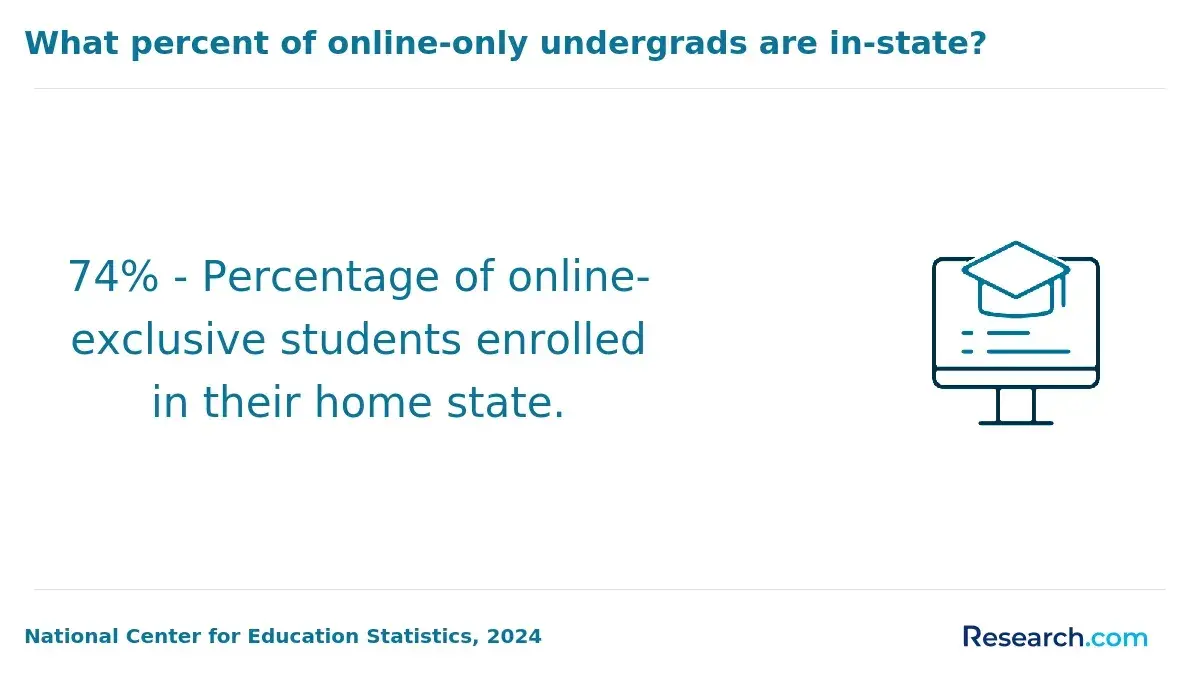
The National Center for Education Statistics has reported continued high participation in distance education among graduate students in recent years, which reflects why universities are building more flexible doctoral pathways for working professionals. For the reader, the key point is that online delivery can reduce relocation barriers, but it does not remove the time burden of clinical practice, scholarship, and leadership projects.
The table below compares common online formats and what they mean for working leaders.
| Format | How it usually works | Best fit | Main trade-off |
| Fully online asynchronous | Coursework is completed on your schedule within weekly deadlines | Executives with unpredictable meetings, travel, or shift patterns | Requires strong self-management and may offer less live networking |
| Online with synchronous sessions | Students attend scheduled live classes or seminars | Students who value discussion, accountability, and faculty access | Meeting times may conflict with clinical or leadership responsibilities |
| Hybrid with campus intensives | Most coursework is online, with short required campus visits | Students who want online flexibility plus in-person skills, networking, or project support | Travel, lodging, time off, and family logistics add cost and complexity |
| Executive cohort model | Students progress together with structured leadership-focused milestones | Managers, directors, and senior clinicians who want peer networking | Less flexibility if you need to slow down or pause enrollment |
Before enrolling, ask your employer about tuition assistance, schedule flexibility, clinical-site support, project approval, and whether your DNP project can align with organizational priorities. The most successful working students often turn the doctorate into a work-integrated leadership project rather than treating school and work as unrelated commitments.
What Are the Admission Requirements for an Online Women's Health Nurse Practitioner Doctorate?
Admission requirements vary by entry point. A BSN-to-DNP WHNP pathway typically admits registered nurses who need both advanced practice preparation and the doctorate, while a post-master's DNP usually admits APRNs, including certified WHNPs, who already hold graduate clinical preparation.
If you are still mapping the earlier steps to advanced practice, this guide on how to become a nurse practitioner can help you understand the sequence from RN preparation to graduate training, certification, and licensure. Doctoral admissions build on that foundation and add expectations for leadership potential, scholarly writing, and practice impact.
Most online WHNP doctorate programs ask for a combination of academic, clinical, and professional materials. Review requirements early because missing clinical documentation or state authorization can delay enrollment.
- Active, unencumbered RN license, and APRN licensure or certification when applying to a post-master's DNP track
- BSN or MSN from an accredited nursing program, depending on the entry pathway
- Minimum GPA, often with separate review of science, nursing, or graduate coursework
- Official transcripts from all colleges and universities attended
- Professional resume showing nursing experience, leadership roles, committee work, quality projects, or women's health practice
- Statement of purpose connecting the WHNP doctorate to clinical, executive, consulting, policy, or academic goals
- Letters of recommendation from supervisors, faculty, APRNs, physicians, or organizational leaders
- Proof of prerequisite coursework, health compliance, background check, immunizations, and clinical-site eligibility
- Interview, writing sample, or proposed DNP project idea for some programs
Applicants with management experience should make that experience visible. Admissions committees may value examples such as leading a quality initiative, opening a clinic service, improving patient throughput, supervising staff, implementing telehealth, or managing reproductive health access programs.
How Long Does It Take to Earn an Online Women's Health Nurse Practitioner Doctorate?
Most online WHNP doctorate timelines depend on entry point. BSN-to-DNP students usually need more time because they complete graduate clinical preparation, WHNP specialty content, doctoral leadership courses, and a DNP project. Post-master's DNP students may finish faster because they already hold graduate nursing preparation and may bring prior clinical hours.
The table below gives a realistic planning range. Exact timelines depend on transfer credits, clinical-hour audits, enrollment intensity, and whether you take breaks during major work or family transitions.
| Entry point | Common online completion range | What drives the timeline | Best fit |
| BSN-to-DNP WHNP | About three to five years | Specialty courses, advanced practice clinicals, doctoral courses, and DNP project work | RNs who want WHNP certification and a doctorate in one pathway |
| MSN-to-DNP for certified WHNPs | About one and a half to three years | Clinical-hour gap to reach doctoral expectations, project scope, and part-time pacing | Practicing WHNPs seeking executive, academic, or systems leadership advancement |
| Post-master's DNP for APRNs changing focus | Often longer than a standard post-master's DNP | Additional specialty coursework, clinical placements, and certification requirements | APRNs who want to add women's health specialization, if the school permits it |
| PhD in Nursing | Often three to six years | Research methods, dissertation, faculty mentorship, and data collection | Nurses targeting research-intensive academic or scientific leadership roles |
Working executives should be cautious with the fastest advertised timeline. A shorter program can be a good value if it recognizes prior graduate preparation, but it can become stressful if clinical placements, doctoral project approvals, or work travel create bottlenecks.
Does an Online Women's Health Nurse Practitioner Doctorate Require a Dissertation?
A DNP usually does not require a traditional dissertation. Instead, it requires a scholarly DNP project, sometimes called a capstone or practice-improvement project, that identifies a real clinical or systems problem, applies evidence, measures outcomes, and proposes sustainable change.
A PhD in nursing usually requires a dissertation because the purpose of the degree is to produce original research. This difference matters for executive careers: a DNP project can be directly tied to a workplace leadership problem, while a dissertation is better suited to research scholarship and academic science.
Common DNP project topics for WHNP leaders often focus on measurable improvements in women's health care delivery. The best topic is one that matters to patients, has organizational support, and can be evaluated within the program timeline.
- Improving postpartum follow-up and referral workflows
- Expanding contraceptive counseling access in primary or specialty care settings
- Reducing no-show rates for preventive gynecologic visits
- Implementing telehealth protocols for rural women's health services
- Improving screening and referral for intimate partner violence
- Standardizing menopause symptom assessment and treatment pathways
- Reducing care variation through evidence-based clinical protocols
Before choosing a program, ask whether the school requires a proposal defense, manuscript submission, oral presentation, poster dissemination, IRB review, or organizational approval. These requirements are manageable, but they can affect your timeline and workload.
How Much Does an Online Women's Health Nurse Practitioner Doctorate Cost, and Is It Worth the Investment?
The cost of an online WHNP doctorate depends on credit load, public or private tuition, residency travel, clinical fees, technology fees, books, background checks, and whether you can use employer tuition support. The degree may be worth the investment if it directly supports a realistic goal such as advanced practice authority, service-line leadership, faculty work, executive consulting, clinical program development, or women's health policy leadership.
Use current cost data as a reality check before comparing individual schools. NCES data published in 2024 reported average graduate tuition and required fees of $12,596 at public institutions and $29,931 at private nonprofit institutions for the 2022-23 academic year, which shows why institution type can meaningfully affect debt exposure.
Important cost benchmarks and financing factors include the following. These figures should not replace school-specific net-price calculations, but they help frame the financial risk.
- Average graduate tuition and required fees were $12,596 at public institutions and $29,931 at private nonprofit institutions for 2022-23, according to NCES data published in 2024.
- Federal Direct Unsubsidized Loans for graduate students first disbursed in the 2024-25 award year carried an 8.08% fixed interest rate.
- Federal Grad PLUS Loans first disbursed in the 2024-25 award year carried a 9.08% fixed interest rate.
- Residency travel, lodging, clinical compliance expenses, malpractice coverage, technology requirements, and graduation fees can raise the total cost beyond advertised tuition.
The table below summarizes common ROI scenarios. It is intentionally cautious because a doctorate can improve competitiveness, but it does not guarantee promotion, executive hiring, or salary growth.
| Career goal | When the WHNP doctorate may be worth it | When to reconsider |
| Women's health NP practice leader | You need doctoral practice expertise to lead protocols, quality, access, and advanced clinical services | Your current role does not require doctoral preparation and your employer offers no advancement pathway |
| Service-line director or clinical operations leader | The program includes finance, analytics, staffing, quality, and change-management content | An MHA, MBA, or healthcare management certificate would address your gap more directly |
| Academic faculty member | You want to teach clinical nursing, supervise DNP projects, or lead practice education | You want a tenure-track research career where a PhD is preferred or required |
| Consultant or policy leader | You can combine WHNP expertise with measurable project outcomes and policy knowledge | You lack a clear consulting niche, portfolio, network, or business-development plan |
Common mistakes include focusing only on tuition per credit, assuming online means no travel, choosing a program based on rankings alone, ignoring clinical-placement responsibility, and borrowing without estimating monthly repayment. A better approach is to compare total cost against the specific leadership role you are targeting and the credentials that role actually values.
What Executive Careers Can You Pursue With an Online Women's Health Nurse Practitioner Doctorate?
An online WHNP doctorate can support several executive and leadership paths, especially when paired with clinical experience, certification, project outcomes, and organizational influence. It is most powerful for roles where women's health expertise and systems leadership intersect.
Salary context should be interpreted carefully because executive pay varies by state, employer, service line, and scope of responsibility. For comparison across advanced nursing specialties, resources such as this analysis of psychiatric nurse practitioner salary can help readers see how specialty, geography, and demand affect compensation patterns, even though WHNP and psychiatric NP roles serve different populations.
The BLS reported a May 2024 median annual wage of $117,960 for medical and health services managers and projected 29% growth from 2023 to 2033. For WHNP doctorate students, this suggests that healthcare leadership demand is strong, but executive roles still require management experience, financial judgment, communication skills, and results beyond the degree itself.
| Career path | Typical responsibilities | How a WHNP doctorate helps |
| Women's health service-line director | Oversees clinical programs, quality metrics, staffing models, patient access, and strategic growth | Adds specialty credibility plus doctoral training in outcomes, systems, and evidence-based change |
| Director of advanced practice providers | Leads APRN practice standards, onboarding, productivity, scope-of-practice policy, and performance improvement | Supports governance, clinical standardization, and interprofessional leadership |
| Chief nursing officer or senior nursing executive | Leads nursing strategy, workforce planning, quality, budgets, safety, and executive decision-making | Can strengthen executive profile when combined with broad operational experience |
| Clinical quality or population health executive | Designs initiatives to improve outcomes, reduce variation, and address health equity | Aligns closely with DNP preparation in implementation, measurement, and population health |
| Women's health policy or advocacy leader | Works on access, regulation, reimbursement, reproductive health policy, and community partnerships | Provides clinical depth and policy literacy for evidence-informed advocacy |
| Nursing faculty or DNP project mentor | Teaches, advises students, supports clinical education, and guides scholarly practice projects | Meets common practice-doctorate expectations for clinical nursing education roles |
| Healthcare consultant | Advises organizations on women's health workflows, quality, access, telehealth, or APRN practice models | Builds authority when paired with a portfolio of measurable project outcomes |
The doctorate is not an automatic route to the C-suite. Leaders who benefit most are those who use the program to build a visible record: measurable DNP project outcomes, cross-functional leadership, financial understanding, policy knowledge, executive communication, and a network of mentors and sponsors.
Other Things You Should Know About Women's Health Nurse Practitioner
Yes, if the university is institutionally accredited, the nursing program is properly accredited, and the pathway meets certification and licensure expectations. Employers usually care more about accreditation, clinical competence, leadership results, and role fit than whether coursework was delivered online.
Yes, some BSN-to-DNP programs include WHNP specialty preparation, but you must verify that the curriculum supports the required certification pathway and that clinical placements can be completed in your state. Post-master's DNP programs may not add WHNP certification unless they include the needed specialty coursework and clinical hours.
A DNP is usually better for practice leadership, clinical operations, quality improvement, and service-line roles. A PhD is better for research-intensive academic careers, grant-funded research, and scientific leadership. Some executives choose other doctorates, such as a DHA or DrPH, if they want broader healthcare administration or public health leadership.
The biggest red flag is unclear accreditation or unclear certification eligibility. Other warning signs include hidden residency requirements, weak clinical-placement support, vague total costs, no faculty expertise in women's health, and leadership claims that are not supported by curriculum, project examples, or graduate outcomes.
References
- How Much Does It Cost to Become a Nurse Practitioner? | ThriveAP https://provider.thriveap.com/blog/how-much-does-it-cost-become-nurse-practitioner
- Women's Health Nurse Practitioner (NP) Programs - Nurse Practitioner Degrees https://npdegrees.org/degrees/np-masters-degrees/womens-health-np-programs/
- Top Online WHNP Programs 2026: Comprehensive Rankings https://www.npschools.com/rankings/all-online-whnp-programs
- Home https://npwomenshealthcare.com/page/21/
- Guide to the Most Affordable Online Nurse Practitioner Programs https://www.edumed.org/online-schools/nurse-practitioner-programs/most-affordable/
- Online Doctor of Nursing Practice (DNP) Degrees for the Clinical Nurse Specialist-Women’s Health Role https://www.doctorofnursingpracticednp.org/online-doctor-of-nursing-practice-dnp-degrees-for-the-clinical-nurse-specialist-womens-health-role/
- Online Women's Health Nurse Practitioner (WHNP) Programs https://nursinglicensemap.com/nursing-degrees/online-nurse-practitioner-programs/whnp/
- Most Affordable Online DNP Programs https://www.onlineu.com/most-affordable-colleges/dnp-degrees
- Doctor of Nursing Practice, Healthcare Leadership https://www.pointloma.edu/graduate-studies/programs/doctor-nursing-practice-healthcare-leadership


