
2027 Best Online Two-Year Degrees With No GPA Requirement

Co-Founder and Chief Data Scientist
A low GPA should not end your search for an online associate degree, but "open admission" does not mean every major is open to every applicant. The College Board reported average published in-district tuition and fees of $4,050 at public two-year colleges for 2024-25, making the choice of program - and its full cost - worth examining. This guide compares six degree fields for students seeking an accessible starting point.
You'll learn where separate admissions rules commonly arise, what "online" may require in practice, and how to check whether a program fits your career or transfer goal before you apply.
Key Things You Should Know
- No minimum GPA must be verified at the program level: Open admission to a college does not waive prerequisites or selective admission into nursing and other majors.
- Check the complete pathway: Many associate degrees require around 60 semester credits, but clinical placements, course sequencing, and part-time study can extend completion beyond two years.
- Compare outcomes, not just access: The U.S. Bureau of Labor Statistics reports a 2024 median wage of $93,600 for registered nurses, but an associate degree alone does not grant an RN license.
Top 10 Best Online Two-Year Degrees With No GPA Requirement
Business Programs
An online business administration AA or AS can suit students planning to transfer; a business AAS may emphasize immediate workplace skills such as accounting software, customer service, and operations. General college admission may have no GPA cutoff, but that must be confirmed for the specific program and applicant type. Compare required math courses, internship expectations, and whether business credits apply to your intended bachelor's major. This is a flexible starting point, not a direct route to a management position, which typically requires experience.
Healthcare Programs
Healthcare administration or health information AAS programs may teach medical terminology, records systems, and privacy practices without requiring clinical training. They can be more practical online options than hands-on allied-health majors. Admission to the college may be open while a particular healthcare program requires prerequisite grades, background checks, or a separate application. Check whether the curriculum supports your target entry-level role and whether an employer expects certification. Do not assume a general healthcare degree qualifies you for a licensed clinical occupation.
Information Technology Programs
Computer information systems or IT support AS and AAS degrees can cover networking, troubleshooting, databases, and cybersecurity fundamentals. An AS may offer a stronger transfer route; an AAS may prioritize technical practice. Ask whether labs use remote-access software, require scheduled sessions, or need equipment you must purchase. A college may admit students without a GPA threshold while requiring placement or prerequisite coursework before advanced classes. Compare hands-on projects and employer-recognized certification preparation rather than assuming the degree itself earns a certification.
Nursing / Pre-Nursing Programs
Online pre-nursing AA or AS coursework may provide a route into later nursing applications, but pre-nursing admission is not admission to a nursing cohort. Associate Degree in Nursing programs commonly have separate prerequisite, grade, testing, and clinical requirements even at open-admission colleges. Clinical training takes place in person, so an ADN should not be treated as a wholly remote pathway. Before enrolling, confirm the nursing program's admission policy, clinical placement rules, state approval, and eligibility for the licensing examination in the state where you intend to practice.
Criminal Justice Programs
A criminal justice AA or AS may suit students transferring into a bachelor's program; an AAS may focus more on report writing, legal procedures, and public-safety operations. Online study can be convenient, but agency jobs may separately require background screening, physical standards, academy training, or other qualifications. Verify that the specific associate program has no minimum admission GPA, not merely that its college is open admission. Ask a prospective employer whether the credential meets its hiring requirements before choosing a career-focused track.
Psychology / Counseling Programs
An online psychology AA or AS is usually a transfer foundation, with courses in research methods, development, and statistics. Human services AAS programs may instead prepare students for certain support roles and include a supervised practicum that must be completed locally. Confirm the program's GPA policy and placement requirements before applying. Neither type of associate degree independently qualifies someone to practice as a licensed counselor or psychologist; those careers require substantially more education and state-specific credentials.
What types of online two-year degrees can you earn with no GPA requirement?
Online two-year options commonly include transfer-oriented AA and AS degrees and career-oriented AAS degrees. These are degree types to investigate, not a list of programs whose no-GPA policies have been confirmed. The strongest choice depends on whether your next step is a bachelor's degree, an entry-level job, or a separately regulated program.
The comparison below shows how the credential's purpose changes what you should verify. Degree abbreviations are useful clues, but the actual curriculum and transfer agreement matter more.
| Degree path | Typical focus | Most important check |
| AA or AS in business, psychology, or criminal justice | General education and transfer preparation | Whether credits meet requirements in your intended bachelor's major |
| AS or AAS in information technology | Transfer preparation or technical workforce skills | Which courses are transferable and how hands-on labs work online |
| AAS in healthcare or human services | Preparation for specific support roles | Any practicum, employer credential, or certification requirements |
| Pre-nursing AS or ADN pathway | Nursing prerequisites or preparation for RN licensure | Separate nursing admission, in-person clinical training, and state eligibility |
If your priority is entering the workforce quickly rather than earning transferable college credit, compare short degrees that pay well against the time and requirements of an associate program. Confirm the credentials employers actually request for your target role.
How do open-admission online two-year programs work and who are they for?
Open admission generally means the college offers an enrollment route to applicants who meet basic eligibility requirements; it does not mean admission to every major. "No GPA requirement" is narrower: it should mean the applicable published admission policy does not set a minimum prior GPA for that applicant and program. Colleges can still require a high school credential or equivalent, placement, prerequisites, or satisfactory academic standing after enrollment.
This route can work well for students returning after weak grades or a long break. It is less useful when the desired major selects applicants using prerequisite grades or a competitive application. Ask admissions staff to distinguish first-time, transfer, and returning-student policies, then ask the department whether admission to the major is automatic. If a webpage is silent about GPA, seek written confirmation rather than treating silence as proof.
Are online two-year degrees with no GPA requirement accredited and recognized?
Yes, an online associate degree can be accredited and recognized even when its admission process has no minimum GPA. Admission selectivity and accreditation answer different questions. Check that the institution holds accreditation recognized by the U.S. Department of Education or the Council for Higher Education Accreditation. Institutional accreditation is also relevant to federal financial aid eligibility and to how another college evaluates transfer credit, though it does not guarantee transfer.
For a licensed occupation, check the program as well as the institution. Nursing applicants, for example, should confirm state board approval and ask whether any programmatic accreditation is needed for their future education or employment plans. A warning sign is a school that markets "accreditation" without clearly identifying its accreditor, or that promises licensure in every state without addressing state-specific rules.
What admission steps and documents are needed if no GPA is required?
Without a minimum admission GPA, you may still need to document your education and complete placement or program-specific steps. Requirements vary by college and by applicant history. Use the following sequence to avoid confusing general admission with acceptance into your chosen major.
- Find the current admission policy for your applicant type and ask whether it sets a minimum GPA.
- Check the exact major for separate prerequisites, minimum course grades, testing, or an additional application.
- Prepare required transcripts and proof of a high school credential or equivalent; ask whether prior college records must be submitted even when GPA is not used for initial admission.
- Ask how placement works and whether accepted transfer, examination, military, or prior-learning credit can satisfy requirements.
- Confirm financial aid eligibility and any deadlines before committing to classes.
Keep a copy of the applicable catalog policy or an advisor's written answer. It is especially important if you plan to apply first to a general studies track and later enter a selective major.
How do online two-year programs compare to campus programs for flexibility and support?
Online study can reduce commuting, but it is not automatically self-paced or entirely remote. Courses may be asynchronous, meet live at set times, or require proctored exams. A clinical, lab, internship, or practicum may require a local site or campus attendance.
This comparison highlights the practical scheduling trade-offs. Ask each school what support is available to online students, not just what appears on its general services page.
| Format | Potential advantage | Constraint to verify |
| Asynchronous online | More choice about when to study | Fixed weekly deadlines, exam windows, and remote support hours |
| Scheduled online | Regular live contact with instructors and classmates | Required meeting times and attendance rules |
| Hybrid or campus | Direct access to physical labs and in-person services | Travel, parking, and predictable on-site hours |
For a working adult, reliable course availability and responsive advising may matter more than an "online" label. Check whether required courses run when you need them and whether tutoring, accessibility services, and career advising serve remote students.
What courses, majors, and skills are common in these two-year degree programs?
Most associate programs combine general education - often writing, mathematics, and social sciences - with courses in a major. Business students may study accounting and operations; IT students may practice networking and troubleshooting; criminal justice students may examine law and report writing. Psychology transfer tracks often include statistics and research methods, while healthcare tracks may add medical terminology and records systems.
Look past the course titles to what you will produce or practice. Projects, software access, supervised fieldwork, and laboratory work affect both career preparation and scheduling. If transfer is the goal, compare each course against the intended bachelor's program before enrolling. A course can be accepted as transfer credit yet count only as an elective rather than fulfill a major requirement.
How long do online two-year degrees take and what do they cost overall?
A two-year degree is usually a description of the full-time pathway, not a completion promise. Many associate degrees require around 60 semester credits, but prerequisites, course sequencing, part-time enrollment, and clinical availability can change the timeline. Accepted transfer credit may reduce the work remaining; the receiving college decides what applies and may require a minimum number of credits completed there.
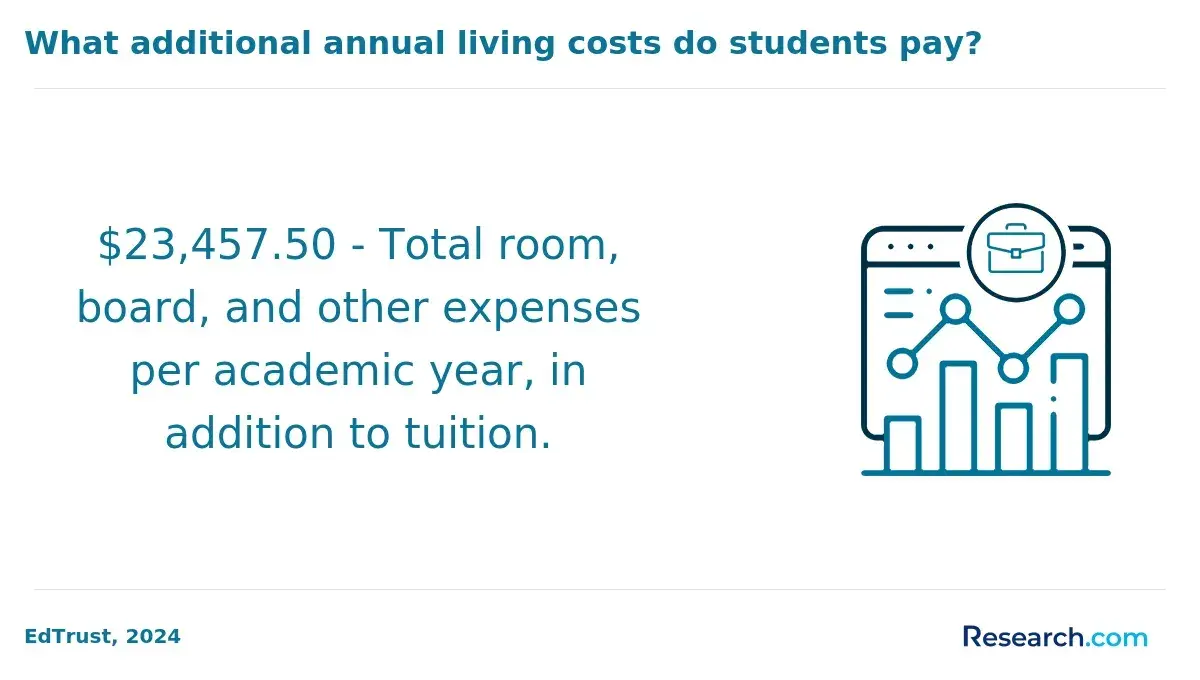
For a U.S. cost benchmark, the College Board's 2024-25 average published in-district tuition and fees at public two-year colleges was $4,050 for one academic year. That is not an individual program quote or a two-year total. Your full cost can also include residency-based tuition differences, books, technology, transportation, and any clinical or exam-related expenses. Request a term-by-term estimate based on your remaining credits, and compare it with grants, scholarships, employer assistance, and eligible federal aid.
If a bachelor's degree is the ultimate goal, compare the associate-to-transfer route with a cheapest online college option using total costs through graduation, not just the first year's tuition. A low-cost associate program loses some of its advantage if credits do not apply to the bachelor's major.
What jobs, industries, and transfer options can these degrees lead to?
The best destination depends on the credential's purpose. Business, IT, healthcare administration, and human services AAS programs may support applications for relevant entry-level roles, subject to employer requirements. AA and AS pathways in psychology or pre-nursing more often function as steps toward further education. Criminal justice graduates should check individual agency standards rather than assume the degree qualifies them for an academy or public-safety job.
Before choosing, identify a target job or bachelor's major and compare its stated requirements with the program's required courses. Ask a transfer destination for a degree audit or articulation agreement; ask employers which skills or credentials they expect. If an employer mainly seeks a particular industry credential, certificate programs that pay well may be worth comparing with an associate degree. A certificate can be more focused, while an associate program may offer broader education or a transfer pathway.
What salaries, job outlook, and licensing requirements apply to related career fields?
Occupational wage data describes workers in a job, not the expected earnings of graduates from a particular degree. For example, the U.S. Bureau of Labor Statistics reports a 2024 median annual wage of $93,600 for registered nurses. That figure includes nurses with different education levels and experience; it should not be used as a salary promise for a new ADN graduate. Becoming an RN also requires meeting state eligibility rules and passing the applicable licensing examination.
Licensing changes the comparison for other fields, too. An associate degree in psychology does not qualify someone to practice as a licensed psychologist or counselor. An IT degree does not automatically confer an industry certification, and public-safety jobs may impose separate training and screening requirements. When weighing roles - including potential jobs for introverts - compare actual duties, local openings, employer requirements, and the full training path rather than selecting a major by an occupational median wage alone.
Other Things You Should Know About
Possibly. Look for a college and specific major whose published policy has no minimum GPA for your applicant type. Prior grades may still affect prerequisite eligibility, transfer credit, or admission to a selective program.
Not necessarily. Admission rules do not change the coursework, passing-grade standards, or requirements for remaining in good academic standing.
Do not assume so. Nursing programs typically have separate admission rules and require in-person clinical training. Confirm the exact delivery and state licensure pathway before applying.
Request written confirmation of the major's GPA policy, any in-person requirements, your transfer-credit evaluation, a total-cost estimate, and - if relevant - how the degree applies to your intended bachelor's program or license.
References
- [PDF] Principles of Good Practice for Distance Education | texas.gov https://reportcenter.highered.texas.gov/agency-publication/miscellaneous/principles-of-good-practice-approved-oct-2023/
- School-Determined Requirements | 2024-2025 Federal Student Aid Handbook https://fsapartners.ed.gov/knowledge-center/fsa-handbook/2024-2025/vol1/ch1-school-determined-requirements
- Fast Facts: Tuition costs of colleges and universities (76) | ed.gov https://nces.ed.gov/fastfacts/display.asp
- Rule 3358:5-7-14 | Student location policy. - Ohio Laws https://codes.ohio.gov/ohio-administrative-code/rule-3358:5-7-14
- Online Associate Degrees | National University https://www.nu.edu/online-degrees/associate/
- Undergraduate Tuition & Fees | Portland State University https://www.pdx.edu/student-finance/tuition/undergraduate
- Credit for Prior Learning - Records & Registration https://www.gaston.edu/records-registration/credit-for-prior-learning/
- Online Associate's Degrees - MDC Online - Miami Dade College https://online.mdc.edu/online-programs/online-associates/
- How Long Are Community College Programs? | Edison State Community College https://www.edisonohio.edu/blog/how-long-are-community-college-programs
- Online | Coastline College https://www.coastline.edu/locations/online.php


