2027 Best Online Sports Management Degree Programs at Nonprofit Universities

Co-Founder and Chief Data Scientist
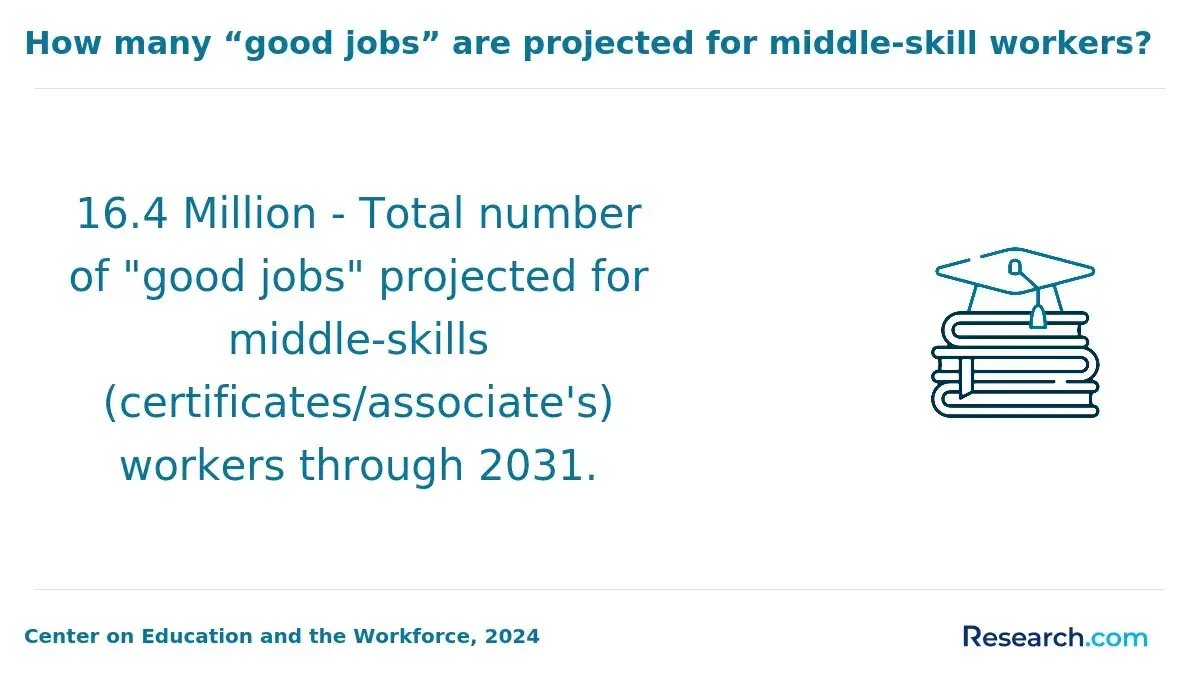
Choosing an online sports management degree means weighing far more than a school's nonprofit status. Students need a program that fits their budget, schedule, transfer credits, and career target in a competitive sports industry. The U.S. Bureau of Labor Statistics projects employment for coaches and scouts to grow 9% from 2023 to 2033, faster than the average for all occupations. This guide explains how to compare nonprofit online programs, verify quality, estimate costs, and identify the degree level that supports your goals.
Key Things You Should Know
- Public and private nonprofit universities can both offer credible online sports management degrees, but institutional accreditation, curriculum, total cost, internship access, and career support matter more than nonprofit status alone.
- A bachelor's degree is the standard entry credential for many sports business roles, while a master's degree can be more useful for experienced professionals seeking leadership, analytics, athletic administration, or specialized sport-industry roles.
- Career prospects vary by job and location: the U.S. Bureau of Labor Statistics projects 9% growth for coaches and scouts from 2023 to 2033, but a degree does not guarantee placement, salary, or access to professional sports jobs.
What Makes an Online Sports Management Degree Program at a Nonprofit University Different?
An online sports management degree teaches the business, operational, legal, marketing, and leadership side of sport. Students commonly study sport marketing, finance, event management, facilities operations, sport law, ethics, sponsorship, ticketing, communications, and data-informed decision-making. Programs may lead to an associate, bachelor's, master's, or doctoral degree.
Nonprofit universities include public institutions and private institutions that reinvest revenue into their educational mission rather than distributing profits to owners or shareholders. That status can be meaningful, but it is not a quality guarantee. A strong program should still demonstrate appropriate accreditation, qualified faculty, transparent policies, relevant experiential learning, and student support.
Sports management is a business-focused major, so applicants deciding between broad and industry-specific preparation should compare the curriculum carefully. A student interested in corporate roles outside athletics may benefit from also reviewing an online business administration degree, while a student committed to athletics, events, recreation, or sport organizations may prefer the industry context offered by sports management.
The following comparison shows the practical differences among common degree paths. It can help students avoid paying for a level of education that does not match their intended role.
| Degree level | Typical best fit | Common focus | Career-use consideration |
| Associate | Students seeking an affordable starting point or transfer pathway | General business, sport basics, communication | May support entry-level work, but many management roles prefer a bachelor's degree |
| Bachelor's | New entrants and career changers | Sport business, marketing, operations, law, internships | Usually the most versatile undergraduate credential for sport-industry roles |
| Master's | Professionals seeking advancement or specialization | Leadership, analytics, administration, strategic management | Most valuable when paired with experience, a clear specialty, or employer demand |
| Doctoral | Researchers, faculty candidates, and senior leaders | Research, policy, leadership, advanced management | Not normally required for operational sports business roles |
Online study is not automatically easier than campus study. The strongest online programs deliver the same academic standards as their campus counterparts while adapting instruction through learning platforms, virtual group projects, online advising, and supervised field experiences. Students should confirm whether an internship, practicum, campus visit, or live meeting is required before enrolling.
How Can Students Verify Accreditation for an Online Sports Management Degree at a Nonprofit University?
Students should verify institutional accreditation before applying or accepting financial aid. Institutional accreditation evaluates the university as a whole, including academic quality, governance, student protections, and financial practices. In the United States, accreditation should be recognized by the U.S. Department of Education or the Council for Higher Education Accreditation.
Sports management does not have one universally required programmatic accreditor in the same way that certain licensed health professions do. Some programs may pursue discipline-specific recognition or align with professional standards, but institutional accreditation remains the essential baseline for transfer credit, federal aid eligibility, and employer confidence.
Use this verification process before paying an application fee. It protects against misleading claims and helps ensure that credits have a reasonable chance of being accepted by another institution.
- Find the university's accreditor on its official accreditation or consumer-information page.
- Confirm that accreditor in the U.S. Department of Education database or the Council for Higher Education Accreditation directory.
- Check that the online sports management program is included in the institution's approved distance-learning offerings.
- Ask whether the degree has specialized recognition, required fieldwork, or state-specific requirements relevant to your target role.
- Request written transfer-credit and graduate-school admissions guidance if you may continue your education elsewhere.
A common mistake is treating nonprofit status as proof of legitimacy. Another is confusing membership in a professional association with accreditation. Ask admissions staff to identify the accreditor by name and provide documentation rather than relying on broad marketing language.
How Rigorous Are Online Sports Management Degree Programs at Nonprofit Universities?
Rigorous online sports management programs use the same learning outcomes expected in comparable campus programs: analytical writing, case analysis, group work, presentations, applied finance, legal and ethical reasoning, and industry projects. Students should expect regular deadlines, reading, discussion, research, and collaborative assignments even in an asynchronous format.
Compare course sequencing and assessment methods, not just course titles. The table below identifies curriculum features that commonly signal career-relevant academic depth.
| Curriculum feature | Why it matters | What to ask |
| Sport finance and budgeting | Builds practical knowledge for facilities, teams, events, and nonprofit sport organizations | Does coursework use budgets, revenue scenarios, or financial analysis? |
| Sport law and ethics | Introduces contracts, liability, compliance, governance, and ethical decision-making | Is the course taught by faculty with legal, compliance, or industry experience? |
| Marketing and analytics | Supports ticketing, fan engagement, sponsorship, and digital communications work | Will students use current data, CRM concepts, or campaign analysis? |
| Internship or practicum | Creates evidence of applied learning and professional contacts | Who secures placements, and can students complete them near home? |
| Capstone project | Shows whether students can integrate business and sport knowledge | Is the final project based on a realistic organization or industry problem? |
Accelerated terms can be a good fit for disciplined students, but compressed schedules do not reduce the total learning required. Students comparing pacing models may notice similar trade-offs in other professional programs, including accelerated online MFT programs: shorter terms can speed completion, but they require dependable weekly study time and careful planning.
Before choosing an accelerated option, calculate the weekly workload for each course, confirm whether exams or team projects occur at fixed times, and avoid stacking demanding courses during a busy sport season or peak work period.
The cost of an online sports management degree depends on residency, degree level, transfer credit, technology fees, books, required travel, and internship-related expenses. Students should compare the estimated total cost to graduate, not only the advertised cost per credit.
For context, College Board reported average published tuition and fees of $11,610 for in-state students at public four-year institutions and $43,350 at private nonprofit four-year institutions for 2024-25. These national figures are not sports-management program prices and do not reflect grants, residency rules, or online tuition schedules, but they show why students should compare public and private nonprofit options individually.
This table outlines common cost trade-offs rather than ranking one institutional type as universally better.
| Program type | Potential cost advantage | Potential trade-off | Best question to ask |
| Public nonprofit, in-state | May offer lower tuition for eligible residents | Out-of-state online rates can be substantially higher | Does the online program charge a flat rate or a residency-based rate? |
| Public nonprofit, out-of-state | May have broad course selection and established athletics connections | Residency pricing may reduce the value advantage | Are online students eligible for a special nonresident tuition rate? |
| Private nonprofit | May offer predictable tuition, multiple starts, or adult-focused services | Published tuition can be higher before institutional aid | What is the net price after scholarships and transfer credit? |
| Transfer-friendly program | Can reduce remaining credits and time to completion | Not all prior coursework applies to the major | How many credits will apply specifically toward degree requirements? |
Ask each school for a written estimate showing required credits, tuition, mandatory fees, books, course materials, background checks, travel, and internship costs. A lower per-credit price can still lead to a higher total if few transfer credits apply or if the curriculum adds courses beyond the standard degree requirements.
Eligible students at accredited nonprofit universities may use federal financial aid, including Pell Grants for qualifying undergraduates, Direct Loans, work-study opportunities, and some parent or graduate borrowing options. Aid eligibility depends on factors such as enrollment level, academic progress, dependency status, financial information, and program participation rules.
Start by filing the Free Application for Federal Student Aid and then compare each school's award letter. Grants and scholarships reduce the amount students need to repay, while loans create an obligation that should be evaluated against realistic earnings and career plans.
Students should review these funding sources in order because the source of aid affects long-term borrowing risk.
- Federal and state grants for students who meet eligibility requirements.
- Institutional scholarships based on academic performance, need, military affiliation, transfer status, or adult-learner enrollment.
- Employer tuition assistance for students working in recreation, athletics, hospitality, education, municipal programs, or related organizations.
- External scholarships from community foundations, sport organizations, professional associations, and local employers.
- Federal Direct Loans after grants, scholarships, and employer benefits have been considered.
Do not assume an online program is ineligible for aid, but verify that the specific degree qualifies and that your enrollment intensity meets requirements. Students exploring funding models in other professional fields can see why program-level eligibility matters when comparing fully funded SLP programs online; "funded" language should always be checked against the actual award terms, renewal conditions, and remaining costs.
A financial-aid red flag is a school that emphasizes monthly payment amounts without clearly disclosing total borrowing, interest, fees, and the number of terms required to finish. Request the net cost and debt estimate in writing.
Online sports management programs range from highly asynchronous formats to programs that require live evening classes, group meetings, proctored exams, internships, or occasional campus residencies. Flexibility should be measured by the full schedule, not by the word "online."
Asynchronous courses generally let students complete lectures and discussion posts at convenient times before weekly deadlines. Synchronous courses offer real-time interaction but require students to be available at set times. Hybrid programs may combine both approaches with in-person components.
The following comparison helps working students match course delivery to their constraints.
| Format | Schedule control | Best fit | Important limitation |
| Fully asynchronous | High | Students with variable work, travel, or family schedules | Still requires consistent weekly participation and self-direction |
| Mostly synchronous | Moderate to low | Students who value live discussion and routine | Time-zone and work conflicts can limit access |
| Hybrid or residency-based | Moderate | Students who can travel and want some face-to-face networking | Travel expenses and attendance requirements must be planned early |
| Accelerated terms | Varies | Students with strong time management and fewer outside demands | Fast pacing can make missed work difficult to recover |
Ask for a sample syllabus and academic calendar before enrolling. Confirm weekly deadlines, live-session attendance rules, exam proctoring, group-project expectations, internship hours, and whether courses are available every term. Students who need maximum flexibility should also verify that they can study part time without losing scholarships or delaying required courses.
Online students need more than access to a learning platform. Useful support services can include academic advising, tutoring, library research help, writing support, accessibility services, technical assistance, career coaching, internship coordination, mental health resources, and alumni networking opportunities.
Support quality varies by institution and may differ between campus and online populations. The best question is not whether a service exists, but whether distance learners can use it during the hours and in the format they need.
Before committing, ask admissions or student services staff to explain how online students access the following supports.
- Degree planning that maps transfer credits, prerequisites, course availability, and expected graduation timing.
- Career services with sport-industry employer relationships, résumé review, interview practice, and job-search guidance.
- Internship support that accommodates students who live outside the university's immediate region.
- Faculty office hours and timely academic help through video, phone, email, or online appointments.
- Technology support for learning platforms, accessibility tools, online testing, and remote library access.
A red flag is vague language about "career connections" without examples of internship partners, employer events, alumni engagement, or staff support. Students should ask whether internship placement is guaranteed, assisted, or entirely self-directed; those models create very different experiences.
An online sports management degree can prepare graduates for sports-related and adjacent business careers, especially when it includes practical projects, internships, professional communication, and networking. Possible settings include professional and amateur sports organizations, college athletics, recreation departments, event companies, fitness and wellness organizations, media businesses, community programs, and sport-focused nonprofits.
Job titles vary widely and may include event coordinator, athletic administrator, ticket sales representative, partnership coordinator, operations assistant, facilities coordinator, marketing specialist, community-relations assistant, and recreation manager. Many competitive roles value experience, sales results, event work, and professional relationships alongside a degree.
The U.S. Bureau of Labor Statistics projects 7% employment growth for meeting, convention, and event planners from 2023 to 2033. That occupation is not exclusive to sports, but the projection reinforces the value of transferable event planning, logistics, budgeting, and communication skills for students who want options beyond team-based employment.
Career changers should be honest about industry fit. Someone whose interests are primarily in clinical communication, education, or rehabilitation may need a different preparation route; for example, guidance on how to become a speech pathologist describes a profession with credentialing expectations that differ substantially from sports management.
To evaluate career preparation, review internship requirements, faculty biographies, capstone assignments, employer partnerships, and public outcome information where available. Do not interpret a school's alumni success stories as a guaranteed result. Local labor markets, prior experience, willingness to relocate, and networking effort all influence outcomes.
Yes. A properly accredited online bachelor's degree from a nonprofit university can provide a foundation for graduate study, provided students meet the admissions requirements of their target program. Graduate schools commonly consider institutional accreditation, undergraduate coursework, cumulative and major GPA, recommendations, résumé experience, essays, and sometimes standardized test policies.
A sports management bachelor's degree can lead to a master's in sport management, business administration, athletic administration, public administration, marketing, communication, data analytics, higher education, or related fields. Students should choose electives strategically if they expect to enter a quantitatively focused or research-intensive graduate program.
A master's degree is usually more appropriate than a doctorate for professionals seeking specialized management preparation. Doctoral study is best reserved for learners with a clear interest in research, university teaching, policy, or high-level organizational leadership. Students considering executive or organizational leadership routes can compare the expectations of an online doctorate organizational leadership before assuming that a terminal degree is necessary for a sports-industry promotion.
Students who may continue to graduate school should select a program with graded academic coursework, accessible faculty, research or capstone opportunities, and clear transcript documentation. Maintain strong grades, build relationships for recommendations, and retain project samples that demonstrate analytical and professional skills.
How Should Students Compare the Best Online Sports Management Degree Programs at Nonprofit Universities?
The best online sports management degree is the one that aligns with your intended role, financial limits, academic background, and availability. A public nonprofit may provide the strongest value for an in-state student, while a private nonprofit may be more practical for a working adult who needs frequent start dates, a predictable online structure, or robust transfer evaluation.
Use a short list of three to five programs rather than relying on a generalized ranking. The comparison categories below prioritize the factors most likely to affect your academic experience and return on investment.
| Comparison factor | Strong evidence | Potential red flag |
| Accreditation | Recognized institutional accreditation clearly identified by the university | Unclear accreditor, vague claims, or no distance-learning confirmation |
| Total cost | Written estimate including tuition, fees, transfer credits, and fieldwork costs | Only a per-credit price or monthly payment is disclosed |
| Curriculum | Finance, law, marketing, operations, analytics, and applied learning | Course list is heavily promotional or lacks business fundamentals |
| Flexibility | Clear information on live sessions, deadlines, pacing, and internships | "100% online" without details about attendance or travel |
| Transfer policy | Formal transcript review and written explanation of applicable credits | Broad transfer promises without a credit evaluation |
| Career preparation | Internship support, relevant faculty experience, career services, and alumni access | Unverified employment claims or no explanation of experiential learning |
After comparing programs, take these practical steps before making a final decision.
- Identify two or three target job types and read their typical education, skill, and experience expectations.
- Request a transfer-credit evaluation and a complete projected cost from each finalist.
- Review the course sequence, sample syllabus, internship policy, and online attendance requirements.
- Verify institutional accreditation independently and confirm federal-aid eligibility with the financial-aid office.
- Speak with an advisor about career services and ask how online students secure internships in their own region.
- Select the program that meets your nonnegotiables rather than the one with the most attractive headline tuition or ranking language.
For most students, the strongest overall value comes from an accredited program with affordable net cost, sufficient transfer credit, a workable schedule, applied business coursework, and support for internships. A more expensive option may still be worthwhile if it materially improves access to instruction, networking, specialized coursework, or completion support that matches your career plan.
Other Things You Should Know About Sports Management
No. Sports management focuses on business, operations, marketing, events, leadership, and administration. Athletic training is a healthcare profession with separate educational, accreditation, and certification requirements.
No. Experience as an athlete can provide context, but employers also value business ability, communication, sales, event experience, data skills, customer service, and professional reliability.
Usually, yes. Internships can help students build experience, professional references, and industry contacts. Ask whether the university helps identify placements and whether you can complete an internship near where you live.
Yes. Transferable skills can apply to events, recreation, fitness, entertainment, hospitality, marketing, community programs, collegiate athletics, and nonprofit organizations. Students should choose electives and internships that keep several career paths open.
- Can Online Colleges Offer Competitive Career Outcomes? https://www.onlineu.com/magazine/popular-online-schools-career-outcomes
- www.shorter.edu: Verifying that you are not a robot... https://www.shorter.edu/online-sports-management-program-ranks-high/
- Why Major in Sport Management - Vont https://www.stonehill.edu/programs/sport-management/why-major-in-sports-management-vont/
- How does a college degree improve graduates' employment and earnings potential? - APLU https://www.aplu.org/our-work/publicuvalues/employment-earnings/
- Why Choose Webber's Sports Business Management Program https://www.webber.edu/why-choose-webbers-sports-business-management-webber/
- What Jobs are Available in Sports Management? https://www.allbusinessschools.com/sports-management/online-degree/
- The Best Online Master's in Sports Management Programs https://www.onlinecolleges.net/rankings/best-online-masters-sports-management-degree-programs/
- Career Paths In Sport Management https://www.ycp.edu/news/career-paths-sport-management