2027 Best Online Family Nurse Practitioner (FNP) Programs for Residents of Baton Rouge, LA

Co-Founder and Chief Data Scientist
For a Baton Rouge registered nurse, choosing an online family nurse practitioner (FNP) program means checking more than class schedules: clinical placements must be workable locally, and the degree must support Louisiana advanced practice licensure.
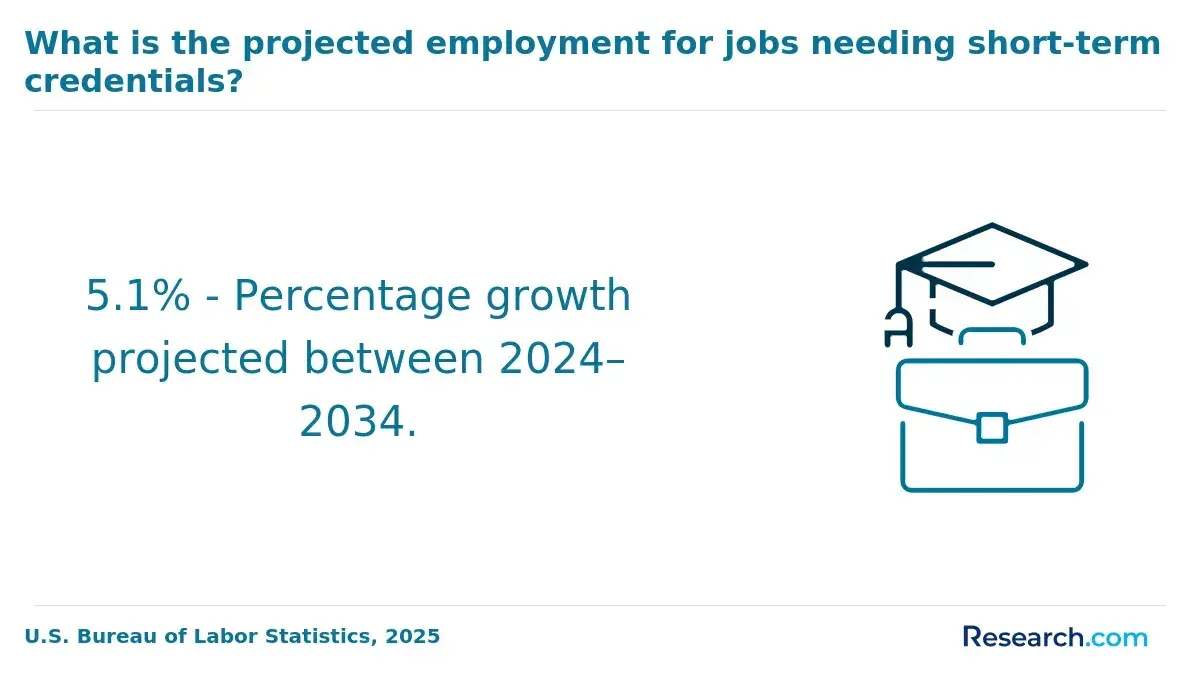
The U.S. Bureau of Labor Statistics projects nurse practitioner employment to grow 40% nationally from 2024 to 2034; that is a national outlook, not a Baton Rouge job forecast. This guide compares realistic program starting points and shows how to assess their format, costs, certification preparation, and fit with a working RN's life.
Key Things You Should Know
- Southern University and A&M College is a Baton Rouge-based FNP program starting point; online options from institutions elsewhere must be evaluated as programs available to city residents, not programs located in the city.
- For Louisiana practice, an online degree alone is insufficient: graduates need qualifying FNP education, national certification, and Louisiana advanced practice registered nurse (APRN) authority.
- Compare the full cost and clinical-placement plan before choosing. An inexpensive online program can become a poor fit if Baton Rouge-area preceptors are unavailable or required campus visits are impractical.
What Are the Best Online FNP Programs in Baton Rouge, LA?
There is no defensible single "best" program for every Baton Rouge RN. The strongest choice is one that currently accepts Louisiana residents, offers a delivery format you can complete, supports local clinical training, and prepares graduates for FNP certification and Louisiana APRN requirements. Institution location and student access are different: a program offered elsewhere can be suitable for a Baton Rouge resident without being a Baton Rouge-based program.
These institutions offer useful comparison starting points. Formats, Louisiana enrollment eligibility, clinical policies, accreditation status, and prices can change; confirm each directly with the school before treating it as an application option.
| Institution and location | Why compare it | Most important point to verify |
| Southern University and A&M College - Baton Rouge | A city-based institution with an FNP graduate nursing pathway; its location may make campus contact more convenient. | Whether the current FNP pathway offers online or hybrid coursework, and how often students must attend in person. |
| Northwestern State University of Louisiana - outside Baton Rouge | A Louisiana institution to investigate for distance-accessible FNP study while remaining a Baton Rouge resident. | Current delivery format, any required travel, and clinical placement responsibilities in Baton Rouge. |
| University of Louisiana at Lafayette - outside Baton Rouge | Another Louisiana FNP option to compare against a city-based pathway. | Whether its current FNP option accepts Baton Rouge residents in the desired track and permits suitable local clinical sites. |
A Baton Rouge campus is not automatically more flexible than an out-of-city online program, and "online" does not mean clinical training is remote. Compare three written program estimates using the same categories: tuition, mandatory fees, books and technology, clinical clearance and travel, and lost work time for required visits. Published per-credit prices may not capture those differences. For broader context, review FNP tuition options for out-of-state students; verify the rate that applies to your own Louisiana residency before deciding.
What FNP Certification Requirements Apply to Residents of Baton Rouge, LA?
FNP is a population-focused nurse practitioner specialty providing care across the lifespan. A Baton Rouge resident planning to practice in Louisiana generally needs an appropriate graduate FNP education, a qualifying national FNP certification, and APRN authority from the Louisiana State Board of Nursing. These are statewide requirements, not rules set by the city. National certification and permission to practice are separate credentials.
FNP graduates commonly pursue certification through the American Nurses Credentialing Center or the American Association of Nurse Practitioners Certification Board. Before enrolling, ask the program which examination its graduates qualify to take and whether its education and supervised clinical experiences meet Louisiana's current APRN application requirements.
An out-of-state school's authorization to teach a Louisiana resident does not, by itself, establish eligibility for Louisiana practice. If a school cannot explain that distinction, investigate licensure issues with family nurse practitioner programs before committing.
How Does an Online FNP Program Prepare Baton Rouge, LA Residents for National Board Certification?
A sound program connects advanced assessment, pathophysiology, pharmacology, and lifespan primary care coursework to supervised patient encounters. Online lectures and case discussions can build knowledge, but certification preparation also depends on faculty feedback, clinical evaluation, and practice applying evidence to patients of different ages.
Ask for the program's current certification-exam eligibility statement, its approach to exam preparation, and recent first-time pass-rate information with the reporting period and number of graduates. A pass rate from a very small class may be less informative than several years of consistent results. Check whether clinical rotations include the age groups and common primary care conditions tested on the chosen FNP exam; a placement concentrated in only one narrow specialty may leave gaps.
What Primary Care Skills Should Baton Rouge, LA Residents Expect to Develop in an Online FNP Program?
Expect to develop the ability to take histories, perform advanced examinations, form differential diagnoses, order and interpret appropriate tests, create treatment plans, and recognize when referral or urgent escalation is needed. FNP preparation should also cover preventive care, chronic disease management, patient education, and care for children and adults rather than a single age group.
In Baton Rouge, potential training settings include primary care clinics, community health centers, and health-system outpatient practices. Their presence does not mean they accept every student or provide every required patient population. Ask schools how they approve sites and track encounters, then check whether proposed rotations provide enough breadth - not merely convenient hours - to develop entry-level primary care judgment.
How Do Online FNP Programs Help Baton Rouge, LA Residents Develop Advanced Practice Nursing Competencies?
Online programs commonly use case conferences, simulated decisions, and faculty review of clinical work to develop diagnostic reasoning and evidence-based care. In-person precepted encounters are where students must demonstrate those abilities with patients. The best format for a working RN therefore depends as much on protected clinical time and responsive supervision as on whether lectures are asynchronous.
Compare scheduled live classes, clinical-semester workloads, and part-time sequencing against your actual shifts. An asynchronous course may still require weekday clinic attendance or a fixed faculty meeting. Nurses balancing employment and study can use this discussion of family nurse practitioner education alongside employment to frame questions for an advisor; do not assume full-time RN work will remain practical during every rotation.

How Can Baton Rouge, LA Residents Evaluate FNP Preceptor Quality and Clinical Mentorship?
A suitable preceptor must meet the school's qualifications, practice in an appropriate setting, have time to observe clinical decisions, and give useful feedback. A willing local clinician is not enough if the school cannot approve the site or the rotation does not satisfy its patient-population requirements. Baton Rouge-based systems and clinics may be worth approaching, but placement depends on their capacity and agreements with the institution.
Before paying a deposit, get specific answers to the placement questions that determine whether the program is workable:
- Who identifies preceptors, who secures affiliation agreements, and what support does the school provide if an intended Baton Rouge site declines?
- What clinical hours and patient populations are required, and can approved sites in or accessible from Baton Rouge fulfill them?
- How often will faculty assess your work and intervene if a preceptor cannot provide adequate supervision?
Waiting until the clinical semester to find out that students arrange their own placements is a costly mistake. Request the policy in writing and speak with a recent Louisiana student if the school can facilitate that conversation.
What Prescriptive Authority Can FNPs Have After Training for Practice in Baton Rouge, LA?
Completing pharmacology coursework does not itself grant prescriptive authority. Louisiana APRNs must obtain the applicable state authority and comply with Louisiana's requirements for collaborative practice and prescribing. Additional state and federal requirements apply to controlled substances, including registration when required. These are Louisiana rules wherever an FNP works in the state, including Baton Rouge.
When comparing schools, ask how the curriculum teaches safe prescribing, medication monitoring, and Louisiana-specific practice constraints. Before accepting a position, confirm the current Board of Nursing requirements and the employer's arrangements for collaboration and prescribing. Do not assume that a credential or prescribing arrangement from another state transfers unchanged to Louisiana.
Which Healthcare Settings Offer the Best FNP Opportunities for Graduates in Baton Rouge, LA?
Primary care practices, community health centers, urgent care services, and outpatient clinics affiliated with health systems are plausible settings for an FNP seeking work in Baton Rouge. The city includes major providers such as Our Lady of the Lake Regional Medical Center, Baton Rouge General, and Ochsner Medical Center-Baton Rouge, alongside community-based care. Naming a provider identifies a type of local workplace to investigate, not a current vacancy or a promise that it hires new FNPs.
The best setting depends on the patient population, onboarding and mentorship, scope of responsibilities, and whether the role fits FNP primary care preparation. Ask prospective employers about new-graduate support and Louisiana collaboration arrangements. National growth projections are useful career context, but they cannot establish the number of openings in Baton Rouge or an individual graduate's likely salary.
How Can Baton Rouge, LA Residents Compare MSN-FNP Programs With Other Advanced Nursing Pathways?
An MSN-FNP is often the direct graduate-degree comparison for a BSN-prepared RN seeking family primary care practice. A DNP-FNP can also lead toward FNP practice but adds doctoral-level study; a post-master's FNP certificate may suit a nurse who already holds a qualifying graduate nursing degree. The credential name alone does not establish certification or Louisiana practice eligibility.
This comparison shows which question should drive the choice before you spend time comparing school advertisements.
| Pathway | Potential fit | Decision trade-off |
| MSN-FNP | BSN-prepared RN seeking a graduate route into family primary care | Check admission prerequisites, local clinical feasibility, and total degree cost. |
| DNP-FNP | RN seeking FNP preparation with doctoral-level coursework | Compare additional time, cost, and any required visits with your career goals. |
| Post-master's FNP certificate | Graduate-prepared nurse adding the FNP population focus | Confirm prior coursework accepted and remaining clinical and certification requirements. |
If you already have a nursing master's degree, a guide to online FNP certificate pathways for master's graduates may help narrow the search. For any pathway, obtain an individualized review of prior credits rather than assuming a published shortest completion time applies to you.
What Should Baton Rouge, LA Residents Verify Before Enrolling in an Online FNP Program?
Start with your intended practice state: if it is Louisiana, use Louisiana's APRN requirements as the test for every school, including those located in Louisiana. Then compare at least three programs on the same written checklist. This avoids two common errors - assuming that all online schools accept Louisiana students and choosing by advertised tuition or speed alone.
Use these checks to turn a promising program into an enrollment decision:
- Confirm current Louisiana-resident enrollment eligibility, institutional authorization for online delivery, and the specific FNP track's nursing accreditation, such as CCNE or ACEN accreditation where applicable.
- Check RN license and prior-degree admission requirements, GPA policies, transfer-credit review, and whether part-time enrollment is available. Applicants concerned about grades can review GPA considerations for FNP admission explained before asking schools how their policies apply.
- Get written confirmation of clinical hours, eligible Baton Rouge-area sites, preceptor-finding responsibilities, campus visits, live-session schedules, and the certification examination the track supports.
- Request a complete cost estimate covering tuition, mandatory fees, technology, clinical clearance, travel, and any residency-related price differences.
- If Louisiana certification or APRN eligibility remains unclear, contact the Louisiana State Board of Nursing before enrolling rather than relying on a general statement that graduates "may qualify."
A program should be ruled out if its required travel, clinical placement policy, or state-eligibility answer remains incompatible with your circumstances - even when its headline tuition looks attractive.
Other Things You Should Know About Family Nurse Practitioner
Potentially. Eligibility depends on the institution, program, enrollment status, and the student's circumstances. Ask each school's financial aid office about the specific FNP track before using anticipated aid to compare costs.
Tell the school before moving. Your new location can affect online enrollment authorization, clinical placement approval, tuition classification, and the state whose APRN requirements you must meet.
Do not assume so. The patient's location can trigger that state's licensing and practice rules. Verify the applicable state requirements and employer policies before providing cross-state care.
It may, but benefits vary by employer. Ask about annual limits, eligible programs, required grades, reimbursement timing, and any obligation to remain employed after receiving assistance.
References
- Evolving Approaches to Meet Clinical Hours for... - PMC https://pmc.ncbi.nlm.nih.gov/articles/PMC10253152/
- Estimate your college cost | usa.gov https://www.usa.gov/estimate-college-cost
- Admissions Requirements - Nurse Practitioner | Information Technology Services https://nursing.louisville.edu/admission/graduate-admissions/admissions-requirements-nurse-practitioner
- FAQs: Online Learning | Virtual Learning and Online Programs https://onlinelearning.egr.uh.edu/faqs-online-learning
- How to Become a Family Nurse Practitioner: A Step-by-Step Guide for RNs | University of the Cumberlands https://www.ucumberlands.edu/blog/how-become-family-nurse-practitioner-step-step-guide-rns
- Online Family Nurse Practitioner Program | Texas Woman's University https://onlinenursing.twu.edu/programs/online-ms-fnp
- Cost to Attend UL Lafayette | Tuition & Aid https://louisiana.edu/admissions-aid/costs-financial-aid
- Program: Family Nurse Practitioner, PMC | southeastern.edu https://catalog.southeastern.edu/preview_program.php
- Master of Science in Nursing - Family Nurse Practitioner (FNP) | FranU https://franu.edu/academics/programs/fnp.html
- Tuition and Fees | LSU New Orleans https://www.lsuneworleans.edu/bursar/tuition-fees