
2027 Best Online Associate Degree Programs for Military Spouses

Co-Founder and Chief Data Scientist
A military move can interrupt a degree just as a student reaches its most important courses. Online associate programs may make it easier to keep studying, but "online" does not always mean portable: labs, clinical placements, scheduled classes, and state licensing rules can still complicate a relocation.
The College Board reported average published tuition and fees of $4,050 for in-district students at public two-year colleges in 2024-25. That makes community colleges worth comparing, though residency and fees can change the bill. This guide helps military spouses choose a field, assess its delivery requirements, and check costs before enrolling.
Key Things You Should Know
- For the greatest relocation flexibility, compare business, IT, and transfer-oriented psychology programs first; confirm that required courses are available online in the terms you need.
- A typical associate degree requires about 60 semester credits, but prerequisites, part-time enrollment, and clinical placements can extend completion beyond two years.
- Eligible spouses may receive up to $4,000 through My Career Advancement Account (MyCAA), verify eligibility, approved programs, and what the benefit will not cover before committing.
Top 10 Best Online Associate Degree Programs for Military Spouses
Business Programs
Business administration and accounting associate programs are useful for spouses seeking transferable office skills or a later bachelor's degree. An AA or AS often emphasizes general education and transfer; an AAS may emphasize bookkeeping, payroll, or workplace software. Ask whether accounting courses apply to your intended bachelor's program. Online coursework is usually easier to carry across a move than a placement-based major, but group projects and exams may still have fixed meeting times. Entry-level administrative or accounting-support jobs vary by employer; a business associate degree is not a direct route to management.
Healthcare Programs
Healthcare administration, health information, and medical coding programs can suit spouses who want healthcare work without a nursing clinical schedule. Compare the exact occupation a program prepares you for: administrative support, records work, and coding have different employer expectations. Some programs include an externship or certification preparation, and coding credentials generally have separate examination requirements. Check whether software access, exams, or placements work after a move. A fully online lecture schedule does not establish that every required component can be completed remotely.
Information Technology Programs
IT support, networking, and cybersecurity associate programs can build portable technical skills through online labs and projects. An AAS may prioritize job preparation, while an AS may offer a clearer transfer route; confirm how its credits apply to a bachelor's degree. Look for hands-on work with current systems, access to virtual labs, and opportunities to prepare for relevant industry certifications. Certifications require separate exams and may cost extra. An IT degree can support a search for help-desk or technical-support work, but neither the credential nor online study guarantees a remote job.
Nursing / Pre-Nursing Programs
Pre-nursing coursework may be offered online, but an associate degree in nursing generally includes supervised, in-person clinical training and may require campus labs. Admission to a college does not mean admission to its selective nursing program. Before applying, ask where clinical placements occur, whether a move can disrupt them, and whether the program meets the requirements of the state where you intend to seek licensure. Graduation is separate from passing the NCLEX-RN and obtaining a state license. For spouses expecting frequent moves, a portable pre-nursing transfer plan may be more practical than starting clinical coursework immediately.
Criminal Justice Programs
Criminal justice associate programs cover courts, corrections, and public safety systems. Many academic courses can be taken online, making an AA or AS a possible transfer foundation. An AAS may focus more directly on workforce skills. The field is not a substitute for an agency academy, background screening, physical standards, or other hiring requirements. Public-safety opportunities also differ by location, so consider whether your intended role can survive a move. Ask where graduates have pursued work and whether the curriculum meets a specific bachelor's transfer agreement.
Psychology / Counseling Programs
An online psychology associate degree is usually a transfer pathway, not a counseling credential. Students commonly study introductory psychology, research methods, and general education before applying to a bachelor's program. Licensed counselor and psychologist roles require substantially more education and state-specific requirements. This option makes sense for spouses who want a flexible start and have a plan for further study; it is less direct for someone who needs an occupation immediately after the associate degree. Confirm that required courses satisfy the intended transfer school's major requirements, not merely its elective requirements.
What Are the Best Online Associate Degrees for Military Spouses?
The best online associate degree for a military spouse is the one that remains feasible through a move and advances a specific career or transfer goal. Business and IT are strong starting points for spouses prioritizing portable coursework. Health information offers a more defined healthcare direction, while nursing is appropriate only when clinical and licensing logistics work. Psychology is best treated as the beginning of a longer education path.
This comparison shows the main trade-off behind each field. It is a guide to choosing a program type, not a ranking of schools or a claim that every program in a field is fully online.
| Field | Best fit | Relocation issue to check |
| Business | Broad office skills or bachelor's transfer | Scheduled classes and transfer applicability |
| Healthcare administration or information | Healthcare support without a nursing license | Externships and certification-related requirements |
| IT | Technical support skills and hands-on projects | Lab access, exams, and equipment |
| Nursing | A planned route toward RN licensure | Clinical locations and state approval |
| Criminal justice | Public-safety studies or transfer | Location-specific hiring requirements |
| Psychology | Transfer toward further education | Major-specific credit transfer |
A school shortlist can help you find candidates, but a list of top online colleges cannot confirm that your chosen major, required courses, and support services fit your next duty station. Compare those details program by program.
How Can Military Spouses Find Accredited Online Associate Programs?
Start with institutional accreditation, confirm the college's status through the U.S. Department of Education's accreditation database or the accreditor itself. Accreditation matters for federal aid and is an important transfer consideration, but it does not guarantee that another college will accept every course. For regulated fields, also check any applicable program approval or accreditation and the requirements of the licensing board in the state where you expect to work.
Then ask an advisor for the program map and written answers to the questions most likely to affect a military move:
- Can every required course be completed online, and which require live attendance, campus visits, proctored exams, or local placements?
- How are placement sites arranged if a student relocates midprogram?
- Which previously earned, military-training, examination, or prior-learning credits will apply to this degree, and what credits must be completed at the college?
- If transfer is the goal, which courses apply to the intended bachelor's major under a current agreement?
Get the answers for the specific program, not just the college. A school's general "online" label can obscure a required in-person lab or a major that admits students separately.
What Financial Aid Helps Military Spouses Pay for Online College?
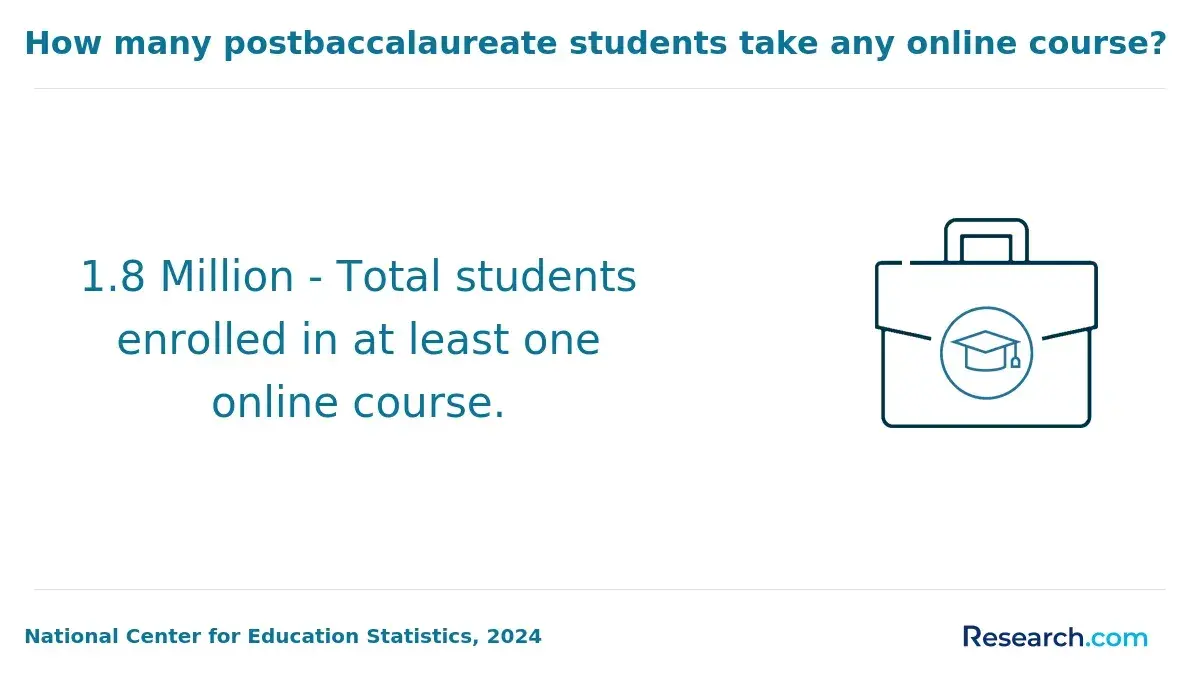
Military spouses can start with the Free Application for Federal Student Aid (FAFSA) to determine eligibility for federal grants, loans, and work-study. For 2025-26, the maximum Federal Pell Grant is $7,395; an individual award depends on eligibility and enrollment. Grants can reduce borrowing, but confirm how aid changes if you study part time or switch schools after a move.
MyCAA may provide up to $4,000 for eligible spouses pursuing an approved career goal. Its eligibility rules and covered expenses are distinct from federal student aid, so verify the current terms before counting it toward tuition. Some spouses may also qualify to use transferred Post-9/11 GI Bill benefits if the service member completed the required transfer process. Ask the school's military benefits office to explain how each benefit applies to your program and whether any expenses remain uncovered.
Which Online Associate Degree Fields Offer Strong Career Opportunities?
Career opportunity depends on the occupation, not just the degree title. IT support and health information offer identifiable skill paths; business can apply across industries but may require more effort to demonstrate a specialization. Nursing has a defined licensed occupation, at the cost of less flexible clinical training. Psychology commonly requires further education for counseling work.
Consider your likely work location as well as the job market. A role with strong national demand may still require a state credential, local employer access, or experience you cannot gain entirely online. For someone making a later-life education decision - or helping an older family member compare options - guidance on college degrees for seniors may be useful, but military-spouse mobility and benefits call for separate checks.
How Long Do Online Associate Degree Programs Take to Complete?
Many associate programs require around 60 semester credits. A student taking a full-time load may finish in roughly two years if courses are offered when needed. Part-time students often need longer; accepted transfer credits may shorten the remaining work. Prerequisites, limited course schedules, nursing admission cycles, and clinical placements can extend either timeline.
Do not confuse an accelerated course with an accelerated degree. Short terms change the pace of individual classes, not necessarily the number of credits required. If a bachelor's degree is the eventual goal, accelerated degree programs may be worth comparing later, but first confirm that the associate courses will count toward that particular bachelor's program.
How Much Do Online Associate Degree Programs Cost for Military Spouses?
The College Board's 2024-25 average of $4,050 in published tuition and fees for in-district public two-year students is a benchmark, not a military spouse's guaranteed price. Online students may face different residency rules, technology fees, course materials, and charges for proctoring, labs, clinical requirements, or certification exams. A move could also change tuition classification.
For a useful comparison, request a written estimate for all remaining credits at each school, including mandatory fees and known program expenses. Subtract grants and confirmed benefits to estimate your likely out-of-pocket cost; keep potential loans separate because they must generally be repaid. Ask how the estimate changes if you enroll part time, transfer existing credits, or relocate. A low per-credit rate is not necessarily the lowest-cost route to graduation.
What Do Online Associate Degree Programs Teach?
An associate degree generally combines general education, such as writing, quantitative reasoning, and social sciences, with courses in a major. Business students might study accounting and management. IT students may use virtual labs to practice troubleshooting or networking. Healthcare programs can add terminology, records systems, or supervised experience. Nursing adds science prerequisites and clinical practice.
Degree letters describe a program's broad design, not a universal transfer rule. An AA or AS often emphasizes transfer, while an AAS often emphasizes workforce preparation; individual curricula can serve both purposes. Compare the actual course sequence with your next goal. If you need immediate job skills, examine hands-on assignments. If you plan to transfer, examine how each required course applies to the bachelor's major.
What Are the Admission Requirements for Online Associate Degrees?
Many colleges request an application, proof of secondary-school completion, and transcripts from any prior colleges. Placement procedures, minimum grades, and transfer-credit rules vary. Standardized admission tests may not be required by a college, but that does not remove a major's prerequisites or separate selection process.
Nursing and some allied-health pathways may require science courses, a minimum GPA, an entrance assessment, or health and background documentation before clinical admission. Ask whether you are applying to the college, the major, or both. Submit previous transcripts early and request a degree-specific credit evaluation: credits that a college accepts as electives may not satisfy the courses you need to graduate or transfer.
Which Careers, Salaries, and Certifications Follow These Degrees?
Use occupational wages as context, not as a forecast of what an associate graduate will earn. The U.S. Bureau of Labor Statistics (BLS) reported the following May 2024 median wages and projected 2024-34 employment growth. These figures cover workers in each occupation across education and experience levels, not graduates of a particular program.
| Occupation | May 2024 median wage | Projected 2024-34 growth | Additional qualification to check |
| Registered nurse | $93,600 | 5% | Approved nursing education, NCLEX-RN, and state licensure |
| Medical records specialist | $50,250 | 7% | Employer requirements; certification may be preferred |
The comparison illustrates a trade-off: nursing has a defined license and a substantial in-person training requirement, while medical records work may offer a more manageable route for a relocating student. Neither wage describes an expected starting salary. Business and IT graduates should likewise compare actual entry-level job postings and any requested software skills or certifications before choosing courses.
A psychology associate degree is further from independent clinical practice: licensed psychologist roles generally require doctoral education and state licensure. Looking at the length and requirements of PhD programs can clarify the scale of that path, but an online doctorate does not eliminate supervised training or licensing rules.
Other Things You Should Know About
Sometimes. Business, IT, and transfer-focused majors may allow it, but confirm every required course and any live, proctored, lab, or placement requirement. Nursing generally requires in-person clinical training.
Not automatically. The receiving college decides which credits it accepts and how they apply to your degree. Request a written evaluation and check residency-credit requirements before transferring.
Choose based on your next step, not the abbreviation alone. AA and AS programs often suit bachelor's transfer; an AAS may emphasize job skills. Verify the actual curriculum and transfer agreement.
Choose the lowest realistic cost for a program you can complete and use. Compare total fees, aid, transfer credit, required visits, and career or licensing fit - not tuition alone.
References
- DAPIP | Homepage - Office of Postsecondary Education (OPE) https://ope.ed.gov/dapip/
- Five types of transfer credit in addition to college courses | pa.gov https://collegetransfer.pa.gov/Student/Types-of-Transfer-Credit
- Understanding U.S. Accreditation | EducationUSA https://educationusa.state.gov/understanding-us-accreditation
- College Credit for Military Training & Experiences | dantes.mil https://www.dantes.mil/credit4training/
- Going Back to School as a Military Spouse | militaryonesource.mil https://www.militaryonesource.mil/education-employment/for-spouses/going-back-to-school-as-a-military-spouse/
- In-State Tuition Rates Under The Veterans Choice Act | Veterans Affairs https://www.va.gov/resources/in-state-tuition-rates-under-the-veterans-choice-act/
- Online Degrees for Military | University of Maryland Global Campus https://www.umgc.edu/military-and-veterans/online-degrees
- MyCAA Military Spouse Scholarship Program | northshore.edu https://www.northshore.edu/veterans/mycaa.html
- Point University Catalog https://catalog.point.edu/policy/standinghonors/creditforpriorlearning
- Credit for Prior Learning (AP, Dual Credit, CLEP, Military, etc...) | Indiana University East https://east.iu.edu/admissions/apply/credit-prior-learning.html


