2027 Best Associate Degree Completion Programs for High-Paying Careers

Co-Founder and Chief Data Scientist
Already have college credits but no degree? The best associate degree completion path depends on whether your remaining courses lead to a career you can actually enter. The stakes are substantial: the U.S. Bureau of Labor Statistics (BLS) reports a May 2024 median wage of $94,260 for dental hygienists, an occupation that typically requires an associate degree and a state license. This guide compares career-focused and transfer-focused fields, explains what previous credits may save, and shows what to verify before you enroll. Occupational wages are not promised earnings for graduates.
Key Things You Should Know
- For a relatively direct route to a higher-paying occupation, compare accredited allied-health and nursing programs first; BLS reports a May 2024 median wage of $93,600 for registered nurses, but an RN license requires more than earning a degree.
- Choose a completion program based on credits that satisfy your remaining requirements, not credits merely accepted by the college; major prerequisites, clinical sequences, and residency rules can still extend enrollment.
- Compare total remaining cost rather than tuition alone: College Board reports average 2024-25 published in-district tuition and fees of $4,050 at public two-year colleges, before books, supplies, and program-specific expenses.
Top 10 Best Associate Degree Completion Programs for High-Paying Careers
Business Programs
Business administration, accounting, and supply chain associate programs can build toward bookkeeping, operations-support, or sales roles. They are often practical completion choices when previous general education credits apply and courses are available online.
An Associate of Arts (AA) or Associate of Science (AS) may favor transfer; an Associate of Applied Science (AAS) may emphasize immediate workplace skills.
Higher-paying management positions usually require substantial experience and sometimes a bachelor's degree. Compare employer demand for specific skills, such as accounting software or logistics, rather than assuming a general business credential leads directly to management pay.
Healthcare Programs
Dental hygiene, diagnostic medical sonography, and radiologic technology offer clearer links to specific occupations than a general healthcare studies degree. Their trade-off is that previously earned electives may transfer while science prerequisites, laboratories, and clinical placements still follow a fixed sequence.
Programs may have competitive admission separate from college admission. Check clinical availability, programmatic accreditation, exam eligibility, and your state's licensing rules before choosing a completion pathway.
A general health studies program can make sense for transfer or existing healthcare workers, but it is not a substitute for occupation-specific training.
Information Technology Programs
Information technology, networking, cybersecurity, and software development programs can fit students who have transferable coursework and want a career path without clinical scheduling. For entry-level support or development roles, compare hands-on projects, current tools, internships, and local job requirements.
An associate degree can provide a foundation; higher-paying security or systems roles commonly require experience and demonstrated technical ability. Ask whether older technology credits still meet current major requirements. An online program may offer scheduling flexibility, but labs, group projects, and certification preparation still take time.
Nursing / Pre-Nursing Programs
An associate degree in nursing (ADN) can prepare graduates to seek RN licensure after meeting state requirements and passing the required examination. It is a strong option for students willing to complete supervised clinical work and potentially selective admission requirements.
Pre-nursing is different: it usually covers prerequisites and does not itself qualify someone for RN licensure. If you already have credits, determine which sciences are accepted, whether they have recency limits, and when the next nursing cohort starts. Also check whether a future RN-to-BSN pathway will accept the ADN.
Criminal Justice Programs
Criminal justice can support applications for corrections, public safety, or administrative roles, but it does not guarantee entry into law enforcement or a high-paying position. Hiring may involve background checks, physical standards, academy training, and agency-specific requirements.
An AA or AS may suit students planning a bachelor's degree; an AAS may focus more on workforce skills. Compare the requirements of agencies where you intend to work before paying for remaining courses. Experience and promotion often matter more than the associate credential for higher-paid supervisory roles.
Psychology / Counseling Programs
Psychology and counseling associate programs are primarily foundations for transfer or entry-level human-services support work. They do not independently qualify graduates to practice as licensed counselors or psychologists; those careers require further education and state-specific credentials.
This path makes sense if your previous credits apply toward a clearly mapped bachelor's program and you are prepared for further study.
If your immediate goal is a higher-paying job after the associate degree, compare it carefully with occupation-specific healthcare or technical programs. Confirm that each course will meet your intended transfer school's major requirements.
What Are Associate Degree Completion Programs?
An associate degree completion program is a pathway for someone who has already earned college credit and wants to finish an associate credential. It is not necessarily a separate degree or a fixed-length program. An AA or AS often supports transfer to a bachelor's program, while an AAS often emphasizes workforce preparation, though individual colleges may design them differently.
The useful comparison is credits applied to your intended degree, not credits appearing on a transfer evaluation. A college might accept an old course as an elective without letting it satisfy a required science or major course.
Ask for a written degree audit before committing: it should identify remaining general education, major, prerequisite, and residency credits; any grade or age restrictions; and whether military training, exams, industry credentials, or assessed prior learning can count. Work experience does not automatically become college credit.
Which Associate Degree Programs Lead to High-Paying Careers?
For students seeking a comparatively direct route from an associate program to a higher-paying occupation, dental hygiene, diagnostic medical sonography, radiologic technology, and nursing deserve close consideration.
Their degree pathways connect to identifiable occupations, but they also carry clinical, accreditation, examination, or licensing requirements. The best choice is the one whose entry requirements and working conditions fit you - not simply the occupation with the highest median wage.
IT can also lead to well-paid work, but the distance between an entry-level job and a higher-paid specialist role depends heavily on skills and experience.
Business, criminal justice, and psychology may be worthwhile when they support a documented promotion or bachelor's transfer plan; an associate degree alone is a less reliable route to their highest-paid roles. Broad lists of highest paying jobs can provide longer-term context, but compare their education requirements before using them to judge an associate program.
How Much Do High-Paying Associate Degree Careers Earn?
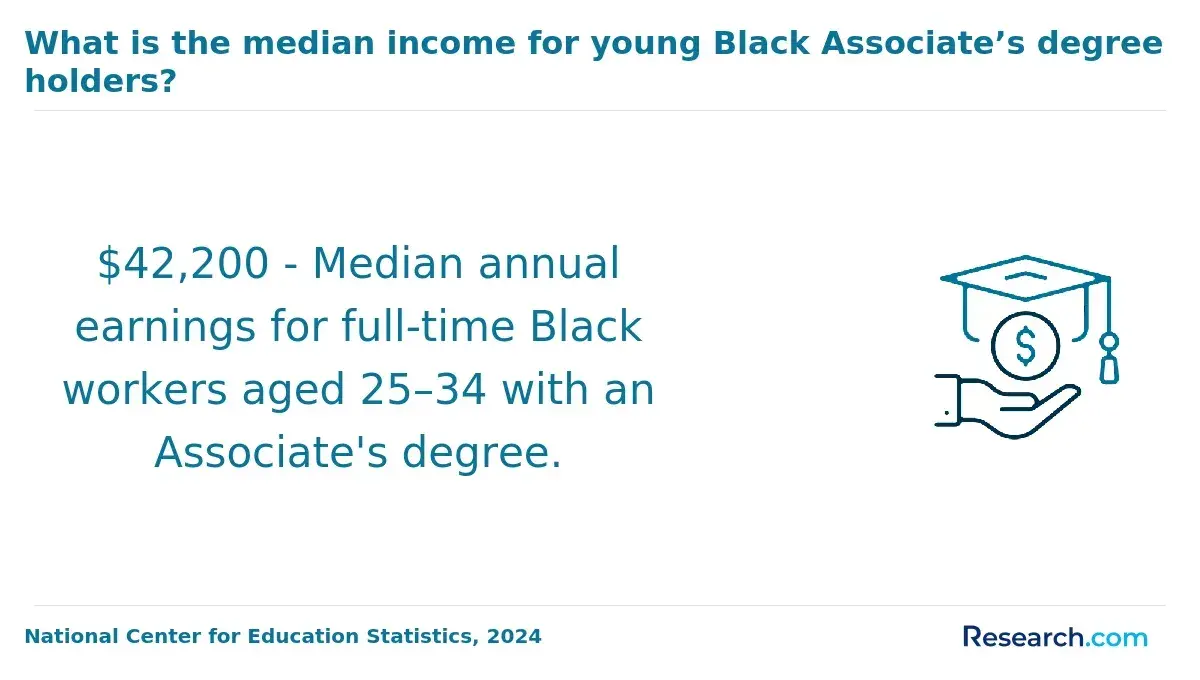
BLS occupational medians are a useful benchmark, not a forecast of what a newly qualified graduate will earn. This comparison shows May 2024 U.S. median wages for occupations associated with some of the paths above, alongside the qualification a student still needs to check.
| Occupation | May 2024 median annual wage | Qualification beyond choosing an associate major |
| Dental hygienist | $94,260 | Complete an appropriate program and meet state licensure requirements |
| Registered nurse | $93,600 | Complete an approved nursing program and meet state RN licensure requirements |
| Diagnostic medical sonographer | $89,340 | Meet employer credential expectations; certification may be preferred or required |
These figures cover workers across experience levels and, for nursing, multiple educational routes. They should not be treated as starting salaries or as evidence that any particular completion program produces those wages. Compare local job postings and entry-level pay with the cost and time of your remaining coursework.
What Accreditation Should Associate Degree Completion Programs Have?
Start with institutional accreditation recognized by the U.S. Department of Education: it matters for federal financial aid eligibility and can affect transfer-credit acceptance. Then check programmatic accreditation when it matters for certification, licensure, or employer acceptance.
For example, dental hygiene, nursing, sonography, and radiologic technology each have profession-specific standards or approval processes that merit checking against your intended state and credential.
Do not assume institutional accreditation alone makes a graduate eligible for a professional exam. Ask the program which accreditor or approval body covers the specific campus and delivery format, and confirm eligibility with the relevant licensing board or credentialing organization.
If a college promises easy transfer, ask the intended bachelor's institution whether the courses satisfy major requirements, not merely elective credit.
What Do Associate Degree Completion Programs Teach?
Most programs combine general education with major coursework. Business students might study accounting and operations; IT students, networking and programming; and allied-health students, anatomy, patient care, labs, and supervised clinical practice. A completion student may have finished general education already but still need a tightly sequenced set of major courses.
Course content should match the career endpoint. Psychology coursework can prepare students for further study, but practicing as a licensed counselor generally requires graduate education and supervised experience.
Someone planning that longer route can compare 1 year master's programs online as a later educational option, while checking whether any specific program meets their state's licensure requirements; a short graduate timeline should never be assumed to replace required clinical training.
How Long Do Associate Degree Completion Programs Take?
There is no universal completion time. An associate degree commonly requires roughly 60 semester credits, but your remaining time depends on credits applied to the degree, enrollment load, course availability, prerequisites, and residency requirements.
Clinical programs may admit cohorts at limited times or require courses in a set order. A student with substantial transferable general education credit can still have multiple terms of major coursework left.
When a school advertises a short timeline, ask which starting credits and full-time course load it assumes. Accelerated terms shorten individual classes, not necessarily the entire degree.
A fast track degree is worth considering when its schedule and transfer evaluation fit your circumstances; an ordinary part-time pathway may be more realistic if clinical placements or work commitments limit your availability.
How Much Do Associate Degree Completion Programs Cost?
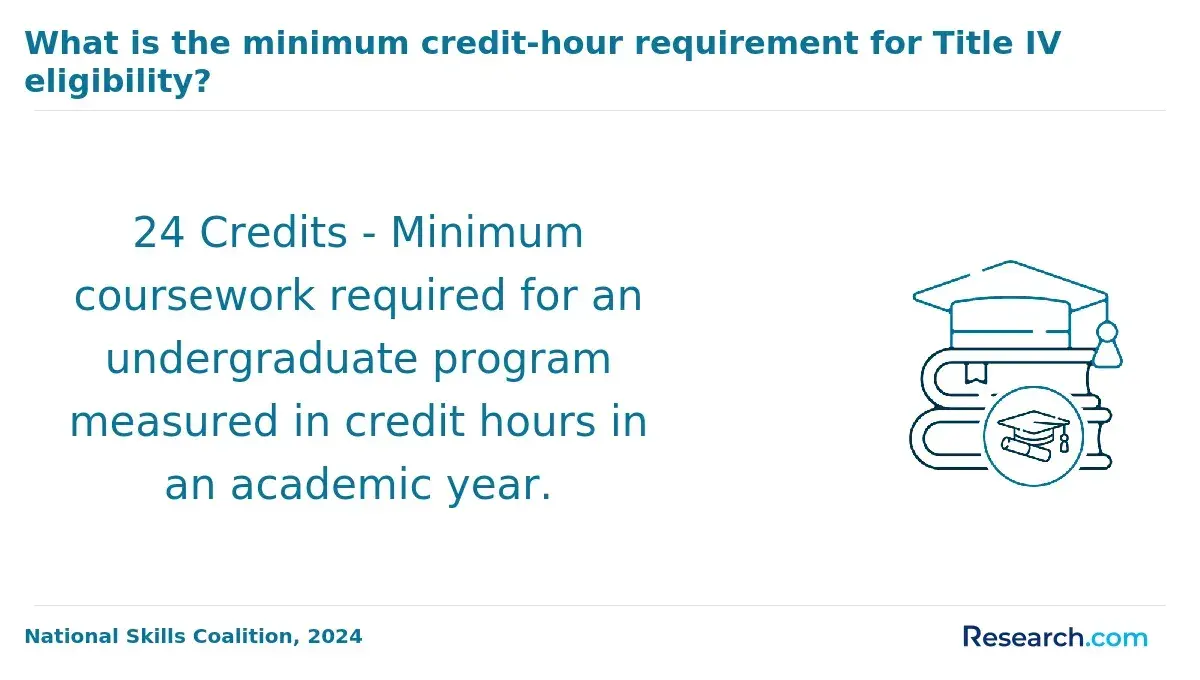
Your relevant price is the cost of the credits you still need, plus mandatory fees and other required expenses. College Board's 2024-25 average published tuition and fees for in-district students at public two-year colleges was $4,050 for an academic year.
That benchmark is not a completion-program price: residency status, remaining credits, and program fees can make an individual bill substantially different.
Request an itemized estimate covering tuition, fees, books, equipment, background checks, immunizations, clinical travel, and certification or licensing exams where applicable. Then compare it with the written degree audit.
A lower per-credit rate may cost more overall if fewer of your previous credits satisfy requirements. Ask the financial aid office about federal aid eligibility, scholarships, employer tuition assistance, and whether your enrollment load affects aid before choosing a payment plan.
Are Online Associate Degree Completion Programs Worth Considering?
Yes, especially for students completing business, IT, or transfer-oriented coursework while working. The advantage is access to classes without routine travel; the limitation is that "online" does not necessarily mean self-paced.
Courses may include scheduled meetings, fixed deadlines, proctored assessments, or occasional campus requirements. Healthcare and nursing programs commonly require in-person labs and local clinical placements even when lectures are online.
Before enrolling, obtain the actual schedule for your remaining courses and ask who arranges required placements near you. Verify that online students have access to the required courses in sequence, advising, and technical support.
A flexible format has little value if a mandatory lab is unavailable where you live or a required course is offered too infrequently to finish on schedule.
What Certifications And Licenses Do Graduates Need?
The degree and the right to practice are separate. ADN graduates must meet their state board's requirements and pass the RN licensing examination. Dental hygienists need state licensure, while sonography and radiologic technology graduates should check relevant credential exams, state rules, and employer requirements.
IT certifications can strengthen applications but are not universal legal requirements. Criminal justice employers may require academy training or other selection steps.
For counseling and psychology, an associate degree is an early educational stage rather than a practice credential. Licensed psychologists generally need doctoral education, supervised experience, and state licensure.
Even someone exploring 1 year PhD programs online no dissertation should not confuse an advertised doctoral format with the requirements for psychologist licensure. Before committing to any regulated career path, confirm the specific program's eligibility with the authority that issues the credential in the state where you intend to work.
Other Things You Should Know About
Often, yes, but the degree-granting college decides which credits apply and how many must be earned there. Request an official evaluation from each program you are considering.
An occupation-specific program such as dental hygiene, sonography, radiologic technology, or nursing may offer a clearer career connection than a general transfer major. Check admissions, clinical requirements, and credential eligibility first.
Not automatically. Verify program approval or accreditation, in-person clinical arrangements, and eligibility under the rules of the state where you plan to practice.
Not necessarily. Some AAS programs have transfer agreements, but acceptance of credits does not mean every course satisfies a bachelor's major requirement. Ask the destination school for a course-by-course review.
References
- DAPIP | Homepage - Office of Postsecondary Education (OPE) https://ope.ed.gov/dapip/
- Program Eligibility, Written Arrangements, and Distance Education | 2024-2025 Federal Student Aid Handbook https://fsapartners.ed.gov/knowledge-center/fsa-handbook/2024-2025/vol2/ch2-program-eligibility-written-arrangements-and-distance-education
- Home: Occupational Outlook Handbook - Bureau of Labor Statistics https://www.bls.gov/ooh/
- TEN_25-19_Attachment_1.pdf - U.S. Department of Labor https://www.dol.gov/node/161266
- Full Cost of Attendance | Ivy Tech Community College https://www.ivytech.edu/tuition-aid/full-cost-of-attendance/
- Program Admission Requirements - Vermont State University https://vermontstate.edu/admission/program-admission-requirements/
- Enrollment Requirements & Academic Part-Time Authorization | The University of Iowa https://international.uiowa.edu/isss/current-students/enrollment-requirements-academic-part-time-authorization
- How to Apply | wichita.edu https://www.wichita.edu/academics/health_professions/pt/msat/admissions.php