2027 Best Accredited Online Marine Science Master's Programs With Asynchronous Classes: No Set Class Times

Co-Founder and Chief Data Scientist
An online marine science master's can let coastal professionals, educators, conservation staff, and career changers advance without relocating, but "online" does not always mean classes have no meeting times. The U.S. Bureau of Labor Statistics reports a $80,060 median annual wage for environmental scientists and specialists in May 2024, illustrating the value of advanced technical and research skills in related fields.
This guide explains how to identify truly asynchronous, accredited programs, compare academic fit and costs, and avoid scheduling surprises.
Key Things You Should Know
- Accredited asynchronous marine science master's programs generally use weekly modules and deadlines rather than live lectures; "no set class times" does not mean self-paced or deadline-free.
- Verify institutional accreditation through the school and its recognized accreditor, then confirm whether fieldwork, labs, examinations, presentations, or capstones introduce required scheduled activities.
- Career value depends more on curriculum, quantitative and research training, faculty expertise, field access, and your target role than on online delivery alone; related environmental scientist roles had a May 2024 median wage of $80,060.
What Does "Asynchronous" Mean in an Online Marine Science Master's Program?
An asynchronous online marine science master's program delivers instruction without requiring students to log in at the same time as an instructor or classmates. Students typically access recorded lectures, readings, datasets, discussion boards, simulations, and assignment instructions through a learning management system when their schedules allow.
It is important to distinguish asynchronous from self-paced. Most graduate programs remain term-based: courses open and close on fixed dates, assignments have due dates, and faculty provide feedback within defined windows. A fully self-paced program, where students progress whenever they are ready, is much less common in graduate science education because research, peer review, and faculty supervision require structure.
The formats below can look similar in marketing language but create very different scheduling commitments.
| Format | Typical class-time expectation | Best fit | Potential limitation |
| Fully asynchronous | No required live lectures; weekly deadlines usually apply | Shift workers, caregivers, and students in distant time zones | Requires strong independent time management |
| Mostly asynchronous | Recorded instruction plus occasional required live sessions | Students wanting flexibility with some real-time contact | A few dates may conflict with work or travel |
| Synchronous online | Regular live classes at scheduled times | Students who value routine and immediate discussion | Least adaptable to variable schedules |
| Hybrid or low-residency | Online coursework plus campus, field, or intensive sessions | Students needing hands-on training or networking | Travel and time-off costs may apply |
A marine science degree may be offered as an MS, MA, Master of Professional Science, or another applied graduate credential. An MS commonly emphasizes scientific methods, data analysis, and research; an MA may emphasize policy, communication, education, or interdisciplinary coastal issues. Professional programs often favor applied projects over a traditional thesis. Review the actual curriculum rather than assuming the degree label determines its rigor or career use.
How Can Students Verify Accreditation for an Asynchronous Online Marine Science Master's Program?
For most online marine science master's degrees, the essential credential is institutional accreditation. It indicates that the university as a whole has been evaluated by an accrediting body recognized by the U.S. Department of Education or the Council for Higher Education Accreditation. It matters for federal financial aid, transfer-credit review, employer confidence, and eligibility for some doctoral programs.
Marine science itself does not have one universal programmatic accreditor comparable to those found in some licensed professions. Specialized recognition can still matter in adjacent areas, such as environmental health, geographic information systems, fisheries, teacher preparation, or coastal policy, but its relevance depends on the position you want after graduation.
Use this sequence before paying an application fee. It separates a school-level accreditation check from claims about a particular online program.
- Find the university's accreditor on its official accreditation or institutional effectiveness page.
- Confirm that the accreditor is recognized by the U.S. Department of Education or CHEA and that the institution's status is current.
- Verify that the exact master's degree, delivery format, and campus or online division appear in the graduate catalog.
- Ask whether the degree has specialized approvals, field-course standards, or professional alignment relevant to your goal.
- Save the written response from admissions if the website is unclear about online authorization, field requirements, or degree conferral.
A common mistake is treating institutional accreditation and programmatic accreditation as interchangeable. Institutional accreditation is the baseline to verify for every program. Specialized approval is an additional consideration only when an employer, doctoral program, certification body, or state requirement specifically calls for it.
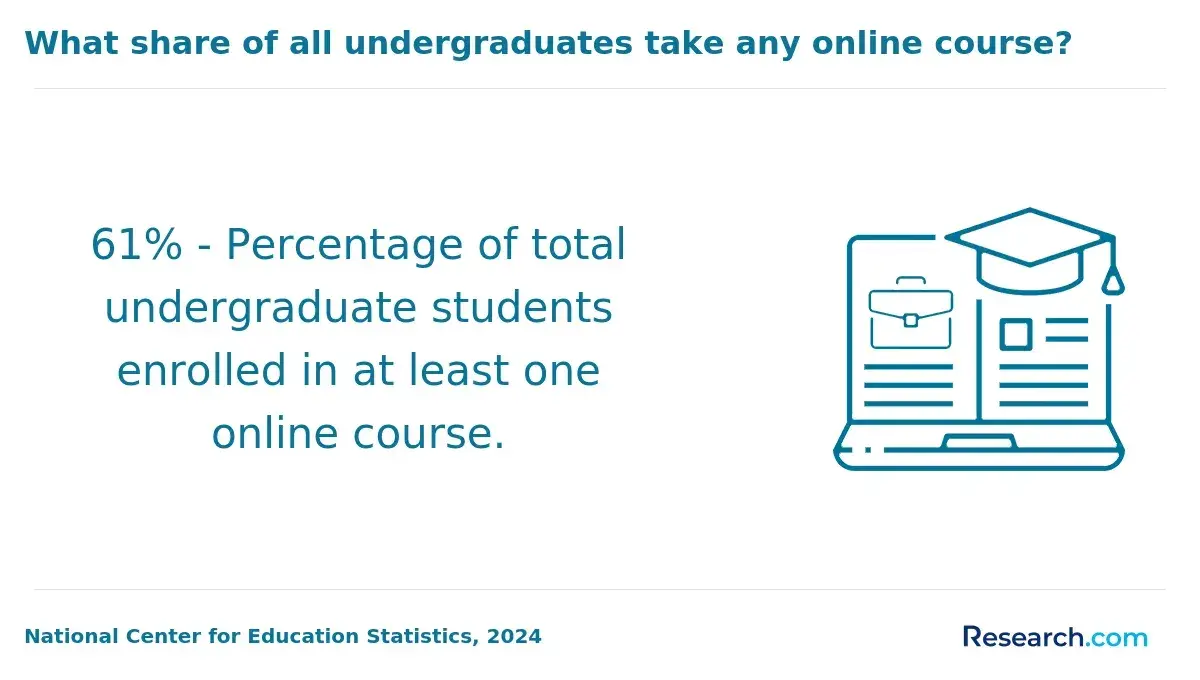
How Can Students Tell If an Online Marine Science Master's Program Truly Has No Set Class Times?
Do not rely only on phrases such as "100% online," "flexible," or "online learning." Those phrases describe location more reliably than scheduling. A program can be entirely online while still requiring evening seminars, proctored exams at fixed times, virtual lab meetings, thesis defenses, or field intensives.
Ask an admissions representative or program director for a written list of required real-time activities across the entire degree, not just the first course. The most useful questions are specific.
- Are any lectures, office hours, orientations, presentations, group meetings, exams, defenses, or advising sessions mandatory at a specific date and time?
- Do field laboratories, research cruises, internships, residencies, or capstone experiences require travel or attendance during business hours?
- Can students complete every required course part-time without enrolling in a cohort-only sequence?
- Are recorded alternatives available when an optional or required live event conflicts with work?
- Have recent course syllabi included required video-conference attendance or timed testing windows?
Request a sample syllabus and the academic calendar. A syllabus reveals weekly due dates, attendance language, group-project expectations, and exam rules that a program overview may omit. If the school cannot clearly identify required synchronous elements, treat its "asynchronous" claim as unconfirmed.
How Flexible Are Asynchronous Online Marine Science Master's Programs for Working Professionals?
Fully asynchronous study can be practical for full-time workers because students can watch instruction and complete most coursework outside standard business hours. It is especially useful for marine technicians, environmental educators, agency staff, military personnel, vessel crews, and professionals who travel or work rotating shifts. Flexibility is about when work is completed, not necessarily how much work is required.
Part-time enrollment is usually the safer choice for someone with a demanding job. A single graduate course may require substantial reading, data analysis, writing, and discussion participation each week. Accelerated terms compress that workload into fewer weeks, which may suit a student with temporary free time but can be difficult during field season, grant cycles, or family-care demands.
The comparison below helps applicants choose a pacing model based on capacity rather than advertising language.
| Enrollment approach | Typical advantage | Typical trade-off | When it makes sense |
| Part-time, traditional terms | More manageable weekly workload | Longer completion timeline | Full-time workers and caregivers |
| Full-time, traditional terms | Steady academic progress | Higher weekly demand | Students reducing work hours or supported by an employer |
| Accelerated asynchronous terms | May shorten calendar time to graduation | Deadlines arrive quickly and absences are harder to recover from | Highly organized students with predictable schedules |
| Hybrid or low-residency study | Can provide field practice and in-person networking | Requires planned travel and fixed attendance | Students who can schedule leave and need hands-on access |
Working professionals changing fields should also compare prerequisite needs. Students who need foundational biology coursework may want to review options for a biology degree online before committing to a quantitatively demanding marine science master's curriculum. This is particularly relevant when an intended program expects prior coursework in biology, chemistry, statistics, calculus, or ecology.
How Do Asynchronous Online Marine Science Master's Programs Handle Faculty Interaction and Group Work?
Asynchronous learning does not mean learning alone. Strong programs build regular faculty contact through written or audio feedback, discussion-board facilitation, scheduled-but-optional office hours, email response standards, individual research meetings, and feedback on proposals, datasets, and scientific writing.
Marine science coursework often includes collaborative tasks because professional work involves interpreting environmental data, communicating findings, and coordinating with agencies or communities. Teams may jointly analyze a coastal dataset, create a management brief, review a restoration plan, or present an applied capstone. Even when a course has no mandatory live meeting, students may need to negotiate working times with peers.
Before enrolling, evaluate interaction quality rather than simply counting video calls. Ask whether faculty teach the online courses, how quickly they normally respond, whether students receive individual feedback on technical work, and how group assignments accommodate different time zones. Programs should be able to explain what happens when team members cannot meet in real time.
Students who prefer frequent spontaneous discussion may be better served by a partially synchronous program. Students who communicate well in writing, plan ahead, and are comfortable requesting help can thrive in an asynchronous setting. The red flag is not group work itself; it is a program that cannot explain how collaboration is structured and assessed.
How Do Course Deadlines and Pacing Affect an Asynchronous Online Marine Science Master's Degree?
Most asynchronous graduate courses use predictable weekly or multiweek cycles. A module might open on Monday, require an initial discussion post by midweek, and close with a data exercise or paper on Sunday. This structure keeps students connected to faculty and peers, but it means an asynchronous degree is usually not one that can be paused whenever work becomes busy.
Term-based programs offer a clear sequence, financial-aid calendar, and regular faculty availability. Self-paced options offer more control over pace but can have fewer cohort interactions and may not be suitable for students who need frequent feedback. A thesis, research project, or capstone can add another layer of scheduling because approvals, data access, and advisor review take time.
Use the published calendar to estimate whether deadlines fit your life. The following review points help identify hidden pacing pressure before enrollment.
- Count how many due dates occur in a typical week and whether late work is accepted.
- Check whether discussion posts require participation on multiple days rather than one weekly submission.
- Identify sequential prerequisites that could delay graduation if one course is unavailable or failed.
- Ask whether summer courses are accelerated and whether the same weekly workload is compressed.
- Confirm thesis, capstone, internship, and fieldwork milestones early enough to plan work leave or travel.
A common error is registering for a full-time load because there are no live lectures. Start with one course if your work schedule is unpredictable, then increase the load only after experiencing the reading, research, and deadline rhythm.
How Do Exams, Projects, and Technology Requirements Work in an Asynchronous Online Marine Science Master's Program?
Assessment in an online marine science master's program may include literature reviews, policy analyses, scientific reports, statistical assignments, mapping projects, discussion contributions, recorded presentations, capstones, and, in research-focused degrees, a thesis. Programs may use take-home assessments rather than traditional exams, but applicants should not assume all assessments are untimed.
Technology requirements commonly include a reliable computer, current operating system, stable internet, webcam and microphone, word-processing tools, spreadsheet software, and access to analytical or mapping applications. Some programs provide remote software access; others require students to purchase licenses or use campus virtual labs. Field-based assignments may require additional equipment, travel, or local site access.
Confirm these details in writing before enrolling, particularly if your schedule depends on complete location independence.
- Whether exams use remote proctoring, a fixed testing appointment, or a defined completion window.
- Whether presentations must be delivered live or may be recorded.
- Whether specialized software, high-performance computing, GIS tools, or laboratory kits create extra costs.
- Whether a capstone can use workplace data or must be completed with a faculty-approved partner.
- Whether any field activity requires travel, diving credentials, vessel access, vaccination documentation, or in-person lab work.
Applicants considering another online professional pathway should likewise check admissions and testing rules early; requirements differ substantially among nursing schools that don't require TEAS test near me and graduate marine science programs. A flexible delivery model does not eliminate program-specific entry standards or technical requirements.
How Rigorous Are Asynchronous Online Marine Science Master's Programs Compared With Campus-Based Programs?
A credible asynchronous master's degree should maintain graduate-level learning outcomes regardless of where lectures are viewed. Students may still conduct literature synthesis, analyze physical or biological data, use statistics or GIS, evaluate management decisions, write technical reports, and complete an original or applied final project. The format changes the delivery and communication pattern, not the expectation for evidence-based work.
Rigor is best assessed through the curriculum, faculty credentials, assignment types, research support, and assessment standards. A research-oriented MS may require a thesis and preparation for doctoral study. A professional or non-thesis program may use a capstone connected to conservation, coastal resilience, fisheries, aquaculture, policy, or environmental management. Neither route is inherently better: choose the thesis route for research-intensive or PhD goals and an applied route for many workplace advancement goals.
Online study may feel more demanding to students who rely on real-time explanation because they must organize their own study routines and actively seek feedback. On-campus study may make informal lab contact and hands-on facilities easier, while online study can allow a student to apply concepts directly in a local workplace or ecosystem. Ask whether online students have access to library services, research databases, tutoring, software support, and faculty research opportunities.
Students exploring health-focused graduate routes should not assume that flexibility or academic intensity transfers across disciplines. For example, BSN to MSN programs can involve clinical and licensure-related requirements that do not typically apply to marine science degrees. Compare the specific learning outcomes and practice requirements of the field you intend to enter.
What Career Value Does an Asynchronous Online Marine Science Master's Degree Provide?
An asynchronous marine science master's degree can strengthen qualifications for roles in environmental consulting, coastal resource management, conservation organizations, marine education, fisheries and aquaculture, government agencies, environmental communication, geospatial analysis, and research support. Its value is highest when the curriculum builds capabilities employers recognize: quantitative analysis, GIS, data visualization, scientific writing, environmental regulation knowledge, project management, and the ability to communicate findings to nontechnical audiences.
Marine scientist is not a single standardized occupation in federal labor data, so applicants should not treat one wage figure as a forecast for every marine-related job. As a relevant benchmark, the U.S. Bureau of Labor Statistics projects 4% employment growth for environmental scientists and specialists from 2024 to 2034. That indicates steady, not automatic, demand in a related occupation; local coastal economies, employer needs, prior experience, and specialization can affect opportunities.
The career return on investment depends on the role you are targeting. A professional already working in a coastal agency may benefit from an applied capstone and technical credential. A student aiming for research scientist roles or doctoral study may need a thesis, faculty mentorship, advanced statistics, and research experience. Someone seeking work involving field sampling should prioritize programs with real access to supervised field or laboratory experiences rather than selecting only for schedule flexibility.
Career changers should also compare the degree against alternatives that match their intended client population and work setting. A substance abuse counselor degree online, for example, leads toward a distinct human-services pathway with separate education and credentialing expectations. Choose marine science when your desired work centers on marine, coastal, aquatic, environmental, or conservation problems.
How Should Students Compare the Best Asynchronous Online Marine Science Master's Programs?
The best program is not necessarily the least expensive, fastest, or most heavily marketed. It is the accredited program whose schedule, curriculum, faculty expertise, total cost, and culminating experience match your intended outcome. Compare total program cost rather than only tuition per credit: fees, software, books, travel, field equipment, residency costs, and lost work time can materially change affordability.
Create a short list and compare the factors below using official catalogs, course schedules, sample syllabi, and written answers from program staff.
| Comparison factor | What to verify | Why it matters |
| Accreditation | Current institutional accreditation and any relevant specialized recognition | Supports aid, employer confidence, and future education options |
| Scheduling | Required live sessions, field dates, exam windows, and residency expectations | Determines whether "no set class times" applies in practice |
| Curriculum | Statistics, GIS, ecology, oceanography, policy, management, or other desired focus | Connects coursework to target jobs or doctoral preparation |
| Final requirement | Thesis, capstone, internship, practicum, or comprehensive exam | Shapes research preparation, portfolio quality, and schedule needs |
| Faculty and support | Online teaching access, advising, library services, career support, and technical help | Affects learning quality and persistence |
| Total cost and aid | All direct and indirect expenses, employer tuition support, and aid eligibility | Produces a more realistic affordability comparison |
After narrowing your choices, speak with a program director rather than relying only on enrollment staff. Ask for the most recent curriculum plan, confirmation of required synchronous activities, average time-to-completion for part-time students, and examples of capstone or thesis topics. If a program offers internships, confirm who arranges the placement, whether it can be completed near you, and whether its hours conflict with your employment.
Professionals comparing flexible degrees across fields may also notice that clinical requirements create a different constraint. An RN to BSN with no clinical hours can be a useful contrast: requirements depend on discipline, so applicants should evaluate each program's experiential components rather than assuming all online degrees offer the same level of flexibility.
Other Things You Should Know About Marine Science
Not always. Many programs accept applicants with degrees in biology, environmental science, chemistry, geology, geography, engineering, or related fields. Schools may require prerequisites in areas such as biology, chemistry, calculus, statistics, or physics, especially for quantitatively focused MS programs.
It can, particularly if the program includes rigorous methods courses, close faculty mentorship, a thesis or substantial research project, and opportunities to produce strong academic references. Applicants who expect to pursue a PhD should ask how online students obtain research experience and whether a thesis is available.
No. Requirements vary by specialization. Programs focused on policy, management, education, data analysis, GIS, or environmental communication may not require diving or travel. Research and field-intensive tracks may require site work, laboratory training, boat-based activities, or other scheduled experiences.
Scientific writing, basic statistics, spreadsheet skills, reading research articles, and foundational knowledge of ecology or environmental systems are valuable. Students interested in physical oceanography, modeling, or geospatial analysis may also benefit from calculus, programming, physics, and GIS experience.
References
- The Graduate Program at William & Mary's Batten School of Coastal & Marine Sciences https://www.vims.edu/academics/graduate/
- Master of Science in Biological Sciences and Marine Sciences Costs https://www.une.edu/sfs/graduate/costs/master-science-biological-sciences-and-marine-sciences-costs
- Exploring Marine Science Research Labs for Graduate School https://www.cjbnetwork.com/articles/exploring-marine-science-research-labs-for-graduate-school
- Marine Biology Degree Programs in the U.S. | MarineBio Conservation Society https://www.marinebio.org/careers/us-schools/
- Academic Institutions and Graduate Programs - Marine Mammal Commission https://www.mmc.gov/resources/career-resources/academic-institutions/
- Cost & Financial Aid https://www.semesteratsea.org/financial-aid/