2027 Best Accredited Online Administration Degree Programs: Compare Tuition, Admissions, and Career Outcomes

Co-Founder and Chief Data Scientist
Choosing an online administration degree is really a cost, credibility, and career-fit decision. Administration programs can lead to roles in business operations, public agencies, healthcare organizations, nonprofits, and schools, but outcomes vary by accreditation, tuition, transfer credit, and specialization.
The U.S. Bureau of Labor Statistics reports a 2024 median pay of $104,900 for administrative services and facilities managers, showing why many students compare programs carefully. This guide helps working adults, transfer students, and first-time degree seekers evaluate accredited online options with practical, decision-focused criteria.
Key Things You Should Know
- The best accredited online administration degree is usually the one with recognized institutional accreditation, transparent total cost, strong transfer-credit policies, and career-aligned coursework rather than the lowest advertised tuition alone.
- Students comparing costs should look beyond per-credit tuition because technology fees, residency requirements, books, prior-learning fees, and lost transfer credits can change the real price by thousands of dollars.
- Career value depends on specialization: general business administration fits broad operations roles, public administration fits government and nonprofit work, healthcare administration aligns with medical organizations, and organizational leadership supports management-track careers.
Which Accredited Online Administration Degree Programs Offer the Best Overall Value?
The best overall value in an accredited online administration degree program comes from the balance of affordability, credibility, flexibility, completion speed, and career relevance. "Administration" is a broad degree category, so students should first decide whether they want business administration, public administration, healthcare administration, educational administration, nonprofit administration, or organizational leadership.
For most students, value is not the same as prestige. A moderately priced public university with strong transfer acceptance may produce a better return than a higher-cost private program if both are properly accredited and offer similar career preparation.
The table below compares common types of accredited online administration programs and the student profiles they often serve best. Use it as a fit guide before comparing individual schools.
| Program type | Best fit | Main value advantage | Potential drawback |
| Online Bachelor of Business Administration | Students seeking broad management, operations, sales, or analyst roles | Versatile curriculum and wide employer recognition | May be too general without a concentration or internship experience |
| Online Public Administration Degree | Students interested in government, policy, nonprofit, or civic-sector work | Strong fit for public-sector career goals | Less direct alignment with private-sector business roles |
| Online Healthcare Administration Degree | Students targeting hospitals, clinics, insurance organizations, or long-term care settings | Clear industry pathway in a large employment sector | Some leadership roles may prefer graduate education or healthcare experience |
| Online Organizational Leadership Degree | Working adults moving into supervisory or operations leadership roles | Often flexible for adult learners with prior credits | May be less technical than a finance, accounting, or analytics degree |
| Online Master of Public Administration or Master of Healthcare Administration | Students who already hold a bachelor's degree and want advancement | Graduate credential can support higher-level administrative roles | Higher cost and narrower career focus than a general bachelor's degree |
Students comparing administration programs should also consider adjacent professional pathways. For example, someone interested in behavioral health leadership might compare administration degrees with BCBA certification programs online, especially if their long-term goal involves autism services, clinical operations, or behavioral program management.
A strong value shortlist usually includes programs that meet several conditions at once. Before applying, compare the following factors in writing so you can evaluate schools on the same basis:
- Institutional accreditation from an agency recognized by the U.S. Department of Education or the Council for Higher Education Accreditation.
- Total estimated program cost after transfer credits, grants, employer tuition assistance, and required fees.
- Coursework that matches your intended setting, such as healthcare finance, public budgeting, human resources, operations management, or organizational behavior.
- Student outcomes such as retention, graduation, employment reporting, and graduate-school placement when the school publishes them.
- Online format, including asynchronous classes, evening live sessions, accelerated terms, or required campus visits.
What Accreditation Should Students Look for in an Online Administration Degree Program?
Accreditation is the first credibility test for any online administration degree. Institutional accreditation means the college or university has been reviewed for academic quality, student support, governance, finances, and educational effectiveness. Without recognized accreditation, students may lose access to federal financial aid, face transfer-credit barriers, or encounter employer skepticism.
Programmatic accreditation can also matter, especially in business or public service fields. Business administration programs may hold AACSB, ACBSP, or IACBE accreditation, while healthcare administration programs may reference CAHME at the graduate level. Not every good program has specialized accreditation, but when it exists, it can signal closer review of curriculum and professional relevance.
The table below shows which accreditation checks are most important by administration field. It helps separate "must-have" accreditation from "nice-to-have" signals.
| Administration focus | Accreditation to verify | Why it matters |
| Business administration | Institutional accreditation; optional business accreditation such as AACSB, ACBSP, or IACBE | Supports transfer, graduate admission, financial aid, and employer confidence |
| Public administration | Institutional accreditation; NASPAA is more common at the graduate level | Helps students assess preparation for public-sector and nonprofit roles |
| Healthcare administration | Institutional accreditation; CAHME is most relevant for graduate healthcare management programs | Can matter for competitive healthcare leadership pathways |
| Educational administration | Institutional accreditation; state approval may be required for licensure-track school administrator programs | Licensure rules vary by state and role |
| Legal or court administration | Institutional accreditation; specialized legal education standards may apply to paralegal-related credentials | Employers may prefer programs aligned with recognized legal education standards |
Students considering administration roles in legal settings should compare degree requirements with certificate pathways. A student seeking a fast, career-specific legal credential may find that the cheapest paralegal certificate online is more targeted than a broad administration degree.
To avoid accreditation mistakes, do not rely only on a school's marketing language. Use a simple verification process before submitting an application:
- Confirm the institution's accreditation status in the U.S. Department of Education's Database of Accredited Postsecondary Institutions and Programs or through CHEA-recognized information.
- Check whether the specific administration program has optional specialized accreditation relevant to your field.
- Ask admissions whether online students receive the same transcript and diploma language as campus students.
- Verify whether the degree meets any state licensure, certification, or employer requirements tied to your intended role.
- Save written documentation of accreditation and licensure statements before enrolling.
How Do Tuition Costs Compare Across Accredited Online Administration Degree Programs?
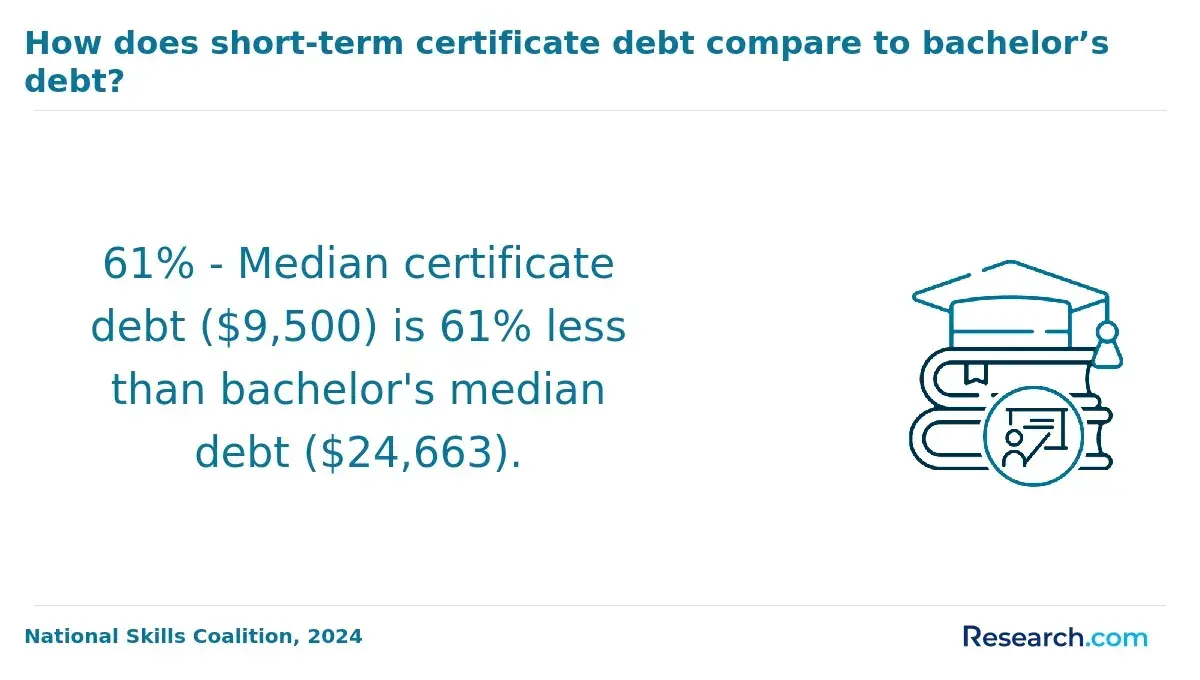
Tuition for accredited online administration programs varies widely because schools price programs by credit, term, residency, level, and delivery model. Public universities often charge lower rates for in-state students, but many online programs now use a flat online tuition rate regardless of residency.
Federal data from the College Board's 2024 Trends in College Pricing shows that published tuition and fees remain substantially higher at private nonprofit institutions than at public four-year colleges. For online administration students, that means the advertised school type can shape the starting price, but grants, transfer credits, and employer aid often determine the final net cost.
Common tuition patterns include the following broad categories. These ranges are not quotes from a specific school; they are decision categories students can use when reviewing official program pages.
- Lower-cost public online bachelor's programs: commonly structured around in-state or flat online tuition.
- Mid-priced public or nonprofit private online programs: often charge higher per-credit rates but may offer stronger advising, brand recognition, or accelerated formats.
- Higher-cost private online programs: may be worthwhile for some students when employer tuition benefits, generous transfer credit, or strong career alignment lowers the net cost.
- Graduate administration programs: usually cost more per credit than bachelor's programs and should be evaluated against specific advancement goals.
The table below shows the cost items that most often change the real price of an online administration degree. Students should request a written total-cost estimate from each school, not just a per-credit tuition figure.
| Cost factor | Why it changes total cost | What to ask the school |
| Transfer-credit acceptance | Lost credits can force students to repeat courses and extend time to graduation | How many credits will apply to the degree, not just transfer to the institution? |
| Online course fees | Technology or distance-learning fees can add recurring costs each term | Are all online fees included in the published tuition estimate? |
| Books and materials | Some programs use inclusive-access materials while others require separate purchases | What is the expected materials cost per term? |
| Residency or campus requirements | Short residencies can add travel, lodging, and time-off costs | Are any in-person meetings, exams, or intensives required? |
| Prior-learning assessment | Credit for work or military experience can reduce cost, but assessment fees may apply | What types of experience qualify and what fees are charged? |
A common mistake is choosing the lowest tuition without checking completion cost. A program that accepts 75 transfer credits may be cheaper than a lower-priced program that accepts only 45, even if its per-credit rate is higher.
How Competitive Is Admission to Accredited Online Administration Degree Programs?
Admissions competitiveness varies by degree level and institution type. Many online bachelor's administration programs are transfer-friendly and designed for adults, while selective public universities and graduate programs may require stronger academic records, prerequisite coursework, professional experience, or recommendation letters.
Online does not automatically mean easy to enter. The National Center for Education Statistics continues to show wide variation in admissions selectivity across U.S. four-year institutions, so applicants should compare program-level requirements rather than assume all online programs use open admission.
The table below summarizes typical admissions expectations. Always confirm requirements with the specific program because policies can change by term and applicant type.
| Program level | Common admissions requirements | Best applicant fit |
| Online associate degree in administration or business | High school diploma or GED; placement information may be required | First-time students seeking a lower-cost entry point |
| Online bachelor's degree for first-year applicants | High school transcript, GPA review, application form, and sometimes test-optional materials | Students starting college with limited prior credits |
| Online bachelor's completion program | Prior college credits, minimum GPA, official transcripts, and sometimes prerequisites | Transfer students and working adults |
| Online master's in administration | Bachelor's degree, statement of purpose, resume, recommendations, and possible minimum GPA | Professionals seeking advancement or specialization |
| Doctoral administration or leadership program | Graduate degree or strong professional background, writing sample, references, and interview in some cases | Senior professionals, researchers, consultants, and higher education leaders |
Students who are already thinking beyond a master's degree may want to compare leadership-focused doctoral pathways. A PhD in organizational leadership online can be a better fit than another general administration credential for people pursuing research, consulting, executive education, or senior organizational change roles.
To improve your admissions odds and avoid wasted application fees, take these steps before applying:
- Request an unofficial transcript evaluation if you have prior college credits.
- Check whether your GPA meets the major requirement, not just the university requirement.
- Ask whether prerequisite courses are required before upper-division administration classes.
- Confirm whether standardized tests are required, optional, or waived for online applicants.
- Apply to a balanced list that includes one affordable match program, one reach program, and one flexible backup option.
Which Learning Formats Offer the Greatest Flexibility in Online Administration Degree Programs?
The most flexible online administration programs are usually asynchronous, transfer-friendly, and offered in multiple start dates throughout the year. Flexibility matters because many administration students are working adults, parents, military-affiliated learners, or transfer students trying to finish a degree without leaving employment.
Online learning has become a mainstream choice rather than a niche format. Federal postsecondary data released in recent years shows that millions of U.S. college students take at least one distance education course, which has pushed schools to improve online advising, learning platforms, and remote academic services.
The table below compares common online formats and when each one makes sense. The right format depends on your work schedule, learning style, and need for interaction.
| Learning format | How it works | Best for | Watch out for |
| Asynchronous online | Students complete weekly work without fixed class meetings | Working adults with changing schedules | Requires strong self-management and calendar discipline |
| Synchronous online | Students attend live virtual classes at set times | Learners who want structure and real-time discussion | May conflict with work shifts or caregiving responsibilities |
| Hybrid | Most work is online, but some campus meetings are required | Students near campus who value in-person networking | Travel requirements can reduce flexibility |
| Accelerated terms | Courses run in shorter sessions, often 5 to 8 weeks | Motivated students who want faster progress | Heavy weekly workload can be difficult with full-time work |
| Competency-based education | Students progress by demonstrating mastery | Experienced professionals with strong self-direction | Not ideal for students who need frequent instructor pacing |
The biggest format mistake is choosing speed over sustainability. If you work full time, an accelerated program can be efficient, but taking too many short-session courses at once may lead to withdrawals, repeated classes, and higher total cost.
Before enrolling, ask each school these format-specific questions:
- Are classes fully asynchronous, or are live sessions required?
- How many hours per week should students expect for each course?
- Are exams proctored online, on campus, or through a testing center?
- Can students pause or reduce course load without losing financial aid eligibility?
- Are internships, practicums, or capstone projects required, and can they be completed locally?
What Student Support Services Improve Success in Online Administration Degree Programs?
Student support can determine whether an online administration student finishes on time. Strong programs do more than post lectures online; they provide proactive advising, career coaching, tutoring, library access, technical help, and clear degree planning.
Retention and completion are especially important for adult and transfer students because stopping out can increase debt without producing the credential benefit. When comparing programs, ask how support works for online students specifically, not just whether the campus has those services.
The table below highlights support services that can improve persistence and career readiness. These services are most valuable when they are available outside standard business hours.
| Support service | Why it matters for administration students | Strong-program signal |
| Dedicated online academic advisor | Helps students sequence courses and avoid delayed graduation | Advisor assigned before the first term begins |
| Transfer-credit advising | Clarifies which credits apply to major, elective, and general education requirements | Written degree plan before enrollment |
| Career services | Supports resumes, interviews, internships, and employer connections | Online appointments and administration-specific career guidance |
| Writing and quantitative tutoring | Helps with business writing, statistics, budgeting, and research assignments | Evening or weekend online tutoring availability |
| Technical support | Reduces course disruption when learning platforms or proctoring tools fail | Extended-hour help desk and clear escalation process |
Administration students interested in human services leadership should also consider whether their program provides field-specific advising. For example, students comparing nonprofit, behavioral health, or student-service administration may also review CACREP schools if their long-term goal requires counseling licensure rather than general management preparation.
A useful red flag is vague support language. If a school says online students have "access" to services but cannot explain response times, advising assignments, or career support by major, ask for more detail before committing.
Which Financial Aid Options Are Available for Accredited Online Administration Degree Students?
Accredited online administration degree students may qualify for many of the same financial aid options as campus students, including federal grants, federal loans, state aid, institutional scholarships, military benefits, employer tuition assistance, and payment plans. Eligibility depends on accreditation, enrollment intensity, citizenship or eligible noncitizen status, satisfactory academic progress, and program type.
The U.S. Department of Education's FAFSA Simplification changes have made aid communication especially important for recent applicants. Because processing timelines and institutional packaging can vary, students should compare finalized aid offers rather than relying on early estimates.
The table below summarizes major aid options and how they typically apply to online administration students. Use it to build a funding checklist for each school.
| Aid option | Who may benefit | Decision tip |
| Federal Pell Grant | Undergraduate students with financial need | Confirm the program is eligible for Title IV federal aid |
| Federal student loans | Undergraduate and graduate students who need financing | Borrow only after comparing total debt to realistic career goals |
| Institutional scholarships | Students meeting academic, transfer, adult learner, or program criteria | Ask whether scholarships renew automatically or require a new application |
| Employer tuition assistance | Working adults whose employers support education | Check reimbursement timing and grade requirements before enrolling |
| Military and veteran benefits | Eligible service members, veterans, and dependents | Ask whether the school has a military benefits office familiar with online students |
| State grants | Residents attending eligible institutions or programs | Verify whether online enrollment affects eligibility |
Students preparing for healthcare or behavioral health administration should match financial aid choices to career requirements. If the target role requires clinical licensure, an online mental health counseling masters may be more appropriate than a general administration program, even if the administration degree appears cheaper at first.
When comparing aid letters, follow this process so you do not confuse grants with loans or short-term discounts with lasting affordability:
- Separate gift aid from loans and work-based aid.
- Calculate out-of-pocket cost per academic year after grants and scholarships.
- Check whether aid assumes full-time enrollment and whether your schedule matches that assumption.
- Estimate the total amount you may need to borrow through graduation.
- Ask whether tuition discounts, scholarships, or employer benefits apply to summer or accelerated terms.
Which Career Outcomes Are Associated With Accredited Online Administration Degree Programs?
Career outcomes for administration degree graduates depend on degree level, specialization, work experience, location, and industry. A bachelor's degree can support entry-level and mid-level roles in operations, human resources, office management, project coordination, public service, and healthcare administration support. Graduate degrees may align better with senior management, policy leadership, healthcare management, or executive-track roles.
BLS data show that medical and health services managers had a 2024 median pay of $117,960, but that figure should not be treated as an entry-level expectation. It reflects a national occupational median across experience levels and settings, so students should use it as a labor-market signal rather than a salary promise.
The table below connects administration specializations with common career directions. It is designed to help students choose coursework that matches their target market.
| Administration specialization | Common career directions | Skills employers often value |
| Business administration | Operations coordinator, management trainee, business analyst, office manager, project coordinator | Budgeting, communication, data interpretation, process improvement, team coordination |
| Healthcare administration | Clinic administrator, patient services manager, healthcare operations coordinator, long-term care administration support | Healthcare finance, compliance awareness, scheduling systems, quality improvement, leadership |
| Public administration | Program coordinator, policy analyst assistant, city or county administration support, nonprofit manager | Public budgeting, grant administration, policy writing, stakeholder communication |
| Human resources administration | HR coordinator, benefits specialist, training coordinator, talent operations assistant | Employment law awareness, HR systems, confidentiality, conflict resolution |
| Educational administration support | Student services coordinator, admissions operations, academic program support, school operations roles | Student records, compliance, scheduling, communication, service orientation |
AI and automation are changing administration work, especially routine scheduling, reporting, document processing, and customer-service workflows. This does not eliminate the value of an administration degree, but it increases the importance of data literacy, process improvement, ethical decision-making, and the ability to manage technology-enabled teams.
Students should be cautious with programs that make broad salary promises. A better approach is to ask each school for career outcome data by program, including job titles, employer types, internship availability, alumni networks, and whether outcomes are based on verified reporting or voluntary surveys.
How Do Online and Campus-Based Administration Degree Programs Compare?
Online and campus-based administration degree programs can lead to similar credentials when they are offered by accredited institutions and use the same academic standards. The difference is usually not the degree title but the learning experience, networking style, schedule structure, and access to local opportunities.
Online programs often work best for students who need schedule control, already have work experience, or live far from campus. Campus programs may be better for students who want in-person networking, residential college life, structured daily routines, or local internships tied to the university's region.
The table below compares online and campus-based administration degrees across practical decision factors. It can help students decide whether convenience or in-person access matters more for their goals.
| Factor | Online administration degree | Campus-based administration degree |
| Schedule | Often more flexible, especially in asynchronous programs | More fixed class times and campus-based routines |
| Networking | Depends on virtual events, discussion boards, alumni platforms, and local internships | More spontaneous access to classmates, faculty, clubs, and campus employers |
| Cost | May reduce relocation, commuting, and housing costs | May include campus fees, commuting, or residential expenses |
| Learning style | Best for self-directed students comfortable with technology | Best for students who prefer face-to-face structure |
| Career services | Quality varies; strong programs provide remote coaching and employer connections | May offer easier access to on-campus recruiting and local employer events |
A common misconception is that employers automatically discount online degrees. In many cases, employers focus on accreditation, institution reputation, skills, experience, and interview performance. However, students should still confirm whether their transcript or diploma identifies the delivery format if that matters in their field.
Choose online if you need flexibility and can manage independent work. Choose campus-based if you need structure, want a traditional college environment, or expect to rely heavily on in-person networking and local internships.
How Should Students Choose the Best Accredited Online Administration Degree Program?
Students should choose the best accredited online administration degree by starting with the career goal and working backward. The right program is the one that prepares you for your target role at a cost and pace you can realistically complete.
A practical comparison process helps prevent common mistakes such as chasing rankings, overvaluing brand name, ignoring transfer policies, or focusing only on tuition. Use the following steps to build a decision you can defend financially and academically:
- Define your target role, industry, and preferred work setting before choosing a concentration.
- Verify institutional accreditation and any relevant programmatic accreditation.
- Request a transfer-credit evaluation and written degree completion plan.
- Compare total cost after grants, scholarships, employer aid, and required fees.
- Review the online format and make sure course timing fits your weekly schedule.
- Ask for career outcome information specific to the administration program or school of business, public affairs, or health sciences.
- Check student support availability for online learners, including advising, tutoring, library access, and career coaching.
- Compare at least three schools using the same cost, admissions, and outcome criteria.
For many students, the best investment will be a regionally accredited public or nonprofit institution with reasonable tuition, generous transfer acceptance, and a concentration tied to a clear career path. For others, a more expensive program can make sense if it offers strong employer connections, accelerated completion, or a specialized curriculum that directly supports advancement.
You should consider a different path if your target career requires licensure, clinical training, technical certification, or a credential outside administration. In those cases, an administration degree may still be useful later, but it may not be the fastest or most cost-effective first step.
Before enrolling, ask admissions counselors direct questions and keep written answers. If a school cannot clearly explain accreditation, total cost, transfer credit, online requirements, and career support, treat that as a warning sign and keep comparing options.
Other Things You Should Know About Administration
Yes, many online bachelor's completion programs are designed for transfer students. The key is whether your prior credits apply to the major and graduation requirements, not just whether the school accepts them generally.
No. Business administration is usually broader and may cover management, accounting, marketing, finance, operations, and strategy. Office administration is typically more focused on administrative support, records, scheduling, software tools, and day-to-day office operations.
Some do, but many do not. Programs may instead require a capstone, project, portfolio, or applied management course. If you have limited work experience, choosing a program with internship options can strengthen your resume.
Prioritize communication, spreadsheet analysis, budgeting, project management, data interpretation, leadership, business writing, and familiarity with workplace software. These skills help translate the degree into practical workplace value.
References
- Student Right to Know | ACE https://ace.edu/about/student-right-to-know/
- Top Online MBAs for Accreditations | FIND MBA Online https://findmbaonline.com/lists/top-10-online-mbas-with-the-best-accreditations
- Is There a Difference between In-State and Out-Of-State Tuition for Online Degree Programs? - Best Colleges Online https://www.bestcollegesonline.org/faq/is-there-a-difference-between-in-state-and-out-of-state-tuition-for-online-degree-programs/
- Roster of Accredited Programs https://www.naspaa.org/accreditation/roster-accredited-programs
- Colleges Ranked by Acceptance Rate | OEDB https://www.oedb.org/rankings/acceptance-rate/
- Online MBA Acceptance Rates: Where Do You Really Stand? https://www.onlinecu.in/blog/cu/how-do-online-mba-acceptance-rates-compare-across-schools.php
- Best Online MBA Programs in Europe in 2026: A Complete Guide - My Framer Site https://www.lbs.ac.at/blog/best-online-mba-programs-in-europe-in-2026-a-complete-guide
- Un an à l'étranger avec MBS https://www.mbs-education.com/international/mbs-en/mbs-a-truly-international-business-school/international-accreditations-and-labels/
- Best Online MBA Programs https://www.princetonreview.com/business-school-rankings
- Top 50 Online and Distance Learning Universities 2026 | EUCDL Distance Accreditation Council https://www.eucdl.com/ranking-2026