2027 Accredited Online Entrepreneurship Degree Programs for Working Adults: Flexible, Part-Time, and Self-Paced Options

Co-Founder and Chief Data Scientist
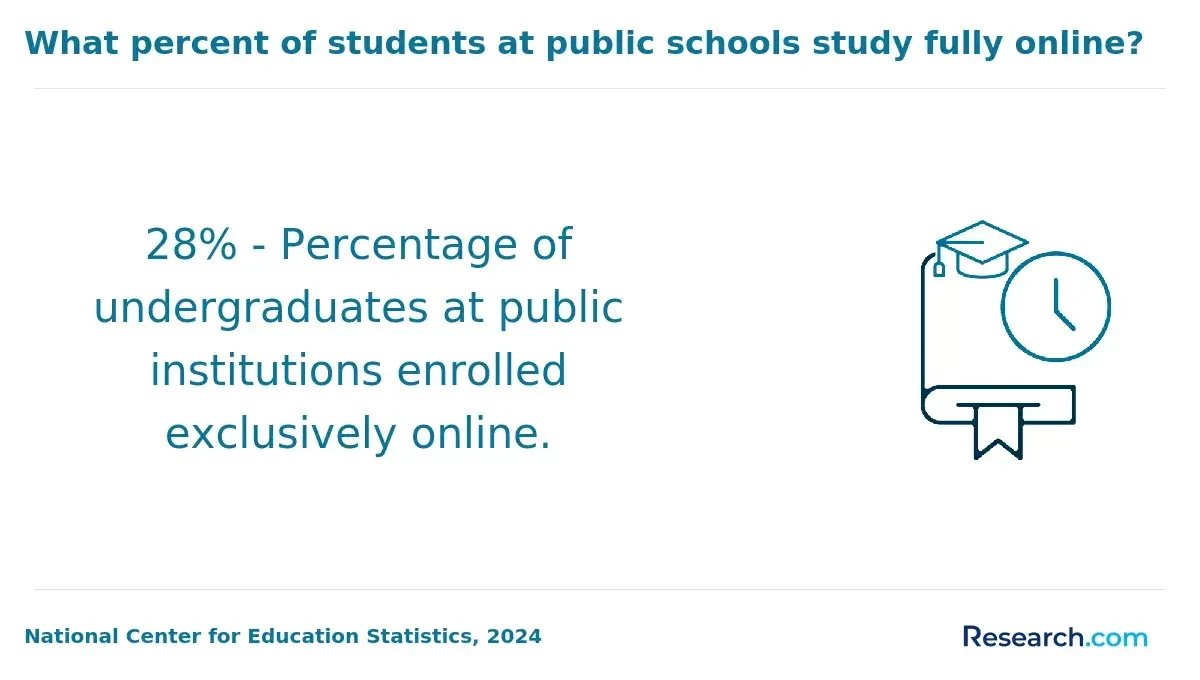
Choosing an accredited online entrepreneurship degree often comes down to one question: can it fit around work, family, and financial limits? NCES reported in 2024 that more than half of U.S. undergraduates took at least one distance education course in fall 2022, showing that online study is now a mainstream path.
This guide is for working adults comparing flexible, part-time, and self-paced entrepreneurship programs. You'll learn how accreditation, cost, transfer credits, schedules, and career outcomes affect your decision so you can choose a program that fits your goals.
Key Things You Should Know
- Choose an institution recognized by the U.S. Department of Education or CHEA, and look for business accreditation such as AACSB, ACBSP, or IACBE when available.
- Part-time online entrepreneurship students commonly take 6 to 9 credits per term, which can mean about 12 to 27 hours of weekly coursework depending on course design and assignment load.
- Transfer-friendly bachelor's programs may accept 60 to 90 prior credits, while typical completion ranges from about 18 months for degree-completion students to 4 or more years for first-time part-time learners.
What Is an Accredited Online Entrepreneurship Degree Program and Why Does Accreditation Matter?
An accredited online entrepreneurship degree is a college program delivered fully or mostly online by an institution that has passed an external quality review. The curriculum usually blends business fundamentals with venture creation, innovation, finance, marketing, operations, leadership, and business planning. Depending on the school, entrepreneurship may be offered as a bachelor's degree, business administration concentration, master's degree, MBA concentration, or graduate certificate.
For working adults, accreditation matters because it affects financial aid access, transfer credit, graduate school eligibility, and employer trust. Institutional accreditation is the baseline; it means the college or university as a whole meets recognized standards. Programmatic business accreditation is not always required, but it can add credibility, especially for students considering graduate business study or corporate roles.
The table below summarizes the most common accreditation signals and how they affect adults comparing online entrepreneurship programs.
| Accreditation or approval type | What it means | Why it matters for working adults |
| Institutional accreditation | The college or university has been reviewed by a recognized accrediting agency. | Often required for federal financial aid, credit transfer, employer tuition benefits, and graduate admission. |
| AACSB, ACBSP, or IACBE business accreditation | The business school or business program meets discipline-specific standards. | Can strengthen program credibility, though not every strong entrepreneurship program has separate business accreditation. |
| State authorization for online learning | The school is approved to enroll online students from specific states. | Important if you live outside the school's home state or may move during the program. |
| Industry partnerships or advisory boards | Employers, founders, or investors may help shape curriculum. | Useful for networking and practical projects, but it is not a substitute for accreditation. |
Do not rely only on marketing phrases such as "recognized," "career-ready," or "globally respected." Verify the school in official accreditation databases, then ask whether the specific entrepreneurship degree, concentration, or business school has any additional business accreditation.
Which Flexible Entrepreneurship Degree Formats Are Best for Working Adults: Part-Time, Full-Time, or Self-Paced?
The best format depends on how predictable your schedule is, how quickly you want to finish, and how much weekly study time you can protect. A full-time format may be faster, but it can be unrealistic for adults working long hours. A self-paced format may feel ideal, but it requires strong discipline and careful attention to course-completion deadlines.
The comparison below explains the practical trade-offs among common online entrepreneurship formats.
| Format | Typical schedule | Best fit | Possible drawback |
| Part-time asynchronous | Weekly deadlines, but no required class meeting time. | Adults with full-time jobs, caregiving responsibilities, or variable work schedules. | Progress is steady but slower than full-time enrollment. |
| Full-time asynchronous | Several courses per term with weekly assignment deadlines. | Students who can reduce work hours or want to finish faster. | Workload can be difficult alongside full-time employment. |
| Self-paced or competency-based | Students move faster or slower within school-defined time limits. | Experienced professionals who can study independently and may already know business concepts. | Less structure can lead to procrastination or unfinished courses. |
| Synchronous online | Live evening or weekend classes at set times. | Students who want discussion, networking, and instructor interaction. | Less flexible for shift workers or parents with unpredictable evenings. |
| Hybrid or low-residency | Mostly online with limited campus or intensive sessions. | Students who value face-to-face networking and hands-on workshops. | Travel costs and time away from work may be requ. |
Use the format decision as a workload decision, not just a convenience decision. Before enrolling, ask yourself these questions and compare the answers against your real calendar.
- Can I consistently reserve 10 to 15 hours per week for one demanding course?
- Do I need fixed deadlines to stay motivated, or do I perform better with self-paced milestones?
- Will my work schedule change seasonally, and does the program allow lighter terms?
- Does the program require live presentations, group meetings, or proctored exams at set times?
- Can I pause enrollment without losing financial aid eligibility, tuition discounts, or catalog-year requirements?
A part-time asynchronous program is usually the safest choice for adults who need flexibility and structure. A self-paced program can be better if you are highly organized, have prior business experience, and want to accelerate through familiar material.
What Are the Admission Requirements for Accredited Online Entrepreneurship Degree Programs?
Admission requirements vary by degree level. Bachelor's programs usually ask for a high school diploma or GED, transcripts, and sometimes prior college records. Degree-completion programs may require a minimum number of transferable credits. Master's programs often require a bachelor's degree, resume, statement of purpose, and sometimes professional experience.
Entrepreneurship is often housed inside a business school, so applicants may also need to meet business prerequisite requirements in areas such as accounting, economics, statistics, or business law. Test requirements are increasingly flexible, but some graduate programs may still request GMAT or GRE scores unless you qualify for a waiver.
The table below shows common requirements by program level so you can identify what you may need before applying.
| Program type | Typical requirements | Working-adult considerations |
| Associate degree in entrepreneurship or business | High school diploma or GED, placement assessment, basic transcripts | Can be a lower-cost starting point before transferring to a bachelor's program. |
| Bachelor's degree | High school diploma or GED, transcripts, application, possible minimum GPA | Best for adults without a completed four-year degree who want broader business credentials. |
| Bachelor's completion program | Prior college credits, minimum GPA, general education completion or prerequisites | Can shorten time to graduation if you have credits from previous enrollment. |
| Master's or MBA entrepreneurship concentration | Bachelor's degree, resume, essays, references, possible test scores or waiver | Often better for professionals seeking leadership, consulting, product, or venture-building roles. |
| Graduate certificate | Bachelor's degree, transcripts, shorter application | Useful if you already have a degree and want targeted entrepreneurship training without a full graduate program. |
Adults comparing entrepreneurship with other professional pathways should also consider whether the degree matches their long-term work identity. For example, some learners comparing business, health, technology, and service-focused fields use guides on the best degree to get to narrow their choices before applying.
Before you submit applications, prepare a transcript inventory. Include every college attended, military training if applicable, professional certifications, and employer-based training that might qualify for prior learning credit.
How Much Does an Online Entrepreneurship Degree Cost, and What Financial Aid Options Are Available?
The cost of an online entrepreneurship degree depends on school type, residency rules, transfer credits, program length, fees, and whether tuition is charged by credit, term, or subscription period. College Board's 2024 Trends in College Pricing reported average published tuition and fees of $11,610 for in-state students at public four-year institutions and $43,350 at private nonprofit four-year institutions. Online tuition may be lower, similar, or sometimes higher after technology and distance-learning fees are added, so you need a full cost estimate rather than a tuition-only comparison.
The table below breaks down major cost categories that working adults should compare before choosing a program.
| Cost factor | What to check | Why it affects total cost |
| Tuition model | Per-credit, flat-rate term, subscription, or cohort pricing | Accelerated and self-paced students may save under term-based models if they complete more credits quickly. |
| Transfer credits | Maximum accepted credits and how they apply to the major | Credits that apply only as electives may not reduce graduation time as much as expected. |
| Online fees | Technology, proctoring, graduation, library, and course-material fees | Small recurring fees can change the real cost of a low-tuition program. |
| Residency rules | In-state, out-of-state, or online flat tuition | Some public universities offer the same online rate regardless of state; others do not. |
| Books and tools | Textbooks, simulations, accounting tools, entrepreneurship platforms, or presentation software | Business courses may require paid platforms beyond standard textbooks. |
| Time away from work | Required residencies, internships, or synchronous sessions | Lost work hours, childcare, and travel can affect affordability. |
Federal Student Aid set the maximum Pell Grant at $7,395 for the 2024-25 award year, but actual eligibility depends on financial need, enrollment intensity, and cost of attendance. Adults should submit the FAFSA even if they assume they will not qualify, because schools may also use it to award grants, work-study, or subsidized loans.
Common financial aid and cost-control options include the following, and each one should be verified with the school's financial aid office before enrollment.
- Federal grants and loans through the FAFSA, including Pell Grants for eligible undergraduate students.
- Employer tuition assistance or reimbursement, especially for business, management, sales, operations, or product roles.
- Scholarships for adult learners, transfer students, first-generation students, veterans, or small-business owners.
- Credit for prior learning, professional certifications, military training, or portfolio-based assessment.
- Community college transfer pathways that reduce the cost of the first two years of a bachelor's degree.
If you are weighing entrepreneurship against other online professional degrees, compare cost and career alignment rather than tuition alone. For example, an online MSW may have very different fieldwork, licensing, and salary considerations than a business-focused entrepreneurship degree.
How Long Does It Take to Complete an Online Entrepreneurship Degree, and Can Transfer Credits Help You Graduate Faster?
Completion time depends on degree level, course load, start dates, transfer credits, and whether the program is term-based or self-paced. A first-time bachelor's student studying part time may need more than four years, while a degree-completion student with substantial transfer credit may finish much faster. Graduate certificates can sometimes be completed in under a year, while MBA or master's programs often take one to three years depending on pace.
The table below gives realistic timeline comparisons for adults who need to plan around work and family responsibilities.
| Degree path | Typical online pace | Approximate completion pattern | Best fit |
| Associate degree | Part-time or full-time | About 2 years full time; longer part time | Adults starting college or seeking a lower-cost transfer route. |
| Bachelor's degree from first year | Full-time or part-time | About 4 years full time; often longer part time | Students without prior college credit who want a full undergraduate business foundation. |
| Bachelor's completion | Often part-time or accelerated | Often 18 months to 3 years depending on accepted credits | Adults with prior college credits who want to finish efficiently. |
| Graduate certificate | Part-time | Often a few terms | Degree holders seeking focused entrepreneurship coursework. |
| Master's or MBA concentration | Part-time, full-time, or accelerated | Often 1 to 3 years | Professionals seeking leadership, innovation, consulting, or venture-development skills. |
Transfer credits can be one of the biggest time-savers, but only if they apply to required courses. A school may accept a large number of credits overall while still requiring you to complete major prerequisites, upper-division business courses, or a capstone through that institution.
Take these steps before you commit to a program so you understand your real timeline.
- Request an unofficial transfer evaluation before enrollment, not after the first term begins.
- Ask how many credits apply to general education, business core, entrepreneurship major requirements, and electives.
- Confirm the minimum number of credits you must complete at the institution to graduate.
- Ask whether prior learning, military training, professional certifications, or portfolio review can reduce requirements.
- Compare the academic calendar, including 8-week, 10-week, 12-week, and semester formats.
Some adults also compare entrepreneurship with specialized online technology programs, such as a game design degree, when their business goals involve creative products, digital media, or startup development.
What Should You Look for When Comparing Accredited Online Entrepreneurship Degree Programs?
A strong online entrepreneurship program should do more than teach theory. It should help you test ideas, understand customers, model revenue, manage risk, analyze markets, communicate with investors, and build practical business plans. For working adults, the right program also needs transparent scheduling, fair transfer policies, and support that is available outside standard business hours.
The table below highlights the most important comparison factors and the reason each one matters.
| Comparison factor | What strong programs show | Red flag |
| Accreditation | Clear institutional accreditation and, when available, business accreditation. | Vague claims without verifiable accreditor names. |
| Schedule transparency | Sample weekly workload, synchronous requirements, and deadline expectations. | Marketing says "flexible" but advisors cannot explain class meeting times. |
| Entrepreneurship curriculum | Courses in venture finance, customer discovery, innovation, marketing, strategy, and launch planning. | Only one entrepreneurship elective inside a general business degree. |
| Hands-on learning | Business plan, pitch, consulting project, incubator, simulation, or capstone. | No applied project or portfolio-building opportunity. |
| Transfer policy | Written transfer-credit rules and preliminary evaluations. | Transfer promises without showing how credits meet degree requirements. |
| Student support | Online advising, tutoring, library access, tech help, and career services. | Support available only during hours when you are at work. |
| Career alignment | Outcomes connected to founder, product, sales, consulting, operations, or management roles. | Overpromises about becoming a successful founder immediately after graduation. |
Common mistakes can be expensive, especially when you are paying tuition while working full time. Use this checklist to avoid decisions that create delays or unexpected costs.
- Do not enroll before verifying accreditation through a recognized database or the accreditor's own website.
- Do not assume asynchronous means self-paced; many asynchronous courses still have weekly deadlines.
- Do not choose a self-paced program without asking about maximum completion windows and satisfactory academic progress rules.
- Do not compare tuition without adding fees, books, proctoring, technology, and lost work time.
- Do not assume all prior credits will shorten your degree until you receive a course-by-course evaluation.
- Do not ignore career services, alumni networks, pitch competitions, incubators, and employer partnerships.
If your interest in entrepreneurship overlaps with supply chain, process improvement, or business scalability, you may also want to compare entrepreneurship programs with an operations management MBA online to see which curriculum better fits your goals.
What Career Opportunities and Salary Potential Can You Expect With a Entrepreneurship Degree?
An entrepreneurship degree does not lead to one fixed job title. It can support several paths, including starting a business, joining a startup, managing product growth, working in business development, moving into sales leadership, consulting for small businesses, or taking on innovation roles inside established companies. Outcomes depend heavily on prior experience, local market conditions, networking, industry, and whether you pair the degree with technical, financial, or operational skills.
BLS May 2024 wage data reported a median annual wage of about $101,280 for general and operations managers. That figure does not measure entrepreneurship graduates specifically, but it gives a useful benchmark for one management pathway where business-building, budgeting, staffing, and operational decision-making skills can matter.
The table below connects entrepreneurship-related roles with the types of responsibilities and preparation that may be useful.
| Career path | Typical responsibilities | How an entrepreneurship degree may help |
| Founder or small-business owner | Develop products, validate customers, manage finances, hire staff, and raise capital | Builds planning, market analysis, finance, and launch skills, but success depends on execution and market fit. |
| Business development specialist | Identify partnerships, generate leads, negotiate opportunities, and support revenue growth | Strengthens customer discovery, value proposition, and strategic communication skills. |
| Product manager or product associate | Coordinate user needs, product strategy, research, and cross-functional teams | Supports innovation, testing, market research, and business model thinking. |
| Management analyst or consultant | Analyze business problems, recommend improvements, and support implementation | Helps with problem framing, operations analysis, and evidence-based recommendations. |
| Sales or marketing manager | Lead campaigns, revenue strategies, teams, and customer acquisition efforts | Connects market positioning, customer behavior, and growth strategy. |
| Innovation or intrapreneurship role | Launch new initiatives inside an established company | Useful for professionals who want startup-style work without immediately starting a company. |
Entrepreneurship may be especially valuable if you already have experience in a field and want to build a business around it. For example, professionals from education, healthcare, technology, communication, trades, or creative industries may use entrepreneurship training to commercialize services or products. Students evaluating career pivots in regulated or clinical fields should compare requirements carefully; pathways such as speech pathology bridge programs involve licensure and clinical preparation that differ sharply from business degrees.
Current trends also matter. AI tools are changing market research, content creation, financial forecasting, customer service, and product prototyping. Strong programs increasingly teach students how to use digital tools responsibly while still emphasizing judgment, ethics, customer validation, and financial discipline.
How Can Working Adults Balance a Entrepreneurship Degree With Full-Time Work and Family Responsibilities?
Balancing an entrepreneurship degree with full-time work is possible, but it requires a realistic workload plan. A common planning rule is that each credit may require roughly 2 to 3 hours of work per week outside class, so a 6-credit part-time term can become a 12- to 18-hour weekly commitment. That estimate can rise during capstones, team projects, exams, or business-plan assignments.
Adults are most likely to stay on track when they choose a format that matches their actual life, not their ideal week. Before enrolling, map out your work shifts, commute, caregiving, sleep, and predictable high-stress periods at work.
Use the steps below to build a practical study plan before your first course begins.
- Choose a first-term course load you can sustain, even if that means starting with one course.
- Block study time on a calendar at the same level of priority as a work meeting.
- Tell family members or roommates which hours are protected for coursework.
- Use lunch breaks or commute time for reading, but reserve focused evening or weekend time for writing and quantitative work.
- Contact instructors early if work travel, childcare, or medical responsibilities may affect deadlines.
- Schedule lighter terms during known busy seasons at work, such as inventory, tax season, product launches, or holiday sales cycles.
Part-time study is not a sign of lower ambition. For many adults, it is the format that protects grades, health, income, and family stability while still moving toward a degree.
What Student Support Services and Online Learning Resources Should You Expect From a Entrepreneurship Degree Program?
Student support can make the difference between "flexible" and "isolating." Working adults need services that are accessible online, available outside traditional office hours, and connected to career goals. Ask schools to show you exactly how online students access advising, tutoring, library tools, career services, and technical support.
The table below summarizes support services that are especially important in online entrepreneurship programs.
| Support service | What to look for | Why it matters |
| Academic advising | Degree maps, transfer planning, part-time sequencing, and proactive check-ins | Prevents taking courses in the wrong order or missing prerequisites. |
| Career services | Resume help, interview coaching, LinkedIn review, employer events, and startup resources | Helps connect coursework to jobs, promotions, consulting, or venture goals. |
| Online tutoring | Support for accounting, finance, statistics, writing, and business analytics | Important because business programs often include quantitative courses. |
| Library and research support | Market databases, industry reports, citation help, and librarian chat | Useful for business plans, market sizing, and capstone projects. |
| Technology support | Evening or weekend help desk access and clear platform tutorials | Reduces disruption when assignments are due outside business hours. |
| Entrepreneurship ecosystem | Incubator access, mentors, pitch events, founder networks, or small-business centers | Can turn coursework into practical feedback and connections. |
Ask whether online students receive the same access to incubators, competitions, mentors, and alumni events as campus students. If these resources are limited to campus learners, the online program may still be academically valid, but it may offer fewer networking benefits.
Do Online Entrepreneurship Degree Programs Include Internships, Practicums, or Other Hands-On Learning Requirements?
Many online entrepreneurship programs include applied learning, but the format varies. Instead of a traditional internship, you may complete a business plan, startup pitch, consulting project, market research study, simulation, venture feasibility analysis, or capstone. Some programs allow you to use your current workplace or personal business idea as the project setting, which can be helpful for working adults.
The table below explains common hands-on requirements and what to clarify before enrolling.
| Applied requirement | What it involves | Questions to ask |
| Business plan or venture proposal | Developing a full plan for a startup, product, or service, | Can I use my own business idea, family business, or workplace project? |
| Pitch presentation | Presenting a concept to faculty, peers, mentors, or external reviewers,, | Is the pitch live, recorded, or scheduled during specific hours? |
| Consulting project | Solving a real problem for a business, nonprofit, or community organization, | Who finds the client, and can the work be completed remotely? |
| Internship | Supervised work experience in a startup, business, or innovation setting, | Are internships required, optional, or replaceable with current employment? |
| Capstone | Final project integrating finance, marketing, operations, and strategy, | How many hours per week should I expect near the end of the program? |
Hands-on learning is valuable because entrepreneurship is applied by nature. However, adults should confirm scheduling expectations, supervision rules, and whether an internship can be completed in the evenings, remotely, or through an existing job. A required daytime internship may be difficult if you cannot reduce work hours.
Before choosing a program, ask admissions or the department these questions in writing.
- Are internships required, optional, or replaceable with a capstone or workplace project?
- Can online students access incubators, mentors, pitch competitions, and small-business development resources?
- Are group projects required, and how are meeting times handled for students in different time zones?
- Can I build my final project around an existing business, side venture, or employer-sponsored initiative?
- Will the capstone produce a portfolio artifact I can show employers, investors, or clients?
Other Things You Should Know About Entrepreneurship
No. Many students enter without a specific venture idea. A good program should help you identify problems, test markets, evaluate customer needs, and develop feasible concepts before asking you to build a full plan.
Yes, and some students use coursework to refine a real venture. The key is to be realistic about time, cash flow, and course deadlines. If you plan to launch while studying, ask whether projects can be based on your own business.
It can be enough if you already have a bachelor's degree and need focused skills in venture planning, innovation, or small-business management. A full degree may be better if you need a broader credential for management roles or graduate study.
Some programs now include AI, analytics, e-commerce, digital marketing, or product prototyping tools, but coverage varies. Review course descriptions and ask whether students use current business software, market research platforms, and responsible AI practices.
References
- Types of Work Schedules | TCP Software https://tcpsoftware.com/articles/types-of-work-schedules/
- Online MBA Scholarships: Guide to Funding, Sponsorships, Financial Aid for Working Professionals https://ebsedu.org/blog/online-mba-scholarships-for-working-professionals/
- How to become an entrepreneur | edX https://www.edx.org/become/how-to-become-an-entrepreneur
- Types of Financial Aid for Online Colleges https://www.umassglobal.edu/blog-news/types-financial-aid-online-colleges
- Best Online Degree Programs for Working Adults https://www.scholaro.com/db/News/best-online-degree-programs-256
- International Admissions - University College of Enterprise and Administration https://en.wspa.pl/international-admissions/
- Online Business Degree Programs | University of Phoenix https://www.phoenix.edu/online-business-degrees.html
- Undergraduate Online Financial Aid | Bushnell University https://www.bushnell.edu/financial-aid/undergraduate-online/
- What Financial Aid Options Are Available for Online Education? - Lakewood University https://lakewood.edu/online-education-financial-aid-3/
- Is Remote Work a Reasonable Accommodation? Yes, But It’s Complicated https://absencesoft.com/resources/is-remote-work-a-reasonable-accommodation-yes-but-its-complicated/