2027 Accredited Online Biochemistry Degree Programs for Working Adults: Flexible, Part-Time, and Self-Paced Options

Co-Founder and Chief Data Scientist
Choosing an accredited online biochemistry degree while working full time is mostly a scheduling, cost, and credibility decision. The National Center for Education Statistics reported in its 2024 Condition of Education that 53% of undergraduate students took at least one distance education course, showing how mainstream online study has become. This guide is for adults comparing flexible, part-time, and self-paced biochemistry options. You will learn how accreditation works, what formats fit different work schedules, how costs and transfer credits affect completion, and how to judge whether a program supports your career goals.
Key Things You Should Know
- Accreditation is the first filter: choose a school recognized by the U.S. Department of Education or CHEA, then confirm that online labs, transfer credits, and graduate-school prerequisites are accepted by your target employers or programs.
- Most online biochemistry bachelor's degrees require about 120 credits; full-time study often takes about 4 years, while part-time study commonly stretches to 5 to 6 years, and transfer-friendly programs may accept 60 to 90 eligible credits.
- A realistic workload is about 8 to 9 hours per week for each 3-credit course, so working adults often do best with 1 to 2 courses per term unless the program is competency-based or self-paced with flexible deadlines.
What Is an Accredited Online Biochemistry Degree Program and Why Does Accreditation Matter?
An accredited online biochemistry degree program is a college program delivered fully or mostly online that covers chemistry, biology, molecular biology, genetics, metabolism, laboratory methods, and data analysis. At the bachelor's level, it usually prepares students for laboratory roles, biotechnology work, health-related graduate programs, or entry into research support positions. At the master's level, it may serve working professionals who already have a science background and want deeper preparation for biotech, pharmaceutical, clinical research, teaching, or doctoral study.
Accreditation matters because it is the quality-control mechanism that affects financial aid eligibility, credit transfer, graduate admissions, employer recognition, and professional credibility. For most students, the most important check is institutional accreditation from an accrediting agency recognized by the U.S. Department of Education or the Council for Higher Education Accreditation. Programmatic accreditation is less common in biochemistry than in nursing, engineering, or dietetics, so absence of a specialized biochemistry accreditor is not automatically a red flag.
Before enrolling, working adults should verify accreditation directly rather than relying only on marketing language. A school may advertise "online," "flexible," or "career-focused" without offering the accreditation, lab access, or transfer policies needed for your goals.
The accreditation check should be practical and documented. Use the following sequence before you apply or pay an enrollment deposit:
- Confirm the institution appears in the U.S. Department of Education Database of Accredited Postsecondary Institutions and Programs or the CHEA directory.
- Ask whether the online biochemistry degree appears on the same transcript as the campus-based degree, if a campus version exists.
- Request written confirmation that online laboratory courses satisfy the major requirements and any stated graduate-school prerequisites.
- Check whether credits from your prior college, military training, CLEP exams, or community college science courses can be evaluated before enrollment.
- If you plan to apply to medical, dental, pharmacy, physician assistant, or graduate programs, compare the curriculum against those programs' prerequisite policies.
The key limitation is that accreditation does not guarantee a specific job, salary, licensing outcome, or graduate-school admission. It tells you the institution has met recognized quality standards, but you still need to judge curriculum fit, lab rigor, advising quality, and career alignment.
Which Flexible Biochemistry Degree Formats Are Best for Working Adults: Part-Time, Full-Time, or Self-Paced?
The best format depends on how much control you need over your weekly schedule and how quickly you want to graduate. Biochemistry is more demanding than many online majors because lab science courses often include sequenced prerequisites, proctored exams, wet-lab components, virtual simulations, or at-home lab kits.
The table below compares common online formats from the perspective of an adult learner who may be working full time, parenting, commuting, or managing rotating shifts.
| Format | Best fit | Typical trade-off | Working-adult considerations |
| Part-time asynchronous | Adults with fixed work or family obligations | Slower completion | Usually the most manageable option because lectures can be completed outside standard business hours |
| Full-time online | Students who can reduce work hours or use employer support | Higher weekly workload | May be difficult during lab-heavy terms unless your job has predictable hours |
| Self-paced or competency-based | Motivated learners with strong prior science preparation | Less external structure | Can be efficient, but only if the program has clear course limits, lab policies, and instructor access |
| Synchronous online | Students who want live interaction and scheduled accountability | Less flexibility | Works best if class times do not conflict with shifts, caregiving, or commuting |
| Hybrid online | Students near campus or approved lab sites | Travel may be required | Often stronger for hands-on lab training, but less convenient for distant learners |
Part-time study is often the safest route for full-time workers because it reduces the risk of failing a prerequisite course and delaying the entire sequence. Self-paced study can be appealing, but it is not the same as "no deadlines." Many schools still set course-completion windows, exam rules, financial-aid progress requirements, and lab deadlines.
Use these decision rules when comparing formats:
- Choose part-time asynchronous study if your job schedule changes weekly or you need evening and weekend coursework.
- Choose full-time online study only if you can consistently protect 30 or more hours per week for classes, labs, homework, and exams.
- Choose self-paced study if you already have strong chemistry and biology foundations and can stay organized without weekly reminders.
- Choose hybrid study if your career goal depends heavily on in-person lab experience or if graduate programs you are targeting prefer traditional wet-lab coursework.
- Avoid any program that uses "flexible" broadly but cannot explain whether lectures, labs, exams, and group assignments are asynchronous or scheduled.
If your long-term goal is direct patient care rather than lab science or graduate study, a shorter clinical route such as a fast track medical LPN pathway may fit your timeline better than a full biochemistry degree.
What Are the Admission Requirements for Accredited Online Biochemistry Degree Programs?
Admission requirements vary by degree level, but accredited online biochemistry programs usually evaluate both general academic readiness and science preparation. Because biochemistry builds on chemistry, biology, algebra, and often calculus or statistics, schools may require prerequisites before upper-division major courses.
The table below summarizes common requirements so working adults can anticipate what to gather before applying and what may slow admission.
| Program level | Common admission requirements | What working adults should verify |
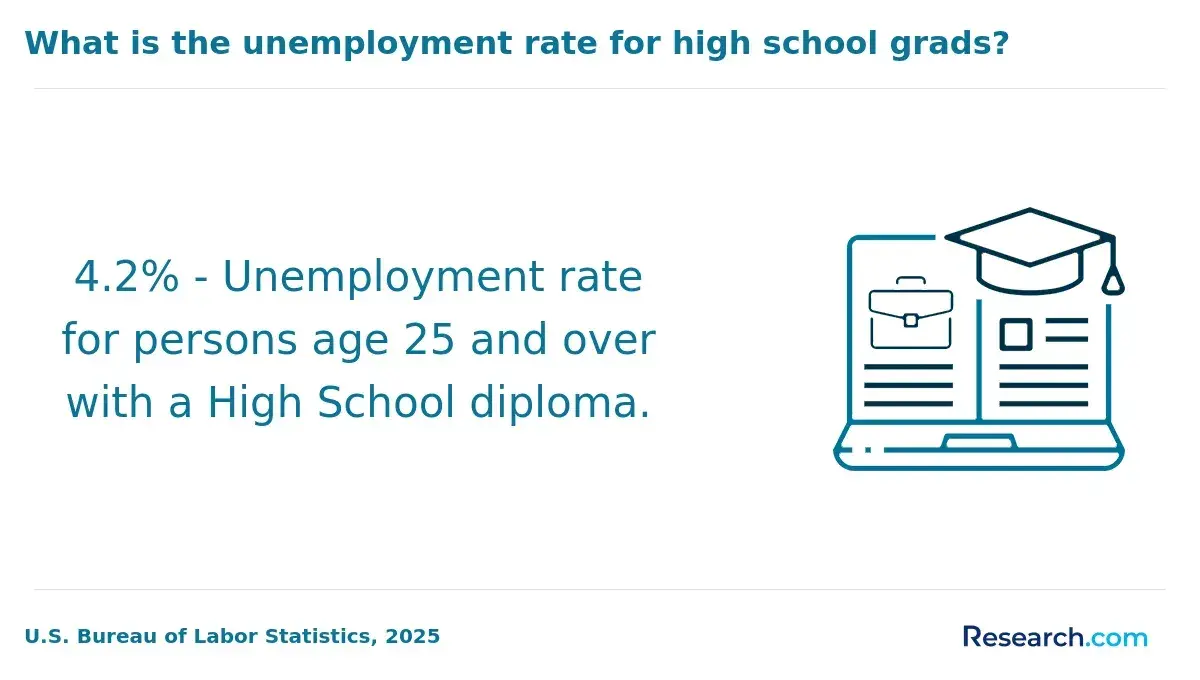
| Bachelor's degree | High school diploma or equivalent, transcripts, minimum GPA, placement requirements, prior math and science coursework | Whether transfer students can begin major courses immediately or must repeat prerequisites |
| Bachelor's completion program | Prior college credits, completed general education courses, introductory biology and chemistry | Whether organic chemistry and lab credits transfer cleanly from community college |
| Master's degree | Bachelor's degree, science prerequisites, statement of purpose, recommendations, sometimes research or lab experience | Whether the program accepts applicants without a biochemistry major but with related science coursework |
| Post-baccalaureate option | Prior bachelor's degree, targeted prerequisite needs, academic plan for graduate or professional school | Whether the courses satisfy medical, dental, pharmacy, or PA school prerequisites |
For adults returning to school, the biggest admission challenge is often not getting accepted but placing into the right course sequence. If you took chemistry several years ago, ask whether the program recommends a refresher, placement exam, or repeating foundational courses.
A strong application file usually includes the following items:
- Official transcripts from every college attended, including community colleges and dual-enrollment coursework.
- A transfer-credit evaluation completed before enrollment, not after your first term begins.
- Documentation of completed biology, general chemistry, organic chemistry, college algebra, calculus, or statistics courses.
- A short explanation of your career goal, especially if you are changing fields from healthcare, teaching, environmental science, or industry.
- For graduate programs, academic or professional references who can speak to your science preparation and ability to manage rigorous online coursework.
If you are comparing science degrees with management-oriented healthcare options, programs such as a healthcare administration degree online California may have different admissions expectations and may require less laboratory science preparation.
How Much Does an Online Biochemistry Degree Cost, and What Financial Aid Options Are Available?
Online biochemistry degree costs vary widely because tuition depends on school type, residency rules, transfer credits, lab fees, technology fees, course materials, and whether the program charges per credit or flat-rate tuition. The College Board's 2024 Trends in College Pricing data shows how large the gap can be between public and private institutions, which is why working adults should compare total program cost rather than headline tuition alone.
- Average published tuition and fees at public four-year institutions for in-state students were $11,610 for the 2024-25 academic year.
- Average published tuition and fees at public four-year institutions for out-of-state students were $30,780 for the 2024-25 academic year.
- Average published tuition and fees at private nonprofit four-year institutions were $43,350 for the 2024-25 academic year.
Those figures are annual averages, not program quotes. For an online biochemistry student, the better question is what you will pay after transfer credits, grants, scholarships, employer tuition assistance, and fees for labs or proctoring.
The table below highlights cost categories that often surprise online science students and explains why each one matters.
| Cost category | Why it matters in biochemistry | What to ask before enrolling |
| Tuition per credit | Most bachelor's programs require around 120 credits | Is tuition different for online, out-of-state, or upper-division science courses? |
| Lab fees | Biochemistry, organic chemistry, and biology courses may use kits, simulations, or campus sessions | Are lab materials included in tuition or billed separately? |
| Technology fees | Online science courses may require specific software, webcams, or proctoring platforms | Are proctoring and course-platform fees mandatory? |
| Textbooks and materials | Science textbooks, lab manuals, and access codes can add costs each term | Are open educational resources used in any required courses? |
| Travel costs | Hybrid labs or internships may require travel | Are there any required campus visits or approved lab-site expenses? |
Financial aid may include federal grants, federal loans, state aid, institutional scholarships, employer tuition reimbursement, military education benefits, and payment plans. Federal loan terms change annually; for example, federal Direct Subsidized and Unsubsidized Loans for undergraduate students carried a 6.53% fixed interest rate for the 2024-25 award year, so borrowing should be weighed carefully against expected career use.
To control cost, take these steps before choosing a program:
- Request a written degree audit showing remaining credits after transfer evaluation.
- Compare total estimated cost through graduation, not just first-term tuition.
- Ask whether lab fees, online fees, and proctored exam fees are included.
- Check whether your employer reimburses science, biotech, healthcare, or graduate-preparation coursework.
- Complete the FAFSA early if you plan to use federal aid, and ask the school how part-time enrollment affects eligibility.
If your goal is a faster health-science credential rather than a lab-centered biochemistry degree, comparing a 2 year nutrition degree online can help you see how shorter programs differ in cost, prerequisites, and career direction.
How Long Does It Take to Complete an Online Biochemistry Degree, and Can Transfer Credits Help You Graduate Faster?
A bachelor's degree in biochemistry usually requires about 120 credits. A full-time student who completes 15 credits per fall and spring term can often finish in about 4 years, while a part-time working adult taking 6 to 9 credits per term may need about 5 to 6 years. Accelerated terms can shorten the calendar, but they do not reduce the academic content.
Biochemistry timelines are heavily shaped by prerequisites. General chemistry typically comes before organic chemistry, which comes before biochemistry. Biology, genetics, calculus, and statistics may also be sequenced. This means that a missed or failed prerequisite can delay later courses, especially if key classes are offered only once or twice per year.
The table below shows how enrollment intensity can affect completion time and weekly workload. Workload estimates use the standard credit-hour expectation that a 3-credit course often requires about 8 to 9 total hours per week when class time, reading, lab work, and assignments are included.
| Enrollment pattern | Typical credits per term | Approximate weekly workload | Likely fit |
| One course at a time | 3 credits | 8 to 9 hours | Best for demanding jobs, caregiving, or reentry after a long academic break |
| Part-time | 6 credits | 16 to 18 hours | Often manageable for full-time workers with predictable schedules |
| Heavy part-time | 9 credits | 24 to 27 hours | Possible for highly organized students but challenging during lab courses |
| Full-time | 12 to 15 credits | 32 to 45 hours | Best for students who can reduce work hours or study as a primary commitment |
Transfer credits can make the biggest difference for adults who already completed general education, introductory biology, general chemistry, or math courses. However, science transfer can be stricter than general education transfer because schools may evaluate lab contact hours, recency, course level, and whether the content matches the major sequence.
Ask these transfer-credit questions before you enroll:
- What is the maximum number of credits I can transfer into the degree?
- Will my prior lab science courses count toward the major or only as electives?
- Is there a time limit on chemistry, biology, anatomy, physiology, calculus, or statistics credits?
- Can I complete missing prerequisites at a community college while enrolled?
- Will accepted transfer credits reduce tuition, shorten time to graduation, or both?
The common mistake is assuming that all prior credits will apply to the major. A program may accept 80 credits overall but still require you to repeat key science courses if they do not match the biochemistry curriculum.
What Should You Look for When Comparing Accredited Online Biochemistry Degree Programs?
Comparing accredited online biochemistry programs requires more than sorting by tuition or advertised flexibility. The right program should match your career goal, work schedule, science background, lab needs, transfer-credit situation, and plans for graduate or professional school.
The table below summarizes the most important comparison factors and the risk of ignoring each one.
| Comparison factor | Why it matters | Red flag |
| Institutional accreditation | Affects aid, transfer, employer recognition, and graduate admissions | The school is not listed by a recognized accreditor |
| Lab delivery model | Biochemistry requires hands-on or simulated scientific practice | The program cannot clearly explain how online labs work |
| Course scheduling | Prerequisite sequencing affects graduation speed | Required science courses are offered infrequently |
| Transfer policy | Prior credits can reduce cost and time | Transfer evaluation happens only after enrollment |
| Graduate-school alignment | Medical, dental, pharmacy, PA, and research programs may review lab coursework closely | The school will not confirm whether courses meet common prerequisite expectations |
| Faculty access | Online science students need help with problem sets, labs, and exams | No stated office hours, tutoring, or response-time policy |
| Career support | Biochemistry outcomes vary by experience, internships, and location | No career advising for science or biotech roles |
Program websites can be incomplete, so direct questions are essential. Before applying, contact admissions, the department, financial aid, and academic advising if possible.
Use this checklist to compare programs consistently:
- Verify institutional accreditation in an official database.
- Download the degree plan and identify every prerequisite sequence.
- Ask which courses are asynchronous, synchronous, self-paced, hybrid, or campus-based.
- Request a sample weekly schedule for a lab science course.
- Confirm whether exams are proctored and whether proctoring requires specific times.
- Ask for written transfer-credit rules for chemistry, biology, math, and lab courses.
- Compare total cost after transfer credits and expected aid.
- Review career services, internship support, research opportunities, and graduate-school advising.
Common mistakes include enrolling before the transfer evaluation is complete, assuming online labs will satisfy every graduate-school prerequisite, choosing the cheapest option without checking fees, and taking too many science courses at once while working full time. A better approach is to build a term-by-term plan before enrollment and test the workload with one demanding science course first if you are returning to school after several years.
What Career Opportunities and Salary Potential Can You Expect With a Biochemistry Degree?
A biochemistry degree can support several career paths, but outcomes depend on degree level, lab experience, location, internships, graduate education, and industry demand. Many bachelor's graduates begin in research support, quality control, biotech manufacturing, environmental testing, food science, or healthcare-adjacent laboratory roles. More advanced research scientist, medical scientist, faculty, or specialized clinical roles often require graduate or professional education.
The U.S. Bureau of Labor Statistics reported a 2024 median annual wage of $103,650 for biochemists and biophysicists. That figure is useful as a labor-market benchmark, but it should not be read as a typical starting salary for every bachelor's graduate because many biochemist roles require advanced training or significant research experience.
The table below connects common roles with realistic preparation levels and responsibilities so you can evaluate whether an online biochemistry degree matches your intended career path.
| Career path | Typical responsibilities | Common education expectation | How online students can strengthen fit |
| Biological technician | Prepare samples, maintain lab equipment, record results, support experiments | Bachelor's degree or related lab training | Complete in-person labs, internships, or research projects |
| Quality control analyst | Test materials, document compliance, review production samples | Bachelor's degree in chemistry, biochemistry, biology, or related field | Build skills in documentation, statistics, and analytical methods |
| Biotech manufacturing associate | Support production of biologics, reagents, or pharmaceuticals | Bachelor's degree or associate-level technical training depending on employer | Seek programs with industry-relevant lab methods and GMP exposure |
| Clinical research coordinator | Organize study records, support participant visits, maintain regulatory documents | Bachelor's degree often preferred | Add coursework or experience in ethics, statistics, and health data |
| Medical scientist or research scientist | Design studies, analyze biological mechanisms, publish findings | Often master's, PhD, MD, or other advanced training | Choose research-intensive coursework and pursue faculty-guided projects |
Biochemistry may be worth it if you want a rigorous science foundation and are prepared to add experience through labs, internships, research, or graduate study. It may be a poor fit if you want a quick credential, dislike chemistry-heavy coursework, or need a program with minimal lab requirements.
For students deciding between laboratory science and nursing, ASN online programs may lead to a more direct patient-care route, while biochemistry is usually better aligned with research, biotechnology, laboratory, or graduate-school preparation.
How Can Working Adults Balance a Biochemistry Degree With Full-Time Work and Family Responsibilities?
Balancing biochemistry coursework with full-time work requires planning around energy, not just calendar availability. A student may technically have time after work, but organic chemistry problem sets, lab reports, and exams require focused study. The most successful working adults usually build a predictable weekly routine and avoid stacking multiple lab sciences in the same term.
A practical weekly plan should account for lectures, readings, problem sets, labs, office hours, exam review, and recovery time. Use the credit-hour workload estimate as a planning floor, then add extra time during exam weeks or lab-report deadlines.
These strategies can make the workload more sustainable:
- Start with one science-heavy course if you have been out of school for several years.
- Reserve recurring study blocks before the term begins and treat them like work shifts.
- Use asynchronous lectures for flexibility, but set personal deadlines earlier than the official due dates.
- Avoid taking organic chemistry, physics, and a writing-intensive lab course in the same term while working full time.
- Tell family members or roommates when exams and lab reports are due so they understand high-pressure weeks.
- Use tutoring early, especially in chemistry and quantitative courses, rather than waiting until after a low exam score.
- If your employer offers tuition assistance, ask whether you can temporarily adjust shifts during lab or exam periods.
Adults who discover that they prefer healthcare leadership, operations, or workforce pathways over molecular science may want to compare other health-related online degrees before committing. The key is not choosing the most flexible program on paper, but choosing the one you can complete consistently while protecting your health, job performance, and family responsibilities.
What Student Support Services and Online Learning Resources Should You Expect From a Biochemistry Degree Program?
Online biochemistry students need more than a learning management system and recorded lectures. Because the coursework is cumulative and technical, support services can directly affect persistence, grades, and confidence. This is especially true for adults who are returning after a long academic gap or taking science labs online for the first time.
The strongest programs usually provide both academic and practical support. Before enrolling, ask whether services are available during evenings or weekends, not only during standard campus hours.
Look for these support resources:
- Online tutoring for chemistry, biology, math, statistics, and scientific writing.
- Faculty office hours that accommodate working adults in different time zones.
- Virtual library access with scientific journals, citation tools, and research databases.
- Lab support for kits, simulations, safety procedures, and technical troubleshooting.
- Academic advising that understands prerequisite sequencing in biochemistry.
- Career services with knowledge of biotechnology, laboratory, healthcare, and graduate-school pathways.
- Disability accommodations, mental health resources, and technology support available to online learners.
Online learning resources should also include clear syllabi, predictable grading rubrics, practice problems, recorded demonstrations, and exam-preparation materials. In a rigorous science major, vague expectations can be costly because one missed concept in general chemistry or molecular biology can affect performance in later courses.
Students thinking beyond a bachelor's degree should also ask whether advising covers advanced clinical or doctoral pathways. For example, nurses exploring a 12 month DNP program online will need very different support and prerequisites than biochemistry students preparing for research or biotechnology careers.
Do Online Biochemistry Degree Programs Include Internships, Practicums, or Other Hands-On Learning Requirements?
Many online biochemistry programs include hands-on learning, but the format varies significantly. Some use virtual labs, some mail lab kits to students, some require local lab placements, and others require short campus residencies. Graduate programs may also include research projects, capstones, practicums, or employer-based projects instead of traditional internships.
Hands-on learning matters because employers and graduate programs often want evidence that you can follow protocols, handle data, understand lab safety, and communicate scientific results. Online delivery can work well, but you should know exactly how the program documents lab competence.
Ask these questions before enrolling in any online or hybrid biochemistry program:
- Which required courses include lab components, and how are those labs delivered?
- Are lab kits, virtual simulations, campus visits, or local placements required?
- Who approves local lab sites or internship sites if they are allowed?
- Are there extra costs for lab kits, safety equipment, travel, background checks, or insurance?
- Will lab courses appear clearly on the transcript for graduate-school or employer review?
- Does the program help students find internships, research experiences, or industry projects?
- Can working adults complete hands-on requirements during evenings, weekends, or summer terms?
The main red flag is a program that cannot explain its lab model in detail. Another concern is a program that offers convenience but little evidence of practical skill development. If you plan to apply to medical school, dental school, pharmacy school, physician assistant programs, or research-based graduate programs, confirm whether online labs are accepted by your target institutions before relying on them.
Other Things You Should Know About Biochemistry
Biochemistry is often more chemistry- and math-intensive than general biology. It may be a better fit if you enjoy molecular processes, lab analysis, metabolism, genetics, and problem-solving, but it can feel demanding if you are trying to avoid organic chemistry or quantitative coursework.
It can, but you must verify each prerequisite with the medical schools you plan to apply to. Some schools review online labs, community college credits, and prerequisite recency differently, so written confirmation is safer than assuming every course will count.
Many employers focus on accreditation, skills, lab experience, and degree relevance rather than delivery format. However, for lab-based roles, you should be ready to show hands-on experience through labs, internships, research projects, or prior work.
Useful complementary skills include data analysis, statistics, scientific writing, lab documentation, quality assurance, Python or R basics, safety procedures, and familiarity with biotechnology or pharmaceutical workflows.
References
- The Essential Guide to Instructional Design & Curriculum Development: Developing Training Programs https://www.nonprofitlearninglab.org/post/the-essential-guide-to-instructional-design-curriculum-development-developing-training-programs
- 5 Learning Delivery Methods to Use in Your L&D Programs https://www.ispring.com/knowledge-hub/learning-delivery-methods
- How to Build a Strong Continuing Education Program That Actually Works https://moderncampus.com/blog/strong-continuing-ed-program.html
- Financial Aid For Online Colleges https://www.affordablecollegesonline.org/financial-aid/financial-aid-for-online-colleges/
- 2025 Most Affordable Online Colleges & Degrees https://www.onlineu.com/most-affordable-colleges
- Online Biochemistry Degree Programs (Biochem) https://www.medicaltechnologyschools.com/biological-sciences/online-degree-in-biochemistry
- Biochemistry Online Course: Helpful Guide for Healthcare and Science Careers [2025] - Prereqcourses https://www.prereqcourses.com/biochemistry-online-course/
- What Can You Do With a Biochemistry Degree? https://www.ycp.edu/news/what-can-you-do-with-a-biochemistry-degree
- Labcorp Tuition Reimbursement: Online Degrees for Labcorp Employees https://www.collegetransitions.com/blog/labcorp-tuition-reimbursement-online-degrees-for-labcorp-employees/