
2027 Social Work Leadership Portfolios: Showing Improvements Without Exposing Client Data
Audited and Verified:
Our Editorial and Data Verification Process
Research.com uses government datasets, official education statistics and primary institutional information to support its career and degree guides. Our review process checks factual accuracy, occupational definitions, source dates and the requirements associated with the credentials discussed.
How This Article Was Fact-Checked
Our editorial team verifies salary estimates, employment projections, education requirements and program information against original data providers and official organizations. Salary figures are checked against the relevant occupational definitions and reporting periods. Information about licensure, accreditation and required in-person training is reviewed separately.
Fact-checked and verified on:

Co-Founder and Chief Data Scientist
A leadership portfolio can make your contribution to better services visible, but a compelling case example or detailed dashboard can also reveal more than you intended. For social workers, field students, and human services professionals, the challenge is to show what changed without exposing clients or confidential agency information. This guide explains how to select credible evidence, describe your role accurately, obtain the right approvals, and share samples safely. It also helps you decide whether your next step is a stronger portfolio, targeted training, or further education.
Key Things You Should Know
- Show improvement with an approved measure, its denominator and comparison period, your specific contribution, and a limitation - not a client story.
- Removing names is not enough: dates, locations, rare circumstances, small groups, and combined details can identify someone. Agency approval is essential before exporting or sharing work.
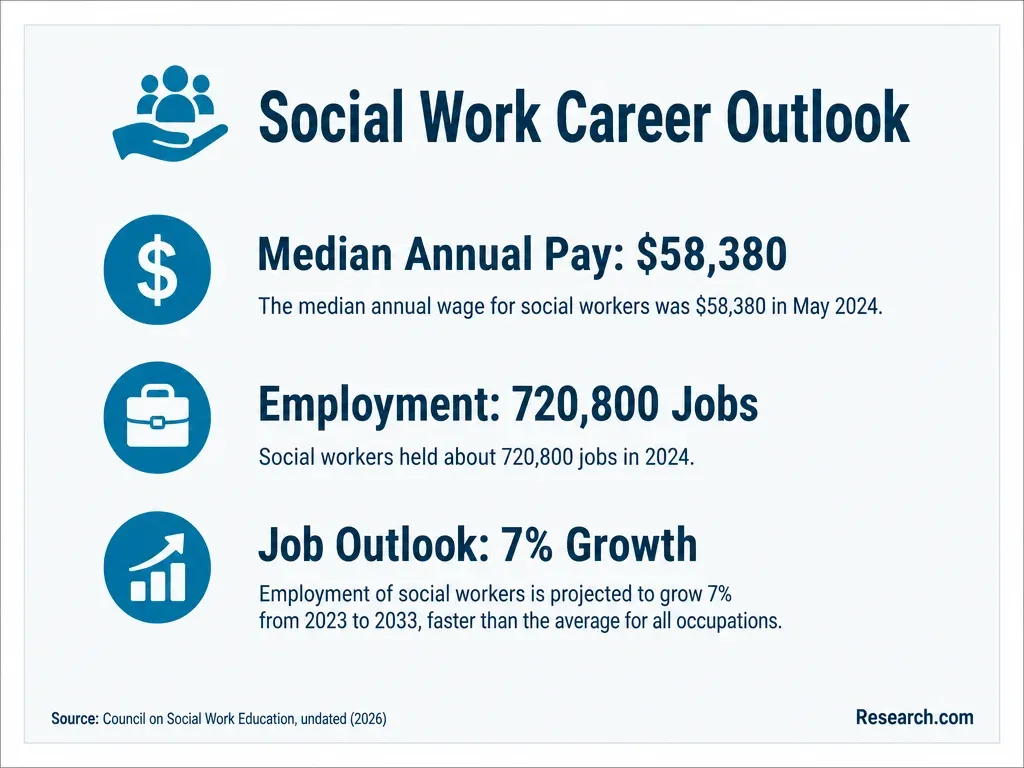
- A portfolio does not confer a credential or license. For context, the U.S. Bureau of Labor Statistics reports a $61,780 median annual wage for social workers across specialties in May 2025, not a salary for leadership portfolio holders.
What is a social work leadership portfolio?
A social work leadership portfolio is a curated set of work samples and short explanations showing how you helped improve a service, team process, policy, or program. It may support an interview, promotion, field evaluation, capstone, or professional development conversation. Unlike a case file, it should establish your judgment and contribution without giving the audience access to clients' experiences or restricted agency operations.
The audience determines what belongs in it. A hiring panel may need a concise project summary; a field instructor may need evidence tied to an approved learning agreement; an internal promotion committee may be permitted to review more detail inside the agency's systems. Decide which role you are pursuing before choosing samples. For example, guide to professional pathways after an MSW can help distinguish service coordination, clinical practice, and program leadership goals; those paths call for different evidence.
For each sample, explain the problem, your authority and collaborators, what you did, how change was assessed, and what remains uncertain. Distinguish work you led from work you supported. A proposed workflow demonstrates planning; it is not evidence that the workflow improved outcomes.
How can social workers demonstrate improvements without exposing client data?
Start with a process or service-access question rather than an individual success story. Depending on the agency's approval, suitable measures might include the proportion of eligible referrals receiving documented follow-up within a defined interval, staff completion of an approved training, or the time between an inquiry and an offered appointment. These describe a system; they should not identify who sought help.
A credible improvement claim needs a defined measure, a baseline and follow-up period, the population counted, and an explanation of your contribution. State whether the figures came from an authorized agency report or were calculated for an approved project. Do not call a change an improvement solely because the number moved: eligibility rules, staffing, seasonal demand, or documentation practices may also have changed.
Use this sequence to turn an approved project into a portfolio entry:
- Agree with the agency and, for a student project, the field program on the question, permitted data, audience, and review process before collecting evidence.
- Define the measure in words: for a follow-up rate, specify which referrals enter the denominator and which documented actions count in the numerator.
- Compare appropriate periods or use a nonnumeric account of a tested process when reliable outcome data are unavailable.
- Describe your own actions, collaborators, alternative explanations, and next steps; seek approval for the final wording and any figures before sharing.
Students should not assume a placement grants permission to export reports for a capstone or job search. When evaluating programs, exploring MSW programs with practicum assistance can prompt questions about how faculty, field instructors, and agencies approve feasible projects and portfolio evidence.
How can portfolio evidence be de-identified to protect client privacy?
De-identification means reducing the risk that a person can be identified from the material itself or by combining it with other information. Replacing a name with initials or "Client A" is not enough. Exact dates, a distinctive service history, a small town, a rare event, and even a small demographic subgroup can point back to someone.
The safest external portfolio often contains no client-level records at all. Create a new summary from agency-approved, sufficiently aggregated findings, or use a clearly labeled fictional illustration to explain a method without claiming it is a real result. If a sample must be derived from records, follow the organization's approved de-identification process; do not independently decide that altered records are safe to publish. HIPAA-covered information, for example, has specific de-identification standards, including expert determination and safe-harbor methods. Neither method makes agency approval optional.
Before release, ask a supervisor or designated privacy reviewer to assess combinations of details, small counts, free-text comments, file metadata, screenshots, and whether the proposed audience could recognize a person. Do not publish subgroup results when identification risk remains. A BSW field student can ask about project and sample-review rules while choosing an accredited BSW program; program approval and agency permission are separate decisions.
The applicable rules depend on who holds the information, where the work occurred, and what the sample contains. HIPAA may govern protected health information held by a covered entity or business associate; it does not govern every social services record. FERPA may apply to education records maintained by a covered school. Certain substance use disorder treatment records have additional protections under 42 CFR Part 2. State confidentiality laws, child welfare rules, contracts, and agency policies may impose further limits.
Professional ethics also matter. The NASW Code of Ethics addresses confidentiality, informed consent, and responsible use of information, but it does not replace law or an employer's release procedure. Client consent alone may not authorize disclosure of third-party information, waive agency restrictions, or resolve whether a proposed public portfolio is appropriate. Ask the agency's privacy or legal contact when the governing rule is unclear.
Keep permission to share separate from qualification to practice. An approved leadership sample does not expand clinical scope or establish licensure eligibility. Social workers considering new roles can use checking professional eligibility when choosing an MSW as a starting point, then confirm current requirements with the relevant state board and employer.
What careers, salaries, and job prospects are available in social work leadership?
A portfolio can support applications for lead social worker, program coordinator, quality-improvement specialist, field educator, or service manager roles when its samples match the actual duties. Employers may look for staff supervision, budget responsibility, evaluation skill, community partnership experience, or a license, depending on the position. A portfolio demonstrates evidence of work; it does not substitute for a required credential or guarantee promotion.
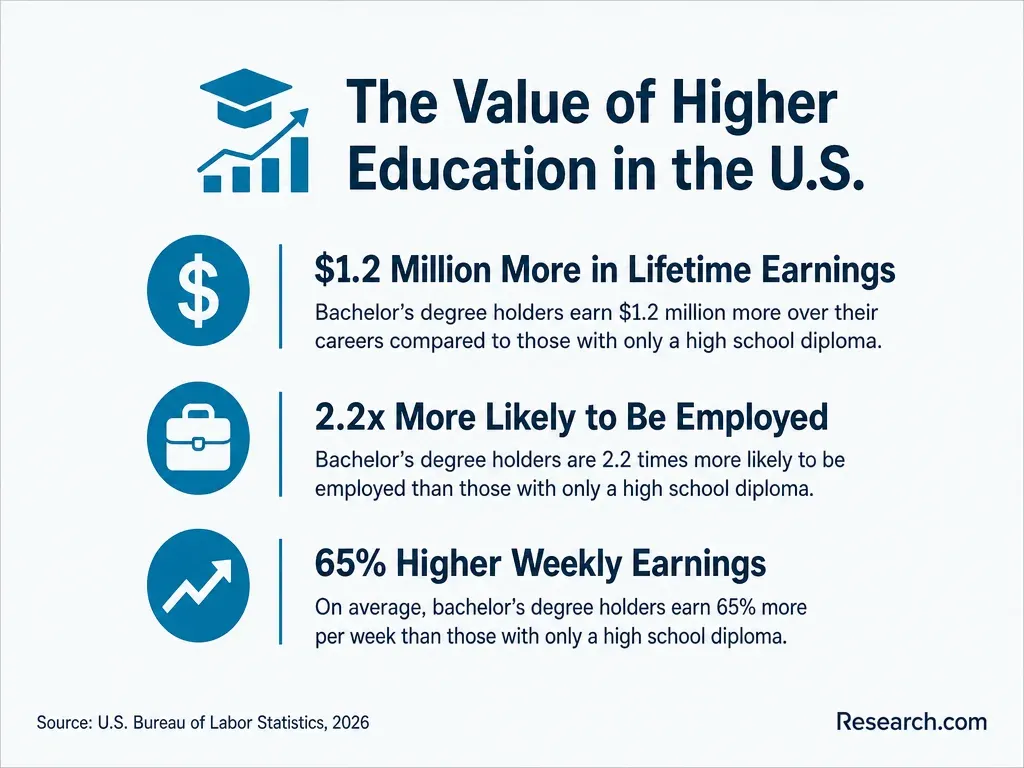
The U.S. Bureau of Labor Statistics reports a May 2025 median annual wage of $61,780 for social workers across specialties and projects 6% employment growth from 2025 to 2035. These occupation-wide figures include many nonmanagerial roles and should not be treated as leadership pay or a forecast for an individual applicant. For a specific offer, compare the job's duties, civil-service classification if applicable, location, funding stability, and required qualifications. Exploring regional pay patterns for MSW careers can add geographic context, but local job postings and published pay bands are more useful for evaluating a particular position.
Other Things You Should Know About Social Work
Only if the agency's policies and your agreements permit it. Ask for written clarification before departure; permission to present work while employed may not extend to keeping a copy afterward.
Present it as a proposal. Explain the problem, stakeholder input, feasibility assessment, and what you would measure if approved, without claiming results.
Include one only with the supervisor's permission and accurate wording. Otherwise, describe the supervision and feedback process without implying that a named person endorsed your work.
Use readable text, clear headings, descriptive labels for visuals, and an accessible file format. Offer to explain a sample verbally without disclosing information omitted from the approved version.
- DHCS Data De-Identification Guideliness (DDG) | ca.gov https://www.dhcs.ca.gov/file/file-193726-pdf/
- Medical Information Delivering Improved Customer Experience | nih.gov https://pmc.ncbi.nlm.nih.gov/articles/PMC10097785/
- CMS National Quality Strategy https://www.cms.gov/medicare/quality/meaningful-measures-initiative/cms-quality-strategy
- Chapter 6 DEVELOPMENT OF IMPARTIAL AND APPROPRIATE FACTUAL RECORDS | U.S. Equal Employment Opportunity Commission https://www.eeoc.gov/federal-sector/management-directive/chapter-6-development-impartial-and-appropriate-factual-records
- NASW Standards for Social Work Case Management | nycourts.gov https://www.nycourts.gov/reporter/webdocs/nasw_standards_socialwork_casemgt.htm
- Patient safety | who.int https://www.who.int/news-room/fact-sheets/detail/patient-safety
- Informed Consent - StatPearls - NCBI Bookshelf - NIH https://www.ncbi.nlm.nih.gov/books/NBK430827/
- Summary of the HIPAA Privacy Rule | hhs.gov https://www.hhs.gov/hipaa/for-professionals/privacy/laws-regulations/index.html
- De-identification and Confidentiality of Research Data | ucsf.edu https://irb.ucsf.edu/content/de-identification-and-confidentiality-of-research-data
- De-Identification Guidelines | USU https://www.usu.edu/compliance/privacy/guidelines/de-identification


