2027 Moving a Social Work License to Kentucky: Endorsement, Records, and Board Verification
Audited and Verified:
Our Editorial and Data Verification Process
Research.com uses government datasets, official education statistics and primary institutional information to support its career and degree guides. Our review process checks factual accuracy, occupational definitions, source dates and the requirements associated with the credentials discussed.
How This Article Was Fact-Checked
Our editorial team verifies salary estimates, employment projections, education requirements and program information against original data providers and official organizations. Salary figures are checked against the relevant occupational definitions and reporting periods. Information about licensure, accreditation and required in-person training is reviewed separately.
Fact-checked and verified on:

Co-Founder and Chief Data Scientist
An active social work license in another state is valuable evidence, but it does not automatically authorize practice in Kentucky. If you are relocating, accepting a Kentucky job, or planning to serve Kentucky clients remotely, the immediate task is to identify the right Kentucky license and assemble records the Kentucky Board of Social Work can evaluate.
This guide explains endorsement, board verification, transcripts, ASWB scores, clinical supervision records, costs, and practice while an application is pending - so you can spot documentation gaps before they delay your start date.
Key Things You Should Know
- Kentucky's three principal social work credentials are Licensed Social Worker (LSW), Certified Social Worker (CSW), and Licensed Clinical Social Worker (LCSW); your existing title does not determine your Kentucky category by itself.
- Endorsement requires a Kentucky Board of Social Work decision, not merely an active out-of-state license. Plan to document your education, examination history, license standing, and, for LCSW applicants, qualifying clinical experience and supervision.
- Do not assume you can serve Kentucky clients while an application is pending. Confirm any applicable authorization with the board before beginning in-person or remote practice.
How do you transfer an out-of-state social work license to Kentucky?
You do not transfer the original license out of its issuing state. You apply to the Kentucky Board of Social Work for the Kentucky credential that fits your qualifications, using your other license as part of the evidence. The other state retains authority over its license; Kentucky decides whether and when to issue its own.
Use this sequence to avoid ordering records for the wrong credential:
- Identify the Kentucky license you need for your intended duties, especially whether the job requires independent clinical authority.
- Review the board's current endorsement application and instructions for that license category, including its directions for third-party records.
- Request verification from every licensing jurisdiction the application requires, along with official education and examination records.
- If applying for LCSW, gather dated post-degree clinical practice and supervision documentation before relying on an employer's proposed start date.
- Track each record separately and respond to board requests; wait for confirmation that the Kentucky credential has been issued before practicing under it.
If your degree's eligibility is unclear, address that question before paying to obtain every other record. Guidance on verifying social work degree recognition with a state board can help you frame the question, but Kentucky's board makes the licensing decision.
Does Kentucky offer social work license reciprocity or endorsement?
Endorsement is the relevant route for an already-licensed applicant: Kentucky evaluates a license earned elsewhere alongside its own requirements. "Reciprocity" is often used informally, but it should not be read as an automatic exchange of credentials or a guarantee that similarly named licenses have identical scopes. An applicant may need to supply additional evidence if the issuing state used different education, examination, or clinical-supervision standards.
Interstate mobility arrangements are a separate issue. Do not assume that passage of a compact law, membership in an interstate initiative, or a license held in another state creates a usable Kentucky practice privilege. Check with the Kentucky board whether a specific privilege is operational and applies to your license before relying on it.
If you are still choosing a program and expect to relocate, online social work degree programs can be compared for educational fit - but online delivery does not resolve Kentucky's separate licensure requirements.
What are Kentucky's requirements for out-of-state social workers?
The board must be able to establish that you qualify for the Kentucky credential requested. Expect review of your social work degree, the standing and history of licenses you have held, any applicable ASWB examination, and additional clinical evidence for LCSW. Disclose disciplinary history and application answers as the current forms require; a public license lookup alone may not supply everything the board requests.
Degree level matters, but so does whether the education meets Kentucky's rules. If a bachelor's credential is central to your application, investigate social work bachelor's accreditation questions rather than assuming any human services bachelor's degree qualifies. An MSW earned later may establish eligibility for a different category, but a concentration or diploma alone does not establish independent clinical authority.
Read the board's current statutes, regulations, and application instructions together. They control details such as accepted examinations, required forms, and any alternative pathway; an employer's interpretation or another state's approval cannot replace that review.
License verification establishes what another jurisdiction actually issued and whether that credential has restrictions or disciplinary history. It is different from uploading a wallet card or printing a public search result. Follow Kentucky's current instructions on which jurisdictions must verify licenses you hold or previously held and whether verification must arrive directly from the issuing authority.
Before requesting it, match your legal name, prior names, license number, and email address across applications. Ask the issuing board how it transmits official verifications and what fee or processing time it requires. If Kentucky's checklist still shows a missing item, confirm that the issuing board sent it to the correct destination; a receipt for your request is not proof Kentucky received the record.
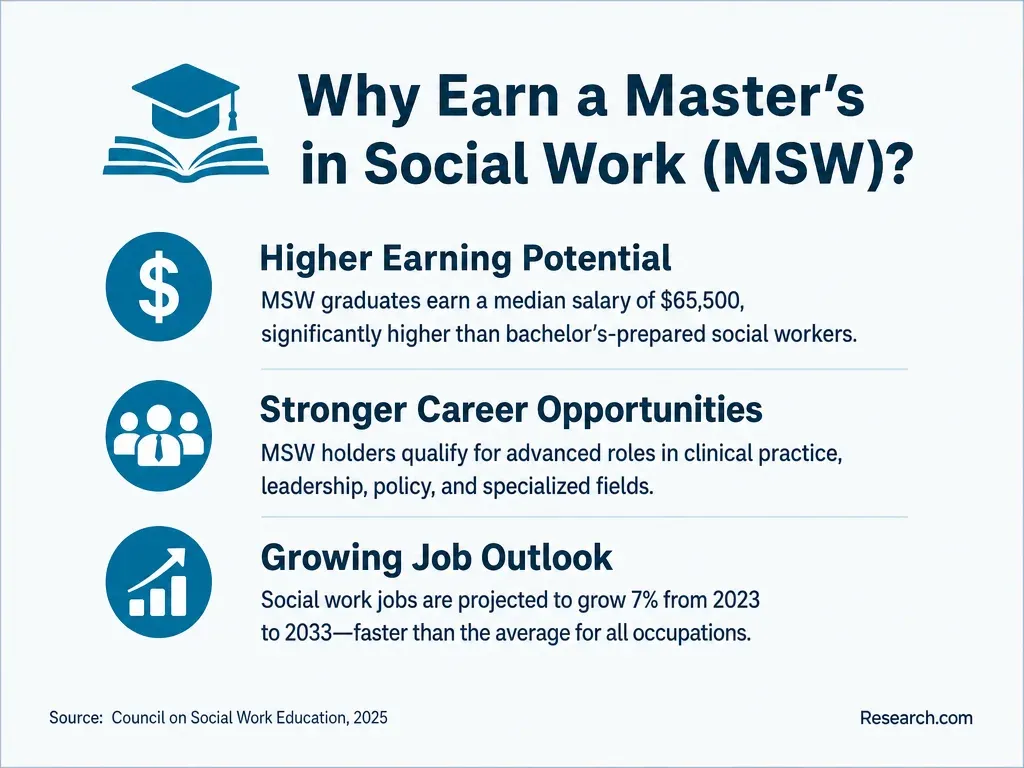
Board verification documents professional standing, not prospective earnings. If a move is tied to an offer, assess compensation separately; planning an MSW career with regional salary context can inform that comparison without treating a statewide figure as your expected pay.
Arrange for an official transcript from the institution that awarded your qualifying social work degree, using the delivery method in Kentucky's current application instructions. A copy you upload may help explain a discrepancy but may not satisfy an official-record requirement. If your name has changed, make the connection clear so the board can match the transcript to your application.
ASWB scores do not transfer as academic credit. If Kentucky requires an examination record for your category, request an official score transfer through ASWB and verify that the specific exam passed meets Kentucky's requirement. Passing an exam used for one state's license does not by itself establish eligibility for a higher Kentucky category. Confirm current examination and documentation rules with the board before scheduling another test.
If transcript review shows that you lack a qualifying social work degree, solve that educational gap rather than repeatedly submitting the same application. An online MSW application accessibility guide may help with program research, but admission criteria and Kentucky license eligibility are separate decisions.
For LCSW endorsement, a prior clinical license is important evidence, but the board may need records showing how you qualified. Gather the dates of post-degree clinical employment, duties and setting, supervisor identities and credentials, and contemporaneous records of supervision and practice hours to the extent Kentucky's current forms request them. Ask former supervisors or licensing boards about records early, particularly if an agency has closed.
Separate clinical-license experience from MSW field education, general social services employment, and unsupervised years in practice. The number of years on a résumé does not establish the amount, type, or oversight of qualifying clinical work. If your original state licensed you through an alternative route, explain that route and seek the Kentucky board's assessment rather than assuming equivalence.
Additional coursework is not a substitute for clinical documentation. Even short-format MSW program comparisons are relevant only if your underlying degree is deficient; a faster degree route cannot retroactively create board-accepted post-degree supervision.
Budget for more than Kentucky's application charge. Other jurisdictions may charge for license verification, ASWB may charge for a score transfer, and schools may charge for official transcripts. An LCSW applicant may also need time to locate older supervision records. Check each organization's current fee schedule before paying; no single total applies to every applicant.
There is no reliable approval date to assume from submitting a form. Timing depends on whether the application is complete, how quickly third parties deliver records, and whether the board needs to resolve an education, examination, disciplinary, or supervision question. Ask a prospective Kentucky employer whether it will make the start date contingent on license issuance, and preserve a financial buffer if that date could move.
If the board identifies a degree gap, compare the cost of remedying that gap separately from application fees. Online MSW tuition comparisons may help with an education decision, but an additional degree is unnecessary when your existing education already meets Kentucky's requirements.
Do not treat a pending application as a Kentucky license. Before providing services to a person located in Kentucky - including by telehealth - confirm whether you have an active Kentucky credential or another currently effective authorization that covers the work. Your out-of-state license, ASWB score, job offer, and application receipt do not independently establish that authority.
If an employer proposes a nonlicensed role while you wait, obtain a clear description of its duties, title, supervision, and limits. Do not represent yourself as holding a Kentucky credential or take on reserved clinical functions simply because a licensed colleague is available. The board and employer should resolve any scope question before client services begin.
If the application reveals that you need an MSW rather than a different start date, MSW earnings and geographic career planning can inform a longer-term education plan; enrollment itself does not create interim practice authority.
What are Kentucky's social work license renewal and continuing education requirements?
Once Kentucky issues your credential, its renewal rules apply even if you continue to maintain another state's license. Confirm your category's expiration date, renewal procedure, required continuing education, any category-specific topics, and documentation-retention rules directly with the Kentucky Board of Social Work. Do not assume courses accepted elsewhere automatically satisfy Kentucky's requirements.
Set a reminder when your Kentucky license is issued and keep completion records that identify the provider, subject, date, and credit awarded. If you hold multiple licenses, track each jurisdiction's requirements separately; renewing one does not renew the other.
Continuing education can be a more direct response to a skills gap than another degree. If you are considering advanced study for a distinct leadership or scholarly goal, comparing online DSW program lengths addresses that educational decision - not Kentucky license renewal.
Other Things You Should Know About Social Work
Disclose its status accurately and ask the Kentucky board how an expired license affects the route available to you. Do not describe it as active or assume prior licensure alone qualifies you for endorsement.
Provide the name history and supporting documentation requested on Kentucky's application. Also use your application identifier when requesting third-party records so the board can match them.
Do not assume either automatic denial or automatic approval. Disclose the action as required and provide the underlying records; Kentucky's board evaluates the application under its rules.
No. License issuance and insurer credentialing are separate processes. Ask prospective employers or payers about enrollment requirements and timing before assuming you can bill for services.
- Credentialing of Foreign Degrees for a United... - State.gov https://2009-2017.state.gov/m/dghr/flo/219100.htm
- Licensure Requirements - Washington State Board of Nursing https://nursing.wa.gov/licensing/licensure-requirements
- Kentucky Social Worker License Lookup https://secure.kentucky.gov/formservices/BSW/LicenseVerification/search
- Licensure - Kentucky Board of Social Work https://bsw.ky.gov/Pages/Licensure.aspx
- MSW, CSW & LCSW: Social Work Licensure in Kentucky | UK College of Social Work https://socialworkonline.uky.edu/resources/article/csw-vs-lcsw-kentucky/
- Exam scoring | Association of Social Work Boards https://www.aswb.org/exam/exam-scoring/
- Social Work Licensure Requirements In Kentucky | psychology.org https://www.psychology.org/social-work/licensure/kentucky/