
2027 Building a Social Work Professional Network Without Sharing Client Information
Audited and Verified:
Our Editorial and Data Verification Process
Research.com uses government datasets, official education statistics and primary institutional information to support its career and degree guides. Our review process checks factual accuracy, occupational definitions, source dates and the requirements associated with the credentials discussed.
How This Article Was Fact-Checked
Our editorial team verifies salary estimates, employment projections, education requirements and program information against original data providers and official organizations. Salary figures are checked against the relevant occupational definitions and reporting periods. Information about licensure, accreditation and required in-person training is reviewed separately.
Fact-checked and verified on:

Co-Founder and Chief Data Scientist
A useful introduction to a colleague can lead to a referral partnership, mentor, supervisor, or job opportunity. For social workers, it can also create a privacy risk if a conversation turns into a recognizable client story.
This guide is for BSW and MSW students, new graduates, and practicing social workers who want to make professional connections without crossing that line. It explains what you can discuss, how to handle digital networking and field placements, and which questions to ask before relying on a program or professional contact for career support.
Key Things You Should Know
- Build connections around your skills, service interests, and questions about a setting - not identifiable client experiences.
- Removing a name is not enough: dates, locations, unusual circumstances, and combined details can identify a person, especially in a small community.
- Use field instructors and agency-approved consultation channels for case-specific learning; a networking conversation, private message, or closed group is not a substitute.
How can social workers build a professional network without sharing client information?
Start with a professional introduction that describes your role and interests, not the people you serve. For example: "I'm an MSW student interested in housing access and care coordination. I'd like to learn how your team works with community partners." That gives someone a reason to connect without inviting a case discussion.
A manageable network can include classmates, field instructors, agency colleagues, association members, community organizers, and professionals in an intended practice setting. Follow up with a specific, nonconfidential question: what skills matter in their role, which public resources they recommend, or how their organization builds referral relationships. Offer something appropriate in return, such as a public event notice or a relevant published resource.
Networking does not require another degree or a costly event. If education is already part of your plan, social work master's study on a budget is worth weighing alongside the time and travel costs of building professional relationships. If your only goal is to meet practitioners, local events, alumni introductions, and workplace projects may be a more direct route.
What can social workers discuss when networking without breaching confidentiality?
Good topics include a setting's public mission, broad service-access barriers, published research, training interests, and skills you have developed. You can say you are learning to coordinate referrals or write clear documentation without describing a particular referral or record. Discuss your responsibilities accurately: a student who observed an assessment should not present it as independent clinical practice.
Before telling an example, ask whether its details are necessary for the conversation. "I'm interested in improving transitions from hospital to community services" usually communicates more professionally than a story about one discharge. A fictional scenario can support general discussion, but merely changing a client's name - or blending details from real clients - does not necessarily prevent recognition.
Online classmates can be valuable peers for discussing coursework, published scenarios, and career interests. When exploring online social work education options for career planning, distinguish those learning conversations from permission to discuss field clients in a class chat or alumni group.
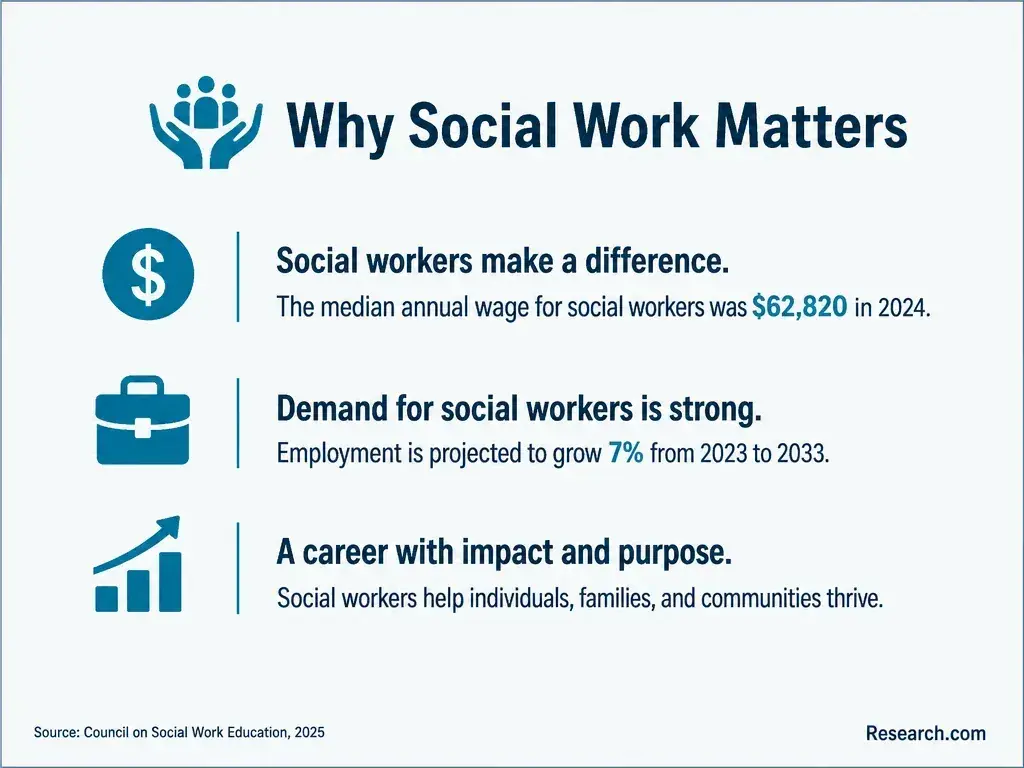
What confidentiality rules apply to social work networking?
Multiple rules may apply at once. The NASW Code of Ethics provides professional guidance on privacy, confidentiality, and responsible technology use. Federal and state law, licensing rules, agency contracts, school policies, and placement agreements may impose additional requirements. HIPAA applies in covered healthcare contexts; FERPA can matter for student education records; and records from certain substance use disorder treatment programs may have additional federal protections. None of these frameworks makes a casual networking conversation an approved consultation channel.
Consent is not a general workaround. Any proposed disclosure must meet the applicable rules for its purpose, recipient, and scope. Even information described as "de-identified" can be recognizable when unusual circumstances are combined with a location, timeframe, or small population. When you need case-specific guidance, use an authorized supervisor or consultation process and follow your agency's procedures for records and communication.
Programs can teach these distinctions, but accreditation is not a privacy waiver. If you are comparing accredited social work bachelor's degrees, ask how students learn confidentiality and how field sites instruct them on the rules that govern actual records.
Look for places where professional discussion already has a purpose: campus or virtual speaker events, student organizations, career-center sessions, faculty office hours, agency-approved community meetings, professional association events, and public trainings. Local cross-disciplinary events can be especially useful for students interested in housing, schools, healthcare, or public benefits because social workers often coordinate across organizations.
Choose opportunities by the people you hope to learn from, not the size of an attendee list. A small event with practitioners in your target setting may be more valuable than a broad conference. Ask one thoughtful question, request permission to follow up, and keep notes about the contact and your next step - not about clients discussed at the event.
Students preparing to enter a BSW program can begin with classmates and approved service organizations. A social work bachelor's prerequisite requirement guide can help separate academic entry planning from the experience needed to build a network; neither prerequisite coursework nor volunteering automatically counts as field education.
A field placement offers repeated, observable opportunities to earn trust: arrive prepared, seek feedback, respect role limits, and follow through on approved tasks. Ask your field instructor which meetings you may attend and how to introduce yourself to partner organizations. Before contacting an outside professional, confirm whether the contact is a learning opportunity, an agency responsibility, or a referral that must follow a formal process.
For an informational conversation, ask about the professional's role, collaboration methods, and entry-level skills. Do not use the meeting to obtain informal advice about a client. Bring case-specific questions to field instruction or another authorized channel. You can later ask a field instructor whether they are comfortable serving as a reference, but do not assume a placement or a positive evaluation guarantees an endorsement.
Placement support varies, particularly when students live far from a university. When comparing faculty and agency support for MSW fieldwork, ask who identifies sites, who approves outside contacts, and how field instructors help students build relationships without exposing client information.
How can professional networking support social work career advancement?
A strong network helps you learn what a role actually involves before applying: populations served, caseload expectations, documentation, safety practices, supervision, schedules, and opportunities to work with community partners. Contacts can point you toward public openings and explain employer preferences. They cannot replace a required degree, license, school qualification, or documented experience.
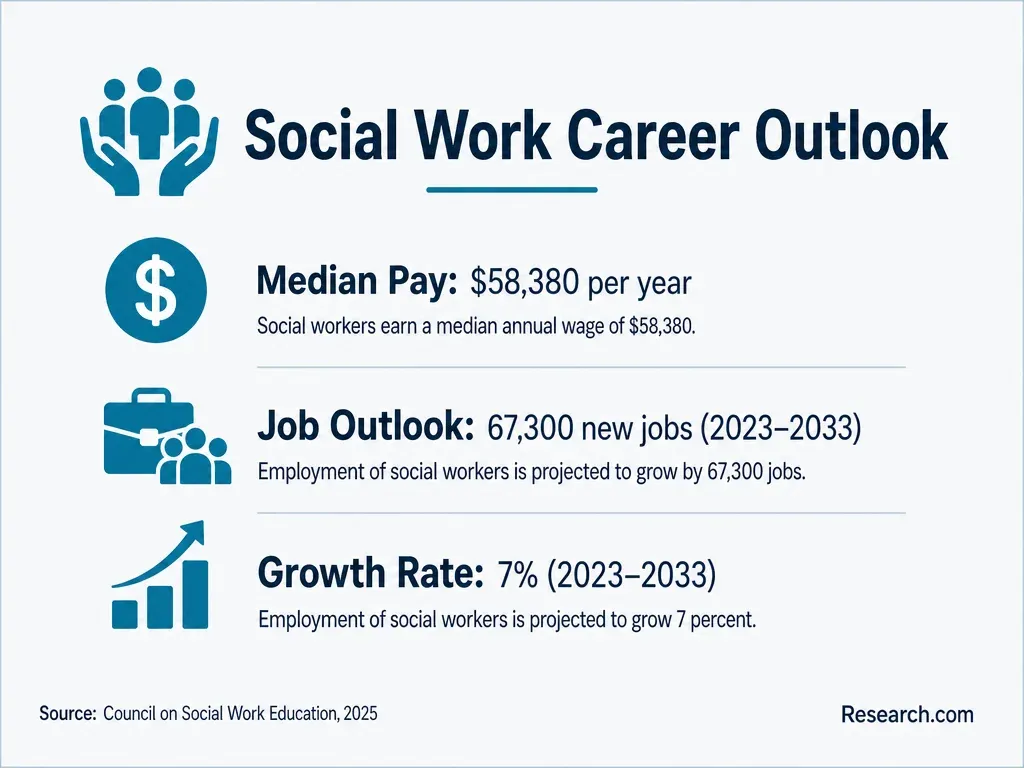
Use informational interviews to test a specific move. A BSW graduate interested in care coordination might ask which duties are open to generalist practitioners; an MSW graduate seeking clinical work should ask about onboarding and board-qualifying supervision rather than assume the degree grants independent practice. For a move across states, combine employer conversations with a check of the destination board's rules. MSW compensation and relocation considerations can inform that comparison, but broad salary figures do not predict an individual offer.
Keep a record of contacts, skills you need to develop, and promised follow-ups. The most useful network is not necessarily the largest: it is one that helps you make informed career decisions while clients remain outside the conversation.
Other Things You Should Know About Social Work
Generally, use supervisors, colleagues, instructors, or approved community partners instead. A client reference can create pressure, blur boundaries, and reveal a service relationship. Consult your organization's policy before making any request.
Let the client decide whether to acknowledge the relationship. Do not identify them as a client or discuss services in front of others. Follow agency guidance if the interaction raises a service or safety issue.
Usually you can discuss your approved responsibilities and broadly stated methods. Check agency restrictions before sharing internal materials, unpublished results, or details that could identify service users.
Stop the disclosure and promptly follow your agency's incident-reporting process. Do not try to resolve a possible breach solely by deleting a post or asking recipients to keep it private.
- NASW Standards for Social Work Case Management | nycourts.gov https://www.nycourts.gov/reporter/webdocs/nasw_standards_socialwork_casemgt.htm
- The Nature and Evolution of the Mentoring Relationship in... - PMC https://pmc.ncbi.nlm.nih.gov/articles/PMC9243938/
- Patient Confidentiality - StatPearls - NCBI Bookshelf - NIH https://www.ncbi.nlm.nih.gov/books/NBK519540/
- Summary of the HIPAA Security Rule | hhs.gov https://www.hhs.gov/hipaa/for-professionals/security/laws-regulations/index.html
- Best Practices - Social Media https://privsec.harvard.edu/best-practices-social-media
- De-Identification Guidelines | USU https://www.usu.edu/compliance/privacy/guidelines/de-identification
- Social Media Guidelines - School of Social Work | Boise State Online https://www.boisestate.edu/socialwork/social-media-guidelines/
- Standards for Technology in Social Work Practice | socialworkers.org https://www.socialworkers.org/Practice/NASW-Practice-Standards-Guidelines/Standards-for-Technology-in-Social-Work-Practice


