Best Welding Training Programs & Trade Schools - Top Welding Schools in New Jersey for 2026

Co-Founder and Chief Data Scientist
Choosing the right welder trade school in New Jersey can shape your future career and open doors to rewarding opportunities. This article introduces the best welder trade school programs for 2026, ranked by the Research.com team of data scientists to help you make an informed decision.
Whether you’re starting fresh or seeking certification, a quality program can boost your skills and confidence. Exploring these top schools will give you valuable insights on where to invest your time and effort.
Discover options that fit your goals and take a confident step toward a promising welding career.
Key benefits of finishing welder trade school in New Jersey
- Graduates from welder trade schools in New Jersey can expect competitive salaries, with entry-level welders earning around $22.60 per hour and certified welders making up to $39.60 per hour, boosting financial confidence early in their careers.
- A graduate from a popular New Jersey trade school may pursue various career paths such as heavy equipment welding, construction, or manufacturing, offering diverse and growing opportunities to build a rewarding future.
- Completing a welder trade school online provides flexibility and convenience, allowing students to balance work and study while gaining skills quickly, as experienced by many successful online graduates from well-known New Jersey programs.
- Best Welding Training Programs & Trade Schools - Top Welding Schools in New Jersey for 2026
- What can I expect from welder trade schools in New Jersey?
- Where can I work after finishing welder trade schools in New Jersey?
What can I expect from welder trade schools in New Jersey?
Expect a welder trade school program in New Jersey to immerse you in practical, hands-on training from day one. Graduates from places like Universal Technical Institute's Bloomfield campus often describe the intense focus on mastering welding techniques across various positions-flat, vertical, overhead-and materials, which builds real confidence before entering the workforce.
You'll quickly learn to operate industry-standard equipment and handle safety gear like helmets and gloves, emphasizing personal responsibility that welders must carry on every job. The curriculum goes beyond just welding skills; blueprint reading, metallurgy, and fabrication become second nature, preparing you to interpret complex welding symbols and work with precision.
Many students appreciate the flexible class schedules that accommodate working adults, with evening and weekend options easing the balance between life and study. Programs aligned with American Welding Society standards, such as those at Raritan Valley Community College, also provide crucial certification prep, opening doors to higher-paying roles.
Graduates often share a sense of pride and readiness, knowing they can step directly into manufacturing or construction jobs. The possibility of free tuition through initiatives like the New Jersey Manufacturing Skills Initiative makes this path even more accessible and rewarding.
Where can I work after finishing welder trade schools in New Jersey?
After completing a welder trade school program in New Jersey, graduates find themselves stepping into a dynamic job market bursting with opportunities. Many discover roles as structural welders on bustling construction sites, assembling bridges or repairing buildings-work that offers a strong sense of accomplishment and visible results. Others join manufacturing plants, welding parts for vehicles or machinery, where the rhythm of production lines creates a satisfying daily routine.
Marine welding is another exciting path, especially near New Jersey's busy ports. Graduates often recall the thrill of repairing ships or working on stainless steel components, sometimes traveling along the coast for diverse projects. For those drawn to industrial settings, pipe welding presents steady work with mechanical contractors, tackling pipelines and complex equipment installations.
Popular trade schools in New Jersey emphasize hands-on practice, so graduates feel confident applying MIG, TIG, and stick welding techniques right away. Part-time options also appeal to many, providing flexible schedules while gaining valuable experience. The broad range of industries hiring welders means graduates rarely struggle to find fulfilling work that matches their skills and passions.
After finishing a welder trade school program in New Jersey, many graduates find themselves earning a solid starting wage that quickly turns their hard work into tangible rewards. Entry-level welders in the state typically make around $22.60 per hour, with some earning as much as $25.14 or more right out of school. Imagine completing your training at a well-known New Jersey trade school and stepping into a job where your skills translate to about $40,000 to $52,000 annually-numbers that turn heads and open doors.
Graduates often share the excitement of landing their first welding positions, feeling proud as they see their paychecks reflect their dedication. Some report salaries near $49,000 per year, especially those who earned certifications alongside their schooling. While New Jersey ranks lower nationally for welder wages, the variety of industries and roles means opportunities to boost earnings with experience or specialized skills are very real.
For those motivated by steady income and career growth, welding in New Jersey offers a rewarding path where the investment in trade school pays off quickly and confidently.
- Most welder trade school programs in New Jersey require a high school diploma or GED for admission.
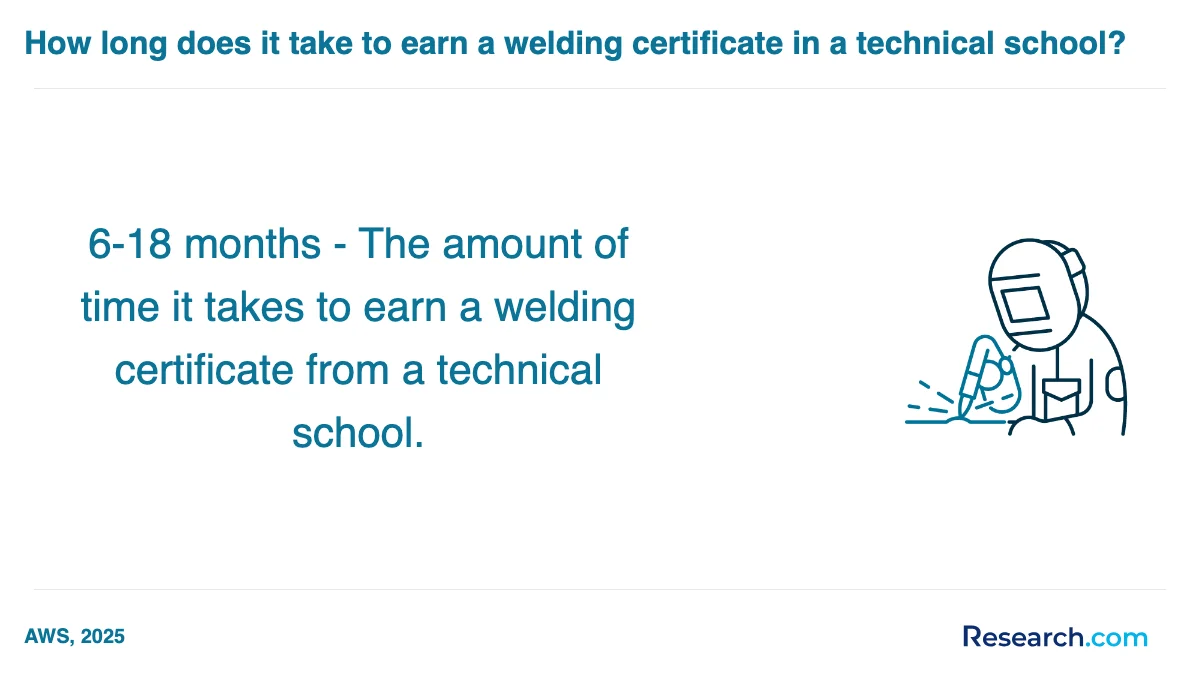
- Programs range from short-term certificates taking a few months to associate degrees lasting up to two years.
- Tuition costs vary widely, from around $650 for short certification programs to $46,000 for private institution annual tuition.
- AWS certification is commonly required or recommended and involves passing practical welding tests.
- Starting salaries for welders in New Jersey range from $41,000 to $46,000, with experienced welders earning over $60,000 annually.
In New Jersey, completing a welder trade school program typically takes between six months and one year, depending on the intensity and structure of the course. Many graduates from well-known trade schools in the state share how immersive the experience is, often balancing hands-on training with classroom instruction that prepares them quickly for the workforce.
For example, students at popular New Jersey schools often describe the fast-paced nature of their programs, where daily practice with welding equipment builds confidence and skill rapidly. One graduate mentioned feeling a strong sense of accomplishment after just a few months, having already mastered essential welding techniques that would have taken years to learn on the job.
Choosing a program in New Jersey means benefiting from a curriculum tailored to local industry demands, which helps students secure employment soon after finishing. The relatively short completion time allows eager learners to dive into their welding careers without prolonged delays, fueling excitement and motivation throughout their studies.
The main difference between online and on-campus welder trade school programs in New Jersey lies in the hands-on experience. Graduates from on-campus programs, like those at Universal Technical Institute's Bloomfield campus, often share how working directly in training bays and welding labs made them confident with real equipment and project planning. They describe the satisfaction of mastering arc welding under the guidance of experienced instructors, a vital part of becoming job-ready.
In contrast, students in online programs such as Bergen Community College appreciate the flexibility of learning at their own pace through virtual labs and multimedia lessons. However, many express the challenge of missing the tactile feedback and physical practice crucial for welding skills. Their experience highlights the limits of simulations when compared to actual welding tasks.
Blended learning models offer a middle ground, combining online theory with essential in-person sessions, appealing to those balancing work and study while still gaining valuable hands-on training.
Understanding the average tuition fees for welding programs in New Jersey reveals a practical range that reflects both community colleges and private institutions. For example, graduates from Camden County College often mention how the in-state tuition of $3,648 made their precision metalworking diploma attainable without overwhelming debt, especially when compared to the slightly higher $3,744 for out-of-state students. Meanwhile, others who chose Bergen Community College experienced a more significant price gap, with in-state tuition at $4,658 and out-of-state costs soaring to $8,822, which shaped their decision to reside locally during training.
Private welding schools in New Jersey present different dynamics, where programs can be more intensive and specialized, leading to varied cost structures. Graduates from Elite Welder Training South Jersey report the value of targeted courses like the 7-week SMAW (Stick) Pipe Welding Qualification Program priced at $7,900, which they found justified by the focused hands-on practice and professional certification preparation. Other offerings, such as the GTAW (TIG) Pipe Welding Program at $5,600 or the SMAW Structural/Plate Program at $5,000, demonstrate that the cost of welder training courses in New Jersey depends largely on the depth and duration of training.
Many students weigh these costs against potential career returns, and exploring options like grants and scholarships often lightens the financial load. Those pursuing welding can draw motivation from stories of recent graduates who have quickly advanced into stable, well-paying careers, emphasizing trade school jobs that pay well. Knowing the real expenses involved in welding education helps prospective students set realistic expectations and make informed decisions for their futures in New Jersey.

Welding students in New Jersey often find financial aid options that make pursuing their trade more achievable than expected. For example, graduates from Raritan Valley Community College benefited from the New Jersey Manufacturing Skills Initiative, which offers free tuition up to $5,000 for welding programs. This initiative is a game-changer, funded by the state's Department of Labor, allowing participants to focus on honing their craft without the heavy worry of debt.
At Universal Technical Institute in Bloomfield, many students rely on federal aid through FAFSA, unlocking Pell Grants and low-interest loans that reduce the upfront financial burden. These options provide a safety net for those balancing work and school.
Meanwhile, welding students at Monmouth County Vocational School recall managing tuition around $2,000 plus modest fees for tools and supplies, often eased by scholarships or employer reimbursements. These combined aids create real pathways for ambition to become certified skill, fueling confidence and career growth.
To enroll in a welder trade school program in New Jersey, candidates typically need to meet several straightforward but essential prerequisites. Most schools expect applicants to have a high school diploma or GED, ensuring a basic level of academic readiness.
Beyond formal education, schools often look for:
- Strong hand-eye coordination and manual dexterity, qualities that many graduates recall developing through hands-on projects during their first weeks.
- Physical stamina and the ability to work in various environments, from confined spaces to outdoor sites, which alumni describe as a rewarding challenge that builds resilience.
- Basic math skills, especially in geometry and measurements, crucial for reading blueprints and calculating angles accurately.
Applicants might also pass a simple skills assessment or an interview focused on motivation and commitment. For example, students at popular New Jersey trade schools report that demonstrating eagerness to learn and a positive attitude can significantly influence acceptance.
These prerequisites set the stage for a fulfilling journey, turning aspiring welders into confident professionals ready to thrive in New Jersey's diverse industrial landscape.
Welder trade school programs in New Jersey immerse students in a comprehensive curriculum that blends theory with hands-on practice, making the learning experience both engaging and practical. Graduates from schools like Universal Technical Institute in Bloomfield often recall the challenge and excitement of mastering four main welding processes: Gas Metal Arc Welding (GMAW), Shielded Metal Arc Welding (SMAW), Flux-Cored Arc Welding (FCAW), and Gas Tungsten Arc Welding (GTAW). These aren't just terms on paper-they become second nature through intensive lab sessions.
Courses typically start with an Introduction to Welding, where students learn safety essentials, including the crucial use of PPE like helmets and fire-resistant clothing. This foundation empowers students to confidently step into welding booths, fully prepared.
Practical training covers:
- welding in multiple positions: flat, horizontal, vertical, and overhead
- working on different materials such as steel and aluminum
- pipe welding techniques in fixed, rolling, and overhead positions
At places like Welder Training South Jersey, students experience focused pipe and structural welding programs lasting 5-7 weeks with 130-190 hours of instruction. Many graduates emphasize how blueprint reading and project planning courses helped them visualize and execute real-world fabrication projects with confidence. Advanced topics such as metallurgy and cutting techniques like plasma arc boost their readiness for diverse welding environments.
These programs don't just teach skills-they build a mindset centered on precision, safety, and adaptability, preparing students for industry certifications and rewarding careers.
Welding specializations in New Jersey trade schools often focus on mastering the four core arc welding methods: Gas Tungsten Arc Welding (GTAW/TIG), Flux-Cored Arc Welding (FCAW), Gas Metal Arc Welding (GMAW/MIG), and Shielded Metal Arc Welding (SMAW/Stick). Graduates recall how hands-on training at schools like Universal Technical Institute in Bloomfield boosted their confidence by working with real industry equipment and learning to weld in complex positions such as rolling, overhead, and vertical-skills essential for pipe welding and structural fabrication.
Programs emphasize practical skills through modules that cover:
- Pipe welding certifications aligned with ASTM standards
- Plate welding techniques compliant with AWS Structural Standards (D1.1)
- Artistic welding for custom fabrication and metal sculpture
- Emerging tech like additive manufacturing and 3D modeling at Raritan Valley Community College
Welding certification programs New Jersey students pursue often lead to AWS credentials that open doors in construction and manufacturing sectors. Many graduates find local employment due to the state's demand for specialized welders who understand code compliance and precision fabrication.
Students looking to maximize their career prospects can also explore cheap online maintenance technician training, which complements welding skills and broadens job opportunities within the skilled trades.
Choosing the best welding programs in New Jersey means looking beyond just location. Graduates from top-rated welder training schools in New Jersey often emphasize the value of schools with strong accreditation, such as those recognized by the American Welding Society. They share how hands-on experience with up-to-date equipment and experienced instructors shaped their confidence and skills on the job.
Another key factor is the curriculum's alignment with real industry demands. For example, programs that thoroughly cover Shielded Metal Arc Welding (SMAW) and Gas Metal Arc Welding (GMAW) prepare students to adapt quickly when entering local New Jersey industries. Graduates often recall smaller class sizes, which allowed personalized mentorship and clearer feedback during practical weld tests, a benefit often found in these programs.
Don't overlook practical concerns like tuition costs and financial aid, which can make a significant difference in completing your training successfully. Many students recommend researching institutions that also offer strong career services, since a high job placement rate is a powerful indicator of program success. If you're balancing choices, it helps to understand what is the difference between a trade school and a vocational program to find the best fit for your goals.

Welder trade school graduates in New Jersey find a diverse range of welding career paths in New Jersey, reflecting the state's thriving manufacturing and construction industries. Many graduates begin as welder helpers or field technicians, gaining valuable on-the-job experience that builds confidence and skill. Popular trade schools encourage students to obtain the American Welding Society (AWS) certificate, which opens doors to high-demand roles such as manufacturing welders, pipe welders, and structural welders.
Graduates from New Jersey's leading programs often describe their transition into roles like fabrication specialists or positions in marine equipment repair as exciting and rewarding. Companies frequently seek candidates skilled in MIG, TIG, and arc welding, reflecting real-world needs and creating steady work pipelines.
- Entry-level roles: welder helper, field technician
- Certified positions: manufacturing welder, structural welder, pipe welder
- Advanced opportunities: welding foreman, quality control inspector, project manager
For those exploring alternative routes, artistic metalwork and contract jobs with construction firms or private clients offer creative satisfaction. New Jersey graduates often highlight partnerships between trade schools and local employers as crucial for career growth. Many discover further specialization or leadership through advanced certifications. Aspiring welders interested in flexible learning can consider an online undergraduate diploma to complement on-site training and accelerate their progress in welding jobs for trade school graduates in New Jersey.
The job market for welder trade school graduates in New Jersey is robust and full of promise. With over 140 welder job postings statewide, graduates from popular New Jersey trade schools often find themselves quickly employed in diverse roles such as fabricator/welder, TIG welder, and pipe welder. Many share stories of landing positions in thriving industries like construction, marine services, and manufacturing within weeks of completing their training.
Graduates appreciate how hands-on programs prepare them to meet employer demands for skills like MIG and TIG welding, making them highly competitive in the welder job market in New Jersey. These jobs frequently come with benefits including health insurance and retirement plans, especially for those advancing into specialized or supervisory roles.
Common career experiences include:
- Starting in full-time roles with steady wages
- Transitioning to temporary or part-time positions with growth potential
- Advancing into engineering or supervision through further certifications
For those weighing educational options, exploring the most affordable online welding courses can also provide flexible pathways into this active field. The welding salary and employment outlook New Jersey reflect a healthy demand amplified by retirements and new infrastructure projects poised to expand opportunities.
Best Welding Training Programs & Trade Schools - Top Welding Schools in New Jersey for 2026
# 1 position
Lincoln Technical Institute-South Plainfield - Welding Technology/Welder.
certificate or diplomaThe Welding Technology/Welder program at Lincoln Technical Institute-South Plainfield offers a hybrid format with some distance education. It prepares students to apply technical skills in various welding processes, including arc welding, brazing, and high-energy beam welding. The curriculum covers welding metallurgy, safety, structural design, and applicable codes. Graduates earn a median salary of $37,249 one year after completion. The program is accredited by the Accrediting Commission of Career Schools and Colleges.
# 2 position
Burlington County Institute of Technology-Adult Education - Welding Technology/Welder.
certificate or diplomaThe Welding Technology/Welder program at Burlington County Institute of Technology-Adult Education offers hybrid learning with some distance-education options. It prepares students to apply technical skills in various welding methods, including arc welding, resistance welding, and high-energy beam welding. The curriculum covers materials, welding processes, metallurgy, safety, and structural design. The program is accredited by the Middle States Commission on Secondary Education.
# 3 position
Ocean County Vocational-Technical School - Welding Technology/Welder.
certificate or diplomaOcean County Vocational-Technical School offers a Welding Technology/Welder program designed to equip students with technical skills in various welding methods such as arc welding, resistance welding, brazing, soldering, and high-energy beam welding. The hybrid program covers welding metallurgy, heat treating, structural design, safety, and relevant codes. It is accredited by the Middle States Commission on Secondary Education.
# 4 position
Lincoln Technical Institute-Mahwah - Welding Technology/Welder.
certificate or diplomaThe Welding Technology/Welder program at Lincoln Technical Institute-Mahwah offers a hybrid format with some distance-education options. It prepares students to apply technical skills in arc welding, resistance welding, brazing, soldering, and cutting. Instruction covers welding metallurgy, processes, safety, and relevant codes. Graduates earn a median salary of $37,249 one year after completion. The program is accredited by the Accrediting Commission of Career Schools and Colleges.
# 5 position
Universal Technical Institute-Bloomfield - Welding Technology/Welder.
certificate or diplomaThe Welding Technology/Welder program at Universal Technical Institute-Bloomfield offers hybrid learning, combining distance education with hands-on training. It prepares students to work with various welding techniques, including arc welding, resistance welding, and brazing. The curriculum covers welding metallurgy, safety, structural design, and applicable codes and standards. Graduates have a median earning of $39,141 one year after completion. The program is accredited by the Accrediting Commission of Career Schools and Colleges.
# 6 position
Hohokus School of Trade and Technical Sciences - Welding Technology/Welder.
certificate or diplomaThe Welding Technology/Welder program at Hohokus School of Trade and Technical Sciences offers a hybrid format with some distance-education options. It prepares students with skills in various welding techniques, including arc welding, brazing, and cutting. The curriculum covers welding metallurgy, safety, and industry standards. Graduates have median earnings of $26,736 one year after completion. The program is accredited by the Accrediting Commission of Career Schools and Colleges.
# 7 position
Camden County College - Welding Technology/Welder.
certificate or diplomaThe Welding Technology/Welder program at Camden County College offers a hybrid format with some distance-education options. It prepares students to apply technical skills in arc welding, resistance welding, brazing, soldering, and cutting, covering various welding processes and metallurgy. The program includes instruction on safety, codes, standards, and structural design. Annual in-state tuition is $3,960. The program is accredited by the Middle States Commission on Higher Education.
# 8 position
Passaic County Community College - Welding Technology/Welder.
certificate or diplomaPassaic County Community College offers a Welding Technology/Welder program in a hybrid format that includes some distance education. The program prepares students to apply technical skills in various welding methods such as arc welding, resistance welding, brazing, soldering, and high-energy beam welding. It also covers welding metallurgy, safety, structural design, and applicable codes. Annual in-state tuition is $5,580. The program is accredited by the Middle States Commission on Higher Education.
# 9 position
Bergen Community College - Welding Technology/Welder.
certificate or diplomaBergen Community College offers a Hybrid Welding Technology/Welder program that prepares students to apply technical knowledge and skills in various welding methods, including arc welding, resistance welding, and brazing. Instruction covers welding metallurgy, structural design, safety, and applicable codes. The program is accredited by the Middle States Commission on Higher Education. Annual in-state tuition is $4,757.
Frequently Asked Questions about welder
After completing a welder trade school in New Jersey, preparing for the job market involves several strategic steps. First, obtaining industry-recognized certifications such as the American Welding Society (AWS) credentials can significantly boost employability. In New Jersey, welders with AWS certification often command higher wages and have better job prospects. Networking is also crucial; attending local trade shows and joining professional associations can connect graduates with employers. Additionally, researching regional demand is important-New Jersey's manufacturing and construction sectors frequently seek skilled welders. According to the U.S. Bureau of Labor Statistics, welders in New Jersey earn a median annual wage of approximately $48,000, reflecting strong local opportunities.
Employers in New Jersey seek welder trade school graduates with strong technical skills, including proficiency in various welding techniques such as MIG, TIG, and Stick welding. According to the New Jersey Department of Labor, skills in blueprint reading and metallurgy are also highly valued, as they enable welders to understand project specifications and materials accurately.
Safety awareness is critical, with employers prioritizing candidates who follow OSHA standards to maintain safe work environments. Additionally, soft skills like communication and teamwork are important because welders often collaborate with engineers and other tradespeople on complex projects.
Hands-on experience gained through apprenticeships or practical training within trade programs significantly increases employability in the state's competitive welding job market.
Finding internships related to welder trade school programs in New Jersey involves targeted research and networking. Start by contacting the career services office at your trade school, as many maintain partnerships with local employers offering welding internships. New Jersey's manufacturing and construction sectors, particularly in counties like Bergen and Essex, provide numerous opportunities for hands-on experience.
The New Jersey Department of Labor & Workforce Development reports that welding jobs are expected to grow by 6% through 2030, increasing internship availability. Check job boards such as NJ.gov's Career Connections and local union websites, like the International Brotherhood of Boilermakers, for apprenticeship openings.
Additionally, attending industry trade shows and local workforce fairs enhances connections with employers actively seeking interns. Building relationships with instructors and alumni often leads to internship referrals, crucial in this specialized field.
Obtaining a welder trade school diploma in New Jersey significantly enhances career mobility and advancement opportunities. The New Jersey Department of Labor notes that certified welders often see higher job placement rates compared to those without formal training. A diploma signals to employers that candidates possess essential skills, such as MIG, TIG, and stick welding, which are in demand across industries like manufacturing, construction, and shipbuilding.
Furthermore, the U.S. Bureau of Labor Statistics projects a steady employment growth of 6% for welders nationwide through 2031, with New Jersey's industrial sectors contributing to local demand. Skilled welders with diplomas frequently qualify for higher wages and supervisory roles, improving long-term earning potential and social mobility within the state.
Students enrolled in welder trade schools in New Jersey can benefit from various part-time job opportunities that complement their education. Entry-level welding assistant roles or metal fabrication positions allow students to gain hands-on experience while earning income. According to the U.S. Bureau of Labor Statistics, New Jersey's welding jobs are projected to grow by 6% through 2030, highlighting demand in construction and manufacturing sectors.
Other complementary roles include working as a maintenance technician or an apprentice under certified welders. These positions reinforce technical skills and workplace safety knowledge. Local unions and trade organizations often provide listings for part-time apprenticeships, which are valuable for networking and career advancement.
Additionally, some students find employment in related fields such as equipment handling or quality control inspection, further broadening their practical understanding of welding processes in industrial settings.
Yes, there are welding programs available near New Jersey where individuals can train to become certified welders. Many community colleges and technical schools offer welding programs that equip students with both practical skills and theoretical knowledge. Programs are available across the U.S., and a search on platforms like Research.com can help you find the best welding degree programs near me.
- Best Welding Training Programs & Trade Schools - Top Welding Schools in Pennsylvania for 2026
- Best Welding Training Programs & Trade Schools - Top Welding Schools in Connecticut for 2026
- Best Welding Training Programs & Trade Schools - Top Welding Schools in Virginia for 2026
- Best Welding Training Programs & Trade Schools - Top Welding Schools in West Virginia for 2026
- Best Welding Training Programs & Trade Schools - Top Welding Schools in Ohio for 2026
- Best Welding Training Programs & Trade Schools - Top Welding Schools in Kentucky for 2026
- Best Welding Training Programs & Trade Schools - Top Welding Schools in New Hampshire for 2026
- Best Welding Training Programs & Trade Schools - Top Welding Schools in South Carolina for 2026
- Best Welding Training Programs & Trade Schools - Top Welding Schools in Indiana for 2026
- Best Welding Training Programs & Trade Schools - Top Welding Schools in Michigan for 2026
- Welder Cover Letter Examples - Templates & Writing Tips https://www.resume-now.com/cover-letter/examples/metal-work/welder
- 8+ Welder Cover Letter Examples & Templates https://www.jobhero.com/cover-letter/examples/metal-work/welder
- Welder Apprentice Cover Letter Examples - QwikResume https://www.qwikresume.com/cover-letters/welder-apprentice/
- 5 Professional Welder Cover Letter Examples and Template for 2025 | Enhancv https://enhancv.com/cover-letter-examples/welder/
- Sample Student Cover Letter – Welding – Technical Writing for Technicians https://openoregon.pressbooks.pub/ctetechwriting/chapter/sample-student-cover-letter-for-welding-week-9/
- 6 Welder Cover Letter Examples https://www.beamjobs.com/cover-letters/welder-cover-letter-examples
- Welding Instructor Cover Letter Examples & Guide https://resumaker.ai/cover-letter-examples/welding-instructor/
- Welding Salary Trends: How Much Do Welders Earn Today? | YesWelder https://yeswelder.com/blogs/yeswelder/welding-salary-trends-how-much-do-welders-earn-today
- Welder | Explore Careers | National Careers Service https://nationalcareers.service.gov.uk/job-profiles/welder
- How Much Do Welders Make? Welding Salary Guide | Goodwin University https://www.goodwin.edu/enews/welder-salary-information/