
Best Electrical Technician Training Programs & Trade Schools - Top Electrical Tech Schools in Chicago for 2026

Co-Founder and Chief Data Scientist
Choosing the right electrician trade school in Chicago can shape your future career and open doors to rewarding opportunities. This article introduces a carefully crafted electrician trade school programs ranking created by the Research.com team of data scientists to help you make an informed decision.
By exploring this guide, you’ll discover programs that match your goals and set you up for success. Earning a diploma or certification in this field offers stability, skill growth, and a path to a fulfilling profession. Take the first step toward building a bright future today.
Key benefits of finishing electrician trade school in Chicago
- Graduates from electrician trade schools in Chicago can expect strong earnings, with entry-level salaries around $60,756 per year and experienced electricians making up to $50.79 per hour.
- Career paths include licensed electrician roles, chief electrician positions, and opportunities in electrical engineering, offering diverse and rewarding options for skilled professionals.
- Completing an electrician trade school online provides flexibility and convenience, allowing students to balance work and study while gaining practical skills recognized by employers in Chicago's robust job market.
- Best Electrical Technician Training Programs & Trade Schools - Top Electrical Tech Schools in Chicago for 2026
- What can I expect from electrician trade schools in Chicago?
- Where can I work after finishing electrician trade schools in Chicago?
What can I expect from electrician trade schools in Chicago?
Students enrolling in electrician trade school programs in Chicago can expect a well-rounded education combining classroom learning with extensive hands-on training. Graduates from programs like those at Richard J. Daley College describe beginning with foundational courses covering electrical theory, OSHA safety standards, and local Chicago electrical codes, which build confidence for real-world job sites.
Technical coursework dives into subjects such as circuitry, conduit bending, print reading, and motor control systems. For instance, some associate degree programs require over 65 credit hours, including specialized classes on photovoltaic and low voltage systems, while certificate programs focus on core practical skills in fewer credit hours. Many students emphasize how the blend of theory with practical labs, especially in facilities like the IBEW/NECA Technical Institute, enhances their understanding of modern technologies like solar and wind power.
Hands-on training is central, with union apprenticeships often integrating 1,200+ classroom hours alongside on-the-job experience, fostering skills in blueprint reading, wiring installation, troubleshooting, and load calculations. Graduates note this approach makes them feel prepared and safe entering residential, commercial, or industrial electrical roles.
Entrance requirements typically include a high school diploma or GED, aptitude tests, and physical fitness, ensuring readiness for the demanding trade. Many students appreciate the programs' focus on current industry standards and the positive, supportive learning environments found in Chicago's top trade schools.
Where can I work after finishing electrician trade schools in Chicago?
Graduates of electrician trade schools in Chicago often find diverse employment opportunities across multiple sectors. Many start as apprentice electricians on construction sites or in industrial facilities, gaining hands-on experience while working alongside skilled journeypersons. Popular trade schools in Chicago prepare students for roles in commercial buildings, hospitals, and residential properties, where maintenance electricians are in demand to install, repair, and maintain complex electrical systems.
Real-life experiences from graduates show that companies like Mondelēz International and Ann & Robert H. Lurie Children's Hospital frequently hire for these roles, offering stable employment with benefits such as health insurance and retirement plans. Some graduates move into specialized positions like electrical technicians or installers in communications and control systems, reflecting the broad career paths available after trade school.
Electricians in Chicago commonly work full-time with opportunities for overtime, especially in building maintenance and industrial environments. This practical training and strong local demand make completing a trade school program a promising step toward a rewarding electrician career.
Graduates of electrician trade school programs in Chicago commonly start with a solid earning potential. Data from Salary.com shows that entry-level electricians in the city earn an average annual salary of around $60,756, with many new tradespeople reporting wages between $53,040 and $69,933. This range reflects real experiences of graduates from well-known Chicago trade schools, who often find themselves quickly employed in roles that pay competitively compared to other skilled trades.
Hourly wages provide another clear picture: early-career electricians typically earn about $24.73 per hour, rising to an average of $32.02 per hour as they gain experience. Licensed electricians in Illinois can expect even higher pay, averaging $33.02 per hour, with some highly skilled professionals earning over $40 per hour.
Many graduates appreciate the additional income from overtime, which can add nearly $9,438 annually, boosting overall financial stability. These realities make completing a Chicago electrician trade program a rewarding step toward a dependable and growing career.
- Applicants must be at least 18 years old and have a high school diploma or GED with official transcripts.
- Programs require passing two semesters of algebra with at least a "C" grade and completing a physical exam and drug test.
- An aptitude test from the Electrical Joint Apprenticeship and Training Trust (EJATT) Local Union 134 assesses English, math, and spatial skills.
- Program lengths vary from under one year for certificates to up to five years for degrees or apprenticeships.
- Tuition ranges from $4,000 to $15,000, with public colleges generally offering lower rates for city residents.
- Entry-level salaries in Chicago range from $52,000 to $58,000, with experienced electricians earning $70,000 or more annually.
Electrician trade school programs in Chicago typically take between 9 months and 18 months to complete, depending on the curriculum and whether students attend full-time or part-time. Graduates from well-known Chicago trade schools often highlight that a 12-month full-time program strikes a good balance, allowing them to gain hands-on skills quickly while preparing for licensing exams without feeling overwhelmed.
One common experience shared by these graduates is the sense of accomplishment that comes from progressing steadily through practical labs and real-world wiring exercises. For example, those attending programs at popular schools in Chicago describe how immersive training schedules help build confidence early on, which is crucial when transitioning to apprenticeships or entry-level jobs.
Part-time students, often balancing work or family commitments, appreciate programs extending to 18 months. This pacing allows them to absorb complex electrical theories and codes at a manageable rate, reducing stress and improving retention. In all cases, the structured timelines in Chicago's trade schools ensure students finish ready to meet industry demands and start their careers with enthusiasm.
The primary distinction between online and on-campus electrician trade school programs in Chicago centers on how instruction is delivered and the extent of hands-on training provided. Online programs, such as the fully digital course offered by Chicago State University, allow students to engage with interactive content and virtual simulations at their own pace, which graduates often find convenient for balancing work and study.
However, many Chicago-based graduates emphasize the value of on-campus programs for their immersive, hands-on experiences. These traditional courses require attending labs where students physically handle wiring, tools, and electrical systems under expert supervision, building confidence that online platforms cannot fully replicate.
Some students appreciate hybrid programs that combine online theory with mandatory in-person labs, striking a balance between flexibility and essential practical exposure. Graduates from these programs often highlight how hybrid formats reduce commuting time while still meeting Illinois' strict licensure requirements for hands-on training hours.
Ultimately, Chicago students pursuing electrician certification must ensure their chosen program aligns with state apprenticeship standards, as practical experience remains critical to success and licensure.
The average tuition fees for electrician programs in Chicago vary depending on the institution and program length, but many students report total costs ranging between $27,000 and $31,000. For example, graduates of Lincoln College of Technology in Melrose Park often mention a total cost of around $27,672, which includes tuition, books, uniforms, tools, and other fees for a program lasting roughly 48 to 49 weeks.
Similarly, Coyne College offers both an Associate Degree and a Diploma Program, with the Associate Degree costing approximately $30,884 for 78 weeks. Graduates appreciate that this price covers tuition, books, supplies, and various fees, highlighting the transparency in the overall cost of electrician trade schools in Chicago, which helps students plan their finances effectively.
Richard J. Daley College charges tuition at $146 per credit hour for in-district students, with additional costs for books and tools. Many students share that even though this structure may result in a variable final cost, the flexibility suits those balancing school with work. Considering all expenses, including books and licensing fees, students typically budget between $500 and $1,500 for textbooks, add $200 to $1,000 for essential tools, and allocate $30 to $75 for licensing exams.
Beyond tuition, exploring financial aid and understanding the full scope of expenses are vital steps. Some students further benefit from federal grants, scholarships, or military benefits as they plan their education. For those interested in related fields, researching how to be a wind turbine technician can offer additional career insights.

Electrician trade school students in Chicago often rely on federal financial aid by submitting the FAFSA, unlocking access to Pell Grants and Direct Student Loans for programs longer than 15 weeks. Graduates from City Colleges of Chicago frequently highlight how federal grants significantly eased their tuition burden, which typically ranges between $4,380 and $14,430.
State and local programs, like the Workforce Innovation & Opportunity Act (WIOA), provide crucial support for low-income or unemployed students, covering expenses such as tuition, books, and certification fees. Students attending specialized schools like HVAC Technical Institute appreciate the guidance these institutions offer in navigating both federal and state aid applications.
Scholarships also play a vital role; for example, children of Local 134 IBEW members can receive up to $5,000 annually through the Electrical Industry Scholarship Program. Additionally, the IBEW-NECA Tuition Reimbursement Program offers up to $6,000 per year toward advanced studies, a benefit that many graduates describe as a game changer for continuing education.
Employer tuition reimbursement and sponsorships further reduce costs, making electrician training in Chicago accessible and rewarding for many students balancing work and study.
Enrolling in an electrician trade school program in Chicago typically requires a few clear prerequisites that set students up for success. Most popular Chicago trade schools expect applicants to have a high school diploma or GED, ensuring foundational knowledge in math and reading. Graduates often reflect on how these basics helped them grasp electrical theory and safety protocols more quickly.
Applicants should also be prepared to provide proof of age, usually 18 or older, which aligns with Illinois state regulations for electrical apprenticeships. Many students appreciate this clarity upfront, as it allows them to plan their education and career path without surprises.
Some Chicago trade schools require a placement test in math or English to tailor instruction to each student's skill level. Graduates recall that these assessments, while initially intimidating, ultimately boosted their confidence by highlighting areas of strength and growth.
Physical fitness is often mentioned since the work demands stamina and the ability to handle tools safely. Students frequently share stories about how hands-on labs at local schools helped them feel prepared and excited about the practical side of the trade.
- High school diploma or GED
- Minimum age of 18
- Placement test in math or English at some schools
- Basic physical fitness and manual dexterity
Electrician trade school programs in Chicago typically include a balanced mix of theoretical and hands-on courses that prepare students for real-world electrical careers. Graduates from popular schools often highlight core courses such as:
- Electrical circuitry - mastering the fundamentals of electrical flow and system design.
- Conduit bending - learning the precise shaping of conduit pipes essential for wiring installations.
- Construction technology - understanding building frameworks and integrating electrical systems within them.
For example, graduates from Richard J. Daley College describe engaging coursework including Motor Control Systems, Programmable Control, and HVAC Systems, which build both confidence and competence in diverse electrical applications.
Safety is a significant focus, with extensive training in OSHA regulations, National Electrical Code (NEC), and local Chicago electrical codes. NCCER Level 1 and 2 modules reinforce tool safety and critical job site thinking, helping students feel well-prepared and secure on the job.
Many students appreciate specialized options like low voltage systems and photovoltaic (solar) technology, which open doors to evolving industries. These courses simulate real industrial environments, making learning engaging and directly applicable to career ambitions in manufacturing or renewable energy sectors.
Electrician trade school programs in Chicago commonly offer specialized tracks tailored to diverse career goals. Graduates from these programs report strong confidence entering fields like electrical construction technology, where curricula at City Colleges of Chicago emphasize advanced tasks such as conduit bending and motor control systems, alongside earning certificates that enable apprenticeships under union contractors. Another popular path is electrical and electronic systems technology at Lincoln Tech, which prepares students for work with both high and low-voltage systems in industries ranging from healthcare to telecommunications.
For those seeking to combine HVAC with electrical skills, Chicago Professional Center's Residential & Commercial HVAC Technician/Electrician program integrates basic electricity and the National Electrical Code with HVAC training, leading to certifications highly valued in the Chicago job market. Coyne College's Electrical Construction and Maintenance program is noted for its hands-on approach, giving students practical skills in troubleshooting and system servicing essential for both commercial and residential roles.
These electrician training programs Chicago also provide access to varied electrician certification courses Chicago, allowing students to enhance their qualifications. Many graduates appreciate the real-world applicability of their training, which supports immediate employment opportunities. Exploring affordable online maintenance technician trade school programs can also be beneficial for flexible learning paths tailored to individual schedules and needs.
When choosing the best electrician trade schools in Chicago, prioritize accreditation and curriculum depth to ensure your education meets industry standards. Graduates from programs like the HVAC Technical Institute appreciate how nationally accredited courses prepare them realistically for the workforce. Evaluating hands-on training opportunities is crucial; students from the IBEW/NECA Technical Institute highlight how extensive on-the-job experiences translated to confidence handling real electrical projects in residential and commercial settings.
Top-rated electrician programs Chicago often offer degrees, such as the Associate of Applied Science from City Colleges of Chicago, that blend theory with practical skills. Graduates frequently share positive outcomes regarding job placement, crediting strong industry ties the schools maintain. Cost remains a significant factor-compare tuition rates carefully and seek financial aid options to ease your investment. Many Chicago students benefit from exploring affordable electrician trade school programs online to supplement or reduce expenses while gaining qualifications.
Electrician trade school graduates in Chicago encounter diverse electrician career opportunities in Chicago that span residential, commercial, and industrial sectors. Graduates often begin with hands-on work in homes, offices, factories, or power plants, developing skills that enable them to handle a wide range of electrical systems. Popular trade schools in Chicago have reported graduates moving fluidly between these sectors based on demand and personal interest.
Career paths after trade school in Chicago also include emerging fields such as renewable energy projects, including solar panel installations and electric vehicle charging station setups, reflecting Illinois' growing green initiatives. Union apprenticeships, especially through Local 134, offer substantial wage benefits, with members earning 27% more on average, which attracts many graduates seeking financial stability and career growth.
Graduates shared experiences of advancing into supervisory and office-based roles like project management, estimation, and electrical inspection. Entrepreneurial graduates take advantage of Chicago's licensing system to start their own businesses, showcasing the flexibility of electrician job paths after trade school in Chicago.
- Residential, commercial, and industrial electric work
- Renewable energy and smart building technologies
- Union apprenticeships with higher wages
- Project management and inspection roles
- Starting licensed electrical contracting businesses
For those contemplating further education, some choose to pursue an ee degree requirements to expand their technical expertise and open additional career doors in the Chicago market.
The electrician job market in Chicago offers strong prospects for trade school graduates due to a rapidly growing demand for skilled electricians driven by infrastructure projects and energy efficiency initiatives. Graduates from local trade schools frequently find stable employment in residential, commercial, and industrial sectors. Typical roles include electrical maintenance and energy systems installation, which reflect the city's investment in renewable energy and modernization.
Key factors shaping the electrician salary and employment trends Chicago include:
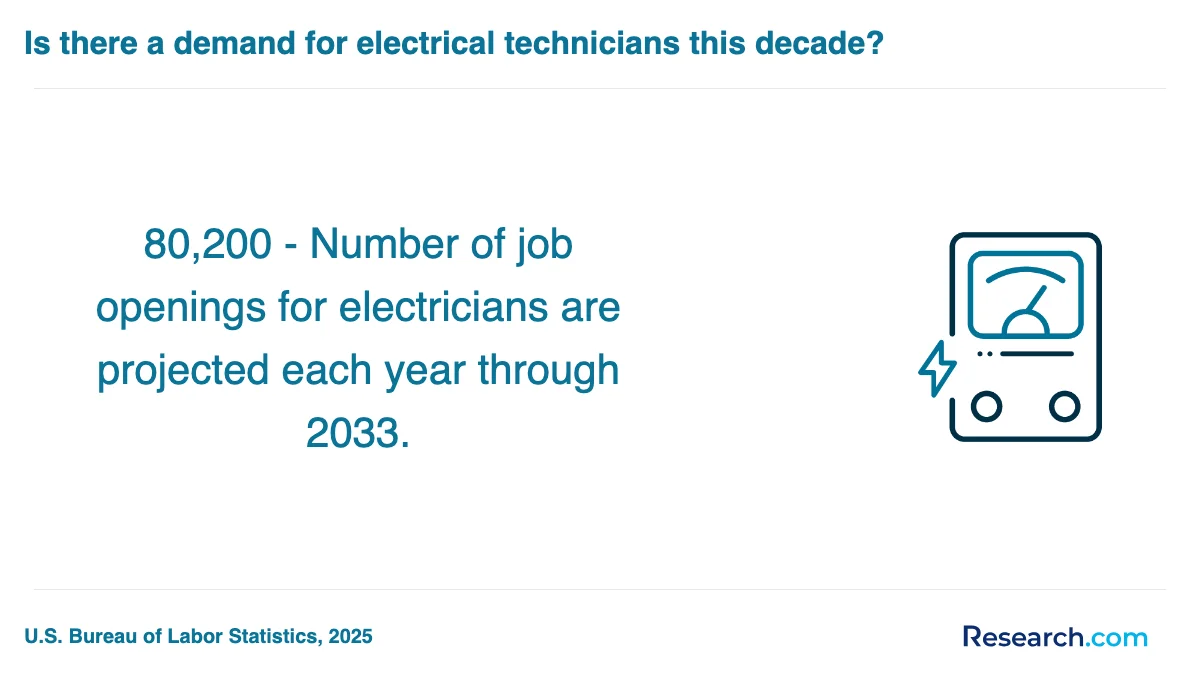
- An 11% nationwide growth rate for electricians expected from 2023 to 2033, mirrored in Chicago's vibrant market
- Average hourly wages around $30.43, with entry-level and top-tier earnings ranging from $20 to $48 per hour
- Annual salaries averaging approximately $69,151 for electricians, with experienced tradespeople earning significantly more
Graduates report positive experiences securing full-time jobs, often with overtime, enhancing their income and skill development. Many remark on the rewarding nature of working on large local projects. Students aiming to enter this market can explore a low cost online electrical engineering degree as a flexible complement to hands-on trade school training, boosting career options.
Best Electrical Technician Training Programs & Trade Schools - Top Electrical Tech Schools in Chicago for 2026
# 1 position
City Colleges of Chicago-Richard J Daley College - Electrician.
associateThe Electrician program at City Colleges of Chicago-Richard J Daley College offers a hybrid format with some distance-education options. It trains students to install, operate, maintain, and repair electric apparatus and systems, including residential, commercial, and industrial wiring. The curriculum covers electronics, electrical systems, safety, job estimation, testing, inspection, and relevant codes. Annual in-state tuition is $4,380. The program is accredited by the Higher Learning Commission.
# 2 position
HVAC Technical Institute - Electrician.
certificate or diplomaThe Electrician program at HVAC Technical Institute is a hybrid course designed to teach installation, operation, maintenance, and repair of electrical systems including residential, commercial, and industrial wiring. It covers electronics principles, power transmission, safety, testing, inspection, and relevant codes. Graduates earn a median income of $32,208 one year after completion. The program is accredited by the Council on Occupational Education.
# 3 position
City Colleges of Chicago-Richard J Daley College - Electrician.
certificate or diplomaThe Electrician program at City Colleges of Chicago-Richard J Daley College offers hybrid learning options. It trains students to install, operate, maintain, and repair electric systems, including residential, commercial, and industrial wiring, motors, controls, and electrical panels. The curriculum covers electronics principles, wiring, power transmission, safety, job estimation, and electrical codes. The annual in-state tuition is $4,380. The program is accredited by the Higher Learning Commission.
Frequently Asked Questions about electrician
After completing electrician trade school in Chicago, preparing for the job market involves several key steps. First, obtaining an Illinois electrician license is essential; this requires passing the state licensing exam and completing required work hours as an apprentice. According to the Illinois Department of Financial and Professional Regulation, licensed electricians earn a median wage of about $28 per hour in the Chicago area.
Networking is also vital. Joining local trade unions or professional groups can provide job leads and mentorship. Many Chicago trade schools offer job placement assistance-students should actively use these resources.
Finally, maintaining up-to-date knowledge of electrical codes and technologies through continuing education improves employment prospects in this competitive market.
Employers in Chicago seek electrician trade school graduates with a strong foundation in electrical theory and practical skills. Proficiency in reading blueprints and electrical diagrams is essential, as it ensures accurate installation and maintenance of electrical systems. According to the U.S. Bureau of Labor Statistics, attention to safety protocols ranks high due to the hazardous nature of electrical work.
Technical skills such as wiring, conduit bending, and troubleshooting electrical malfunctions are highly valued. Additionally, soft skills like problem-solving, communication, and teamwork are critical for effective collaboration on job sites. The Illinois Department of Employment Security highlights that adaptability and familiarity with emerging technologies, including smart systems, improve job prospects for graduates in Chicago's evolving electrical market.
Finding internships in Chicago relevant to electrician trade school programs involves several practical steps. First, students should connect with their school's career services, which often maintain partnerships with local electrical contractors and companies. According to the Illinois Department of Commerce, Chicago hosts over 1,200 electrical contractors, offering a variety of internship opportunities.
Additionally, job platforms like IllinoisWorkNet list electrician internships specifically in the Chicago area, helping students access openings from apprenticeships to hands-on training roles. Networking through trade unions such as the International Brotherhood of Electrical Workers (IBEW) Local 134 can also provide valuable internship placements.
Finally, attending local trade fairs and industry events in Chicago increases exposure to employers actively seeking interns, facilitating real-world experience that complements classroom learning.
Obtaining an electrician trade school diploma in Chicago significantly enhances career mobility and advancement opportunities. According to the U.S. Bureau of Labor Statistics, electricians with formal training and certification typically earn 20% more than those without credentials. In Chicago's competitive job market, a diploma demonstrates practical skills and knowledge that employers value, increasing the likelihood of securing apprenticeships and journeyman positions.
Trade schools also provide access to industry connections and apprenticeship programs essential for licensure in Illinois. Graduates often advance faster to supervisory roles, as documented by the Chicago Federation of Labor's workforce reports. This credential thus serves as a vital stepping stone for long-term career growth within the city's electrical industry.
Students attending electrician trade schools in Chicago can benefit from part-time jobs that provide practical experience and income. Common opportunities include electrical apprenticeships or helper roles with local contractors, where students assist licensed electricians on residential or commercial projects. These positions allow hands-on learning while earning wages.
Retail positions at hardware stores like Home Depot or Lowe's also complement coursework by familiarizing students with electrical tools and materials. Additionally, roles in maintenance departments of large facilities offer exposure to electrical systems and troubleshooting.
According to the U.S. Bureau of Labor Statistics, the Chicago metropolitan area employs over 6,000 electricians, indicating strong local demand and opportunities for on-the-job experience.
To choose the best electrician degree program near me in Chicago, IL, start by assessing the curriculum and practical training offered by various local universities and community colleges. Programs should provide a comprehensive understanding of electrical systems and ample hands-on opportunities through labs or apprenticeships. Consult Research.com to compare faculty expertise and graduate success rates, helping you select a program that best meets your career goals in the electrical field.
- How to Become an Electrician in Illinois https://www.best-trade-schools.net/locations/illinois/electrician-in-il/
- Illinois Electrician Guide: How Long Does It Take to Become an Electrician? https://industrack.com/industrack-blog/illinois-electrician-guide-how-long-does-it-take-to-become-an-electrician
- Electrician Training at a Top Trade School | Chicago, IL https://www.hvac-tech.com/electrician-training
- How Do You Become an Electrician in Chicago? https://skillsetgroup.com/2023/04/13/how-do-you-become-an-electrician-in-chicago/
- Studying to Become an Electrician at City Colleges of Chicago https://electricalschool.org/studying-to-become-an-electrician-at-city-colleges-of-chicago/
- Industry Programs | Union Electricians - Powering Chicago https://poweringchicago.com/programs/
- Online Residential Electrician from Chicago State University https://careertraining.csu.edu/training-programs/residential-electrician/
- Electrician Apprenticeship: 7 Things You Should Know Before Joining IBEW - InterCoast Colleges https://intercoast.edu/articles/electrician-apprenticeship-ibew/
- Electrician Trade Schools in Chicago https://www.electricianinformationresource.com/trade-schools-in-chicago.html
- Best Electrician Programs in Chicago, Illinois | How to Become https://toptradeschools.com/near-you/electrician/illinois/chicago/


