
Best Automotive Technician Training Programs & Trade Schools - Top Automotive Technician Schools in San Bernardino for 2026

Co-Founder and Chief Data Scientist
Choosing an automotive technician trade school in San Bernardino is a practical career decision: you need a program that fits your budget, schedule, skill level, and employment goals. The right school should offer hands-on vehicle training, clear preparation for industry credentials, transparent tuition information, and support for moving into local dealerships, repair shops, fleet operations, or specialty service roles.
This Research.com ranking guide is designed for students comparing automotive technician trade school options in and around San Bernardino. It explains what these programs typically teach, how long they take, what they may cost, what financial aid may be available, and how graduates can use their training in the local job market.
Use this guide to compare programs more confidently, understand the trade-offs between online and on-campus formats, and identify the factors that matter most before enrolling: accreditation, lab access, ASE preparation, employer connections, schedule flexibility, and total out-of-pocket cost.
Key benefits of finishing automotive technician trade school in San Bernardino
- Automotive technician trade school can provide a faster route into the workforce than a traditional four-year degree, with many programs focused on job-ready repair, diagnostic, and maintenance skills.
- Graduates from automotive technician trade schools in San Bernardino can expect an average annual salary around $73,146, with room to increase earnings through experience, overtime, manufacturer training, and certifications.
- Training can support several career paths, from general mechanic roles to specialized work such as diagnostic technician, diesel mechanic, collision repair technician, or master technician.
- Programs with strong lab components help students practice on real vehicles, tools, and diagnostic systems before entering a shop environment.
- Online or hybrid automotive technician coursework can add flexibility for working students, although hands-on labs remain important for building employer-ready skills.
- Many programs are designed to help students prepare for Automotive Service Excellence (ASE) certification exams, which are widely recognized by employers.
- Best Automotive Technician Training Programs & Trade Schools - Top Automotive Technician Schools in San Bernardino for 2026
- What can I expect from automotive technician trade schools in San Bernardino?
- Where can I work after finishing automotive technician trade schools in San Bernardino?
What can I expect from automotive technician trade schools in San Bernardino?
Automotive technician trade schools in San Bernardino typically combine classroom instruction with hands-on lab training. Students learn how vehicle systems work, then apply that knowledge by inspecting, diagnosing, repairing, and maintaining cars and light trucks using shop equipment and diagnostic tools.
You can expect coursework in areas such as engine performance, brake systems, suspension and steering, electrical systems, wheel alignment, emissions, safety procedures, and service documentation. Programs such as those at San Bernardino Valley College emphasize both technical theory and lab-based troubleshooting, so students can move from basic maintenance tasks to more advanced diagnostics.
Some programs follow a sequence of multi-level courses, such as Auto Tech 1, 2, and 3 offered by the County Superintendent of Schools. This structure helps students build skills gradually while adding work-based learning opportunities, including apprenticeships that may connect students with local dealerships and repair shops.
Program length varies. Some options can be completed in about a year, while others take closer to two years. Universal Technical Institute offers a 51-week associate degree pathway that is designed as an accelerated career launch option. The best fit depends on whether you want the shortest route to entry-level work, a broader credential, or more time for specialized training.
By the end of a strong program, students should be able to perform common service tasks, use diagnostic equipment, follow safety standards, communicate repair findings, and prepare for ASE certification exams. Financial aid may also be available, which can help eligible students manage tuition while focusing on training.
Where can I work after finishing automotive technician trade schools in San Bernardino?
Graduates of automotive technician trade schools in San Bernardino can work in several types of automotive service environments. The most common employers include dealerships, independent repair shops, collision centers, tire and brake shops, fleet maintenance departments, and parts or service operations.
Dealerships are a common destination for new technicians, especially for graduates who want brand-specific training and a structured career ladder. Local employers may include dealerships connected to brands such as Honda and Kia, where technicians diagnose vehicle problems, perform maintenance, complete warranty work, and use manufacturer tools and service procedures.
Collision repair is another option. Shops such as Gerber Collision & Glass employ technicians who focus on restoring damaged vehicles, which may involve bodywork, paint preparation, panel replacement, structural repair, and related service tasks. This path may appeal to students who prefer visual, hands-on restoration work.
Fleet maintenance roles are also important in the region. These jobs involve keeping delivery trucks, service vehicles, buses, and other work vehicles operating safely. Fleet work can be attractive because it often emphasizes preventive maintenance, consistent schedules, and long-term equipment familiarity.
Graduates may also pursue roles in parts delivery, service advising, diagnostics, wheel repair, or specialized maintenance. The local market has shown demand for trained technicians, with over 370 positions available for skilled candidates across different automotive work settings.
After finishing an automotive technician trade school program in San Bernardino, many graduates may enter jobs paying around $35 per hour, or roughly $73,146 annually. That is about $1,400 per week, though actual pay depends on employer, experience, certifications, schedule, and specialization.
Some technicians with more experience, overtime availability, or in-demand diagnostic skills report hourly pay above $37. Overtime can also add income, with some workers earning an extra $5,000 yearly from overtime.
Pay can vary by role. A master technician position may average around $64,667 a year or $31 hourly, but these roles often involve more complex diagnostics, leadership expectations, and advanced repair responsibilities. In some shops, a master technician may also gain access to better assignments, manufacturer training, or performance-based pay.
Students should compare advertised wages carefully. Entry-level pay is usually lower than experienced technician pay, and total compensation may include benefits, certification reimbursement, tool allowances, paid training, or overtime opportunities. ASE certification, manufacturer credentials, and proven diagnostic ability can all affect long-term earning potential.
- Admission typically requires a high school diploma or equivalent, and many programs can be completed in about one year.
- Automotive technician programs commonly prepare students for Automotive Service Excellence (ASE) certification exams, which are important for many service and repair careers.
- Tuition costs usually range from $15,000 to $30,000, with financial aid available for eligible students.
- Entry-level technicians in San Bernardino earn around $35,000 to $40,000, while the national median salary is $49,670 as of May 2024.
- There are more than 67,000 annual job openings nationwide, and the Inland Empire region continues to need skilled automotive technicians.
- Accreditation, hands-on training, lab quality, ASE preparation, schedule flexibility, and job placement support are key factors when comparing schools.
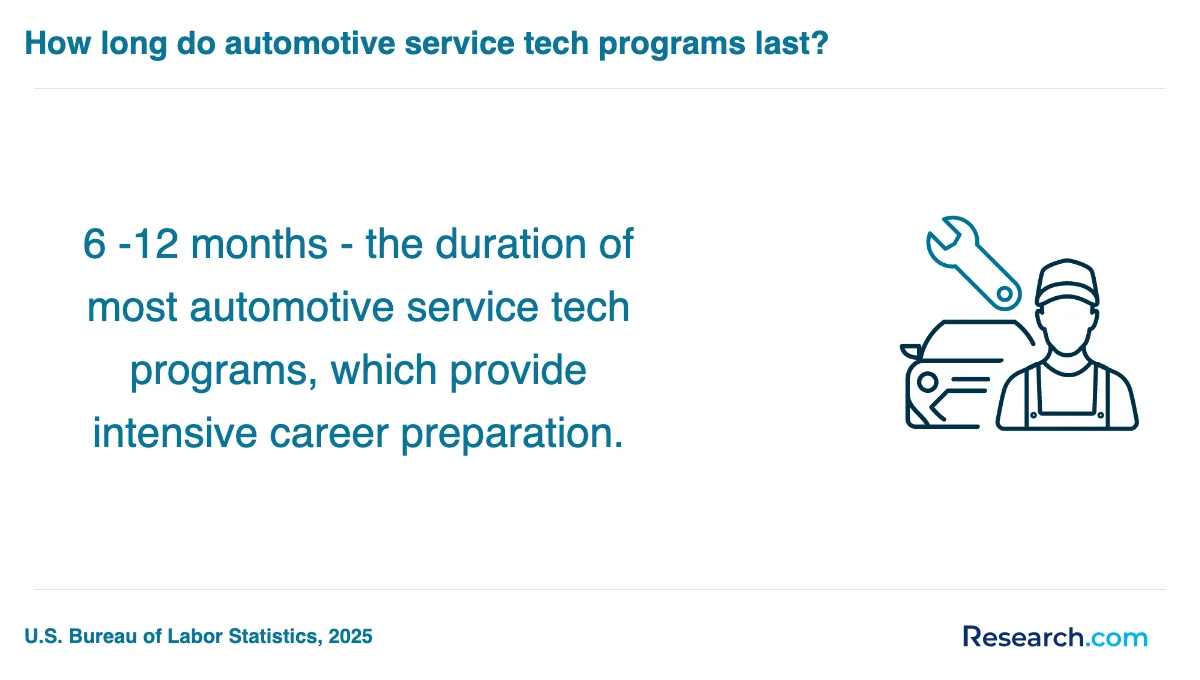
Most automotive technician trade school programs in San Bernardino take about 9 to 12 months to complete. This timeline is designed for students who want focused career training without spending several years in school.
Shorter programs usually concentrate on core service and repair skills, such as inspections, maintenance, brakes, steering and suspension, electrical basics, and engine performance. Longer options may include broader coursework, more lab hours, or additional preparation for specialized credentials.
The pace can be demanding. Students often move quickly from basic vehicle systems into hands-on diagnostics and repair procedures. For working students, the schedule matters as much as the total program length, so it is important to ask whether classes are offered during the day, evening, weekends, or in a hybrid format.
Before enrolling, compare the completion time with the credential awarded. A shorter certificate may help you enter the workforce faster, while a longer diploma or associate-level pathway may provide more depth, more lab exposure, or stronger transfer and advancement options.
The main difference is how students complete theory coursework and hands-on training. Online or hybrid automotive technician programs may allow students to study topics such as safety, engine systems, service procedures, and diagnostics through digital lessons. On-campus programs place students in shops and labs more frequently, where they practice with vehicles, lifts, tools, and diagnostic equipment.
Online learning can work well for students who need flexibility because of work, family, or commuting constraints. Programs associated with schools such as San Bernardino Valley College or Universal Technical Institute (UTI) may use digital content for some theory-based instruction. However, automotive training cannot be fully mastered through reading or video alone; students still need lab time to build real repair skills.
On-campus training offers immediate access to instructors, vehicles, tools, and peer learning. At campuses such as UTI's San Bernardino location, students can get direct feedback while working through service procedures. This format can be especially helpful for beginners who need close supervision and repeated hands-on practice.
Cost may also differ. Online courses might start as low as $700, while more equipment-intensive on-campus programs can cost up to $20,000. When comparing formats, look beyond tuition and ask how many lab hours are included, whether tools are provided, where hands-on training happens, and whether the program prepares students for ASE exams or employer expectations.
The average tuition for automotive technician programs in the San Bernardino area is about $18,350 for a roughly 50-week course. Actual cost varies by school, credential level, program length, lab access, included fees, and whether students need to buy tools or books separately.
At the Center for Employment Training in nearby Colton, students have completed a hands-on program with 810 contact hours over seven months for a tuition of $14,221. This type of shorter, job-focused program may appeal to students who want a direct route into entry-level automotive work.
Universal Technical Institute in Rancho Cucamonga offers a longer 19-month program costing $54,950 and providing 90 contact hours. While this option is more expensive, students should evaluate whether the additional time, curriculum, facilities, and employer connections align with their career goals.
Tuition is only one part of the total cost. Students may also need to budget for books, tools, lab fees, uniforms, transportation, exam fees, and personal expenses. Tool costs alone may range from nearly $400 to $1,400. Financial aid can reduce out-of-pocket cost for eligible students; over half the CET students received scholarships averaging $7,703.
Students who want to continue beyond trade school can also compare longer academic options, such as a bachelor of science in automotive technology. That path may make sense for those interested in management, advanced technical roles, or broader automotive technology study, but it usually requires a larger time and cost commitment.
Financial aid for automotive technician trade schools in San Bernardino may include federal aid, state aid, veterans benefits, scholarships, employer support, and payment plans. Availability depends on the school, program eligibility, student status, and financial need.
The first step for many students is completing the FAFSA. Eligible students may qualify for federal Pell Grants, which do not have to be repaid, or federal student loans, which must be repaid with interest. Not every trade school or program participates in federal aid, so students should confirm eligibility directly with the financial aid office before enrolling.
California residents may also explore the Cal Grant program. Veterans and active military members may be able to use GI Bill benefits at approved schools. Some automotive employers may offer tuition reimbursement, sponsorships, or paid training, especially for workers pursuing certifications or brand-specific technical skills.
Some schools also offer payment plans to spread costs over time. This can help students manage programs that may cost anywhere from $6,000 to $25,000, but payment plans are not the same as grants or scholarships. Ask for a written estimate showing tuition, fees, books, tools, repayment terms, and any amount due before classes begin.
Most automotive technician trade schools in San Bernardino require a high school diploma or GED. Some programs may also ask students to complete a placement test, admissions interview, orientation, or basic skills assessment.
Students do not usually need professional mechanic experience before enrolling. However, basic math, reading comprehension, and comfort with hands-on work are useful. Technicians often read service manuals, interpret diagnostic codes, measure components, calculate costs, and follow detailed safety procedures.
Typical enrollment requirements may include:
- A high school diploma or GED
- Basic algebra and reading comprehension skills
- Interest in vehicles, tools, and hands-on problem-solving
- Ability to follow safety rules in a shop or lab environment
- A placement test or informal interview, depending on the school
Before applying, students should ask whether the program has age requirements, physical requirements, tool requirements, immunization or background check policies, driver’s license expectations, or prerequisites for specific advanced courses.

Automotive technician trade school courses in San Bernardino usually begin with foundational maintenance, safety, and vehicle systems before moving into diagnostics and specialized repair. The goal is to help students understand how major systems work and how to service them using industry procedures.
Common courses include Automotive Fundamentals and Maintenance, Automotive Engine Performance, and Engine Repair. These classes help students learn basic service tasks, identify common mechanical problems, use diagnostic equipment, and understand how engine systems affect performance.
Students may also take hands-on courses in:
- Automotive Brakes
- Suspension and Steering
- Manual Transmissions and Transaxles
- Wheel Alignment
- Electrical and electronic systems
- Preventive maintenance and inspection procedures
At San Bernardino Valley College, some subjects pair lectures with around 54 contact hours of hands-on lab time. Lab hours are important because they allow students to practice inspection, removal, installation, adjustment, and diagnostic procedures on real equipment.
Advanced coursework may include BAR Specified Diagnostic & Repair and Smog Check Certification, which are especially relevant in California because emissions and inspection requirements affect many automotive service jobs. Some programs may also include practical life skills such as roadside emergency procedures or car-buying guidance.
Automotive technician trade schools in San Bernardino may offer specializations that let students focus on a specific vehicle system, repair category, or employer need. Specialization can help graduates stand out when applying for jobs, especially if they want to move beyond general maintenance roles.
Common specialization areas include:
- Automotive Engine Performance using advanced diagnostic tools
- Automatic and Manual Transmission service and rebuild
- Automotive Preventative Maintenance
- Wheel Alignment and Brakes
- Diesel Technology for students interested in commercial fleets and heavier vehicles
- Hybrid and electric vehicle training San Bernardino programs for students interested in clean vehicle technology
- Welding Technology and Industrial Maintenance Technician options at trade schools such as UTI
Students should choose a specialization based on local employer demand, personal interest, expected tool requirements, and long-term advancement. For example, diesel and fleet maintenance may suit students who want commercial vehicle work, while engine performance and diagnostics may appeal to those who enjoy complex troubleshooting.
For students weighing the college vs. trade school decision, automotive specializations can be a strong argument for trade school when the goal is to enter a technical role quickly with focused, job-specific training. Associate degrees and Certificates of Achievement can also support advancement when paired with experience and certifications.
The best automotive technician trade school in San Bernardino is the one that matches your career goal, budget, schedule, and learning needs while providing enough hands-on training to prepare you for real shop work. Do not choose based on speed or tuition alone.
Start by reviewing accreditation, program outcomes, lab facilities, instructor experience, and ASE preparation. A strong program should teach both mechanical fundamentals and modern computer-based diagnostics. Ask whether students train on current vehicles, scan tools, lifts, alignment systems, and manufacturer or industry-standard equipment.
Compare each program using these questions:
- Is the school accredited or otherwise recognized by employers?
- Does the curriculum prepare students for ASE certification exams?
- How many hands-on lab hours are included?
- Are tools, books, uniforms, and exam fees included in tuition?
- Does the school offer internships, apprenticeships, or employer partnerships?
- Are evening, weekend, online, or hybrid options available?
- What job placement support is provided after graduation?
- What is the total cost after grants, scholarships, and loans?
Career support can make a major difference. Look for schools that offer resume help, interview preparation, employer introductions, and guidance on certification pathways. Students comparing options outside the region can also review broader vocational trade schools to understand how San Bernardino programs compare with national online and hybrid alternatives.

Automotive technician trade school graduates in San Bernardino can pursue entry-level service roles, specialized repair jobs, and related positions that use automotive knowledge outside the repair bay. Career growth usually depends on experience, certifications, tool proficiency, employer training, and the ability to diagnose increasingly complex problems.
Entry-level roles often include automotive service technician, lube technician, tire technician, maintenance technician, or general mechanic. These jobs build speed, accuracy, and familiarity with shop procedures. They are common starting points for graduates who want to gain paid experience quickly.
With additional training, graduates may move into specialized work such as diagnostic auto technician, heavy line service technician, diesel mechanic, body technician, or cosmetic wheel repair technician. Collision centers, dealerships, independent repair shops, and fleet employers may all need these skills.
Some graduates use their technical background in related roles such as parts delivery, service advising, estimating, or shop coordination. These paths may suit workers who enjoy customer interaction, logistics, or administrative responsibilities but still want to stay connected to the automotive industry.
Graduates who want to improve their credentials may pursue ASE exams, manufacturer training, or specialized online courses. Some students also compare options such as the cheapest automotive engine technician course online to add targeted skills while working.
- Entry-level roles: automotive service technician, lube technician, tire technician
- Specialized roles: body technician, diesel mechanic, heavy line service technician
- Alternative career options: diagnostic technician, cosmetic wheel repair, parts delivery, estimator
The job market for automotive technician trade school graduates in San Bernardino is supported by steady demand for vehicle maintenance, repair, diagnostics, collision work, and fleet service. Graduates may find opportunities with dealerships, independent shops, tire and brake centers, collision repair facilities, and fleet maintenance employers.
Local openings have included roles ranging from lube technicians and tire technicians to diagnostic specialists and experienced repair technicians. Over 370 openings and climbing show that employers in the area continue to look for workers with hands-on training and practical shop skills.
Pay varies by employer and role. For students researching auto mechanic salary San Bernardino CA, wages may range from $19 to $48 per hour, depending on experience, specialization, certifications, and job responsibilities. Benefits may include health insurance, paid holidays, retirement plans, paid training, or support for ASE certification.
Certification and continued training can improve competitiveness. Employers may value graduates from programs that include hands-on labs, ASE preparation, work-based learning, or manufacturer-aligned training such as GM's ASEP. New technicians who keep learning electrical diagnostics, emissions systems, hybrid technology, and advanced driver-assistance-related service may be better positioned for long-term growth.
Students comparing local training options can review these automotive technician trade schools to better understand how program quality, cost, and employer alignment may affect job opportunities after graduation.
Best Automotive Technician Training Programs & Trade Schools - Top Automotive Technician Schools in San Bernardino for 2026
# 1 position
San Bernardino Valley College - Automobile/Automotive Mechanics Technology/Technician.
associateSan Bernardino Valley College offers a hybrid program in Automobile/Automotive Mechanics Technology/Technician. The curriculum covers brake systems, electrical systems, engine performance and repair, suspension and steering, transmissions, and heating and air conditioning systems. Annual in-state tuition is $1,185. The program is accredited by the Western Association of Schools and Colleges Accrediting Commission for Community and Junior Colleges.
# 2 position
San Bernardino Valley College - Automobile/Automotive Mechanics Technology/Technician.
certificate or diplomaSan Bernardino Valley College offers a hybrid Automobile/Automotive Mechanics Technology/Technician program designed to prepare students to repair, service, and maintain various automobile systems. The curriculum covers brake systems, electrical systems, engine performance and repair, suspension and steering, transmissions, and heating and air conditioning. Annual in-state tuition is $1,185. The program is accredited by the Western Association of Schools and Colleges Accrediting Commission for Community and Junior Colleges.
Frequently Asked Questions about automotive technician
After completing an automotive technician trade school in San Bernardino, preparing for the job market involves several key steps. First, obtaining industry certifications such as the National Institute for Automotive Service Excellence (ASE) can increase employability. ASE certification is widely recognized and often required by employers in California's automotive sector.
Networking is also crucial. Graduates should connect with local repair shops, dealerships, and industry professionals through job fairs and online platforms like LinkedIn. According to the California Employment Development Department, automotive service technicians in San Bernardino earn a median annual wage of around $48,000, with demand expected to grow moderately.
Gaining hands-on experience through internships or apprenticeships can further improve job prospects. Additionally, maintaining up-to-date knowledge of evolving automotive technologies, especially electric and hybrid vehicles, is essential for staying competitive in the local job market.
Employers in San Bernardino seek automotive technician graduates with strong diagnostic and repair skills. According to the California Employment Development Department, proficiency in computerized engine controls and electronic systems is essential due to the growing complexity of modern vehicles.
Hands-on experience with tools and equipment is highly valued. Trade schools that provide practical training in brake systems, transmissions, and engine repair better prepare students for the workforce.
Additionally, communication skills are crucial. Technicians must explain issues and repairs clearly to customers and coworkers.
Employers also prioritize ASE certification readiness, as it is a recognized industry standard that enhances job prospects in the San Bernardino area.
Finding internships in San Bernardino related to automotive technician trade school programs involves several practical steps. Start by contacting local trade schools, as many maintain partnerships with nearby auto repair shops and dealerships. These schools often have internship placement services or job boards exclusive to students.
Additionally, the San Bernardino Workforce Development Board offers resources and programs connecting students with employers in the automotive industry. According to their 2023 report, nearly 40% of automotive-related internships in the region are facilitated through these initiatives.
Networking is also essential-attending local automotive trade shows or industry events can help students meet potential employers. Online platforms like the California Employment Development Department's website provide listings for internships and apprenticeships in the area.
Obtaining a diploma from an automotive technician trade school in San Bernardino significantly enhances career mobility and advancement opportunities. According to the California Employment Development Department, skilled automotive technicians in the Inland Empire, which includes San Bernardino, experience a steady job growth rate of about 7% through 2030. A diploma certifies technical proficiency, making graduates more competitive for entry-level positions and promotions.
Employers in San Bernardino increasingly prefer candidates with formal training due to the complexity of modern vehicle systems. Graduates often qualify for specialized roles, such as diagnostics or hybrid vehicle repair, which tend to offer higher wages. Additionally, many trade schools maintain strong connections with local dealerships and repair shops, facilitating internships and job placement.
As a result, diploma holders typically see faster career progression compared to those without formal credentials, supporting improved long-term earnings and job stability in the region.
Students attending automotive technician trade schools in San Bernardino can benefit from part-time jobs that provide practical experience alongside their studies. Local auto repair shops often seek entry-level assistants or lube technicians, roles that help students apply classroom knowledge in real-world settings. According to the U.S. Bureau of Labor Statistics, automotive service technicians in California earn a median wage of about $22 per hour, which can increase with experience gained in part-time roles.
Additionally, dealerships and tire service centers in San Bernardino frequently offer part-time positions. These jobs allow students to familiarize themselves with vehicle diagnostics and customer service, essential skills for their future careers. Working in such environments supports networking opportunities and skill development, complementing formal education effectively.
To find the best Automotive Technician degree program near me, consider researching local community colleges or trade schools to evaluate their curricula, accreditations, and student success rates. In the region near San Bernardino, CA, there are various educational programs and universities offering specialized automotive technology training tailored to the current industry standards. Research.com can be a helpful resource in comparing different programs and identifying those with strong reputations and facilities.
- Best Automotive Technician Training Programs & Trade Schools - Top Automotive Technician Schools in San Luis Obispo for 2026
- Best Automotive Technician Training Programs & Trade Schools - Top Automotive Technician Schools in Monterey for 2026
- Best Automotive Technician Training Programs & Trade Schools - Top Automotive Technician Schools in Greeley for 2026
- Best Automotive Technician Training Programs & Trade Schools - Top Automotive Technician Schools in Walla Walla for 2026
- Best Automotive Technician Training Programs & Trade Schools - Top Automotive Technician Schools in Vancouver for 2026
- Best Automotive Technician Training Programs & Trade Schools - Top Automotive Technician Schools in Wenatchee for 2026
- Best Automotive Technician Training Programs & Trade Schools - Top Automotive Technician Schools in Tacoma for 2026
- Automotive Technology - San Bernardino Valley College https://www.valleycollege.edu/academics/pathways/mit/automotive-tech/
- Automotive Technology - San Bernardino Valley College https://iewatercouncil.sbccd.org/academics/pathways/mit/automotive-tech/index.php
- Auto Mechanic Schools in San Bernardino CA - ASE 101 https://ase101.com/auto-mechanic-schools-in-san-bernardino-ca/
- Mechanic Trade Schools - San Bernardino, CA https://mechaniccareernow.com/mechanic-schools/san-bernardino-ca
- Automotive Technology Cert. - Copper Mountain College https://www.cmccd.edu/programs/automotive-technology-cert/
- Schools to Become an Auto Mechanic in California https://www.best-trade-schools.net/locations/california/becoming-an-automotive-technician/
- San Bernardino Valley College - LAUNCH https://launchapprenticeship.org/school/san-bernardino-valley-college/
- Automotive Technician Associate of Science Degree | Academic Catalog https://catalog.valleycollege.edu/degree-certificate-program-index/automotive-technology/automotive-technician-as-degree/
- How Long is Automotive Technician School? | UEI College https://www.uei.edu/guides/automotive-technician/how-long-automotive-technician-school/
- Colton, CA - Center for Employment Training https://cetweb.edu/location/colton-ca


