2027 Online Supply Chain Management Degrees With Real-World Planning and Distribution Case Studies

Co-Founder and Chief Data Scientist
Facing a disrupted supply chain amid skyrocketing demand, a logistics coordinator must swiftly devise a distribution plan that minimizes delays and curbs soaring transportation costs.
This challenge intensifies as 62% of adult learners enrolling in graduate programs seek flexible online options, according to the National Center for Education Statistics, reflecting a critical demand for accessible education that fits complex schedules.
Such flexibility enables professionals to pivot careers without sacrificing current employment or family commitments, a necessity given ongoing labor shortages and evolving industry expectations. This article evaluates online supply chain management degrees featuring real-world planning and distribution case studies, offering actionable guidance to navigate program choices that align with these urgent professional realities.
Key Things You Should Know
- Employers prioritize candidates with demonstrated case study experience reflecting real-world distribution complexity; LinkedIn data from 2024 shows 62% of hiring managers in supply chain roles value project-based learning over theoretical credentials.
- Programs emphasizing hands-on planning face curriculum tradeoffs, often sacrificing advanced analytics training, which the Bureau of Labor Statistics links to a 14% wage premium in supply chain analyst roles.
- Average online degree completion spans 24-30 months with costs exceeding $25,000; this timing affects mid-career pivot feasibility amid rapid industry automation shifts documented by McKinsey's 2024 supply chain report.
What is an online supply chain management degree and how does it integrate real-world case studies?
Online supply chain management degree programs with practical case studies deliver operational and analytical skills essential for navigating pervasive industry disruptions. For instance, responding to automotive parts shortages demands distinct tools compared to managing pharmaceutical cold chain logistics, illustrating how integrated real-world planning and distribution case studies in supply chain management degrees hone contextual problem-solving.
Such programs emphasize adaptive decision-making over abstract frameworks by using data-driven scenarios and simulations that replicate supplier risk assessment, negotiation, and network redesign. Students gain fluency in modeling disruptions and optimizing responses through interactive platforms reflective of current market complexities.
Employers value graduates equipped to anticipate systemic uncertainties like supplier lead-time variability or geopolitical risks, which conventional curricula might overlook. With 96% of supply chain professionals surveyed by the Association for Supply Chain Management intending to remain in the field for over five years-a segment supported by a median salary near $99,100-these practical competencies translate to tangible career sustainability.
For professionals seeking a strategic pivot or growth, selecting programs that integrate substantive case studies enhances readiness for cross-functional roles requiring both operational savvy and technological fluency. Prospective students should also weigh programs alongside options such as an MBA operations management to align educational investments with targeted career outcomes.
How do online supply chain management programs compare with on-campus options for quality and flexibility?
Online supply chain management programs maintain academic rigor comparable to many on-campus degrees by employing the same faculty and curricula, including detailed case studies on inventory optimization and distribution network design. This quality comparison reveals that remote students can engage thoroughly with logistics-specific challenges while retaining the flexibility to balance work and personal commitments.
The flexibility of online versus on-campus supply chain management degrees especially benefits mid-career professionals, allowing them to upskill without career interruption amid 46,502 projected annual job openings and an expected 18% employment growth over the next decade.
Practical application remains a critical consideration. For instance, a logistics manager can immediately apply online coursework insights to improve their firm's supply chain operations, offsetting the reduced face-to-face mentorship typical of remote study.
However, hands-on opportunities such as internships or site visits often require more proactive effort from online learners, who must leverage virtual labs and simulation tools to gain employer-valued real-world experience. Employers increasingly prioritize demonstrable skills grounded in applied scenarios and software proficiency.
Students weighing their options should consider the tradeoffs between the convenience of online study and the networking advantages of hybrid models that combine remote learning with local practicums. For budget-conscious professionals exploring online business education, reviewing online MBA programs under 30k may provide additional relevant pathways.
How can students verify accreditation and program quality for online supply chain management degrees?
Accreditation verification for online supply chain management programs extends beyond institutional approval by bodies like HLC or SACSCOC; it must include program alignment with industry standards from the Association for Supply Chain Management (ASCM) or Council of Supply Chain Management Professionals (CSCMP).
This differentiation impacts transfer credits, federal aid, and employer recognition. For example, a program lacking these endorsements may limit graduates' employability despite institutional accreditation.
Evaluating quality assurance for online supply chain management degrees requires analyzing outcome metrics. The University of Houston's online BBA graduates earning a median $71,241 just four years post-graduation exemplifies a strong return on investment compared to the comparatively low tuition of schools like Broward College ($2,753/year) or Florida State College at Jacksonville ($3,495/year).
This contrast reveals trade-offs between affordability and market-relevant outcomes, critical for career pivots requiring strategic educational investment.
Additional factors such as curricular integration of case studies and simulation tools reflect practical readiness for complex manufacturing or retail distribution environments. Faculty professional certifications and industry experience further validate program relevance beyond academic theory. Prospective students should also confirm these aspects to avoid programs with limited career support or weak employer networks, which frequently undermine employment success.
Students looking to find the cheapest MBA options or comparable degrees must apply rigorous criteria and verify online supply chain management program accreditation while considering real workforce implications.
What courses and case-study projects are typically included in an online supply chain management curriculum?
Mastering supply chain management involves rigorous exposure to both conceptual frameworks and applied problem-solving methods, focusing on specific industry scenarios. For instance, retail-focused courses embed distribution and logistics planning projects in supply chain programs that simulate seasonal inventory mismatches demanding agile replenishment strategies, while manufacturing tracks prioritize lean production with supplier risk controls.
These nuanced case studies cultivate critical skills beyond textbook theory-preparing students to navigate disruptions like capacity constraints or demand volatility with tactical agility.
Practical curricula also integrate scenario-based simulations where students balance cost, service levels, and timing pressures reflective of complex environments such as pharmaceuticals or automotive industries.
Emphasis on risk management and sustainable practices addresses shifting regulatory demands, while modules on supply chain finance and global trade compliance prepare students for intricate cross-border challenges. This applied focus sharpens decision-making, fostering graduates who can measurably reduce lead times and optimize inventory turns-key drivers of employer profitability.
According to ASCM's 2023-2024 survey, professionals holding a master's degree in this field command a median salary of $113,300, notably higher than the general master's cohort.
Prospective learners should prioritize programs with applied case studies aligned to their career sectors to ensure quicker employment, as most find roles within three months. Those seeking adjunct expertise may also consider exploring online accelerated project management degree programs to complement supply chain competencies and broaden operational leadership potential.
What admission requirements and prior experience do online supply chain management programs expect?
Admission to online supply chain management programs hinges on more than academic credentials; employers and programs alike prioritize applied experience that aligns with workforce demands. Bachelor's degrees in business, engineering, or related fields set a baseline, but quantitative aptitude demonstrated through coursework in statistics or operations research significantly impacts preparedness.
Candidates with 2 to 5 years of relevant supply chain experience-such as procurement or inventory management-navigate practical scenarios, like logistics optimization, more effectively than those lacking hands-on exposure.
Applicants without direct supply chain backgrounds often face prerequisite courses to bridge gaps, emphasizing analytical and project management skills. Mastery of ERP systems and supply chain analytics software is increasingly non-negotiable given the sector's rapid digitization and an expected compound annual growth rate of 17.3% in supply chain analytics through 2028. Practical ability to translate data into operational decisions is a critical differentiator.
International candidates must verify English proficiency through TOEFL or IELTS, with admissions committees scrutinizing detailed resumes and professional endorsements for evidence of real-world involvement in strategic planning or vendor negotiations. Demonstrable leadership in cross-functional teams signals capacity to apply academic models to complex distribution challenges.
- Bachelor's in relevant fields often required, usually with a minimum GPA around 3.0
- Standardized tests like GRE or GMAT are sometimes waived for experienced applicants
- 2-5 years of supply chain experience preferred, focusing on procurement, distribution or planning roles
- Proficiency in supply chain analytics tools and ERP platforms is essential
- International students must demonstrate English proficiency and relevant professional experience
How long do online supply chain management degrees take and what do they cost?
Deciding on a supply chain management educational path involves weighing program length, cost, and practical outcomes against workforce demands and personal circumstances. Bachelor's degrees, typically spanning four years and costing between $20,000 and $60,000, deliver comprehensive theory and leadership preparation but carry higher opportunity costs, including time away from work and delayed earnings.
Accelerated master's programs offer a faster alternative-around 18 months-often priced between $25,000 and $50,000, appealing to those targeting mid-career specialization.
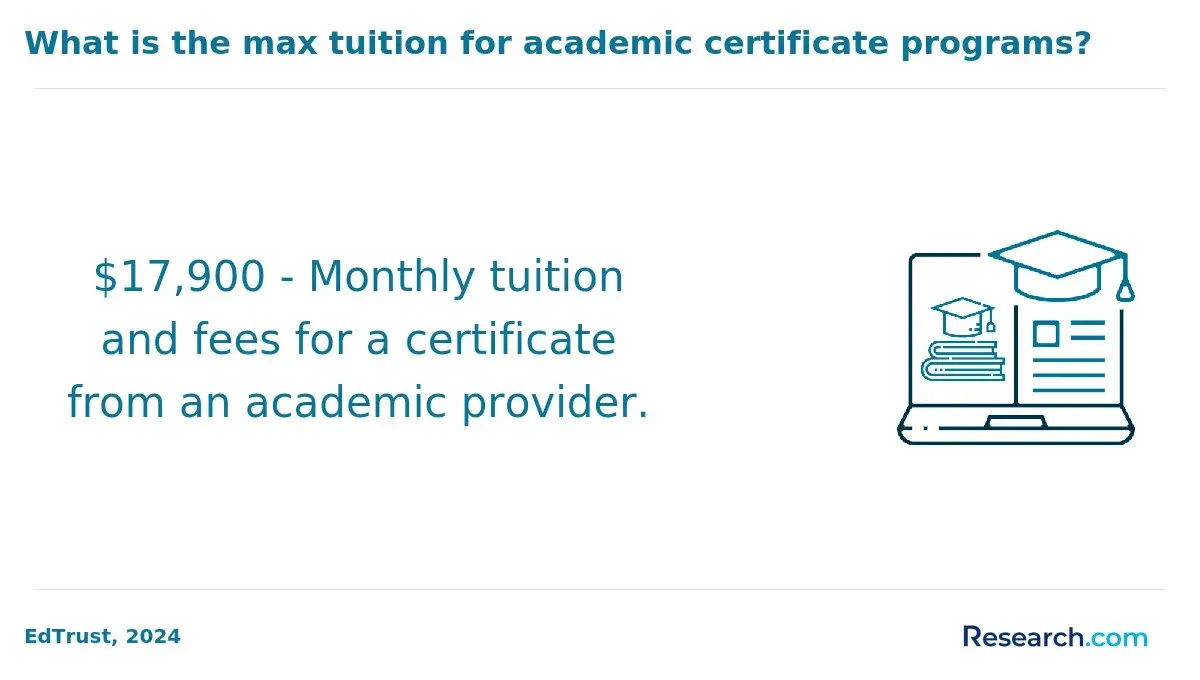
Certificate programs, some as short as six months, provide targeted skills like warehouse management or transportation planning, enabling quicker entry into niche roles such as last-mile delivery or supply chain analytics. However, these shorter credentials may restrict long-term promotion potential by omitting broader strategic content.
Between 2012 and 2020, degree and certificate completions in this field surged by over 75%, illustrating heightened employer demand for candidates familiar with complex supply networks and demand forecasting. Employers increasingly value programs embedding real-world case studies and practical experience, which directly impact hire-ability and career progression.
Key practical considerations include the cumulative cost of tuition, technology fees, software licenses, and potential unpaid internships. A professional transitioning from general business must balance these factors with their career timeline, choosing between comprehensive degree programs and accelerated credential options.
What supply chain careers can graduates pursue and which roles use planning case studies most?
Operations research analysts and demand planners represent critical nodes in the supply chain management ecosystem, utilizing planning case studies to address complex logistical challenges. Their work frequently involves quantitative modeling to optimize resource allocation and distribution, such as developing mathematical solutions that reduce costs without compromising delivery times in sectors like manufacturing and retail.
Practical training through case studies equips these professionals to navigate issues like multi-tier supplier interruptions, variable demand cycles, and transportation bottlenecks. Demand planners, in particular, apply this knowledge to generate precise forecasts, adapt replenishment schedules, and align cross-departmental functions-vital for industries prone to demand volatility such as consumer electronics and pharmaceuticals.
This analytical skill set corresponds with a Bureau of Labor Statistics projection forecasting 25% employment growth for operations research analysts from 2019 to 2029, a rate significantly above average. The median annual salary of $86,200 reflects employer valuation of expertise in advanced supply chain planning techniques and the ability to mitigate risks associated with inventory and service level tradeoffs.
Logistics decision-makers utilize scenario analysis from case studies to determine reorder points and distribution center locations, directly impacting operational resilience and customer satisfaction. For professionals targeting roles with supply chain planning responsibility, this grounding translates academic concepts into actionable business strategies-a necessary capability given the operational complexities confronting today's supply networks.
What salary ranges and advancement opportunities exist for supply chain management graduates in the U.S.?
Salary trajectories in supply chain management vary significantly by role and industry, often reflecting operational complexities rather than mere tenure. Entry-level logistics analysts start around $65,000 annually but benefit from robust demand growth of 16.7% by 2026, pointing to accelerated opportunities for early-career professionals willing to engage with evolving market needs.
Mid-career supply chain managers earn between $90,000 and $120,000, although their compensation depends heavily on sector-specific challenges. For example, those working in manufacturing must navigate complex vendor negotiations and compliance, which typically commands higher pay compared to healthcare supply chain roles where regulatory expertise dominates.
Key career advancement hinges on expanding beyond siloed skills. Proficiency in advanced planning software, data analytics, and real-time logistics can elevate a candidate to roles with salaries exceeding $130,000, such as director of supply chain or operations strategy lead. Conversely, professionals who do not broaden their skill set or remain confined to a single industry may find upward mobility constrained.
Employers prioritize candidates with practical, case-study-driven training that translates directly to measurable impact and faster onboarding in vendor relations and distribution. This operational readiness often determines the pace of salary negotiation leverage and promotion timing, underscoring the importance of applied educational experiences aligned with industry expectations.
Which industry certifications align with online supply chain management degrees and enhance employability?
The value of industry certifications alongside online supply chain management degrees lies in their targeted alignment with specific operational roles, which can materially influence employability and career trajectory. For example, manufacturing professionals gain a distinct edge with CPIM certification focused on internal operations and inventory control-skills critical in production-heavy settings.
Certified Supply Chain Professional (CSCP) certification broadens this scope, preparing candidates to manage global logistics and supplier networks across sectors such as retail and e-commerce. This credential frequently leads to a 10-15% salary increase and faster promotional movement by validating comprehensive supply chain knowledge.
Procurement-focused careers benefit most from Certified Professional in Supply Management (CPSM), which emphasizes strategic sourcing and supplier negotiation. Employers in logistics-dense regions like Charles Town (WV), Knoxville (TN), and Houston (TX) highly value CPSM for readiness in regional supply chain demands.
Balancing certification investment against workforce reentry urgency remains a practical challenge. Non-certified professionals risk stagnant growth or restricted mobility, while overqualifying in misaligned certifications can impede job matching. For students considering online degrees, prioritizing CSCP supports broad logistical roles, whereas CPIM or CPSM suits candidates targeting production or procurement specialties more precisely.
How should prospective students choose the best online supply chain management program for their goals?
Choosing between bachelor's and master's degrees in supply chain management hinges on specific career goals and market realities. By 2020, bachelor's programs accounted for 66% of completions, aligning closely with entry-level logistics and planning roles, where employers often seek candidates with practical exposure rather than advanced theoretical knowledge.
For example, an undergraduate aiming for a logistics coordinator position should prioritize accredited online bachelor's degrees featuring case-study-driven curricula and strong industry partnerships that facilitate internship pathways.
In contrast, master's degrees cater to professionals targeting analytics, strategic procurement, or leadership roles and thus must embed real-world projects and scenario-based learning tied to manufacturing, retail, or e-commerce domains. Programs emphasizing software proficiency, simulation exercises, and experiential components better prepare candidates for evolving employer demands.
Working adults must weigh flexibility-favoring asynchronous formats and robust support services-to balance existing job responsibilities with meaningful skill acquisition. A coordinator moving into demand forecasting benefits more from data-centric modules and cross-functional integration than pure theory.
Cost considerations extend beyond tuition to include completion time, employer recognition, and demonstrable ROI through placement rates or graduate outcomes. Programs lacking transparent, recent data or employer engagement risk delivering less workforce value despite reputational appeal.
- Prioritize degree level relative to targeted job functions and employer expectations.
- Seek programs offering practical tools and verified outcomes.
- Evaluate scheduling flexibility aligned with personal work-study constraints.
Other Things You Should Know About Supply Chain Management
Employers prioritize candidates who demonstrate practical problem-solving skills alongside theoretical understanding. Programs heavily focused on abstract theories without integrating real-world planning and distribution scenarios may limit readiness for operational challenges. Students should choose degrees offering case studies, simulations, or project-based coursework because these provide direct exposure to decision-making dynamics common in supply chain roles.
Part-time and self-paced formats offer flexibility but often delay immersion in complex concepts, potentially making skill application slower. Fast-moving supply chain environments require sharp decision-making and adaptability that rely on regular, structured learning and peer collaboration. Prioritize programs with scheduled interaction and deadlines to foster discipline and timely mastery of key planning and distribution tools.
Balancing work and study means managing intensive workloads from detailed case analyses alongside professional responsibilities. Those with demanding jobs must evaluate programs' time expectations and support services critically. Selecting degrees with focused, industry-relevant case projects rather than broad but shallow assignments helps maximize return on investment and directly enhances skills applicable on the job.
In 2027, employers generally value online supply chain management degrees that incorporate real-world case studies for their practical insights and application. These programs demonstrate a candidate's ability to tackle real industry problems, making them preferable to some employers over more theoretical programs.
References
- FULL-TIME | WINNIPEG LOCATIONS LOGSF-DP Logistics and Supply Chain Mgmt - Business Administration https://catalogue.rrc.ca/Programs/WPG/Fulltime/LOGSF-DP/PrinterFriendly
- CPSCP — Council of Procurement & Supply Chain Professionals https://cpscp.org/
- Choose the Right Supply Chain Management Degree for Global Careers | BSBI https://www.berlinsbi.com/blog/how-to-choose-the-right-supply-chain-management-degree-for-global-careers
- 7 Successful Supply Chain Management Case Studies https://www.logisticsbureau.com/7-mini-case-studies-successful-supply-chain-cost-reduction-and-management/
- How to Become a Supply Chain Manager https://www.allbusinessschools.com/specialties/how-to-become-a-supply-chain-manager/
- 2025 Most Affordable Online Supply Chain Management Degrees https://www.onlineu.com/most-affordable-colleges/supply-chain-management-degrees
- Effective MBA - Supply Chain Management | EDU Effective https://www.edueffective.online/effective-mba-supply-chain-management/
- Are Online Degrees Accredited? How to Identify Quality Distance Learning Programs https://www.umassglobal.edu/blog-news/online-degrees-accredited-identify-quality-distance-learning-programs
- What Are The Top-rated Certification Programs For Supply Chain Professionals? https://wingswaytraining.com/what-are-the-top-rated-certification-programs-for-supply-chain-professionals/
- Online UG/PG/IT Courses | MBA TopUp , DBA | OTHM | SQA Authorized https://www.edubex.com/blog/the-benefits-of-studying-supply-chain-management