2027 Online Marketing Degrees With Cross-Industry Marketing Mobility

Co-Founder and Chief Data Scientist
Professionals aiming to transition across marketing sectors face a profound dilemma: selecting an online degree that balances flexible scheduling with credible cross-industry credentials. A recent National Center for Education Statistics report reveals a 14% rise in postsecondary enrollment among adult learners since 2024, underscoring urgent demand for accessible programs that do not compromise rigor. However, many offerings emphasize narrow specializations, limiting graduates' ability to pivot between digital marketing, product marketing, and brand strategy roles.
Simultaneously, employers expect proficiencies validated by diverse, transferable coursework rather than siloed expertise. This article assesses the best online marketing degrees that deliver both program flexibility and tangible mobility across marketing disciplines, guiding strategic enrollment decisions grounded in workforce realities.
Key Things You Should Know
- Industry data from Burning Glass shows 42% of online marketing degree graduates pivot to roles in tech or healthcare, revealing a tradeoff between brand-focused skills and sector-specific analytics, impacting immediate job fit.
- Employers prioritize candidates with cross-industry adaptability: 68% of hiring managers in Deloitte's 2024 survey demand proven data literacy alongside creative marketing, creating tension between deep marketing expertise and versatile workforce mobility.
- Median online marketing program duration increased by 18% since 2022 amid curriculum expansions, elevating total opportunity costs per year by $12,500 per Georgetown University estimates, affecting timely career transitions for working professionals.
What are online marketing degrees with cross-industry mobility?
Online marketing degrees with cross-industry career mobility address a significant practical challenge: preparing students for rapid sector shifts without extensive retraining. Graduates with skills in marketing analytics, consumer behavior, and digital campaign management can pivot between industries like healthcare, technology, retail, and finance, leveraging core competencies such as SEO and customer segmentation.
For example, a marketer adept in digital data tools can transition from managing pharmaceutical campaigns to launching tech products with minimal downtime. Flexible marketing degree programs for diverse industries must strike a nuanced balance between specialization and broad applicability. An overly narrow curriculum may limit employment sectors, while too general a focus risks inadequate competitive advantage.
Practical program elements-such as employer partnerships and project-based learning simulating varied market environments-serve as strong indicators of graduate readiness to address real-world marketing challenges across fields. Employer demand increasingly centers on data-driven decision-making. Projections from the U.S. Bureau of Labor Statistics signal solid job growth for marketing research analysts and managers, reinforcing the utility of programs that cultivate versatile expertise.
Students should critically assess curricular breadth in digital marketing, consumer insights, and cross-functional communication to ensure adaptability. Those seeking foundational or advanced skills might compare offerings or pathways, including alternatives such as online construction management courses, when career direction intersects with industry-specific project management demands.
How does online marketing accreditation affect degree value?
Accreditation directly influences the value of an online marketing degree by shaping employer trust, credit transferability, and access to advanced certifications. Employers in competitive sectors such as technology and finance rely on accredited degrees as validation of curriculum quality and current skill standards, which critically affect hiring and promotion decisions.
For example, a digital marketing manager in healthcare prefers candidates from accredited programs who understand regulatory compliance and can navigate interdepartmental communication efficiently. Degrees from nonaccredited or marginally accredited online providers often face skepticism, reducing job market flexibility.
The impact of accreditation on marketing degree value extends to cross-industry mobility. Students transitioning from retail marketing to analytics gain from institutions with regional or national accreditation and clear articulation agreements, which protect foundational coursework and prevent duplication. In contrast, individuals with nonaccredited degrees may encounter longer, costlier educational journeys.
Cost comparisons reveal that fully online marketing programs average approximately 38% lower tuition than partly on-campus alternatives, but verifying accreditation remains crucial to maintain degree credibility and avoid tradeoffs. Prospective students must assess if employers in their target industries recognize the accrediting bodies behind these programs to safeguard their investment.
Practical evaluation includes considering whether a program supports specific career goals and aligns with market expectations. For deeper insight into targeted pathways, see operations management MBA.
Which marketing degree path fits your career goals best?
Choosing an online marketing degree option for career advancement demands a strategic balance between specialization and versatility aligned with industry expectations. Data-driven sectors such as technology and finance prioritize candidates versed in digital analytics, SEO, and CRM technology, where measurable impact and strategic acuity differentiate applicants. In contrast, creative industries including entertainment and fashion value programs emphasizing brand storytelling and consumer psychology.
Graduates targeting stable, multi-sector roles-healthcare, manufacturing, or government-benefit from curricula focusing on strategic marketing management and market research to sustain adaptability. However, pursuing highly specialized degrees can restrict occupational mobility outside niche fields, requiring careful consideration of long-term career flexibility.
Practical constraints such as scheduling rigidity and the geographic availability of internships near industry hubs significantly influence experiential learning and professional networking. Employers increasingly demand proof of applied marketing experience, making programs that integrate internships or live client projects essential for robust employability.
Cost-efficiency remains critical, with successful models exemplified by online marketing degrees ranging from $1,250 to $8,970 in annual in-state tuition; institutions like Utah Valley University show graduates earning competitive salaries, which is a tangible indicator of program value. Prospective students evaluating cross-industry marketing degree pathways should weigh these outcomes judiciously.
For those exploring connected fields, considerations similar to those found in CAHIIM-accredited HIM degree online programs demonstrate how accreditation and alignment with employer expectations shape career trajectories.
What courses are included in an online marketing degree?
Online marketing degree courses with cross-industry applications emphasize technical skills like marketing analytics and consumer behavior, equipping graduates to adapt strategies across retail, healthcare, and finance sectors. For example, a healthcare marketing professional must interpret data differently to optimize patient outreach compared to a retail marketer focusing on seasonal promotions.
Programs blending advertising, social media marketing, and marketing communications address the shifting demands of customer engagement channels, which vary notably by industry context. The comprehensive curriculum for marketing professionals in the US often includes foundational business subjects-economics, statistics, management principles-that expand strategic decision-making capabilities.
Some programs integrate supply chain and product development courses, reflecting employer expectations for versatile marketers who can collaborate beyond traditional boundaries. Accounting and finance electives develop budgeting skills critical in startups or small businesses where marketing roles require fiscal responsibility alongside creative strategy.
Prospective students should weigh their career objectives carefully, especially if targeting data-driven roles that necessitate strong quantitative methods. Tuition variation is substantial, with 2024 NCES data showing average annual costs of $9,750 at public four-year institutions versus $38,421 at private schools. Industry reports reveal the average online bachelor's marketing tuition at $10,476, indicating moderate investment relative to career adaptability and employer requirements. Those interested in entrepreneurial paths may refer to the best online MBA in entrepreneurship to complement their marketing expertise.
How do online and campus marketing programs compare?
The decision between online and campus marketing programs significantly influences career trajectories, driven largely by graduate outcomes and employer perceptions. For instance, graduates of West Texas A&M University's online marketing bachelor's program show a modest lifetime ROI of about $55,000, with salaries starting near $37,000 at age 25 and growing to $65,000 by 45.
Contrastingly, Pennsylvania State University's campus marketing graduates report a lifetime ROI exceeding $815,000, supported by starting salaries above $53,000 and surpassing $113,000 at mid-career. These disparities reflect differences in program rigor, institutional reputation, and access to vital career-building resources.
Campus programs often provide critical benefits like direct internship placements, peer collaboration, and project-based learning essential in sectors where networks and experiential knowledge are prized, such as consumer goods and B2B tech. Online programs better serve working professionals needing flexibility but may face challenges in conveying equivalent value to competitive employers.
Employers prioritize degrees from institutions with strong brand equity and verified practical exposure, affecting a graduate's ability to pivot across industries like finance, healthcare, or retail marketing. Prospective students weigh factors such as cost, expected ROI, networking strength, and employer recognition to align their educational choices with intended market sectors.
What admissions requirements do online marketing programs usually have?
Admission to online marketing programs demands practical alignment between academic readiness and workforce relevance. Most programs require at least a high school diploma or equivalent, with many bachelor-level tracks insisting on official transcripts, standardized test scores, and proof of English proficiency when applicable. A minimum GPA around 2.5 to 3.0 on a 4.0 scale is typical to ensure candidates can handle course rigor.
Admission committees prioritize demonstrated quantitative skills and clear writing ability, reflecting marketing's dual emphasis on analysis and communication. Working professionals seeking to pivot careers face additional scrutiny; they must submit resumes or statements of purpose that showcase relevant experience or clear motivation.
This complements undergraduate requirements, where a completed degree in marketing, business, or related fields is standard for master's programs. Non-marketing backgrounds can be acceptable if candidates evidence quantitative competency through prior coursework or professional experience.
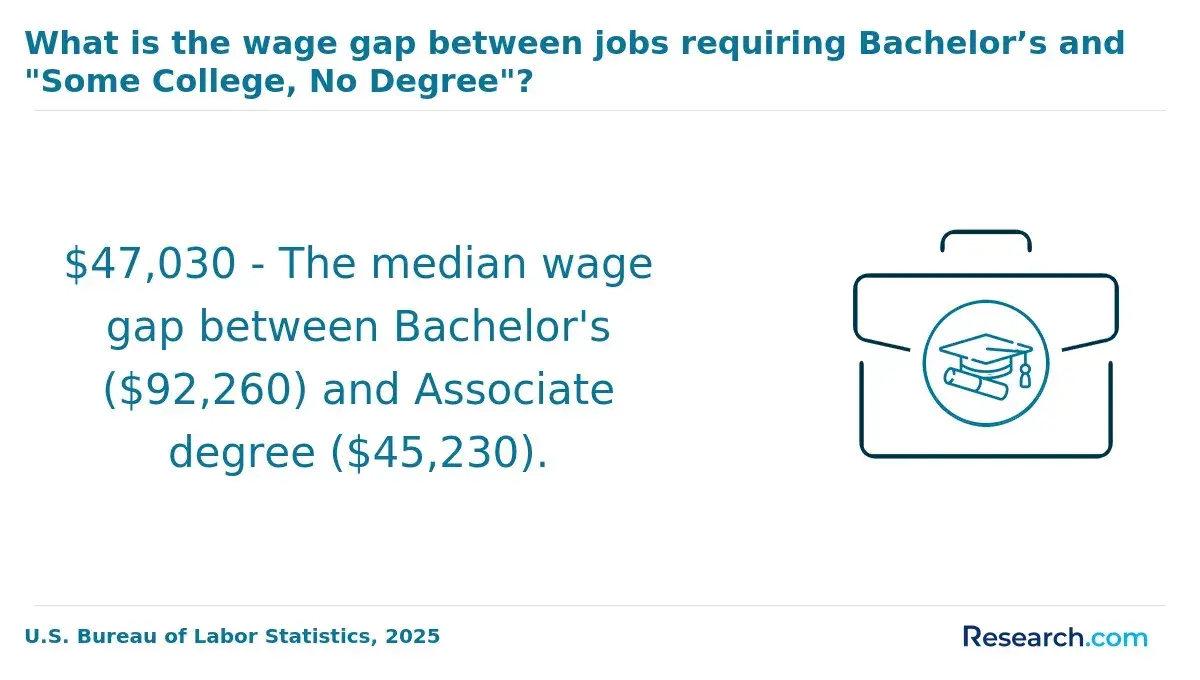
Sector-specific experience matters: applicants shifting into fields such as healthcare, technology, or retail marketing often need industry familiarity to meet employer expectations and optimize career outcomes. Wage data reveal that bachelor's degree holders in marketing earn substantially more than those with associate degrees-early-career salaries average $36,381 versus $36,200, with mid-career wages showing an even wider gap ($64,768 vs. $46,496), which influences program competitiveness and selectivity.
Additional admissions requirements may include technology proficiency assessments and references. Some programs permit professional experience to waive academic prerequisites, especially in accelerated or executive tracks. Aligning application components with career-specific realities helps avoid delays or unexpected barriers during enrollment.
How long does an online marketing degree take to finish?
Accelerated online marketing degrees can significantly reduce time-to-completion-but this speed introduces tradeoffs impacting cost, learning depth, and workforce readiness. Western Governors University exemplifies a self-paced model where enrollees often finish a bachelor's in approximately three years through six-month terms costing $3,830 each. This approach suits disciplined students aiming to enter rapidly evolving industries like digital advertising.
Working professionals juggling employment and part-time study tend to extend degree timelines to four years or more, increasing tuition and delaying real-world skill application. In sectors driven by shifting marketing trends, slower program completion risks graduating with outdated competencies and weaker hiring prospects.
Cost considerations intersect tightly with duration, with total tuition commonly ranging from $26,000 to $70,000. Faster degrees tend to produce better return on investment by limiting debt and enabling earlier income generation. However, compressed pacing demands strong independent learning skills and can reduce opportunities for deeper engagement or networking.
Prospective students should weigh program flexibility, term structure, and price transparency against their professional commitments. Evaluating these variables is critical since protracted enrollment delays skill acquisition and weakens competitiveness in a field where employers prioritize current knowledge and practical experience.
- Accelerated format can cut degree time to about three years
- Part-time enrollment extends duration, inflating total costs
- Annual tuition ranges roughly between $6,000 and $17,500
- Faster completion supports earlier workforce entry and reduces debt
- Balancing pace with depth and opportunities for networking is essential
How much do online marketing degrees cost in the United States?
Choosing between online and on-campus marketing degrees in the U.S. involves more than tuition totals; it demands nuanced cost-benefit analysis tied to student circumstances and career trajectories. Tuition ranges widely-from around $15,000 to over $50,000-largely influenced by institution type, residency status, and degree format. Public universities typically provide lower sticker prices for in-state students, while private institutions generally charge more.
Online programs often reduce tuition by 20 to 40 percent compared to their on-campus counterparts, as seen with Pennsylvania State University, where students save thousands by studying remotely. This cost difference can enable mid-career professionals pivoting into marketing to allocate funds toward specialized certifications or intensive skill courses, boosting their marketability. Conversely, recent graduates targeting competitive entry-level roles may weigh higher campus tuition against stronger networking and recruiter engagement.
Additional expenses-digital materials, proctoring fees, and software access-can add $500 to $2,000 annually. Online study also eliminates relocation and commuting costs, intensifying overall savings, especially for those in expensive urban centers. Prospective students should rigorously request detailed tuition breakdowns and explore employer tuition assistance, as such benefits frequently favor online degrees but may exclude on-campus programs.
- Online tuition typically 20-40% cheaper than in-person at the same institution
- Higher on-campus costs may correlate with better hiring network access
- Additional fees and costs vary widely and should be explicitly budgeted
- Employer tuition assistance programs often apply primarily to online formats
Comparing net costs after aid is essential to realistically assess return on investment across sectors like retail, healthcare, or technology marketing. Understanding these financial and practical tradeoffs directly shapes strategic decision-making in acquiring a marketing degree.
What jobs can you get with an online marketing degree?
An online marketing degree equips graduates with technical competencies in analytics, customer segmentation, and campaign optimization, directly aligning with specific employer demands. For instance, a digital marketing specialist within an e-commerce company prioritizes conversion metrics, whereas a content strategist working for a nonprofit must tailor messages to enhance donor engagement-demonstrating how sector-specific applications influence skill emphasis.
Graduates often pivot into adjacent roles such as product management or advertising account management that require a nuanced grasp of consumer behavior and market dynamics. However, these positions frequently necessitate supplemental expertise in advanced data analytics or project management tools, which prospective students should verify within program curricula or pursue through additional certifications.
Geographic factors substantively affect job opportunities and salary ceilings. Concentrations of marketing professionals in metropolitan areas like New York and Chicago can facilitate access to diverse roles but also introduce heightened competition. Conversely, markets such as Atherton, CA, and New Rochelle, NY reward specialized digital marketing skills with premium compensation due to localized demand.
Industries including healthcare and manufacturing increasingly seek marketing professionals capable of harmonizing digital acquisition strategies with industry-specific compliance frameworks. This integration demands continuous learning beyond degree completion, highlighting the ongoing tradeoff between foundational education and workplace adaptability.
What certifications strengthen an online marketing degree?
Certifications tied to an online marketing degree must be evaluated through their direct applicability and resultant employability shifts rather than their mere availability. Google Ads Certification, HubSpot Inbound Marketing, and Facebook Blueprint stand out for their specific alignment with digital advertising, lead generation, and social media campaign management, respectively.
Each credential supports discrete workforce roles: Google Ads excels in e-commerce and retail contexts, HubSpot caters to B2B lead nurturing and CRM integration, and Facebook Blueprint benefits sectors dependent on social media influence like entertainment and consumer goods.
Balancing time and financial investment is a critical consideration. Google Ads and Analytics certifications demand 10-15 hours of mostly free study, attracting professionals who must swiftly upskill without losing income. HubSpot's certifications vary in cost, which may deter or delay candidates without employer sponsorship. Candidates should prioritize certifications that complement their career trajectory to avoid diminishing returns from credential accumulation without practical implementation.
Market data from the U.S. Bureau of Labor Statistics (via OnlineColleges.net) quantifies the wage and unemployment advantages tied to bachelor's credentials, but targeted certifications amplify these benefits by signaling actionable skills to employers. Those pursuing data-driven marketing positions particularly benefit from Google Analytics Individual Qualification and the Digital Marketing Institute's Data Analytics certification.
- Google Ads and Analytics certifications: 10-15 hours, typically free
- HubSpot certifications: free to modest fees, B2B lead generation focus
- Facebook Blueprint: social media campaign proficiency in sectors like entertainment
Other Things You Should Know About Marketing
Employers usually expect 3 to 5 campaign examples showing strategy, execution, and results, plus analytics screenshots or reports from tools like Google Analytics 4 or Meta Ads Manager. A strong portfolio should also include a resume-ready case study that shows budget, audience targeting, and measurable outcomes.
Specializations can signal expertise in high-demand areas like digital advertising, analytics, or brand management, which helps when targeting specific industries. That said, over-specializing early can limit cross-industry flexibility, especially since marketing roles often require adaptability. Students aiming for mobility should prioritize programs offering broad foundational skills with electives to tailor learning as their career path evolves.
Balancing a full-time job with an online marketing degree demands strong time management; coursework frequently involves case studies, group work, and data projects that require consistent effort. Programs with asynchronous formats provide more flexibility but may still expect weekly engagement and deadlines. Students should choose programs aligned with their work schedule and confirm workload expectations upfront to avoid burnout or extended completion times.
References
- Digital Marketing Courses USA | AECC https://www.aeccglobal.com/study-in-usa/courses/digital-marketing
- Digital Marketing Major https://www.kozminski.edu.pl/en/digital-marketing-major
- Digital Marketing Course Eligibility: 2026 Guide https://amquesteducation.com/blog/digital-marketing-course-eligibility/
- Online Bachelor's Degree Marketing https://www.umgc.edu/online-degrees/bachelors/marketing
- 29 Best Digital Marketing courses In the USA 2026 https://www.hotcoursesabroad.com/study/training-degrees/us-usa/digital-marketing-courses/loc/211/cgory/bf.4-4/sin/ct/programs.html
- Is a Digital Marketing Certification Better than a Degree? https://www.sitelogicmarketing.com/podcast-certification-degree/
- The Relevance of a Master's Degree in Digital Marketing https://www.enae.com/blog/relevance-masters-degree-digital-marketing
- 15 Marketing Certifications to Build Must-Have 2025 Skills https://www.cmswire.com/digital-marketing/10-marketing-certifications-that-can-help-you-earn-a-better-salary/
- Part-time Master's degree program Digital Marketing Management at NORDAKADEMIE https://www.nordakademie.de/en/studies/master-part-time/digital-marketing-management
- Online Business Degrees with Digital Marketing https://www.coloradotech.edu/degrees/studies/business-and-management/articles/online-business-digital-marketing-degree