2027 Online Marketing Degrees With Brand Management Coursework

Co-Founder and Chief Data Scientist
Professionals aiming to transition into brand management often grapple with programs that lack flexibility or fail to integrate core marketing strategies with real-world brand challenges. As the National Center for Education Statistics reports, online enrollment for business-related degrees grew by over 15% since 2022, reflecting a shift toward accessible learning for working adults balancing career demands. However, many online marketing degrees overlook specialized coursework in brand management, limiting graduates' readiness for roles requiring nuanced brand positioning and digital asset oversight. This article identifies online marketing degrees with integrated brand management tracks designed to equip learners with practical skills while accommodating diverse schedules and career timelines.
Key Things You Should Know
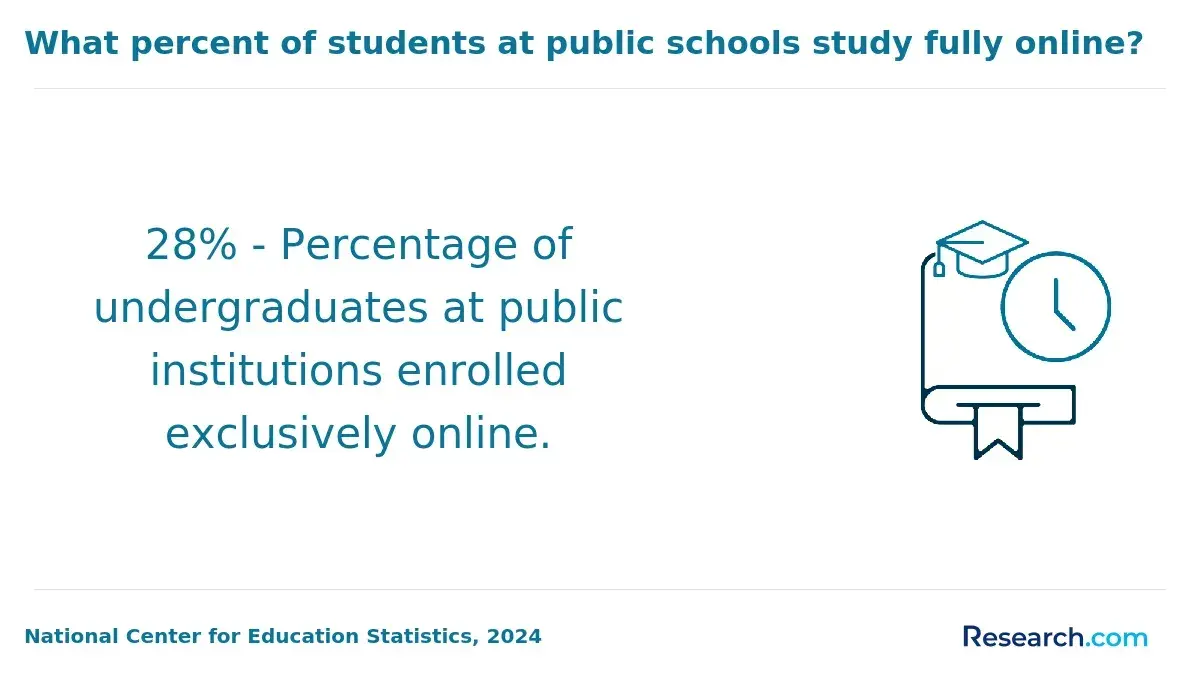
- Only 42% of U.S. online marketing degrees with brand management coursework offer specialized experiential projects, forcing students to weigh hands-on skill gaps against theoretical advantages, which directly impacts job readiness post-graduation, according to the National Center for Education Statistics 2024 data.
- Employers increasingly prioritize candidates from institutions with integrated digital analytics modules in brand management, meaning graduates lacking these may face a 15%-20% hiring disadvantage in leading marketing agencies, per the 2024 CMO Survey.
- Median total costs for accredited online marketing brand management tracks range from $18,000 to $35,000, creating a significant financial barrier that elongates return-on-investment timelines beyond industry average career pivots of 2-3 years, as highlighted in the 2024 Georgetown University report.
What is an online marketing degree with brand management coursework, and who is it best for?
An online marketing degree with brand management focus delivers specialized expertise that merges traditional marketing principles with essential brand strategy and competitive positioning skills. This pathway appeals especially to the best candidates for online brand management programs-those seeking to shift strategically toward roles like brand managers or digital strategists or recent graduates aiming to differentiate themselves by mastering brand value creation. For example, a marketing coordinator in a technology company can use this degree to pivot into product brand leadership roles aligned with evolving consumer and platform demands.
Online delivery reduces barriers such as commuting and rigid scheduling, making it practical for employed students or those managing family obligations. The average tuition for a fully online bachelor's in marketing stands near $10,473 annually, about 38% less than partially or fully on-campus programs, lowering debt without compromising curriculum quality when programs hold recognized accreditation. However, fewer in-person networking and internship opportunities require students to proactively engage in virtual communities and outreach.
Employers prioritize candidates demonstrating applied brand management alongside data analytics and cross-channel communication skills, regardless of program format. Admissions should weigh the accessibility of online learning against the tradeoff in experiential learning that can impact early-career employability. Prospective students comparing options may also consider cost efficiencies found in online construction management courses, reflecting broader trends in affordable digital education pathways.
How do online marketing programs with brand management compare to on-campus degrees?
Online marketing degrees with brand management coursework provide theoretical foundations comparable to on-campus programs, but practical outcomes diverge sharply. Employers prioritize on-campus graduates for their direct interaction with internships, live projects, and face-to-face mentorships-elements integral to cultivating professional networks essential for brand management roles. Online programs must offset this gap by offering virtual internships and case-based methods, yet these often fall short in replicating spontaneous industry insights and organic feedback channels found on campus.
Consider a candidate targeting brand management within consumer packaged goods: securing collaborative projects remotely can hinder portfolio depth compared to peers on campus, where real-time engagement is routine. Conversely, online learning's flexible schedule suits working professionals and mid-career changers, alongside access to diverse global case studies not always available locally. However, success in these programs demands heightened self-motivation and active networking to build what on-campus settings supply more naturally.
The differences between online and on-campus marketing degrees with brand management extend to employability prospects. Advertising and marketing management roles are expected to grow 6% from 2022 to 2032, generating approximately 34,000 openings annually per U.S. Bureau of Labor Statistics data. Employers increasingly seek candidates blending strategic knowledge with demonstrated, real-world achievements. On-campus students often gain advantage through employer recruitment events, fostering direct hiring pipelines, while online learners need to pursue professional platforms and industry networks independently.
Employers expect tangible experience and interpersonal proficiency that online programs struggle to replicate without institutional support. Those weighing online versus on-campus options should consider personal discipline, career timing, and available external networking avenues. For practitioners exploring advanced credentials, evaluating the best online MBA in entrepreneurship may also prove relevant.
Are online marketing degrees with brand management coursework respected and properly accredited?
Employers distinctly favor candidates from regionally accredited programs where online marketing degrees with brand management accreditation ensure alignment with industry competencies. Accreditation confirms the curriculum addresses essential strategic and analytical skills expected in brand management roles. In contrast, unaccredited programs or diploma mills typically produce graduates lacking job-ready experience or recognized credentials, leading to longer job searches and potential salary stagnation.
Prospective students evaluating online marketing degrees with brand management coursework recognized by industry must scrutinize not only accreditation but also the presence of practical components such as internships or capstone projects. These elements bridge theoretical knowledge and applied skills, which are critical for roles involving market research, consumer behavior insight, and digital marketing analytics. For example, candidates targeting consumer packaged goods firms or digital agencies often face rejection if their degree lacks verified brand management content.
Financial and time investments must be weighed against program rigor and relevance. Graduates from accredited, practice-oriented programs report better employment outcomes, with marketing managers earning a median annual wage of $157,620 and the top 10% exceeding $239,200, according to U.S. Bureau of Labor Statistics data. Since many students navigate diverse offerings, detailed verification of program quality is essential.
Those interested in efficient pathways might explore options such as a sports management degree online as a comparative case for accelerated undergraduate completion while assessing curriculum alignment and career fit.
What brand management courses and specializations are typically included in these online programs?
Programs featuring a brand management course curriculum in online marketing degrees equip students with practical tools to evaluate brand equity through data-driven analytics and competitive benchmarking. Such specialties detail how industries like retail and technology diverge sharply in their brand priorities-retail prioritizes customer retention amid constant promotions, while technology firms focus on innovation branding tied to rapid product cycles. This industry-specific differentiation influences workforce expectations for graduates, who must navigate cross-functional collaboration with sales and product development teams to ensure consistent brand messaging.
Students also encounter real-world scenarios in crisis management and brand reputation recovery, addressing the operational challenge of managing negative publicity across diverse digital platforms. Understanding how brand narratives adapt regionally and reflect cultural nuance in multicultural U.S. markets is essential to effective strategy. The integration of licensing, co-branding, and partnership tactics further extends brand reach without diluting core identity, skills critical to sustained brand performance.
From an employment standpoint, hiring managers favor candidates demonstrating fluency in brand audits and ROI evaluation of branding initiatives. This is reflected in earnings differentials: a bachelor's in marketing from Penn State delivers a lifetime ROI of $815,490, far superior to the $55,297 ROI for West Texas A&M graduates, underscoring the tangible value of comprehensive brand management training. For professionals considering a strategic shift, complementary pathways like online human resource management masters programs may also present valuable versatility in career progression.
Specializations in brand management for marketing students deepen understanding of how to optimize brand lifespan and customer lifetime value across challenging industry landscapes.
What admission requirements and application materials do online marketing programs usually expect?
Applicants to online marketing programs with brand management coursework face tangible hurdles that often extend beyond academic credentials. Demonstrating readiness requires official transcripts proving at least a high school diploma or equivalent, with emphasis on relevant coursework in business or communications. Many programs still expect standardized test scores such as the SAT or ACT, although alternatives exist for working professionals with prior college credit.
Beyond paperwork, admissions typically seek statements of purpose clarifying career objectives and alignment with brand management, supported by letters of recommendation from individuals who can verify analytical and creative capacities necessary in brand strategy roles. Applicants with digital experience or sales backgrounds bolster their profiles, reflecting employer preferences for practical skills essential in a market expecting over 8% growth in digital marketing jobs by 2030, according to data cited by Miami Dade College.
Operationally, candidates must also navigate logistical demands including submitting digital portfolios and participating in virtual interviews that assess strategic thinking and communication skills. Those lacking formal marketing preparation may need prerequisite courses, and working professionals should prepare to validate industry experience to offset academic requirements. This balance highlights the tradeoff between academic rigor and practical exposure, impacting how candidates position themselves for competitive entry into brand management careers.
How long do online marketing degrees with brand management coursework take to complete?
Completing an online marketing degree with brand management coursework requires a strategic balance between duration and flexibility, often lasting two to four years depending on degree type and enrollment status. Associate degrees typically need about two years full-time, while bachelor's span four, though accelerated programs can reduce this by roughly a year. Graduate certificates and master's degrees generally demand 12 to 24 months. For working professionals, part-time study is common, extending timelines but allowing continued employment-an essential consideration for those targeting managerial roles within sectors like consumer goods.
For example, a marketing specialist pursuing advancement might spend three years part-time on an online bachelor's program, aligning with employer demands for both theoretical expertise and applied skills in digital brand strategies and market analytics. This real-world alignment often justifies the longer, flexible commitment required.
The financial tradeoffs are significant: online study averages about $10,473 per year in tuition and fees, compared to $16,941 for on-campus or hybrid options, according to BestColleges. This cost difference can offset extended part-time study durations, offering a more cost-efficient path without sacrificing educational quality.
A critical factor not to overlook is the high degree of self-discipline required; unlike traditional cohorts, online learners set their own pace, which can influence total completion time and timing for job market re-entry or promotions.
How much do online marketing and brand management degrees cost, and what financial aid is available?
Flat tuition models, such as Rutgers Business School's online marketing program introduced in Fall 2024, alter the traditional financial calculus for prospective students by eliminating out-of-state premiums. This pricing approach can save mobile students thousands compared to programs charging 1.5 to 2 times in-state rates, a crucial consideration for those relocating or balancing cost versus geographic flexibility.
Financial aid options skew toward federal student loans, especially unsubsidized types that accrue interest immediately, increasing long-term debt burdens. Pell Grants provide need-based relief but are limited to undergraduates, while institutional scholarships and employer tuition assistance remain inconsistent and often capped. These factors force many candidates to anticipate six-figure debt entering entry-level brand management roles where salaries may not offset repayment quickly.
Practical cost reduction strategies include:
- Targeting programs with flat or reduced online tuition to minimize geographic cost disparities
- Leveraging employer reimbursement aggressively but with awareness of annual limits
- Early FAFSA application and seeking marketing or business scholarships that can cover up to 25% of tuition
Careful evaluation of these cost drivers and aid variables is essential to avoid debt that negates earning gains from a marketing or brand management degree. This financial foresight should be prioritized alongside program quality to optimize long-term workforce outcomes.
What careers can a marketing degree with brand management coursework lead to?
Brand management coursework within a marketing degree equips graduates for nuanced roles where measurable outcomes in brand equity and customer loyalty are paramount. For instance, brand managers in consumer packaged goods leverage data-driven strategies to sharpen market positioning, while product marketing professionals in technology firms continuously recalibrate messaging to match rapid product evolution. This level of expertise often aligns with mid-level management roles but requires strategic collaboration and impact evidence for advancement to director or chief marketing officer positions.
Employers prioritize proficiency in market research, competitive analysis, and cross-functional engagement over theoretical knowledge alone. Practical skillsets, such as navigating Nielsen data sets and Adobe Creative Suite, enhance influence over stakeholder perceptions. However, career growth frequently hinges on continuous skill development, notably in digital analytics and emerging platforms, to remain competitive in B2B and B2C markets alike.
Professionals transitioning from unrelated disciplines face higher entry barriers and must pursue internships or projects demonstrating tangible brand performance improvements. Western Governors University's online B.S. in Marketing graduates report an average salary increase of $14,337, reflecting industry trends documented by the Bureau of Labor Statistics in 2024. This figure highlights the tangible financial impact of combining brand management competencies with evolving digital and strategic communication capabilities.
Critical considerations for prospective students include understanding that brand management applications vary significantly by industry and require tailoring approaches to specific business models, with decisions about specialization directly affecting employability and advancement potential.
What salary ranges and job outlook can graduates in marketing and brand management expect?
Starting salaries for graduates with online marketing degrees that include brand management coursework typically range from $50,000 to $65,000 annually, with mid-career professionals earning between $70,000 and $95,000. Senior management roles, particularly in technology and consumer goods sectors, can command salaries exceeding $110,000. These figures reflect a 7% projected job growth rate for brand managers through 2034, aligning with average labor market trends but suggesting moderate expansion rather than rapid escalation.
Cost considerations heavily influence return on investment. For example, Southern New Hampshire University's online BS in Marketing charges $354 per credit, meaning students transferring 90 credits may only pay about $10,620 for the final 30 credits. This structure can ease debt burdens while covering essential foundational knowledge aligned with employer expectations.
Employers increasingly prioritize practical competencies such as digital tools proficiency, analytics, and integrated marketing communications alongside academic credentials. Brand management roles demand cross-functional collaboration and strategic interpretation of market data, typically gained through internships or project-based experience. Graduates in saturated local markets often face lower starting wages, whereas metropolitan areas with higher living costs may provide better negotiation leverage. Success in advancing salary and position depends on demonstrating relevant digital skills and strategic agility rather than credentials alone.
How can students choose a reputable online marketing program focused on brand management?
Evaluating brand management programs requires prioritizing measurable ROI and specific curriculum relevance over general reputation. For example, Penn State's marketing bachelor's program reports a lifetime ROI of $815,490, notably higher than many competing business degrees, indicating strong employer recognition and alumni success. Such financial outcomes provide a practical benchmark beyond institutional prestige.
Accreditation, especially by entities like AACSB, combined with faculty who have tangible industry experience or research contributions, directly affects the program's ability to prepare students for distinct brand management roles. A professional targeting brand leadership in tech startups will find greater value in courses on agile brand innovation compared to those focused on retail branding tailored to FMCG sectors.
Flexibility through part-time or asynchronous formats gains importance for working professionals pivoting careers. Programs that integrate experiential learning-such as internships, live company projects, or brand labs simulating campaign development-translate theoretical skills into workplace readiness more effectively.
Graduation rates and up-to-date employment statistics, preferably from 2024 or later, serve as critical indicators of how well programs convert education into job placement. This allows prospective students to distinguish between programs emphasizing theory versus those fostering direct, branded role access.
Ultimately, selecting a program should factor in rigorous ROI analysis, curriculum alignment with specific brand management functions, accreditation credibility, hands-on learning opportunities, and verified workforce outcomes to optimize the educational investment for relevant career trajectories.
Other Things You Should Know About Marketing
Online degrees in marketing with brand management focus can be just as rigorous as traditional programs. They often include comprehensive coursework, projects, and case studies tailored to industry standards, providing flexibility without sacrificing educational quality. Accreditation and faculty credentials ensure academic rigor is maintained.
Hands-on experience is critical for employability in marketing with a brand management focus. Employers prioritize candidates who can demonstrate real-world application through internships, live projects, or case studies. If an online program lacks built-in experiential opportunities, students should proactively seek internships or freelance work, as theoretical knowledge alone rarely meets hiring expectations for brand management roles.
Choosing between specialized brand management coursework or broader marketing programs depends on your career goals. For roles tightly focused on brand strategy, brand equity analysis, and product positioning, prioritize programs with deep brand management content. If you want flexibility across marketing functions or leadership positions, select programs with a wider marketing scope that still include brand management as a component.
An online marketing degree should come from a regionally accredited institution recognized by the U.S. Department of Education or the Council for Higher Education Accreditation. For 2027 jobs and graduate study, regional accreditation is the main standard employers and universities use to verify degree quality and transferability.
References
- Brand Manager Career Guide : missions, training, and salary https://www.iscparis.com/en/program/career-guides-brand-manager/
- CourseCareers https://coursecareers.com/blog-posts/how-to-choose-the-best-digital-marketing-course
- Careers in Marketing: What You Can Achieve with a Master’s Degree https://www.ibat.ie/blogs/careers-in-marketing-what-you-can-achieve-with-a-masters-degree
- Online Master Communication and Brand Management | Rome Business School https://romebusinessschool.com/master-online-in-brand-management-and-communication/
- Brand Management Certificate Course Online https://eduberkeley.com/course/certificate-in-brand-management
- Marketing and Communication Degree Careers and Salary in Europe - StudyinEurope.eu https://www.studyineurope.eu/marketing-communication/marketing-communication-degree-careers-salary-europe/
- What’s the Difference Between Online vs. On-Campus Digital Marketing Master’s Programs? | Digital Marketing Institute https://digitalmarketinginstitute.com/blog/whats-the-difference-between-online-vs-on-campus-digital-marketing-masters-programs
- How to apply for a Bachelor in Marketing ? - ESCE https://www.esce.fr/en/faq-all-the-answers-to-your-questions/how-to-apply-for-a-bachelor-in-marketing/
- The 10 Most Affordable Online Masters in Marketing - Best Marketing Degrees https://www.bestmarketingdegrees.org/most-affordable-online-masters-in-marketing/
- Marketing and Brand Management, BA Hons https://www.gre.ac.uk/undergraduate-courses/business-school/marketing-and-brand-management-ba-hons