2027 MIS Specializations That Build the Most Transferable Business-Tech Skills

Co-Founder and Chief Data Scientist
Professionals entering MIS programs face a pressing challenge: selecting specializations that not only align with immediate job openings but also equip them with versatile skills adaptable across volatile business-technology landscapes. As workforce data from the U.S. Bureau of Labor Statistics illustrates, MIS roles requiring hybrid expertise in analytics and systems integration grow 18% faster than average, reflecting employers' rising demand for cross-functional skill sets.
However, program structures vary widely in how effectively they foster this breadth, complicating strategic enrollment decisions for career shifters and upskillers balancing time and financial constraints.
This article examines MIS specializations that maximize transferable business-tech competencies, helping candidates choose pathways that yield the greatest long-term mobility and relevance.
Key Things You Should Know
- MIS specializations emphasizing cloud architecture and automation rank 27% higher in job placement rates per U.S. Labor Department 2024 data, but require costly certification delays averaging 9 months, impacting immediate workforce entry.
- Employers prioritize candidates with integrated data analytics and cybersecurity skills, with 68% of tech firms in Deloitte's 2024 survey favoring hybrid MIS backgrounds over narrow focus, reshaping entry-level hiring criteria.
- Programs heavily weighted toward business process modeling reduce technical depth by 15% on average, limiting adaptability in software-intensive environments, a significant tradeoff for pivoting professionals per Gartner workforce research.
What are the most valuable MIS specializations for building transferable business-tech skills?
Data analytics, cybersecurity, and IT project management stand out as the most valuable MIS specializations for transferable business skills, each with distinct real-world tradeoffs and workforce implications. Data analytics drives business insight by applying statistical analysis and database management across industries like finance and healthcare, but it demands fluency in programming and visualization tools—a practical barrier for some candidates.
Cybersecurity offers a more reactive skill set essential for protecting assets amid rising cyber threats, requiring ongoing certification and adaptation to regulatory changes, which can create a continuous learning burden. IT project management emphasizes leadership skills such as agile methodologies and risk management, often vital for coordinating diverse teams but dependent on formal credentials and interpersonal strengths.
The top management information systems tracks that enhance business and technology expertise do so by preparing students for roles that bridge technical and organizational needs, but success depends on aligning specialization with industry demands and personal capabilities.
For example, manufacturing firms prioritize project managers who can balance budgeting and timelines, while retail sectors seek cybersecurity experts adept at vulnerability assessments.
Choosing the optimal pathway also involves understanding employment constraints. Candidates should consider the ongoing commitments data analytics specialization requires or the regulatory vigilance inherent in cybersecurity. Access to formal credentials, such as PMP for project management, can influence employability and career mobility.
Prospective students may also explore emerging fields by reviewing blockchain degrees as part of their broader strategic evaluation of MIS educational pathways.
How do core MIS specializations differ in focus, tools, and long-term career fit?
Core MIS specializations demand careful alignment with distinct labor market conditions and skill transferability. Cybersecurity, with its focus on defensive tactics, risk management frameworks, encryption technologies, and strict compliance regimes such as NIST or ISO, addresses a critical gap: over 4 million unfilled global job openings and 92% of organizations reporting skill shortages per the ISC2 Cybersecurity Workforce Study 2024.
This path suits those prepared to pursue rigorous technical roles like security analyst or information assurance, recognizing the necessity for ongoing certification to remain competitive.
Data analytics specializations rely heavily on statistical programming languages such as R and Python, alongside SQL-based database querying and visualization tools such as Tableau.
While offering flexibility through its core technical toolkit, excelling often requires domain-specific expertise, for example in healthcare data or financial fraud detection, underscoring the importance of strategic specialization when navigating core MIS specializations in business technology integration.
Enterprise systems pathways concentrate on ERP environments like SAP and Oracle, demanding not only systems administration but also proficiency in process integration across supply chains, finance, and HR.
Professionals here often transition into consultancy or IT project leadership, roles that necessitate blending technical skill with substantive business acumen. However, this specialization carries risks linked to vendor-specific dependencies and evolving platform landscapes.
In comparing MIS career paths by focus and tools, prospective students face a tradeoff between technical depth and cross-functional fluency, with employer preferences increasingly valuing validated certifications and hands-on experience above broad coursework. Assessing program curricula for practical labs, internship opportunities, and alignment with high-demand roles is critical when evaluating educational pathways.
For individuals exploring affordable educational options tailored to workforce realities, resources like health information management online programs can offer practical models for structuring learning and career advancement within applied business technology sectors.
Which MIS specializations lead to the widest range of business and IT roles?
The most versatile management information systems specializations continue to be data analytics, cybersecurity, and cloud computing management, each unlocking diverse roles spanning business and IT. Data analytics, for instance, extends beyond traditional MIS boundaries to impact marketing strategy, supply chain efficiency, and financial forecasting, offering operational and strategic leverage.
Cybersecurity's focus on policies and incident response suits professionals navigating compliance-heavy industries, though sustaining expertise demands ongoing certification efforts. Cloud computing management couples IT infrastructure knowledge with vendor negotiation and cost control, critical as companies accelerate digital transformation—especially amid a predicted 20.4% global increase in public cloud spending to $1.35 trillion by 2025.
Students weighing these specializations must account for practical tradeoffs aligned with workforce realities: strong technical training is essential for analytics roles; cybersecurity requires regulatory fluency and continuous upskilling; cloud requires understanding hybrid environments and business continuity.
These considerations map onto sector-specific hiring patterns where manufacturing favors analytics for process improvements, finance integrates cybersecurity rigor, and retail prioritizes cloud scalability. This sector-driven lens helps maximize career mobility and relevance in competitive labor markets.
For those exploring complementary fields or career pivots within technology and healthcare, degree paths like the nutritionist degree illustrate how specialized knowledge intersects with practical workforce demands.
Evaluating management information systems specializations for versatile business and IT careers requires an objective view of sectoral hiring trends, transferable skills, and real-world application rather than relying solely on program descriptions or surface-level job titles.
What courses and projects best develop transferable skills in popular MIS tracks?
Effective management information systems project ideas for transferable skills hinge on combining technical expertise with leadership in business process transformation. Core courses such as data analytics, systems analysis and design, and IT project management equip students to translate data insights into actionable business outcomes and lead diverse teams effectively.
Projects replicating enterprise digital transformation efforts provide critical exposure to challenges like legacy system integration and stakeholder management.
For instance, a capstone project implementing an ERP system at a mid-sized manufacturing firm sharpens skills both in IT infrastructure and operational workflow optimization, addressing a significant workforce gap, as only 39% of organizations rated their digital transformation maturity as advanced despite 91% undertaking such efforts. This context makes practical experience in process improvement and change management invaluable.
Top courses in management information systems for business technology should also include business process modeling paired with hands-on cloud and automation platforms. These prepare students to navigate constraints such as budgets and resistance while designing scalable systems, enhancing problem-solving agility.
Fundamentals in information security and risk assessment complement this skill set by enabling foresight into enterprise vulnerabilities. Additionally, cultivation of communication and negotiation techniques is essential for sustaining transformation initiatives.
Students seeking strong employer-aligned credentials should prioritize programs offering capstone or cooperative education projects involving real-world collaboration. For those comparing pathways or exploring interdisciplinary options, resources like best online medical assistant programs can provide insight into alternative models blending practical training with workforce readiness.
How do online MIS specialization options compare with campus programs for quality and flexibility?
Choosing between online and campus Management Information Systems (MIS) programs hinges on how you balance flexibility, networking, and direct application of skills in your work context. Online MIS tracks match campus curricula in core domains like data analytics and UX design, yet their chief advantage lies in enabling employed professionals to integrate learning immediately into their roles, a valuable edge in sectors such as fintech or healthcare IT where timely tech-business fluency expedites skill translation.
However, online students face notable tradeoffs, including reduced spontaneous peer interaction and limited hands-on lab access, calling for proactive use of virtual collaboration tools or attending optional residencies. Campus programs, despite less scheduling flexibility, foster immersive social learning and easy access to faculty-research projects, which benefits those targeting enterprise roles with a strong collaboration component.
Employers increasingly value measurable outcomes; programs emphasizing user experience and product management align well with business goals, contributing to higher conversion rates and ROI, as demonstrated in 2024 Forrester Research. Yet, acceptance of online degrees varies by industry and often requires supplementing credentials with tangible project experience.
What admissions requirements and prerequisites do MIS specialization tracks typically have?
Admission criteria for management information systems specialization tracks go beyond holding a general bachelor's degree. Programs typically require demonstrated proficiency in key areas like statistics, programming, and accounting, aligned with foundational IT concepts such as database management and systems analysis.
These prerequisites respond directly to employer demand for candidates who can mitigate the steep financial losses caused by project failures—estimated globally at $1 million every 20 seconds in 2024, amounting to $2.5 trillion annually.
This economic impact has sharpened admission rigor, especially for mid-career or advanced tracks, where minimum GPA standards, relevant work experience, and portfolios of project management evidence become critical.
Candidates without required fundamentals often face bridge courses that extend time-to-specialization but are essential for domains like healthcare IT or financial services, where specialized knowledge must complement core MIS competencies. Skipping these steps risks underpreparedness, which employers view as a liability in sustaining project success and adaptability.
Prospective students balancing employment should verify prerequisites and possible waivers early with admissions offices to avoid costly program delays. Doing so strategically maximizes skill transferability and reduces wasted time, enabling clearer alignment between learner background and employer expectations, particularly important when pivoting to roles demanding robust project and IT product management capabilities.
How long do MIS specialization programs take, and what do they typically cost in the U.S.?
Length and cost are pivotal factors for professionals weighing management information systems specialization. Full-time master's programs typically span 1 to 2 years, requiring 30 to 45 credit hours, with tuition ranging broadly from $20,000 to $70,000 based on university reputation, residency, and delivery method. Part-time or online formats can extend to 3 years, while certificate programs focusing on niche skills like data analytics or cybersecurity offer 6 to 12-month options with less comprehensive coverage.
For working professionals, such as an IT business analyst aiming to transition into a data-centric MIS role, the tradeoff between accelerated but shallow certificates versus longer, in-depth degrees is critical. Employers increasingly value expertise in AI, cloud computing, and business analytics, pushing candidates toward deeper competencies.
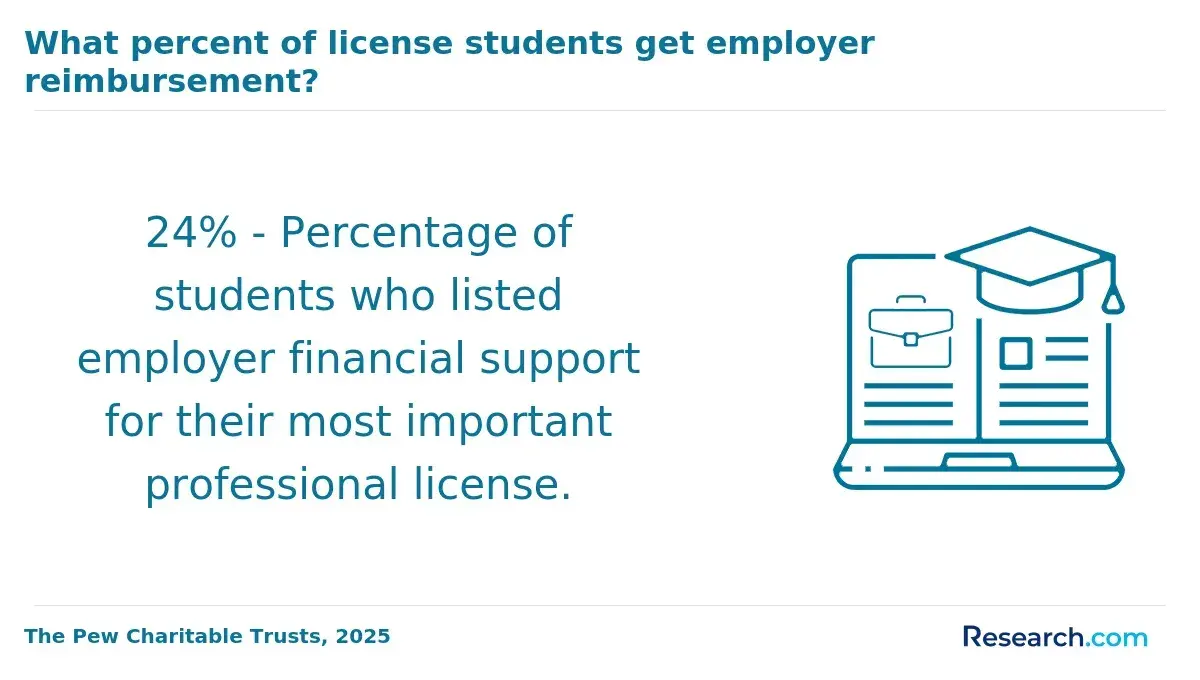
Additional costs, including materials and exam fees, should factor into overall investment plans, as should the incidence of employer tuition reimbursement. The urgent labor market demand for AI-enabled system experience, underscored by IDC's projection of AI system spending reaching $500 billion in 2025 from $327.5 billion in 2024, compels candidates to prioritize programs integrating automation and AI skills despite higher tuition. This complex matrix of duration, depth, cost, and technological relevance demands nuanced decision-making aligned with specific career trajectories.
What entry-level and mid-career roles do top MIS specializations commonly prepare graduates for?
Graduates focusing on management information systems (MIS) specializations confront a distinct divide between technical entry-level roles and strategically demanding mid-career positions, which shapes their skill development and career trajectory.
Early roles such as business analyst or systems analyst center on mastering process mapping and technology integration within enterprise software ecosystems, providing crucial hands-on experience with rapidly growing ERP platforms. This operational grounding is essential, as the global ERP market is projected to grow from $54.7 billion to $78.4 billion by 2029, at a sustained 7.5% compound annual growth rate.
Mid-career roles diverge by demanding a blend of technical expertise and leadership, for example, IT project managers or ERP consultants coordinating cross-functional teams and aligning IT solutions with core business goals. Consider an ERP consultant customizing resource planning for manufacturing clients—this role requires not only software proficiency but also deep domain knowledge and stakeholder management skills.
Tradeoffs arise between early roles that favor breadth but limited strategic influence and mid-career positions requiring both technical depth and business acumen. Employers increasingly prioritize certifications and practical ERP experience. However, students face challenges developing transferable skills amid evolving technology stacks, making it vital to select MIS specializations that balance technical proficiency with applicable business insight.
What salary ranges and job outlook can students expect from different MIS specializations?
Salary outcomes and job stability for management information systems specializations vary significantly based on industry demands and skill applicability. For example, positions in risk management and governance benefit from sustained market growth due to increasing regulatory complexity—MarketsandMarkets forecasts the global governance, risk, and compliance (GRC) market will expand from $15.8 billion in 2024 to $26.7 billion by 2029, growing at an 11.0% compound annual growth rate.
Early-career salaries here typically range from $75,000 to $110,000, with seasoned professionals earning over $140,000. These roles suit candidates preferring steadier job security and a structured growth trajectory within regulated environments.
In contrast, data analytics and information systems management roles often offer starting salaries of $80,000 to $120,000, especially within the finance and healthcare sectors. However, rapid technological evolution demands ongoing certifications, which can introduce volatility and require continuous skill investment.
Enterprise systems and supply chain MIS careers emphasize integration and operational knowledge, with salaries commonly between $70,000 and $105,000. While growth here tends to be more stable, expertise in cloud-based ERP systems significantly enhances employability and promotion prospects.
Decision-making for prospective students should weigh the tradeoff between financial upside and market unpredictability, considering that combining technical MIS expertise with communication and compliance skills aligns with employer priorities more effectively than purely technical profiles.
How should students evaluate accredited MIS programs and industry certifications for each specialization?
Management information systems programs must be evaluated through the lens of current job market demands, particularly the integration of AI, data analytics, and cybersecurity—sectors attracting over 40% of global venture capital in 2024. Graduates need practical skills aligned with these trends to maintain relevance across industries such as finance, healthcare, and technology startups where data-driven strategies dominate.
Program rigor should be measured by opportunities for applied learning, including scenario-based projects and partnerships with employers. For example, candidates targeting healthcare MIS roles benefit from curricula offering healthcare informatics certifications or HIPAA-compliant data management training, whereas those aiming for tech sectors require cloud computing and AI tool proficiencies backed by recognized credentials.
The value of certifications like CISSP or CAP depends on their alignment with employer hiring criteria and demonstrated hands-on proficiency rather than theoretical knowledge alone. Prospective students must weigh time and financial costs against flexible delivery options, such as modular formats and stackable credentials, to sustain skill relevance amid shifting industry demands.
Finally, alumni employment metrics and salary trajectories tailored by specialization provide indispensable evidence of career impact, best sourced from institutions reporting verified graduate outcomes through government or educational oversight platforms.
Other Things You Should Know About Management Information Systems
Specializing narrowly can create strong expertise in a focused niche, such as cybersecurity or data analytics, which appeals to employers seeking deep technical skills. However, broader exposure develops versatility and adaptability, increasing employability across diverse roles and industries. For most students, prioritizing a core specialization with secondary skills in complementary MIS areas delivers the best balance of depth and transferability.
Workload intensity depends on the specialization's technical rigor and project demands. Tracks emphasizing coding, system integration, or data science require consistent practice and time investment, often doubling regular coursework effort. Students should evaluate their capacity for sustained effort and opt for specializations with balanced workloads if they are working or managing other responsibilities alongside studies.
Internships in business analysis, data analytics, IT project coordination, and ERP support build the strongest transferable skills. Employers often expect 10 to 12 weeks of experience, plus hands-on work with Excel, SQL, Power BI, or Jira, because those tools show measurable business and technology fluency.
References
- How Long Does it Take to Get a Master’s Degree? https://www.aiuniv.edu/degrees/business/articles/how-long-does-it-take-to-get-a-masters-degree
- Best MBA Specialisation for 2026 | Which MBA Specialisation is Most in Demand? https://lsmt.org.uk/blog/most-in-demand-and-best-mba-specialisation
- Top 8 Transferable Skills Every Business Professional Needs | StudyNext Australia https://studynext.com/au/resources/transferable-skills
- Top 3 Transferable Skills For Your Next Career Move - General Assembly https://generalassemb.ly/blog/top-transferable-skills-for-your-next-career-move/
- Which MBA Specialization is Best and in Demand https://www.euroamerican.eu/top-mba-specialization
- How to Get Into Management Information Systems | CSU Global https://csuglobal.edu/blog/how-to-get-into-management-information-systems
- Top Certifications for Management Information Systems Today https://ultimatemanagementsystem.com/best-certifications-for-management-information-systems/
- Transferable Skills in Business Administration Across Industries https://www.cw.edu/blog/how-business-administration-courses-build-transferable-skills-across-multiple-industries/
- Top Jobs for Management Information Systems Graduates - Biz Systems News by Workato https://bizsystemsnews.com/top-jobs-management-information-systems/
- Online MIS Degrees | Accounting.com https://www.accounting.com/degrees/information-systems/masters/