2027 Finance Specializations for Banking Careers

Co-Founder and Chief Data Scientist
For professionals aiming to transition into banking, selecting the right finance specialization is a critical fork in the road. With 63% of U. S. adult learners juggling employment while pursuing education according to 2024 data from the National Center for Education Statistics, flexibility in program design has become non-negotiable. Rigid curricula or narrowly focused tracks risk limiting timely career advancement or mobility in a sector increasingly valuing interdisciplinary skills.
Employers now prioritize candidates with both technical mastery and adaptable finance acumen, pressuring students to carefully weigh specialization relevance against evolving job market demands. This article examines the most strategic finance specializations tailored for banking careers and how each aligns with workforce expectations and access considerations to optimize career trajectories.
Key Things You Should Know
- Risk management specializations yield 12% higher median salaries but require CFA or FRM certification, adding 18-24 months and $3,000-$5,000 in costs, constraining candidates prioritizing rapid entry.
- Data analytics roles dominate hiring growth (+15% projected through 2028 by BLS), pressing candidates to gain coding skills yet face employer skepticism on nontraditional finance backgrounds.
- Investment banking remains highest paid but shows 10% enrollment decline due to intense hours and burnout risk, signaling workforce shifts favoring ESG and tech-integrated finance careers.
What are the main finance specializations that lead to banking careers?
Banking careers demand specialization choices that balance market opportunity with skill development and experiential access. Among the top finance specializations for banking careers, financial analysis offers the most direct economic advantage; its median annual wage was $99,550 in the US, substantially exceeding the overall occupational median, signaling stronger employer demand for advanced analytical and investment knowledge.
Key finance career paths in the banking sector also include investment management, risk management, corporate finance, and commercial banking. Investment management gears candidates toward portfolio and wealth management roles, while risk management is critical for compliance and internal control functions using quantitative models. Corporate finance aligns with advisory and lending services in commercial banks, focusing on capital strategies such as mergers and acquisitions. Commercial banking, by contrast, emphasizes credit analysis and client relationship management for retail services.
Practical distinctions matter: an investment banking analyst requires mastery of financial modeling and valuation, whereas retail bank officers benefit more from client service skills and credit assessment expertise. Employers typically expect hands-on experience or recognized certifications alongside formal education. Prospective students should also evaluate program costs, credential recognition, and access to internships or similar experiential learning.
Given the competitive nature of these roles, many candidates contemplate accelerated pathways, including the shortest MBA programs, to efficiently pivot or advance. Such pathways may minimize time-to-market while retaining essential functional training, but the tradeoffs involve ensuring sufficient practical exposure and employer-valued credentials before entering the banking workforce.
How do corporate finance, investment banking, and commercial banking careers differ?
Choosing between corporate finance and investment banking career paths requires assessing tradeoffs in work environment, skill demands, and compensation. Corporate finance roles prioritize internal financial strategy, capital budgeting, and risk analysis, favoring professionals aiming for stability and advancement into executive roles like CFO or treasury. In contrast, investment banking demands intense analytical rigor, negotiation, and endurance, with US investment bankers averaging $392,853 total annual compensation inclusive of bonuses as of July 2024, according to Glassdoor data reported by Coursera. This difference highlights the high reward and significant pressure typical of investment banking.
Differences between commercial banking and investment banking roles extend beyond compensation to focus areas and lifestyle. Commercial banking emphasizes client relationships, loan management, and compliance, especially with retail and small-business clients. This path often provides more predictable schedules and stronger job security but less lucrative pay than investment banking. These distinctions influence candidates who must weigh lifestyle preferences alongside career goals.
Real-world decisions also vary by background: a professional moving from manufacturing to corporate finance must master capital allocation rather than deal structuring, while an investment banking candidate targeting technology IPOs requires valuation and client pitching skills. Commercial banking suits those committed to credit risk management within local communities. For those considering an educational pivot, reviewing MBA programs that accept transfer credits can materially affect how quickly new competencies translate into career advancement.
Which finance degree level and major best prepare you for banking jobs?
Banking roles demand a distinct balance between foundational finance knowledge and specialized expertise, influencing educational requirements significantly. A bachelor's degree focused on financial analysis, risk management, or banking is typically sufficient for entry-level positions such as commercial banking, lending, and credit risk evaluation. However, more complex functions in investment banking or treasury management increasingly require graduate credentials like a master's in finance or an MBA emphasizing finance. For example, risk specialists command median salaries near $99,555 with steady job growth, illustrating how advanced study translates into higher compensation and strategic roles.
Employers seek candidates who combine quantitative skills with practical experience in banking regulations, financial instruments, and analytics tools. Professional certifications like CFA and FRM are valuable but do not substitute for the depth of knowledge that specialized finance degrees provide. In practice, a bachelor's degree is often the quickest path to employment in commercial banking branches or credit departments, while upward mobility into fintech or portfolio management necessitates graduate education.
Students pursuing a finance degree for banking careers must carefully examine program curricula for banking-relevant courses-credit analysis, risk modeling, and regulatory systems-as generic finance programs frequently lack this focus. Working professionals weighing immediate job placement against long-term strategy may consider top MBA online options under $30K to position themselves toward senior roles handling capital markets and financial risk strategy.
What coursework and skills do banking-focused finance programs typically emphasize?
Banking finance program core coursework prioritizes technical rigor combined with practical application, focused on meeting banking sector demands. Students must attain competency in financial accounting, corporate finance, banking regulations, risk management, and investment analysis. The ubiquity of financial modeling and spreadsheet proficiency, particularly Excel, supports essential tasks like credit analysis, loan structuring, and portfolio management.
Employers expect mastery in interpreting financial statements under fluctuating economic conditions, directly impacting roles in credit underwriting and asset-liability management. Understanding regulatory frameworks such as Basel III and the Dodd-Frank Act is non-negotiable in mitigating compliance risks within heavily regulated banking environments.
Essential skills for banking finance careers now extend to practical exposure with emerging technologies including data analytics, blockchain, and digital banking platforms. Soft skills-communication, negotiation, and ethical judgment-shape client interactions and fiduciary responsibility.
Given the US finance industry's expansion to 7.6 million jobs supported by sustained growth, candidates face competitive hiring requiring blended expertise in regulation and technology. Students are advised to select programs that integrate internship opportunities aligned with banking to gain workplace readiness and advantage. For those considering interdisciplinary alternatives, exploring medical assistant programs that accept financial aid may offer practical entry paths with different labor market dynamics.
How do online finance programs for banking compare with traditional on-campus options?
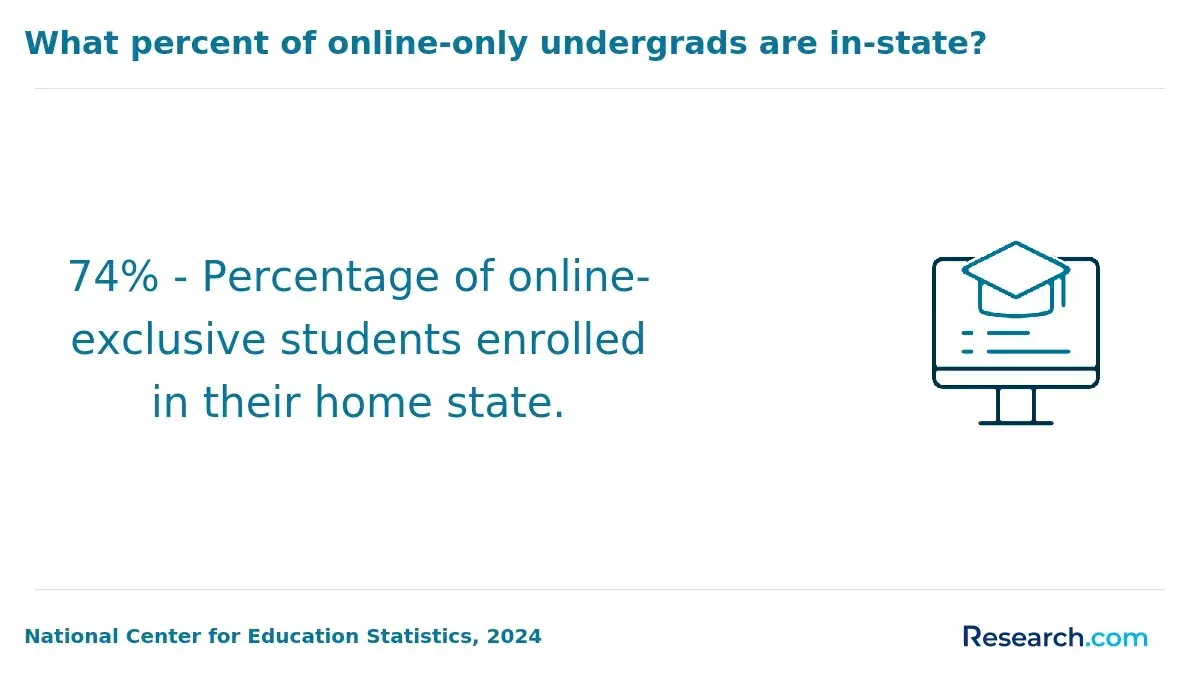
Choosing between online and traditional on-campus finance programs hinges on balancing immediate applicability and long-term employer perception. On-campus options tend to provide stronger access to internship pipelines, professional networks, and live mentorship-assets that matter in early investment banking roles where face-to-face recruiting and campus career events dominate. Conversely, online programs offer vital flexibility for mid-career professionals, enabling them to maintain client relationships while adopting new skills, especially in wealth management.
Cost is a tangible differentiator: online paths often lower living and commuting expenses, easing debt burdens. However, candidates must critically assess program accreditation and hiring conventions, since top-tier banking firms may still prefer traditional degrees for entry-level advisory positions. Additionally, online formats demand rigorous self-motivation and may limit spontaneous peer interaction, which can impede the development of client-facing soft skills essential in banking.
What accreditation and program quality standards matter for finance majors entering banking?
Program accreditation significantly impacts the preparedness of finance majors for banking roles, especially as fintech employment in the US exceeds 7.6 million with steady growth. Employers prioritize candidates from programs accredited by bodies such as AACSB, ACBSP, or EQUIS because these credentials signal adherence to rigorous academic standards and up-to-date curricula. Graduates from non-accredited or regionally unrecognized programs often face skill gaps in critical areas like compliance, risk management, and data analysis-skills essential for navigating the digital transformation shaping banking.
Consider a student choosing between two programs: one AACSB-accredited with integrated fintech applications and another with a traditional theoretical focus. The accredited program is likely to provide access to internships and faculty expertise aligned with banking's practical demands, such as risk analysis or capital markets, resulting in stronger job prospects within months of graduation. In contrast, students from less comprehensive programs may encounter longer job searches and lower salary offers due to skill mismatches.
Transparency in graduate outcomes data-including six-month employment rates and salary benchmarks-should be a decisive factor when evaluating programs. Certifications like CFA or FRM embedded in the curriculum enhance hiring potential and demonstrate readiness for complex industry roles. Prioritizing programs that balance accreditation with applied fintech and real-world case studies mitigates risk and improves long-term employability in a finance sector increasingly driven by technology.
What are typical entry-level and mid-career salaries for common banking specializations?
Salary trajectories in banking illustrate clear tradeoffs tied to specialization and skill development. Entry-level roles vary, with investment banking analysts typically starting near $70,000 annually, while retail or commercial banking positions begin closer to $55,000. Mid-career compensation diverges more sharply, as investment bankers reach $150,000 to $200,000, risk management professionals earn between $110,000 and $140,000, and quantitative roles in asset management or trading often exceed $180,000. These distinctions have significant implications for career planning and educational focus.
Employers in asset management increasingly prioritize candidates with STEM backgrounds, with forecasts from Wifitalents indicating that 40% of future hires will come from these disciplines. This shift demands that finance programs integrate coding, statistics, and advanced financial modeling to prepare students for roles with accelerated salary growth but also heightened technical expectations.
For mid-career professionals, transitioning into analytics-heavy functions can be a pivotal move, but it requires substantial upskilling. Those who remain in client relationship management or compliance may experience steadier but slower salary increases, revealing a tradeoff between technical expertise investment and stable earnings. Decision-makers must assess whether the costs and efforts of reskilling align with their long-term compensation goals and labor market realities. Strategically navigating these options with an informed view of workforce trends and employer demands is critical for optimizing educational choices and career outcomes in finance.
What is the job outlook and hiring demand for different banking finance roles?
Hiring trends in banking finance reveal distinct shifts shaped by regulatory dynamics and sector priorities. Routine roles such as loan officers and credit analysts encounter slower growth due to automation reducing manual credit evaluations. Conversely, demand for compliance officers and risk managers is intensifying as financial institutions react to stricter oversight and more complex risk profiles. Employers now seek candidates with skills extending beyond core finance, notably expertise in data analytics and regulatory technologies.
Sustainability-focused finance roles are expanding rapidly. By 2025, about 10% of financial services jobs will be dedicated to ESG and sustainability functions. For example, sustainability analysts saw a 45% hiring surge in 2023, driven by increasing investment in socially responsible portfolios and regulatory transparency mandates. Professionals combining finance skills with sustainability metrics stand to gain a strategic advantage in hiring.
Corporate finance specialties like treasury management and mergers and acquisitions fluctuate with economic cycles, often limiting opportunities for entry-level candidates during downturns. Meanwhile, fintech-related positions such as blockchain analysts grow faster but require technical credentials outside traditional finance curricula. Aligning education with targeted subfields and anticipating these hiring realities improves employability and optimizes workforce outcomes.
Which licenses and certifications support careers in investment banking, commercial banking, and risk?
Licensing and certification in investment, commercial banking, and risk management directly influence employability and functional capacity within their respective regulatory environments. Investment bankers require the FINRA Series 7 and Series 63 licenses, which are non-negotiable for securities sales and compliance with state laws. Equity research and M&A analysts often pursue the CFA charter to substantiate advanced valuation and portfolio skills, critical for upward mobility and role specialization.
Commercial banking roles emphasize credentials like the Certified Commercial Investment Member (CCIM) for real estate finance or Certified Risk Professional (CRP) for risk evaluation, while compliance and audit positions lean on the Certified Financial Services Auditor (CFSA) and Certified Regulatory Compliance Manager (CRCM) certifications. These distinctions matter because neglecting appropriate licenses can block transitions: for instance, lacking Series 7 effectively prevents moving into investment banking, while missing risk certifications limits leadership in compliance-driven commercial banking.
The labor market underscores significant growth, with the U.S. Bureau of Labor Statistics projecting nearly 942,500 annual openings in business and financial sectors over the coming decade. Regtech integration raises the value of IT-compliance credentials like Certified Information Systems Auditor (CISA), emphasizing digital proficiency alongside traditional licensing. Employers expect candidates to invest 6-12 months and assume high costs, often requiring employer sponsorship, underscoring that certifications are substantial strategic commitments rather than quick wins.
How can prospective students choose a reputable U.S. finance program for a banking career?
Programs emphasizing employer connections and updated curricula with clear alignment to banking industry needs offer the most practical value. A degree's worth depends less on reputation and more on how effectively it equips graduates for roles in risk analysis, asset management, or the expanding field of cloud financial management (FinOps), which is growing by 35% annually according to Wifitalents' 2024 upskilling report for the financial services industry.
Frequency and quality of internships or co-op options within reputable financial firms heavily influence employability and salary outcomes. Graduates without such hands-on experience often encounter prolonged job searches and lower entry compensation. While accreditation remains important, transparent graduate placement rates in core banking roles within six months provide stronger evidence of program efficacy.
Consider the curriculum's methodological emphasis: programs overly weighted toward quantitative finance or financial engineering may limit prospects in client-facing or broader banking roles. Instead, a blend of financial theory, practical experience, and emerging technology skills like FinOps better meets evolving employer demands.
For example, a candidate targeting a banking analyst position at a national bank should confirm access to cloud finance modules and direct project experience addressing compliance and digital transformation pressures. Flexibility through part-time or online formats must still ensure robust networking and current content that covers FinOps fundamentals to remain viable.
Other Things You Should Know About Finance
Employers in banking prioritize practical experience, such as internships or relevant project work, often over purely academic credentials. While a degree in finance provides necessary theoretical grounding, hands-on experience demonstrates your ability to apply concepts under real-world pressures. Practical exposure also accelerates career advancement by building networks and familiarity with industry tools, which programs alone cannot offer.
Employers increasingly demand proficiency in data analytics, programming, and financial modeling across banking specializations. Programs that integrate quantitative skills and technology applications better prepare graduates for current job requirements. Prioritizing specializations that combine finance theory with analytics tools enhances your competitiveness and ability to contribute to data-driven decision-making in banking environments.
No, a CFA charter is not required for most banking jobs in 2027, but it is valued for investment research, portfolio analysis, and some corporate finance roles. The CFA program has three levels and usually takes at least 2 to 4 years to complete.
References
- Banking Careers: Successful Careers You Can Bank On https://www.tafecourses.com.au/resources/banking-careers-successful-careers-you-can-bank-on/
- Investment Banking Career Path: Roles, Salaries & Promotions https://mergersandinquisitions.com/investment-banking-career-path/
- Top 10 Banking Courses After 12th: Common & High-Pay https://www.upes.ac.in/blog/business/banking-courses-after-12th
- Best Degrees, Majors & Courses for Banking & Finance Careers (2025) - Bankers By Day https://www.bankersbyday.com/best-degrees-for-a-career-in-banking/
- What skills do you need to get ahead in banking and finance? | Kaplan UK https://kaplan.co.uk/blog/careers/what-skills-do-you-need-to-get-ahead-in-banking-and-finance
- What careers can you pursue with a finance and banking degree? https://www.rmit.edu.vn/study-at-rmit/study-areas/business/what-careers-can-you-pursue-with-a-finance-and-banking-degree
- Professional Certifications for Bankers | American Bankers Association https://www.aba.com/training-events/certifications
- UK finance jobs outlook H2 2025: demand & in-demand skills https://merakitalent.com/our-perspectives/uk-finance-jobs-outlook-h2-2025/
- ROI Of College Majors By Early And Mid-Career Salaries | Bankrate https://www.bankrate.com/loans/student-loans/roi-mid-career-by-major/
- Maximize Savings and Education Goals with Online College Courses | Adirondack Bank https://www.adirondackbank.com/blog/enter-the-virtual-world-of-online-college-courses-to-save-money-while-reaching-your-education-goals