2027 Online Entrepreneurship Degrees for Professionals Testing New Venture Ideas

Co-Founder and Chief Data Scientist
Professionals juggling innovation demands and limited time often face a dilemma: how to gain rigorous, actionable skills that validate new venture ideas without sacrificing current career momentum. The challenge intensifies as 60% of adult learners pursuing online programs in business emphasize flexibility as their top priority, according to the National Center for Education Statistics 2024 report. This data reveals a significant shift toward modular, accessible education that accommodates ongoing professional obligations without postponing advancement.
Yet, not all online entrepreneurship degrees deliver equally on practical integration or timely credentialing. This article evaluates top online entrepreneurship programs tailored for professionals vetting business concepts, focusing on real outcomes to guide program selection and strategic enrollment.
Key Things You Should Know
- Employer surveys from the National Federation of Independent Business in 2025 show 62% of startups prioritize candidates with practical venture experience over formal online entrepreneurship degrees, signaling limits in degree-driven job market leverage.
- Completion time averaging 24 months for accredited online entrepreneurship programs incurs opportunity costs around $45,000 in foregone wages, as per Bureau of Labor Statistics 2024 wage data, challenging mid-career professionals' time-to-market agility.
- Programs emphasizing lean startup methodologies face a tradeoff between rigorous case-based learning and reduced pedagogical depth, with 48% of graduates reporting insufficient strategic frameworks to scale ventures effectively, per a 2024 Ewing Marion Kauffman Foundation survey.
What is an online entrepreneurship degree for professionals testing new venture ideas?
Online entrepreneurship degree programs for professionals who focus on venture idea testing offer targeted instruction that prioritizes practical validation and iterative business model development over broad theoretical business education. These programs typically emphasize lean startup methods, financial modeling, and opportunity recognition, enabling active entrepreneurs to balance ongoing venture adjustments with employment or family obligations. For example, a healthcare professional developing a telemedicine platform gains industry-specific insights into regulatory challenges and customer discovery that differ significantly from a software developer refining a SaaS product for small businesses.
Such entrepreneurship degrees often deliver asynchronous coursework combined with capstone projects simulating capital raising or scaling activities, along with access to mentorship networks. However, prospective students should critically evaluate each program's capacity to provide meaningful investor connections and experiential learning, as gaps here can limit long-term venture viability. Employers and investors now prioritize proven entrepreneurial competencies-validated prototypes, revenue models, and scalable pitches-over traditional credentials.
With about 1 in 8 working-age adults globally engaged in entrepreneurial activity, roughly 665 million people by end of 2024 according to the 2024/2025 Global Entrepreneurship Monitor report, demand for specialized entrepreneurship degrees focusing on venture idea testing continues to rise. Professionals aiming to pivot strategically might also consider complementing their skills with targeted credentials such as an operations management MBA to broaden operational expertise relevant to scaling startups efficiently.
How do online entrepreneurship degrees compare with on-campus programs for aspiring founders?
Online entrepreneurship degree benefits versus traditional programs reveal significant distinctions in practical immersion and network cultivation. On-campus entrepreneurship courses provide direct mentorship, access to incubators, and spontaneous peer interactions that accelerate hands-on problem solving and real-time feedback, critical for startup founders requiring rapid prototyping and iterative testing. In contrast, online programs lean on virtual collaboration and asynchronous learning, which can limit engagement with local startup ecosystems and investor connections.
For professionals balancing full-time work or located in dispersed markets, online entrepreneurship degrees offer flexibility that supports career pivots without income disruption. Labor market projections analyzed by College Factual underscore growth in managerial and academic roles driven by entrepreneurial skills, validating that theoretical and strategic knowledge acquired online retains strong employability value. Those weighing educational formats should consider that employers increasingly emphasize demonstrable entrepreneurial outcomes and business metrics over program modality.
Decision-makers face tradeoffs:
- On-campus formats excel in ecosystem immersion and community building.
- Online degrees enable access to education alongside existing professional commitments.
Regardless of format, proactive pursuit of mentorship and real-world projects remains essential to meet employer expectations in startups and management. Prospective students interested in flexible options might explore the most affordable online MBA programs that integrate entrepreneurship coursework while accommodating diverse professional demands.
Comparing on-campus and online entrepreneurship courses for startup founders requires balancing experiential limitations against accessibility, with long-term outcomes hinging on individual initiative and strategic skill application.
What types of entrepreneurship degrees and certificates are available fully online?
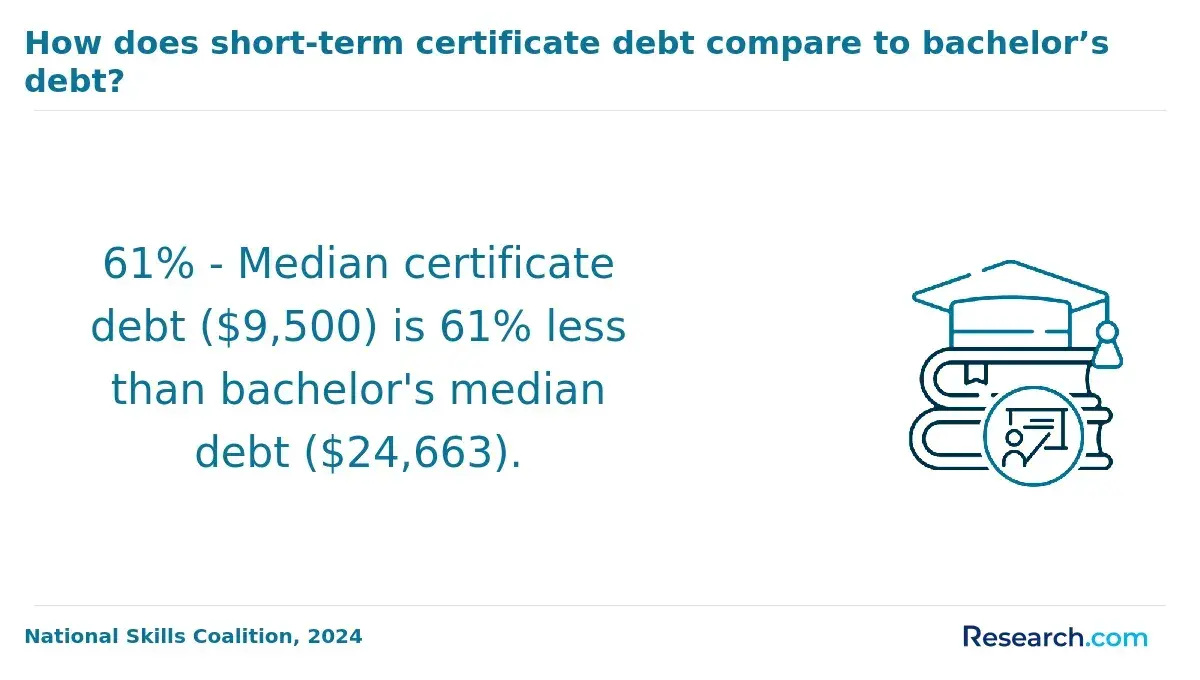
Pragmatic decisions about online entrepreneurship degree programs for professionals hinge on balancing specific career goals with the program's practical applicability and time investment. Fully online certificates in entrepreneurship and new venture creation deliver targeted expertise in areas like startup management and venture financing within 6 to 12 months, offering a low-commitment path for those who need rapid skill upgrades without pursuing a full degree.
Online bachelor's degrees blend core business fundamentals with entrepreneurial strategy, equipping students for roles such as small business leaders or new venture developers. Master's programs, including the Master of Business Administration with an entrepreneurship focus, add layers of strategic complexity-covering scaling ventures, venture capital acquisition, and market disruption analysis. For instance, a healthcare administrator might complete a certificate in entrepreneurial finance to navigate funding in medical practices, while a marketing professional launching a tech startup leans toward a master's emphasizing product innovation.
Employers increasingly demand candidates who demonstrate applied skills like business model validation, lean startup techniques, and financial forecasting, all integral to these online programs' case studies and project assessments. Graduates report an average annual salary near $65,000, but this should be measured against program cost and relevance to industry.
For those evaluating cost alongside quality, investigating options like the cheapest MBA programs can clarify feasible pathways that balance tuition and outcomes effectively.
How can you verify accreditation and quality for online entrepreneurship programs?
Verifying accreditation for online entrepreneurship degrees hinges on approval by a U.S. Department of Education-recognized agency or the Council for Higher Education Accreditation, which directly impacts employer recognition and credit transferability. Additionally, state authorization limits where programs can legally operate and influences eligibility for federal financial aid, a critical factor for many students.
Quality indicators for online entrepreneurship programs in the US go beyond accreditation. Programs should demonstrate measurable outcomes such as graduate employment rates and alumni startup success. Curricula that include sector-specific content-like venture capital navigation for tech founders or impact measurement for social enterprises-offer practical advantages aligned with diverse career objectives.
Working professionals face tradeoffs between synchronous and asynchronous learning formats. With 59% of U.S. distance education students enrolled exclusively online, many entrepreneurs benefit from flexible, mostly asynchronous schedules while still needing some live interaction for peer networking and mentorship. Evaluate faculty for direct venture experience and confirm that technology platforms support hands-on collaboration essential for applied learning.
Transparent program assessments or independent third-party reviews based on consistent criteria help validate value relative to your specific professional growth or pivot goals. For those seeking accessible options, reviewing affordable online MBA programs may provide a pragmatic pathway balancing cost and rigor.
What core courses and specializations do online entrepreneurship degrees typically include?
Degrees in online entrepreneurship demand more than familiarity with basic business disciplines; they require critical skills in budgeting, forecasting, and business model development tailored to early-stage ventures. Employers expect graduates to not only understand accounting and finance but to also deploy these frameworks in unpredictable startup contexts where cash flow volatility and pivoting strategies are common.
Specializations such as digital marketing or venture financing offer tangible workforce skills-like running cost-efficient online campaigns or navigating investor networks-that directly influence a startup's survival chance. For instance, an online entrepreneurship student focused on innovation management will practice competitive market analysis essential for iterative product development in tech startups or social enterprises.
However, pursuing these programs involves financial tradeoffs; the National Center for Education Statistics reports average tuition and fees around $42,000 for a four-year online bachelor's degree. Given the irregular income typical in entrepreneurial careers, students must evaluate if the hands-on project experience and capstone simulations compensate for the cost and the challenge of translating academic outcomes into steady income.
Students should assess how well a program's balance of core business education, specialized tracks, and practical exposure matches their career objectives in a competitive business landscape, where networking and real-world feedback often outweigh classroom instruction.
What are the admission requirements for online entrepreneurship degrees for working professionals?
Applicants pursuing online entrepreneurship degrees as working professionals must demonstrate a clear ability to integrate prior business knowledge with practical, sector-specific experience. Employers increasingly value candidates who can translate academic frameworks into actionable strategies, especially in volatile markets such as technology startups where adaptability and speed are essential. For instance, a software engineer involved in launching a SaaS product needs to combine technical expertise with entrepreneurial decision-making, a balance that admission committees expect applicants to have already begun developing.
Entry standards typically require at least a bachelor's degree and 2 to 5 years of relevant work experience to handle intense, application-focused curricula. This prerequisite supports engagement with live projects that reflect real market conditions, moving beyond theoretical exercises. Candidates must provide official transcripts, detailed professional experience documentation, and a statement of purpose clearly aligning their goals with the program's offerings.
Time management and remote learning capabilities are non-negotiable; some schools mandate proof of technological readiness or standardized test scores, though waivers are common for seasoned professionals. Incomplete or vague applications often result in deferrals, so prospective students must prepare comprehensive submissions well in advance.
- Requirement of foundational business knowledge plus industry-specific experience
- Emphasis on translating theory into real-world venture development
- Demand for clear articulation of career pivot or entrepreneurial objectives
- Institutional preference for candidates with tested time management and technology skills
How long do online entrepreneurship programs take, and what do they cost?
Choosing an entrepreneurship education requires critical evaluation of program duration, depth, and alignment with specific career goals. Certificate programs, often completed in 6 months, provide targeted skills ideal for professionals seeking immediate application, such as a software consultant transitioning into a service-based SaaS startup. Longer programs, including master's degrees that typically span two years, offer comprehensive training in strategic, financial, and innovation competencies necessary for scalable ventures or corporate venturing roles.
Cost variability is significant, ranging from under $5,000 for certificates primarily at public institutions to upwards of $30,000 for private master's programs. Importantly, the total investment includes opportunity costs like income foregone during study periods. Modular course designs can mitigate these challenges by enabling working professionals to balance education with existing responsibilities.
Service-based entrepreneurship tracks consistently produce higher venture survival rates compared to product-based models. Employer expectations increasingly favor digital business frameworks and innovation-oriented credentials over lengthy, generalized degrees when hiring for startup or tech-driven roles.
- Program duration: 6 to 24 months depending on credential and enrollment intensity
- Cost range: $4,000 to $35,000; includes tuition, fees, and indirect costs
- Service-based tracks yield higher venture survival rates, underpinning strategic specialization
- Shorter programs offer quicker market entry but less comprehensive depth
- Longer degrees offer advanced skills but require significant time and financial investment
What startup-focused careers and roles can an online entrepreneurship degree support?
Choosing an online entrepreneurship degree demands recognizing the practical tension between theoretical knowledge and real-world application. For example, a product manager at a tech startup applies entrepreneurial methods to reshape business models and steer cross-functional teams amidst resource scarcity-something coursework often abstracts but must be mastered for effective market navigation.
Key career roles include startup founder, venture analyst, and innovation consultant, each requiring a balance of analytical rigor and adaptable strategy. Graduates face challenges beyond foundational skills, such as remote collaboration and sector-specific expertise, especially in fields like healthcare or green technology, which necessitate nuanced curricula and targeted certificates.
Entrepreneurship programs emphasize validating ideas and lean startup techniques critical for roles evaluating venture potential or accelerating product-market fit without heavy capital. Yet, 40% of aspiring entrepreneurs reportedly avoid launching due to fear of failure, a risk mitigated through mentorship and investor networks integrated in structured programs.
Employers prioritize demonstrable outcomes-validated prototypes, data-backed market analysis, or tangible business plans-over theoretical understanding alone. Students should expect to invest effort in building such deliverables to convincingly transition into entrepreneurial roles.
- Operational agility in digital communication and project management is essential for virtual team dynamics.
- Sector-specific knowledge enhances relevance but complicates curriculum selection.
What salary ranges and earnings potential can entrepreneurship graduates realistically expect?
Entrepreneurship graduates face a challenging financial landscape characterized by a tradeoff between immediate salary stability and the volatile income associated with launching new ventures. Entry-level roles in corporate or consultancy settings generally start between $50,000 and $70,000, while mid-career positions such as product management or business consulting can push earnings beyond $100,000. However, graduates attempting to build startups encounter unpredictable cash flow; nearly two-thirds of new businesses fail within a decade, resulting in potentially minimal or no income during critical early stages.
For example, a graduate with a tech entrepreneurship focus might earn $80,000 initially at a mid-sized firm but must prepare for financial irregularity when transitioning to founding their own company. This scenario demands strong financial acumen, market analysis skills, and resilience to navigate fluctuations in income and business viability. Employers value these competencies when hiring entrepreneurship graduates who must also be prepared to pivot given high startup attrition rates.
Graduates should anticipate:
- Entry-level salaries typically ranging from $50,000 to $70,000 in corporate or consultant roles
- Managerial or specialized positions offering compensation exceeding $100,000 within five years
- Variable and often limited personal income when pursuing startup ventures due to elevated risk
An entrepreneurship degree can provide marginally better survival outcomes compared to non-educated founders but does not guarantee financial security. Graduates must strategically weigh the stability of conventional employment against the uncertain rewards of startup initiatives, considering practical limitations and expected industry volatility.
How should professionals choose the best online entrepreneurship program for their goals?
Choosing an online entrepreneurship degree demands prioritizing alignment between curriculum focus and specific venture goals, as the 77 distinct programs catalogued by OnlineStudies in 2025 illustrate wide specialization. For example, a professional launching a tech startup needs programs centered on lean startup practices, digital marketing, and venture capital rather than broad management theory. Neglecting this targeted fit risks learning abstract concepts with limited immediate application.
Programs offering project-based learning or mentorship from active entrepreneurs improve practical skill acquisition valued by employers and investors. Access to startup incubators, pitch events, or ecosystem collaboration significantly matters for sectors such as biotech or social enterprise where networks influence funding and market entry.
Decision-making must factor in duration, flexibility, and cost weighted against opportunity costs. Mid-career professionals benefit from part-time or self-paced formats to maintain income streams, while those aiming for rapid skill acquisition might accept full-time intensity. Graduation outcomes-startup launch rates, funding success, and role transitions-offer concrete performance indicators, underscoring the importance of program accreditation to avoid diploma mills.
For regulated industries, selecting programs that address compliance and sector-specific challenges mitigates costly knowledge gaps during venture launch. Evaluating workforce impact data, when available, provides critical insight into real-world effectiveness beyond credential accumulation.
Other Things You Should Know About Entrepreneurship
For current founders, an online entrepreneurship degree can provide structured knowledge and frameworks often missing in hands-on experience, especially in areas like finance, legal compliance, and scaling operations. However, the time and cost investment should be weighed against immediate business needs; programs with flexible pacing and practical, project-based components offer better returns by allowing learners to apply concepts directly to their ventures.
Most online entrepreneurship degrees designed for working professionals require 10 to 15 hours per week, including coursework, discussions, and project work. This workload demands disciplined time management, especially for startup founders balancing unpredictable schedules. Prospective students should prioritize programs offering asynchronous content and modular assignments to maintain consistent progress without sacrificing business responsibilities.
Most 2027 online entrepreneurship programs require a capstone or venture lab of 6 to 9 credits. Students usually submit a business model, market validation evidence, financial projections, and a pitch deck reviewed by faculty or an external panel.
References
- Master in Innovation & Entrepreneurship Digital https://www.euruni.edu/en/Master-s/Innovation-Entrepreneurship-Digital.html
- Entrepreneurship Major https://www.kozminski.edu.pl/en/entrepreneurship-major
- Certificates and accreditations – Poznań University of Economics and Business https://ue.poznan.pl/en/university/certificates-and-accreditations/
- Entrepreneurship certificates | edX https://www.edx.org/certificates/entrepreneurship-certificates
- Entrepreneurship Degree and Certificate Programs | DeVry https://www.devry.edu/online-programs/area-of-study/entrepreneurship.html
- How to Choose the Right Online Course | A Step-by-Step Guide https://dsuonline.com/resources/blogs/guide-choosing-right-online-course/
- Best Entrepreneur Jobs: Top Career Options https://impactdots.com/blog/best-entrepreneur-jobs-top-career-options/
- Online Entrepreneurship Course: From Idea to Launch https://licenseme.com/blog-details/online-entrepreneurship-course-from-idea-to-launch
- Entrepreneurship Degree Online | Fuel Your Business Dream https://www.educationconnection.com/online-degrees/entrepreneurship/
- How to Choose a Professional Development Program For Your Company - Dale Carnegie Blog https://www.dalecarnegie.com/blog/how-to-choose-a-professional-development-program-for-your-company/