2027 Best Online Business Administration Programs for Generalists Who Want More Career Options

Co-Founder and Chief Data Scientist
Professionals aiming to shift careers or expand their opportunities often encounter rigid online business administration programs that lack adaptability to nontraditional schedules or diverse role ambitions. With 60% of adult learners prioritizing flexible pacing and access according to the National Center for Education Statistics, this demand for customizable program structures underscores a broader redefinition of how education supports career mobility.
Employers increasingly value versatile credentials but also expect practical experience and timely completion, intensifying pressure on students to choose programs balancing breadth with actionable outcomes. This article evaluates the best online business administration programs built for generalists seeking diverse career trajectories, emphasizing flexibility, curriculum scope, and real-world applicability to guide informed enrollment decisions.
Key Things You Should Know
- Programs emphasizing generalist business administration skills yield average salary premiums near 12% over specialized peers, but lack of niche expertise can constrain candidate differentiation in competitive sectors per 2024 BLS data.
- Employers increasingly prioritize hybrid skill sets combining data analytics with business administration fundamentals, as 67% of hiring managers in Deloitte's 2024 survey report preference for candidates with quantitative competencies.
- Extended time-to-completion and rising tuition-averaging 9% annual increase per NCES-challenge working professionals balancing full-time employment, prompting critical evaluation of accelerated versus traditional program formats.
What is an online business administration degree and how does it prepare flexible generalists?
An online business administration degree offers a curriculum structured to develop adaptable generalists equipped with cross-functional expertise in management, finance, marketing, and operations. This diverse skill set meets employer demand for professionals capable of employing data-driven decision-making and strategic planning across sectors rather than narrowing early in a single specialization. Graduates often pivot fluidly among roles-for instance, moving from retail management into business analytics within healthcare or finance-reflecting workforce needs for versatile problem-solvers who can integrate complex departmental functions.
Emphasizing flexibility, this degree benefits those seeking practical adaptability rather than narrowly defined expertise. Key implications include:
- Broader career opportunities in diverse industries requiring cross-disciplinary knowledge
- Necessity for self-discipline and technological proficiency to thrive in remote or hybrid work environments
- Challenges such as less organic in-person networking, demanding proactive virtual engagement with mentors and peers
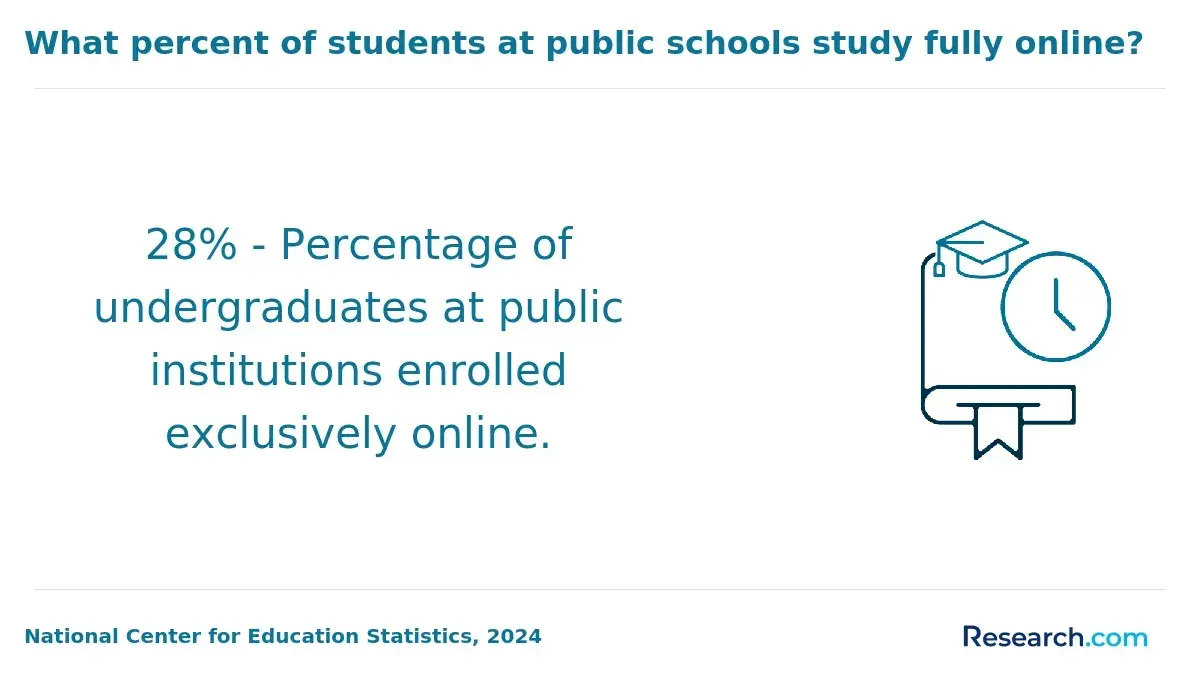
The rise in fully online undergraduate enrollment by 26% between fall 2019 and fall 2023 indicates a growing preference for learning formats that accommodate employed students balancing job demands. This dynamic training aligns with the workforce's shift toward flexible roles. However, students must supplement coursework with practical experience such as internships or consulting projects to meet employer expectations for initiative and applied skills.
Those evaluating how an online business administration degree expands career opportunities should also consider specialized pathways like operations management. Interested students can explore more about the operations management MBA to understand advanced focus options within this broader field.
How do online business administration programs compare with on-campus options for generalist learners?
Choosing between online business administration programs versus on-campus learning benefits hinges on the tradeoffs between flexibility and immersive engagement. Online formats provide crucial scheduling freedom, aligning well with generalist learners balancing work or family commitments, especially in the context of flexible career options with online business administration degrees in the United States. However, they often lack the spontaneous networking and direct mentorship that on-campus environments facilitate, which can limit access to internships and real-time recruiting essential in fields like finance or consulting.
Employers generally value accredited degrees from both formats equally, focusing more on demonstrable skills and relevant experience. Students pursuing on-campus programs may benefit from structured pathways to experiential learning and alumni networks, while remote learners must proactively create virtual connections and independently seek practical opportunities.
Practical challenges of online learning include delays in feedback and less opportunity for immediate collaboration, requiring intentional engagement strategies. Meanwhile, on-campus study demands accommodating fixed schedules and possibly higher costs, which may deter some learners.
The U.S. labor market outlook projects an addition of around 911,400 business and financial jobs from 2023 to 2033, with median wages near $79,050. This supports a diverse array of professional options stemming from a generalist business degree. Those evaluating accelerated or flexible options might also consider the best construction management schools as an alternative pathway blending project management skills with business acumen.
Which types of online business administration degrees offer the most versatile career options?
Choosing online business administration degrees with versatile career paths requires prioritizing programs that balance broad management fundamentals with flexible electives in finance, marketing, operations, and information systems. Specializing too narrowly, such as in accounting or human resources, can restrict adaptability and limit career transitions, while generalist curricula support shifts across industries and functions more effectively.
Graduates equipped with skills in financial analysis, data interpretation, and operational strategy can move fluidly between sectors like healthcare management, tech startups, or supply chain roles without needing additional certification. Employers increasingly favor interdisciplinary skill sets underpinned by critical thinking and digital literacy. Programs integrating technology management or data analytics electives align better with labor market demands, boosting long-term career mobility.
Students exploring the most flexible online business administration programs in the US should evaluate career services, mentorship availability, and networking support, recognizing that employer recognition of online credentials varies widely. Although accelerated degrees may reduce time to completion, they often sacrifice elective diversity, which constrains skill breadth. Longer programs that emphasize diverse coursework and problem-solving foster agility essential for responding to volatile job markets.
For those considering broader decision-making pathways, comparing business administration options alongside alternatives like the online construction management bachelors degree may reveal practical trade-offs between specialized skill focus and cross-functional versatility.
How can you verify accreditation and quality for online business administration programs?
Choosing an online business administration program without verifying accreditation risks degrees that employers or licensing boards may not recognize. Regional accreditation sanctioned by the U.S. Department of Education or the Council for Higher Education Accreditation establishes baseline institutional quality, but this alone does not ensure the program meets industry-relevant standards. For example, employer demand often hinges on programmatic accreditation such as from the Accreditation Council for Business Schools and Programs (ACBSP) or the Association to Advance Collegiate Schools of Business (AACSB), which directly attest to the rigor of business curricula.
This distinction is critical for working adults or career changers pursuing quality assurance criteria for online business administration degrees in the US, as lack of appropriate accreditation can block access to certifications or advanced study pathways. Evaluating graduation rates and job placement statistics provides additional context on real-world outcomes rather than institutional marketing claims.
Students facing time and financial constraints should prioritize programs verified through official government sources and analyze course content alignment with sector-specific skills like finance or operations management to avoid generic curricula. Employers aggressively seek verifiable mastery in leadership and business fundamentals, a demand shaped by graduates' proven competencies.
Considering the evolving workforce, many students older than 25 leverage these programs for tangible upskilling. Those interested in healthcare management might also explore related options like a health information management degree online to diversify credentials with sector-specific expertise.
What courses and concentrations best support a generalist business administration pathway?
A generalist business administration degree that balances broad foundational knowledge with selective concentrations offers a practical advantage in a fluctuating job market. Core coursework in accounting, finance, marketing, management, and business law builds the essential understanding necessary to navigate diverse operational contexts. Yet, integrating concentrations such as strategic management, data analytics, entrepreneurship, or international business sharply enhances adaptability and employer appeal.
For instance, professionals aiming for consulting or corporate leadership roles benefit significantly from strategic management combined with data analytics, equipping them with critical decision-making skills grounded in quantitative analysis. Meanwhile, entrepreneurship coursework is pivotal for those launching or expanding ventures, providing practical tools for varied market demands. International business concentrations prepare graduates for roles involving cross-border negotiations, cultural fluency, and global supply chain complexities.
Employers increasingly seek candidates who merge broad business acumen with emerging competencies like digital transformation and sustainability management. This hybrid approach reduces the risks inherent in over-specialization, preserving professional flexibility amid rapid industry changes.
Cost considerations impact educational choices as well. According to a 2024 Eduventures Research study, online bachelor's business programs typically cost 14-18% less than on-campus equivalents, enabling students to allocate funds toward certifications or internships that expand practical experience. Ultimately, carefully chosen core studies combined with targeted concentrations offer a robust foundation for diverse business careers, balancing specialization with operational versatility.
What admission requirements and application materials do online business administration programs expect?
Admission to online business administration programs involves more than academic credentials; it requires demonstrating a blend of quantitative aptitude and contextual career relevance. Applicants typically must provide a bachelor's degree transcript with a competitive GPA-usually 2.5 or 3.0 minimum-and proof of English proficiency via standardized tests like TOEFL or IELTS for non-native speakers. However, meeting these baseline metrics rarely suffices for career-oriented candidates aiming to shift industries or accelerate upward mobility.
Many programs expect a detailed professional resume that contextualizes work experience, especially for mid-career professionals transitioning into management roles. Letters of recommendation from supervisors or academic mentors remain pivotal in signaling leadership potential and reliability, influencing recruiter perceptions for fields like finance or consultancy where AACSB accreditation signals quality and employer preference. Notably, only about 6% of global business schools hold AACSB accreditation, which typically correlates with higher entry standards and better long-term value.
Enrollment can be delayed by logistical hurdles-waiting on transcripts or endorsement letters-which directly impacts the timing of career pivots tied to program completion. Missing core application components usually results in rejection or forced deferrals. Unlike diploma mills, legitimate programs enforce these admission criteria to ensure candidates' preparedness and professional seriousness. This rigor reflects employer expectations that graduates possess validated academic and experiential qualifications, essential for sustained career progression.
How long do online business administration programs take and what do they typically cost?
Length and cost variations in online business administration programs reflect a tradeoff between accelerated learning and flexible pacing aligned with workforce demands. Associate degrees often require about two years with some completing in as little as 18 months using transfer credits or intensive schedules; bachelor's degrees typically extend to four years but may compress to three in accelerated formats. Graduate certificates and master's programs range roughly from one to two years depending on specialization and course load.
In practical terms, tuition differs markedly by institution type and residency status:
- Public universities average $15,000-$35,000 for a full bachelor's degree.
- Private nonprofit institutions frequently exceed $40,000.
- Associate degrees online can start near $5,000.
- Master's programs span $20,000 up to $50,000 or more.
Professionals with general business administration degrees typically switch job roles 22% more often in their early careers compared to specialized graduates, offering cross-industry mobility such as moving from retail marketing to technology finance. Such flexibility comes at the cost of broader, less specialized expertise, which can influence hiring trajectories.
Students weighing these programs should assess time-to-completion against career timing needs, balancing affordability with return on investment and factoring the potential for credit transfer or acceleration based on employer or personal skill goals. Employers prioritize demonstrable skills and degree completion over length or sticker price alone, making strategic program selection crucial for meaningful workforce integration.
What careers can a generalist with an online business administration degree pursue?
Generalist graduates with an online business administration degree encounter a mixed professional landscape that values adaptability but also demands strategic upskilling. These degrees open doors across industries such as healthcare management, financial services, retail, and technology, with common roles including operations manager, project coordinator, and business analyst. For instance, a healthcare employer might engage a graduate to optimize patient scheduling and reduce vendor costs, demonstrating how broad skill sets enable operational improvements.
While 92% of HR professionals recognize accredited online degrees as comparable to traditional ones, this acceptance depends heavily on institutional reputation and industry relevance. Graduates can expect similar entry-level opportunities as on-campus counterparts but must balance generalist knowledge with certifications or technical skills like Six Sigma or SHRM to remain competitive.
Employers valuing niche expertise may prefer candidates with specialized credentials over broad management exposure, especially for senior roles. Job seekers benefit from framing their versatility as cross-functional problem-solving capability, which can facilitate rapid rotational assignments in sectors like retail or finance. However, advancing beyond middle management typically requires targeted experience or additional credentials to offset the generalist nature of the degree.
- Workforce demand favors candidates who combine business fundamentals with visible professional certifications.
- Broad online degrees suit those pursuing varied managerial paths but limit fast-tracked specialization.
- Institutional prestige and online program accreditation significantly influence employability and acceptance.
What salary ranges and advancement opportunities exist for business administration generalists?
Business administration generalists face a salary trajectory that depends heavily on sector-specific dynamics and skill adaptability. Entry-level roles typically offer between $50,000 and $70,000 annually, but moving into mid-level positions often requires demonstrating strong digital fluency alongside traditional managerial knowledge, with salaries frequently exceeding $90,000. For example, a production coordinator in manufacturing can advance to a supply chain manager role with compensation rising beyond six figures, while in services, leadership roles like business operations directors emerge after 5 to 7 years, contingent on mastery of data-driven tools and AI literacy.
Workforce demands increasingly penalize stagnation in standard managerial roles lacking technological integration. The World Economic Forum's Future of Jobs Report 2025 forecasts a 44% shift in core workforce skills by 2030, emphasizing analytical and digital competencies. Candidates who update skills through certifications in digital business tools stand out, particularly when positioned as connectors across finance, marketing, and technology functions.
This adaptability correlates strongly with mobility and pay growth, underscoring the tradeoff between broad generalist knowledge and specialized digital aptitude. Failure to evolve can confine professionals to middle management where advancement slows.
Overall, success in business administration hinges not on static skill sets but on ongoing skill acquisition, strategic networking, and the ability to align interdisciplinary knowledge with emerging business technologies.
How can working adults choose the best-fit online business administration program for their goals?
Employment outcomes vary sharply among online business administration programs; graduates from top-tier programs achieve a nearly 9-point higher three-year employment rate compared to those from lower-ranked schools. For professionals targeting competitive sectors like finance or consulting, prioritizing institutions with established employer connections and career services that translate academic content into applicable skills is essential.
Curriculum alignment with career goals directly affects skill acquisition. Programs focused on data analytics, project management, or digital marketing cater to technical roles, while leadership and organizational behavior courses support those pursuing management or entrepreneurship. Flexible course formats and reasonable time-to-degree calculations are indispensable for working adults managing job and family commitments. Accreditation from recognized agencies ensures program credibility, employer recognition, and access to financial aid.
Transfer credit policies matter for minimizing costs and accelerating completion; understanding these can reduce redundancy for mid-career learners. A manufacturing professional might prioritize programs with supply chain or operations management modules, while a marketing specialist benefits from curricula with embedded digital marketing certifications.
Beyond tuition, assessing ROI through alumni earnings, placement statistics, and debt load is vital. Support services and technical assistance significantly influence persistence and completion rates in online learning environments.
- Top program quality correlates with higher employability post-graduation
- Curriculum relevance should reflect targeted industry skills
- Flexible scheduling and accreditation impact practicality and validity
- Transfer credits and support services affect overall cost and success
Other Things You Should Know About Business Administration
Online business administration programs often require the same academic rigor as on-campus formats but demand stronger self-discipline from students. The absence of scheduled class time means managing deadlines independently, making time management critical. Prospective students should prioritize programs with structured weekly milestones and active faculty engagement to avoid falling behind.
The top online business administration programs in 2027 offering diverse career paths include the University of Florida's Warrington College of Business, Indiana University’s Kelley School of Business, and Carnegie Mellon's Tepper School of Business. These programs emphasize broad skill development for various industries.
Specializations can increase employability in targeted roles but may reduce versatility if too narrowly focused. For those seeking broad options across industries, selecting a generalist track or a specialization with cross-sector relevance-like management or marketing-provides more adaptability. Prioritize programs that allow switching concentrations without penalty or offer dual-focus options.
Working professionals must plan for significant weekly study time-often 15 to 20 hours-to meet academic standards without compromising job performance. Programs with asynchronous courses provide flexibility but require stronger self-motivation, while those with synchronous elements demand scheduling accommodations. Assess programs for clear workload expectations and support services designed for working adult students.
References
- Online Business Degree Programs | University of Phoenix https://www.phoenix.edu/online-business-degrees.html
- How Long Does It Take to Get a Business Administration Degree? - Team Academy https://teamacademy.nl/how-long-does-it-take-to-get-a-business-administration-degree/
- How a Business Degree Built for Adults Accelerates Career Momentum https://www.marian.edu/blog/2026/01/how-a-business-degree-built-for-adults-accelerates-career-momentum.php
- Online BBA vs. On-Campus BBA: What You Should Know Before You Choose | CourseCompare.ca https://www.coursecompare.ca/online-bba-vs-on-campus-bba/
- How Long Does An Online MBA Take? | StudyNext Australia https://studynext.com/au/resources/how-long-does-an-online-mba-take
- How long does it take to get a Business Administration degree? https://vinuni.edu.vn/how-long-does-it-take-to-get-a-business-administration-degree/
- Ten Types of Business Degree Specializations | AIU https://www.aiuniv.edu/degrees/business/articles/10-types-of-business-degree-specializations-you-can-pursue
- Is Your Online Degree Legitimate? How to Verify Private University Approval https://matchtocollege.com/blog/verify-private-university-online-degree-approval
- How Long Does It Take To Complete An MBA Degree? - GradSchoolHub.com https://www.gradschoolhub.com/faqs/how-long-does-it-take-to-complete-an-mba-degree/
- Careers in Business Administration: Roles, Pay, Outlook https://pathwise.io/careers-in-business-administration-2/