2027 Online Accounting Degrees With Stable White-Collar Career Alignment

Co-Founder and Chief Data Scientist
Facing a rapidly shifting labor market and tight work-life schedules, many professionals aiming to enter or advance in accounting confront a high-stakes dilemma: How to secure credible credentials without sacrificing current job responsibilities or personal obligations.
Enrollment data from the National Center for Education Statistics shows that over 70% of online degree candidates are adults balancing employment and family, revealing a fundamental pivot in higher education toward flexible, career-aligned models. This evolution is not merely convenience-driven but a response to employer demand for proven expertise paired with adaptive learning formats.
This article evaluates online accounting degrees that align with stable white-collar roles, helping readers choose programs that optimize career outcomes within real-world constraints.
Key Things You Should Know
- Recent BLS data indicates a 7% growth in accounting roles through 2032, but automation risks in transaction-heavy tasks pressure candidates to prioritize strategic analytics skills, shifting degree focus toward data proficiency over traditional bookkeeping.
- Employer surveys from the AICPA show 65% of firms prefer candidates with integrated online degrees plus 150 credit hours for CPA eligibility, underscoring credential alignment as a decisive hiring filter despite the rise of nontraditional pathways.
- National Center for Education Statistics finds average online accounting degree completion spans 2.8 years versus 4 years on-campus, reducing opportunity costs yet often increasing upfront tuition per credit, a critical budget consideration for mid-career pivots.
What is an online accounting degree and how does it prepare you for white-collar careers?
An online accounting degree benefits white-collar professionals by equipping them with foundational skills in financial reporting, auditing, taxation, and regulatory compliance, combined with emerging digital competencies. These programs integrate technical expertise with real-world applications such as managerial accounting, financial analysis, and proficiency in accounting software, preparing graduates to manage increasingly automated workflows.
For example, a professional transitioning from general business to a forensic accounting role gains targeted skills to detect fraud and support legal proceedings. This specificity reflects how an online accounting degree prepares for stable careers within corporate finance, public accounting, government agencies, and nonprofit sectors, all demanding accurate financial oversight and strategic decision-making.
Success in these programs depends on disciplined time management and mastering complex concepts remotely, often without in-person support. Employers commonly expect CPA certification post-graduation, so degrees emphasizing CPA exam readiness can smooth entry into accounting roles. Graduates should anticipate ongoing skill upgrades due to evolving regulatory environments and technology integration.
Labor market data reveals a significant workforce contraction among accountants since 2019, with over 300,000 professionals leaving the field. This decline intensifies demand for qualified candidates competent in adapting to regulatory changes and digital tools, reinforcing the need for continuous learning alongside formal credentials.
Those evaluating this path should also explore the options for affordable education tailored for remote learners via online accounting, balancing cost with program quality and career outcomes.
How do online accounting degrees compare with campus-based programs for quality and credibility?
Online accounting degree quality comparisons highlight that regional accreditation remains the primary determinant of program credibility, regardless of delivery mode. Employers focus on curriculum rigor and demonstrated competencies rather than online versus campus format, yet practical tradeoffs exist.
Campus programs often provide superior access to internships, live mentorship, and in-person networking crucial for entry-level positions at competitive public accounting firms. Conversely, online programs offer flexibility that suits working professionals aiming for a strategic career pivot by maintaining employment while pursuing credentials.
Key considerations include:
- Accreditation by AACSB, ACBSP, or regional bodies as proof of equivalence in curriculum and faculty qualifications.
- Online formats demand proactive virtual networking to offset limited face-to-face interaction, impacting tangible connections that influence hiring in certain markets.
- Campus programs' recruitment fairs and on-site interviews offer direct pipelines particularly valuable for recent graduates targeting Big Four firms.
The U.S. Bureau of Labor Statistics projects a steady 5% growth in accountants and auditors from 2024 to 2034, producing approximately 124,200 openings each year. This makes choosing an accredited program, a strategic decision tied to licensure and employer expectations. Students should weigh their industry focus, networking needs, and learning preferences before committing.
Those evaluating options might also consider related pathways such as the best online accelerated project management degree to complement accounting skills in broader business environments.
What types of online accounting degrees are available and which level suits your career goals?
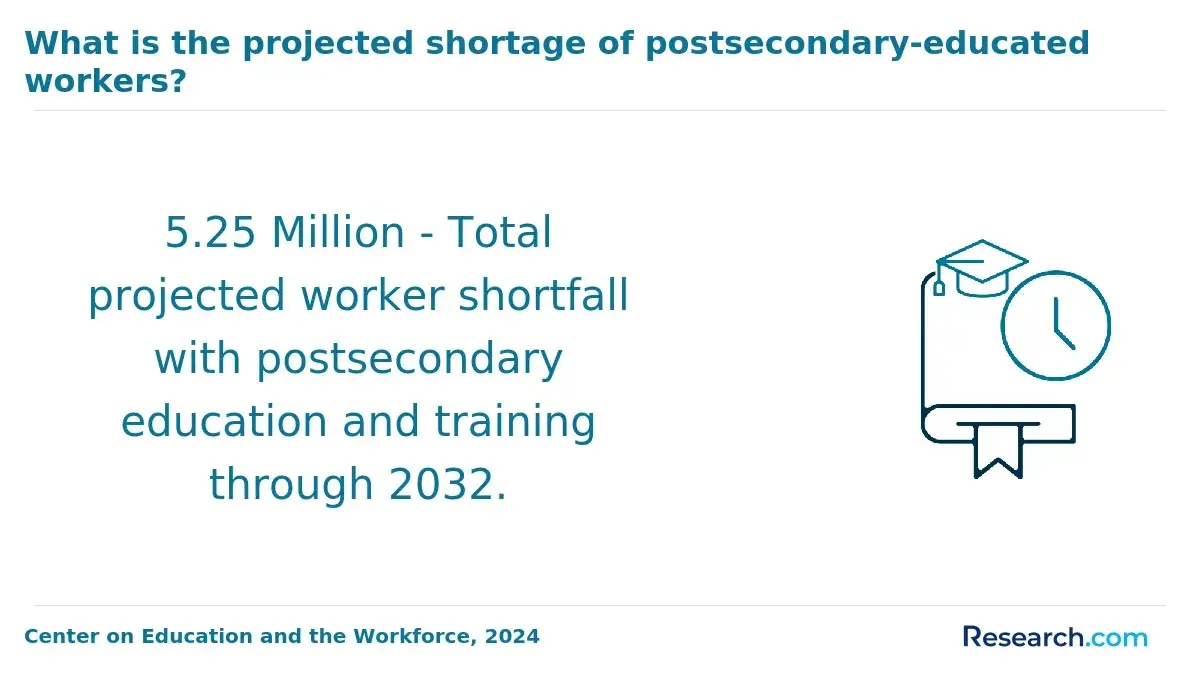
The choice of an online accounting degree level shapes not only initial employability but also long-term career trajectory and wage potential. Associate degrees meet immediate staffing needs such as bookkeeping or clerical roles but offer limited advancement without further education. Employers typically expect 1-2 years of postsecondary education for these entry positions, where median wages fall well below those of professionals with higher credentials.
In contrast, bachelor's degrees remain the employment baseline for most accounting roles requiring substantive technical skill and regulatory knowledge, unlocking access to public accounting, corporate finance, and government jobs. Given the U.S. Bureau of Labor Statistics reported median annual earnings of $81,680 for accountants and auditors, this level balances educational investment with practical return.
For professionals targeting CPA licensure or leadership positions, audit manager, controller, CFO trainee, the master's degree, especially a Master of Accounting, is often indispensable. It satisfies the 150-credit hour CPA requirement and provides specialized knowledge to transition from general finance roles.
Doctoral degrees in accounting cater mainly to those pursuing academic research or high-level consultancy, involving a significant time commitment with modest wage premiums compared to master's graduates.
Master's credentials accelerate access to senior positions and CPA eligibility. The cheapest online construction management degree options provide a useful cost benchmark when analyzing the investment for online accounting degree programs and career alignment.
How can you verify that an online accounting program and school are properly accredited?
Choosing accredited online accounting programs in the United States directly affects professional certification eligibility, credit acceptance, and employment outcomes.
Regional accreditation from recognized bodies like the Higher Learning Commission or Middle States Commission confirms adherence to rigorous academic standards essential for CPA licensure and transferability of credits. In contrast, national accreditation often lacks this recognition, potentially limiting graduate program access and employer acceptance.
Students should verify accreditation through resources such as the U.S. Department of Education's Database of Accredited Postsecondary Institutions and Programs rather than relying solely on school claims.
For example, a working professional pursuing CPA credentials must ensure their degree comes from a regionally accredited school to meet state board requirements. Additionally, programmatic accreditation from organizations like AACSB or ACBSP affirms curriculum quality aligned with industry standards.
The impact of accreditation extends to employment prospects in financially lucrative sectors, where median wages reach $161,700 with 17% projected growth according to Bureau of Labor Statistics data cited by ASU Online. Employers prioritize candidates from accredited programs as a measure of foundational knowledge and ongoing compliance with professional updates. Enrolling in unaccredited or solely nationally accredited programs can substantially restrict access to these career paths.
For students balancing work and study, transparency about accreditation status and its recent renewal (within five years) is vital. Early verification prevents investing time and resources in programs that fail to meet licensure or hiring requirements in accounting-related fields demanding stable, high-wage careers.
Prospective students might also review comparative fields with structured accreditation frameworks, such as CAHIIM accredited health information management degree online, to understand accreditation's role in professional advancement.
What courses and specializations are typically included in an online accounting curriculum?
Core accounting courses in financial, managerial, taxation, and auditing form the indispensable foundation for nearly all practical roles within the field. Choosing to specialize, for example, in forensic accounting versus governmental accounting, fundamentally shapes employability, as these tracks demand wholly different regulatory knowledge and problem-solving approaches.
Forensic accounting targets fraud detection crucial for legal and corporate risk departments, while governmental accounting requires navigating stringent public-sector financial controls.
Employers prioritize proficiency not only in foundational theory but in applicable skills like financial statement analysis, tax software, and internal control systems. Complementing this, mandatory coursework in business law and ethics equips candidates to manage compliance risks effectively. Advanced offerings in data analytics and spreadsheet modeling prepare students for roles that intersect accounting with broader organizational budgeting and forecasting tasks.
The nexus of CPA exam preparation with degree completion materially impacts earning potential; CPAs earn roughly $30,000 more annually than their non-certified peers. Selecting programs featuring embedded CPA-aligned content, including simulation exams, minimizes the costly risk of exam failure and the subsequent delay in certification.
However, practical hurdles remain. Graduates often face challenges adapting to evolving accounting software and regulatory changes without hands-on exposure during their studies. Flexible program schedules and access to up-to-date technology are critical accommodations for working professionals balancing ongoing employment with education.
What are the admission requirements and application materials for online accounting degrees?
Admission criteria for online accounting degrees reflect a balance between academic readiness and workforce alignment rather than uniform benchmarks. While a high school diploma (or equivalent) and official transcripts proving a minimum GPA, generally between 2.5 and 3.0, are common, these thresholds matter most in relation to program selectivity and long-term employability.
For instance, candidates lacking foundational quantitative skills should seek programs offering remedial coursework or competency exams to avoid a mismatch with employers' expectations in areas like auditing or corporate accounting.
Test scores such as the SAT or ACT have become largely optional but remain relevant for certain bachelor's admissions. Admissions also typically require personal statements demonstrating clear career intent tied to accounting and, for advanced students, documented professional experience to contextualize learning outcomes. Letters of recommendation, while optional, can differentiate applicants in competitive programs.
Residency proof is mandatory for federal aid qualification, and international students must validate English proficiency via TOEFL or IELTS, ensuring effective engagement with technical content. The practical implication is clear: stringent entry standards correlate with access to roles offering salaries starting near $62,000 and rising to $90,000 mid-career, as reported by DegreeCalc.
Students must evaluate programs critically. Those omitting quantitative skill development risk limiting career mobility in a field where certifications like CPA and analytical aptitude are non-negotiable for advancement.
How long do online accounting programs take and what do they cost to complete?
Completing an online accounting program demands balancing time, cost, and career impact with a sharp focus on employer expectations. Associate degrees, typically 2 years, offer quicker entry but may fall short in competitive markets where employers prioritize bachelor's credentials.
Bachelor's degrees usually span 4 years full-time, although accelerated or part-time paths adjust this timeline, often increasing weekly coursework and affecting work-life balance.
Cost remains a decisive factor. Public in-state tuition averages $6,000 to $15,000 annually, while private institutions range from $20,000 to $45,000. Total bachelor's degree expenses can reach $25,000 to $65,000 excluding fees and materials.
This investment demands scrutiny against potential returns; data from DegreeCalc estimates a 3.8-year tuition payback, underscoring the long-term financial viability of accounting qualifications.
Professionals transitioning careers must weigh opportunity costs against program length and intensity. Those pursuing associate degrees need to consider supplementary credentials or experience to remain employable. Strategic financial planning should also include CPA exam preparation and certification costs, essential for advanced roles employers often require.
What accounting careers, job titles, and work settings can an online degree lead to?
Graduates with an online accounting degree in 2026 often enter roles like staff accountant, financial analyst, or tax preparer, but positions such as forensic accountant or compliance officer typically demand certifications beyond the degree itself. For example, a tax preparer starting at a small local firm will face extensive continuing education requirements to advance within larger organizations.
Employers largely value demonstrable technical skills, such as proficiency in accounting software and GAAP knowledge, over the learning modality, which places fresh graduates from online programs at a slight networking disadvantage compared to traditional degree holders.
Key practical challenges include acquiring sufficient real-world experience, often addressed by internships or concurrent CPA exam preparation. Government roles like budget analysis provide a pathway for online graduates but involve intense competition where professional networks offer an edge to those from traditional programs.
Tuition costs for online programs vary widely, typically between $27,000 and $72,000, requiring prospective students to weigh affordability against program quality and employer connections. Lower-cost options may lack internship integration or direct industry ties, which diminishes early-career mobility in competitive urban markets.
Industry data indicate that candidates combining accredited online degrees with hands-on internships secure diverse entry-level positions more reliably than those without such experience.
In sum, accreditations, embedded CPA exam prep, and internship opportunities significantly influence outcomes. Roles in forensic accounting or auditing highlight the necessity of practical experience beyond academic credentials, shaping long-term career trajectories in accounting.
What salary ranges and advancement opportunities can accounting graduates realistically expect?
Starting salaries for accounting graduates typically range from $55,000 to $70,000 annually, reflecting U.S. Bureau of Labor Statistics data on entry-level auditors and accountants. Advancement follows a clear trajectory: from staff accountant to senior accountant, then to managerial positions like accounting manager or financial controller, where mid-career salaries generally rise to $90,000-$120,000.
However, these figures are highly influenced by factors such as industry specialization, technical expertise, and professional credentials.
Possession of a CPA license combined with a bachelor's degree substantially improves earning potential, often pushing salaries beyond $130,000 within five to seven years. Sectors like technology and healthcare offer faster salary growth due to their complexity and profitability, emphasizing the importance of strategic industry choice.
Educational cost is a critical consideration for career pivoters. For example, Arizona State University's online bachelor's program costs $13,698 annually in-state, a relatively affordable option compared to programs exceeding $30,000 per year, which may impact return on investment and debt burden.
Many mid-level professionals targeting executive roles such as CFO or VP of Finance need a master's degree or specialized certifications. Employers prioritize candidates with experience in data analytics and financial compliance software, making continuous skill development essential to avoid stagnation.
Public accounting offers intense initial workloads with exposure to auditing and tax specialties that can accelerate promotion but may demand longer hours. Corporate accounting roles provide steadier hours but require broader cross-functional knowledge for advancement into strategic finance.
Which licenses and certifications align with accounting degrees, and how do you qualify for them?
Choosing between CPA, CMA, CIA, and CFA certifications often hinges on targeted roles and required investment of time and education, not just credential prestige. The CPA remains indispensable for public accounting and audit careers, demanding 150 credit hours, usually beyond a bachelor's degree, passing a rigorous Uniform CPA Exam, and meeting state-specific experience criteria.
For professionals aiming at corporate finance, the CMA offers an edge, requiring a bachelor's degree, two years' management accounting experience, and a two-part exam focused on financial strategy.
The CIA credential is particularly important within internal audit and risk roles, involving a three-part exam and relevant auditing experience. Meanwhile, the CFA is aimed at those pursuing portfolio management or financial advisory positions, with stringent requirements including three exam levels and four years of investment-related work.
Practical tradeoffs include the CPA's longer educational requirement versus the CMA's strategic applicability in finance departments. Employers often treat these certifications as baseline filters, making their completion necessary rather than optional for serious consideration. Candidates shifting later in their careers must weigh these realities carefully: nonprofits may prioritize the CIA while investment firms lean heavily toward the CFA.
Aligning certification choice with labor market demand, for roles such as financial analyst, accountant, bookkeeper, financial advisor, or accounting manager, can significantly improve hiring outcomes and reduce wasted effort on less relevant credentials.
Other Things You Should Know About Accounting
Online accounting programs often demand significant time for studying, assignments, and accounting case analyses, which can strain working professionals. Programs with asynchronous formats offer more flexibility but still require disciplined time management to handle intense coursework, especially during accounting cycles like auditing or taxation modules. Those balancing full-time jobs should evaluate programs with modular pacing or part-time options to avoid burnout and maintain work performance. Prioritizing programs that provide clear workload expectations upfront is essential for sustainable progress.
While acceptance of online degrees has grown, some employers remain cautious about older or lesser-known online programs, especially for senior positions requiring team leadership and complex problem-solving. Candidates from reputable, accredited programs with transparent faculty qualifications and relevant internship experience navigate this bias better. To offset potential skepticism, graduates should pursue additional certifications such as CPA and demonstrate practical experience. In higher-level hiring, proven work history and soft skills often matter more than degree delivery mode, but initial perceptions still influence interview opportunities.
Accounting employers place high value on candidates with internship experience that connects academic knowledge to real-world applications. Programs offering structured internships or practicum components significantly enhance employability by providing exposure to accounting software, regulatory environments, and professional networks. Without this experience, graduates risk entering the job market with theoretical knowledge but limited practical competence. When deciding between programs, prioritize those with formalized, credit-bearing internships as they directly improve job placement chances and skill development.
References
- Accounting certifications (beyond a CPA license) https://www.becker.com/blog/career/accounting-certifications
- Applying for Accounting Graduate School | Accounting.com https://www.accounting.com/resources/graduate-application-guide/
- The Ultimate Guide to Accounting Certifications: Which One Is Right for You? https://online.champlain.edu/blog/guide-to-accounting-certifications
- Are Online Degrees Accredited? How to Identify Quality Distance Learning Programs https://www.umassglobal.edu/blog-news/online-degrees-accredited-identify-quality-distance-learning-programs
- Accounting AS - Fully Online | School of Business, Culinary Arts, and Hospitality Management | Academic Pathways | Programs and Courses | Hudson County Community College https://www.hccc.edu/programs-courses/academic-pathways/business-culinary-hospitality/accounting-as-online.html
- Accredited Online Accounting Degree Programs https://www.accreditedonlinecolleges.org/accounting/