2027 Is Grand Canyon University's Online BS in Elementary Education: STEM Worth It? What Students Should Know

Co-Founder and Chief Data Scientist
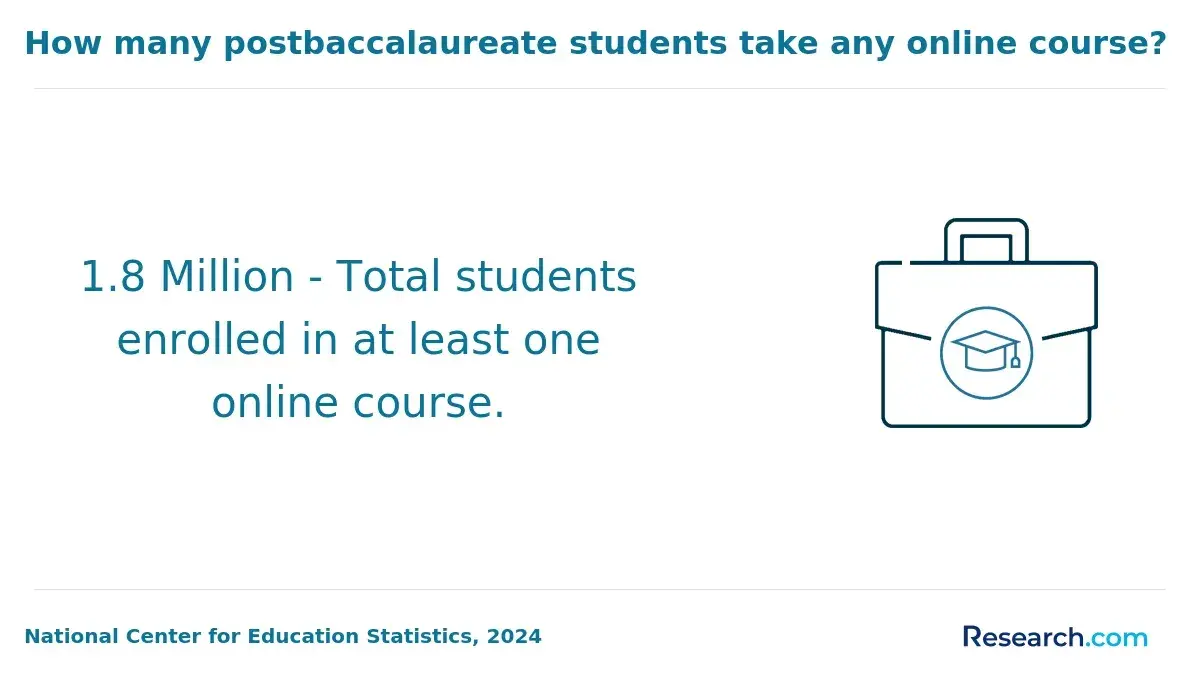
Choosing an online BS in Elementary Education: STEM program involves balancing flexible learning formats with the need for rigorous, up-to-date content. With online higher education enrollment rising over 10% annually according to the National Center for Education Statistics, many students face questions about the relevance and depth of virtual STEM teaching credentials. Prospective students must consider whether a program like Grand Canyon University's aligns with their goals for practical classroom readiness and career adaptability in a STEM-focused elementary education landscape. This article will explore key factors to help determine if the program meets evolving workforce demands and personal learning preferences.
Key Points About Grand Canyon University's Online BS in Elementary Education: STEM Program
- The program's 60% acceptance rate balances selective admission with accessibility, meaning applicants should be prepared for moderate competition but need not expect significant barriers.
- Graduates' median salary of $42,186 versus a tuition debt of $37,212 produces a 1.91x earnings-to-debt ratio, indicating a moderate return but highlighting the importance of careful financial planning.
- Employers value the program's practical STEM focus, which aligns graduates with education roles that demand applied STEM expertise, enhancing workforce relevance and job prospects.
What makes Grand Canyon University's online BS in Elementary Education: STEM program stand out?
The decision to enroll in Grand Canyon University's online BS in Elementary Education: STEM program involves assessing the tradeoff between flexibility and graduation outcomes. Its asynchronous model benefits working adults or caregivers who need adaptable pacing, but the university's 43% average graduation rate signals that self-motivation and strong time management are crucial to completion. For students balancing life responsibilities, the program offers a realistic option to earn credentials without sacrificing work or family, though the extended timeline or dropout risk should be factored into career planning.
This program stands out by integrating foundational pedagogical skills with specialized STEM content, addressing a growing demand for teachers competent in science, technology, engineering, and mathematics at the elementary level. Access to a large faculty and institutional resources supports diverse learning needs, but it differs from many purely theoretical education degrees by emphasizing practical, experiential learning tailored toward real classroom application. This combination can enhance employability in districts prioritizing STEM literacy but may require students to actively engage with digital tools and virtual collaboration platforms to fully benefit.
Is it difficult to get admitted to Grand Canyon University's online BS in Elementary Education: STEM program?
Admission to bachelor's programs in elementary education with a STEM focus tends to be moderately competitive, reflecting growing demand for educators skilled in science, technology, engineering, and math at early grade levels. Employers increasingly prioritize teachers who can integrate STEM effectively, which pressures these programs to balance accessibility with academic standards. Applicants often face a tradeoff between program selectivity and timely access, influencing their ability to enter the workforce quickly.
Grand Canyon University's online BS in Elementary Education: STEM fits this pattern with an acceptance rate around 60%, signaling neither open enrollment nor stringent filtering. Out of nearly 48,000 applicants annually, about 28,960 are admitted, displaying a measured selectivity that expects baseline preparedness without excessive barriers. Required SAT scores range from 540 to 620 verbal and 518 to 555 math, while ACT scores fall between 19 and 158-benchmarks that reflect moderate academic expectations relative to peer institutions.
This level of admission difficulty suggests a balanced admissions process appropriate for students with solid but not top-tier academic records. For many, this represents a reasonable gateway while maintaining standards that align with employer expectations for foundational skills in education and STEM integration.
One graduate recalled that the most challenging part was timing the application around job prospects. "I wasn't sure if waiting for my test scores to improve would delay my start too much, but I also didn't want to rush without meeting the minimum," they explained. Their hesitation about balancing readiness versus entry opportunity illustrated how the moderately competitive admission process required strategic planning rather than simply meeting a checklist.
How does the curriculum of Grand Canyon University's online BS in Elementary Education: STEM program stay aligned with current industry trends?
The curriculum of Grand Canyon University's online BS in Elementary Education: STEM addresses critical industry expectations but comes with tradeoffs related to depth versus breadth in STEM proficiency for K-6 education roles. Its alignment with current teaching demands reflects an attempt to balance foundational STEM content knowledge with applied teaching strategies, a necessary compromise given the scope of elementary education. For instance, an early-grade teacher in a diverse district may find the program's focus on inquiry-based lessons with embedded field experiences essential for adapting STEM concepts practically, though some employers may seek deeper specialization in a specific STEM subject. Key factors enabling this alignment include:
- Educational Technology Integration: The program emphasizes incorporating digital literacy and technology tools into the curriculum, preparing candidates for classrooms increasingly driven by tech-enhanced learning environments. This focus supports real-world demands for teachers adept at using educational software and digital resources to engage young learners.
- Practical Field Experience: Embedded student teaching and classroom exposure provide opportunities to translate theoretical STEM concepts into actionable lesson plans. This practical component is an advantage for graduates facing hiring managers who prioritize demonstrated teaching effectiveness alongside subject knowledge.
- Curriculum Design Emphasis: Instruction on STEM curriculum development reinforces skills in creating age-appropriate, inquiry-based lessons that meet district standards and evolving STEM literacy goals. This aligns with employer expectations for teachers who can adapt curriculum content amid shifting educational policies and equity initiatives.
The program's online elementary education stem curriculum alignment with industry standards offers a relevant foundation but also highlights the inherent tension between broad instructional preparation and the depth of STEM expertise sought by some districts. Prospective students should weigh whether the blended focus on education theory and STEM application matches their career objectives, especially within competitive markets prioritizing STEM proficiency. Additionally, those considering this program as an online college that accepts FAFSA gain a logical path to certification but should remain aware of the evolving employer demands for specialized STEM skills beyond generalist training.
Grand Canyon University STEM education program career relevance ultimately depends on individual career contexts, geographic hiring patterns, and the extent to which educators can leverage the program's structured practical experiences to meet diverse classroom needs.
How much does Grand Canyon University's online BS in Elementary Education: STEM program cost?
The base tuition and fees for Grand Canyon University's online BS in Elementary Education: STEM program stand at $17,450 annually, which excludes additional necessary costs such as books, room, and board. When factoring in these extra expenses, the total annual cost reaches approximately $37,212. While these combined figures are substantial, the structure allows students to anticipate and budget more precisely. The availability of financial aid, which supports 99% of undergraduates with an average award of $7,744, shapes the net cost more favorably for many, reducing the upfront financial burden for working adults or those balancing family obligations.
In real-world terms, students who rely solely on tuition financing should prepare for the consistent $17,450 base charge, whereas the additional $1,100 annual estimate for books and supplies can fluctuate based on course demands and resource usage. Grand Canyon University's flat-rate tuition policy for all online undergraduate programs minimizes geographic cost disparities, a practical advantage for students relocating or living out-of-state. This policy, coupled with the absence of specialized online technology fees, contrasts with many programs where distance learners face variable or hidden charges, affecting the overall return on investment.
Comparatively, the Federal Scorecard pegs the total cost of attendance for in-state, on-campus students at $31,493, revealing a different cost model influenced by housing and campus fees. For those investigating the grand canyon university online elementary education tuition cost, such differences underscore the importance of assessing program-specific expenses beyond sticker price alone. Many institutions display higher tuition volatility, making Grand Canyon's approach potentially more predictable, though total costs may still be higher once living and material expenses are included.
Prospective students weighing the cost of a BS in Elementary Education: STEM program at Grand Canyon University should also consider national tuition variability. Some schools may offer lower tuition but less comprehensive financial aid, while others carry hidden fees that inflate costs over time. Evaluating the total investment alongside factors like program flexibility and aid accessibility is critical. Those interested in efficient degree completion might also refer to rankings for the best accelerated bachelor's degree online to compare how Grand Canyon University's offerings align with broader market options.
What are the admission requirements for Grand Canyon University's online BS in Elementary Education: STEM program?
Admission to Grand Canyon University's online BS in Elementary Education: STEM program reflects a balance of standard academic metrics with flexible entry points that can influence career prospects in education, especially for those transitioning from non-traditional backgrounds. Students should recognize that meeting minimum criteria does not guarantee admission, but preparation around these elements can facilitate smoother entry and affect how employers view the candidate's readiness. Here are the key admission elements to consider:
- High School Completion: Applicants must have a completed high school diploma or GED certificate, ensuring foundational academic readiness for college-level coursework.
- Academic Records: Submission of secondary school GPA and official records is required; while class rank and a college-preparatory curriculum are recommended, they are not mandatory, providing some flexibility for diverse educational histories.
- Standardized Testing: SAT or ACT scores are typically submitted, with competitive ranges noted but not rigidly enforced, accommodating varied testing outcomes without an entrance exam requirement.
- English Proficiency: Non-native English speakers must submit TOEFL scores, which underscores the program's commitment to ensuring language competence critical for effective teaching.
- Additional Recommendations: Letters of recommendation and formal competency proofs are encouraged to strengthen applications but remain optional, offering candidates an opportunity to highlight relevant experience beyond transcripts.
What is the ROI of attending Grand Canyon University's online BS in Elementary Education: STEM program?
The return on investment for attending Grand Canyon University's online BS in Elementary Education: STEM program reflects a balance between its substantial total annual cost and the stable income prospects of its graduates. With expenses approaching $37,000 yearly, including tuition and living costs, the initial financial outlay is significant when compared to the median starting salary of about $42,000. This modest income gain relative to cost should prompt prospective students to consider how they might finance their education, particularly through scholarships or grants that can meaningfully reduce debt burdens.
Graduates typically work in K-12 educational settings where salary growth tends to be slow, which affects long-term earnings potential. While the median student debt of roughly $22,000 results in an earnings-to-debt ratio near 2:1, this indicates manageable debt relative to income but underscores limited rapid financial returns. For students able to secure financial aid or supplemented by additional certifications or experience, the ROI improves. However, those counting on swift wage increases or higher-paying STEM-related roles outside teaching may find this pathway less financially advantageous.
The steady but modest salary trajectory in this field reflects consistent demand for elementary STEM educators but also highlights a tradeoff between entering a stable yet relatively low-paying profession and bearing considerable upfront costs. Understanding these economic dynamics is essential for weighing the practical value of Grand Canyon University's program against other educational or career options.
Is there a high student satisfaction for Grand Canyon University's online BS in Elementary Education: STEM program?
Student satisfaction in Grand Canyon University's online BS in Elementary Education: STEM program hinges on the balance between supportive resources and the demanding nature of the coursework. While the program offers substantial faculty access and structured mentoring aimed at fostering a sense of community among remote learners, the intensity of the curriculum combined with occasional communication delays typical of online education presents tangible challenges. This tradeoff is particularly relevant for students who must manage work-life responsibilities alongside their studies, as flexibility can help but does not fully eliminate academic pressures.
The student culture at Grand Canyon University reflects an emphasis on peer support and networking through various student-led organizations and online forums. These platforms contribute positively to retention efforts and help students navigate the isolation that sometimes accompanies remote learning. However, satisfaction varies notably by individual circumstance, with some students reporting that the program's demands require significant self-discipline and time management. The retention and graduation rates suggest that while ample institutional resources exist, success often depends on how well students adapt to the online environment's inherent challenges.
A recent graduate shared that while the flexible schedule was critical for balancing a part-time job and family, there were moments when delayed feedback from instructors tested her perseverance. "I wasn't sure at times if I could keep up," she reflected, "but having access to online mentoring and active forums eventually made a difference." Her experience highlights the nuanced reality that satisfaction is tied not only to program structure but also to individual resilience and support utilization.
How does Grand Canyon University help online BS in Elementary Education: STEM graduates secure employment?
Employment outcomes for graduates of an online BS in Elementary Education: STEM program often hinge on the practical connections and targeted support a school offers beyond academics. Many districts prioritize candidates demonstrating readiness through direct engagement with hiring entities, a facet that schools influence significantly. In fact, roughly 85% of education graduates secure their first jobs through networking supported by their institution's connections, which underscores the necessity of robust employment support services. Considering this, grand canyon university's approach to employment assistance incorporates multiple tailored resources aimed at STEM-focused educators. Below are some key job placement resources for GCU online Elementary Education STEM program graduates:
- Virtual Job Fairs: These events enable students to interact in real time with school districts and educational organizations actively recruiting, bypassing geographic limitations common in online learning and facilitating early hiring conversations.
- Resume Workshops: Online sessions help students adapt their resumes to emphasize STEM-related pedagogical skills, enhancing competitive positioning in job markets that increasingly value technology integration in elementary education.
- Alumni Mentorship: Access to an extensive alumni network with mentorship programs connects students to experienced educators who provide guidance on job searches and interview preparation tailored to STEM roles.
- Dedicated Job Portal: Curated listings focus exclusively on education roles relevant to STEM graduates, streamlining the job search process by aligning opportunities with candidate qualifications and specialization.
This blend of strategically designed support underscores how a school's resources affect career trajectories, especially for niche fields like Elementary Education STEM. Those considering such degrees should also weigh how alternative programs stack up in providing comparable employment services. For related pathways that balance cost considerations with employability, prospective students can explore cheap online degrees.
What are the career outcomes for recent graduates of Grand Canyon University's online BS in Elementary Education: STEM?
Graduates of Grand Canyon University's online BS in Elementary Education: STEM often enter roles with modest starting salaries but stable employment prospects across public, charter, and private school settings. The value of career outcomes in assessing this program lies in understanding typical employer expectations and the tradeoffs between initial compensation and long-term opportunities in education. Those aiming for more immediate financial returns might find alternatives elsewhere, but the program's alignment with growing demand for STEM educators supports gradual salary growth through leadership or curriculum development. Below are key job opportunities for graduates of grand canyon university elementary education stem program and their typical career contexts.
- Elementary School Teacher: Focuses on developing lesson plans and managing classrooms with an emphasis on STEM concepts to support critical thinking in young students. Starting salaries generally reflect entry-level education positions, averaging around $35,000 annually.
- STEM Educator Specialist: Serves as a resource or mentor for integrating STEM curriculums, often employed in schools seeking to enhance science and math education quality. Compensation may start near traditional teaching salaries but can increase with specialized expertise and demand.
- Instructional Coordinator: Designs and evaluates educational programs, including STEM content, and typically requires experience post-graduation. These roles offer higher salary potential, reflecting responsibility for curriculum standards and teacher development.
This program's graduates benefit from rising interest in STEM education nationwide, which slowly shifts salary structures upward despite historically moderate pay scales. Understanding this can help weigh if career growth and salary prospects after earning a bs in elementary education stem from grand canyon university meet individual professional aims. For further exploration of degree value and comparison with other fields, online military colleges offer alternative perspectives on stable education career paths.
How do I know if Grand Canyon University's online BS in Elementary Education: STEM program is the right fit for my goals?
Whether grand canyon university's online BS in Elementary Education: STEM program aligns with your goals depends on how well it meets your academic and career needs, a judgment shaped by concrete tradeoffs in curriculum breadth, certification, delivery mode, and support services. For instance, if your goal is a career in education settings emphasizing STEM integration, this path may offer relevant content but requires confirming alignment with state licensure standards and personal study habits. Many applicants weigh these factors differently depending on their priorities. To clarify this decision, consider the following key criteria.
- Curriculum Relevance: Investigate if the program offers a balanced emphasis on both elementary education fundamentals and STEM disciplines. Prioritize comprehensive training that enables proficiency in integrating science, technology, engineering, and math concepts into early childhood instruction rather than surface-level coverage.
- Accreditation and Certification: Verify that the program's accreditation meets state licensure requirements. This is crucial since many employers require degrees with recognized credentials to hire for teaching positions, especially in public school systems.
- Learning Format Suitability: Reflect on your ability to engage in a fully online environment. Success in virtual programs demands self-motivation and disciplined time management, so assess whether these conditions align with your learning style.
- Support Services Availability: Examine the accessibility of academic advising, tutoring, and career counseling. Support infrastructure can impact retention and preparation for professional challenges more than program content alone.
- Career Alignment: Align program focus with your ambition to work in STEM-oriented elementary education roles. Understanding local job market demand and how employers value integrated STEM teaching credentials will inform this assessment.
Students evaluating grand canyon university's online BS in Elementary Education: STEM program for personal educational goals will benefit from this structured approach. For those considering alternative formats or competency-based pacing, information on best competency-based colleges may also help optimize educational choices.
What Graduates Say About Grand Canyon University's Online BS in Elementary Education: STEM Program
- Connor: "Studying at Grand Canyon University gave me the flexibility I needed to balance work and coursework, especially since I was already employed part-time in an educational setting. The BS in Elementary Education: STEM program equipped me with practical skills to incorporate technology and hands-on experiments into elementary curriculums, which helped me secure a teaching position faster than I had expected. However, I quickly realized that while the degree opened doors, some school districts still emphasized teaching experience and certifications over degree alone, so I invested time in building a strong portfolio and gaining student-teaching hours."
- Devon: "After completing the BS in Elementary Education: STEM at Grand Canyon University, I took a more cautious approach to my career advancement knowing the field's competitive nature. The program's rigorous content helped me understand the challenges of integrating STEM projects in traditional classrooms, but I noticed many employers preferred candidates with formal licensure or specialized STEM endorsements. This reality meant I had to focus on internships and networking to stand out. The online format was a clear advantage, as it allowed me to start working sooner and gain relevant experience, even if salary growth without licensure was initially limited."
- Ahmed: "I entered the BS in Elementary Education: STEM program at Grand Canyon University with the goal to pivot my career toward education technology. The coursework deepened my understanding of STEM pedagogy, but the real turning point was the internship opportunity GCU provided, which connected me with a local school eager to pilot new STEM initiatives. This practical experience made all the difference when applying for jobs, as many recruiters look for tangible classroom results rather than just degrees. Though I faced some challenges without a traditional teaching license, the program's blend of theory and applied STEM strategies gave me a unique edge in the job market."
Other Things You Should Know About Degrees
Grand Canyon University's online BS in Elementary Education: STEM integrates virtual simulations and local classroom internships to ensure students gain practical experience. While online, the program requires immersive fieldwork in local schools to maintain hands-on teaching skills.
Students should expect a demanding workload because the program integrates a full spectrum of general elementary education topics alongside specialized STEM instruction. This dual focus requires effective time management since STEM components often involve assessments and projects that demand more analytical and problem-solving skills. Prioritizing coursework deadlines and actively engaging in STEM activities will be critical, especially for those without a strong background in science or math.
While the curriculum includes pedagogical strategies for differentiated instruction, some graduates report variability in how well it equips them to address wide-ranging STEM skill levels among elementary students. The program emphasizes foundational STEM teaching methods but offers limited advanced training in inclusive or special education approaches specific to STEM. Students aiming to work with diverse or exceptional learners may need supplemental training beyond this program to feel fully confident and effective.
Licensure obtained through this program is state-specific, and not all states recognize the teaching credentials earned via Grand Canyon University's online BS in Elementary Education: STEM. Students planning to teach outside Arizona should investigate their target state's reciprocity agreements before enrolling. Prioritizing states with clear pathways for licensure transfer will save time and additional coursework later, making this consideration essential for those seeking geographic flexibility.
References
- Why STEM Graduates Should Consider a Career in Teaching | GRB https://www.grb.uk.com/article-hub/why-stem-graduates-should-consider-a-career-in-teaching/
- Top 5 Affordable Bachelor's Degrees In Elementary Education https://www.affordablecollegesonline.org/degrees/education-and-teaching-programs/elementary-education/
- BIOLA UNIVERSITY https://tes.collegesource.com/publicview/TES_publicview03_group_report.aspx
- Career Services https://georgian.edu/academics/career-services/
- How Do I Become An Elementary STEM Teacher https://blog.ecapteach.com/how-do-i-become-an-elementary-stem-teacher
- Grand Canyon University Reviews https://www.gradreports.com/colleges/grand-canyon-university
- Elementary Education: STEM Studies https://catalog.rider.edu/undergraduate/colleges-schools/education/majors-minors-certificates/elementary-education-stem-studies/
- Grand Canyon University Ranking: What You Need To Know https://www.staging.westernautisticschool.vic.edu.au/vic-news/grand-canyon-university-ranking-what-you-need-to-know-1767648806
- Careers https://www.gce.com/careers.html
- What Is STEM Education? | ACE Blog https://ace.edu/blog/what-is-stem-education/