2027 Global Studies Degree Oversupply or Undersupply? Student Volume vs Employer Demand

Co-Founder and Chief Data Scientist
A recent report from the Bureau of Labor Statistics shows that over 22,000 students graduated with global studies degrees in 2023, while job postings specifically seeking these graduates grew by only 5% regionally. This imbalance raises critical questions for prospective students and educators about the actual market value of this degree.
Institutions continue to produce large cohorts despite regional employers emphasizing skills not fully covered by most global studies programs. Graduates may face heightened competition and underemployment, especially in areas with limited international organizations or diplomatic agencies. Navigating these trends is essential to avoid costly credential mismatches and stalled career progress.
This article compares global studies student volume with employer demand, job growth, industry needs, regional conditions, and skill gaps to help readers judge whether the field offers sustainable opportunities or rising competition.
Key Things to Know About Global Studies Graduate Supply and Employer Demand
- Demand for global studies graduates in sustainable development and policy roles grew 12% nationally in 2024, emphasizing the need for specialization to navigate complex employer criteria and avoid generalized oversupply.
- Employer surveys highlight skill mismatches where many graduates lack multilingual and quantitative expertise, causing qualified candidates to face higher competition despite steady job openings in international NGOs and government sectors.
- Rising enrollment has increased program costs and time-to-degree, pressuring students to weigh the tradeoff between broader credentials and faster workforce entry in regions showing slower job growth.
- Key Things to Know About Global Studies Graduate Supply and Employer Demand Key Things to Know About Global Studies Graduate Supply and Employer Demand
- Is There an Oversupply or Undersupply of Global Studies Graduates? Graduate Oversupply or Shortage
- How is Global Studies Degree Enrollment Changing? Degree Enrollment Trends
- How Many Global Studies Graduates Enter the Workforce Each Year? Annual Graduate Workforce Entry
- Does Job Growth Support the Rising Supply of Global Studies Graduates? Job Growth Versus Supply
- How Competitive is the Entry-Level Market for Global Studies Graduates? Entry-Level Market Competition
- Which Industries Have the Greatest Demand for Global Studies Graduates? Top Hiring Industries
- Where are Global Studies Graduates Most in Demand? Top Geographic Demand
- Which Global Studies Specializations and Degree Levels Face the Strongest Demand? Which Global Studies Specializations and Degree Levels Face the Strongest Demand?
- Are Employer Skill Gaps Affecting Demand for Global Studies Graduates? Are Employer Skill Gaps Affecting Demand for Global Studies Graduates?
- What is the Future Supply-and-Demand Outlook for Global Studies Graduates? Future Supply-Demand Outlook
Is There an Oversupply or Undersupply of Global Studies Graduates?
The current employment landscape reveals that the supply of global studies graduates generally exceeds direct job openings in specialized sectors, particularly in metropolitan areas like Washington, D.C., and New York City where graduate density is highest. Data from the National Center for Education Statistics and Lightcast show steady graduate growth over the past decade, but this increase has not translated into proportional expansion in entry-level global studies job market demand and graduate supply analysis, resulting in heightened competition.
For prospective students, this means an oversupply when targeting roles in international nonprofits or government agencies without distinguishing by geographic or industry variation, underscoring the need for strategic focus on practical experiences and transferable skills to improve positioning.
Regional employment trends vary greatly, with emerging markets and cross-cultural specialization showing undersupply conditions, which implies that graduates with targeted proficiencies and regional knowledge can better align with workforce needs.
However, credential mismatch and the premium placed on master's degrees or relevant internships mean that a growing share of programs must emphasize skill application to avoid underemployment. For a comprehensive view on aligning graduate expectations with market demands, examining resources like the most affordable online MBA can offer insights on balancing education costs with strategic career planning.
How is Global Studies Degree Enrollment Changing?
Enrollment in global studies programs has shifted notably, with moderate undergraduate growth contrasting with more complex trends at the graduate level. The rise of online and hybrid formats has broadened access, particularly benefiting non-traditional and geographically dispersed students, yet complicates straightforward assessments of graduate supply versus employer demand.
National data from 2024 show master's enrollments increasing steadily as professionals seek specialization, while doctoral numbers remain stable but concentrated, underscoring a nuanced redistribution rather than uniform expansion. This fragmentation means local and sector-specific demand, such as in international development or policy analysis, often diverges significantly from aggregate national enrollment figures, so an uptick in graduates does not necessarily relieve hiring pressures or guarantee job availability.
Without complementary skills like language proficiency or practical experience, the growing candidate pool may heighten competition rather than meet employer needs.
Demographic changes reflect a diversification of global studies students, including more first-generation and minority participants, but international student enrollment exhibits volatility tied to immigration policies and geopolitical factors. For workforce planners and educators, these enrollment dynamics imply that interpreting broad increases as simple oversupply risks overlooks key labor market subtleties and specialization bottlenecks.
Employers remain selective, valuing interdisciplinary expertise alongside global knowledge, which means prospective students must weigh the constraints of regional labor market saturation and the variable quality of program delivery, especially as online expansion continues. Misreading these trends could leave graduates confronting crowded fields without clear advantages.
A current master's student observed that while her program's incoming cohort grew in size this year, with more remote learners enrolling, the sense of community felt diluted, and some courses were restructured to accommodate larger, more diverse groups. She noted uncertainty among peers about whether the enrollment increase signaled improved job prospects or merely tougher competition.
The mix of traditional and online students has also introduced varied career goals, complicating networking and post-graduation planning. This experience highlights how enrollment shifts manifest in everyday academic and career decision-making, reinforcing that rising student numbers alone do not guarantee smoother employment pathways.
How Many Global Studies Graduates Enter the Workforce Each Year?
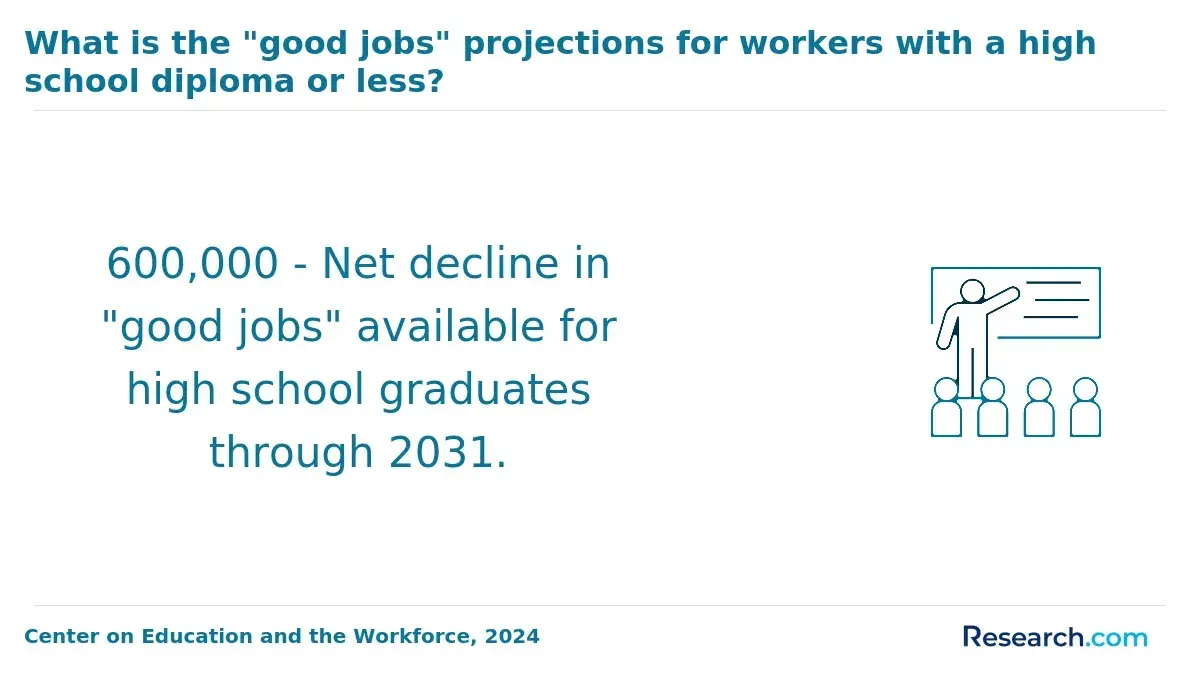
Annual graduate numbers alone do not provide a definitive measure of whether the Global Studies field is oversupplied or undersupplied in the workforce. Data from sources like the National Center for Education Statistics and the Integrated Postsecondary Education Data System capture roughly 8,000 to 10,000 graduates per year from programs labeled as global studies or closely related disciplines.
However, this figure includes a range of degree levels and delivery modes, and it does not account for graduates who pursue additional education or delay workforce entry. Consequently, interpreting supply relative to employer demand requires considering factors such as job specialization, geographic hiring patterns, and the timing of labor market transitions.
Employer demand in government, international organizations, and non-profits tends to be more constrained than the number of graduates, with many available positions requiring overlapping skills found in political science or economics graduates as well.
Approximately 60-70% of global studies graduates find roles closely aligned with their degree within two years, while others diversify into communications, policy analysis, education, or business.
This variability affects how workforce supply matches openings and suggests that the presence of a large graduate cohort does not equate to immediate or direct competition for a fixed number of jobs. Misreading this dynamic risks overestimating job market saturation or underestimating the value of transferable skills in broader labor sectors.
Does Job Growth Support the Rising Supply of Global Studies Graduates?
Job growth for global studies graduates does not consistently align with the rising supply of degree holders, creating uneven opportunities across specializations and regions. While sectors like international relations and public policy exhibit modest annual growth below 5% according to 2024 BLS data, these increases often fail to keep pace with the expanding graduate output, resulting in heightened competition for entry-level roles.
For instance, a recent graduate focusing on international development may face limited openings compounded by employer preferences for candidates with internships, language proficiency, or advanced credentials, heightening underemployment risk despite apparent occupational growth.
Regional hiring trends for global studies degree holders reveal that demand is highly variable, with some local markets offering stronger opportunities due to retirements or specialized skill shortages, particularly in cultural competency consulting and niche nonprofit sectors.
However, many graduates must navigate tradeoffs such as additional certifications or geographic mobility to secure stable employment. Additionally, expansive graduate supply outstrips entry-level openings in many areas, amplifying the necessity for informed educational choices and realistic expectations.
Prospective students should consider programs carefully; options like the cheapest bachelor degree online may alleviate financial burden but still require strategic planning to align with workforce demand patterns.
How Competitive is the Entry-Level Market for Global Studies Graduates?
The entry-level job market for global studies graduates in 2024 reveals a nuanced mix of oversupply and skill mismatches rather than uniform demand or scarcity. While the volume of graduates continues to grow, employer needs remain uneven and often limited to specific roles that blend academic knowledge with practical talents.
Positions explicitly requiring global studies expertise are not proliferating rapidly, resulting in fierce competition where candidates frequently face five to seven applicants per job. This dynamic reflects both constrained job creation in traditional fields and rising employer preference for versatile skills beyond pure academic credentials.
Major factors influencing competitiveness include:
- Applicant Volume: The number of graduates outpaces open roles, increasing rivalry. Candidates must differentiate through targeted skills or experience to avoid commoditization in busy applicant pools.
- Experience Expectations: Over 70% of entry-level jobs list internships or field experience as essential. This raises the barrier for recent graduates lacking practical exposure and shapes early career strategies.
- Industry Concentration: Jobs for core global studies knowledge cluster in sectors like international policy, NGOs, and public administration with limited geographic hubs, narrowing accessible opportunities.
- Skill Complementarity: Employers favor graduates who combine global studies with technical skills such as data analysis or multilingualism, affecting job search direction and training choices.
- Regional Variability: Hiring demand varies widely by location, making geographic flexibility a critical consideration to improve chances of employment.
- Networking and Soft Skills: Personal connections and cross-cultural communication proficiency significantly enhance prospects amid stiff competition.
- Underemployment Risks: Many graduates accept related but less specialized roles, indicating a supply-demand mismatch that calls for adaptable career planning.
One recent graduate, despite holding a strong academic record, competed with dozens of applicants for each internship in her metropolitan area, encountering repeated interview refusals due to lack of hands-on experience. She noticed more openings in smaller cities where demand was less saturated but required moving away from established networks.
To improve her prospects, she began pursuing language courses and data analysis certifications, pivoting toward roles demanding combined competencies rather than pure global studies theory. Her experience illustrates how strategic skill development and geographic openness can somewhat mitigate the challenging landscape for entry-level applicants today.
Which Industries Have the Greatest Demand for Global Studies Graduates?
Employer hiring trends for global studies graduates in North America highlight concentrated demand within a handful of sectors where international knowledge and cross-cultural competencies directly correlate with operational needs.
This concentration reflects the reality that global studies degrees impart skills most relevant to roles involving policy analysis, geopolitical literacy, and socio-economic frameworks. However, demand varies by industry size, regional focus, and specialized skill requirements, which can affect both job volume and competition.
For example, a graduate considering roles in international development may encounter steady but competitive hiring driven by multilateral agency funding cycles. In contrast, government sectors such as foreign service or diplomacy might offer fewer positions but favor candidates with strong language skills and advanced security clearances, impacting upward mobility.
Similarly, corporate roles in multinational firms require blending global studies expertise with economics or data analytics, demanding targeted experience or dual-degree credentials for entry and growth. Understanding these nuances helps graduates evaluate where supply aligns more closely with employer demand and which fields may require supplemental qualifications to improve hiring prospects.
Industries with highest demand for global studies graduates include:
- International Development: Demand arises from global aid groups and multilateral organizations managing humanitarian and sustainability projects. Entry-level roles commonly require knowledge of international systems and policy, while advanced positions emphasize program management and donor relations. Competitive hiring reflects variable funding and expanding project scopes.
- Government Services: Agencies focused on diplomacy, foreign affairs, and trade policy seek graduates with strong language proficiency and cultural intelligence. Positions often involve analysis and operational roles, with preference for candidates possessing security clearances and specialized regional expertise.
- Multinational Corporations: Corporate social responsibility, international market research, and regulatory compliance roles attract global studies graduates who supplement their degrees with economics or data analysis skills. Employers prize practical experience and cross-border regulatory knowledge for career progression.
- Non-Governmental Organizations: NGOs operating in areas like human rights and environmental policy require graduates skilled in advocacy, program coordination, and stakeholder engagement. These roles may have high turnover, but funding fluctuations can limit steady hiring.
- Education and Cultural Institutions: These sectors offer fewer openings relative to candidate volume, often favoring those with advanced certifications or dual degrees in law, business, or public policy to stand out amid competition.
Given the competition and diversity of hiring expectations, some students might explore interdisciplinary pathways such as a fast track construction management degree if their career goals involve sectors intersecting with global development infrastructure, thereby broadening opportunities beyond traditional global studies roles.
Where are Global Studies Graduates Most in Demand?
National employment statistics for global studies graduates often mask sharp regional disparities influenced by industry hubs and employer density. For instance, Washington, D.C.'s concentration of federal agencies, international NGOs, and policy institutions creates a distinct labor market where demand far outstrips many other areas, yet this also intensifies applicant competition and raises cost-of-living concerns.
A graduate targeting D.C. must weigh the benefits of proximity to relevant employers against these tradeoffs, especially as entry-level roles in this sector remain comparatively scarce, often necessitating further specialization or advanced credentials to stand out.
Conversely, other metropolitan regions with sizeable immigrant populations or active international trade, such as parts of California and Texas, present more diverse but less centralized opportunities. While these locations may have lower job density in international affairs, they sometimes offer roles linked to cross-border relations or immigration policy that align more directly with certain global studies specializations.
However, the practical value of these markets depends on matching graduate skills with regional economic realities, including the prevalence of nonprofit versus corporate employers and the extent to which remote work mitigates geographic constraints.
Ultimately, evaluating geographic fit requires more than counting vacancies; graduates must consider local workforce shortages, the intensity of competition, living expenses, and the alignment of their training with employer expectations. For many, relocation to a global commerce hub might offer visible opportunities but also entails navigating saturated applicant pools, while peripheral markets could demand adaptability and supplementary skills but provide steadier entry points.
These nuanced factors influence not only immediate employability but the potential for sustainable careers within the global studies field, calling for informed, strategic decision-making grounded in current labor market intelligence such as reports from the U.S. Bureau of Labor Statistics and Lightcast.
Which Global Studies Specializations and Degree Levels Face the Strongest Demand?
Employer demand within global studies is highly concentrated in specific specializations and credential levels, rather than evenly spread across the entire discipline. Roles tied to international relations, global security, and international development consistently attract stronger hiring interest due to their direct application to government, nonprofit, and international organizational priorities.
Meanwhile, broader cultural or ethical focus areas face more saturated candidate pools, leading to fewer openings and greater competition. A bachelor's degree holder might find limited prospects outside generalist roles with modest pay, while a master's graduate specializing in international development typically aligns better with mid-tier analyst or program manager positions.
For example, a master's in global security may open federal agency doors, whereas a doctoral degree holder often contends with a narrow academic or research job market demanding extensive publication and policy experience. The U.S. Bureau of Labor Statistics and Lightcast data from 2024 underscore this nuanced demand, emphasizing that employer preferences prioritize applied skills and higher-level credentials.
Key areas where demand is strongest include:
- International Relations: Employers seek candidates adept at navigating diplomatic, policy, and cross-border negotiation roles primarily within government and large NGOs. Advanced degrees combined with foreign language proficiency and data analysis skills enhance competitiveness.
- Global Security: This specialization attracts demand tied to cybersecurity, intelligence, and international risk management. Master's-level credentials are favored, with experience in practical security frameworks valued.
- International Development: Focus on program management and policy implementation roles within international aid and development agencies. Multidisciplinary skills, especially in monitoring and evaluation, strengthen candidacies.
- Master's-Level Credentials: Employers often prefer candidates with master's degrees for mid-career positions, as these candidates demonstrate both subject mastery and practical application abilities.
- Doctoral Research Roles: Highly competitive segments demand extensive publication records and fieldwork, and typically funnel graduates into academia or high-level policy advisory positions.
- Data and Language Skills Integration: Combining global studies knowledge with quantitative skills and proficiency in critical languages significantly boosts employer interest across multiple sectors.
Are Employer Skill Gaps Affecting Demand for Global Studies Graduates?
The perceived shortage in global studies graduates often stems less from absolute supply constraints and more from a mismatch between candidate capabilities and employer expectations. Employers frequently reject candidates lacking demonstrable proficiency in areas such as advanced foreign languages, data analytics, and digital communication tools essential for nuanced international roles.
For instance, a hiring manager in international policy may leave positions open when candidates have strong theoretical knowledge but limited practical negotiation experience or project-based learning, illustrating how skill gaps can suppress demand despite ample graduate volume. This dynamic distorts regional demand for global studies skills and credentials, causing some markets to appear oversupplied while critical technical qualifications remain scarce.
Employer skill gaps affecting global studies graduate employment reveal the importance of targeted curriculum design and experiential learning opportunities. Candidates who integrate internships, cross-functional problem-solving projects, or certifications related to foreign policy, international business, or digital fluency markedly improve their job prospects.
Conversely, graduates without such applied experience face sharper competition in entry-level roles, particularly in regions or sectors emphasizing multidisciplinary skill sets. Prospective students and degree holders evaluating their career pathways must therefore consider program features and practical exposures beyond traditional academic coursework.
Those interested in deeply contextualized or affordable options might explore programs like a masters in history, which can complement global studies skill development and broaden employability across interconnected fields.
What is the Future Supply-and-Demand Outlook for Global Studies Graduates?
Targeted job searches consistently outperform high-volume, unfocused applications because they align graduate strengths with specific employer needs, reducing wasted effort and improving interview conversion rates. For example, a recent graduate with a global studies degree focusing broadly on "international affairs" jobs across multiple sectors may face stiff competition and low callback rates.
Conversely, a candidate who prioritizes entry-level positions in government agencies or international NGOs-sectors demonstrating stronger hiring demand according to 2024 labor data-and tailors their resume using precise language mirroring job descriptions can more effectively signal job readiness.
Graduates improve outcomes by concentrating on roles where their qualifications directly match stated requirements and by highlighting applied skills such as language proficiency, data analysis, or policy translation within projects and internships. In the evolving landscape of future supply and demand for global studies graduates, this selective approach is critical since graduate volume often exceeds employer demand, especially in urban hubs with many universities.
Being knowledgeable about geographic and industry variations, and timing applications to market conditions, further enhances candidacy, as does leveraging reputable resources to identify online universities with multiple start dates to maintain flexibility.
Ultimately, strategic market research and skill-focused presentation are more effective than generic application spamming, as employers prioritize candidates with demonstrated competencies and relevant experience.
For many holding a global studies degree, discerning how to navigate competition through evidence-informed decision making determines not only initial entry but also long-term career positioning in a moderately growing but tightly contested employment outlook.
References
- Rebound or Mirage? Unpacking the Latest International Enrollment Trends https://encoura.org/resources/wake-up-call/rebound-or-mirage-unpacking-the-latest-international-enrollment-trends
- What is a Global Studies Major and is it Right for Me? | Career Advice & Interview Tips | WayUp Guide https://www.wayup.com/guide/global-studies-major-right/
- Oversupply of College Graduates? Structural Mismatch! | PIIE https://www.piie.com/blogs/china-economic-watch/oversupply-college-graduates-structural-mismatch
- What Can You Do With an International Studies Degree? https://willamette.edu/academics/college/international-studies/career-options
- Top Degrees in Demand for the Future: 2026 & Beyond https://skillifysolutions.com/blogs/career-growth/top-degrees-in-demand-for-the-future/
- Global Studies Major/Minor https://www.taylor.edu/academics/degrees/global-studies
- The Global Outlook for International Education | HESA https://higheredstrategy.com/the-global-outlook-for-international-education/
- Library for international educators | EAIE https://www.eaie.org/resources/library.html
Other Things You Should Know About Global Studies
The interdisciplinary approach of global studies programs often means students gain diverse knowledge but may lack deep expertise in technical or market-specific skills that employers prioritize. Prospective students should assess whether their program offers practical, targeted training-such as data analysis, language fluency, or policy evaluation-in addition to broad theoretical content. Prioritizing programs with strong experiential learning components can improve employability by balancing breadth with applicable skills. Without this, graduates risk entering a crowded job market with credentials that employers may find insufficiently specialized.
Programs that integrate internships, fieldwork, or practical projects tend to produce graduates who can better navigate real-world tasks, making them more competitive despite an oversupplied labor pool. Conversely, programs centered mainly on classroom theory can hamper graduates' adaptability to fast-changing employer demands. Students should prioritize opportunities for hands-on experience to build not only resume credentials but also confidence and networks essential to effective career entry. Lack of experiential learning often prolongs job searches and may lead to underemployment.
The career trajectory for global studies graduates is rarely linear or confined to a single sector; it often involves lateral moves, additional certifications, or graduate education to reach desired roles. This complexity means students must weigh the workload and financial investment of supplementary qualifications alongside potential short-term underemployment. Recognizing the need for ongoing skill development and career flexibility is critical for managing expectations and making informed educational choices. Those unwilling or unable to pursue further credentials may face stagnant growth despite holding a global studies degree.
Geographic location significantly influences a graduate's ability to convert a global studies degree into suitable employment, as demand clusters vary internationally and even regionally. Students should consider the likelihood of relocation and its associated costs against local job market realities before enrolling. While some may thrive by targeting cosmopolitan hubs with NGOs, think tanks, or international agencies, others constrained by location should evaluate alternative career pathways or complementary skills to mitigate underutilization risks. Geographic inflexibility can convert potential opportunity into a practical mismatch.