2027 State-by-State Acceptance of Online Positive Psychology Master's Programs for Licensure

Co-Founder and Chief Data Scientist
When pursuing licensure through an online positive psychology master's program, graduates often confront a complex patchwork of state-specific standards that can affect the recognition of their degree. Variations in residency requirements, clinical hour expectations, curriculum alignment, and accreditation can cause a program accepted in one state to face scrutiny or rejection in another.
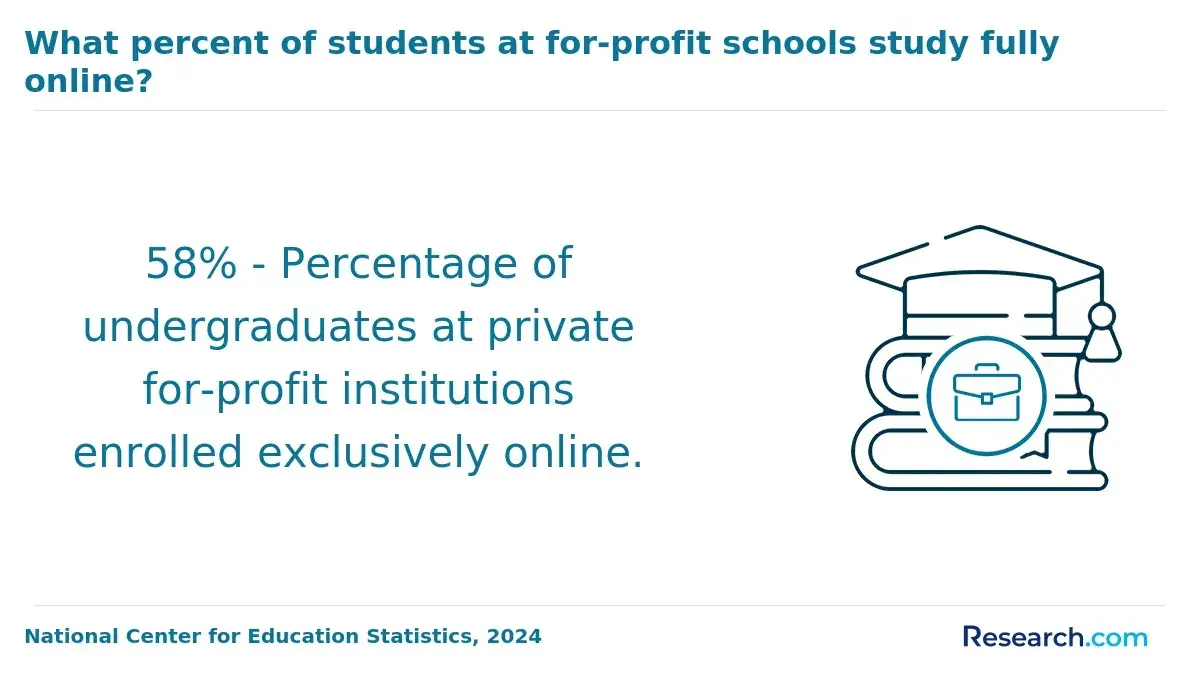
In 2024, over 35% of graduate students enrolled in fully online programs, according to the National Center for Education Statistics, highlighting a growing reliance on flexible learning paths. Understanding these regulatory nuances is essential for students aiming to navigate licensure hurdles and maintain career mobility across jurisdictions.
Key Things to Know About State-by-State Acceptance of Online Positive Psychology Master's Programs for Licensure
- Residency requirements vary widely, creating a timing and cost tradeoff as some states demand local presence for clinical supervision, limiting remote learners' access in fast-evolving workforce contexts.
- Differences in clinical hour standards reflect employer priorities for practical readiness but complicate interstate licensure transfers, forcing graduates to supplement experience depending on jurisdictional demands.
- Accreditation designations influence program legitimacy in licensing decisions, shaping adult learners' enrollment strategies by privileging regionally accredited degrees, a key factor amid growing online education enrollment per National Center for Education Statistics.
How Do State Licensing Boards Define Acceptance of Online Positive Psychology Master's Programs for Licensure Purposes?
Acceptance by state licensing boards of online positive psychology master's programs hinges on differing interpretations rather than uniform criteria, creating a notable risk for students who presume any accredited online program guarantees licensure eligibility. Boards fall along a spectrum: some formally approve specific programs after rigorous review, others evaluate degrees on a case-by-case basis considering curriculum and practicum components, while some apply only broad accreditation or curriculum standards without vetting individual programs.
This definitional ambiguity can lead to unexpected licensure obstacles-particularly for career changers or geographically mobile students uncertain where they might eventually practice-when clinical hour requirements or residency mandates diverge across states. The evaluation process reflects distinct decision-making categories: statutory laws that define eligibility, regulatory rules setting educational benchmarks, and administrative board decisions interpreting evolving professional norms.
- Formal Approval: States maintaining explicit approval lists provide clearer pathways for graduates but limit flexibility for those entering positive psychology from related fields or newer online programs.
- Case-by-Case Evaluation: Boards reviewing applications individually consider detailed program content and accreditation but introduce unpredictability and longer processing times for candidates.
- General Accreditation Standards: Relying solely on regional or national accreditation avoids program-specific scrutiny yet risks overlooking critical elements like clinical practicums essential for licensure.
- Licensing Categories: Compliance depends on statutory, regulatory, and administrative frameworks that vary widely, influencing how online positive psychology degrees are validated within each jurisdiction.
- Risk of Assumptions: Assuming all accredited online positive psychology programs are equally accepted risks incomplete preparation for licensure, potentially delaying entry into the workforce or requiring additional training.
Given this variability, prospective students must navigate an intricate state-by-state acceptance landscape shaped by nuanced licensing board evaluations and educational standards-a complexity that this article will map to better inform choices across licensing jurisdictions.
Which States Have Formally Approved Online Positive Psychology Master's Programs as Licensure-Qualifying?
Licensure acceptance of online positive psychology master's degrees varies widely, influencing career mobility and regional employability. For example, a graduate intending to relocate from Colorado to Georgia may face significant barriers due to disparate state-level policies, which underscores the necessity of strategically aligning graduate education choices with licensure environments.
- Clear Statutory Acceptance: States like Washington, Colorado, and New York explicitly recognize online positive psychology master's programs from regionally accredited institutions as meeting educational licensure requirements, provided supervised clinical experience fulfills state criteria. This pathway offers graduates relatively straightforward licensure eligibility, supporting smoother workforce entry within these jurisdictions.
- Conditional Acceptance Based on Accreditation: California, Texas, and Florida emphasize institutional accreditation-usually regional-and may also require program-specific credentials relevant to counseling or psychology. These states often demand supplemental documentation such as detailed coursework or practicum proofs to validate equivalency, potentially adding administrative hurdles and lengthening licensure timelines.
- Additional Review or Documentation Required: Illinois, Pennsylvania, and Minnesota conduct thorough case-by-case evaluations of online degrees, including curriculum alignment verification and practicum scrutiny. Such requirements reflect heightened board caution, demanding graduates' preparedness for additional documentation or interviews that may delay licensure and complicate interstate licensure portability.
- Known Restrictions or Ambiguity: Louisiana, Nevada, and Georgia illustrate jurisdictions with residency mandates, restrictions on fully distance-based clinical training, or unclear formal policies, often resulting in unpredictable acceptance outcomes. For mobile professionals or those with military affiliations, these ambiguous or restrictive standards present significant career planning challenges and risk licensure denials or prolonged qualification processes.
These regulatory nuances pivot largely on residency rules, clinical hour specifications, curriculum focus, and accreditation requirements. Because board policies are subject to change, candidates should treat this overview as a foundational map rather than a legal guarantee. Consulting directly with state licensing authorities remains critical. Later sections of this analysis provide detailed contact strategies for verifying current acceptance standards and navigating state-specific licensure complexities effectively.
What Role Does Regional Accreditation Play in State Acceptance of an Online Positive Psychology Master's Degree?
Regional accreditation acts primarily as a baseline filter rather than a definitive qualifier for state licensure acceptance of an online positive psychology master's degree. While bodies like the Middle States Commission on Higher Education or the Western Association of Schools and Colleges confirm institutional quality and standards, many state licensing boards require more than this broad endorsement to ensure degrees align with field-specific criteria.
For example, a graduate holding a degree from a regionally accredited school might still need additional coursework or supervised clinical hours if the program lacks targeted programmatic accreditation that attests to psychology or counseling competencies. This distinction matters significantly for those aiming to meet diverse state acceptance criteria for regionally accredited online positive psychology master's programs, especially when mobility or interstate licensure is anticipated.
- Accreditation Bodies: Regional accreditors evaluate institutions holistically, considering governance and resources but do not guarantee specialization adequacy in positive psychology.
- Threshold Requirement: Universal among licensing boards, regional accreditation establishes academic legitimacy but rarely fulfills all state-specific licensure conditions.
- Programmatic Accreditation: Additional approval from psychology-focused entities often smooths licensure hurdles by validating relevant curriculum and clinical experiences.
- Licensure Implications: Degrees lacking programmatic accreditation may trigger extra state-mandated requirements, extending time and cost for licensure.
- Verification Necessity: Candidates must ensure online programs maintain current regional accreditation and inquire explicitly if this alone suffices for licensure in their intended state.
- State-Specific Inquiry: Because standards vary, confirming whether regional accreditation meets licensure boards' expectations or if programmatic accreditation is compulsory is essential before enrollment decisions.
For applicants balancing cost and quality in advanced degrees, exploring options like an affordable executive MBA may also provide useful insights into how accreditation impacts professional acceptance across disciplines.
How Does Programmatic Accreditation Affect Whether States Accept an Online Positive Psychology Degree for Licensure?
The presence of programmatic accreditation critically shapes whether states will recognize an online positive psychology master's degree for licensure, often serving as a decisive factor beyond regional accreditation. Several states demand that degree programs carry specialized accreditation from bodies recognized in counseling or psychology fields-such as CACREP or the APA-which verify the curriculum and clinical practices meet professional licensing standards.
Without these endorsements, graduates may find their credentials insufficient for licensure or be required to undergo additional supervised experience or coursework to qualify.
- Programmatic Accreditation: Accreditation from established bodies like CACREP and APA functions as a trusted licensing board benchmark, smoothing the pathway to licensure by confirming the program's adherence to discipline-specific requirements.
- State-Approved Program Status: Some states offer their own approval processes for online programs that lack national programmatic accreditation but fulfill localized criteria, often easing licensure concerns within that state but potentially limiting mobility for professionals relocating elsewhere.
- No Programmatic Accreditation: Degrees without recognized programmatic or state approval generally entail greater licensure uncertainty, forcing graduates to navigate heightened regulatory obstacles or restricting their eligibility outright.
- Licensing Board Variability: Differences between state boards regarding accreditation type (programmatic versus regional) and clinical hour demands mean identical degrees might be accepted in some jurisdictions but scrutinized or rejected in others.
- Research and Verification: Prospective students must proactively investigate their chosen program's current programmatic accreditation and simultaneously match those credentials against the licensing requirements of intended practice states, obtaining direct written confirmation from programs when possible.
Which States Require In-Person or Residential Components for an Online Positive Psychology Master's Program to Qualify for Licensure?
Several states require in-person or residential elements within online positive psychology master's programs to qualify for licensure, reflecting a widespread regulatory emphasis on verifying applied competencies beyond what asynchronous instruction can demonstrate. This creates a significant consideration for candidates, particularly those who are military-affiliated or geographically mobile, as licensure acceptance often hinges on fulfilling these face-to-face mandates.
The underlying concern among licensing boards is that essential clinical skills and practitioner-client interactions must be observed or practiced under supervision, which purely online formats may inadequately ensure.
- Residency Requirements: A number of states mandate attendance at residency weekends or brief on-campus immersions focused on workshops, skills practice, and simulated client interactions designed to assess hands-on abilities.
- Simulation Lab Visits: Some jurisdictions require visits to specialized labs for controlled assessments of client-practitioner dynamics, reinforcing evaluation standards that support remote learning's validity.
- Orientation Sequences: On-campus orientation sessions-often spanning several days-provide foundational training in ethical practices and applied techniques that online modules alone may not cover effectively.
- Licensing Board Rationale: Boards emphasize the necessity of demonstrated applied competence, citing limitations of asynchronous coursework in simulating real-time critical thinking and standardized skill appraisal.
- Distinguishing from Clinical Hours: These in-person instructional mandates differ from practicum or clinical hour requirements, which involve supervised client services and are handled separately.
- Recommendations for Students: Prospective licensure candidates, particularly those with relocation or travel restrictions, should directly verify any in-person commitments with their chosen programs and confirm licensing board rules to ensure no unforeseen barriers to credential recognition arise.
How Do State Licensing Boards Evaluate Supervised Clinical or Practicum Hours Completed Under an Online Positive Psychology Program?
State licensing boards apply rigorous, multifaceted criteria when assessing supervised clinical or practicum hours earned under online positive psychology master's programs. For graduates navigating varied licensure acceptance across states, understanding these criteria is pivotal.
A candidate completing hours at a local site without board pre-approval risks rejection or conditional acceptance of their clinical hours, complicating their pathway to licensure and potentially delaying employment eligibility. This situation presents a tangible tradeoff: the flexibility and accessibility of online programs against unpredictable regulatory scrutiny, especially for students unsure of their eventual licensure state.
- Supervisor Qualifications: Boards typically require supervisors to hold licenses aligned with state mandates and possess relevant clinical experience, ensuring genuine oversight of practicum activities.
- Site Approval: Clinical environments must meet state-specific standards. Boards often demand formal agreements between programs and sites, and absence of such may lead to nonacceptance of hours.
- Hour Documentation: Detailed, verifiable logs and supervisor evaluations are essential as boards reject poorly documented or inconsistent records, emphasizing administrative diligence.
- Accreditation Compliance: Programs accredited by bodies recognized by the state licensing board signal adherence to rigorous curriculum and practicum standards, increasing the likelihood that hours will count toward licensure.
- Conditional Acceptance and Rejection: Boards may provisionally accept hours subject to supplementary supervision or documentation, while outright rejection occurs when compliance or supervision cannot be confirmed.
- Locally Arranged Placement Complications: Students placed at sites lacking formal program agreements or state board pre-approval risk having hours invalidated, underlining the importance of preemptive compliance verification.
- Protective Steps for Students: Requesting a written summary of a program's clinical hour approval and documentation process, then cross-referencing this against the target state's requirements, helps ensure the licensability of practicum hours before and during placement.
Prospective students should factor state requirements for online positive psychology practicum hours deeply into program selection, especially if geographic mobility or interstate licensure is anticipated. For those balancing graduate study with parallel efforts such as pursuing an MBA no GRE or other credentials, this due diligence mitigates costly licensure delays or denials. Licensure acceptance of online positive psychology clinical hours by state remains uneven; careful alignment of clinical training with specific state demands is critical for career continuity and fulfillment.
What Interstate Compact or Reciprocity Agreements Affect Positive Psychology Licensure Portability for Online Degree Holders?
Licensure portability for online positive psychology master's graduates remains fragmented due to the absence of dedicated interstate compacts, unlike fields such as counseling or social work where multistate licensure pathways are clearer. This lack forces candidates to navigate a complex regulatory patchwork, where recognition of their credentials highly depends on each state's individual reciprocity policies and existing mental health compacts that may only partially apply.
The practical consequence is that an online degree accepted in one state might face scrutiny or rejection in another, complicating career mobility. Professionals seeking to practice across state lines often rely on broad mental health compacts like the Counseling or Social Work Compact, but eligibility criteria-especially around enrollment in qualifying programs and clinical supervision-do not seamlessly fit many online positive psychology tracks.
- Interstate Compacts: There are currently no compacts tailored specifically to positive psychology licensure, and states participating in overlapping compacts may offer streamlined credentialing with centralized applications and expedited background checks.
- Reciprocity Agreements: Some states maintain bilateral or regional agreements that facilitate license recognition, but these require rigorous verification of supervised clinical hours and curriculum alignment, which online program graduates must carefully confirm.
- Limitations: Compact benefits often presuppose in-person training and location-specific supervised practice, which many online graduates may not meet, leading to delays or denials in license transfers.
- State Variation: Variations in residency requirements, approved curricula, and supervised experience standards mean that identical degrees have uneven acceptance, necessitating detailed state-level research before enrollment.
- Advisory: Prospective students should confirm their target state's compact participation and inquire whether their chosen online programs have documented success placing graduates under these multistate licensure frameworks.
How Do States Handle Licensure Applications From Graduates of Out-of-State Online Positive Psychology Programs?
Licensing boards across the United States apply heightened scrutiny when evaluating licensure applications from graduates of out-of-state online positive psychology master's programs, introducing practical tradeoffs that affect licensure timing and certainty. Unlike candidates from in-state or traditional brick-and-mortar programs, online graduates often face prolonged review processes, reflecting persistent doubts about clinical training equivalency and accreditation legitimacy.
This disparity can delay entry into the workforce, with some boards requiring months to validate credentials, which impacts professionals relocating or career changers aiming for swift licensure. Since admissions data show steady growth in online program enrollment-fueled by workforce demand and geographic mobility-these regulatory nuances play a critical role in candidate decision-making.
- Documentation: Boards request detailed transcripts, syllabi, accreditation verification, and clinical hour logs. When programs are unfamiliar, supplementary evidence such as faculty qualifications or course outlines may be needed to establish credibility.
- Timeline: Reviews often extend beyond typical in-state application processing times, sometimes spanning several months due to equivalency assessments or committee deliberations.
- Evaluation Criteria: Boards scrutinize curriculum content, accreditation status, clinical training rigor, and residency requirements. Programs absent from pre-approved lists undergo deeper evaluation to ensure alignment with state-specific professional competencies and training mandates.
- Appeals and Equivalency: Applicants facing initial rejection can engage in appeals or equivalency determinations, which may involve submitting additional materials, interviews, or completing supplemental coursework to satisfy state standards.
- Additional Steps: Some states require transcript evaluations by credentialing agencies, proof of supervised clinical practice within the state, or in-person interviews to verify applicant competence and program authenticity.
- Advisory: Prospective students should proactively contact licensing boards during their research phase to clarify interstate acceptance policies and recent rulings on graduates of their intended online programs. This is especially critical for military-affiliated or geographically mobile individuals who cannot predetermine where they might seek licensure.
The complex interstate acceptance policies for online positive psychology degrees and licensure eligibility highlight a patchwork regulatory landscape. Applicants who fail to anticipate state-specific nuances risk unexpected delays or denials, underscoring the importance of due diligence well before enrollment.
Practical workforce implications include potential gaps in employment during licensure processing, emphasizing the value of transparent state-board communications and strategic program selection aligned with long-term career plans. Online positive psychology master's programs, like other fields-including architecture programs-exemplify growing enrollment trends that fuel the need for clear, harmonized interstate licensure recognition frameworks.
Which States Impose the Most Restrictive Acceptance Criteria for Online Positive Psychology Master's Programs?
States imposing the most restrictive acceptance criteria for online positive psychology master's degrees present significant barriers that can delay or block licensure for graduates who assumed their online credentials were broadly accepted. For professionals and career changers, especially those considering relocation or uncertain about future geographic practice, these states demand careful navigation of accreditation, residency, and clinical training requirements.
The patchwork of regulations illustrates how degrees identical on paper may encounter radically different interpretations, undermining mobility and posing practical workforce challenges.
- New York: New York enforces one of the tightest licensing frameworks, requiring that online master's programs be explicitly approved or listed by its licensing board. It mandates clinical practicum hours completed in-person with board-approved supervisors, reflecting a historic reluctance to recognize fully online training without substantial local mentorship.
- California: California's board applies narrow accreditation and curriculum standards, demanding regional accreditation and alignment with specific state competency models. Hybrid and fully online programs face thorough case-by-case evaluations, often requiring additional documentation or coursework when clinical exposure lacks in-person elements.
- Texas: Texas requires substantial in-state or contiguous region practicum and internship hours for online degree holders. The state maintains a restrictive approved program list and frequently denies licensure when residency or supervised experience mandates are unmet.
- Florida: Florida's stringent review routinely rejects online programs without explicit board recognition or sufficient clinical residency, extending licensure timelines through detailed, case-by-case scrutiny.
- Illinois: Illinois demands rigorous credential review emphasizing board-approved curricula, detailed supervised hour documentation, and in-state residency for clinical training. While pending legislation might modify these rules, the timing and scope of changes remain unclear.
Graduates targeting these states must treat degree acceptance verification as a non-negotiable pre-enrollment step. Consulting licensure attorneys or credentialing experts becomes essential where board guidance is ambiguous, to avoid costly delays or supplementary education. These states exemplify the complex regulatory environment within which online positive psychology master's degrees are judged, underscoring that such degrees are not universally interchangeable across state lines.
For those with intersecting interests in fields such as animal degrees, or related disciplines, similar licensure complexities often arise. Navigating this complexity is crucial given the growing demand for practitioners across healthcare systems and specialized settings, where understanding state-specific mandates can decisively impact employability and career trajectory.
How Do State-Specific Curriculum Requirements Affect Whether an Online Positive Psychology Master's Program Qualifies for Licensure?
Licensing boards in the U.S. do not treat all online positive psychology master's programs equally, especially where curriculum specifics determine eligibility for licensure. Many states apply strict curricular benchmarks that go beyond theoretical instruction-demanding coursework in clinical theories, diagnostic methods, ethics, and multicultural competence critical to practical clinical readiness. For graduates, enrolling in a program without these elements may mean being ineligible for licensure in states with detailed curriculum audits, restricting where they can legally practice and limiting career mobility.
Consider a student aiming for licensure in a state that mandates documented supervised clinical hours paired with coursework on psychopathology and clinical interventions. Graduating from a purely positive psychology curriculum lacking these components could lead to licensure denial, regardless of the program's accreditation or reputation. This mismatch forces difficult tradeoffs: selecting a program with a broader clinical curriculum may be less specialized but crucial for licensure, while pursuing a streamlined positive psychology focus might narrow professional flexibility.
Prospective students must obtain the exact curriculum requirements from their target state licensing board's website and systematically compare these against each program's published course catalog. Program advisors should assist by identifying content gaps relative to state criteria during enrollment counseling, enabling candidates to choose programs aligned with their licensure goals and geographic plans. This verification process is essential given the growing workforce demand for licensed clinicians with comprehensive clinical training-an expectation reflected by employers increasingly requiring demonstrated applied competencies alongside positive psychology expertise.
- Curriculum Focus: Most states require inclusion of clinical psychopathology, diagnostic assessment, ethics, and multicultural counseling beyond positive psychology theory.
- Clinical Hours and Supervision: Verifiable supervised clinical experience is a frequent licensure prerequisite often inadequately addressed in online positive psychology tracks.
- Multistate Variability: Differences in recognition of online clinical training and residency stipulations affect interstate license portability.
- Verification Process: Students should obtain official state curriculum mandates and compare them with program catalogs before enrolling.
- Advisory Support: Informed program advisors can help flag curriculum gaps relative to state requirements as part of enrollment decision-making.
What Graduates Say About Obtaining Licensure From Online Positive Psychology Master's Programs
- Riggs: "Balancing a full-time job and family commitments meant I had limited hours to dedicate to my master's in positive psychology, so choosing an online program with flexible deadlines was crucial. I decided on this route because it allowed me to maintain income while earning my degree. After finishing, I found that while the licensure added credibility, employers heavily valued my internship experience and portfolio, which ultimately landed me a role in organizational wellness rather than clinical practice."
- Curtis: "With a background in business and a tight budget, I hesitated before investing in a positive psychology master's. I opted for an affordable online program hoping it would open doors to HR and coaching roles. The licensure didn't guarantee higher pay, but the practical skills and remote learning format helped me pivot careers more quickly than expected. However, I still compete with candidates holding more certifications and real-world coaching hours."
- Waylon: "Juggling a demanding workload while pursuing an online license in positive psychology was challenging, but I chose the program for its reputation and focus on applied research. Upon graduating, I realized that many employers prioritize hands-on project experience and verified internships over licensure alone. Though the degree provided some advancement opportunities, I found networking and continuous certification critical to breaking into clinical settings."
Other Things You Should Know About Positive Psychology Degrees
Generally, state licensing boards require official transcripts that clearly indicate the degree conferred and the accrediting institution's recognition by the U.S. Department of Education or a comparable body. Beyond transcripts, graduates often must submit a detailed program curriculum, including course syllabi, to verify alignment with state-specific content mandates related to counseling, ethics, or clinical skills. This documentation process can be especially stringent for online positive psychology programs, as boards scrutinize curriculum rigor and practicum components to ensure equivalency with traditional formats. Prospective students should anticipate that without comprehensive documentation, approval delays or denials are common, directly impacting the timeline for licensure and employment.
Graduates from non-accepted programs face prolonged licensure processes, often requiring supplementary coursework, supervised practice, or even re-enrollment in a regionally recognized program to meet state board standards. This outcome leads to wasted time and financial resources, and in worst cases, delays or bars entry into professional roles that require licensure. Because many positive psychology roles in coaching and counseling intertwine with licensing mandates, choosing a program without confirmed state acceptance risks undermining employability in regulated settings. Students must weigh near-term convenience of online learning against the long-term labor market constraints imposed by their program's acceptance status.
Due diligence demands direct communication with the target state's licensing board, supplemented by reviewing the board's official publications or FAQs regarding online degree recognition. Third-party resources, such as professional associations specializing in positive psychology or counseling licensure, can offer guidance but should not replace board-level confirmation. Because licensing criteria shift, students should request written confirmation when possible and inquire about the acceptance of specific program features like practicum format or credit transferability. This proactive verification is critical, especially for geographically mobile students or military-affiliated individuals, to avoid post-enrollment surprises that can impede licensure and career progression.
References
- What to Look For with Accreditation https://mastersinpsychologyguide.com/articles/masters-in-psychology-accreditation-what-to-look-for/
- Does it Matter if my Psychology Degree Program is Accredited? https://www.bestpsychologydegrees.com/faq/does-it-matter-if-my-psychology-degree-program-is-accredited/
- The Psychology License Map: A State-by-State Guide https://www.onlinemastersdegrees.org/student-resources/psychology/licensure-by-state/
- Regarding The Creation of Master’s-Granting Psychology Programs for Licensure https://acesonline.net/regarding-the-creation-of-masters-granting-psychology-programs-for-licensure/
- Life University's Online Master's Degree Program in Positive Psychology Ranked Ninth on Top 25 List of Online Psychology Master's Degree Programs in Country - Cobb Chamber of Commerce https://cobbchamber.org/life-universitys-online-masters-degree-program-in-positive-psychology-ranked-ninth-on-top-25-list-of-online-psychology-masters-degree-programs-in-country/
- Counseling and the Interstate Compact: Navigating Ethical Practice Across State Lines - The Professional Counselor https://tpcjournal.nbcc.org/counseling-and-the-interstate-compact-navigating-ethical-practice-across-state-lines/
- Positive Psychology and Well-being | Tilburg University https://www.tilburguniversity.edu/education/masters-programs/positive-psychology-well-being
- The Graduate University of America, New School of Psychology Accreditations https://psydp.org/accreditation/
- Global Education Programs https://ippanetwork.org/what-is-positive-psychology/global-education-programs/
- Applications from outside Ireland | Article | PSI https://www.psychologicalsociety.ie/join-us/Applications-from-outside-Ireland-1