2027 Return on Investment of an Online General Psychology Bachelor's Degree: Salary vs Cost

Co-Founder and Chief Data Scientist
Many working adults consider pursuing an online general psychology bachelor's degree to change careers-but worry about whether the investment will pay off. Graduates often face uncertainty about potential salaries relative to the total cost of tuition and lost income during study. According to the National Center for Education Statistics, psychology bachelor's degree holders earn a median annual wage approximately 20% higher than those with only a high school diploma.
This article examines the balance between salary outcomes and educational costs for online general psychology degrees, offering critical insights to help readers gauge the true return on their educational investment.
Key Things to Know About the Return on Investment of an Online General Psychology Bachelor's Degree
- Average tuition for online general psychology bachelor's programs ranges from $15,000 to $40,000-often lower than traditional options-making cost transparency critical for budget-conscious students.
- Graduates report median salaries around $50,000 annually, with potential to exceed $65,000 in applied psychology roles, according to BLS data and verified employment surveys.
- Beyond earnings, degree holders gain enhanced job security, professional growth, and access to supervisory positions, contributing significantly to long-term career sustainability and advancement.
What is the true cost of earning an online general psychology bachelor's degree from enrollment to graduation?
Direct and indirect expenses affect the net cost of earning an online general psychology bachelor's degree. According to the Integrated Postsecondary Education Data System (IPEDS) and the National Center for Education Statistics, tuition sticker prices range typically from $15,000 to $40,000 for the entire degree. Yet, many students pay less due to financial aid, scholarships, and grants, which often reduce the total by 20% to 50%.
- Tuition Fees: Tuition varies by institution type with public universities usually more affordable for in-state students, while private schools generally charge more. Online program tuition models tend to align with these ranges but sometimes have additional costs.
- Technology and Course Fees: Mandatory fees include access to online platforms, proctoring services, and digital libraries. These add approximately $500 to $1,500 over the four years of study.
- Textbooks and Materials: Although some courses use open educational resources, plan on budgeting around $1,000 to $2,000 for necessary textbooks and supplementary materials throughout the program.
- Indirect Costs: Reliable internet, study space, and computer equipment are essential. A capable laptop or desktop might cost between $500 and $1,200 if not already owned.
Calculating all expenses from enrollment to graduation in online psychology programs results in a realistic total investment range from $18,000 to $45,000, offering a useful baseline for return on investment analysis.
Additionally, students may consider accelerated pathways like 1 year master's programs online as part of their long-term educational goals and financial planning.
How does the starting salary for general psychology bachelor's degree graduates compare to the total cost of the degree?
The median annual starting salary for graduates holding a general psychology bachelor's degree typically falls between $35,000 and $45,000. These figures are based on Bureau of Labor Statistics (BLS) data reflecting common entry-level roles such as social workers, human resources assistants, and support positions in mental health and counseling.
When measured against the total cost of earning a general psychology bachelor's degree online, which can vary widely-from around $15,000 at affordable institutions with substantial financial aid to upwards of $45,000 at higher-priced programs-the return on investment timing varies considerably.
For students who secure strong financial aid and enroll in more economical programs, the payback period may be as short as 5 to 7 months of working at their starting salary. In contrast, higher tuition costs coupled with less aid can extend this period to 12 months or more.
It's important to recognize that starting salary is only the initial phase; graduates often see salary growth as they gain experience, obtain certifications, or specialize. The projected demand and employment growth in psychology-related fields further enhance long-term earning potential and job stability.
For those considering further advancement, exploring an accelerated MSW program can be a strategic next step. This pathway may complement a general psychology background and offer additional career opportunities.
- Starting Salary Range: Entry-level roles for general psychology bachelor's graduates typically provide median pay between $35,000 and $45,000, reflecting several common occupational paths.
- Degree Cost Variation: The total cost of earning a general psychology bachelor's degree online ranges broadly, from about $15,000 with significant aid to $45,000 without, strongly affecting financial outcomes.
- Payback Period: Depending on tuition costs and starting salaries, graduates can recoup their education expenses within 5 to 12 months, emphasizing the importance of program selection.
- Projected Salary Growth: As experience and credentials increase, so does salary potential, improving the long-term return on investment for graduates.
- Non-Financial Value: Beyond initial earnings, job security, career advancement, and professional development opportunities contribute to the overall value of the degree.
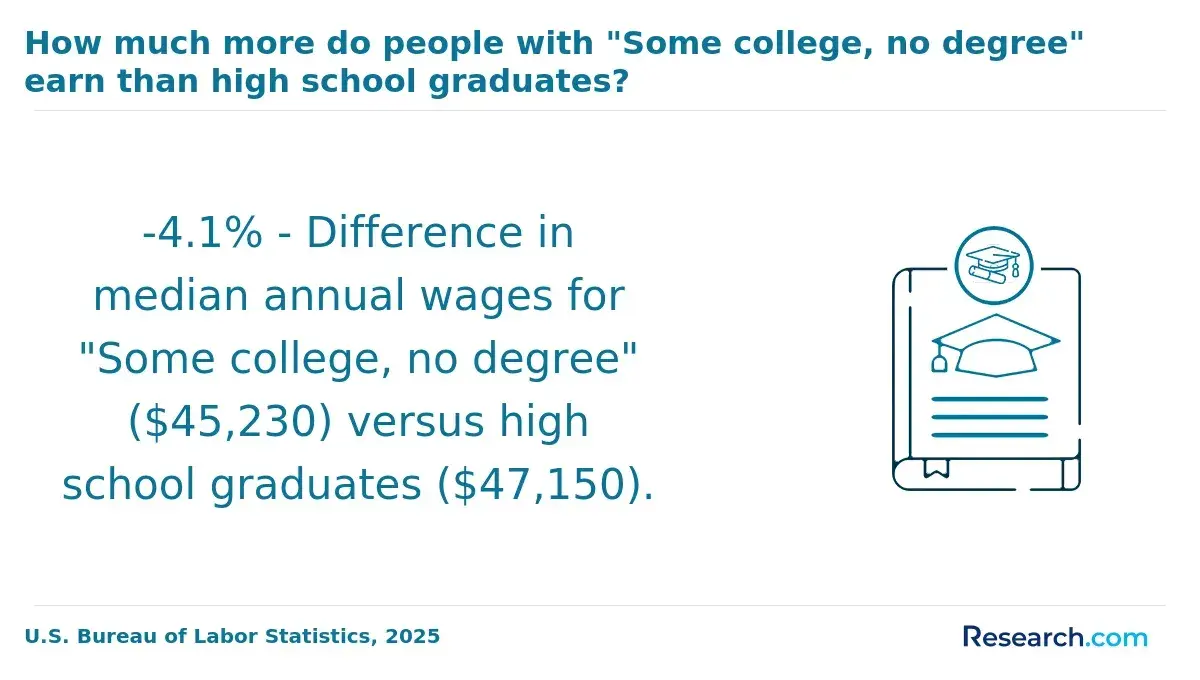
What is the average return on investment (ROI) for an online general psychology bachelor's degree over a 10-year career?
Return on investment (ROI) in higher education represents the net financial gain from earning a degree after deducting its total cost from the extra income earned over 10 years compared to individuals holding a high school diploma or an associate degree in related fields.
According to data from the Georgetown University Center on Education and the Workforce, bachelor's degree holders can expect to earn approximately $250,000 more over a decade than those without one.
Considering Bureau of Labor Statistics data, the median annual wage for psychology-related roles is around $82,000. Graduates with an online general psychology bachelor's degree typically start near $50,000 and receive about a 3% salary increase each year, compounding their earnings over time. When calculated over ten years, total earnings can top $600,000, illustrating significant growth.
With an average program cost of roughly $40,000, the net financial benefit-additional earnings minus degree expenses-reaches nearly $160,000 compared to workers without a bachelor's degree in the same domain. This figure fluctuates based on tuition fees, geographic location, and career progression.
- Degree Cost Impact: Tuition and related fees strongly affect ROI; online formats often offer savings by reducing expenses linked to commuting and campus facilities.
- 10-Year Earnings Growth: Annual raises averaging 3% lead to considerable compounding, boosting long-term income for degree holders.
- Comparison to National Average: General psychology bachelor's degrees provide a slightly lower ROI than the estimated $200,000 average for all bachelor's degrees over ten years.
- Non-Financial Benefits: Graduates gain enhanced job stability, opportunities for career advancement, and professional skills development beyond salary increases.
A professional who enrolled in an online general psychology bachelor's degree after careful ROI analysis shared that the decision involved balancing upfront costs against projected career benefits. "I was hesitant at first due to tuition expenses and time commitments," he explained, "but calculating future earnings growth alongside flexible course schedules helped me feel confident."
He described the process as challenging yet rewarding, emphasizing that the online format allowed him to maintain employment while advancing his education. Reflecting on the journey, he noted, "Realizing how much I could potentially increase my income over a decade made the sacrifices worthwhile."
How do online general psychology program tuition rates compare across public, private, and for-profit institutions?
Public institutions generally offer the most affordable tuition for online general psychology bachelor's degree programs, particularly for in-state students. Many public universities set flat-rate tuition fees for online learners, which do not vary by residency, simplifying financial planning. State funding and streamlined course delivery further reduce costs, making public options appealing for budget-conscious students.
Private nonprofit institutions' tuition tends to be higher compared to public universities, reflecting smaller class sizes, comprehensive student support, and often stronger academic prestige. Though sticker prices are elevated, offers of scholarships and need-based aid can offset some costs. Graduates often benefit from better job market recognition and stable completion rates, which enhance career outcomes.
For-profit colleges may charge lower or competitive tuition, but data from IPEDS highlights lower graduation rates and employer skepticism surrounding their degrees. Such challenges limit the practical value of the degree despite upfront affordability, impacting the long-term return on investment. Students should consider these factors carefully when comparing cost differences for public private and for-profit online psychology degrees.
The sticker price alone does not guarantee the best return on investment. Career advancement, job stability, and professional growth are heavily influenced by program quality and recognition. Prospective students-whether first-generation college attendees, working professionals, or career changers-should examine these outcomes along with costs to choose wisely. For a deeper look at tuition structures and affordability, especially for related programs, explore resources on criminal justice degree online cost.
What long-term salary growth can general psychology bachelor's degree holders expect over a 20- to 30-year career?
Salary progression for individuals with a general psychology bachelor's degree typically follows distinct phases across a 20- to 30-year span, closely tied to growing experience and role advancements.
- Early Career Growth: In the initial five years, professionals often advance from entry-level roles to positions with more responsibility, such as research assistants or coordinators, resulting in roughly a 10 to 15 percent salary increase as skills strengthen.
- Mid-Career Acceleration: Between five and ten years, salary gains speed up as many move into specialist or supervisory positions. Data from sources like PayScale indicate a 25 to 35 percent rise over starting salaries during this period.
- Established Professional Stage: After a decade or so, individuals often secure senior or managerial roles overseeing teams or projects, accompanied by salary jumps of 40 to 50 percent above entry level, emphasizing the premium placed on experience.
- Long-Term Growth Plateau: Beyond 15 years, salary increases become steadier but slower, typically 2 to 3 percent annually, reflecting career maturity without substantial positional leaps unless further education is pursued.
- Cumulative Earnings Advantage: Over a full career, bachelor's degree holders in general psychology earn 30 to 45 percent more than their non-degree peers, translating into significant additional lifetime earnings.
A professional who built her career after completing an online general psychology bachelor's program shared that the journey was as challenging as rewarding. She described balancing coursework with personal responsibilities and how each promotion felt like confirmation that her investment was paying off.
"It wasn't just about the raises," she explained, "but about growing confidence and the ability to lead meaningful projects." Her experience highlights that long-term success is shaped by persistence as much as by the formal credential itself.
How does the ROI of an online general psychology bachelor's degree compare to an associate degree or a professional certificate?
Certificates and associate degrees in general psychology demand less initial investment and shorter completion times. Tuition for associate degrees typically ranges from $6,000 to $10,000, with certificates often costing less.
In contrast, online bachelor's degree programs usually require between $20,000 and $40,000, representing a significantly higher upfront expense.
- Salary Outcomes: Data from the Bureau of Labor Statistics indicates individuals with a bachelor's degree tend to earn 20% to 30% more annually than those with associate degrees or certificates. For example, median salaries hover near $60,000 for bachelor's holders compared to around $45,000 for those with an associate degree; certificates often align with entry-level pay below these figures.
- Short-Term Versus Long-Term Benefits: Certificates and associate degrees provide quicker entry into the workforce, fitting those who prioritize immediate employment or have limited budgets. Bachelor's degrees, however, open avenues for higher lifetime earnings, promotion potential, and greater job stability, especially in roles demanding advanced research and critical thinking skills. This approach suits career changers and working adults managing both job and studies.
- Career Mobility and Professional Growth: Earning a bachelor's degree enhances eligibility for supervisory positions, specialized careers such as counseling, or human resources, and serves as a prerequisite for graduate education. Certificates and associate degrees often cap upward advancement but can act as foundational steps toward further study.
- Decision Framework: Individuals should weigh their financial means, career objectives, and timelines carefully.
- Those seeking minimal upfront costs and fast employment may find certificates or associate programs more practical.
- For sustained professional growth, higher income potential, and expanded opportunities, investing in an online bachelor's degree often yields a stronger return over time.
Which online general psychology specializations or concentrations yield the highest earning potential after graduation?
Specializing within an online general psychology bachelor's degree can significantly impact salary prospects after graduation. According to Bureau of Labor Statistics (BLS) data, several concentrations provide notable salary premiums compared to generalist graduates who typically earn median salaries near $55,000 in entry-level roles.
- Industrial-Organizational Psychology: Prepares students for roles in human resources, organizational development, and training with median salaries around $97,000, a substantial increase over general psychology fields.
- Behavioral Neuroscience: Focuses on brain-behavior relationships, leading to research or pharmaceutical positions starting near $65,000. Additional certifications or graduate degrees are often necessary to reach full earning potential.
- Forensic Psychology: Links psychology and the legal system with median salaries between $60,000 and $90,000. Licensure or forensic certification is usually required, adding to educational investment.
- Health Psychology: Centers on psychological health aspects, offering median earnings near $70,000. Advanced clinical licenses or certifications enhance salary opportunities.
- School Psychology: Designed for educational settings, initial bachelor's degree holders might start lower, but licensed practitioners with master's degrees earn between $70,000 and over $90,000.
Choosing a specialization involves balancing immediate salary gains against additional costs for certification or graduate education, which increases total time and financial investment.
Students should consider their prior experience, professional goals, and financial resources to select a track aligning with a faster return on investment and long-term career advancement. Non-financial returns, including job security and opportunities for professional development, further influence the value of these concentrations.
How do employer tuition reimbursement and financial aid reduce the net cost of an online general psychology bachelor's degree?
Employer tuition reimbursement programs offer a powerful way to lower the out-of-pocket cost of earning an online general psychology bachelor's degree. Under IRS Section 127, employees can receive up to $5,250 annually in tax-free tuition benefits from their employer, making education much more affordable without increasing taxable income.
Data from the Society for Human Resource Management (SHRM) reveals that over 60% of U.S. employers provide such tuition assistance, highlighting its widespread availability as a standard employee benefit.
These employer programs can work in tandem with federal and institutional financial aid to dramatically reduce net tuition costs. Federal grants, such as the Pell Grant, and subsidized loans help eligible students avoid borrowing large sums, while many colleges offer scholarships specifically for online or adult learners. Together, these options make online general psychology degrees accessible to students balancing work and study.
For example, consider a student whose total tuition is $30,000. With employer tuition reimbursement covering $5,250 each year for four years, that's $21,000 in support. Adding a Pell Grant of $6,000 further lowers the remaining balance to just $3,000. Small institutional scholarships and low-interest subsidized loans may reduce this cost even more, substantially improving the return on investment and easing the financial burden.
Besides cost savings, prospective students should compare such tuition assistance programs alongside other options like an online MBA no GRE to align their educational choices with career goals and finances.
- Employer Tuition Reimbursement: Provides up to $5,250 yearly in tax-free tuition aid, which lowers education costs without raising taxable income.
- Prevalence of Benefits: SHRM reports more than 60% of U.S. employers now offer tuition assistance, reflecting strong corporate support for education advancement.
- Federal Financial Aid: Grants and subsidized loans decrease tuition expenses and reduce the need for high-interest borrowing.
- Institutional Aid: Many colleges award scholarships specifically to online students, making degree programs more affordable.
- Worked Example: Combining employer aid and federal grants can cut a $30,000 tuition bill to a few thousand dollars out-of-pocket, improving affordability for working students.
What hidden costs should students factor into the total investment of an online general psychology bachelor's degree?
Hidden costs in online general psychology degree programs often catch students by surprise, significantly increasing the total financial burden beyond tuition. These additional expenses include technology fees for online platform upkeep, which range from $200 to $600 annually, and proctoring service charges between $30 and $50 per exam that accumulate over a full course load.
Graduation fees typically add another $100 to $300 near the degree's completion. Some courses require specialized software licenses-such as statistics or research tools-costing from $50 to several hundred dollars per semester. Annual fees for memberships in professional psychology organizations, generally $50 to $100, also contribute to ongoing costs that benefit career development but add to the budget.
According to the College Board and institutional cost-of-attendance disclosures, these hidden expenses commonly total between $1,000 and $2,500 over the duration of the degree. Factoring in these additional expenses extends the break-even timeline for salary increases and affects the true cost of pursuing an online general psychology bachelor's degree.
Prospective students should always request a comprehensive cost-of-attendance breakdown that includes both tuition and these associated fees before enrolling. This approach ensures realistic financial planning and informed decision-making for those balancing education with work or other responsibilities.
- Technology Fees: Annual charges support online infrastructure and maintenance, adding several hundred dollars over the program's span.
- Proctoring Charges: Remote exam monitoring costs accumulate based on the number of tests, impacting total degree expenses.
- Graduation Expenses: One-time fees arise late in the program and need early anticipation in budgeting.
- Course-Specific Software: Licensed software required for psychology coursework introduces additional recurring costs each semester.
- Professional Memberships: Career-enhancing psychology organizations require yearly dues that should be included in cost projections.
For those seeking further guidance on educational investments, exploring graduate degrees that are worth it can provide valuable insight into longer-term career and salary outcomes.
How does the accreditation status of an online general psychology program affect graduate salary and employability?
Regional accreditation evaluates the overall quality of an institution, ensuring it meets broad academic standards, while programmatic accreditation specifically examines individual psychology programs for specialized rigor. Both types signal credibility to employers and significantly affect a graduate's job prospects and salary potential.
According to surveys by the National Association of Colleges and Employers (NACE) and SHRM, hiring managers prioritize degrees from regionally or programmatically accredited schools. Degrees from nationally accredited-only or non-accredited institutions are often viewed as less reliable, limiting job opportunities and reducing starting salaries.
Graduates from accredited programs benefit from stronger negotiating power for salaries and broader career options, particularly in healthcare, education, and government fields. Attending an unaccredited school may restrict access to licensure exams required for clinical roles, graduate programs necessary for advancement, and positions funded by federal grants or professional certifications. Prospective students should use the U.S. Department of Education's accreditation database and the Council for Higher Education Accreditation (CHEA) resources to confirm a program's accreditation status before enrolling.
- Regional Versus Programmatic Accreditation: Regional accreditation covers the entire institution's academic standards, while programmatic accreditation focuses on psychology programs, both crucial for employer recognition.
- Employer Preferences: Surveys confirm that hiring managers favor candidates with degrees from accredited institutions, which influences job offers and salary levels significantly.
- Licensure and Graduate School Access: Lack of proper accreditation can block eligibility for licensure exams and admission to graduate studies, hindering career growth.
- Job Market Restrictions: Graduating from unaccredited or nationally accredited-only programs often limits eligibility for government, healthcare, and federally funded roles.
- Verification Tools: Students should consult the U.S. Department of Education and CHEA databases to ensure their chosen program's accreditation status is legitimate.
What entry-level job titles and salary ranges are available to graduates of online general psychology bachelor's programs?
Graduates earning an online general psychology bachelor's degree often start in roles across various sectors-each with distinct salary ranges and job settings. Entry-level position possibilities include:
- Behavioral Health Technician: Starting pay ranges between $32,000 and $42,000, primarily in healthcare environments like hospitals and outpatient clinics.
- Human Resources Assistant: Salaries typically fall within $34,000 to $44,000, with finance and technology companies offering the highest wages.
- Case Manager: Entry wages generally range from $35,000 to $45,000, often in social service agencies or government programs.
- Research Assistant: Median starting salaries span $30,000 to $40,000, mainly in academic and healthcare research settings.
- Psychology Technician: Earnings usually hover between $33,000 and $43,000 within mental health and rehabilitation centers.
- Marketing Coordinator: Entry pay ranges from $36,000 to $46,000, especially in technology and advertising sectors.
- Rehabilitation Specialist: Salaries often fall between $34,000 and $44,000, mostly in healthcare and nonprofit organizations.
- Probation Officer Assistant: Median earnings vary from $35,000 to $45,000, typically within government justice departments.
Internships and certifications-such as CPR, Behavioral Health credentials, or HR qualifications-can boost initial salaries by 5% to 15%. Specializing in areas like industrial-organizational psychology or clinical support may also accelerate promotion and increase pay.
This variety of roles allows graduates to align their career starts with personal interests and financial goals, affecting how soon they offset education costs and see a positive return on investment.
What Graduates Say About the Return on Investment of Their Online General Psychology Bachelor's Degree
- Damian: "Choosing the online general psychology bachelor's degree was a strategic decision for me-I carefully evaluated the cost against potential earnings and saw a solid return on investment. The flexibility of the program allowed me to maintain my job while upgrading my skills, which made the financial commitment manageable. Beyond salary, the degree opened doors to leadership roles, proving that the non-financial rewards are just as valuable."
- Cairo: "The online general psychology bachelor's degree significantly boosted my confidence and job security in a competitive market. I chose this program because of its reputation for delivering quality education at a reasonable cost-an important factor given the ROI. The knowledge I gained has led to continuous career advancement and personal growth, making the entire experience an invaluable investment."
- Deidre: "Pursuing an online general psychology bachelor's degree transformed my professional path in ways I hadn't anticipated. While the financial ROI was important, the real benefit came in the form of enhanced career opportunities and the ability to specialize further. This program gave me the credentials and skills needed to elevate my career, and looking back, it was undoubtedly worth the effort and expense."
Other Things You Should Know About General Psychology Degrees
The time to recoup the total cost of an online general psychology bachelor's degree varies but typically ranges from 5 to 10 years. This depends on factors such as tuition expenses, the graduate's starting salary, and career advancement opportunities. Graduates in regions with higher demand for psychology-related roles may recover their investment faster due to better salary prospects.
Geographic location significantly impacts salary potential; graduates in urban areas or states with a higher cost of living generally earn more than those in rural regions. Industry sectors also matter-those working in healthcare, social services, or human resources often see higher salaries compared to roles in education or customer service. These variations are critical when assessing return on investment for the degree.
Factors such as fluctuating job market conditions, varying salary offers by region, and individual career choices can complicate assessing the ROI for an online general psychology bachelor's degree in 2027. These dynamics make it important for students to evaluate how these variables align with personal career goals.
Prospective students can use cost-benefit analysis tools by inputting the total program cost, expected salary post-graduation, and potential career growth. These tools estimate the break-even point and long-term earnings compared to alternative career paths. Evaluating program accreditation, graduation rates, and alumni success alongside financial metrics helps students make informed decisions about their investment.
References
- Salary for Psychology Majors VS National Average | ABD Guide https://allbachelordegrees.com/degrees/liberal-arts-humanities/psychology/salary-of-a-psychology-major-compared-to-the-national-average-usa/
- 10 High-Paying Jobs with a BS in Psychology | University of Bridgeport https://www.bridgeport.edu/news/high-paying-jobs-with-a-bachelors-in-psychology-degree/
- Program Details: https://www.eastern.edu/academics/online-undergraduate-programs/ba-psychology-online
- Planning for College? Don’t Forget These Hidden Costs - Crane Credit Union https://www.cranecu.org/resources/blog/planning-for-college-dont-forget-these-hidden-costs/
- 2025 Psychology Tuition https://www.collegetuitioncompare.com/majors/42.0101/psychology/
- Is an Online Psychology Degree Cheaper Than a Traditional One? https://www.onlinepsychologydegree.info/faq/is-an-online-psychology-degree-cheaper-than-a-traditional-one/
- Is an Online Bachelorâs Degree in Psychology Worth It? | Academic Influence https://academicinfluence.com/inflection/online-education/is-online-bachelors-degree-in-psychology-worth-it
- Unveiling the Potential: Advantages of an Online Psychology Degree https://www.calcoast.edu/news/unveiling-the-potential-advantages-of-an-online-psychology-degree
- The 9 Highest Paying Psychology Careers https://www.verywellmind.com/the-9-highest-paying-psychology-careers-2794940