2027 Online TESOL & Multilingual Learners Degree Programs With No Letters of Recommendation Required

Co-Founder and Chief Data Scientist
Applicants who lack recent professors or supervisors may find recommendation letters to be the biggest obstacle to starting an online TESOL or multilingual learners degree. Programs with streamlined admissions can remove that barrier while still reviewing academic readiness.
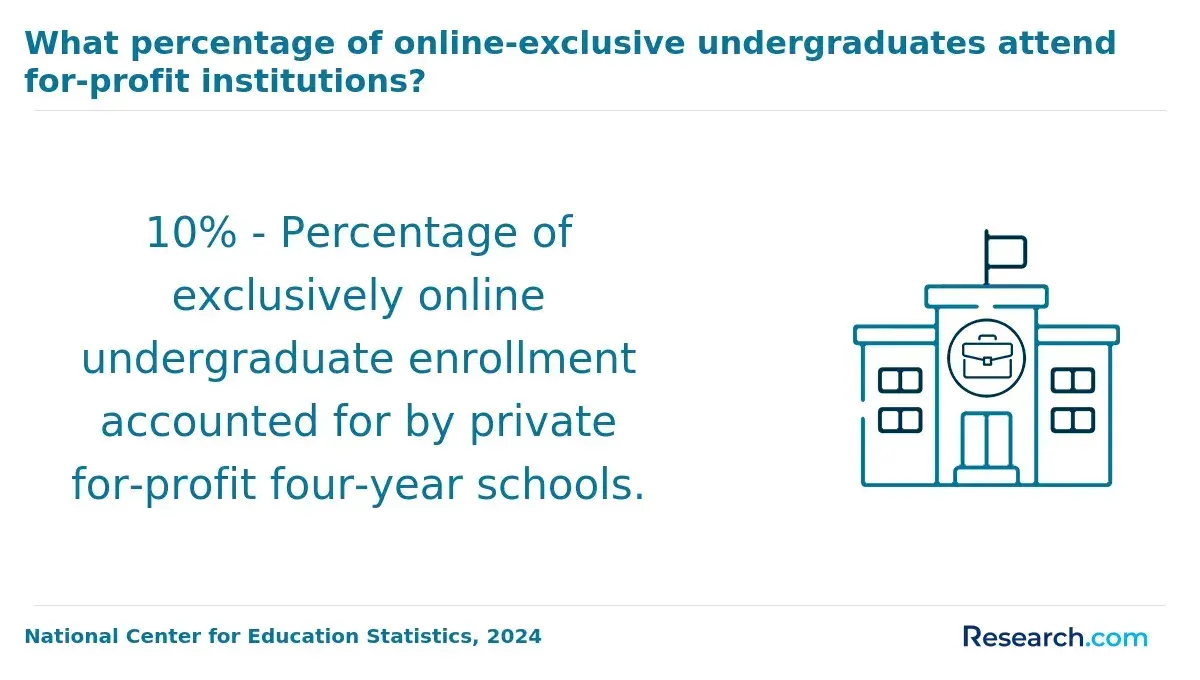
The National Center for Education Statistics reported that 7.5 million U.S. postsecondary students enrolled exclusively in distance education in fall 2022, underscoring the scale of online learning options. This guide explains what "no letters required" actually means, what schools assess instead, and how to compare legitimate programs before applying.
Key Things You Should Know
- "No letters of recommendation required" means every applicant can apply without submitting references; it does not mean transcripts, a minimum GPA, a résumé, an essay, or English-proficiency evidence are automatically waived.
- Legitimate online TESOL and multilingual learners degrees may use transcript review, professional experience, prerequisite coursework, and personal statements instead of references; simplified admissions alone do not indicate lower academic standards.
- For career planning, the U.S. Bureau of Labor Statistics reports a $59,950 median annual wage for adult basic and secondary education and ESL teachers in May 2024, but pay, licensure needs, and job availability vary substantially by employer and state.
Which Online TESOL & Multilingual Learners Degree Programs Require No Letters of Recommendation?
Online programs in this area may be titled Master of Education in TESOL, MEd in English as a Second Language, MA in TESOL, multilingual learner education, English language learning, bilingual education, or teaching English to speakers of other languages. A program should be described as "no letters required" only when its current application checklist states that references are not required for any applicant.
Schools sometimes use different admissions rules for degree pathways, endorsements, certificates, teacher-licensure tracks, and international applicants. For example, an online MEd focused on English language learners may not require recommendations, while the same university's teacher-certification pathway may request references, field-placement clearance, or additional documentation.
The table distinguishes common program formats a prospective student may encounter. It is useful because the degree title alone does not reveal whether the program prepares students for classroom teaching, adult ESL instruction, curriculum work, or a state-issued license.
| Program format | Typical audience | Common no-reference admissions model | Important limitation to verify |
| Online MEd in TESOL or ESL | Licensed teachers and education professionals | Bachelor's transcript, GPA review, application, and sometimes résumé | Whether the degree leads to an ESL endorsement in the student's state |
| Online MA in TESOL | Applicants seeking language-teaching or international education preparation | Bachelor's degree, transcripts, statement of purpose, and English-language documentation when applicable | Whether it includes supervised practicum experience |
| Online multilingual learner education master's | K-12 educators working with multilingual learners | Transcript review and professional background information | Whether prior teaching licensure is required for admission or outcomes |
| Online graduate certificate or endorsement | Current teachers seeking a focused credential | Proof of degree or license, transcript, and short application | Whether credits can later apply toward a master's degree |
| Adult ESL or community education concentration | Adults entering language instruction outside K-12 schools | Undergraduate degree, academic record, and career-goal statement | Whether employers in the target setting prefer a full degree or TESOL certificate |
Use the school's program-specific admissions page and the application portal, not a third-party directory, as the final authority. A phrase such as "recommendations may be requested" is not the same as "no recommendation letters required." Ask admissions whether references are absent from the file review for the exact online degree, start term, and concentration you intend to enter.
Students interested in language access beyond classroom teaching may also compare adjacent education settings, including public and academic libraries. A library science degree can be relevant for applicants drawn to multilingual community programming, literacy services, and information access rather than ESL instruction.
What Are the Admission Requirements for Online TESOL & Multilingual Learners Degree Programs With No Recommendation Letters?
Most programs replace letters with evidence that can be verified directly. Requirements vary by degree level and whether the curriculum includes teacher licensure, but an applicant should expect a complete academic and identity record rather than an abbreviated application.
The following materials commonly appear in no-recommendation admissions checklists. They help an institution determine whether an applicant can manage graduate-level reading, writing, research, and online coursework.
- Official transcripts showing completion of a bachelor's degree for a master's program, or prior college coursework for an undergraduate completion program.
- A cumulative undergraduate GPA that meets the school's stated threshold; some schools review applicants below the threshold individually or require conditional admission.
- A personal statement explaining professional goals, experience with multilingual learners, and alignment with the program.
- A résumé or curriculum vitae documenting teaching, tutoring, paraprofessional, nonprofit, language-learning, or related experience when requested.
- Evidence of an active teaching license for programs designed exclusively for licensed educators or for endorsement pathways.
- English-language proficiency documentation for applicants whose prior education does not meet the institution's exemption rules.
- Identification, application fee or waiver request, and any required background clearance for field-based coursework.
GRE scores are increasingly uncommon in many online education programs, but applicants should not assume they are universally eliminated. A school may waive a test based on GPA, prior graduate work, or professional credentials. Similarly, a statement can be optional at one institution and central to the admission decision at another.
Before paying an application fee, download or save the current checklist, then compare it with the portal's required-document list. If the two conflict, request written clarification. This simple step prevents a common mistake: applying because a marketing page says "simple admissions" while the actual concentration has a different requirement.
Are Online TESOL & Multilingual Learners Programs With No Letters of Recommendation Easier to Get Into?
Not necessarily. Removing recommendation letters reduces the time and access burden of applying, particularly for working adults, career changers, and applicants who completed college years ago. It does not establish that a program has a higher acceptance rate, lower GPA standard, or less demanding curriculum.
Admissions teams may place greater weight on the transcript, academic writing sample, statement of purpose, relevant employment, and fit with the degree's audience. A licensure-oriented MEd can remain selective because it must confirm prior credentials and placement eligibility, even if it does not ask for references. Conversely, a program with recommendations may have broad access admissions. The requirement itself is not a reliable measure of rigor.
Applicants should distinguish convenience from selectivity. The comparison below shows why a streamlined file can still involve meaningful screening.
| Admissions feature | What it may indicate | What it does not prove |
| No recommendation letters | The school uses other evidence to assess readiness | Automatic admission or lower academic expectations |
| No GRE requirement | The program emphasizes prior academic and professional record | That no writing or GPA review occurs |
| Rolling admissions | Multiple entry points may be available | That courses, placements, or aid are available every term |
| Online delivery | Coursework can be completed remotely | That practicum, observation, or licensure elements are fully remote |
| Conditional admission | A pathway may exist for applicants needing academic support | That all applicants will qualify or progress without conditions |
A better question is whether the program's standards match your background and intended work setting. If you are comparing education with other helping professions, review the admissions structure separately rather than assuming all online degrees operate alike; cheapest online master's in counseling options, for example, may have clinical or licensure requirements that TESOL programs do not share.
What Do Online TESOL & Multilingual Learners Programs Evaluate Instead of Letters of Recommendation?
Recommendation letters traditionally provide outside evidence of reliability, communication, academic ability, and professional potential. Programs that do not require them usually assemble that picture from documents the applicant submits directly and from records the institution can authenticate.
Transcript review is often the foundation. Admissions staff may look for degree completion, overall GPA, performance in writing-intensive or education-related courses, and any required prerequisites. A personal statement then helps explain career direction, language-teaching interests, experience with culturally and linguistically diverse learners, and readiness for online study.
For applicants with a lower GPA or a noneducation bachelor's degree, the statement and résumé can be especially important. They should provide concrete context without overstating experience. Describe settings, responsibilities, age groups served, languages or learner needs encountered, and what you learned. Do not submit a generic essay written for several unrelated programs.
Programs may also evaluate whether an applicant understands the distinction between TESOL preparation and state teacher licensure. TESOL can prepare graduates for English-language teaching and learner-support roles in many settings, but a degree alone does not automatically authorize someone to teach in a public K-12 classroom. State rules, district hiring standards, and endorsement requirements control that outcome.
To make a no-reference application stronger, complete these steps before submission.
- Match your statement to the program's stated population, such as adult English learners, K-12 multilingual learners, or international language education.
- Request official transcripts early and review them for holds, missing institutions, or name differences.
- Update your résumé with measurable responsibilities, relevant training, volunteer work, and current licensure where applicable.
- Explain any academic gap briefly and factually if the application provides a place to do so.
- Confirm that uploaded documents satisfy the school's file format, word-count, and deadline requirements.
Applicants who need extensive evidence of readiness, a structured foundation term, or academic coaching should also ask whether the institution offers conditional admission. That option can be more useful than choosing a program solely because its initial application appears short.
How Can You Tell if an Online TESOL & Multilingual Learners Degree With No Recommendation Requirement Is Accredited and Legitimate?
A no-recommendation policy does not affect accreditation. The most important legitimacy check is institutional accreditation recognized by the U.S. Department of Education and the Council for Higher Education Accreditation. Accreditation supports transferability, federal aid eligibility when other requirements are met, and employer confidence, although it never guarantees that every employer or state will accept a particular credential.
For a TESOL or multilingual learner degree, students should also examine whether program design aligns with their goal. Nationally recognized institutional accreditation is different from state approval to prepare licensed teachers, and both are different from a voluntary professional association membership. If your goal is public-school employment, confirm the program's relationship to your state's teacher-preparation and endorsement rules.
Use this verification sequence before applying. It is especially important when a program advertises fast admission, multiple start dates, or unusually broad career promises.
- Confirm the university's institutional accreditation through the accreditor's official directory and the U.S. Department of Education database.
- Verify that the exact online degree, concentration, and delivery format appear on the university's current catalog.
- Ask whether the program is designed for initial licensure, an added endorsement, nonlicensure professional preparation, or adult and international education.
- Check whether field experiences, observations, student teaching, or practicums can be completed in your location.
- Request the total estimated tuition, mandatory fees, technology costs, and any travel or placement expenses in writing.
- Review faculty biographies, course descriptions, student-support services, complaint procedures, and withdrawal policies.
Red flags include vague claims about accreditation, pressure to enroll before receiving program details, promises of guaranteed jobs or licensure, missing faculty information, and tuition disclosures that exclude recurring fees. A legitimate program should be able to answer direct questions about accreditation, curriculum, faculty oversight, and the limits of its credential.
How Much Do Online TESOL & Multilingual Learners Degree Programs With No Letters of Recommendation Cost?
There is no standard price for an online TESOL or multilingual learners degree. Total cost depends on public or private status, residency policy, credit requirements, per-credit tuition, fees, transfer credit, and whether the program includes clinical or licensure components. Recommendation-letter policy does not predict tuition.
Compare the total program price rather than a single per-credit figure. A lower advertised rate can be offset by technology fees, graduation fees, course-material charges, practicum supervision, background checks, fingerprinting, or travel for local placement requirements. Students taking fewer courses per term may also face more annual fee cycles.
The table identifies cost categories to request from each school. It helps applicants build comparable estimates before accepting admission.
| Cost category | What to ask | Why it matters |
| Tuition | What is the per-credit rate and how many credits are required? | Produces the base tuition estimate |
| Mandatory fees | Are online, technology, service, or term fees charged? | Fees can materially change the final price |
| Field experience costs | Who pays for clearances, placement, supervision, or travel? | Licensure and practicum routes may carry extra expenses |
| Books and software | Are digital resources included in tuition? | Required platforms and assessments may not be included |
| Transfer credit evaluation | Is there a fee and what is the maximum accepted? | Accepted credit can reduce remaining coursework |
| Tuition changes | Is the rate locked for enrolled students or subject to annual changes? | Improves the accuracy of a multiyear budget |
For broad benchmarking, compare the program with other cheapest online master's options, then return to the TESOL curriculum and licensure fit. The least expensive master's degree is not necessarily the best value if it lacks the practicum, endorsement alignment, or learner-population focus required for your goal.
ROI depends on the role you seek. Adult ESL teaching, K-12 instruction, curriculum coordination, language-program administration, tutoring, and nonprofit education work can have different pay structures and credential expectations. Evaluate borrowing conservatively, particularly if you expect to work in part-time, adjunct, nonprofit, or geographically limited roles after graduation.
Can You Get Financial Aid for an Online TESOL & Multilingual Learners Degree With Streamlined Admissions?
Yes. Streamlined admissions and financial-aid eligibility are separate issues. Students enrolled in an eligible degree program at an accredited institution may be considered for federal student aid if they meet federal eligibility requirements and complete the Free Application for Federal Student Aid. Program modality does not by itself make a student ineligible.
Graduate students commonly use federal Direct Unsubsidized Loans and, when needed and approved, Direct PLUS Loans. Aid availability depends on enrollment status, cost of attendance, remaining eligibility, satisfactory academic progress, and other federal requirements. Grants are less common for graduate study than at the undergraduate level, so applicants should investigate institutional scholarships, employer tuition assistance, state programs, and professional associations as well.
Before committing, obtain a financial-aid estimate and ask how part-time enrollment affects disbursement. This is particularly important for working teachers who plan to take one course at a time or who may pause during a school year.
Students considering multiple service-oriented career paths can compare funding questions across fields, including affordable online MSW programs. However, aid packages, practicum schedules, professional licensing costs, and earning patterns differ by discipline, so each degree should be evaluated on its own terms.
Borrow only after comparing net cost, expected completion time, and realistic employment options. Do not assume that a school's payment plan reduces the total cost; it may simply spread payments across a term.
How Long Does an Online TESOL & Multilingual Learners Degree With No Letters of Recommendation Take to Complete?
Most online master's programs in TESOL, ESL education, or multilingual learner education are designed for roughly one to two years of continuous full-time study, while part-time schedules often take longer. The exact timeline depends on total credits, course sequencing, transfer credits, summer availability, and field experiences. A program's no-reference policy has no direct effect on time to degree.
Asynchronous online courses can help working adults complete readings, discussions, and assignments around employment schedules. They still have weekly deadlines, group work, instructor feedback cycles, and assessment requirements. Synchronous sessions may be required for seminars, language-teaching demonstrations, advising, or cohort activities.
Licensure or endorsement pathways can add timing constraints. A local placement, mentor teacher, classroom observation, background clearance, or state approval process may need to occur during a specific school term. Applicants should ask whether the program guarantees placement support, permits self-arranged placements, or requires them to secure a suitable school site independently.
A practical timeline estimate should include application processing, transcript delivery, financial-aid review, orientation, prerequisite completion, course sequence, practicum timing, and graduation processing. Avoid relying on the shortest advertised completion period unless you can take the stated number of credits each term and all required courses are available when needed.
Can You Transfer Credits Into an Online TESOL & Multilingual Learners Degree Program With No Recommendation Letters?
Many graduate programs evaluate transfer credit, but acceptance is never automatic. Schools commonly review the prior institution's accreditation, course level, grade earned, learning outcomes, age of the coursework, and fit with the new curriculum. Some programs cap the number of transfer credits or exclude practicum, capstone, and licensure courses.
No-recommendation admissions does not mean transfer review is informal. Applicants may need official transcripts and catalog descriptions, syllabi, course objectives, or faculty verification. Ask for a written transfer evaluation before enrolling whenever possible, especially if transfer credit is central to your budget or completion plan.
These questions can clarify whether a prospective transfer will genuinely save time and money.
- What is the maximum number of graduate credits that may transfer into this exact online program?
- What minimum grade is required for transferred coursework?
- Must the previous course match a required course directly, or can it count as an elective?
- How old can transferred credits be before they are no longer eligible?
- Will transfer credits satisfy practicum, research, assessment, or state endorsement requirements?
- When will the school provide the final written decision, and can it change after enrollment?
Do not withdraw from a current program or assume a shorter completion timeline based on an informal conversation. A transfer-credit decision should identify both credits accepted and the requirements that remain.
How Should You Compare Online TESOL & Multilingual Learners Degree Programs That Do Not Require Letters of Recommendation?
Start with the career outcome, not the application length. The best program for a licensed elementary teacher seeking an ESL endorsement may be a poor match for someone who wants to teach adult immigrants, work abroad, tutor online, or develop multilingual curriculum. Compare each option against the job setting and credential you actually need.
The following comparison framework keeps admissions convenience in its proper place. Use it to narrow a list of programs before applying.
| Comparison factor | What a strong answer looks like | Why it affects the decision |
| Admissions policy | The program explicitly says references are not required for your pathway | Prevents surprises after beginning an application |
| Accreditation | Institutional accreditation can be independently verified | Supports legitimacy, aid eligibility, and academic recognition |
| Career alignment | Curriculum fits K-12, adult ESL, higher education, tutoring, or program administration goals | Degree titles can conceal major differences in preparation |
| Licensure and endorsement fit | The school clearly states whether it meets requirements in your state | Critical for applicants seeking public-school roles |
| Field experience | Practicum expectations, placement support, and location rules are transparent | Influences schedule, cost, and employability evidence |
| Total price | Tuition, fees, materials, and field costs are disclosed in writing | Allows meaningful affordability comparisons |
| Online design | Required live sessions, deadlines, cohort pace, and student support are clear | Determines whether the format fits work and family responsibilities |
| Student outcomes | The school provides accurate, limited claims about roles and credential pathways | Helps identify unsupported marketing promises |
Common mistakes include treating no references as guaranteed admission, skipping accreditation checks, overlooking licensure restrictions, comparing only tuition, and assuming "online" means no in-person field obligations. Avoid these errors by making a one-page comparison sheet for each program and obtaining answers in writing from admissions, financial aid, and licensure staff.
If you are exploring a broader career change, compare curriculum and professional requirements rather than selecting a degree based only on convenience. For example, master's human resources programs can lead toward organizational roles, whereas TESOL degrees center on language learning, instruction, assessment, and support for multilingual learners.
An online TESOL or multilingual learners degree with no recommendation letters can be a sound choice for applicants with a clear goal, a solid academic record or relevant experience, and the discipline for online study. It is less suitable for applicants who need a credential the program does not provide, such as initial K-12 licensure in a particular state. Confirm the outcome first, then use the streamlined admissions process as a practical advantage.
Other Things You Should Know About TESOL & Multilingual Learners
Often, yes. No-recommendation programs can be especially useful for applicants without recent academic contacts. You will still typically need official transcripts, proof of a completed bachelor's degree, and any required statement or résumé. Ask whether the program has limits on the age of prerequisite or transfer coursework.
Work experience does not technically replace a letter, but programs may evaluate it through a résumé, application questions, or statement of purpose. Teaching, tutoring, classroom support, nonprofit education, literacy work, and language-learning experience can help demonstrate fit when documented accurately.
Check the current admissions page for the exact online degree and concentration, then review the application portal checklist. Contact admissions if either source is unclear and ask whether letters are required, optional, conditionally requested, or waived only for certain applicants. Save the response for your records.
Employers generally evaluate your degree, institution, applicable licensure or endorsement, experience, interview performance, and demonstrated skills rather than the materials used in your admission file. A streamlined application process should not be confused with the quality of the curriculum or your professional preparation.
References
- Top 7 TESOL Jobs Online in 2026: Earn Up to $25/hr | TEFL Institute https://teflinstitute.com/blog/top-tesol-jobs-online-2026-earn-up-to-25hr/
- Master of Science in Teaching English to Speakers of Other Languages - Niagara University https://www.niagara.edu/programs/master-of-science-in-teaching-english-to-speakers-of-other-languages/
- Top 25 Great Values: Online Master's in TESOL Degree Programs https://www.greatvaluecolleges.net/rankings/online-masters-tesol/
- TESOL or TEFL: Which is better to teach English in the US? https://ili.edu/news/tesol-vs-tefl-certificates-which-works-best-to-teach-english-in-the-us/
- TESOL Certificate Entrance Requirements | Online TESOL Certification | Anaheim University - Anaheim University https://anaheim.edu/programs/certificate-in-tesol/entrance-requirements/
- 2025 Most Affordable Online Master's Degrees in ESL https://www.onlineu.com/most-affordable-colleges/esl-masters-degrees
- Teaching English to Speakers of Other Languages (TESOL): What is Needed? https://www.scholaro.com/db/News/tesol-what-is-needed-233