2027 Online Reading & Literacy Doctorate Programs with Practicum, Internship, Clinical, or Fieldwork Requirements

Co-Founder and Chief Data Scientist
Choosing an online Reading & Literacy doctorate is not just about coursework; it is about whether you can complete supervised practice while working and living where you are. The need is urgent: 2024 NAEP results show only about one-third of U. S. fourth graders reached reading proficiency.
This guide is for educators, literacy coaches, curriculum leaders, and school administrators comparing online doctoral options with practicum, internship, clinical, or fieldwork requirements. You will learn how these experiences affect cost, time, licensure, placement logistics, and career value before you enroll.
Key Things You Should Know
- Online Reading & Literacy doctorates are most likely to require practicum, internship, clinical, or fieldwork hours when the program is tied to reading specialist, literacy coach, curriculum leadership, or administrator licensure pathways.
- Fieldwork can add indirect costs such as transportation, background checks, unpaid release time, supervisor documentation, and delayed completion; graduate Direct Unsubsidized Loans carry a 7.94% fixed interest rate for 2025-26 federal loan disbursements.
- Before enrolling, students should confirm the exact number of required hours, whether placements can be completed near home or at a current workplace, whether the school helps secure sites, and whether the experience meets state or employer requirements.
Which Online Reading & Literacy Doctorate Programs Require Practicum, Internship, Clinical, or Fieldwork Experience?
The online Reading & Literacy doctorate market includes several different program models. The programs most likely to require hands-on experience are not always labeled simply "Reading & Literacy"; many are EdD programs in curriculum and instruction, literacy leadership, educational leadership, or reading specialist preparation with a literacy concentration.
Use the table below to understand which types of online doctoral programs commonly include experiential requirements and how those requirements usually appear in the curriculum. Catalog language changes by institution, so students should verify the current degree plan, endorsement pathway, and state authorization status directly with each school.
| Online doctoral program type | Common experiential requirement | Who it usually fits | Key verification point |
| Online EdD in Reading, Literacy, or Literacy Leadership | Practicum, field-based improvement project, supervised literacy leadership work, or school-based dissertation-in-practice | Literacy coaches, reading specialists, teacher leaders, district literacy coordinators | Ask whether the program requires direct work with learners, teachers, families, or school data in an approved site. |
| Online EdD in Curriculum and Instruction with Reading or Literacy specialization | May include practicum, action research, curriculum implementation fieldwork, or applied capstone | Teachers and curriculum leaders who want doctoral-level literacy expertise without necessarily pursuing a new license | Confirm whether the literacy specialization is academic only or connected to endorsement requirements. |
| Online doctorate with reading specialist or literacy coach endorsement option | Most likely to require supervised practicum hours, documented assessments, intervention planning, and work with diverse readers | Licensed teachers seeking reading specialist, literacy coach, or similar state-recognized credentials | Verify whether hours meet the requirements in your state, not just the university's state. |
| Online EdD in Educational Leadership with literacy emphasis | Internship or fieldwork may be required if the program leads to principal, superintendent, or district-level licensure | Educators moving into school or district leadership roles with a literacy improvement focus | Ask whether leadership internship hours are separate from literacy-focused field experiences. |
| Online PhD or research-focused doctorate in literacy education | Often no formal practicum, but dissertation research may require access to classrooms, schools, student data, or adult literacy settings | Future researchers, faculty members, policy analysts, and literacy scholars | Clarify whether "no practicum" still means you need local research permissions or site access for dissertation data collection. |
The practical takeaway is simple: a program's online label does not prove it is fully remote. A doctorate designed for professional practice, licensure, or leadership improvement will usually involve some form of supervised or site-based work, even when seminars and dissertation advising are delivered online.
Students comparing programs should look for course titles such as "Reading Practicum," "Literacy Internship," "Clinical Practice in Reading," "Field-Based Literacy Assessment," "Dissertation in Practice," or "Educational Leadership Internship." These labels usually signal that the program requires more than online coursework.
What Are the Practicum, Internship, Clinical, and Fieldwork Requirements for Online Reading & Literacy Doctorates?
Practicum, internship, clinical experience, and fieldwork are related terms, but they are not interchangeable. Understanding the difference matters because each one can affect your weekly schedule, supervision requirements, assessment responsibilities, and eligibility for licensure or endorsement.
The table below compares the most common experiential terms used in online Reading & Literacy doctoral programs. Use it to decode catalog language before you assume a requirement is short, flexible, or fully online.
| Requirement type | What it usually means | Typical activities | Main decision factor |
| Practicum | A supervised applied experience focused on developing specific professional skills | Administering reading assessments, planning interventions, tutoring or coaching readers, analyzing literacy data | Best for students who need documented practice in assessment and intervention. |
| Internship | A broader work-based experience connected to a professional role | Serving in a literacy leadership role, supporting teachers, leading professional learning, contributing to district literacy plans | Best for students moving into literacy coach, coordinator, or administrator roles. |
| Clinical experience | A structured supervised experience with direct application to learners or clients | Working with struggling readers, English learners, students with dyslexia-related needs, or adult literacy learners under supervision | Most important when the program is tied to specialist preparation or intensive intervention work. |
| Fieldwork | A broad term for site-based learning, research, observation, or implementation | Collecting school data, observing literacy instruction, piloting curriculum changes, conducting action research | Often flexible, but students should confirm required hours, site approvals, and deliverables. |
Programs may also combine these requirements. For example, a doctoral student might complete a reading practicum for endorsement, an applied literacy improvement project for the EdD, and dissertation data collection in a local school district.
Before applying, ask the program to define each experience in writing. The most important details are usually not the course title, but the expectations attached to it:
- Number of required clock hours or credit hours
- Whether hours must be completed with children, adolescents, adults, teachers, or administrators
- Whether the experience must occur in a public school, private school, clinic, community literacy site, or district office
- Whether evening, weekend, summer, or workplace-based hours are allowed
- Who may serve as the site supervisor and what credentials that person must hold
- What documentation is required, such as logs, observations, supervisor evaluations, case reports, assessment records, or video submissions
A common mistake is assuming a practicum is always shorter than an internship. Some reading practicums are tightly supervised and documentation-heavy, while some field-based doctoral projects are flexible but last multiple terms. Always compare the actual hour requirement, not the label.
How Do Online Reading & Literacy Doctorate Programs Arrange Practicum and Clinical Placements?
Online Reading & Literacy doctorate programs typically use one of three placement models: school-arranged, student-arranged with approval, or partnership-based. The right model depends on your location, employer support, state rules, and willingness to manage placement paperwork.
The table below summarizes how placement models usually work and what each model means for students who need predictable scheduling. It is especially useful for working teachers and administrators who cannot relocate or pause employment.
| Placement model | How it works | Advantages | Risks to check |
| School-arranged placement | The university identifies or assigns approved sites and supervisors. | Less administrative burden for students; clearer compliance oversight. | May be limited by geography, state authorization, site availability, or cohort location. |
| Student-arranged placement with university approval | The student proposes a site, and the university reviews credentials, agreements, and supervision plans. | Often best for students who want to complete requirements near home or at work. | Students may carry most of the responsibility for finding backup sites if an employer or supervisor cannot participate. |
| Employer-based placement | The student completes hours in their current school, district, or literacy organization. | Can reduce travel time and make scheduling easier for full-time educators. | Some programs restrict using one's own classroom, direct supervisor, or paid job duties as practicum evidence. |
| Partner district or regional network placement | The university relies on approved partner schools, districts, clinics, or agencies. | Can provide stronger supervision and consistent expectations. | May not be available to out-of-state online students. |
Students should not rely on verbal assurances alone. Ask admissions staff, the program director, or the field placement office for the written placement policy before submitting an enrollment deposit.
A practical placement conversation should cover the following steps:
- Confirm whether the university or the student is responsible for identifying the site.
- Ask whether the program has approved sites in your state, region, or district.
- Request the site approval form and supervisor qualification requirements.
- Ask whether your current school, district, or literacy organization can serve as the placement site.
- Clarify what happens if a site withdraws, a supervisor leaves, or required hours are not available in a given term.
- Ask whether placement delays can postpone dissertation milestones, endorsement paperwork, or graduation.
The biggest red flag is a program that says placements are "flexible" but cannot explain who approves sites, who verifies hours, and what support is available if a local site falls through.
Many students can complete Reading & Literacy doctorate fieldwork near home, but local completion is not automatic. It depends on the program's state authorization, the type of field experience, local site availability, supervisor credentials, and whether your state accepts the university's preparation pathway for any licensure-related purpose.
Local fieldwork is most realistic when the program permits student-arranged or employer-based placements. It is less predictable when the doctoral program requires a specific kind of clinical setting, a university-approved partner district, or a supervisor with a credential that is uncommon in your area.
Use the table below to evaluate whether near-home completion is likely. It highlights the conditions that usually make local placement easier or harder.
| Local completion factor | More favorable situation | Less favorable situation | Question to ask |
| State authorization | The university is authorized to offer online education and field experiences in your state. | The program excludes your state or cannot place students there. | "Can students in my state complete all fieldwork and graduate from this program?" |
| Site type | Your employer or a nearby district can support the required activities. | The program requires a clinic, lab school, or approved partner site not available locally. | "What types of sites are acceptable for reading and literacy fieldwork?" |
| Supervisor credentials | A local reading specialist, literacy coach, administrator, or doctoral-level educator meets the requirement. | No local supervisor has the exact certification, experience, or degree required. | "What credentials must my site supervisor hold?" |
| Student population | Your site serves the grade bands or learner groups required by the program. | Your site does not provide access to required learners, such as struggling readers, multilingual learners, or multiple grade levels. | "Do I need experience across specific grade bands or learner populations?" |
| Schedule | Hours can be completed during your workday, summer term, or planned release time. | Hours conflict with teaching duties, school calendars, or district testing periods. | "Can required hours be completed during my paid role, or must they be separate?" |
Working professionals should be especially careful if they live in rural areas, work in small schools, or serve in specialized roles. A local placement may be possible, but it can require earlier planning because supervisor availability and learner access may be limited.
Whether completing applied practicum hours for an online business administration degree or conducting advanced graduate research, if you hope to use your current workplace, ask the program whether your paid duties can count. Some universities allow workplace-based fieldwork if it involves new doctoral-level responsibilities, while others require experiences outside your usual job description to avoid conflicts of interest.
Clinical and fieldwork requirements can affect the total cost of an online Reading & Literacy doctorate in two ways: direct expenses and opportunity costs. Unlike a classroom-based or accelerated business degree where practical components may seamlessly leverage existing corporate desks, literacy practica require active on-site placement.
Direct expenses include tuition for practicum credits, technology fees, background checks, fingerprinting, liability insurance, travel, parking, and assessment materials. Opportunity costs include unpaid hours, reduced overload teaching, substitute coverage, or delayed graduation if placement timing does not align with your plan.
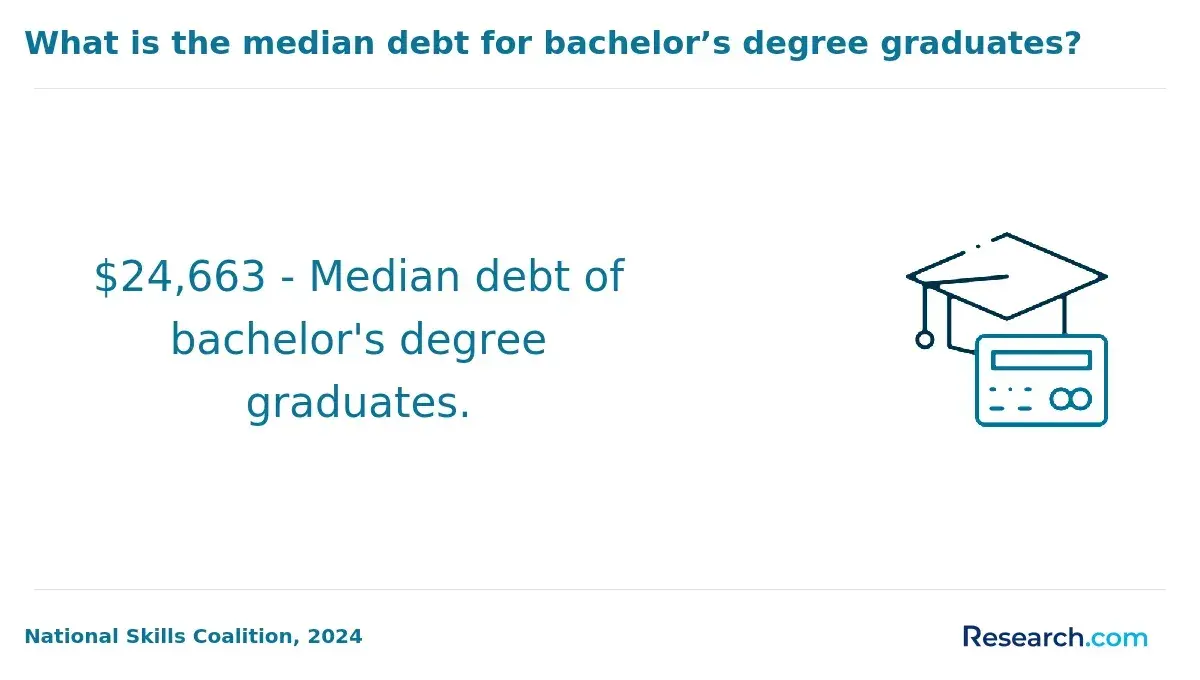
Federal borrowing costs make these trade-offs more important. For 2025-26 federal loans, graduate Direct Unsubsidized Loans have a 7.94% fixed interest rate, while Grad PLUS Loans have an 8.94% fixed interest rate. If fieldwork delays graduation or adds extra terms, students who borrow may pay more than the posted tuition difference between programs.
The table below shows cost and timeline variables that students often overlook when comparing online doctoral programs. These are not universal charges, but they are common enough to ask about before enrolling.
| Cost or timeline factor | Why it matters | How to verify it |
| Practicum or internship tuition | Some programs charge full tuition for supervised experience credits. | Review the degree audit and tuition schedule by credit hour. |
| Extra terms for placement | Fieldwork may only be offered in certain terms or require sequential enrollment. | Ask for a sample plan of study for full-time and part-time students. |
| Travel and transportation | Even local placements can require regular travel outside normal work duties. | Estimate mileage, parking, transit, and time away from work. |
| Background checks and clearance | Schools and districts may require updated screenings before site access. | Ask whether clearances are paid by the student, site, or university. |
| Assessment and intervention materials | Reading diagnostics, screening tools, and instructional materials may be required for practicum documentation. | Ask whether materials are provided through the course, site, or student purchase. |
| Delayed dissertation progress | Site approval or data access issues can slow applied research and graduation. | Ask how fieldwork and dissertation milestones are sequenced. |
Timeline effects vary by degree type. A professional EdD may integrate fieldwork into an applied dissertation or dissertation-in-practice, which can make the experience efficient if your site supports the project. A PhD may not require formal fieldwork, but students may still need school access for research, which can create delays during institutional review board approval or district data permission.
To compare affordability realistically, calculate total completion cost rather than tuition alone. Include tuition, fees, books, travel, release time, lost stipends, childcare, and the financial effect of any extra term caused by placement availability.
Online Reading & Literacy doctorate programs can be flexible in coursework but less flexible in fieldwork. Asynchronous seminars may fit around a teaching schedule, while supervised hours may need to occur during the school day, in specific grade bands, under a credentialed supervisor, or during a district-approved calendar window.
Program flexibility is best evaluated across several dimensions, not by the word "online" alone. The table below helps separate meaningful flexibility from marketing language.
| Flexibility dimension | High-flexibility program | Low-flexibility program |
| Course delivery | Mostly asynchronous with recorded sessions and predictable deadlines | Frequent live sessions during work hours or fixed evening blocks |
| Fieldwork location | Allows approved local, workplace-based, or student-proposed sites | Requires university-selected sites or partner locations |
| Fieldwork timing | Allows summer, evening, weekend, or workday-integrated experiences when appropriate | Requires hours during specific school-day blocks or sequential semesters |
| Supervisor approval | Provides clear criteria and accepts qualified local professionals | Requires highly specific credentials that may be hard to find locally |
| Pace | Offers part-time plans and leave policies for placement disruptions | Locks students into a cohort sequence with limited make-up options |
Flexibility is especially important for students who teach full time, serve as administrators, care for family members, or live far from large school districts. A program with fewer required hours is not always better, but a program with unclear scheduling expectations can create serious completion risk.
When comparing programs, ask practical schedule questions before asking broad questions about flexibility:
- Can practicum or internship hours be completed during my regular job?
- Can hours be completed in summer school, after-school literacy programs, adult literacy programs, or intervention blocks?
- Are synchronous class meetings scheduled during common school or district work hours?
- What happens if my district calendar does not match the university term?
- Can I pause fieldwork for maternity leave, medical leave, military obligations, or job changes?
- Are there minimum weekly hour expectations that could conflict with full-time employment?
A useful rule of thumb is to treat the least flexible requirement as the true measure of program flexibility. If the coursework is convenient but the clinical placement is rigid, the program may still be difficult to complete.
Experiential requirements often exist because accreditation bodies, state education agencies, or professional standards expect candidates to demonstrate applied competence. For Reading & Literacy doctorates, this may involve assessment, intervention, coaching, literacy leadership, ethical data use, and evidence-based instruction.
Accreditation and licensure are related but not the same. Institutional accreditation confirms that a college or university meets broad quality standards for federal aid and degree recognition. Programmatic approval, state educator preparation approval, and endorsement eligibility determine whether the degree's practicum or clinical work helps meet a specific credential requirement.
The table below summarizes the main quality and compliance checks students should complete before enrolling. This is especially important for out-of-state online students because licensure rules are state-specific.
| Requirement area | Why it matters | What to confirm |
| Institutional accreditation | Affects federal financial aid, transfer recognition, and employer acceptance. | The institution is accredited by a recognized accreditor. |
| Educator preparation approval | May be required if the doctorate includes reading specialist, literacy coach, or administrator certification. | The program is approved for the credential it advertises in the state where it is approved. |
| State licensure alignment | A program approved in one state may not automatically meet another state's requirements. | Your state education agency confirms whether the pathway supports your intended credential. |
| Supervisor qualifications | Fieldwork may not count if supervised by someone who lacks required credentials or experience. | The program provides written supervisor criteria before placement begins. |
| Required documentation | Licensure or endorsement applications may require logs, evaluations, assessments, and university verification. | The school explains what records you must keep and who signs them. |
The safest approach is to contact both the university and your state education agency. Ask the university for a licensure disclosure statement, then ask your state whether that program's coursework and fieldwork satisfy your intended reading, literacy, or leadership credential.
Students should avoid assuming that fieldwork hours automatically transfer across states. Even when the educational content is strong, a state may require a different exam, supervised setting, grade-band experience, or educator license as a prerequisite.
Strong support during practicum and fieldwork can make the difference between a manageable online doctorate and a frustrating one. The best programs provide clear placement guidance, responsive faculty supervision, documentation templates, and early warning systems when students fall behind on required hours.
Support varies significantly by institution, so students should evaluate services before enrollment. The table below outlines the kinds of support that matter most during supervised Reading & Literacy doctoral experiences.
| Support area | What strong support looks like | Why it matters |
| Placement advising | Students receive written site criteria, approval timelines, and examples of acceptable placements. | Reduces the risk of choosing a site that cannot count. |
| Faculty supervision | Faculty provide feedback on assessment plans, intervention design, coaching artifacts, and field logs. | Connects practice experiences to doctoral-level literacy expertise. |
| Site supervisor orientation | Local supervisors understand expectations, evaluation forms, and communication procedures. | Prevents confusion between university requirements and workplace duties. |
| Documentation tools | Students receive templates for hour logs, case studies, observation notes, and evaluations. | Makes licensure, capstone, or dissertation evidence easier to manage. |
| Problem resolution | The program has a clear process for replacing a site, changing supervisors, or addressing access barriers. | Protects students when placements change unexpectedly. |
Students can test support quality during the admissions process. A program that provides specific answers, sample forms, and a placement timeline is usually more transparent than one that only says students will "work with an advisor later."
Before committing, ask to speak with a current student or recent graduate who completed fieldwork while employed full time. Their experience can reveal whether the program's written policies are realistic in actual school schedules.
Practicum and clinical experiences can strengthen career readiness when they align with the role a student wants after graduation. For Reading & Literacy doctoral students, the value is usually highest when the supervised experience builds evidence of literacy leadership, coaching skill, data-driven intervention, curriculum design, program evaluation, or school improvement work.
Labor market data can help frame the decision, but it should not be treated as a salary promise. The Bureau of Labor Statistics reported a May 2024 median annual wage of $74,620 for instructional coordinators and $104,070 for elementary and secondary education administrators. These figures show why doctoral students often evaluate literacy doctorates not only as teaching credentials, but as pathways into curriculum, coaching, district leadership, and administrative roles.
The table below connects common career goals with the experiential requirements that may add the most value. Use it to decide whether a practice-heavy doctorate fits your intended outcome.
| Career goal | Most useful experiential component | Why it can matter |
| Reading specialist | Supervised reading assessment, intervention, and case documentation | Builds evidence of direct literacy expertise and may support endorsement requirements. |
| Literacy coach | Internship involving teacher coaching, professional learning, and instructional feedback | Shows ability to improve adult practice, not just work with students. |
| District literacy coordinator | Field-based literacy program evaluation or curriculum implementation project | Demonstrates experience with systems-level improvement and data use. |
| School administrator with literacy focus | Leadership internship tied to reading outcomes, assessment systems, or intervention models | Connects literacy expertise with staffing, scheduling, budgeting, and school improvement decisions. |
| Higher education faculty or researcher | Research apprenticeship, dissertation study, or applied research in literacy settings | Provides experience designing studies, collecting data, and translating evidence into practice. |
| Education consultant or professional development provider | Fieldwork involving coaching, implementation support, and evaluation of literacy initiatives | Creates a portfolio of applied work that can support consulting credibility. |
Students who benefit most from practice-based doctoral training are usually already working in education and want to solve real literacy problems in schools, districts, or community learning settings. Students who primarily want to conduct theoretical research, pursue tenure-track scholarship, or avoid school-based scheduling constraints may prefer a research-focused doctorate with fewer required field hours.
The career value of fieldwork depends on fit. A high-hour practicum is worthwhile when it produces supervised experience relevant to your target role; it is less valuable if it duplicates work you already do and does not help with licensure, advancement, or a stronger professional portfolio.
How Should Students Choose an Online Reading & Literacy Doctorate With Experiential Requirements?
Choosing an online Reading & Literacy doctorate with experiential requirements should start with feasibility, not prestige alone. The best program for you is the one that matches your career goal, state requirements, budget, work schedule, and realistic access to approved field sites.
A strong decision process should compare academic fit and placement fit side by side. Follow these steps before applying or enrolling:
- Define your goal: reading specialist, literacy coach, curriculum leader, school administrator, district coordinator, researcher, or faculty member.
- Decide whether you need licensure, endorsement, salary lane movement, leadership preparation, or doctoral research training.
- Request the full plan of study and identify every course with practicum, internship, clinical, fieldwork, residency, or dissertation site requirements.
- Ask for the required number of hours, eligible site types, supervisor credentials, and documentation rules.
- Verify state authorization and licensure alignment with your state education agency if the program supports a credential.
- Confirm whether your current employer can serve as a placement site and whether paid duties can count.
- Estimate total cost, including tuition, fees, travel, clearances, unpaid time, materials, and possible extra terms.
- Ask what happens if a site is unavailable, a supervisor changes, or fieldwork hours cannot be completed on schedule.
- Speak with current students or alumni about actual placement support and workload.
- Compare the program's experiential requirements with the portfolio, credential, or career outcome you want.
Students should also watch for common red flags. These do not always mean a program is poor, but they do mean you need more information before committing:
- The program advertises "fully online" but does not clearly explain in-person or site-based requirements.
- Admissions staff cannot say who is responsible for arranging placements.
- The catalog lists a practicum or internship but does not publish hour expectations or supervisor criteria.
- The school says licensure is possible but does not provide state-specific disclosures.
- The program requires local fieldwork but has no backup process if your site falls through.
- The schedule assumes daytime availability that conflicts with full-time teaching or administration.
- The program does not explain whether dissertation research can be completed at your workplace.
The final decision should come down to one question: can you realistically complete the required supervised experience in a way that advances your goal? If the answer is yes, a practice-based online program, such as an applied doctorate in organizational leadership, can provide meaningful leadership preparation. If the answer is uncertain, delay enrollment until the placement, cost, and licensure details are clear in writing.
Other Things You Should Know About Reading & Literacy
Many online education doctorates no longer require the GRE, especially professional EdD programs, but policies vary by university. Applicants should check whether the program requires graduate transcripts, a teaching license, professional experience, writing samples, interviews, or evidence of leadership experience instead.
Most programs expect a master's degree in education or a related field. Some also prefer or require classroom teaching experience, a valid educator license, literacy-related coursework, leadership experience, or access to an educational setting for applied research.
An EdD is usually better for practitioners who want to lead literacy improvement in schools, districts, or organizations. A PhD is usually better for students focused on research, scholarship, and higher education faculty roles. The better choice depends on whether your goal is applied leadership or research production.
Sometimes. Universities may accept prior doctoral coursework or specialist-level credits, but transfer limits vary. Practicum, internship, dissertation, and residency requirements are less likely to be waived because programs often require students to complete those experiences under their own supervision.
- Internship Resources https://www.pacifica.edu/student-services/practicums-internships-fieldwork/internship-resources/
- Reading & Literacy Instruction (MSEd or EdS) Master's Degree Online https://www.baypath.edu/academics/graduate-programs/reading-literacy-instruction-msed-eds/
- Inside Online Master’s Programs in Reading Literacy https://www.onlinemastersdegrees.org/best-programs/education/reading-literacy/
- Reading and Literacy Program - Bank Street Graduate School of Education https://graduate.bankstreet.edu/academics/academic-programs/reading-and-literacy-program/
- All Ed.D Programs in Reading & Literacy in 2025 - EdDPrograms.org https://www.eddprograms.org/schools/reading-literacy/
- How to Become a Reading Specialist - Graduate Programs for Educators https://www.graduateprogram.org/blog/how-to-become-a-reading-specialist/
- Explore Doctorates In Reading And Literacy Online (2024) https://www.gradschoolhub.com/affordable/online/doctorate/reading-literacy/
- PhD Programs In Reading And Literacy Online https://www.learnhowtobecome.org/best-online-phd-in-reading-literacy-degree-programs/
- Literacy https://www.albany.edu/education/programs/phd-literacy
- Reading Specialist Graduate Programs (Online) | Georgian Court University | Lakewood, New Jersey https://georgian.edu/academics/graduate-programs/education/reading-specialist-graduate-programs-online/