2027 Online Radiology Technician Degree Programs With University Scholarships: Awards, Eligibility, and Net Cost

Co-Founder and Chief Data Scientist
Choosing an online radiology technician program based on tuition alone can hide major differences in scholarship eligibility, required clinical expenses, and yearly renewal terms. For the 2025-26 award year, the maximum Federal Pell Grant is $7,395, but institutional scholarships may change how much aid a student can actually use.
This guide helps prospective radiologic technology students compare university-funded awards, determine whether online or hybrid enrollment qualifies, and estimate the true out-of-pocket cost before committing.
Key Things You Should Know
- University scholarships for online radiology technician students vary widely: some schools include eligible online or hybrid students, while others reserve institutional awards for campus-based, degree-seeking, or full-time enrollees.
- Academic merit, financial need, program admission, FAFSA results, GPA, and enrollment intensity commonly affect awards; the 2025-26 maximum Federal Pell Grant is $7,395, but Pell eligibility does not guarantee a university scholarship.
- The best offer is the one with the lowest renewable net cost after tuition, fees, clinical travel, imaging equipment, books, and grants - not necessarily the largest advertised scholarship.
Which Online Radiology Technician Degree Programs Offer University Scholarships?
There is no single nationwide list of online radiology technician degree programs with identical university scholarships. The most dependable options are schools that explicitly state that online or hybrid radiologic technology students are eligible for institutional aid. Because entry-level radiography requires supervised clinical education, many "online" programs are actually hybrid: didactic coursework may be online, but labs and clinical rotations occur in person.
Start by distinguishing between an entry-level associate degree in radiography, a bachelor's degree-completion program for already credentialed technologists, and related imaging or health-sciences programs. A degree-completion student may have more fully online choices, while an entry-level student must verify clinical placement, professional accreditation, and state eligibility before treating an online format as practical.
The comparison below identifies the scholarship-policy features that matter more than an advertised online label.
| Program type | Typical online format | Institutional scholarship question to ask | Important caution |
| Entry-level associate degree in radiography | Hybrid; clinicals and labs in person | Are students in this specific radiography cohort eligible for university-funded scholarships? | Clinical placement, commuting, immunizations, and background checks can add substantial costs. |
| BS degree completion in radiologic science | Often primarily online | Do online bachelor's-completion students receive the same merit or transfer awards as campus students? | Admission may require ARRT credentials or an associate degree. |
| Health sciences or imaging administration bachelor's degree | Often online | Does the scholarship apply to all online degree-seeking students or only selected majors? | This path may not qualify a graduate for initial radiography credentialing. |
Ask each institution for a written answer covering the exact program, start term, delivery format, and enrollment level. A general university scholarship page is not enough if the radiography program has cohort restrictions or is administered through a partner college.
Students comparing nearby healthcare pathways may also review an healthcare administration degree online accredited option, although healthcare administration does not replace radiography education or clinical credential requirements.
How Much Scholarship Money Can Online Radiology Technician Degree Students Receive?
Scholarship value should be measured by the amount that actually reduces your bill. Universities may describe awards as annual, per-term, one-time, tuition-only, or "up to" a stated maximum. Without a school-specific award letter, no advertised amount should be treated as guaranteed.
Institutional aid generally falls into the categories below. The award that is most valuable depends on whether it applies to your program and whether it can be renewed through completion.
| Award category | How it is commonly calculated | What to verify before relying on it |
| Academic merit scholarship | Based on prior GPA, test-optional review, academic record, or program admission profile | Whether online, transfer, and part-time students qualify; whether the amount is fixed or competitive |
| Need-based institutional grant | Based on FAFSA information and the school's financial-aid methodology | Whether it changes after outside scholarships, a change in income, or enrollment status |
| Departmental or donor scholarship | May be tied to radiologic science, health care, service, leadership, or community background | Application deadline, cohort limits, and whether it is one-time or renewable |
| Transfer or adult-learner award | Often based on transferable credits, GPA, prior learning, or returning-student status | Minimum transferred credits and whether a radiography cohort is excluded |
A small renewable scholarship can be more valuable than a large first-term award if it continues while you meet the conditions. Conversely, an award that only offsets tuition may leave the student responsible for clinical fees, health screenings, uniforms, transportation, certification preparation, and technology.
Readers who are still comparing clinical entry routes may find the fastest way to become a medical assistant useful for evaluating a different healthcare training path; medical assisting and radiologic technology have separate education, scope-of-practice, and credentialing requirements.
What Are the Eligibility Requirements for Online Radiology Technician Degree Scholarships?
Eligibility rules are set by each institution, not by a universal rule for online radiology technician degrees. The first requirement is usually admission to an eligible degree or certificate program. Some scholarships are available before acceptance, while others require formal enrollment in the radiography major after completing prerequisites.
Review these eligibility conditions in the award terms because one restriction can make an otherwise attractive scholarship unavailable.
- Degree-seeking status: Nondegree, visiting, prerequisite-only, and continuing-education students may be excluded.
- Enrollment intensity: Awards may require full-time enrollment, while radiography cohorts or working adults may attend part-time.
- Academic record: A minimum admission GPA or continuing cumulative GPA may be required for merit awards.
- FAFSA completion: Need-based university grants typically require a current FAFSA and may have priority deadlines.
- Program delivery and location: Some schools include online students, but exclude students at satellite sites, partner institutions, or selected hybrid cohorts.
- Citizenship or residency status: Federal-aid eligibility and institutional scholarship eligibility can differ.
- Satisfactory academic progress: Students generally must complete enough attempted credits and remain in good standing.
Students should also verify whether a scholarship can be used during clinical terms. Clinical scheduling can reduce the number of academic credits taken in a term, which may unintentionally affect awards tied to full-time enrollment.
Radiography is regulated differently across states. Before paying an enrollment deposit, confirm that the curriculum, clinical arrangement, and credential pathway meet requirements where you intend to work. Scholarship eligibility does not establish programmatic accreditation or licensure eligibility.
How Do You Apply for University Scholarships for an Online Radiology Technician Degree?
Apply early because university scholarship deadlines can occur before program admission, FAFSA processing, or a clinical-cohort decision. Save copies of every submission and every award notice; financial-aid offices often need to reconcile institutional awards with outside resources.
Use this process to avoid missing school-specific requirements.
- Identify whether the program is entry-level radiography, degree completion, or a related imaging degree, and confirm that its hybrid or online format fits your clinical needs.
- Request the institution's scholarship eligibility policy for online and hybrid students in writing.
- Submit the FAFSA by the school's priority deadline if you may qualify for need-based aid, federal grants, work-study, or federal loans.
- Complete the university's general scholarship application and any radiologic-science, transfer, adult-learner, or donor scholarship forms.
- Provide required transcripts, recommendations, personal statements, residency documentation, military records, or proof of certification before the stated deadline.
- Read the award letter for the amount, term coverage, renewal conditions, enrollment requirement, and whether the award can be combined with other aid.
- Ask for a revised cost estimate that includes direct charges and realistic clinical-related expenses before accepting the offer.
A common mistake is applying only for a named radiography scholarship and overlooking the university's general scholarship portal. Another is assuming admission automatically triggers scholarship review. Ask whether consideration is automatic, competitive, or dependent on a separate application.
Applicants completing science prerequisites online should ensure that coursework transfers appropriately; reviewing online biology degrees can help when considering academic preparation, but transfer acceptance remains the receiving institution's decision.
Are Scholarships for Online Radiology Technician Degree Programs Renewable Every Year?
Some scholarships renew each academic year, but renewal is never automatic unless the written terms say so. A renewable award is institutional aid that may continue for a stated number of semesters or years if the recipient meets conditions. Those conditions can be especially important in radiography because clinical sequencing may extend the program timeline.
Compare the renewal terms below with your expected course plan, including summers and clinical semesters.
| Renewal term | Why it matters for radiology technician students | Question to ask |
| Minimum GPA | A demanding science and clinical curriculum can affect cumulative GPA. | Is the required GPA cumulative, term-based, or program-specific? |
| Credit completion | Withdrawals, repeats, or lighter clinical terms may reduce completed credits. | How many credits must be completed each year, and do clinical credits count? |
| Enrollment level | Full-time definitions may not match every cohort's prescribed schedule. | Can the award continue if the program requires fewer credits in a clinical term? |
| Maximum duration | Scholarships may end after a set number of semesters even if graduation is delayed. | Does the clock include prerequisite or leave-of-absence terms? |
| Annual application | Some donor awards require students to reapply each cycle. | Must I submit a new application, FAFSA, or essay to be reconsidered? |
Obtain the appeal process in writing. If illness, a clinical-placement disruption, or a required course repeat affects progress, an appeal may be possible, but it is not assured. Do not build a multiyear budget around a renewal assumption that the school has not documented.
Can You Combine an Online Radiology Technician Scholarship With FAFSA and Other Financial Aid?
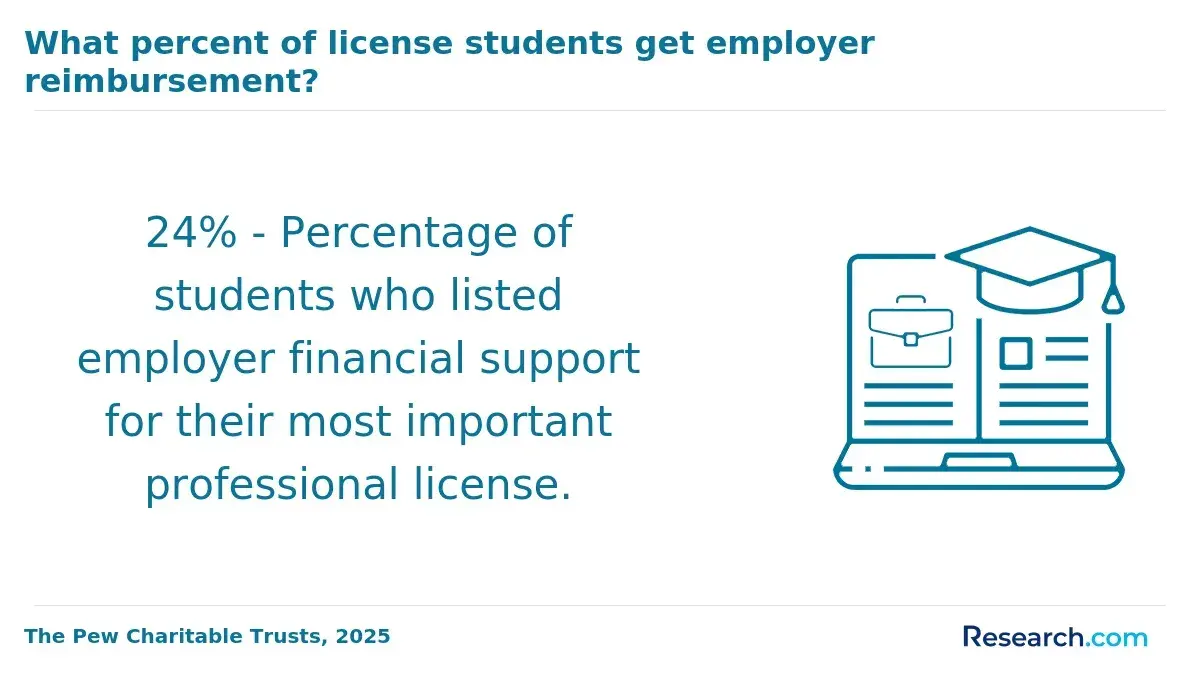
In many cases, students can combine a university scholarship with FAFSA-based aid, outside scholarships, veterans' education benefits, employer assistance, and federal loans. This is often called aid "stacking." However, the financial-aid office must keep the student's total aid within applicable limits and may adjust institutional, need-based, or loan aid after receiving new scholarship information.
The 2025-26 maximum Pell Grant of $7,395 illustrates why FAFSA completion matters even for students pursuing merit aid: it can open access to federal and school-based need aid. The actual Pell amount depends on the student's circumstances, enrollment intensity, program cost, and other federal eligibility factors.
Before accepting outside aid, ask how the school handles these situations.
- Whether an outside scholarship reduces institutional grants, federal loans, work-study, or the family's remaining balance.
- Whether the university scholarship is applied only to tuition or can help cover mandatory fees.
- Whether aid is divided equally by term or reduced if clinical scheduling changes enrollment intensity.
- Whether veterans' benefits, employer reimbursement, or state assistance affect eligibility for university-funded awards.
- Whether a scholarship creates a credit balance that can be used for approved education expenses under school policy.
Report outside scholarships promptly rather than waiting until after disbursement. Late reporting can lead to an aid revision and an unexpected bill. If borrowing is still necessary, compare the remaining balance after grants and scholarships first; loans should not be treated as a scholarship discount.
Students interested in nursing as an alternative clinical route can compare an LPN 6-month program, while recognizing that practical nursing education and radiography lead to different licenses and job responsibilities.
How Much Does an Online Radiology Technician Degree Cost After Scholarships and Financial Aid?
Net cost is the estimated cost of attendance minus grants and scholarships that do not need to be repaid. It is more useful than sticker tuition because radiology technician students may face expenses that tuition advertisements omit, particularly in hybrid programs with off-campus clinical education.
Use the school's official cost of attendance and award letter to build a term-by-term estimate. The following calculation separates charges paid to the institution from expenses students may pay elsewhere.
| Net-cost component | How to calculate it | Why it should be compared |
| Direct institutional charges | Tuition + mandatory fees + required program charges | These are usually billed by the school and may be covered by tuition-restricted scholarships. |
| University and outside gift aid | Institutional scholarships + grants + confirmed outside scholarships | Subtract only aid that is confirmed and applicable to the term. |
| Federal and state grants | Confirmed Pell Grant and other grant eligibility | Grant eligibility can change with FAFSA information and enrollment. |
| Indirect clinical and living costs | Transportation + housing + food + books + uniforms + screenings + equipment | These costs can differ sharply by clinical site and are not always covered by tuition awards. |
| Estimated out-of-pocket need | Direct charges + indirect costs − gift aid | This is the amount to cover through savings, earnings, payment plans, benefits, or borrowing. |
For example, a program with lower tuition can still cost more if it requires long clinical commutes, repeated travel to campus labs, or fees excluded from scholarships. Likewise, a higher-tuition university may be more affordable after renewable institutional grants. Compare the same academic year, the same enrollment intensity, and the same living arrangement across offers.
A major red flag is a financial-aid estimate that lists loans alongside scholarships without clearly separating them. Request a revised award summary showing gift aid, self-help aid, direct charges, and estimated nonbillable costs in separate categories.
Are There Scholarships for Transfer, Adult, Military, and Other Online Radiology Technician Students?
Transfer students, working adults, military-connected students, and students returning to college may have scholarship opportunities, but they should not assume eligibility based on a general admissions category. In radiologic technology, transfer credit evaluation and cohort sequencing can influence both time to completion and the number of semesters for which aid is available.
These student groups should look for university policies that address their circumstances directly.
- Transfer students should ask whether awards require a minimum number of accepted transfer credits, a transfer GPA threshold, or continuous enrollment after transfer.
- Adult learners should confirm whether evening, online, accelerated, or part-time enrollment is eligible for institutional aid.
- Military-connected students should ask about institution-funded military scholarships, benefit coordination, residency rules, and whether deployments affect renewal appeals.
- Already credentialed radiologic technologists should ask whether degree-completion scholarships apply to fully online students and whether professional certification is required.
- Students with prior health-care training should verify transferability rather than assuming work experience replaces radiography prerequisites or clinical requirements.
Prior learning can improve affordability only when it reduces required coursework without jeopardizing eligibility for a scholarship that requires a minimum enrollment level. Ask the financial-aid office and program director to evaluate that trade-off together.
For experienced clinicians planning a different advanced-practice direction, online MSN PMHNP programs are a separate graduate nursing pathway and generally require nursing preparation rather than radiography credentials.
What Is the Difference Between Merit-Based and Need-Based Scholarships for Online Radiology Technician Degrees?
Merit-based and need-based scholarships both reduce college costs without requiring repayment, but they are awarded for different reasons. Merit-based scholarships primarily recognize academic performance, achievement, leadership, talent, or a competitive admissions profile. Need-based scholarships are tied to demonstrated financial need, often using FAFSA information and institutional financial-aid rules.
The distinctions below can help students focus their effort where they have the strongest chance of qualifying.
| Feature | Merit-based scholarship | Need-based scholarship |
| Main basis for award | Academic record, achievement, leadership, or designated criteria | Financial need as determined through required financial-aid information |
| FAFSA requirement | May not be required, but some schools still request it | Commonly required for federal and institutional need-based aid |
| Typical renewal focus | GPA, credit completion, enrollment level, and conduct standards | Continued need, FAFSA renewal, satisfactory progress, and sometimes GPA |
| Best comparison method | Compare the renewable amount and GPA risk | Compare the grant estimate, annual FAFSA process, and risk of aid adjustment |
Neither type is automatically better. A student with a strong academic record may prioritize a renewable merit award, while a student with substantial financial need may find that FAFSA-based grants produce the lower net cost. Many students should pursue both because schools can package merit and need aid together, subject to their policies.
How Should You Compare Scholarship Offers From Online Radiology Technician Degree Programs?
Compare written financial-aid offers, not marketing claims. The strongest scholarship value for your situation is the offer that supports an eligible radiography pathway, remains available for your expected enrollment pattern, and leaves the lowest manageable cost after required educational expenses.
Create a one-page comparison for each school using identical assumptions. The most useful questions to answer are:
- Is the radiology technician program accredited appropriately for my credentialing goal, and are clinical placements available where I can complete them?
- What is the annual institutional scholarship amount actually offered to me, and is it guaranteed, competitive, or estimated?
- Does the award apply to online or hybrid coursework, clinical semesters, summer enrollment, and all required program terms?
- What GPA, credit-completion, FAFSA, and enrollment requirements govern renewal?
- What direct charges are excluded from the scholarship, including lab, clinical, technology, liability, or graduation fees?
- What indirect costs should I budget for clinical travel, parking, uniforms, background checks, immunizations, books, and exam preparation?
- Will an outside scholarship, employer benefit, or veterans' benefit reduce another form of aid?
- What happens financially if I need to repeat a course, change clinical sites, take a leave, or extend the program?
Do not accept an offer until you can identify the source of every number in the net-cost estimate. A school that provides transparent answers about clinical requirements, scholarship renewal, and billing practices may be easier to budget for than one that advertises a large award without clear terms.
Radiologic technologists operate imaging equipment, position patients, follow radiation-safety procedures, maintain records, and work closely with radiologists and other care teams. The U.S. Bureau of Labor Statistics reports a 2024 median annual wage of $77,660 for radiologic and MRI technologists and projects 5% employment growth from 2024 to 2034. Those figures describe the occupation broadly, not a guaranteed outcome for any program or graduate; location, modality, experience, certification, and employer influence pay and opportunity.
Other Things You Should Know About Radiology Technician
Usually not for initial radiography education. Coursework may be online, but accredited entry-level programs generally require in-person labs and supervised clinical experiences. Confirm the clinical location, scheduling, travel expectations, and credentialing pathway before enrolling.
Not always. Many scholarships apply first to tuition and mandatory institutional charges. Ask whether the award can be used for clinical fees, uniforms, immunizations, background checks, transportation, books, and certification-related costs.
Eligibility depends on the specific educational program and credential pathway. Confirm with the school that its curriculum, accreditation status, clinical education, and degree outcome meet the requirements relevant to your intended certification and state practice location.
Compare the renewable net cost, not just the award amount. Give added weight to confirmed clinical placements, total required fees, commuting costs, renewal rules, transfer-credit acceptance, and the number of terms needed to complete the program.
References
- Radiology Tech School: Programs, Costs, and How to Choose (2026 Guide) | Tesla MR Institute https://teslamr.com/guides/radiology-tech-school/
- Radiologic Technology Associates https://an.edu/programs/associates/radiologic-technology-associates/
- Tuition and Aid - Radiography Program (Florida) - Mayo Clinic College of Medicine & Science https://college.mayo.edu/academics/health-sciences-education/radiography-program-florida/tuition-and-aid/
- Radiologic Technology - Mitchell Technical College https://www.mitchelltech.edu/programs/radiologic-technology/
- Guide to Top Scholarships for Online Radiology Tech Students https://www.edumed.org/financial-aid/scholarships/radiology-tech-programs/
- Radiology Training Programs https://www.radiologytrainingprograms.com/radiology-scholarships.html
- How Much Is a Radiology Technology Program? https://medcareernow.com/articles/how-much-is-a-radiology-technology-program
- Academic Scholarships https://www.asrt.org/foundation/programs/academic-scholarships