2027 Online Project Management Doctorate Programs for Working Professionals: Flexible, Part-Time, and Self-Paced Options

Co-Founder and Chief Data Scientist
Choosing an online project management doctorate while working full time is mainly a scheduling and ROI decision. The U.S. Bureau of Labor Statistics projects 7% growth for project management specialists from 2023 to 2033, making advanced leadership and research skills increasingly relevant.
This guide is for professionals balancing work, family, travel, and doctoral study. You will learn how flexible, part-time, asynchronous, and self-paced formats differ, what workload to expect, and how to compare programs by cost, pacing, accreditation, dissertation structure, and career fit.
Key Things You Should Know
- Most online project management doctorates are designed for employed adults, but "flexible" usually means adjustable weekly study times, not unlimited time; part-time students commonly need about 3 to 6 years depending on credit load, dissertation pace, and transfer credit.
- Expect a serious weekly workload: one doctoral course may require about 10 to 15 hours per week, while two courses can push the commitment closer to 20 to 30 hours, especially during research-methods and dissertation phases.
- Cost depends on tuition, fees, residencies, and financing; federal graduate Direct Unsubsidized Loans first disbursed from July 1, 2024, through June 30, 2025, carry an 8.08% interest rate, so borrowing strategy matters as much as sticker tuition.
Is an Online Project Management Doctorate Worth It for Working Professionals?
An online project management doctorate can be worth it when it supports a specific professional goal: moving into enterprise-level program leadership, consulting, higher education, research-driven practice, organizational transformation, or executive decision-making. It is usually less useful if your goal is only to qualify for entry-level project manager roles, because those roles more often value experience, a bachelor's or master's degree, certifications, and a record of delivery.
A doctorate is also different from a general project management degree. At the doctoral level, you are expected to evaluate evidence, design research or applied investigations, lead complex change, and produce original or practice-based scholarship. The value is strongest when your career rewards those advanced capabilities.
The labor market provides some context, but it should not be read as a guarantee. The U.S. Bureau of Labor Statistics reports a May 2024 median annual wage of $100,750 for project management specialists. For working professionals, this means the field can support advanced career investment, but the payoff depends on industry, role level, employer recognition, prior experience, and whether the doctorate helps you access higher-scope responsibilities.
For many professionals, the best reason to enroll is not simply "more salary." A stronger case is that the degree helps you solve more complex organizational problems, compete for senior roles, teach at the postsecondary level, build a consulting practice, or become the person who can connect strategy, risk, governance, data, and execution.
Consider an online project management doctorate if the following conditions describe you. These markers help separate a strategic doctoral investment from an expensive credential that may not match your immediate needs.
- You already have substantial project, program, operations, technology, engineering, construction, healthcare, government, or business leadership experience.
- You want to study project delivery at a deeper level, such as portfolio governance, risk systems, stakeholder behavior, agile transformation, procurement strategy, or organizational change.
- Your employer, industry, or career plan values doctoral-level credibility for senior leadership, consulting, teaching, or research-informed practice.
- You can protect regular study time for several years without relying on unrealistic "catch-up" weekends.
- You are comfortable with independent research, academic writing, data analysis, and long-term project ownership.
You may want to delay or avoid the doctorate if your immediate need is a faster credential, a certification, or a career switch into project management. In those cases, a master's degree, graduate certificate, PMP-aligned coursework, or employer-sponsored professional training may provide a better short-term return with less cost and time risk.
Which Type of Online Project Management Doctorate Best Fits Your Career Goals?
Online project management doctorates are not all the same. Some are housed in business schools, some in technology or organizational leadership departments, and some emphasize applied practice rather than academic theory. The right fit depends on what you want the degree to do for your career after graduation.
Use the comparison below to connect degree type with career direction. The labels vary by institution, so always read the curriculum and dissertation or doctoral project requirements rather than relying only on the degree name.
| Doctorate type | Best fit for working professionals who want to | Typical emphasis | Potential limitation |
| Doctor of Business Administration with project management concentration | Advance into executive, consulting, portfolio, or enterprise transformation roles | Applied business research, strategy, governance, leadership, decision-making | May be less focused on technical project methods than specialized programs |
| PhD in Business, Management, or Organizational Leadership with project management focus | Pursue research, teaching, scholarship, or theory-building careers | Research methods, theory, publication-quality scholarship, dissertation depth | Often more academically intensive and less directly practice-oriented |
| Doctor of Project Management or specialized applied doctorate | Build advanced project, program, and portfolio expertise for complex organizations | Project systems, risk, stakeholder management, procurement, quality, leadership | Availability is more limited, and naming conventions vary widely |
| Doctor of Strategic Leadership or Organizational Leadership with project-focused research | Lead change initiatives, transformation offices, or cross-functional teams | Leadership, change management, culture, ethics, organizational performance | May require you to tailor electives or dissertation work toward project management |
Professionals coming from finance, operations, marketing, supply chain, or entrepreneurship may also compare doctoral paths against an online business degree pathway at earlier levels if they still need broader business foundations. A doctorate works best after you already have enough professional context to turn research into practical leadership value.
Match the degree type to the outcome you want. If you want to teach full time, ask whether graduates are placed in academic roles and whether the dissertation is research-intensive. If you want a senior corporate role, look for applied research, executive communication, analytics, organizational change, and portfolio management. If you want consulting credibility, look for programs that help you produce a defensible doctoral project tied to measurable business problems.
How Do Flexible, Part-Time, Asynchronous, and Self-Paced Project Management Doctorate Programs Differ?
Flexible, part-time, asynchronous, and self-paced are often used together in marketing materials, but they describe different things. Understanding the difference is essential because a program can be asynchronous without being self-paced, or part-time without being flexible enough for your job.
The table below explains the main format terms and what they mean for a professional who travels, manages staff, works shifts, or has family responsibilities.
| Format term | What it usually means | Best fit | Watch for |
| Flexible | The program allows some choice in course load, assignment timing, elective sequence, or attendance format | Professionals with variable work cycles or seasonal workloads | Flexibility may still include fixed weekly deadlines |
| Part-time | You take fewer credits per term, often one course at a time or a reduced doctoral load | Full-time employees who need sustainable pacing | Longer completion time and possible limits on financial aid eligibility |
| Asynchronous | You do not have to log in at a specific class meeting time for most coursework | Professionals in different time zones, frequent travelers, parents, and shift workers | Discussion posts, exams, and projects usually still have weekly due dates |
| Synchronous online | Live online sessions are required at set times | Students who want real-time faculty interaction and cohort accountability | Evening or weekend sessions may conflict with work travel or family obligations |
| Self-paced | You can move through some coursework faster or slower within defined academic limits | Highly disciplined learners with unpredictable calendars or prior subject mastery | True self-paced doctoral programs are uncommon, and dissertation work still needs faculty approval |
| Cohort-based | You progress with the same student group on a fixed sequence | Students who want structure, networking, and predictable milestones | Less freedom to pause, accelerate, or rearrange courses |
A practical way to compare formats is to focus on where the deadlines actually sit. Before enrolling, ask admissions and program faculty to clarify the following operational details, not just the marketing label.
- Whether lectures are recorded, live, or both.
- Whether assignments are due weekly, biweekly, at the end of a module, or by competency milestones.
- Whether you can take one course at a time without losing good academic standing.
- Whether dissertation milestones have fixed semester deadlines.
- Whether temporary stop-outs are allowed and how they affect tuition, enrollment status, and financial aid.
- Whether group projects require real-time meetings with classmates.
The biggest mistake is assuming "online" means "available whenever I have time." Doctoral study is more like managing a long, high-stakes program: you need defined milestones, risk buffers, stakeholder communication, and realistic capacity planning.
What Are the Admission Requirements for Online Project Management Doctorate Programs?
Admission requirements vary, but online project management doctorate programs typically expect evidence that you can handle advanced academic work and connect doctoral study to professional practice. Many programs prefer applicants with a master's degree, although some allow bachelor's-to-doctorate pathways with additional credits.
If you are still building your academic foundation, a project manager bachelor degree may be a more appropriate step before doctoral study. Doctoral admissions committees usually want to see both academic readiness and a clear reason for pursuing advanced research or applied leadership training.
Most applicants should be prepared to submit a package that demonstrates academic ability, professional maturity, and research fit. These are the common items to confirm before you invest time in an application.
- Official transcripts from bachelor's and graduate programs, with minimum GPA requirements that vary by school.
- A master's degree in project management, business, engineering management, information technology, leadership, public administration, or a related field, unless the program offers a direct-entry doctorate.
- Professional résumé showing project, program, portfolio, operations, consulting, military, technical, or leadership experience.
- Statement of purpose explaining your career goals, research interests, and why the program format fits your schedule.
- Writing sample, research proposal, or academic essay, especially for PhD or dissertation-heavy programs.
- Letters of recommendation from supervisors, faculty, or professional leaders who can assess your readiness for doctoral work.
- Interview with faculty or admissions staff, often focused on fit, motivation, research interests, and time management.
- English-language proficiency documentation for applicants whose prior education does not meet the school's waiver criteria.
Some schools have removed standardized test requirements, while others may request GRE or GMAT scores in specific cases. Do not assume a test-optional policy means admission is easier; doctoral programs still evaluate whether your writing, research readiness, professional experience, and goals align with faculty capacity.
Working professionals should also ask about transfer credits, prior doctoral coursework, and maximum time-to-degree rules. A generous transfer policy can shorten the coursework phase, but it rarely eliminates dissertation, capstone, or doctoral project requirements.
How Long Does It Take to Complete an Online Project Management Doctorate Part Time?
Part-time online project management doctorates commonly take about 3 to 6 years, although timelines vary by degree type, credit requirements, course availability, transfer credit, dissertation progress, and whether the program uses year-round terms. The coursework phase is often predictable; the dissertation or doctoral project phase is where timelines expand.
Students looking for speed sometimes compare doctoral options with an accelerated project management degree at another level. Acceleration can work well for earlier degrees or certificate pathways, but doctoral acceleration is limited by research quality, faculty review, ethics approvals, data collection, and committee feedback.
The table below summarizes typical pacing patterns. It is not a promise of completion time, but it can help you ask better questions about the program calendar before enrolling.
| Enrollment pattern | Typical course load | Common completion range | Best for | Main risk |
| Full-time online | Two or more courses in many terms | About 3 to 4 years | Professionals with flexible jobs, employer support, or reduced work hours | High weekly workload and burnout risk |
| Part-time online | One course at a time or reduced credit load | About 4 to 6 years | Full-time employees seeking sustainable progress | Longer exposure to tuition increases and life interruptions |
| Self-paced or competency-based elements | Variable, within school limits | Depends heavily on student progress and program rules | Independent learners with strong writing and planning skills | Momentum loss without external structure |
| ABD or dissertation-completion pathway | Focused dissertation or project credits | Often shorter if prior doctoral credits are accepted | Students who completed coursework elsewhere but did not finish the dissertation | Strict transfer, recency, and topic-fit rules |
To estimate your own timeline, work backward from dissertation requirements rather than counting only courses. A program with fewer courses but a demanding dissertation may take longer than a program with more structured milestones built into each term.
Before enrolling, ask the school for recent median time-to-completion for part-time online doctoral students in the same program or department. If the school only provides the fastest possible timeline, ask what timeline is realistic for students working full time.
What Curriculum, Dissertation, Residency, or Practicum Requirements Do Online Project Management Doctorate Programs Include?
Online project management doctorate curricula usually combine leadership theory, advanced project management concepts, research methods, analytics, ethics, and an original dissertation or applied doctoral project. The exact balance depends on whether the program is a PhD, DBA, Doctor of Project Management, or leadership doctorate.
The curriculum should help you move from managing individual projects to understanding project systems across organizations. Typical subject areas include the following, although course titles vary by school.
- Strategic project, program, and portfolio management.
- Advanced risk management, quality management, procurement, and governance.
- Organizational change, stakeholder engagement, leadership, and communication.
- Agile, hybrid, and traditional delivery models in complex environments.
- Quantitative, qualitative, and mixed-methods research design.
- Data analysis, evidence-based decision-making, and performance measurement.
- Ethics, compliance, sustainability, and social responsibility in project environments.
- Dissertation, doctoral project, capstone, or applied research seminar sequence.
Dissertation and doctoral project requirements deserve close attention because they determine much of the real workload. A traditional dissertation usually asks you to produce original research that contributes to scholarship. An applied doctoral project may focus more directly on a workplace or industry problem, but it still requires rigorous methods, evidence, faculty approval, and formal writing.
Residency requirements also vary. Some online programs are fully online, while others require short campus visits, virtual residencies, research intensives, dissertation workshops, or in-person orientations. Even a brief residency can affect cost and scheduling if you need airfare, lodging, childcare, or time away from work.
Working professionals should look for dissertation support built into the program instead of waiting until coursework ends. Stronger structures may include research courses tied to your topic, early committee formation, regular milestone reviews, writing labs, statistical support, library consultation, and clear rubrics for proposal and final defense expectations.
A common mistake is choosing a program with attractive coursework but vague dissertation guidance. If the school cannot explain how online students move from topic selection to proposal approval to defense, that uncertainty can become a major time and cost risk.
How Much Weekly Work Should Full-Time Professionals Expect in an Online Project Management Doctorate Program?
Full-time professionals should expect an online project management doctorate to function like a second major commitment. The workload depends on course design, reading volume, writing expectations, group projects, statistics courses, and dissertation stage, but doctoral study generally requires consistent weekly time rather than occasional bursts.
The table below provides practical workload ranges for planning purposes. Use it to compare your real weekly calendar against the study pattern a program expects.
| Program activity | Likely weekly commitment | What the time is usually spent on | Scheduling implication |
| One doctoral course | About 10 to 15 hours | Reading, discussion posts, research, writing, recorded lectures, faculty feedback | Manageable for many full-time professionals if protected across several days |
| Two doctoral courses | About 20 to 30 hours | Parallel deadlines, multiple papers, team work, research assignments, exams or presentations | Often difficult during heavy work seasons or frequent travel |
| Research methods or statistics course | Variable, often higher than standard courses | Software practice, methods design, data interpretation, technical writing | Requires extra buffer time and fewer competing obligations |
| Dissertation or doctoral project phase | Uneven but sustained | Proposal writing, literature review, data collection, analysis, revisions, committee meetings | Progress depends on self-management and faculty response cycles |
| Residency or intensive | Concentrated over specific days | Workshops, presentations, networking, research planning, defenses | Requires advance work coverage, travel planning, and family scheduling |
To make the workload realistic, plan your doctorate like a portfolio initiative with capacity constraints. The following habits help working professionals maintain progress without relying on emergency deadlines.
- Block recurring study sessions before the term starts, including at least one weekday session and one longer weekend session.
- Check the syllabus for major papers, group work, and synchronous sessions in the first week, then map them against work deadlines.
- Use vacation days strategically for residencies, statistics-heavy assignments, proposal milestones, or final defense preparation.
- Tell your supervisor early if the program requires live sessions, travel, or predictable blocks of time.
- Build a dissertation topic around accessible data and realistic permissions rather than an ideal topic that is impossible to study while employed.
The red flag is not a hard course; it is a program whose workload pattern does not match your life. If your job requires unpredictable travel, an asynchronous program with weekly deadlines may work better than live evening sessions. If you struggle with self-direction, a cohort program may be safer than a highly independent format.
How Much Does an Online Project Management Doctorate Cost, and What Financial Aid Is Available?
The cost of an online project management doctorate includes more than tuition. Working professionals should calculate total cost of attendance, financing cost, technology fees, books, residencies, dissertation continuation fees, lost income if reducing work hours, and the opportunity cost of several years of study time.
Because doctoral tuition varies widely by institution and program type, the safest comparison is cost per credit multiplied by required credits, plus mandatory fees and residency expenses. Financing terms also matter. Federal Student Aid lists an 8.08% interest rate for Direct Unsubsidized Loans for graduate and professional students first disbursed from July 1, 2024, through June 30, 2025, which means borrowed tuition can cost substantially more over time if repayment is delayed.
When comparing programs, organize costs into direct, indirect, and financing categories. This prevents a low tuition rate from hiding required expenses that affect working adults.
- Direct academic costs: tuition per credit, program fees, technology fees, library fees, graduation fees, dissertation or continuation credits, and course materials.
- Residency costs: airfare, lodging, meals, local transportation, parking, professional attire, childcare, and unpaid leave if your employer does not cover the time.
- Financing costs: loan origination fees, interest accrual, repayment timeline, employer reimbursement delays, and tax implications of tuition benefits.
- Work-life costs: reduced consulting hours, fewer overtime opportunities, postponed certifications, and time away from family or community obligations.
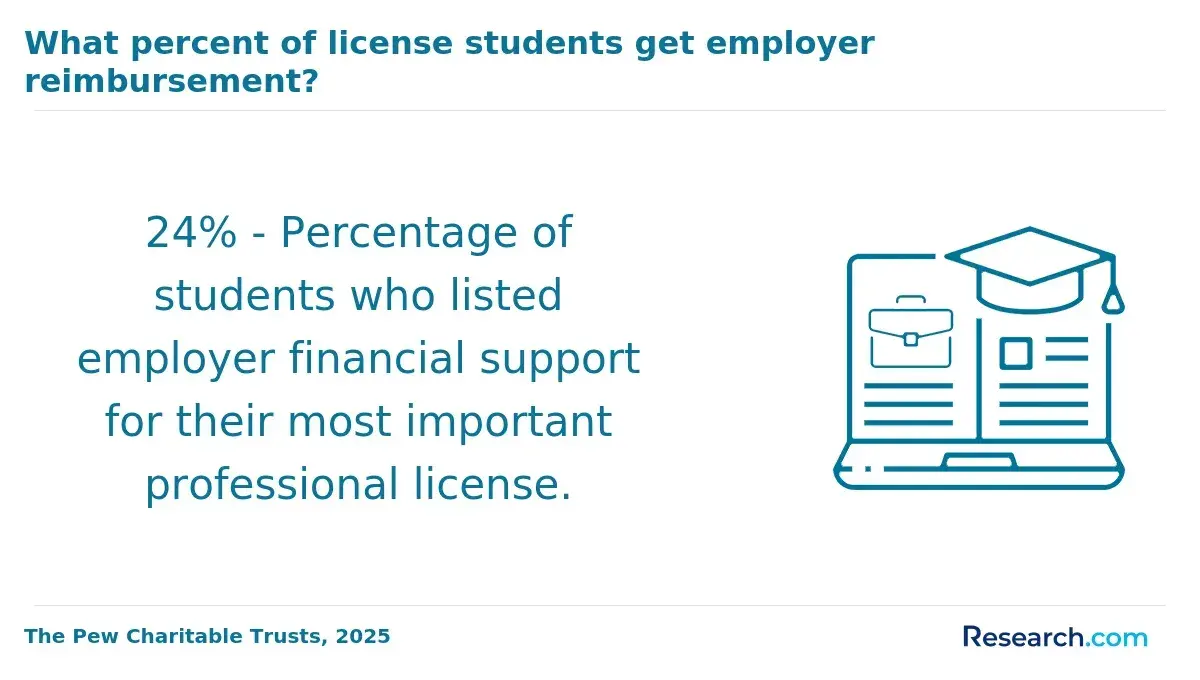
Financial aid options may include federal graduate loans for eligible students, employer tuition assistance, military or veterans education benefits, institutional scholarships, payment plans, assistantships in limited cases, and professional association awards. Employer support is especially important for working professionals, but read the policy carefully because some employers reimburse only after successful course completion or require continued employment for a set period.
Use these questions before committing financially. They can reveal whether a program is affordable in practice, not just on paper.
- What is the total estimated cost for part-time online students, including all required fees?
- Are dissertation credits billed at the same rate as coursework?
- Are residencies required, optional, virtual, or in person?
- Can I pause enrollment without triggering loan repayment or losing my place in the program?
- Does the school offer a tuition lock, corporate partnership rate, military rate, or alumni discount?
- How many credits can transfer, and how does transfer credit change total tuition?
- What happens financially if the dissertation takes extra terms?
The most common cost mistake is comparing only tuition per credit. A better approach is to estimate total cost under three scenarios: fastest realistic completion, expected part-time completion, and delayed dissertation completion.
How Can You Verify the Accreditation and Quality of an Online Project Management Doctorate Program?
Accreditation is one of the most important quality checks for an online doctorate. In the United States, start by confirming that the institution is accredited by an accreditor recognized by the U.S. Department of Education or the Council for Higher Education Accreditation. This matters for federal financial aid eligibility, credit transfer, employer recognition, and academic credibility.
Programmatic accreditation may also matter, especially for business-based doctorates. Business schools may hold accreditation from organizations such as AACSB, ACBSP, or IACBE, though not every legitimate project management-related doctorate has separate programmatic accreditation. The key is to understand what accreditation the school has, what it covers, and whether your employer or target academic institutions value it.
Quality also depends on program design, faculty expertise, doctoral support, and student outcomes. Accreditation is necessary, but it is not enough by itself. Working professionals should evaluate these quality indicators before applying.
- Faculty have relevant research, publications, consulting experience, or senior practice experience in project management, program management, operations, leadership, analytics, or organizational change.
- The curriculum includes advanced research methods and project-related leadership content rather than only repackaged master's-level courses.
- The program publishes clear dissertation or doctoral project milestones, committee processes, defense expectations, and time-to-completion rules.
- Online students receive access to library resources, research software, writing support, advising, career services, and faculty office hours.
- The school can explain completion patterns for working adults, not just advertise the shortest possible timeline.
- Residency, synchronous attendance, and practicum expectations are transparent before enrollment.
- Transfer credit, leave-of-absence policies, and dissertation continuation fees are documented in the catalog.
Red flags include pressure to enroll quickly, unclear accreditation language, missing faculty information, vague dissertation requirements, unusually short completion promises, no evidence of doctoral student support, or a refusal to provide a full cost breakdown. If a school makes the doctorate sound effortless, be cautious; legitimate doctoral study is flexible in format, not easy in academic expectations.
A practical verification step is to compare the program website, academic catalog, accreditation database listing, tuition page, and student handbook. If those sources disagree, ask for clarification in writing before you apply.
What Career Outcomes and Professional Benefits Can an Online Project Management Doctorate Provide?
An online project management doctorate can support career growth by strengthening your ability to lead complex initiatives, evaluate evidence, influence senior stakeholders, and translate research into organizational action. It is most valuable when combined with substantial experience and a clear professional narrative.
Potential outcomes vary by industry and employer. The table below summarizes common directions for doctorate-trained project management professionals and the type of value the degree may add.
| Career direction | Typical responsibilities | How a doctorate may help | Important caveat |
| Program or portfolio executive | Align major initiatives with strategy, budgets, governance, risk, and benefits realization | Builds advanced decision-making, systems thinking, and evidence-based leadership skills | Experience and organizational results still matter heavily |
| Project management office leader | Standardize methods, manage capability maturity, oversee reporting, coach project teams | Supports research-informed process improvement and organizational change leadership | Certification and practical delivery history may be equally important |
| Consultant or advisor | Diagnose project failures, design governance models, advise executives, lead transformations | Adds credibility for complex client problems and applied research-based recommendations | Business development skills are still required |
| Higher education instructor or faculty candidate | Teach project management, leadership, business, or operations courses; conduct research | May meet doctoral credential expectations for teaching and scholarship roles | Tenure-track roles may prefer a research-intensive PhD and publications |
| Organizational change or transformation leader | Lead enterprise initiatives involving technology, culture, process, and stakeholder adoption | Strengthens change theory, analytics, and executive communication | The degree should align with the industry context you want to lead in |
Current trends make doctoral-level project management study more relevant for some professionals. AI and automation are changing planning, forecasting, reporting, and risk analysis, but organizations still need leaders who can interpret data, manage uncertainty, guide teams, and make ethical decisions. Hybrid work has also increased the importance of virtual stakeholder management, distributed-team governance, and communication discipline.
The professional benefit is strongest when you deliberately connect coursework and dissertation research to your field. For example, a healthcare project leader might study implementation risk in clinical technology projects, while a technology program director might research AI governance in agile portfolios. A construction or infrastructure leader might focus on procurement, safety, sustainability, or stakeholder risk.
Before choosing a program, define the outcome you want in one sentence. If the sentence is "I want a doctorate because it sounds impressive," keep researching. If it is "I want to lead enterprise transformation programs and produce applied research on portfolio governance in regulated industries," you are much closer to a program-selection strategy.
Other Things You Should Know About Project Management
You usually can, but it may not be wise if the program includes live sessions, residencies, field research, or heavy deadlines during business hours. Employer awareness can also help with tuition assistance, schedule flexibility, data access for applied research, and support during dissertation milestones.
No. Self-paced formats may offer more control over timing, but they require strong self-discipline and still include academic standards, faculty review, and research milestones. Cohort-based programs can feel less flexible, but they often provide accountability and a clearer schedule.
Not always. Some programs value certifications such as PMP, PMI-ACP, Scrum credentials, or Lean Six Sigma, but they are usually not universal admissions requirements. Professional experience, graduate preparation, writing ability, and research fit often matter more.
Contact your advisor early and ask about reducing course load, taking a leave of absence, shifting dissertation milestones, or moving to a later course sequence. Do not simply stop participating, because nonattendance can affect grades, financial aid, academic standing, and time-to-degree limits.
References
- Project Management for Scientists - Manage a research project https://www.embolableadership.org/course/project-management-for-scientists/
- Online Doctorate (DBA) in Project Management - IMET https://imetworldwide.com/online-doctorate-dba-project-management/
- Free Online PhD Programs 2026 | Best PhD Online Options https://applyindex.com/blog/best-free-online-phd-programs/
- 6 Benefits of a PhD for Working Professionals - The Thames International University https://thethamesuniversity.fr/6-benefits-of-a-phd-for-working-professionals/
- Best PMP Certification Programs of 2026 | CourseCompare.ca https://www.coursecompare.ca/best-pmp-certification/
- Which Colleges Offer an Online Doctorate in Project Management? https://www.gograd.org/online-phd-programs/best-project-management-degrees/
- Best Online PhD Programs With Flexible Learning Options 2026 - GTR Blogs | Career Guidance Articles https://gtracademy.org/blog/online-phd-programs-with-flexible-learning/
- Best Online PhD Programs for Working Professionals in the USA https://www.euroamerican.eu/best-online-phd-programs-usa-for-working-professionals
- Best Project Management Degrees Online 2026 https://www.onlineu.com/degrees/project-management
- This is How Your Ph.D. Can Help You to Get a Project Management Professional Certification https://www.controlledreleasesociety.org/how-your-phd-can-help-you-get-project-management-professional-certification