2027 Online Professional Writing Degree Programs With University Scholarships: Awards, Eligibility, and Net Cost

Co-Founder and Chief Data Scientist
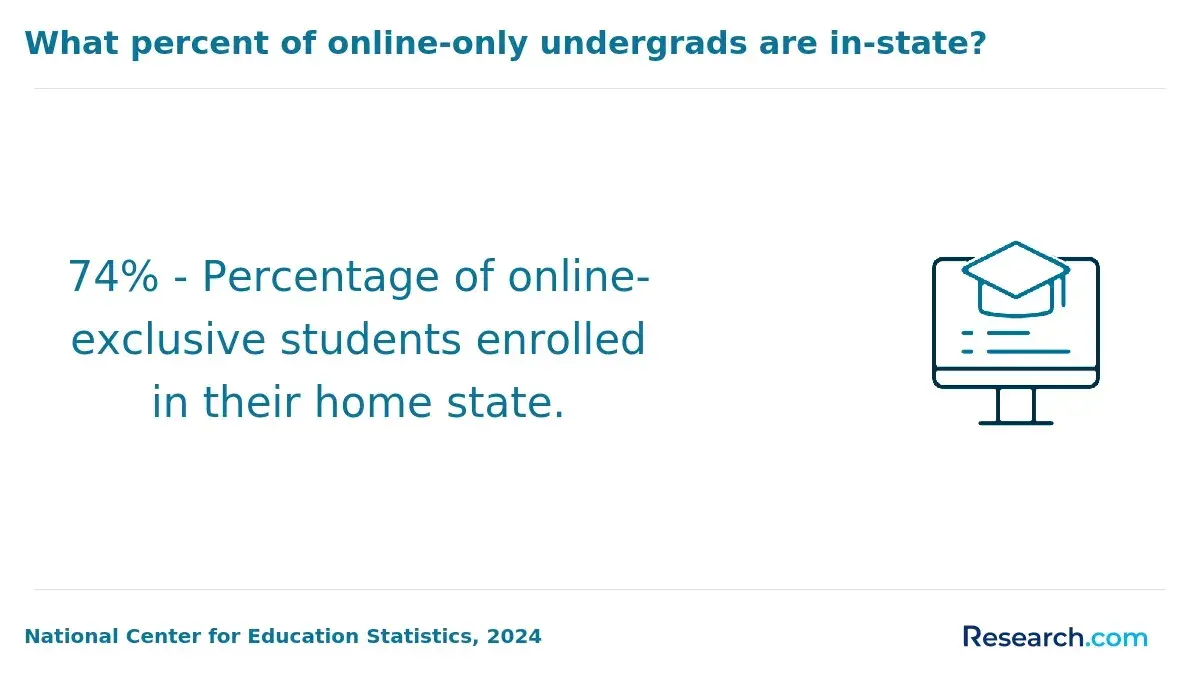
An online Professional Writing degree can look affordable until tuition, technology fees, enrollment rules, and limited online-only scholarship eligibility are added together. This guide is for prospective first-year, transfer, adult, and military students comparing university-funded aid. The National Center for Education Statistics reported that about 7 million U.S. undergraduates took all their courses through distance education in fall 2023. Learn how institutional scholarships work, what awards may cover, and how to compare the actual amount you may pay rather than tuition or a headline scholarship alone.
Key Things You Should Know
- University scholarships for online Professional Writing students are often institution-wide rather than program-specific, so an advertised award is not a guaranteed offer; eligibility can depend on admission status, GPA, residency, credit load, and whether online students are included.
- The maximum Federal Pell Grant for the 2025-26 award year is $7,395, but it is need-based federal grant aid, not a university scholarship; it can materially reduce net cost when a school permits aid to be combined.
- Compare the annual tuition and required fees minus grants and scholarships you are likely to keep, then add books, course materials, and any living costs; a smaller award at a lower-priced public university can produce a better out-of-pocket result.
Which Online Professional Writing Degree Programs Offer University Scholarships?
Online Professional Writing programs may be offered as a bachelor's degree in professional writing, English with a professional-writing concentration, technical writing, writing studies, or a related master's program. Institutional scholarships are funded by the university, foundation, college, or academic department. They differ from outside scholarships because the school controls eligibility, selection, renewal, and whether distance learners can receive the funds.
Few universities publish a scholarship award reserved solely for online Professional Writing majors. A more realistic search is to identify accredited institutions with an online writing pathway and a university scholarship system, then obtain written confirmation that your specific online program and enrollment level qualify.
| University and online writing pathway | Potential institutional-aid route to investigate | Important question to ask before applying |
| Arizona State University Online, BA in English with a Professional Writing concentration | University and college-level scholarship opportunities may have separate rules for online students. | Are degree-seeking ASU Online students eligible for the particular merit or donor scholarship? |
| Old Dominion University Online, BA in English with a Professional Writing concentration | University scholarships, departmental awards, and transfer-related opportunities may be available under distinct terms. | Does online enrollment meet the scholarship's residency and minimum-credit requirements? |
| University of Arkansas at Little Rock, professional and technical writing study options | Foundation, departmental, and university scholarship listings can be relevant, especially for continuing students. | Is the program fully online for your entry point, and do distance learners qualify for each award? |
| University of Denver, online graduate writing-related programs | Graduate-school, college, or program awards may be limited by cohort, term, or funding availability. | Is the award a scholarship, tuition discount, assistantship, or one-time grant? |
Use this as a screening list rather than a promise of funding. Scholarship inventories and online-student rules can change by academic year, and an institution may accept online students while excluding them from selected campus-based awards.
Program fit still matters. Professional Writing curricula commonly develop editing, research, document design, digital content, audience analysis, and workplace communication skills. Students aiming for a communications-oriented career may also compare related options, such as a business management degree online, if their target work emphasizes operations, client communication, or project leadership rather than writing-intensive roles.
How Much Scholarship Money Can Online Professional Writing Degree Students Receive?
There is no standard institutional scholarship amount for an online Professional Writing degree. Awards can range from a modest one-term donor scholarship to multi-year tuition support, and the university may use a fixed amount, a tuition percentage, or a competitive award that changes with available funds. Treat every published amount as a maximum or an example until it appears in your personalized aid offer.
The following comparison separates the kinds of aid students may see. It is important because funds with similar names can have very different restrictions and renewal expectations.
| Aid category | Typical basis for selection | How it affects your bill | What to verify |
| University merit scholarship | Academic record, test-optional review factors, portfolio, leadership, or writing achievement | Usually reduces tuition and eligible institutional charges | Annual amount, online eligibility, minimum GPA, and duration |
| Need-based institutional grant | Financial need, often determined using FAFSA information | May reduce direct educational charges after other gift aid is considered | FAFSA deadline, verification requirements, and whether funding is renewed |
| Departmental or donor scholarship | Major, writing sample, career interest, transfer record, or donor criteria | Usually a fixed award applied to the student account | Separate application, selection timing, and one-time versus renewable status |
| Federal Pell Grant | Federal need-based eligibility | Grant aid that can be applied to eligible education expenses | Enrollment intensity, annual FAFSA filing, and remaining lifetime eligibility |
For context, the maximum Federal Pell Grant for 2025-26 is $7,395. Your actual Pell amount can be lower based on federal eligibility calculations, enrollment intensity, and cost of attendance. It should not be used to assume that a university will provide an equal institutional scholarship.
Ask financial aid staff to state the award in annual, not merely term-by-term, terms. Also ask whether the figure is based on full-time enrollment. A $2,000 annual scholarship may be split across semesters and reduced or unavailable if you study part time.
What Are the Eligibility Requirements for Online Professional Writing Degree Scholarships?
Eligibility requirements determine whether an award is realistic for you, not just whether you can submit an application. Universities may use different rules for first-year, transfer, readmitted, nondegree, certificate, undergraduate, graduate, full-time, and fully online students. Admission to a degree program does not automatically establish scholarship eligibility.
Before investing time in essays or recommendation requests, confirm these common requirements with the institution.
- Degree status: Many awards require admission as a degree-seeking student rather than enrollment as a nondegree, visiting, or certificate student.
- Academic record: Merit awards may require a stated high school, college-transfer, or continuing-student GPA, while competitive awards can consider a writing portfolio or personal statement.
- Enrollment intensity: A scholarship may require full-time enrollment, such as a specified minimum number of credits each term, even when the degree can be completed part time online.
- Program and location: Some funds are restricted to a college, major, campus, state resident, or students taking courses in a particular format; "online" eligibility must be confirmed separately.
- Financial-need documentation: Need-based awards commonly require a FAFSA and may require tax-information verification before funds disburse.
- Deadline and application materials: A university scholarship portal may close months before the admissions deadline and may require recommendations, an essay, or a writing sample.
Do not assume an online format makes a writing degree less rigorous or automatically less fundable. However, online learners should specifically ask whether they are coded as distance students for scholarship purposes. Students exploring other helping-profession pathways should make the same format check for a mental health counseling online masters, where program structure and aid eligibility can also vary.
How Do You Apply for University Scholarships for an Online Professional Writing Degree?
Start the scholarship process before you commit to a program. Some institutional awards are automatic with admission, but many donor and departmental awards require a separate application in the school's scholarship portal. Applying early gives the university time to review financial-aid information and resolve missing documents.
A practical application sequence helps prevent deadline and eligibility errors.
- Apply for admission to the exact online Professional Writing degree or concentration, because scholarship systems often require a student ID and degree-seeking status.
- Submit the FAFSA as early as possible if you may qualify for need-based institutional aid, federal grants, work-study, or loans.
- Open the university's scholarship portal and filter for awards open to online, transfer, adult, or writing-related applicants.
- Prepare tailored materials, which may include a writing sample, résumé, personal statement, transcript, and recommendations; follow word limits and file-format rules exactly.
- Confirm whether your scholarship application is complete and save the award notice, deadline, and conditions once a decision is made.
- Ask financial aid for a written estimate showing tuition, mandatory fees, scholarships, grants, loans, and the remaining balance for your planned credit load.
A strong writing sample should show the type of communication the award values, such as clear analysis, audience awareness, research, editing, or professional persuasion. Unless the application says otherwise, use polished original work and briefly explain the context, audience, and your role in creating it.
A common mistake is applying only for scholarships labeled "English" or "writing" and overlooking general transfer, adult learner, service, community, or donor awards. The opposite mistake is submitting broad applications without reading format restrictions; an otherwise qualified online student can be ruled out by a full-time or on-campus requirement.
Are Scholarships for Online Professional Writing Degree Programs Renewable Every Year?
Some scholarships renew, but renewal is never automatic unless the written award terms say it is. Renewable aid generally continues for a stated number of semesters or until degree completion, provided the student meets conditions. A one-time award, by contrast, may reduce only one semester's bill and should not be counted in a multi-year affordability plan.
Review the award letter for the renewal conditions most likely to change your future bill.
- Minimum cumulative GPA: The required GPA may be higher than the university's academic-good-standing standard.
- Enrollment requirement: Dropping below full-time enrollment or taking fewer credits than required can reduce, pause, or end the award.
- Satisfactory academic progress: Federal and institutional rules may require successful completion of a minimum share of attempted credits and progress toward the degree.
- Time limit: Awards can end after a fixed number of semesters, attempted credits, or years, including terms affected by transfer credit.
- Annual renewal process: Some need-based awards require a new FAFSA and may be recalculated when income, household information, or available funding changes.
- Conduct or participation conditions: Certain donor awards may require continued involvement, a thank-you letter, or adherence to university conduct standards.
Get clarification before changing your pace. Online students often choose part-time study to balance work or caregiving, but that decision can change both the scholarship amount and the number of terms required to graduate. Ask whether an award can be prorated, deferred, or reinstated after a reduced-load term.
Can You Combine an Online Professional Writing Scholarship With FAFSA and Other Financial Aid?
In many cases, yes. A university scholarship may be combined with FAFSA-based federal grants, state grants, employer education benefits, veterans' education benefits, and eligible outside scholarships. This is often called aid stacking. The final combination is limited by federal rules, the university's cost of attendance, and each award's terms.
Filing the FAFSA remains worthwhile even if you expect a merit scholarship. It can establish eligibility for need-based grants and loans and may be required for institutional aid. It is also relevant when comparing an online Professional Writing degree with another online field, including an accelerated cyber security degree online, because institutional policies - not the subject area alone - determine which aid can be layered.
Use these questions to identify whether an offer is truly stackable.
- Will an outside scholarship reduce my university grant, my student loan eligibility, or only my remaining unpaid balance?
- Does the university use scholarship funds before federal grants, or can it preserve need-based institutional aid after Pell Grant eligibility is calculated?
- Are employer tuition benefits treated as a resource that changes institutional need-based aid?
- Can VA education benefits or military tuition assistance be used with the specific scholarship?
- Does the total aid package exceed the school's published cost of attendance for my enrollment level?
Loans can fill a funding gap, but they are not scholarships or grants and must generally be repaid with interest. When evaluating affordability, separate gift aid from borrowing so that a large "financial aid package" is not mistaken for a large discount.
How Much Does an Online Professional Writing Degree Cost After Scholarships and Financial Aid?
Net cost is the amount remaining after scholarships and grants are subtracted from tuition, required fees, and other education costs. It is more useful than published tuition because two students in the same online program can receive very different aid packages. Loans lower the amount due now but do not lower the underlying price in the same way as scholarships and grants.
College Board's 2024-25 published tuition-and-fee averages were $11,610 for in-state students at public four-year institutions and $43,350 at private nonprofit four-year institutions. Those are national benchmarks, not online Professional Writing prices. Online per-credit charges, residency treatment, and fees can differ substantially, so use the school's current estimate for your own comparison.
This illustrative annual calculation shows the distinction between direct charges, gift aid, and borrowing. It is not a quote from any university.
| Illustrative annual item | Amount | How to interpret it |
| Tuition and required fees | $12,000 | Direct charges for the planned year of study |
| University scholarship | -$3,000 | Gift aid if eligibility and renewal terms are met |
| Federal Pell Grant | -$5,000 | Example need-based grant; actual eligibility varies |
| Estimated direct net cost after gift aid | $4,000 | Amount before books, supplies, personal expenses, and any loan decision |
| Optional federal student loan | Not subtracted from net cost | Can pay part of the balance but must generally be repaid |
Build your own estimate using the same order: add annual tuition and mandatory fees, subtract only confirmed scholarships and grants, then identify costs that may not appear on the tuition bill. These can include books, online learning platforms, software, proctoring, professional memberships, reliable internet access, and living expenses.
Consider program length as well as annual price. A lower per-credit price can still lead to a higher total if transfer credits are not accepted or required courses delay completion. Students considering a rapid management credential can apply this same total-cost method when assessing the shortest MBA program options available to them.
Are There Scholarships for Transfer, Adult, Military, and Other Online Professional Writing Students?
Yes, but availability and terms vary by institution. Transfer students may find awards based on prior college GPA or associate-degree completion. Adult learners may qualify for donor awards aimed at returning students. Military-connected students may have access to institutional military scholarships, tuition discounts, federal benefits, or state programs, although a discount is not always a scholarship and may not combine with every award.
The table highlights the eligibility details that matter most for students whose path is not traditional full-time, first-year enrollment.
| Student group | Potential funding route | Eligibility detail to verify |
| Transfer students | Transfer merit awards, community-college partnership awards, or departmental scholarships | Required transfer GPA, minimum accepted credits, and whether the award starts in the first term |
| Adult or returning students | Continuing-education, donor, workforce, or re-entry scholarships | Age, enrollment status, gap-in-enrollment rule, and online-program inclusion |
| Active-duty military, veterans, and dependents | Institutional military awards, tuition assistance, GI Bill benefits, and military spouse programs | Certification procedures, benefit coordination, and whether tuition discounts can be stacked |
| Part-time online students | Selected donor awards and prorated institutional grants | Minimum credits, whether the award is reduced, and effects on renewal |
| First-generation or high-need students | Need-based university grants and donor scholarships | FAFSA completion, verification, deadline, and annual financial-need review |
Transfer credit evaluation is a financial issue, not merely an academic one. Ask for a preliminary transfer review before enrolling, then compare the number of credits remaining with your scholarship's maximum term limit. A scholarship can be less valuable if it expires before you finish the required writing courses.
Military and adult learners comparing fields should avoid assuming that every accelerated online option has the same benefit rules. For example, an online SLP program may have clinical placement and enrollment requirements that affect timeline and costs differently from a writing degree.
What Is the Difference Between Merit-Based and Need-Based Scholarships for Online Professional Writing Degrees?
Merit-based scholarships recognize academic performance, writing ability, leadership, service, or other achievement. Need-based scholarships and grants consider a student's financial circumstances, often using FAFSA information. A student may qualify for both, but universities can have separate applications, deadlines, and online-enrollment rules for each type.
The better option depends on your profile and the offer's durability, not simply on the award label. Merit aid can be especially useful when your academic record is strong but FAFSA results show limited need. Need-based aid may be more valuable when family finances qualify you for grants, though the amount can change after a new FAFSA or financial review.
| Comparison point | Merit-based scholarship | Need-based scholarship or grant |
| Primary basis | Academic or nonfinancial achievement | Demonstrated financial need and available funding |
| FAFSA commonly required | Sometimes | Usually |
| Common application materials | Transcript, résumé, essay, writing sample, recommendations | FAFSA, verification documents, and sometimes a separate application |
| Likely renewal focus | GPA, credits completed, and enrollment level | Continued need, FAFSA renewal, academic progress, and enrollment |
| Main risk to compare | Loss after GPA or enrollment changes | Reduction if financial circumstances or funding changes |
Neither category is automatically better. A renewable $2,000 merit award at a lower-cost school may be more predictable than a larger one-time grant, while a need-based package may create the lowest first-year bill for a FAFSA-eligible student. Compare each year separately and ask which parts of the package are guaranteed, estimated, or competitive.
How Should You Compare Scholarship Offers From Online Professional Writing Degree Programs?
Compare offers using the same enrollment plan and the same time period. A school can appear generous because it lists a large scholarship, yet still cost more after tuition, fees, or a shorter award duration are considered. Request a revised estimate if the offer does not clearly show the credit load, academic year, and conditions used.
Use this checklist to make an apples-to-apples comparison before paying a deposit.
- Confirm that the offer applies to your exact online Professional Writing degree, start term, residency classification, and planned number of credits.
- Separate scholarships and grants from loans, parent loans, work-study, and payment-plan amounts.
- Calculate annual direct net cost by subtracting confirmed gift aid from tuition and mandatory fees.
- Add reasonable estimates for books, software, online course materials, and other costs you will personally pay.
- Read the renewal terms and calculate how many funded terms remain after accepted transfer credits and your planned pace are considered.
- Ask whether later outside scholarships, employer benefits, or military benefits will reduce institutional aid.
- Compare academic fit as well as price, including required writing courses, faculty support, career services, transfer policy, and institutional accreditation.
The strongest scholarship value is the offer that produces an affordable, sustainable path to completion. Keep award letters and email confirmations, and ask each financial-aid office to explain conflicting terms in writing. This comparison approach also works across disciplines; tuition alone is not enough when evaluating credentials such as an online Professional Writing degree or a specialized graduate program.
Red flags include an award that is described only as "up to" a certain amount, a package dominated by loans, a scholarship with no stated renewal terms, or an estimate that omits required fees. Do not make an enrollment decision until you know whether the stated scholarship is automatic, competitive, one-time, renewable, and available to online students.
Other Things You Should Know About Professional Writing
Employers typically evaluate the institution, curriculum, portfolio, writing quality, relevant experience, and the role's requirements rather than online delivery alone. Choose a properly accredited institution and build work samples in areas such as technical documentation, content strategy, editing, grant writing, or business communication.
Potential roles include technical writer, content writer, editor, communications specialist, proposal writer, copywriter, documentation specialist, and content strategist. Requirements vary by employer and specialty. The U.S. Bureau of Labor Statistics reported a median annual wage of $91,670 for technical writers in May 2024; this occupation-specific figure does not represent earnings for every writing graduate or job title.
Many undergraduate programs do not require a portfolio for admission, while some scholarships, honors pathways, and graduate programs may request one. Review the program's admissions page and the separate scholarship application because their requirements may differ.
A bachelor's degree commonly requires about 120 credits, but completion time depends on transfer credit, course availability, and whether you study full time or part time. Ask for a degree plan showing the remaining required credits; it helps determine whether a renewable scholarship will last through graduation.
References
- Financial Aid and Scholarships | Scholarships | MFA Program for Writers | Warren Wilson https://www.warrenwilsonmfa.org/financial-aid-and-scholarships/
- Award Letter Requirements - Finaid https://finaid.org/educators/awardletterrequirements/
- Types of Financial Aid | Roosevelt University https://www.roosevelt.edu/tuition-aid/types-of-financial-aid
- 2026 Guide to Scholarships For College Students https://www.onlineu.com/resources/financial-planning/scholarships
- Professional Writing, MA Online https://www.nec.edu/programs/professional-writing-m-a
- Scholarships and Grants for College | DeVry University https://www.devry.edu/tuition-financial-aid/financial-aid/scholarships-grants.html
- Law School Scholarships Guide https://onlinemasteroflegalstudies.com/resources/law-school-scholarships/
- Create Your Best 2025 with These Top MFA Creative Writing Programs https://www.onlinemastersdegrees.org/best-programs/fine-arts-mfa/creative-writing/
- Financial Aid For Online Colleges https://www.affordablecollegesonline.org/financial-aid/financial-aid-for-online-colleges/
- 12 Best Colleges for Creative Writing [2023] | Outlier https://articles.outlier.org/best-colleges-for-creative-writing