
2027 Online Patient Safety & Quality Degree Programs With Monthly Tuition Payment Plans

Co-Founder and Chief Data Scientist
Paying a full term's tuition at once can put an otherwise suitable online Patient Safety & Quality degree out of reach. Monthly tuition payment plans divide a school's net term balance into scheduled installments, usually after financial aid is applied. For context, College Board reported average published 2024-25 tuition and fees of $11,610 at public four-year colleges and $43,350 at private nonprofit four-year colleges. This guide helps working healthcare professionals compare payment-plan availability, total costs, financial-aid rules, fees, and program fit before choosing an online degree.
Key Things to Know About Patient Safety & Quality Programs with Monthly Tuition Payments
- Monthly payment plans are usually school-wide installment arrangements, not a separate type of financial aid; they commonly divide the remaining semester or term balance into three to six payments after aid is credited.
- There is no reliable national average monthly payment for Patient Safety & Quality degrees because program length, per-credit tuition, transfer credit, and aid differ; divide the school's net term bill by the number of scheduled installments instead.
- A plan can improve cash-flow management but may add enrollment, late-payment, returned-payment, or finance charges, so compare the written total due with paying tuition by the school's regular deadline.
Which online Patient Safety & Quality degree programs have monthly tuition payment plans?
Online programs may be titled Patient Safety, Healthcare Quality, Quality Improvement, Healthcare Quality and Safety, or Patient Safety Leadership. A monthly plan is generally administered by the university bursar or student-accounts office, so it may be available to eligible online students even when it is not described on the academic program page.
The programs below are examples of online graduate-level options in this field whose institutions should be asked directly about the payment-plan terms available for the student's enrollment term. Availability, installment count, and excluded charges can change by campus, program, and semester.
| Online program to investigate | Typical credential focus | What to confirm with student accounts |
| University of Illinois Chicago MS in Patient Safety Leadership | Patient-safety systems, leadership, and quality improvement | Whether online graduate tuition can be split by term and whether the plan covers all mandatory program charges |
| Johns Hopkins University MS in Patient Safety and Healthcare Quality | Safety science, quality measurement, and healthcare improvement | Term billing schedule, required initial payment, and consequences of a missed installment |
| Drexel University MS in Healthcare Quality Improvement and Patient Safety | Quality improvement, patient safety, and healthcare operations | Whether accelerated online sessions use a separate payment calendar from standard semesters |
| George Washington University MSHS in Health Care Quality | Quality management, performance improvement, and healthcare leadership | Whether the plan is available to distance learners and whether a plan enrollment fee applies |
Do not treat this list as a guarantee that a plan is open when you apply. Ask for the current payment-plan agreement in writing before accepting admission or paying a nonrefundable deposit.
Professionals considering related clinical pathways may also compare online nursing programs for working adults, particularly when their long-term goal requires a nursing credential rather than a quality-focused graduate degree.
How much do online Patient Safety & Quality degree programs typically cost?
Most online Patient Safety & Quality degrees are master's programs, and schools commonly charge by credit rather than by a single program price. The final cost depends on required credits, residency status where applicable, technology charges, course materials, transfer credits, and annual tuition changes. A published per-credit rate is more useful than a headline total only when you also know the required credit count and mandatory fees.
As a broad U.S. benchmark rather than a program-specific price, College Board's 2024-25 average published tuition and fees for public four-year institutions was $11,610. Dividing that figure over nine monthly payments produces about $1,290 per month before aid; a specialized online graduate program may be substantially above or below that benchmark.
This comparison shows how to convert a term bill into a realistic monthly budget. Use the net balance shown by the school, not the program's advertised tuition alone.
| Cost calculation | Example | Why it matters |
| Published tuition | Required credits × current per-credit tuition | Estimates the academic charge before institutional fees and aid |
| Net term balance | Term charges − accepted grants, scholarships, employer payments, and loan disbursements | Is usually the amount eligible for an installment plan |
| Estimated installment | Net term balance ÷ number of scheduled payments | Shows whether the plan fits recurring income |
| True plan cost | Net term balance + plan fee + any finance charge | Allows a fair comparison with paying by the original due date |
Request a program-specific cost sheet covering the expected completion period. If the program is accelerated, calculate each shorter session separately; a lower total term bill can still create a high monthly installment because fewer payment dates are available.
Students who need an entry-level healthcare route rather than a graduate quality credential may find that medical assistant certification has a different tuition structure, timeline, and financing profile.
How common are monthly tuition payment plans among Patient Safety & Quality programs?
Monthly plans are common across U.S. colleges, but their availability is not reliably tracked by academic specialty. For Patient Safety & Quality students, the practical question is whether the institution extends its general tuition-payment plan to online graduate students, students in accelerated sessions, and students with an outstanding balance after aid.
Payment plans have become a routine enrollment-management option because they let schools collect a term balance on scheduled dates without extending the balance across multiple years. They are usually short-term plans: the balance is expected to be paid within the semester, quarter, or academic-year plan window rather than after graduation.
Check these details early because a school can offer a payment plan while excluding your particular program or billing cycle.
- Ask whether fully online and part-time graduate students are eligible.
- Confirm the number and dates of installments for the exact term in which you will start.
- Verify whether enrollment closes before the first course begins or after the standard tuition due date.
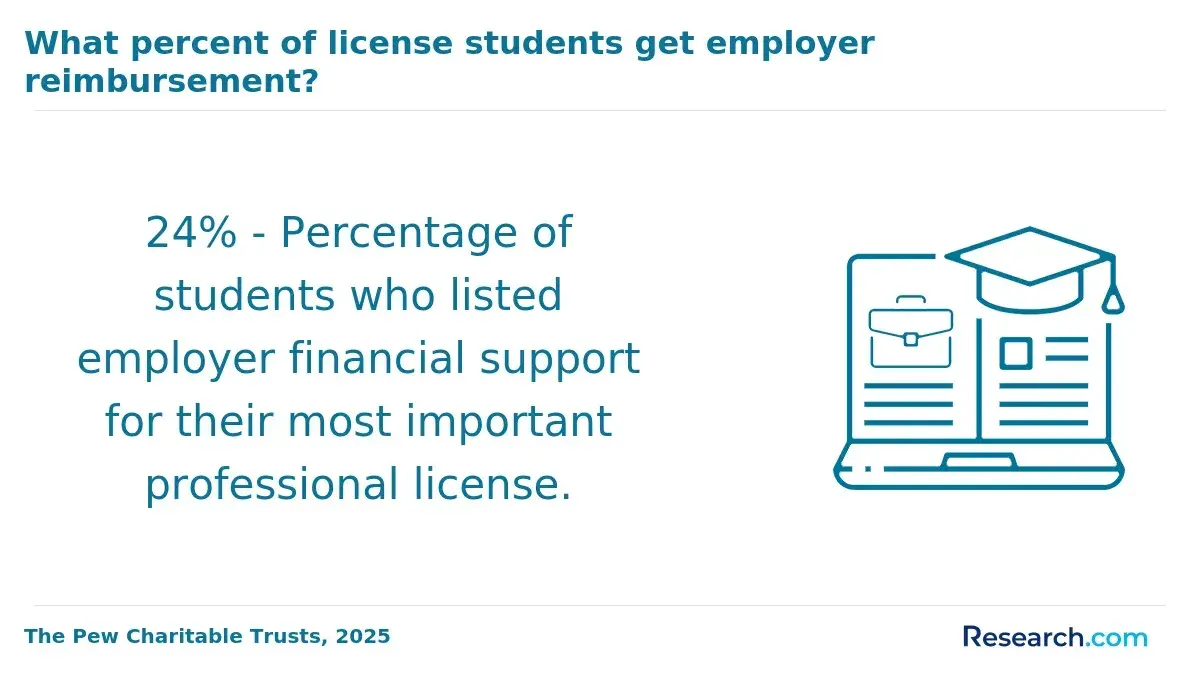
- Ask whether students using employer reimbursement may defer part of the balance instead of enrolling in the standard plan.
For nurses who may eventually pursue research, policy, or academic roles, compare degree purpose as carefully as financing: PhD programs for nurses generally involve a much longer academic commitment than a patient-safety master's program.
Can monthly tuition plans make paying for Patient Safety & Quality degrees more attainable?
Monthly plans can make a degree more attainable when the student has predictable income and can pay the full term balance over a short period without borrowing. They are especially useful for employed clinicians, quality coordinators, risk-management staff, and healthcare administrators whose employer benefits or household income arrive monthly rather than in a lump sum.
A plan improves timing, not affordability by itself. If a $6,000 remaining term balance is divided into four payments, the student still needs $1,500 plus any plan fee on each due date. That may be manageable for one learner and unsustainable for another, even though both face the same total bill.
Monthly installments tend to fit best when the following conditions are true.
- Your after-tax monthly cash flow can cover the installment while leaving room for housing, food, transportation, insurance, and emergencies.
- Your employer reimbursement is confirmed and its payment date falls before or close to the school's installment dates.
- You have already applied for grants, scholarships, and federal aid for which you are eligible, reducing the balance placed on the plan.
- The plan is interest-free and the enrollment fee is lower than the cost of alternative short-term borrowing.
Paying upfront may be preferable when you have adequate savings, receive an early-payment discount, or would otherwise face recurring late fees. A federal Direct Loan may be more appropriate when the remaining balance cannot realistically be repaid within one term, though borrowing increases long-term repayment obligations and interest costs.
Students exploring a nursing entry pathway should also compare the clinical-placement and scheduling demands of an ASN program online with the primarily quality-improvement focus of many Patient Safety & Quality degrees.
Does monthly payment plans have an effect on the overall cost of Patient Safety & Quality degrees?
Monthly payment plans can increase the overall cost if the school charges an enrollment fee, a finance charge, or penalties for late or returned payments. Many institutional plans are designed as interest-free installment arrangements, but "interest-free" does not mean "fee-free." Read the agreement for the exact amount due and the conditions that trigger additional charges.
The comparison below separates short-term cash-flow planning from longer-term borrowing. It is important because the least expensive option depends on both the plan's fees and your ability to make every payment on time.
| Option | Likely total-cost effect | Best fit | Main trade-off |
| Pay tuition by the original due date | Usually avoids payment-plan fees | Students with sufficient savings or confirmed employer payment | Requires a larger upfront outlay |
| School monthly payment plan | May add an enrollment fee and late or returned-payment charges | Students able to clear the balance within the school's short plan period | Missed payments can create registration or account holds |
| Federal student loan, if eligible | Interest and potential loan fees can raise repayment cost | Students needing a longer repayment timeline | Debt may continue after the program ends |
| Employer tuition reimbursement | Can reduce personal cost when eligibility conditions are met | Employees with written benefits and manageable reimbursement timing | May require grades, continued employment, or upfront payment first |
Common mistakes include selecting the longest available plan without adding fees, assuming autopay prevents overdrafts, and using a credit card to cover installments without comparing card interest. Keep a copy of the agreement and calculate the full plan cost before enrolling.
Do monthly payment plans affect your financial aid eligibility for Patient Safety & Quality programs?
Enrolling in a school payment plan does not usually reduce federal financial-aid eligibility by itself. Financial aid eligibility is determined through the FAFSA, institutional policies, enrollment status, satisfactory academic progress, cost of attendance, and other applicable requirements. The payment plan generally begins after the school applies disbursed aid to eligible charges.
The important timing issue is that accepted aid is not always disbursed immediately. If loans, grants, or scholarships are pending, ask whether the school will temporarily reduce the amount due under the plan or require you to make installments until the funds arrive.
Before selecting a plan, take these steps to prevent a billing surprise.
- Review your financial-aid offer and confirm which awards you accepted.
- Ask the financial-aid office when each accepted award is expected to disburse.
- Ask student accounts whether pending aid is deducted before the installment amount is set.
- Confirm how a dropped course, reduced enrollment, withdrawal, or returned aid would change the unpaid balance.
Federal aid rules and institutional packaging policies can change, so rely on your school's written award notice and payment agreement rather than a verbal estimate. A payment plan also does not replace filing the FAFSA when you may qualify for aid.
Is there a deposit required before starting Patient Safety & Quality monthly payment plans?
Schools may require a program enrollment deposit, an initial down payment toward the term balance, a payment-plan enrollment fee, or all three. These are separate charges: an admissions deposit may reserve a place in the program, while a plan down payment reduces the balance being divided into installments.
There is no standard U.S. deposit amount for Patient Safety & Quality programs. The required amount may be a fixed charge or a percentage of the outstanding balance, and some institutions waive or credit an admissions deposit under specific conditions. Request written confirmation of whether every payment is refundable, nonrefundable, or applied to tuition.
Ask admissions and student accounts these direct questions before paying anything.
- Is there an admissions deposit, and is it credited to tuition?
- Does the payment plan require a down payment at enrollment?
- What are the separate charges for plan enrollment, tuition, technology, and student services?
- If I withdraw before classes begin, which amounts are refundable and on what schedule?
A low first payment is not automatically a better deal. It can mean larger later installments, so review every due date rather than focusing only on the initial amount.
Are there fees not covered by monthly tuition payment plans for Patient Safety & Quality programs?
A plan may cover tuition and selected institutional fees but exclude application fees, deposits, course materials, books, testing costs, technology purchases, graduation charges, travel, or optional services. Some schools also require separate payment for health insurance or course-specific expenses.
This table identifies common charges to compare against the school's plan agreement and your program cost sheet. The exact categories vary by institution.
| Charge category | Often included in a tuition plan? | What to verify |
| Tuition | Usually | Whether all online-course tuition is included |
| Mandatory institutional fees | Sometimes | Technology, distance-learning, student-service, and registration fees |
| Admissions or enrollment deposit | Often no | Due date, refundability, and whether it is credited to tuition |
| Books, software, and supplies | Often no | Required platforms, textbooks, and professional materials |
| Plan enrollment and late fees | No; these are plan charges | Enrollment fee, late fee, returned-payment fee, and finance charge |
| Graduation or commencement charges | Sometimes no | Whether the charge appears in the final term bill |
For a broader healthcare education comparison, online registered dietitian programs may have different practicum, supervised-experience, and program-fee patterns that should be budgeted separately.
What should you look for in payment plan terms for Patient Safety & Quality programs?
The most useful payment-plan agreement answers four questions clearly: how much you owe, when each payment is due, what the plan costs, and what happens if your circumstances change. Compare the agreement for your exact academic term, because schools may use different plans for fall, spring, summer, quarters, and accelerated online sessions.
Use this checklist when comparing two programs or clarifying an offer with student accounts.
- Confirm the total balance eligible for the plan after accepted financial aid and known employer benefits.
- Count the installments and record each due date, including whether the first payment is due immediately.
- Identify every charge: plan enrollment fee, finance charge, late fee, returned-payment fee, and reinstatement fee.
- Ask whether automatic payments are required and whether the payment method has separate processing charges.
- Read the missed-payment policy, including account holds, course access, registration restrictions, and collection procedures.
- Check the withdrawal and refund policy, especially how an adjusted balance is handled after you leave or reduce courses.
- Request written confirmation that your online program and enrollment level are eligible for the plan.
Red flags include vague wording about "additional charges," no published missed-payment policy, a plan that extends beyond the program term without clear financing disclosures, or staff who cannot state whether pending aid changes the installment amount. Keep emails, estimates, and the final agreement in one place.
How do you know if online Patient Safety & Quality degrees with monthly payments are right for you?
A monthly plan is a good fit when you have a clear career reason for studying patient safety and quality, a program that matches your educational background, and dependable cash flow to meet every short-term installment. These degrees can suit nurses, allied-health professionals, healthcare administrators, and quality or risk professionals seeking stronger skills in safety systems, measurement, improvement methods, and leadership.
Do not choose a program solely because it offers monthly payments. First confirm accreditation or institutional authorization as appropriate, curriculum relevance, faculty expertise, online course format, expected completion timeline, admission requirements, and whether the credential supports your intended employer role.
Requirements for regulated clinical work vary by state and employer; a quality degree does not automatically create a new professional license. Use this final decision framework before enrolling.
| If this describes you | Monthly payments may be a fit when | Consider another approach when |
| You work full time in healthcare | Income is stable and installment dates align with pay cycles | Variable shifts, commissions, or overtime make missed payments likely |
| You receive employer support | Reimbursement terms are documented and you can bridge any timing gap | Benefits require you to pay tuition before reimbursement and you lack short-term cash reserves |
| You need federal aid | Pending and disbursed aid are accurately reflected in the plan balance | You have not completed aid steps or cannot manage a balance if aid changes |
| You are comparing accelerated programs | You can afford larger payments over a shorter session | A compressed billing calendar would strain your budget |
| You have savings available | The plan fee is worth the convenience of retaining liquidity | Paying on time upfront costs less and leaves an adequate emergency fund |
Choose the degree first, then the payment method. If the plan requires you to rely on high-interest credit cards, skip essential bills, or assume uncertain reimbursement, pause and discuss lower course loads, aid options, employer support, or a later start term with the school.
Other Things You Should Know About Patient Safety & Quality
Often, yes, if the school allows part-time online graduate students to enroll in its plan. The minimum balance requirement and available installment count may differ from those for full-time students, so confirm the policy for your course load.
Many quality and patient-safety programs emphasize applied projects, case studies, data analysis, or workplace improvement initiatives rather than traditional clinical rotations. Requirements vary, and some programs may expect access to a healthcare setting for project work.
Some employers provide direct billing, vouchers, or third-party sponsorship, while others reimburse employees after successful course completion. Ask both the employer and school whether direct billing is available and whether it changes your payment-plan balance.
The degree can strengthen relevant knowledge, but employers may also expect clinical experience, quality-improvement work, data skills, or familiarity with healthcare regulations. Review job postings in your target setting before selecting a curriculum.
References
- What Is a Tuition Payment Plan and How Can You Benefit from One? | NC Assist Loans https://www.ncassist.org/paying-for-college-101/blog/tuition-payment-plan/
- Online Undergraduate Certificate in Healthcare Quality and Patient Safety | CSU Global | Accredited https://csuglobal.edu/academic-programs/undergraduate-certificates/undergraduate-certificate-healthcare-quality-and-patient-safety
- Domain 5: Quality and Safety https://www.aacnnursing.org/essentials/tool-kit/domains-concepts/quality-and-safety
- How to Take Advantage of College Tuition Payment Plans Today https://www.edumed.org/financial-aid/tuition-payment-plans/
- Top 15 Online Healthcare Quality and Patient Safety Master's Programs 2020 - Healthcare Management Degree Guide https://www.healthcare-management-degree.net/best/online-masters-healthcare-quality-patient-safety/
- What is a Tuition Payment Plan? | University of Phoenix https://www.phoenix.edu/blog/how-to-make-a-college-tuition-payment-plan.html
- Online Master's in Patient Safety and Healthcare Quality Programs https://www.mhaonline.com/programs/masters-in-patient-safety-healthcare-quality
- Data Sources for Post-Graduation Outcomes https://www.airweb.org/article/2021/09/30/data-sources-for-post-graduation-outcomes
- Why Tuition Payment Plans Help Students Stay Enrolled - Campus Commerce https://campuscommerce.com/blog-why-tuition-payment-plans-help-students-stay-enrolled/
- Online Master's in Patient Safety and Healthcare Quality (PSHQ) Programs https://www.onlineeducation.com/healthcare/masters-in-patient-safety-healthcare-quality-programs


