2027 Online Information Technology Management Doctorate Programs with Practicum, Internship, Clinical, or Fieldwork Requirements

Co-Founder and Chief Data Scientist
Choosing an online information technology management doctorate can be complex when the program includes required in-person or supervised experience. The stakes are high: the U.S. Bureau of Labor Statistics lists computer and information systems managers at a median pay of $169,510, with projected job growth of 17% for 2023 to 2033.
This guide is for working IT professionals comparing doctoral options, especially applied programs with field projects, practicums, internships, or clinical-style placements. You will learn how these requirements affect cost, time, location, accreditation, and career value before you enroll.
The presence of in-person or supervised experiences can significantly impact the overall program's cost, time, and location, making it essential to consider these factors when choosing a program.
Key Things You Should Know
- Most online information technology management doctorates do not use traditional "clinical" rotations; hands-on requirements are more often applied research projects, consulting practicums, residencies, internships, or workplace-based fieldwork tied to a dissertation or doctoral capstone.
- Experiential requirements can improve leadership, research, and implementation skills, but they may add travel, supervisor approval, unpaid work hours, site paperwork, and placement delays that are not always visible in advertised tuition.
- The strongest labor-market case is for senior technology leadership: BLS data published in 2024 projects 17% growth for computer and information systems managers from 2023 to 2033, but a doctorate is most valuable when it aligns with executive, consulting, academic, or specialized technology governance goals.
Which Online Information Technology Management Doctorate Programs Require Practicum, Internship, Clinical, or Fieldwork Experience?
Online information technology management doctorates vary widely because the field sits between business leadership, applied computing, cybersecurity, data governance, and organizational strategy. The programs most likely to include supervised experience are professional doctorates such as a DBA in information systems, Doctor of Information Technology, Doctor of Computer Science, Doctor of Technology, or applied PhD tracks with an organization-based research component.
Traditional campus-style clinical placements are uncommon in IT management. When schools use the terms practicum, internship, fieldwork, or clinical, they usually mean structured professional application rather than patient-care clinical work. A healthcare informatics or health IT doctorate may involve clinical-adjacent environments, but the requirement is usually about technology implementation, compliance, analytics, or workflow improvement rather than clinical licensure.
The table below summarizes the main online doctorate formats that may include hands-on or supervised requirements. Use it to identify which program type matches your career goal before comparing individual schools.
| Program type | Common experiential requirement | Best fit | Important caution |
| Doctor of Information Technology or Doctor of IT Management | Applied project, practicum, consulting engagement, or organization-based capstone | Senior IT managers, architects, CIO-track professionals, technology consultants | Students may need an approved employer, client organization, or project site |
| DBA in Information Systems, IT Management, or Technology Management | Applied business research project, residency, consulting-style field project, or executive practicum | Technology leaders focused on strategy, governance, operations, and digital transformation | Some programs are "online" but require residencies or synchronous project milestones |
| PhD in Information Systems or Technology Management | Research assistantship, dissertation research site, teaching practicum, or limited residency | Future faculty, researchers, policy analysts, and advanced technical strategists | Research expectations may be heavier than professional fieldwork |
| Cybersecurity management doctorate | Security audit project, risk assessment practicum, incident-response simulation, or industry-based capstone | Security directors, governance professionals, risk leaders, and cyber consultants | Some sites require background checks, clearance eligibility, or employer permission |
| Health informatics or health IT leadership doctorate | Clinical-site technology project, compliance fieldwork, informatics practicum, or workflow implementation project | Health IT leaders, informatics managers, EHR implementation professionals | Site access may depend on healthcare privacy rules, state requirements, and supervisor credentials |
Students who are still building their technical foundation may want to compare doctoral paths with earlier-stage options first. For example, a cybersecurity degree online may be a more practical step if the immediate goal is to move into security operations, risk analysis, or technical leadership before pursuing doctoral-level management work.
What Are the Practicum, Internship, Clinical, and Fieldwork Requirements for Online Information Technology Management Doctorates?
The terms practicum, internship, clinical, and fieldwork are not interchangeable. In IT management doctorates, they describe different levels of supervision, workplace involvement, and professional application. Understanding the difference helps you avoid enrolling in a program that sounds flexible online but requires more in-person time than your schedule allows.
The comparison below explains how each requirement usually works in an information technology management doctorate. Schools may use the same terms differently, so always confirm definitions in the catalog, doctoral handbook, and enrollment agreement.
| Requirement | What it usually means in IT management | Typical evidence of completion | Level of location sensitivity |
| Practicum | A supervised application of doctoral coursework to a real or simulated technology-management problem | Supervisor evaluation, project report, reflective analysis, presentation, or portfolio | Moderate; may be completed at an employer, approved organization, or virtual project site |
| Internship | A structured professional role or project with defined responsibilities, often outside the student's normal job | Hour log, learning contract, site-supervisor evaluation, and faculty review | High if the school requires an external site or daytime availability |
| Clinical | In IT, usually an informatics or health-technology placement in a healthcare environment rather than direct patient care | Compliance documents, site approval, supervisor sign-off, and project deliverable | High; healthcare sites may impose privacy training, immunization, background check, or access rules |
| Fieldwork | Workplace-based research, data collection, consulting, implementation, evaluation, or leadership observation | Research approvals, field notes, interviews, implementation evidence, and dissertation or capstone chapters | Variable; can be local, employer-based, hybrid, or remote depending on the project |
For many students, the most important distinction is whether the requirement is tied to credit hours, clock hours, competencies, or a deliverable. A 3-credit practicum may not tell you how many evenings, weekends, meetings, site visits, or supervisor check-ins you must complete.
Before applying, ask the school for written answers to these requirement-specific questions. They will help you estimate whether the hands-on component is realistic alongside work and family obligations.
- What exact term does the program use: practicum, internship, clinical, fieldwork, residency, applied project, or capstone?
- How many clock hours, credit hours, site visits, or project milestones are required?
- Can the requirement be completed through your current employer, consulting clients, or a virtual organization?
- Who approves the site, supervisor, learning contract, project scope, and final deliverable?
- What happens if the site cancels, the supervisor leaves, or access to data is denied?
How Do Online Information Technology Management Doctorate Programs Arrange Practicum and Clinical Placements?
Placement arrangements can make or break an online doctorate. Some schools actively help students identify and approve practicum sites, while others expect doctoral students to use their professional networks to create an approved project. The difference affects risk, timeline, and stress.
Online IT management programs generally use one of four placement models. The table below shows how each model affects student responsibility and what to verify before enrolling.
| Placement model | How it works | Student responsibility | Best question to ask |
| School-arranged placement | The university identifies or assigns approved sites, sometimes within partner networks | Complete onboarding, meet eligibility rules, and follow site schedules | Is placement guaranteed in my state or region? |
| Student-secured, school-approved placement | The student finds a site, but the program must approve the organization, supervisor, and project | Contact sites, negotiate access, submit paperwork, and maintain communication | What percentage of recent students had to find their own sites? |
| Employer-based fieldwork | The student completes a project through their current employer or professional role | Secure employer permission, avoid conflicts of interest, and meet research ethics rules | Can my direct supervisor serve as the site supervisor? |
| Virtual or simulation-supported practicum | The program uses remote consulting, case-based projects, labs, simulations, or virtual teams | Meet online collaboration, documentation, and faculty assessment requirements | Will virtual work satisfy all experiential requirements, or only part of them? |
A common mistake is assuming that "online" means the school will solve every placement challenge. In doctoral IT management programs, students are often experienced professionals, so schools may expect them to bring an organizational problem, employer partnership, or project sponsor. That can be an advantage if you already work in IT leadership, but a major barrier if your employer will not allow research, data collection, or supervisor participation.
Clinical-style placements in health IT or cybersecurity-sensitive environments may add another approval layer. Healthcare organizations, government contractors, and financial institutions may require background checks, confidentiality agreements, information security training, or restrictions on what data can be used in a dissertation or capstone.
Many students can complete fieldwork near home, but it depends on the program's authorization, the student's state, the type of site, and whether qualified supervision is available. Local completion is most feasible when the program permits employer-based projects, remote consulting work, or community-based technology management research.
Local placement becomes harder when the program requires a specific type of organization, a faculty-approved supervisor with doctoral or senior professional credentials, access to sensitive systems, or scheduled on-site hours during business days. State authorization can also matter because some online programs limit field placements in states where the institution is not approved to conduct supervised educational activity.
Use the following process before assuming you can complete fieldwork near home. These steps are especially important for students in rural areas, military families, frequent travelers, and professionals whose employers restrict outside research.
- Ask the program for a list of states where it currently allows practicum, internship, clinical, or fieldwork activity.
- Request the site-approval criteria, including supervisor credentials, organizational requirements, insurance expectations, and documentation deadlines.
- Confirm whether your current employer can serve as a site and whether your normal job duties can count toward the requirement.
- Identify at least one backup site in case your preferred employer, client, or agency cannot approve the project.
- Ask current students or alumni whether local placements were completed on time and what obstacles they encountered.
The biggest red flag is vague placement language. If admissions staff say students "usually find something local" but cannot provide a written policy, site-approval timeline, or escalation process, treat the requirement as a potential delay risk.
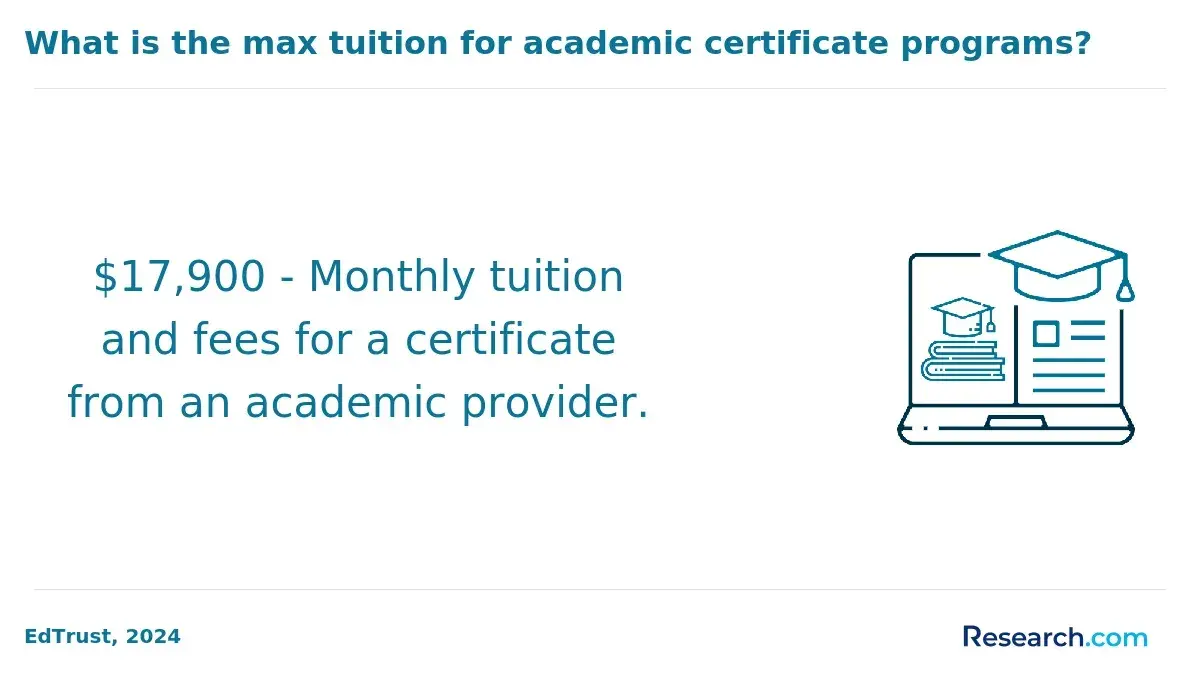
Experiential requirements can add value, but they can also change the real cost of an online doctorate. Advertised tuition rarely captures travel, hotel stays for residencies, parking, background checks, professional liability coverage, software, conference presentations, unpaid practicum hours, or extra terms caused by placement delays.
Graduate education is already a major financial commitment. NCES data released in 2024 shows that average graduate tuition and required fees were higher at private nonprofit institutions than at public institutions in the 2022-23 academic year, which means students should compare total program cost rather than assuming all online doctoral programs have similar pricing.
The table below summarizes common cost and timeline variables that experiential requirements can create. It is designed to help you build a realistic budget before choosing a program.
| Cost or timeline factor | Why it matters | How to verify it |
| Extra academic terms | Placement approval, research review, or site delays can push completion into another billing period | Ask for the average time to complete the practicum and dissertation or capstone phase |
| Travel and residency costs | Some online doctorates require campus intensives, presentations, or in-person project meetings | Request all residency dates, required locations, and estimated out-of-pocket costs |
| Unpaid field hours | Working professionals may need to reduce paid work or use leave time to complete supervised activities | Ask whether fieldwork can be scheduled during evenings, weekends, or normal work duties |
| Compliance and onboarding | Clinical-adjacent or secure sites may require background checks, privacy training, drug screening, or access credentials | Ask which costs are paid by the student and which are included in tuition or fees |
| Technology and data access | Applied research may require analytics tools, secure storage, survey software, or organizational approvals | Confirm which tools the university provides and whether employer data may be used |
Students comparing long-term education costs may also want to look at lower-cost technical preparation before doctoral study. A cheapest online computer science degree pathway can be useful for learners who need stronger computing fundamentals before committing to a doctorate with fieldwork and applied research expectations.
Timeline impact is not only about the number of required hours. A 100-hour practicum can be easier to finish than a smaller project if the site is ready, the supervisor is responsive, and the deliverables are clear. Conversely, a dissertation-based field project can take months longer if organizational data approval, human-subjects review, or executive sponsorship becomes difficult.
Flexibility depends less on the online course format and more on how the experiential component is governed. A program can offer asynchronous classes but still require fixed residency dates, daytime site meetings, synchronous supervision, or employer-approved research activities.
The most flexible programs usually allow students to connect fieldwork to their existing professional role, choose an approved local organization, or complete applied projects through remote collaboration. The least flexible programs require specific site types, fixed in-person sessions, external internships, or synchronous supervision that conflicts with full-time employment.
When evaluating flexibility, look beyond marketing language. The following features show whether the program is truly designed for working professionals.
- Written policies allowing employer-based or local fieldwork, not just informal advisor approval
- Clear alternatives if a student cannot use their workplace as a project site
- Multiple start dates for practicum or internship courses rather than one annual placement cycle
- Evening, weekend, or asynchronous supervision options when the site permits them
- Transparent limits on states, countries, regulated industries, and clinical-adjacent environments
- A documented process for changing sites if the original supervisor, project, or employer becomes unavailable
A practical test is to map the requirement onto a real calendar. If the program cannot tell you when site paperwork is due, how often you must meet with a supervisor, and whether fieldwork can overlap with dissertation milestones, the "flexible online" label may not be enough for your situation.
Accreditation and licensure are separate issues. Institutional accreditation confirms that a college or university meets recognized academic quality standards. Programmatic or professional accreditation may matter in fields such as business, computing, cybersecurity, health informatics, or education technology, depending on the degree title and career goal. Licensure, when relevant, is controlled by state boards or specialized professional bodies, not by the fact that a program is online.
Most information technology management careers do not require a state license. However, fieldwork can matter when the doctorate overlaps with regulated or credential-sensitive areas such as health informatics, educational leadership, public-sector security, or certain consulting roles. In those cases, an internship or practicum may support professional readiness, but it may not automatically satisfy a licensing board, employer credential, or government-contract requirement.
Students should verify three layers of approval before enrolling. This is especially important if the program includes clinical-adjacent settings, out-of-state placements, or work with protected organizational data.
- Confirm institutional accreditation through a recognized accreditor and verify that the program title matches the credential you need.
- Ask whether any programmatic accreditation applies to the degree, such as business, computing, cybersecurity, or health informatics accreditation.
- If your target role involves licensure, clearance, public-sector eligibility, or a regulated setting, contact the relevant board or employer before assuming the fieldwork will count.
Accreditation also affects transfer credit, employer tuition assistance, faculty hiring, and federal financial aid eligibility. A low-cost or highly flexible doctorate can become a poor investment if it lacks the recognition required by your employer, target university, or professional sector.
Support quality varies widely. Strong programs treat fieldwork as a structured academic experience with faculty oversight, site approval, research guidance, and escalation support. Weak programs leave students to interpret requirements on their own, which can cause avoidable delays.
High-quality support is usually visible before enrollment. Ask for the doctoral handbook, practicum manual, dissertation or capstone timeline, and sample site agreement. If the school will not share these documents until after admission, ask for a written summary of the policies that affect placement approval and completion.
Look for these support services when comparing programs with experiential requirements. Each one reduces a specific risk that can affect completion.
- Dedicated practicum, internship, or fieldwork coordinator who explains approval steps and deadlines
- Faculty mentor with expertise in IT management, cybersecurity, analytics, enterprise systems, or the student's applied research area
- Templates for learning contracts, supervisor evaluations, site agreements, project proposals, and final reports
- Research ethics support for interviews, surveys, organizational data, human-subjects review, and confidentiality concerns
- Career services or alumni networks that can help students identify project sponsors, consulting opportunities, or leadership mentors
- Clear appeal or backup procedures if a site withdraws, a supervisor becomes unavailable, or a project is no longer feasible
For technical fields, support should also include access to software, digital libraries, data tools, and secure research practices. Doctoral students often need to analyze organizational systems, evaluate technology adoption, or assess cybersecurity governance, so academic support must go beyond general writing help.
Practicum and fieldwork requirements can strengthen career outcomes when they produce evidence of advanced leadership, research, and implementation ability. For IT management professionals, the most useful experiential projects are those that solve real organizational problems: cloud migration governance, cybersecurity risk reduction, enterprise architecture alignment, AI policy development, data governance, IT service transformation, or digital operations improvement.
Labor-market demand supports the value of advanced technology leadership, but it does not mean every student needs a doctorate. BLS data published in 2024 projects much faster-than-average growth for computer and information systems managers from 2023 to 2033, reflecting continued demand for leaders who can manage security, infrastructure, software, analytics, and digital transformation.
A doctorate may be most relevant when the student wants to move beyond implementation into executive strategy, consulting, teaching, research, or complex organizational change.
Experiential doctoral work can help graduates build a portfolio that is more concrete than coursework alone. The value is strongest when the practicum or field project leads to deliverables that employers can understand, such as a governance framework, risk assessment, implementation plan, analytics evaluation, technology adoption model, or measurable process improvement.
Students interested in cybersecurity leadership should compare doctoral fieldwork expectations with shorter professional training options as well. A focused cyber security course may be more efficient for immediate skill validation, while a doctorate may fit long-term goals in executive leadership, research, consulting, or higher education.
Fieldwork is less valuable when it is disconnected from the student's target role. For example, a generic internship may not help an experienced IT director as much as an employer-based doctoral project tied to AI governance, vendor risk, data strategy, or enterprise security. The best programs help students translate field experiences into interview stories, leadership artifacts, conference proposals, publications, and executive-level project evidence.
How Should Students Choose an Online Information Technology Management Doctorate With Experiential Requirements?
The right program is not simply the one with the lowest tuition or the shortest advertised timeline. It is the one you can complete realistically while gaining experience that supports your target role. Start with your career goal, then work backward to the degree type, fieldwork model, accreditation, cost, and schedule.
Use this decision process before applying. It can help you separate a well-supported online doctorate from one that shifts too much placement risk to the student.
- Define your goal: CIO-track leadership, consulting, cybersecurity governance, academic teaching, applied research, health IT leadership, or technology policy.
- Choose the degree type that fits that goal, such as a DBA, Doctor of IT, Doctor of Computer Science, Doctor of Technology, or PhD.
- Request the exact experiential requirement in writing, including hours, credits, deliverables, site rules, residency expectations, and supervision requirements.
- Confirm whether you can complete the requirement near home, through your employer, remotely, or through a school-arranged site.
- Calculate total cost using tuition, fees, travel, lost work time, compliance costs, software, dissertation continuation fees, and possible extra terms.
- Verify accreditation, state authorization, transfer-credit limits, faculty expertise, and whether the degree is recognized by your employer or target sector.
- Ask for completion data or at least a realistic range for time to finish the coursework, experiential phase, and dissertation or capstone.
Admissions requirements often include a master's degree, professional experience, transcripts, resume, statement of purpose, recommendations, and sometimes writing samples or evidence of leadership experience. Some programs accept students with a bachelor's degree into longer doctoral pathways, but working professionals should compare the added time and cost carefully.
Students who need a faster technical credential before doctoral study may want to compare an accelerated computer science degree online with doctoral admissions expectations. This can be useful if your background is stronger in business management than computing and you need to strengthen your technical credibility first.
The best candidates for an online IT management doctorate with experiential requirements are experienced professionals who can access real organizational problems, secure supervisor support, and use doctoral work to advance a clear career plan. Students should be cautious if they need a fully remote program, lack employer support, cannot travel, or are unsure whether a doctorate is necessary for their next role.
Before making a final decision, watch for these common mistakes. Avoiding them can save time, money, and frustration.
- Assuming an online doctorate has no in-person, residency, or supervised site requirements
- Confusing a practicum with an internship, clinical placement, dissertation project, or field study
- Choosing a program before confirming state authorization and geographic placement restrictions
- Underestimating unpaid hours, travel costs, supervisor paperwork, and extra academic terms
- Assuming your current workplace will automatically approve research, data use, or field supervision
- Ignoring accreditation, employer recognition, and whether the doctorate supports your specific career goal
Other Things You Should Know About Information Technology Management
Many programs prefer or require a master's degree in IT, information systems, cybersecurity, business, computer science, or a related field. Some admit bachelor's-prepared students into longer tracks, but those pathways usually require more credits and a larger time commitment.
A DBA usually fits professionals who want to apply research to business and technology leadership problems. A PhD is usually better for students who want deeper research training, academic careers, or theory-focused scholarship. The better choice depends on your career target, not the title alone.
Many programs require either a dissertation or a doctoral capstone. A dissertation is usually more research-intensive, while a capstone is often more applied and organization-focused. Some professional doctorates use applied research projects that combine elements of both.
Sometimes. Programs may accept graduate transfer credits, previous doctoral coursework, or credits from a relevant master's degree, but limits vary by school. Transfer credit rarely removes dissertation, capstone, residency, or required experiential components.
- Best Online PhD Programs for Working Professionals in the USA https://www.euroamerican.eu/best-online-phd-programs-usa-for-working-professionals
- Information Technology, Bachelor's Degree https://www.metropolia.fi/en/study-at-metropolia/bachelors-degrees/information-technology
- Practicum vs. Internship in Counseling Programs: What’s the Difference? https://www.nec.edu/news/practicum-vs-internship-counseling-programs
- Ph.D. in Information Technology https://www.ucumberlands.edu/academics/executive/phd-information-technology
- 1-2 Year Doctoral Programs Online: Top Schools & More https://www.phds.me/online-programs/one-year-doctoral-programs/
- The Importance of Internships: Gaining Practical Experience Before Graduation https://www.alliedonesource.com/the-importance-of-internships-gaining-practical-experience-before-graduation
- How internships, career-connected learning experiences prepare students for success - TGR Foundation https://tgrfoundation.org/newsroom/internships-career-connected-learning-experiences-equip-students-success/
- Five Steps for a Successful Doctoral Internship and Beyond! - National Register https://www.nationalregister.org/five-steps-for-a-successful-doctoral-internship-and-beyond/
- Can you get a PhD in one year? - Swiss School of Business Research https://ssbr-edu.ch/can-you-get-a-phd-in-one-year/
- Development and Assessment of a Sustainable PhD ... https://elifesciences.org/reviewed-preprints/91011