2027 Online Humanities Degree Programs With No Application Fee and Rolling Admissions

Co-Founder and Chief Data Scientist
Choosing an online humanities degree is not just about finding a school that lets you apply for free. It is about comparing flexibility, total cost, accreditation, transfer credit, and career value before you enroll. NCES reported that about 54% of postsecondary students took at least one distance education course in fall 2022, showing how mainstream online study has become. This guide is for adults, transfer students, and first-time applicants who want flexible admissions without overlooking affordability or program quality.
Key Things You Should Know
- No application fee usually saves only the school's application charge; it does not prove the degree is affordable, especially when College Board's 2024 data lists average published tuition and fees at $11,610 for in-state public four-year colleges and $43,350 for private nonprofit four-year colleges.
- Rolling admissions can help students start sooner, but it does not mean there are no deadlines; financial aid, transfer evaluation, course registration, and cohort start dates may close before the admission window does.
- Humanities graduates often pursue writing, communications, education, public service, museum, nonprofit, and graduate-study pathways; BLS May 2024 data lists the median wage for media and communication occupations at $66,320, but outcomes vary by role, experience, location, and added skills.
Which Online Humanities Degree Programs Have No Application Fee and Rolling Admissions?
Online humanities degrees typically cover fields such as English, history, philosophy, communication, liberal arts, cultural studies, religious studies, and interdisciplinary humanities. The most useful no-fee, rolling-admission options are usually offered by institutions that serve adult learners, transfer students, military students, or year-round online cohorts.
The table below summarizes examples of online humanities or humanities-adjacent bachelor's programs that commonly advertise no application fee and flexible or rolling admissions. Policies can change, so students should verify the fee status, start date, and program availability directly with the admissions office before applying.
| Institution | Example online humanities-related options | Application-fee position to verify | Admissions timing to verify | Best fit |
| Southern New Hampshire University | BA in English, BA in History, BA in Communication, BA in Liberal Arts | No application fee commonly advertised for online programs | Multiple online terms with rolling-style review | Students who want frequent start dates and broad transfer-credit evaluation |
| American Public University | BA in English, BA in History, BA in Humanities, BA in Religion and Philosophy | No application fee commonly advertised | Monthly course starts and continuous online enrollment cycles | Military-affiliated students, adult learners, and students seeking a wide humanities catalog |
| Purdue Global | BS in Communication, BS in Liberal Studies, professional studies options | No application fee commonly advertised | Multiple start dates with rolling-style online admissions | Career-focused students who want applied humanities and communication pathways |
| National University | BA in English, BA in History, BA in Strategic Communications, interdisciplinary liberal arts options | No application fee is commonly promoted for many applicants | Frequent monthly or year-round starts in many online programs | Working adults who want shorter course blocks and flexible scheduling |
| University of Arizona Global Campus | BA in Liberal Arts, BA in Communication Studies, humanities-adjacent general education pathways | No application fee commonly advertised | Frequent online starts with rolling-style admissions | Students seeking broad liberal arts study with continuous enrollment options |
| Columbia College | BA in English, BA in History, BA in Humanities, general studies options | No application fee is commonly advertised for many applicants | Multiple sessions per year and flexible admission review | Transfer students who want online and campus-supported options from one institution |
A no-fee application is most valuable when it lets you compare several legitimate programs without spending money before you know your transfer credits, financial aid package, or exact time to completion. It is less valuable if the school's tuition, required fees, low transfer acceptance, or limited course availability make the degree more expensive overall.
How Does Rolling Admission Work for Online Humanities Degree Programs?
Rolling admission means a school reviews applications as they arrive instead of waiting for one fixed deadline. In online humanities programs, this often pairs with several start dates per year, shorter academic terms, and year-round admission advising.
Rolling admission is flexible, but it is not the same as instant admission or guaranteed admission. A program may keep accepting applications while individual term starts, scholarship deadlines, transcript-evaluation windows, and class sections still have earlier cutoffs.
Students should understand the difference between rolling admissions and fixed-deadline admissions before deciding how quickly to apply. The comparison below shows how each model affects planning.
| Feature | Rolling admissions | Fixed-deadline admissions | What it means for students |
| Application review | Applications reviewed as received | Applications reviewed after a set deadline or in rounds | Rolling review can provide faster decisions, especially for complete applications |
| Start dates | Often several per year | Often one or two main starts per year | Rolling programs may help students avoid waiting a full semester or year |
| Financial aid timing | May still have priority dates | Usually tied to institutional deadlines | Students should not assume aid deadlines roll with admission deadlines |
| Course availability | May vary by term | Often planned around traditional semesters | A later admission decision may limit first-term course choices |
| Competitiveness | Seats may fill gradually | Applicants compared within one pool | Applying early can improve planning, even when admission remains open |
The biggest mistake is assuming rolling admissions means you can wait indefinitely. A better strategy is to work backward from your preferred start date and allow time for transcripts, transfer-credit review, financial aid processing, and orientation.
How Much Can Students Save by Choosing an Online Humanities Degree With No Application Fee?
A no-application-fee policy can reduce upfront costs, especially if you are applying to several programs to compare transfer credits and aid packages. However, the savings are usually small compared with tuition, technology fees, course materials, graduation fees, and the cost of credits that do not transfer.
The practical way to evaluate savings is to separate pre-enrollment costs from total degree costs. A waived application fee helps at the search stage, but it should not outweigh tuition per credit, accepted transfer credits, and net price after grants or scholarships.
Use this framework to estimate whether the no-fee feature is financially meaningful for your situation:
- List every school you are seriously considering and note whether the application fee is currently $0, waived by code, or charged after admission.
- Estimate the application-fee savings only against schools you would realistically apply to; do not count savings from programs you would not choose anyway.
- Request a transfer-credit estimate before enrolling, because losing even one three-credit course can cost far more than an application fee.
- Compare tuition, mandatory fees, textbooks, technology requirements, and graduation fees before treating a no-fee application as a cost advantage.
- Review the aid offer and expected borrowing, not just the advertised tuition rate.
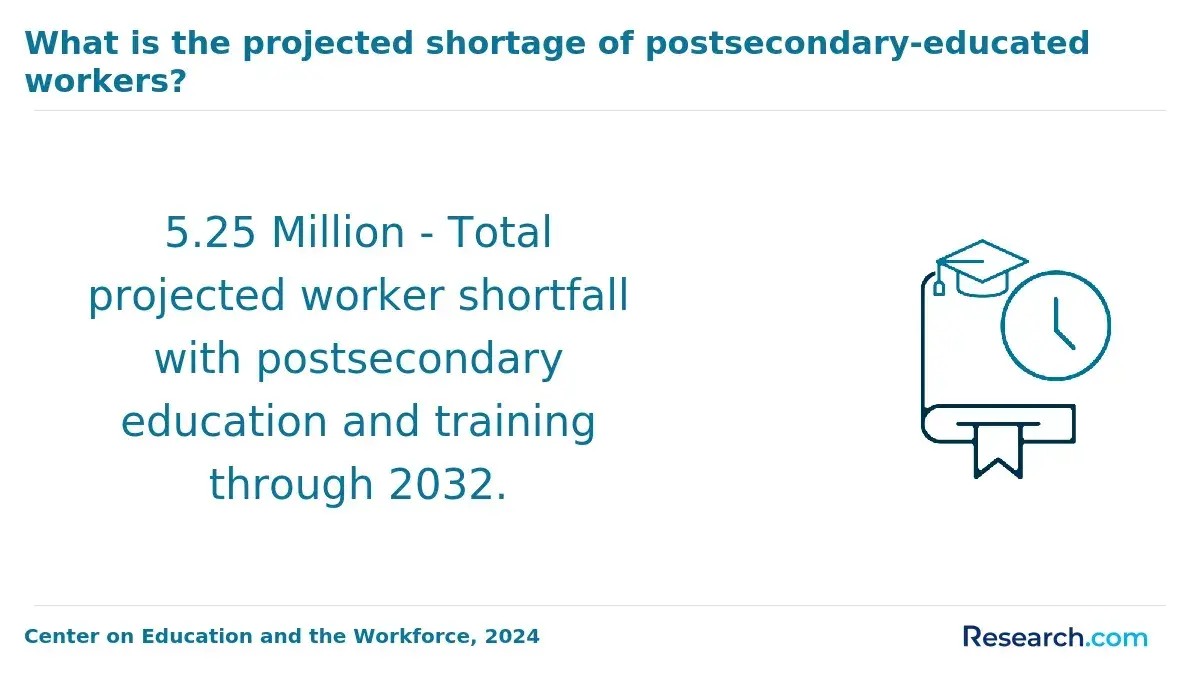
College Board's 2024 Trends in College Pricing data shows why this distinction matters: average published tuition and fees for public four-year in-state students were $11,610 for one academic year, while private nonprofit four-year institutions averaged $43,350. Against costs at that scale, an application-fee waiver is useful but rarely decisive.
If your main concern is affordability, compare no-fee humanities programs alongside broader lists of affordable online bachelor degree programs. A program with a modest application fee may still be cheaper overall if it has lower tuition, better transfer-credit acceptance, or stronger institutional aid.
Most online bachelor's programs in humanities fields use general undergraduate admission requirements rather than portfolio-based or lab-based prerequisites. Requirements vary by institution, but adult-friendly online programs often focus on academic history, transfer readiness, and proof of high school completion or college credit.
The table below shows common requirements and how they affect the application timeline. This helps students identify what to prepare before submitting a rolling-admission application.
| Requirement | Common expectation | Why it matters |
| Online application | Basic personal, academic, and program information | Even when the fee is waived, incomplete applications can delay review |
| Official transcripts | High school, GED, and all prior college transcripts as applicable | Transfer-credit decisions and admission eligibility depend on official records |
| Minimum GPA | Varies by school and applicant type | Some programs admit conditionally if prior grades are below the standard threshold |
| Personal statement | Sometimes optional, sometimes required | Can explain academic gaps, career goals, or reasons for studying humanities |
| Recommendations | Often not required for broad-access online bachelor's programs | May be requested for selective programs, scholarships, or graduate-level study |
| English proficiency | Required for some applicants educated outside English-language institutions | Policies vary, so students should confirm acceptable tests or waiver options |
| Transfer-credit evaluation | Usually completed after transcripts are received | Can change total cost and time to completion more than the application fee itself |
Students should also check whether the program has synchronous class meetings, proctored exams, residency requirements, internship expectations, or required capstone courses. These details may not appear in the application checklist, but they affect whether the program fits a working adult's schedule.
The best time to apply is earlier than the school's final admission cutoff. A strong timeline gives you time to collect transcripts, compare transfer-credit results, review financial aid, complete orientation, and register for the courses you actually need.
For most students, the application timeline should be based on the desired start date rather than the fact that admissions are rolling. The steps below show a practical sequence.
- Eight to twelve weeks before your desired start date, identify programs that offer your humanities concentration, preferred online format, and a no-fee or fee-waived application.
- Six to eight weeks before the start date, request official transcripts from every prior institution, including colleges where you completed only one course.
- Four to six weeks before the start date, submit applications and ask each school how long transfer-credit evaluation usually takes.
- Three to four weeks before the start date, compare admission decisions, transfer-credit awards, tuition estimates, and financial aid status.
- Two to three weeks before the start date, complete enrollment steps only after confirming course availability and your first-term schedule.
Applying early can also help if a program's first-term writing, research, or general education courses fill quickly. Humanities degrees often rely on course sequencing, so missing a required introductory course may delay advanced classes even if admission itself is still open.
Many online humanities bachelor's programs are accessible, but a stronger application can still improve your chances of regular admission, scholarship consideration, transfer-credit clarity, or placement into the right course level. This is especially important for students with academic gaps, low prior grades, or credits from multiple institutions.
Focus on evidence that shows readiness for reading-intensive, writing-intensive, and discussion-based coursework. Humanities programs value clear communication, analytical thinking, research habits, and intellectual curiosity.
Applicants can strengthen their materials by taking the following steps:
- Submit all transcripts, not just the ones with strong grades, because undisclosed college attendance can delay or complicate admission.
- Use the personal statement to explain why the humanities major fits your career, graduate-school, or personal-development goals.
- Highlight writing, editing, research, teaching, public service, nonprofit, communications, or cultural work experience if the application allows it.
- Ask whether prior learning assessment, military credit, CLEP exams, or portfolio credit can reduce the number of credits needed.
- Review a recent writing sample before submitting optional materials, especially if you plan to major in English, history, philosophy, or communication.
- Contact admissions before applying if your GPA is below the published standard, because conditional admission or academic-success pathways may be available.
Students exploring humanities because they want long-term career flexibility may also want to compare the field with other best degrees for the future. That comparison can clarify whether a humanities degree, a communications-focused major, or a more technical program best supports your goals.
Yes, a no-application-fee online humanities program can be fully legitimate and institutionally accredited. The absence of an application fee is usually an enrollment policy or recruitment strategy, not a sign of weak academic quality by itself.
Accreditation should be checked separately from admissions convenience. In the United States, students should confirm that the institution is accredited by an agency recognized by the U.S. Department of Education or the Council for Higher Education Accreditation. Institutional accreditation matters because it affects federal financial aid eligibility, transfer credit, graduate-school recognition, and employer confidence.
Students should watch for red flags that have little to do with the application fee itself. These warning signs are more important than whether applying is free:
- The school is unclear about institutional accreditation or uses language that sounds official but cannot be verified through recognized accreditor databases.
- The program promises unusually fast completion without explaining transfer credits, course load, prior learning assessment, or academic requirements.
- Admissions staff pressure you to enroll before you receive a financial aid estimate or transfer-credit evaluation.
- The program advertises humanities career outcomes as guaranteed rather than describing possible pathways and typical roles.
- The school will not provide a full tuition and fee schedule before enrollment.
- Online courses require residency, synchronous attendance, or technology commitments that were not clear during the application stage.
Humanities degrees generally do not lead directly to state licensure in the way that nursing, teaching, counseling, or social work programs may. However, students who plan to become teachers, counselors, librarians, attorneys, or licensed professionals should confirm the additional graduate degree, certification, examination, or state requirements connected to that career path.
Financial aid and total cost can vary widely among no-fee online humanities programs. The most important comparison is not "free application versus paid application," but net cost after transfer credits, grants, scholarships, employer tuition assistance, military benefits, and required fees.
Use the cost categories below to compare programs on the same basis. The table is designed to help students identify cost items that may not be visible in a school's headline tuition rate.
| Cost or aid factor | What to compare | Why it can change the real price |
| Tuition per credit | Online rate, in-state rate, out-of-state rate, and military or employer-partner rate | Humanities bachelor's degrees usually require around 120 credits, so small per-credit differences compound |
| Accepted transfer credits | Maximum transfer allowance and how prior courses apply to major, general education, and electives | Credits that transfer only as electives may not shorten the degree as much as expected |
| Mandatory fees | Technology, student services, graduation, transcript, proctoring, and course fees | A school with lower tuition may still have recurring fees that raise the total cost |
| Books and materials | Open educational resources, digital books, library access, and course material fees | Humanities programs are reading-heavy, so material policies affect term-by-term affordability |
| Financial aid timing | FAFSA processing, school priority dates, scholarship deadlines, and satisfactory academic progress rules | Rolling admission does not always extend aid or scholarship deadlines |
| Time to completion | Term length, course load, course sequencing, and year-round availability | Finishing sooner can reduce opportunity costs, but overload can hurt academic performance |
College Board's 2024 national averages show that institutional type strongly affects sticker price, but sticker price is not the same as net price. Students should compare aid offers and remaining out-of-pocket cost before assuming that a public, private nonprofit, or private for-profit institution is automatically the best value.
If a humanities degree is part of a longer academic plan, total-cost thinking becomes even more important. For example, students considering graduate routes in counseling, leadership, or family services may later compare options such as an online masters in mental health counseling, so minimizing unnecessary undergraduate debt can preserve flexibility for future study.
No-fee, rolling-admission online humanities degrees are most useful for students who need flexibility before they can make a confident enrollment decision. The strongest fit is usually a student who wants to compare programs, start soon, and avoid paying application costs before seeing transfer-credit and financial aid results.
These programs may be especially helpful for the following students:
- Working adults who cannot wait for one annual application deadline and need several possible start dates.
- Transfer students who want to apply to multiple schools and compare how many credits each institution accepts.
- Military-affiliated students who may need monthly or frequent starts because of relocation, deployment, or benefit timing.
- Students returning after a stop-out period who want admission support and flexible pacing.
- Applicants still deciding among humanities concentrations such as English, history, communication, liberal arts, or philosophy.
- Cost-conscious students who want to reduce upfront search costs while comparing net price.
These programs are not the best fit for everyone. Students should be cautious if they are choosing a program only because the application is free, if they need a highly specialized research track, or if they plan to pursue a licensed career that requires a specific undergraduate major or prerequisite sequence.
Humanities can also serve as a foundation for graduate study in education, leadership, counseling-adjacent administration, nonprofit management, law, or public service. Students who already know they want a later leadership-focused credential may eventually compare options such as a doctorate in leadership online, making undergraduate accreditation and cost control especially important.
How Should Students Choose Among No-Fee Online Humanities Degree Programs?
The best program is the one that fits your academic goal, budget, schedule, and next career step after you look beyond the free application. A no-fee application should make comparison easier, not replace careful evaluation.
Use a short decision process to avoid common mistakes and compare programs fairly:
- Confirm the program is institutionally accredited and that the exact online degree is active for the term you want.
- Verify in writing that the application fee is currently waived or not charged, because fee policies and promo codes can change.
- Ask whether admissions are truly rolling or whether there are priority cutoffs for the next start date.
- Request a transfer-credit estimate before committing, especially if you have credits from community college, military training, exams, or previous universities.
- Compare total estimated cost after grants, scholarships, employer benefits, and accepted transfer credits.
- Review the curriculum for writing, research, digital communication, internship, capstone, or portfolio opportunities that support your career goals.
- Check whether courses are asynchronous, synchronous, hybrid, self-paced, or cohort-based so the schedule matches your work and family obligations.
- Ask career services how humanities students build job-ready experience through writing samples, internships, alumni networks, digital portfolios, or graduate-school advising.
When comparing return on investment, look for features that build transferable skills: advanced writing, research methods, data-informed communication, digital publishing, public speaking, cultural analysis, project management, and ethical reasoning. These skills can support roles in communications, education support, publishing, public service, nonprofit work, marketing, policy support, and graduate-study pathways.
Students who are still weighing humanities against helping-profession pathways should compare degree requirements early. For example, counseling and therapy careers often require specialized graduate training, so researching options such as accelerated MFT programs online can help you decide whether a humanities bachelor's degree is the right first step or whether another undergraduate path would be more direct.
Other Things You Should Know About Humanities
Humanities fields study human culture, ideas, language, history, values, texts, and creative expression. Social sciences study human behavior and society using methods often drawn from psychology, sociology, economics, political science, anthropology, or data analysis. Some majors, such as communication or cultural studies, can overlap.
It can, especially if the program is accredited and includes strong writing, research, theory, and capstone work. Students planning graduate study should choose courses that match future prerequisites and ask advisors about writing samples, faculty recommendations, and research preparation.
Yes. Digital communication, research databases, content management systems, presentation tools, basic data literacy, and AI-aware writing practices are increasingly useful. Pairing humanities study with practical technology skills can make the degree more adaptable across communications, education, nonprofit, and business roles.
It depends on the goal. A humanities major may fit students who want deep reading, writing, cultural, historical, or ethical analysis. A humanities minor can complement business, technology, health, education, or social science majors by strengthening communication and critical-thinking skills.
- Free Study Abroad: Complete List of Countries with No Tuition Fees for International Students - Spain Internship https://spain-internship.com/blog/list-country-free-study-abroad/
- Full-time, part-time, online - which study mode is right for you? https://www.studentspace.pl/en/blog/post/studia-stacjonarne-zaoczne-wieczorowe---ktory-tryb-wybrac
- Humanities Degree: Careers, Jobs, and What You Can Really Do with It - CIS University https://www.cis-spain.com/en/blog/humanities-degree-careers-jobs-and-what-you-can-really-do-with-it/
- Admissions https://en.ehuniversity.lt/admissions/
- Best Accredited Online Universities in 2025 https://www.study.eu/article/best-accredited-online-universities
- What Are the Best Career Paths After a Humanities Degree? https://www.wiranking.com/post/what-are-the-best-career-paths-after-a-humanities-degree
- Universities in USA Without Application Fee (2026 Guide) https://northcypruseducation.com/blog/universities-in-usa-without-application-fee-study-abroad-without-application-fee/
- Admissions for international candidates - SWPS University https://english.swps.pl/programs/apply/application-for-international-candidates
- 10 Universities with Full Funding & No Application Fees for International Students (Part 1) https://williamlebeau.com/blog/no-application-fee-full-scholarships-international-students-part-1
- Grad Schools with No Application Fees https://www.onlinemastersdegrees.org/best-programs/no-application-fees/