2027 Online Fire Science Degree Programs With No Letters of Recommendation Required

Co-Founder and Chief Data Scientist
Applicants who lack recent academic or professional references can still find online Fire Science degree options with streamlined admissions. "No letters required" means recommendations are not part of the standard application; it does not mean transcripts, minimum GPA rules, or other screening disappear.
This guide helps future firefighters, fire inspectors, emergency-services professionals, and working adults compare legitimate programs. The U.S. Bureau of Labor Statistics reported a $59,530 median annual wage for firefighters in May 2024, underscoring the value of choosing a program that fits a specific public-safety career goal.
Key Things You Should Know
- Some online associate and bachelor's Fire Science programs list no recommendation letters among their standard admissions documents, but applicants commonly still submit an application, official transcripts, and proof of high school completion or prior college coursework.
- Institutional accreditation is the essential legitimacy check; for career preparation, also compare curriculum against National Fire Academy, NFPA, state fire-service, and local employer expectations rather than treating streamlined admissions as a quality signal.
- Cost and completion time vary more by institution type, residency, transfer credit, and course load than by recommendation-letter policy; firefighters had a May 2024 median annual wage of $59,530 according to the U.S. Bureau of Labor Statistics, but a degree alone does not qualify a person for every fire-service role.
Which Online Fire Science Degree Programs Require No Letters of Recommendation?
Online Fire Science programs are commonly offered as certificates, associate degrees, bachelor's completion degrees, and, less often, master's degrees in fire administration or emergency services. Recommendation requirements are set by each institution and can change by degree level, applicant type, and term. Undergraduate programs with open or transfer-friendly admissions are more likely to omit letters than selective graduate programs.
Rather than relying on a directory label, review the current application checklist for the exact online program. The comparison below shows the types of programs where applicants are most likely to encounter a standard no-recommendation policy.
| Program type | Typical applicant | Likelihood of letters in standard admission | Common replacement requirements |
| Career certificate | Entry-level learner or incumbent firefighter | Often not required | Application, identification, placement steps, prerequisite review |
| Associate degree | New college student or public-safety employee | Often not required | High school transcript or GED, application, placement or prerequisite courses |
| Bachelor's completion degree | Student with prior college or fire-service credits | Often not required | College transcripts, transfer evaluation, minimum GPA, sometimes resume |
| Master's degree | Experienced fire, emergency-management, or public-safety professional | Varies substantially | Bachelor's transcript, resume, statement, professional experience, and sometimes letters |
"No letters of recommendation required" is different from "letters optional" or "letters waived." Optional letters may still strengthen an application, while a waiver may apply only to alumni, employees, or applicants above a stated GPA. Ask admissions staff to confirm that no letters are required for your program, degree level, entry term, and applicant category before paying an application fee.
Students who are also weighing a shorter credential path can review quick degree programs, but should confirm that any alternative credential supports the fire-service position they want.
What Are the Admission Requirements for Online Fire Science Degree Programs With No Recommendation Letters?
A no-recommendation application is usually document-based rather than reference-based. Schools use academic records and eligibility information to determine whether an applicant can begin general education and Fire Science coursework. Requirements differ between first-year, transfer, military-affiliated, and graduate applicants.
The following materials are commonly requested even when letters are not.
- Completed institutional application and any required application fee or fee-waiver request.
- Official high school transcript, GED record, or college transcripts, depending on the degree level and transfer status.
- Minimum GPA review, particularly for bachelor's completion and graduate programs.
- Proof of prerequisite completion for courses such as English composition, college algebra, emergency medical training, or fire-service coursework when applicable.
- Residency information for tuition classification and financial-aid eligibility.
- A resume, personal statement, or employment verification when the program serves working public-safety professionals.
Standardized tests are not universally required. Many undergraduate institutions use placement measures or prior coursework instead of SAT or ACT scores, while some graduate programs may not require the GRE but can still request a statement and professional resume. Read the requirements page and the graduate catalog, because the general university application page may not show program-specific conditions.
A practical application sequence is to request transcripts first, compare them with prerequisite requirements, then submit the application only after confirming whether your intended term has rolling, priority, or fixed deadlines. Do not assume that online delivery means year-round starts or immediate entry.
Are Online Fire Science Programs With No Letters of Recommendation Easier to Get Into?
Not necessarily. Removing recommendations reduces one administrative barrier, especially for applicants who have been out of school or cannot easily contact former supervisors. It does not indicate that a program has lower academic standards, automatic admission, or a weaker curriculum.
Admissions difficulty depends on the institution's enrollment policy, available seats, degree level, GPA threshold, prerequisite rules, transfer-credit review, and whether applicants must already hold fire-service credentials. A bachelor's completion program may be accessible to qualified transfer students but still require substantial prior credit. A graduate fire administration program may omit letters while closely reviewing leadership experience and undergraduate performance.
The labor market also should not be confused with admissions selectivity. The Bureau of Labor Statistics projects 4% employment growth for firefighters from 2023 to 2033. That national projection is useful context for career planning, but local hiring, civil-service examinations, physical ability tests, EMT credentials, and academy standards can be more important than an online degree for an entry-level firefighter job.
Applicants should avoid choosing solely for the fewest documents. A simpler application can be a good fit for an experienced firefighter seeking promotion-related education, but it is less useful if the curriculum does not match local department requirements or a desired specialty such as fire inspection, prevention, investigation, or emergency management.
What Do Online Fire Science Programs Evaluate Instead of Letters of Recommendation?
When recommendations are not required, admissions offices generally rely on direct evidence of academic readiness and professional preparation. This approach can benefit applicants with substantial field experience but limited access to recent faculty references, while still allowing the school to evaluate whether the applicant meets program standards.
This table explains what common materials can demonstrate during review. Requirements are examples, not guarantees that every school will request each item.
| Application material | What it may show | Most common use |
| Official transcript | Prior coursework, grades, degree completion, and prerequisite eligibility | All degree levels |
| Minimum GPA | Baseline academic performance | Transfer, bachelor's, and graduate admissions |
| Personal statement | Career goals, readiness for online learning, and reasons for pursuing Fire Science | Some bachelor's and graduate programs |
| Resume or employment history | Fire-service, EMS, military, safety, or leadership experience | Professional and graduate-oriented programs |
| Certification documentation | Relevant training or qualifications that may support placement or credit review | Programs serving incumbent personnel |
A strong application should make the connection between prior experience and the degree clear without overstating credentials. Use a resume that identifies roles, dates, training, leadership duties, and relevant certifications; use a statement to explain career direction and capacity for online coursework. Never submit unofficial claims in place of documentation when a school requests official records.
Career changers considering fields beyond public safety may also compare an administrative assistant associate degree to understand how admissions and occupational preparation differ across online associate programs.
How Can You Tell if an Online Fire Science Degree With No Recommendation Requirement Is Accredited and Legitimate?
The absence of recommendation letters has no bearing on accreditation. A legitimate degree should be issued by an institution recognized by an accreditor accepted by the U.S. Department of Education or the Council for Higher Education Accreditation. Institutional accreditation matters for transfer credit, federal aid eligibility, employer confidence, and graduate-school planning.
Use the following checks before enrolling. They help distinguish a streamlined application from an insufficiently transparent program.
- Confirm the institution's accreditation status through official federal or accreditor records and compare the listed institutional name with the name on the application.
- Read the online program's curriculum, course descriptions, faculty information, academic calendar, and student-support policies.
- Ask whether the degree is designed for entry-level learners, working firefighters, or transfer students and whether practical requirements can be met in your location.
- Verify that the institution can enroll students in your state and ask whether any state-specific disclosures apply.
- Compare the curriculum with the expectations of your target employer, state fire marshal office, certification body, or promotion policy.
- Request a written explanation of total tuition, required fees, transfer-credit rules, and the current recommendation-letter policy.
Be cautious if a school cannot clearly identify its accreditor, pressures you to enroll before providing a catalog, promises credit for experience without a formal evaluation, or claims the degree alone makes you eligible for a public-safety license or job. Firefighter hiring and fire inspector requirements are commonly controlled by local or state agencies, so institutional accreditation does not replace occupational credentials.
For students exploring broad interdisciplinary options alongside Fire Science, lists of the most affordable online interdisciplinary studies programs can provide a useful cost-comparison starting point, but each program's accreditation and career alignment still require separate verification.
How Much Do Online Fire Science Degree Programs With No Letters of Recommendation Cost?
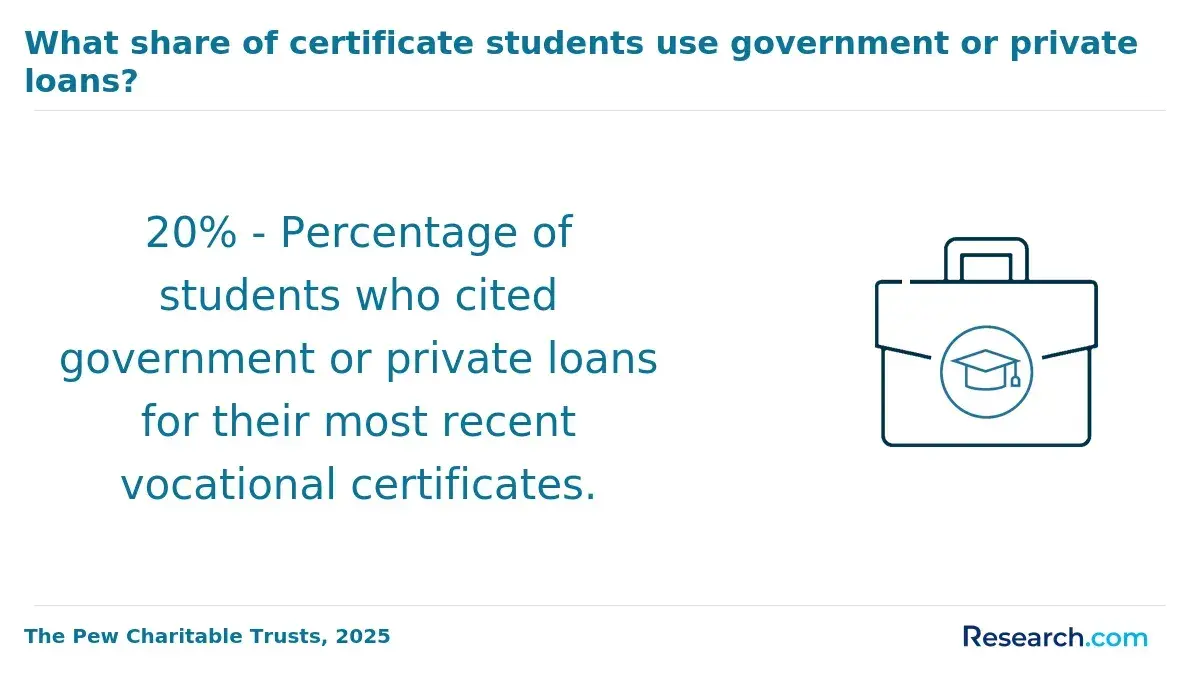
No-recommendation admissions do not create a standard price. Tuition can differ sharply by public versus private institution, in-state or out-of-state status, degree level, number of transferred credits, course fees, and whether an online program charges a flat per-credit rate. Compare the full published cost of attendance rather than only one course's tuition.
For context, the College Board reported average published tuition and fees of $4,050 for public two-year in-district students in the 2024-25 academic year. That national benchmark is not a Fire Science program price and excludes expenses such as books, technology, transportation, and living costs, but it illustrates why community-college associate routes can be worth comparing against four-year options.
The cost categories below are the ones applicants should request in writing before deciding.
- Tuition per credit or per term and the number of credits required after transfer evaluation.
- Mandatory institutional, online-learning, technology, graduation, and proctoring fees.
- Course materials, digital access codes, uniforms, lab supplies, and travel costs for any practical component.
- Whether active-duty military members, veterans, public-safety employees, or in-state residents receive a separate tuition rate.
- Expected cost changes if a student drops below full-time enrollment or repeats a course.
Use net price, not admissions convenience, as the primary financial comparison. A lower tuition rate may be outweighed by fewer accepted transfer credits, while a higher rate may be manageable if employer assistance, military benefits, or aid reduces the actual amount paid.
Can You Get Financial Aid for an Online Fire Science Degree With Streamlined Admissions?
Yes, online enrollment and no-recommendation admissions do not by themselves prevent financial aid. Eligibility depends on the institution, program, student status, satisfactory academic progress, and federal or state rules. Students should submit the Free Application for Federal Student Aid as early as practical and ask the financial-aid office whether the exact online program is eligible for institutional, federal, state, or workforce funding.
Federal Student Aid reported that the maximum Pell Grant for the 2024-25 award year was $7,395. The amount an individual student may receive depends on financial need, enrollment intensity, cost of attendance, and other eligibility criteria; it should not be treated as a guaranteed award or as coverage for an entire degree.
In addition to grants and loans, firefighters and public-safety employees may have access to employer tuition assistance, union education benefits, state workforce support, veterans' education benefits, or department-sponsored professional development. Ask whether aid can be used for asynchronous online terms, summer sessions, and repeated courses, since those details can affect a completion plan.
Before accepting loans, compare the expected borrowing amount with your career plan and local promotion requirements. Students considering human-services alternatives can also examine an accelerated master's program social work, recognizing that graduate professional programs typically have different licensing, field-placement, and aid considerations.
How Long Does an Online Fire Science Degree With No Letters of Recommendation Take to Complete?
Completion time is determined by credits required, transfer credits accepted, course availability, pacing, and whether students attend part time. Recommendation-letter policy affects the application process, not the academic length of the degree.
An associate degree commonly requires about two years of full-time study when starting without transferable credits. A traditional bachelor's degree commonly follows a four-year full-time sequence, while a bachelor's completion program may take less time for students who enter with a substantial block of approved credits. A master's program may take one to two years or longer depending on its credit total and pace.
Online courses can offer flexibility for shift workers, but flexibility is not the same as self-paced completion. Confirm whether courses follow fixed eight-, 12-, or 16-week terms; whether group projects or live sessions are required; and whether field, laboratory, or proctored assessments have scheduling rules. Firefighters working rotating shifts should build a course plan around expected overtime and department obligations.
Accelerated formats can reduce calendar time only when students can sustain the workload and have enough transfer credit. Students should avoid overloading a term simply to finish sooner, particularly if doing so risks GPA, financial-aid eligibility, or success in required technical coursework.
Can You Transfer Credits Into an Online Fire Science Degree Program With No Recommendation Letters?
Many online Fire Science programs accept transfer credit, but each institution decides what will apply toward general education, major courses, electives, and residency requirements. A no-recommendation policy does not guarantee generous transfer treatment. Formal evaluation of official transcripts remains essential.
Potential sources of credit may include regionally or institutionally accredited college coursework, military learning evaluated under school policy, approved prior-learning assessments, and documented fire-service training. Some schools may award credit for recognized professional learning, but policies vary and credit is never automatic.
Before enrolling, request a preliminary transfer review and ask for the result in writing. The most useful questions are whether courses satisfy major requirements, how long transferred coursework remains valid, whether a grade minimum applies, how many credits must be completed through the school, and whether certifications can count as credit or only as placement evidence.
Transfer planning matters most for working professionals. A degree that appears inexpensive per credit can cost more and take longer if it accepts fewer credits than a competing program. Keep copies of course syllabi, training records, certification documents, and military transcripts because they may help an evaluator determine equivalency.
If your interests are shifting from public safety toward clinical social services, an MSW degree has a separate admissions and licensure pathway that should be evaluated independently of a Fire Science transfer plan.
How Should You Compare Online Fire Science Degree Programs That Do Not Require Letters of Recommendation?
Compare programs on career fit and verifiable quality first, then on application simplicity. Fire Science degrees can support advancement in fire prevention, inspection, administration, emergency management, occupational safety, or related public-safety work. They may complement, but do not replace, fire academy training, EMT certification, physical testing, background checks, or jurisdiction-specific hiring requirements.
This comparison framework helps applicants evaluate two or three realistic options without assuming that the fastest application is the best choice.
| Comparison factor | What to verify | Why it matters |
| Admission policy | Whether letters are truly not required for your degree, term, and applicant type | Prevents late application delays |
| Accreditation | Recognized institutional accreditation and transparent institutional information | Supports aid, transfer, and employer confidence |
| Curriculum | Courses in prevention, building codes, investigation, administration, emergency management, or safety | Aligns learning with the intended role |
| Online format | Live-session expectations, course terms, exams, practical components, and student support | Determines compatibility with work schedules |
| Total cost | Tuition, fees, books, transfer credits, and likely net price after aid | Shows the actual financial trade-off |
| Career relevance | Local employer, department-promotion, state, and certification expectations | Reduces the risk of earning an unneeded credential |
After narrowing the list, contact each admissions office with the same short set of questions: Are recommendations required in any circumstance? Which transcripts are needed? What credits will transfer? What is the complete program cost? Are there in-person requirements? Can you send the answers and current catalog link in writing?
The best fit is usually a properly accredited program whose curriculum, schedule, transfer policy, and total cost support a clearly defined goal. Applicants who only need a promotion credential may prioritize transfer credit and department alignment; new entrants should prioritize foundational coursework and local entry-level hiring requirements.
Other Things You Should Know About Fire Science
Usually, yes. No-recommendation policies can be especially helpful for adult learners without recent faculty contacts. You may still need official transcripts, a GED or high school record, and placement or prerequisite documentation. Ask whether older coursework is accepted and whether professional experience affects placement.
Not always. Some associate and bachelor's programs accept students without fire-service employment, while others are designed as degree-completion options for firefighters or emergency-services personnel. Review prerequisites and confirm whether the program includes practical training or focuses primarily on academic and administrative knowledge.
A degree may strengthen knowledge and support long-term advancement, but it usually does not by itself satisfy local firefighter hiring requirements. Departments may require an academy, EMT credential, physical ability testing, examinations, background screening, and other state or local qualifications.
Check the current program application checklist, graduate or undergraduate catalog, and online admissions page. Then contact admissions and ask for written confirmation for your intended degree, start term, and applicant type. Save the response with your application records in case requirements change or are applied differently.
References
- Letters of Recommendation https://www.admissions.caltech.edu/apply/first-year-applicants/letters-of-recommendation
- KC online Fire Science degree program named best in Texas, No. 3 in nation - Kilgore College https://www.kilgore.edu/news_and_events/kc-online-fire-science-degree-program-named-best-in-texas-no-3-in-nation/
- Firefighters Enrolled in Fire Science Courses https://www.hhloans.com/types-of-financial-aid/firefighters-enrolled-in-fire-science-courses/
- Fire Science Degree | Fire Science Schools & Colleges https://www.firescience.org/fire-science-degrees-and-programs/
- Best Online Fire Science Degrees https://www.onlineu.com/degrees/fire-science
- Letters of Recommendation for College Applications: Who Will Sing Your Praises? - Career Vision https://careervision.org/letters-recommendation-college-application-sing-praises/
- Online Associate in Fire Science | AcademicEarth.org https://academicearth.org/associate-in-fire-science/
- Cal State Apply Program Materials https://help.liaisonedu.com/Cal_State_Apply_Applicant_Help_Center/Filling_Out_Your_Cal_State_Apply_Application/Cal_State_Apply_Program_Materials/Cal_State_Apply_Program_Materials
- Does the Letter of Recommendation Still Matter in College Admissions? https://www.saraharberson.com/blog/letter-of-recommendation-still-matter-college-admissions