
2027 Online Educational & Teacher Leadership Master's Programs Under $20,000: Total Tuition and Required Fees

Co-Founder and Chief Data Scientist
An advertised online master's price can be misleading when graduation fees, technology charges, and extra credits push the final bill above $20,000. The U.S. Bureau of Labor Statistics reports a $104,070 median annual wage for elementary, middle, and high school principals in 2024, making careful program selection especially important for professionals pursuing leadership roles.
This guide is for current teachers, aspiring instructional leaders, and education professionals comparing affordable online educational and teacher leadership degrees. Learn how to calculate total cost, verify quality, and choose a program aligned with your goals.
Key Things You Should Know
- A program is genuinely under $20,000 only when tuition, mandatory institutional fees, required course charges, and graduation costs remain below that threshold, not when tuition alone does.
- Most educational leadership master's programs require roughly 30 to 36 credits, so a $500 per-credit rate produces $15,000 for 30 credits but $18,000 for 36 credits before required fees.
- Affordability matters, but accreditation, state principal-licensure alignment, practicum requirements, and schedule flexibility determine whether a lower-priced degree supports the role you want.
How Much Does an Online Educational & Teacher Leadership Master's Degree Under $20,000 Cost in Total?
An online educational and teacher leadership master's degree under $20,000 should be evaluated as a total program price: all required tuition and institutionally mandated charges through graduation.
Programs may use titles such as Master of Education in Educational Leadership, Teacher Leadership, Instructional Leadership, or Curriculum and Instruction with a leadership concentration. They can prepare teachers for curriculum leadership, coaching, department leadership, instructional coordination, or, where state-approved, for principal licensure.
The comparison below shows how the same under-$20,000 target can produce very different value depending on credits, fees, and career alignment. Confirm every figure with the institution before applying because tuition schedules and fees can change by term.
| Cost pattern | Example calculation | Estimated tuition before required fees | Best fit |
| Lower per-credit, 30-credit program | 30 credits × $450 | $13,500 | Students seeking teacher leadership or curriculum roles without an added licensure pathway |
| Moderate per-credit, 36-credit program | 36 credits × $500 | $18,000 | Students who need a broader leadership curriculum and can keep required fees low |
| Flat-rate program | Published program charge | Varies by institution | Students who want budget certainty and expect to follow the standard sequence |
| Higher-credit licensure-aligned program | Credits × published rate plus fieldwork costs | May exceed $20,000 | Aspiring principals where state approval and licensure preparation outweigh the price ceiling |
A low tuition total is not automatically the best choice. A $19,500 program with a state-approved internship structure, relevant leadership coursework, and strong advising may be more useful than a $14,000 program that does not meet the requirements for your target position.
Students exploring broader academic pathways can also compare the best value online interdisciplinary studies degrees when they want flexibility beyond school leadership.
What Required Fees Can Increase the Cost of an Online Educational & Teacher Leadership Master's Degree Beyond $20,000?
Required fees are charges a student must pay to enroll, take required courses, use necessary systems, complete fieldwork, or graduate. They differ from optional expenses such as upgraded equipment, commuting, or voluntary campus services. A school can accurately advertise low tuition while still requiring fees that materially change the amount you pay.
Before treating a program as under $20,000, ask the admissions or student accounts office for a written estimate covering the items below. This protects against comparing a tuition-only figure with another school's all-in estimate.
- Application, enrollment, matriculation, or orientation fees
- Per-term technology, distance-learning, student-service, or instructional-support fees
- Course-specific charges for assessments, proctoring, software, or online materials
- Practicum, internship, background-check, fingerprinting, or liability-insurance costs when required
- Graduation, degree-audit, transcript, and commencement fees
Ask whether each fee is charged once, per course, per credit, or per semester. Per-term fees create a trade-off: taking fewer courses each term can make an online program easier to manage while increasing the number of terms billed. Also distinguish school-required costs from state licensing expenses, which are usually paid separately and vary by state.
A common mistake is subtracting a scholarship from advertised tuition and assuming the program will remain under the limit. First calculate the full required institutional price; then treat grants, employer aid, and scholarships as potential reductions rather than guaranteed components of the program's cost.
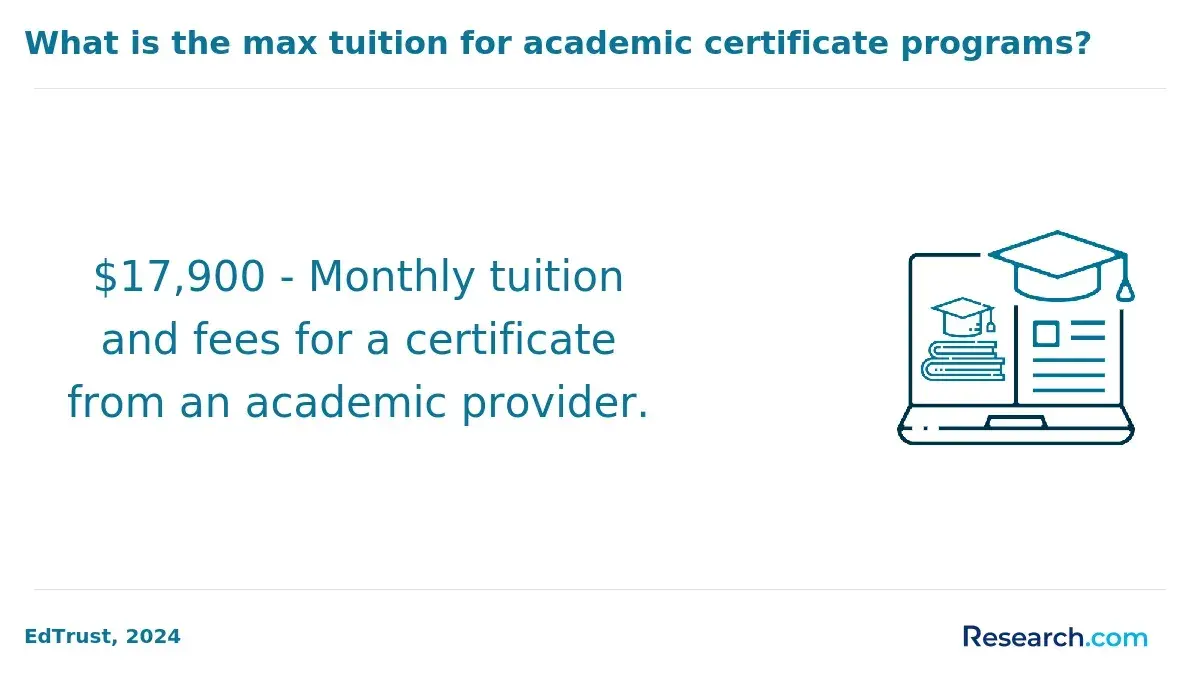
How Does Per-Credit Tuition Affect the Total Cost of an Online Educational & Teacher Leadership Master's Degree Under $20,000?
Per-credit pricing makes the credit requirement the central cost driver. Multiply the published per-credit tuition by the number of credits required for graduation, then add mandatory fees. Do not multiply by a typical credit count; use the curriculum for your exact concentration and catalog year.
This table illustrates why two programs with similar rates may not have similar total tuition. It uses simple calculations rather than school-specific price claims.
| Required credits | Per-credit tuition | Tuition calculation | Tuition before required fees |
| 30 | $450 | 30 × $450 | $13,500 |
| 33 | $500 | 33 × $500 | $16,500 |
| 36 | $525 | 36 × $525 | $18,900 |
| 36 | $600 | 36 × $600 | $21,600 |
A program priced below about $20,000 in tuition can still cross the threshold once fees are added, especially at 36 credits. Conversely, a program with a slightly higher rate may be a better value if it requires fewer credits, includes digital materials, or uses a genuine flat program price.
Review whether the rate applies to all students, all courses, and the full enrollment period. Some schools differentiate tuition by residency, delivery format, course level, or program. Also check whether leadership licensure courses, electives, and capstone credits use the same rate as core courses.
How Long Does It Take to Complete an Online Educational & Teacher Leadership Master's Degree Under $20,000?
Completion time depends on credit requirements, course sequencing, transfer credit, work obligations, and whether a practicum must occur during a school term. Many online education master's programs are designed for working educators and use asynchronous coursework, but field experiences, live meetings, group projects, and internship supervision may still have fixed schedules.
The following planning view helps students match format with time constraints rather than assuming "online" means fully self-paced.
| Format pattern | Typical scheduling feature | Potential advantage | Planning concern |
| Asynchronous online | Recorded instruction and weekly deadlines | Useful for educators balancing classroom schedules | May still require group work, proctored assessments, or placement hours |
| Synchronous online | Live evening or scheduled sessions | More real-time faculty and peer interaction | Meeting times may conflict with coaching, family, or school events |
| Accelerated online | Shorter, intensive terms | Can shorten completion time when taken continuously | Heavy weekly workload can make withdrawal or repeated courses more likely |
| Hybrid or field-based | Online coursework plus site-based requirements | May better support leadership practice and licensure preparation | Travel, supervision, and placement timing can add cost or delay completion |
Build a term-by-term plan before enrolling. Confirm the earliest and latest possible completion dates, whether courses are offered every term, and whether capstone or internship courses require prerequisites.
If you are comparing flexible online degrees in another field, an online computer science degree may illustrate a different pacing model, but education leadership programs often have school-calendar-dependent field requirements.
Finishing quickly can reduce per-term fees, but it is not always the best financial decision. A sustainable course load that avoids dropped classes, repeated coursework, or delayed field placement can cost less overall.
How Can Students Verify Accreditation for an Online Educational & Teacher Leadership Master's Degree Under $20,000?
Accreditation verifies that an institution or program meets standards established by a recognized accrediting body. For an online educational and teacher leadership master's degree, start with institutional accreditation, then investigate whether the program has specialized education accreditation or state approval relevant to your goal.
Institutional accreditation matters for federal financial aid, transferability, employer confidence, and future doctoral study. Specialized accreditation can provide an additional quality signal, but it does not by itself authorize you to become a principal or administrator. Licensure eligibility is governed by the state where you seek certification.
Use these verification steps before paying an application or enrollment fee.
- Confirm the institution's current accreditation status through the accreditor named by the school and the U.S. Department of Education database.
- Ask whether the exact online degree, concentration, and catalog year are covered by any specialized education accreditation claimed by the institution.
- Check your state education agency's rules for the intended license or endorsement, including examinations, experience, internship, and approved-program requirements.
- Request written confirmation from the program about whether its curriculum is designed to meet requirements in your state, especially if you live outside the school's home state.
Be cautious when a program uses broad language such as "leadership preparation" without explaining the credential it supports. Teacher leadership degrees can be valuable for instructional coaching and curriculum work yet may not satisfy principal certification requirements. The right choice depends on the job you intend to pursue, not on the title alone.
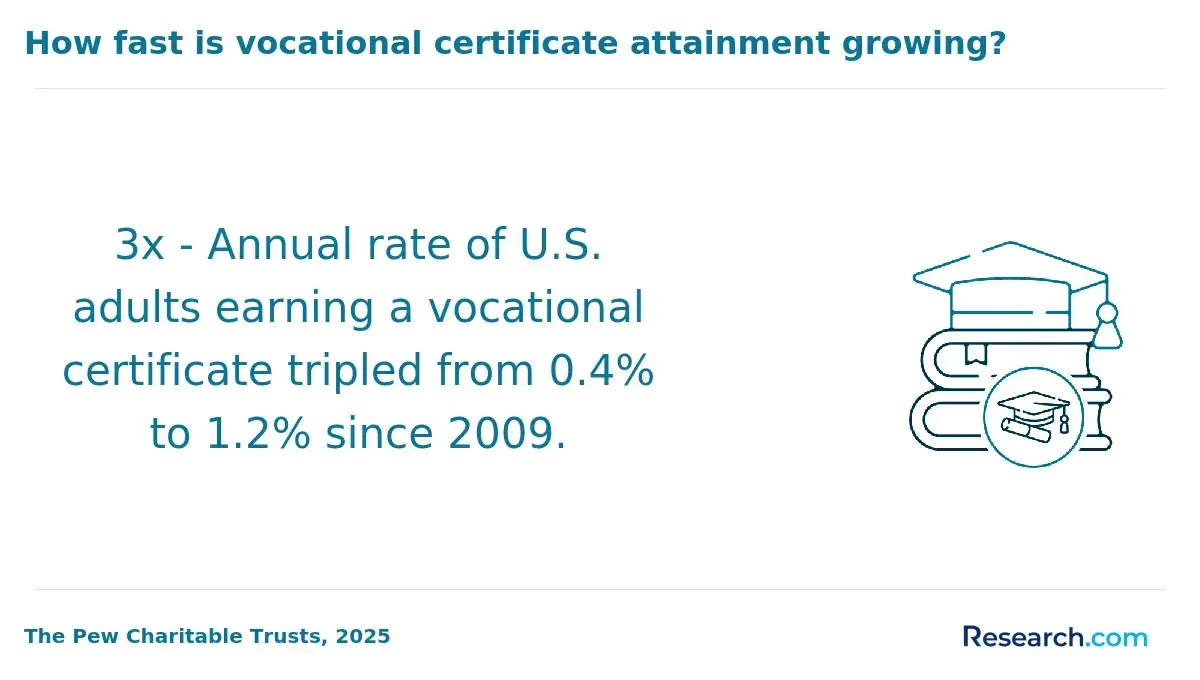
Do Out-Of-State Students Pay More for an Online Educational & Teacher Leadership Master's Degree Under $20,000?
Out-of-state students do not always pay more for an online education master's degree. Many online programs publish one nationwide tuition rate, while others retain separate resident and nonresident pricing. A third model offers a discounted online rate that is neither the standard in-state nor out-of-state rate.
Residency is only one pricing variable. Ask whether the published amount applies to your location, whether it is guaranteed for continuing students, and whether field-placement support is available where you live. A low national rate can be valuable, but it does not solve a mismatch between the program and your state's licensure rules.
Compare these questions in writing before making a residency-based decision.
- Is the online tuition rate identical for resident and nonresident students?
- Are online learners charged campus-based fees that resident students commonly pay?
- Can the institution enroll students and arrange required placements in your state?
- Does the program meet your state's educational leadership or teacher-leadership requirements?
- Will tuition remain at the published rate while you are continuously enrolled?
Do not assume relocating establishes immediate in-state eligibility. Residency classifications are institution-specific and can involve documentation and waiting periods. For fully online programs, the cleaner comparison is usually the written all-in estimate for your own enrollment status.
Can Transfer Credits Keep the Total Cost of an Online Educational & Teacher Leadership Master's Degree Under $20,000?
Transfer credits can reduce cost only when the receiving institution accepts them and applies them to required degree coursework. At the master's level, schools often limit the number of transfer credits, require a minimum grade, and set a time limit on prior coursework. Leadership programs may be especially selective about transferring internship, licensure, or capstone requirements.
Transfer is most useful for students with recent graduate-level education courses that closely match the target curriculum. It is less reliable for avoiding foundational leadership courses, state-specific policy courses, or supervised field experiences.
Take these steps before assuming transfer will keep a program below $20,000.
- Send official transcripts and course descriptions for a preliminary review before committing to enrollment.
- Ask for the maximum number of credits that can transfer into your specific concentration.
- Request a written degree plan showing exactly which required courses remain after transfer evaluation.
- Recalculate tuition, per-term fees, and completion time using the revised plan.
A transfer decision can have a trade-off. Fewer required credits generally lower tuition, but transferring too broadly may leave gaps in a state-specific leadership sequence or reduce opportunities to build relationships with faculty and local school partners. Prioritize eligibility and preparation over the largest possible credit reduction.
Can Financial Aid Bring the Cost of an Online Educational & Teacher Leadership Master's Degree Below $20,000?
Financial aid can reduce what you pay out of pocket, but it does not change the published cost of attendance or guarantee that a program's final price will be below $20,000. Eligible graduate students commonly use a combination of employer tuition assistance, scholarships, federal Direct Unsubsidized Loans, and, when necessary, Graduate PLUS Loans. Loan availability should be treated as financing rather than a discount.
Complete the FAFSA and contact the program's financial aid office early enough to compare aid offers before enrollment. Ask whether scholarships apply to online students, whether awards are renewable, and whether part-time enrollment changes eligibility. Teachers should also ask districts, unions, and state agencies about reimbursement policies, which may require prior approval or continued employment.
Use this sequence to compare affordability after aid without overstating what is guaranteed.
- Calculate the program's required tuition and fees without aid.
- Subtract only confirmed grants, scholarships, and employer payments.
- Separate loans from gift aid and estimate the repayment obligation before borrowing.
- Keep a reserve for licensing exams, fieldwork, books, and other costs not included in the school bill.
If you are comparing helping-profession pathways with different aid and licensing structures, affordable masters in social work online programs can provide a useful contrast. Each field has different supervised-practice, credentialing, and employment requirements, so aid alone should not decide between them.
Is an Online Educational & Teacher Leadership Master's Degree Under $20,000 Worth the Cost for Career Advancement?
An under-$20,000 online degree can be a strong investment when it directly supports a realistic next role, meets employer or state requirements, and can be completed without excessive borrowing. It is less compelling when the degree does not qualify you for the leadership role you want, duplicates skills you already have, or requires debt that your expected career progression cannot reasonably support.
Educational leadership can lead toward roles such as assistant principal, principal, instructional coordinator, curriculum specialist, academic coach, or district-level administrator. Responsibilities commonly include improving instruction, analyzing student-performance data, coaching educators, managing operations, and coordinating school improvement initiatives.
The U.S. Bureau of Labor Statistics lists a 2024 median annual wage of $104,070 for elementary, middle, and high school principals. That figure is a national occupation-wide median, not a starting salary or a promise of earnings; pay varies substantially by location, district, experience, and role.
A degree is more likely to offer practical value when these conditions are present.
- The curriculum maps to the role, endorsement, or leadership responsibilities you intend to pursue.
- Your state or employer recognizes the degree for the relevant advancement pathway.
- The practicum, internship, and applied projects fit your current school setting or professional network.
- The total borrowing amount is manageable against your current income, likely pay progression, and household budget.
- The online schedule lets you keep working without sacrificing required field experience or academic performance.
For professionals seeking a lower-cost career change rather than school leadership, a certified bookkeeper pathway may involve a different time, cost, and credential profile. Comparing alternatives is worthwhile when your main objective is income mobility rather than an education-specific leadership role.
Do not rely solely on broad salary claims. Request information about graduate roles, licensure outcomes where applicable, career services, and employer relationships, then compare that evidence with the duties and qualifications in job postings from the districts or organizations you would realistically join.
How Should Students Choose the Best-Value Flat-Rate Online Educational & Teacher Leadership Master's Program?
The best-value flat-rate online program is not necessarily the lowest advertised price. Flat-rate pricing can provide useful certainty because the cost is set for the degree or a defined enrollment period, but students must verify what the rate includes and what happens if they take longer than planned. A per-credit program may be the better value for students with transfer credits or a reduced course load.
Use this decision process to compare finalists on the same basis.
- Identify the exact career target: teacher leader, instructional coach, curriculum specialist, assistant principal, principal, or another education role.
- Confirm accreditation, state authorization, and licensure or endorsement alignment before comparing price.
- Request a written all-in estimate listing tuition, mandatory fees, required credits, fieldwork charges, and graduation costs.
- Compare the standard completion plan with your realistic course load, including work-calendar conflicts and practicum timing.
- Review curriculum, faculty access, advising, placement support, and concentration options alongside total cost.
- Choose the program that meets your requirements with the lowest reasonable total financial and time investment.
Flat-rate plans deserve extra scrutiny when they have an expiration date, exclude extended enrollment, or charge separately for unsuccessful course attempts. Conversely, a slightly more expensive program may justify the difference if it includes required materials, has stronger state alignment, or offers scheduling that prevents delays.
Students who are still comparing undergraduate online value options can review the cheapest accredited online college guide, but master's-level leadership decisions require additional attention to fieldwork, graduate transfer rules, and state credential requirements.
Other Things You Should Know About Educational & Teacher Leadership Programs
Many programs require a bachelor's degree, official transcripts, a minimum GPA, a résumé, recommendation letters, and a statement of purpose. Principal-preparation tracks may also require current educator licensure, classroom experience, or employment in a school setting. Requirements vary by institution and concentration.
Not necessarily. Teacher leadership programs may prepare graduates for coaching, mentoring, curriculum, or instructional-improvement roles without meeting principal licensure requirements. Verify your state's requirements and ask whether the exact program is approved or designed for administrator certification.
Employers often focus on the institution, accreditation, relevant licensure, experience, and demonstrated leadership skills. Online format can be less important than whether the program includes credible coursework, supervised practice, and preparation aligned with the position.
Common areas include instructional coaching, curriculum design, data-informed improvement, adult learning, school law and policy, communication, equity-centered leadership, budgeting, and change management. Review course descriptions to ensure the skills match the responsibilities of your intended role.
References
- Tuition and Fees at the University of Rio Grande https://www.rio.edu/affordability-aid/tuition-fees
- Residence Requirements https://catalog.cccd.edu/golden-west/admissions-registration/residence-requirements/
- Number of Credits for a Master's Degree in Education https://creditsforteachers.com/the-necessary-number-of-credits-for-a-masters-degree-in-education/
- How does a college degree improve graduates' employment and earnings potential? - APLU https://www.aplu.org/our-work/publicuvalues/employment-earnings/
- NC RDS | Tuition Benefits and State Financial Aid | NC Residency Determination Service https://www.ncresidency.org/tuition-benefits/
- Best Educational Leadership Master's Programs Online https://www.onlineu.com/degrees/masters-educational-leadership


