2027 Online Data Science Master's for Supply Chain Analysts: A Career Transition Guide

Co-Founder and Chief Data Scientist
Supply chain analysts already work with forecasts, inventory, and operational decisions. Moving into data science means building stronger statistical, programming, and model-development skills without losing that domain advantage.
An online master's may help, but its value depends on the role you want, the projects you can complete, and the cost of studying while you work. This guide helps you decide whether to pursue a degree, what to look for in a program, and how to turn supply chain experience into credible evidence for a new role.
Key Things You Should Know
- A master's can support a move from supply chain analysis into forecasting, optimization, or data science, but a degree alone does not demonstrate that you can build and evaluate models.
- Prioritize programs with substantial statistics, programming, and applied projects; use a supply chain problem to show how your existing expertise improves an analytical decision.
- The U.S. Bureau of Labor Statistics projects 35% growth in data scientist employment from 2025 to 2035, but that occupation-wide forecast does not predict demand for any one supply chain specialty.
What Is an Online Data Science Master's for Supply Chain Analysts?
It is a graduate degree in data science or a closely related field, studied primarily online, that a supply chain analyst uses to develop more advanced analytical skills.
The degree need not have "supply chain" in its title. What matters is whether its coursework and projects let you work on problems such as demand forecasting, inventory decisions, transportation, supplier risk, or fulfillment.
The distinction is between analyzing what happened and developing, testing, and communicating a method for what to do next. A useful program should help you handle imperfect operational data, compare models against sensible baselines, and explain the consequences of errors to planners and managers. Online delivery makes continued employment possible; it does not make the technical work less demanding.
Can a Data Science Master's Help Supply Chain Analysts Change Careers?
Yes, particularly if you want a role that combines modeling with operational decisions. Your knowledge of lead times, stockouts, service levels, and data-quality problems can distinguish you from candidates who know modeling techniques but not the decisions those models serve.
The likely gaps are deeper statistics, Python or another production-oriented language, reproducible workflows, and experience evaluating models on data they have not seen before.
A master's is most useful when you need structured instruction, access to substantial projects, or a graduate credential for your target employers. It may be unnecessary if you already have strong quantitative preparation and can gain modeling responsibility at work.
Before enrolling, review job postings for your intended role and compare their requirements with your current skills. If you could close a narrow gap through a course and a well-documented work project, test that route first.
For an AI-focused destination rather than a broader data science role, online artificial intelligence program comparisons can help you assess a different degree path. Choose based on the work you want to perform, not which title sounds more advanced.
What Are the Best Online Data Science Master's Programs for Supply Chain Analysts?
There is no universal best program. The strongest fit is one that closes your technical gaps, permits relevant projects, and works within your schedule and budget.
These established online degrees are starting points for a shortlist, not a ranking; confirm current curriculum, delivery, eligibility, and charges on each university's official pages before applying.
The comparison below separates degree orientation from the supply chain question you should resolve. A program title alone cannot establish the depth of its forecasting or optimization coursework:
| Program to investigate | Degree orientation | Supply chain fit to confirm |
| Georgia Institute of Technology - Online Master of Science in Analytics | Analytics | Availability of coursework and projects relevant to forecasting and optimization |
| University of Texas at Austin - Online Master of Science in Data Science | Data science | Depth of statistical and machine-learning work applicable to operational data |
| University of California, Berkeley - Master of Information and Data Science | Information and data science | Opportunities to pursue supply chain topics in applied work |
For each finalist, examine the current course catalog and recent project requirements. Ask whether you can build a demand-forecasting or inventory-related project, what support exists for choosing a topic, and which courses are available to online students when you expect to take them. Avoid choosing by university reputation or degree title without checking those details.
What Do Online Data Science Master's Programs Teach?
Relevant programs commonly cover statistics, programming, data management, machine learning, and communication of results. For a supply chain transition, depth matters more than the appearance of a topic on a course list. A useful forecasting course, for example, should require evaluation on future periods rather than merely fitting a model to historical sales.
Look for a path from messy transaction or shipment data to a decision: preparing data; estimating uncertainty; comparing forecasting or classification methods; and, where relevant, modeling capacity, routing, or inventory constraints.
Operations research can be especially valuable for analysts who want to recommend actions, not just predict demand. For roles involving deployed models, check whether the curriculum also covers data pipelines, monitoring, and reproducibility.
An AI-focused alternative with that emphasis may be worth examining through choosing an AI master's with data engineering preparation.
A strong portfolio project could compare a demand model against a simple seasonal baseline, test it on later periods, and translate forecast errors into a planning consequence. Be wary of a program that advertises industry applications but offers no clear opportunity to complete and explain work of that depth.
What Are the Admission Requirements for Online Data Science Master's Programs?
Requirements vary by institution. Programs may examine undergraduate preparation in mathematics and computing, academic records, professional experience, recommendations, or a statement of purpose.
Supply chain experience can demonstrate problem-solving and domain knowledge, but it should not be assumed to satisfy a formal calculus, statistics, or programming prerequisite.
Before applying, compare the published requirements with your transcript and recent work. If a prerequisite is unclear, ask admissions whether a particular course or other documented preparation fulfills it; self-study may make you more capable without meeting a formal requirement. In your application, describe the analytical methods you used, the decisions they informed, and what you still need to learn.
Analysts considering an AI degree instead can compare expectations for master's-level AI study after another major. Do not assume that policies for an AI program also apply to a data science program at the same university.
How Much Does an Online Data Science Master's Cost and Take?
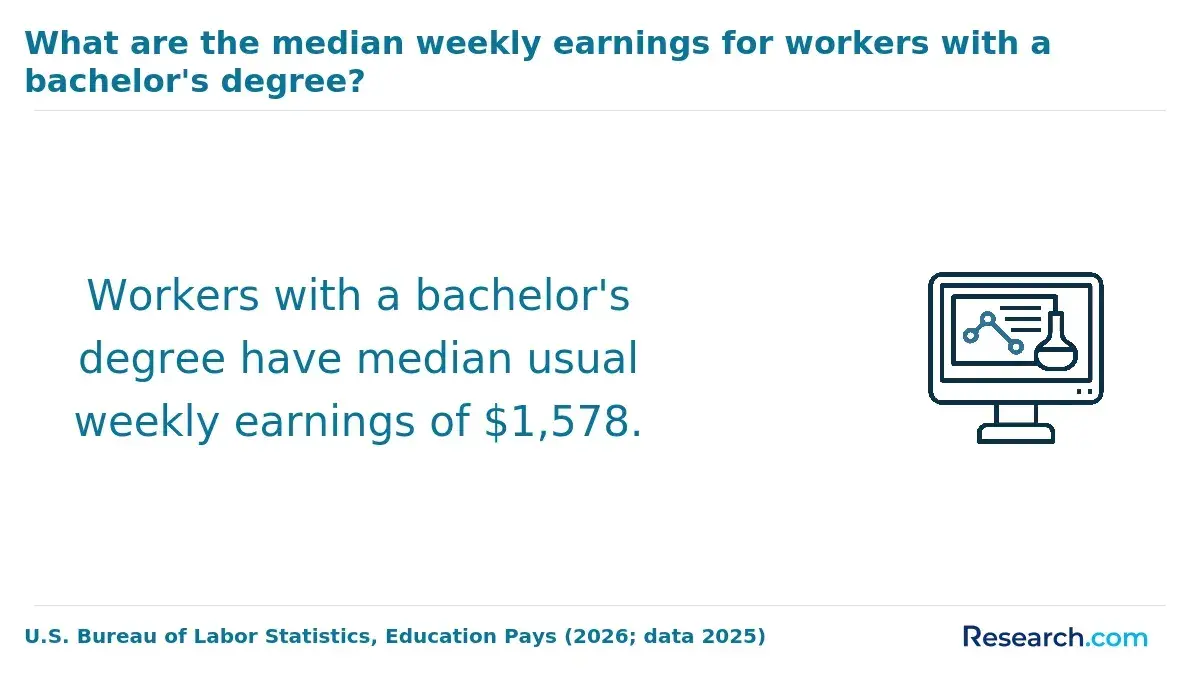
There is no reliable single price or completion time for the programs in this guide. Tuition structures, required credits, fees, course loads, and maximum completion periods differ, and published charges can change.
Request the current official tuition and fee schedule for each finalist, then calculate the cost of the courses you would actually need, not just the advertised tuition rate.
Your budget should account separately for mandatory fees, materials or technology, any required travel, and financing costs. Your timeline should allow for the courses offered each term and the hours you can study alongside work.
Employer tuition assistance can change the calculation, but confirm eligibility, reimbursement timing, and any obligation to remain employed.
For a return-on-investment check, compare the full expected cost with a realistic alternative, such as targeted coursework plus a project in your present job. Do not treat the salary of an established data scientist as the raise a new graduate will receive. Your prior experience, target role, employer, and local market all affect the outcome.
How Do Online and Campus Data Science Master's Programs Compare?
Online study may let you keep earning and apply coursework to live supply chain problems. Campus study may be preferable if you need in-person research, frequent face-to-face collaboration, or access to opportunities that a particular online program does not offer. Neither format establishes instructional quality on its own.
For a working analyst, the decisive details are operational: whether classes or exams require attendance at fixed times, whether team projects conflict with work hours, whether campus visits are required, and how quickly courses can be completed.
Compare those policies for specific programs rather than assuming all online degrees are self-paced. If keeping a full-time job is essential, explore data science master's choices for full-time employees alongside each program's current scheduling rules.
What Jobs Can Supply Chain Analysts Get With a Data Science Master's?
The most direct targets retain a connection to operations: demand forecasting specialist, supply chain data scientist, inventory or network optimization analyst, and analytics roles in procurement, transportation, or fulfillment.
Broader data scientist roles are possible, but a degree does not by itself establish experience with the tools, systems, or deployment responsibilities a particular employer requires.
Start your search with the work, not the job title. A "data scientist" posting may focus on production machine learning, while an "analyst" posting may involve sophisticated optimization. Build a portfolio that identifies the operational decision, documents the data and baseline, tests the method appropriately, and explains its limitations.
If you seek AI-heavy roles, access to people doing that work can also matter; evaluate networking opportunities rather than assuming every online cohort offers the same reach. One point of comparison is AI master's options with professional alumni networks.
How Much Can Data Scientists in Supply Chain Earn?
The U.S. Bureau of Labor Statistics reports a $120,230 median annual wage for data scientists in May 2025. That is a benchmark for the occupation across industries, not a supply-chain-specific salary or an expected starting wage after a master's. Pay for a particular opportunity depends on responsibilities, experience, employer, and location.
Use the figure to put an offer in context, then compare postings that match your target duties and experience. A move from supply chain analysis into a specialist forecasting role may have a different pay trajectory from a move into a broader data scientist position. Neither the occupational median nor a program's promotional outcome can establish the financial return on your degree.
Do Supply Chain Data Scientists Need Certifications or Licensure?
Data scientist roles generally do not have a profession-wide licensure requirement. Employers may prefer particular software or cloud credentials, but those preferences vary by role. Check actual postings before paying for a certification; it is usually less persuasive than evidence that you can solve the employer's type of problem.
Also verify an institution's accreditation and whether its online program can enroll students where you live. Those are checks on the educational option, not a license to practice data science. If you work in a regulated setting or handle restricted commercial information, follow the applicable employer and industry rules for data access and use.
Other Things You Should Know About Data Science
Only with the necessary employer permission and in compliance with your program's rules. Removing names may not adequately protect sensitive prices, routes, customers, or suppliers. Ask about approved access and publication before sharing data with classmates or instructors.
It happens when a model uses information that would not have been available at the time of the forecast. For example, a feature recorded after an order was fulfilled can make a test result look strong without helping planners make earlier decisions.
Yes, if the dataset fits a clearly defined decision and you explain what it cannot represent. Document its provenance, time coverage, missing values, and limitations rather than presenting a classroom result as a deployed business outcome.
Follow the course's academic-integrity policy. Where use is permitted, review and test the code yourself, disclose assistance when required, and make sure you can explain every analytical choice and result.
References
- Cost of Attendance (Budget) | 2025-2026 Federal Student Aid Handbook https://fsapartners.ed.gov/knowledge-center/fsa-handbook/2025-2026/vol3/ch2-cost-attendance-budget
- Accreditation in the U.S. | ed.gov http://www.ed.gov/laws-and-policy/higher-education-laws-and-policy/college-accreditation/accreditation-in-the-us
- What are Asynchronous Classes? | University of Bridgeport https://www.bridgeport.edu/news/what-are-asynchronous-classes/
- Return to School | Employer Tuition Assistance Programs | UMass Global https://www.umassglobal.edu/blog-news/get-your-employer-pay-college-tuition-assistance-programs
- What Is Data Science? Definition, Skills, Applications & More | Harvard SEAS https://seas.harvard.edu/news/what-data-science-definition-skills-applications-more
- Profiling data scientists in the digital labour market | sciencedirect.com https://www.sciencedirect.com/science/article/pii/S0263237322000810
- Supply Chain Master's Degree Now Rivals Elite MBAs in Jobs Market | Center for Transportation and Logistics https://ctl.mit.edu/news/supply-chain-masters-degree-now-rivals-elite-mbas-jobs-market
- Applied Data Science (MS) Student Capstone Projects | Bay Path University https://www.baypath.edu/academics/graduate-programs/applied-data-science-ms/student-capstone-projects/
- Online Program - UChicago Data Science Institute https://datascience.uchicago.edu/education/masters-programs/online-program/
- Data Science Capstone Experience - Purdue Online https://www.purdue.edu/online/data-science/data-science-capstone-experience/