2027 Online Data Science Master's After a Bachelor's in Electrical Engineering: Prerequisites and Program Fit

Co-Founder and Chief Data Scientist
An electrical engineering bachelor's can provide a strong starting point for an online data science master's, but it does not establish that every applicant meets every program's prerequisites. The important questions are whether your coursework and projects demonstrate programming and statistical readiness, and whether the degree builds skills your engineering background has not already given you. This guide helps electrical engineering graduates identify gaps, evaluate program fit, and decide whether a master's is the right next step.
Key Things You Should Know
- Electrical engineering coursework may cover calculus, linear algebra, and quantitative problem-solving; check your transcript for statistics, substantial programming, and data-management experience rather than assuming those areas are covered.
- A program is a better fit when its prerequisites match your record and its projects let you apply new methods to problems such as sensor data or predictive maintenance.
- The U.S. Bureau of Labor Statistics projects 35% employment growth for data scientists from 2025 to 2035, but that occupation-wide forecast does not predict an individual graduate's job prospects.
What is an online data science master's, and is it a good fit after electrical engineering?
An online data science master's typically combines statistical analysis, computing, and applied work with data. For an electrical engineering graduate, the appeal is not simply "more math." It is the chance to extend existing strengths in modeling, signals, systems, or experimentation into data preparation, machine learning, and communication of results.
The fit depends on the work you want to do. A data science degree makes sense if you want to build and evaluate models using messy, real-world datasets. If your goal is primarily reporting and business decision support, a guide to data analytics master's programs can help you compare that emphasis. If you mainly want deeper study of electrical systems, a specialized engineering degree may use more of your prior preparation.
Degree titles alone are not decisive. Compare required courses, electives, project opportunities, and the level at which introductory material begins. A program that spends much of its required curriculum reteaching math you already know may offer less value than one that addresses your genuine gaps.
What prerequisites do electrical engineering graduates need for a data science master's?
Common preparation areas include calculus, linear algebra, probability or statistics, and programming. Many electrical engineering graduates have studied several of these, but coverage varies by institution, electives, and time since graduation. Data science may also demand more sustained work with databases, data cleaning, and statistical inference than an engineering transcript demonstrates.
The distinction is between having used a skill and being able to document it. A signals course may show mathematical preparation; it may not satisfy a program's named statistics prerequisite. Likewise, writing a small script does not necessarily demonstrate the programming depth expected for graduate projects.
To assess readiness before applying, take these steps:
- Match your transcript and course descriptions against each program's stated prerequisite subjects and minimum grades, if specified.
- Identify evidence beyond course titles, such as code repositories, research, or work projects involving data analysis.
- Ask admissions whether missing coursework must be completed for credit, may be taken after admission, or can be demonstrated another way.
Self-study and short courses can improve readiness, but they fulfill a formal prerequisite only if the program accepts them. Applicants considering a more AI-focused curriculum can use AI master's degrees for students from other academic fields to frame a separate comparison of entry expectations.
Do electrical engineering graduates meet data science master's admission requirements?
Often they can be eligible to apply, but an electrical engineering degree neither guarantees eligibility nor admission. Programs set their own rules for accepted bachelor's fields, prerequisite courses, grades, tests, recommendations, and professional experience. Some evaluate preparation across the entire application; others require particular courses before enrollment.
Read the admissions page alongside the academic catalog, then request written clarification if the two leave a gap. When contacting a program, name the course or experience you believe meets each requirement and ask whether it counts. This is especially important if your degree emphasized hardware design rather than software or statistics.
A strong application connects prior engineering work to the proposed degree: what data you handled, how you tested a model or system, and what you still need to learn. Do not treat a general statement that "STEM majors are welcome" as confirmation that your individual prerequisites are complete.
Which data science courses should electrical engineering graduates expect online?
Expect a mix of statistical methods, programming, machine learning, data management, and applied projects, though names and required depth differ by school. The useful comparison is between what your electrical engineering degree likely introduced and what the master's will require you to do independently. The table summarizes potential overlap without assuming that every graduate has the same background.
| Course area | Possible electrical engineering foundation | Potential new emphasis in data science |
| Statistics and inference | Probability, noise, or experimental measurements | Inference, uncertainty, and study design across varied datasets |
| Programming and data systems | Simulation or embedded-system code | Reusable analysis code, databases, and data pipelines |
| Machine learning | Optimization, signals, or control models | Model validation, generalization, and comparison against baselines |
| Applied projects | Engineering experiments or design work | Problem framing, reproducible analysis, and communication to stakeholders |
Look beyond course titles. A machine-learning requirement is more useful if students evaluate models on held-out data and explain errors than if they only survey algorithms. If your goal is a broader analytical role, compare the course balance with a guide to data analytics master's programs.
How do online and on-campus data science master's programs compare?
Neither format is inherently a better academic fit for an electrical engineer. An online option may let you keep working and apply new methods to engineering data at your job. An on-campus option may suit someone who wants regular in-person contact with faculty, laboratories, or local recruiting activities. The meaningful comparison is between specific programs, not delivery labels.
Check whether an online program has live sessions, group projects across time zones, proctored exams, campus visits, or access to the same project supervision as campus students. Ask how often courses run: limited availability can matter if you must take a prerequisite before an advanced elective. Online flexibility is valuable only if the actual schedule fits your work and responsibilities.
How long does an online data science master's take, and what does it cost?
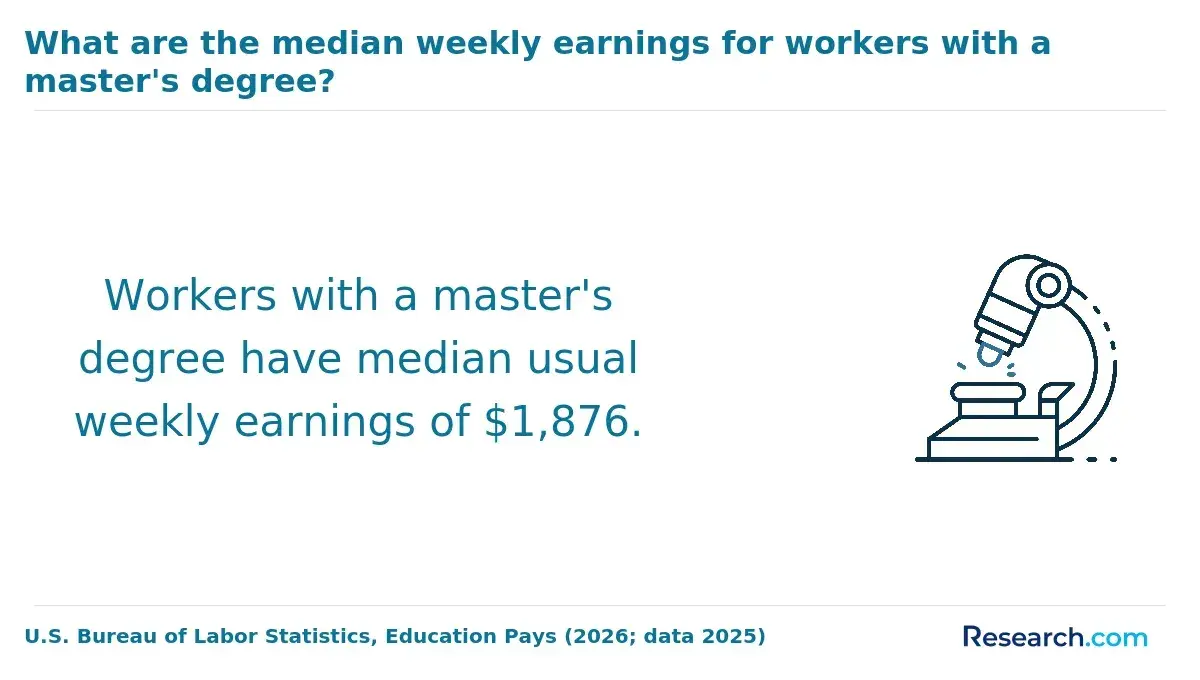
There is no reliable universal timeline or price. Completion depends on required credits, course availability, enrollment pace, and whether you need preparatory coursework. Before committing, obtain the program's current degree plan and published tuition and fee schedule for your intended start term.
Compare the full financial commitment, not tuition alone. Include mandatory fees, any separately charged prerequisite courses, software or equipment requirements, and travel if campus attendance is required. If you expect to reduce work hours, consider that lost income separately. Employer tuition assistance may change your personal cost, but confirm its eligibility and repayment conditions first.
If speed is your main priority, use the scheduling questions in online artificial intelligence master's timelines as a comparison aid - not as evidence that a data science program has the same pace. A shorter path is less attractive if it leaves no room to address a statistics or programming gap.
How can students verify data science program accreditation and quality?
Verify the institution's accreditation through its accreditor or an official U.S. Department of Education recognition resource; do not assume accreditation of an institution establishes separate accreditation for a particular data science degree. Also confirm that the institution can enroll online students in your state, because authorization and placement rules can vary.
Quality requires a separate check. Review current catalog requirements and ask to see representative project expectations, faculty expertise, advising arrangements, and career support available to online students. A ranking or attractive course list is not a substitute for evidence that you can take the electives you want and receive feedback on substantial work. Treat unpublished completion or employment outcomes as unknown rather than filling the gap with assumptions.
What careers can electrical engineers pursue with a data science master's?
Electrical engineering experience can remain valuable in roles involving sensor measurements, equipment performance, energy systems, manufacturing, or other physical systems. Possible paths include data scientist, machine-learning practitioner, or an engineering analytics role; the appropriate target depends on your existing work and the skills an employer requires.
Build portfolio evidence around the transition you actually want. For example, a project using equipment data could define a failure-prediction problem, compare a simple baseline with a more complex model, test performance on appropriate data, and explain the cost of false alarms. That demonstrates both domain understanding and data science judgment. For a broader look at matching curricula to roles, see how to compare data science programs by career preparation.
A master's is not automatically necessary for every adjacent role. If you already analyze engineering data at work, a project, targeted coursework, or an internal move may test your interest before you undertake a full degree.
How much can data science master's graduates earn in the United States?
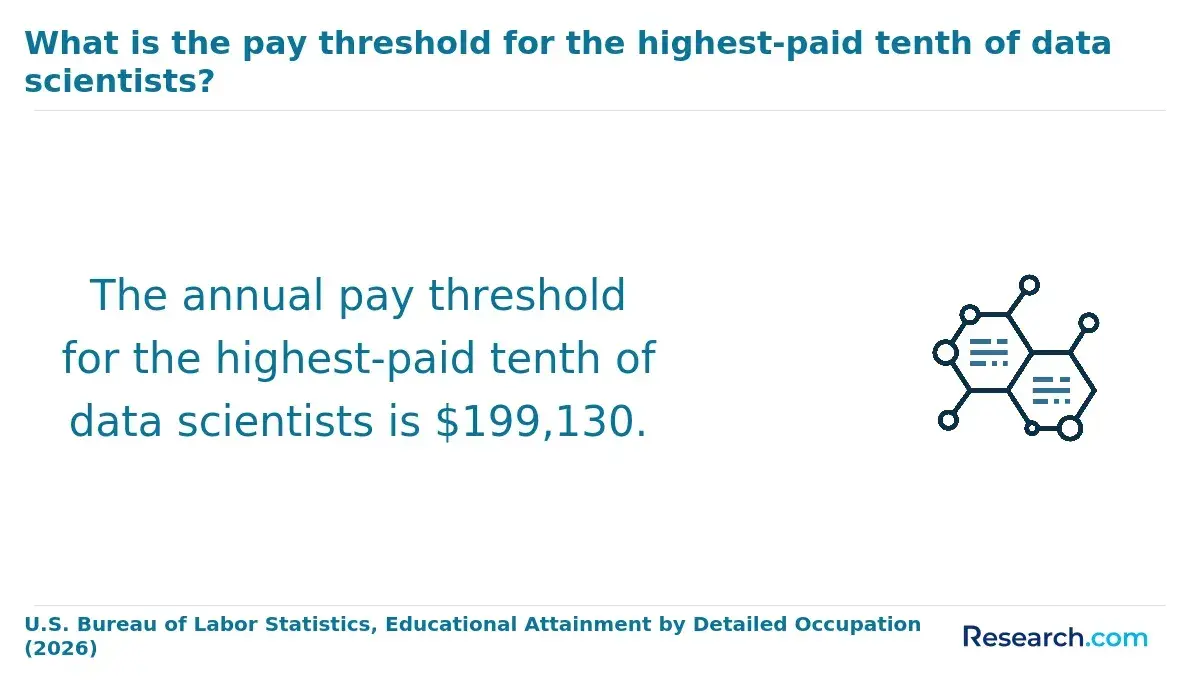
The U.S. Bureau of Labor Statistics reports a median annual wage of $120,230 for data scientists in May 2025. This is an occupation-wide figure, not a starting salary, a master's-graduate outcome, or the pay increase caused by earning a degree. Prior engineering experience, role, employer, location, and industry can all affect an individual offer.
For a personal financial comparison, evaluate credible salaries for the specific jobs you could pursue against your current compensation and the degree's full cost. A guide to industry-specific data science salaries can help you consider industry differences, but no salary estimate should be treated as a guaranteed return on tuition.
What certifications and professional standards matter for data science careers?
There is no single certification that substitutes for the degree prerequisites or project evidence discussed here. A tool-specific credential may help demonstrate familiarity with a platform used by a target employer, but its value depends on that employer's requirements and how recently you used the tool.
Give greater weight to practices you can demonstrate: reproducible code, sound validation, clear documentation, appropriate handling of sensitive data, and honest communication of model limitations. These standards matter particularly when engineering analyses could influence operational or safety-related decisions. Check job postings for your intended roles before paying for an optional certification.
Other Things You Should Know About Data Science
Only with permission and under the employer's data-use rules. Ask the program whether a public or properly de-identified dataset can meet the same project requirements.
Yes, if your employer and schedule allow it. An engineering analytics project can help you assess whether you enjoy the work before committing to a degree or changing jobs.
It can be, especially if its projects and electives cover the modeling methods you need. Compare those courses with engineering-focused options if system behavior and deployment constraints are central to your goal.
Keep work you are authorized to share that shows your contribution, methods, validation, and conclusions. If the original data is confidential, describe the problem and your approach without disclosing protected information.
References
- DAPIP | Homepage - Office of Postsecondary Education (OPE) https://ope.ed.gov/dapip/
- Applied Data Science and AI: Master's Degree | du.edu https://ritchieschool.du.edu/academics-education/gr-programs/ms-online-applied-data-science-and-artificial-intelligence
- Electrical Engineering Concentration, Data Science, Analytics and Engineering Degree, MS | ASU https://degrees.asu.edu/masters-phd/major/ASU00/ESDSEEEMS/data-science-analytics-and-engineering-electrical-engineering-ms
- Statistics MS Required Courses | stanford.edu https://statistics.stanford.edu/graduate-programs/statistics-ms/statistics-ms-required-courses
- Electrical & Computer Engineering: Machine Learning & Processing | PDC https://pdc.wisc.edu/degrees/machine-learning-signal-processing-ms/
- Computational & Data Science | The University of Utah https://psm.utah.edu/degree-programs/comp-data-sci.php
- MS in Data Science | Online | $9900 | Eastern University https://www.eastern.edu/academics/graduate-programs/ms-data-science
- What Can I Do With a Degree in Data Science? Career Paths & Skills | Harvard SEAS https://seas.harvard.edu/news/what-can-i-do-degree-data-science-career-paths-skills
- M.S. in Data Science, Online | virginia.edu https://datascience.virginia.edu/degrees/msds-online
- Graduate Data Science Option (DSO) - UW ECE https://www.ece.uw.edu/academics/grad/graduate-data-science-option/