2027 Online Data Science Master's After a Bachelor's in Anthropology: Prerequisites and Program Fit

Co-Founder and Chief Data Scientist
An anthropology degree can be a useful starting point for an online data science master's, but research experience alone may not satisfy a program's math and programming requirements. If you are considering the transition, the key is to distinguish skills you already have from formal prerequisites you still need.
This guide shows you how to assess your readiness, compare programs by technical depth and support, and decide whether a data science master's fits the work you want to do.
Key Things You Should Know
- An anthropology bachelor's degree does not automatically rule you out; eligibility depends on each program's stated coursework and evidence of quantitative and programming readiness.
- Prioritize programs whose prerequisites you can meet and whose projects let you combine technical methods with your experience studying people, communities, or material culture.
- The U.S. Bureau of Labor Statistics projects 35% growth in data scientist employment from 2025 to 2035, but that occupation-wide forecast does not predict an individual graduate's job prospects.
What Is an Online Data Science Master's for Anthropology Graduates?
For an anthropology graduate, an online data science master's is a way to build computational and statistical skills on top of existing research and domain knowledge. Depending on their coursework, anthropology graduates may already know how to frame questions, evaluate evidence, work with messy observations, and explain findings in context. Those strengths can be valuable when a model's output needs interpretation rather than just calculation.
The fit depends on what you want to do next. A data science program is most relevant if you want substantial training in programming, statistics, data management, and predictive methods. If your goal is primarily to interpret organizational data and communicate findings, data analytics master's program options may also be worth comparing. Do not assume the degree title alone tells you how much mathematics or software development a curriculum requires.
Can You Enter a Data Science Master's With an Anthropology Degree?
Yes, potentially. An anthropology major is not inherently a barrier, but admission depends on the individual program. Some programs assess applicants from multiple academic backgrounds; others specify prior courses or competencies. A strong statement of interest cannot necessarily replace a required calculus, statistics, or programming course.
Start with a transcript audit. Match every stated prerequisite to a completed course, then identify requirements for which you have only informal experience. Ask admissions staff whether a particular course, community-college class, or approved preparatory option fulfills each missing requirement before you enroll in it. Self-study and short courses can help you prepare and demonstrate initiative, but they count as formal prerequisites only if the program accepts them.
Your application should make relevant anthropology work concrete: describe the research question, data collection or analysis you performed, tools you used, and how you handled limitations or ethics. A quantitative archaeology project, survey analysis, or reproducible research workflow is more informative than a general claim that anthropology involves research.
What Prerequisites Do Anthropology Majors Need for Data Science?
Requirements vary, so there is no universal checklist. The most important distinction is between skills that may transfer from your particular anthropology coursework and technical foundations that a graduate program expects you to have before its advanced courses begin. This comparison helps you locate likely gaps without assuming every anthropology graduate has the same background.
| Area | Preparation an anthropology graduate may bring | Preparation to check against program requirements |
| Research and interpretation | Study design, contextual analysis, and communicating uncertainty | How those skills are applied to computational projects |
| Statistics | Survey methods or quantitative analysis, depending on coursework | Probability, statistical inference, and any named prerequisite courses |
| Mathematics | Preparation that differs substantially by student | Calculus or linear algebra if the program specifies them |
| Computing | Possible experience with research databases or statistical software | Programming, data manipulation, and any required computer science foundations |
If you are missing several foundations, sequence your preparation rather than applying on the strength of domain expertise alone. First confirm which courses are mandatory for admission. Then build enough programming and statistics practice to evaluate whether you enjoy the work; a small, well-documented analysis of a permitted dataset can test your interest and strengthen an application. Finally, check whether introductory graduate courses teach these skills or assume them. The costly mistake is treating a beginner-friendly marketing description as a waiver of published prerequisites.
How Do Online Data Science Master's Programs Compare With Campus Programs?
Online and campus study can lead toward similar academic goals, but their day-to-day demands may differ. Online delivery can reduce relocation and commuting barriers; it does not necessarily make quantitative coursework easier or eliminate scheduled meetings. Campus study may provide more in-person access to peers and facilities, while online support depends heavily on how courses, office hours, and projects are organized.
For an anthropology graduate making a technical transition, support matters more than the label "online." Ask whether foundational courses include live help, whether group projects require meetings across time zones, and whether exams or presentations have fixed times. Also verify any campus visits or residency requirements. If you plan to remain employed, compare data science programs for employed professionals on scheduling and pacing, not just on whether lectures are recorded. Choose campus study when in-person collaboration is central to how you learn; choose online study when its actual schedule and support make sustained participation feasible.
What Courses Are Included in an Online Data Science Master's?
Course titles and depth vary, but a relevant curriculum should connect statistical reasoning, programming, data preparation, and the evaluation of analytical results. More technical programs may expect substantial prior math or computing and move quickly into machine learning. Others provide a clearer path from introductory work to advanced applications. Read course descriptions and prerequisites together: a course called "machine learning" does not, by itself, establish how deeply you will study or practice it.
Look for opportunities to apply methods to questions you can evaluate with your anthropology background, such as survey nonresponse, geographic patterns, text from appropriately licensed collections, or bias in how observations were recorded. A strong project should explain both the method and what the data cannot support. Compare the curriculum with online data science degrees and labor market alignment while checking the program's own course descriptions for the skills you want to build. A capstone is especially useful if it produces work you are permitted to share with prospective employers.
How Long Does an Online Data Science Master's Take and Cost?
There is no reliable single duration or price for online data science master's programs. Completion time depends on required credits, course availability, prerequisites, and whether you study full-time or part-time. Ask for a sample course sequence based on your starting preparation; a published completion timeline may assume that all prerequisite work is already finished.
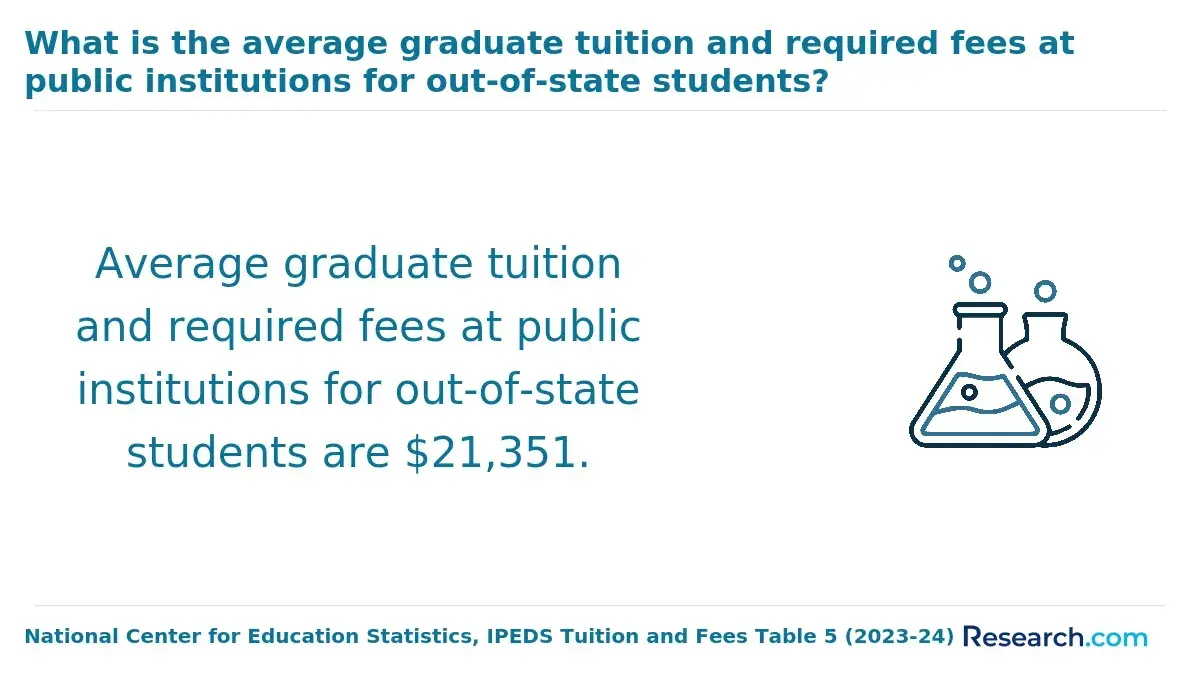
Compare a written estimate of total tuition and mandatory fees for the credits you will need, not an advertised per-credit price in isolation. Include prerequisite courses, materials or technology charges, any required travel, and the financial effect of reducing paid work if applicable. Check whether tuition changes with residency or enrollment pace. The graduate data science financial aid guide can help you investigate funding options, but confirm eligibility and actual aid offers with each institution. A lower sticker price is not necessarily a lower total cost if it excludes required preparation or fees.
How Can You Choose an Accredited Online Data Science Master's?
First, verify the institution's current accreditation through its official information and the accreditor's records. Then confirm that the institution can enroll online students where you live; accreditation and state authorization answer different questions. Do not assume that a program-level accreditation label is required for every data science degree, or that accreditation alone proves a curriculum fits your goals.
Next, compare programs using the same decision criteria: admissions prerequisites, course depth, access to academic support, opportunities for shareable projects, scheduling, and your estimated total cost. Request clarification in writing when a requirement or fee is unclear. Be cautious of a program that highlights career outcomes without explaining whom its figures cover, or that describes itself as suitable for beginners while leaving its technical entry expectations ambiguous. For an anthropology graduate, the best fit is a program that both admits your demonstrated preparation and offers a credible path from that preparation to the work you want.
What Data Science Jobs Can Anthropology Graduates Pursue?
Potential directions include research or insights roles, data analyst work, and, with stronger statistical and computing preparation, data scientist positions. Your anthropology background may be especially relevant when a role involves human behavior, surveys, communities, cultural materials, or the interpretation of incomplete and potentially biased data. That background complements technical ability; it does not substitute for the tools specified in a job posting.
Choose a target role before choosing electives. If you want to analyze surveys and present findings, prioritize statistical inference, data cleaning, and communication. If you want to develop predictive models, look for deeper programming, mathematics, and model evaluation. Compare a general data science degree with a specialized machine-learning route only if that is your intended work; you can compare total tuition for affordable ML master's programs as one part of that decision. A master's may help you make a larger technical transition, but for some adjacent analyst roles, targeted coursework and credible project evidence may be a more proportionate first step.
What Salary and Job Outlook Can Data Science Graduates Expect?
The U.S. Bureau of Labor Statistics reports a $120,230 median annual wage for data scientists in May 2025. This is an occupation-wide midpoint, not an expected starting salary for someone entering the field after an anthropology degree. Pay and access to roles depend on technical skills, prior experience, employer, location, and the position's responsibilities.
BLS projects 35% employment growth for data scientists from 2025 to 2035. That signals demand for the occupation, but it does not mean every graduate will qualify for a data scientist job or that a degree will cause a salary increase. When evaluating a program's career claims, look for the population, time period, and method behind any reported outcomes; compare those graduates' prior experience with your own.
Do Data Science Careers Require Certifications or Licensure?
Data scientist roles generally are not entered through an occupation-wide professional license. An employer may prefer particular tools, credentials, or industry experience, but those preferences vary by role. A certificate can document focused study; it should not be mistaken for proof that you meet a master's admission prerequisite or can perform a job's full range of technical tasks.
If you work with sensitive research, health, or organizational data, pay close attention to the permissions and rules governing that specific work. For this transition, evidence that you can analyze data responsibly and explain your methods is usually a more useful priority than collecting unrelated credentials.
Other Things You Should Know About Data Science
Yes, if you have permission to use and share it. Explain the research question, data limitations, analysis, and reproducible steps; the archaeological subject does not make a project less technical.
Do not assume so. Check each program's application requirements. If publications are not required, substantial coursework or research projects may still help you show relevant skills.
Diploma wording is institution-specific. Ask the university's registrar how the credential is recorded rather than relying on a general claim about online degrees.
Only if the applicable consent, agreements, and data-use rules permit it. When they do not, use an approved public dataset or create a project that demonstrates your methods without exposing restricted information.
References
- What preparations do I need for graduate education? | Statistics & Data Science Graduate Interdisciplinary Program https://stat.arizona.edu/what-preparations-do-i-need-graduate-education
- MS Bridge Programs | Columbia Engineering https://www.engineering.columbia.edu/academics/programs/masters-programs/ms-bridge-programs
- NYU Tandon Bridge Course https://engineering.nyu.edu/academics/programs/nyu-tandon-bridge-course
- Online Master's in Data Science - Graduate School https://asegrad.tufts.edu/program/online-masters-data-science
- What's the Difference Between Asynchronous and Synchronous Learning? | Ohio State Online https://online.osu.edu/content-hub/blogs/whats-the-difference-between-asynchronous-and-synchronous-learning/
- Full article: Students' Experience and Perspective of a Data Science Program in a Two-Year College | tandfonline.com https://www.tandfonline.com/doi/full/10.1080/26939169.2023.2208185
- How to Become a Data Scientist | Harvard SEAS https://seas.harvard.edu/news/how-become-data-scientist
- Prerequisite Key Topics - UVA School of Data Science https://datascience.virginia.edu/pages/prerequisite-key-topics
- What do the different instructional methods mean? - Help Desk | Pace University https://helpdesk.pace.edu/TDClient/213/Portal/KB/ArticleDet
- Tuition & Financial Aid: UW MS in Data Science Program | Trends and Issues in Higher Ed https://www.washington.edu/datasciencemasters/tuitionfinancialaid/