
2027 Online Cybersecurity Management Doctorate Programs with One-on-One Faculty Mentorship

Co-Founder and Chief Data Scientist
Choosing an online cybersecurity management doctorate is really a decision about support: who will guide your research, keep you moving, and connect your work to executive-level security problems. The stakes are rising; the FBI's 2024 Internet Crime Report recorded more than $16.6 billion in reported cybercrime losses.
This guide is for working security, IT, risk, and compliance professionals comparing doctoral programs. You will learn how mentorship works, which program structures look strongest, what to verify, and when individualized faculty support is worth the added cost and commitment.
Key Things You Should Know
- One-on-one mentorship is most valuable when it includes a named faculty research chair, scheduled doctoral milestones, and feedback on dissertation or applied-project design-not just access to an academic advisor.
- The labor market supports advanced cybersecurity leadership study: the U.S. Bureau of Labor Statistics lists a 2024 median pay of $124,910 for information security analysts and projects 29% employment growth from 2024 to 2034.
- Higher-touch mentoring can justify higher tuition only if the faculty member's expertise matches your research goal, communication frequency is clear, and students can verify advising quality through current students, alumni, or published doctoral outcomes.
How Does One-on-One Faculty Mentorship Work in Online Cybersecurity Management Doctorate Programs?
In an online cybersecurity management doctorate, one-on-one faculty mentorship means a doctoral student works individually with a faculty member on research direction, scholarly writing, methodology, professional positioning, and progress through major milestones. It is different from routine academic advising, which usually focuses on registration, policies, and degree requirements.
Students who arrive from a cybersecurity degree online often know the technical field but may still need doctoral-level help turning professional experience into a defensible research question. A strong mentor helps narrow a topic such as cyber risk governance, incident response leadership, security culture, AI-driven threat management, or compliance strategy into a study that can be completed with available data.
The table below separates the support roles students often see in online doctorate programs. This distinction matters because many schools advertise "personalized support," but not all of that support comes from a faculty scholar who can guide doctoral research.
| Support role | Primary function | What students should verify |
| Academic advisor | Helps with course sequencing, registration, forms, and policy questions | Whether the advisor is separate from the dissertation mentor |
| Faculty mentor | Guides research direction, theory, literature, methodology, and scholarly development | How often meetings occur and whether the mentor has cybersecurity management expertise |
| Dissertation chair or committee chair | Approves dissertation or applied doctoral project milestones | When the chair is assigned and whether students can request a match |
| Program director | Oversees curriculum quality, faculty assignments, and doctoral policies | Whether the director intervenes if mentorship is delayed or mismatched |
| Career services or alumni office | Provides job-search, networking, and employer-facing support | Whether services are tailored to senior cybersecurity and risk roles |
Meaningful mentorship usually includes both synchronous and asynchronous communication. Synchronous support may involve video meetings or research seminars, while asynchronous support may include annotated manuscript feedback, email guidance, learning management system comments, and document reviews. The best arrangement is not always the most frequent one; it is the one that provides timely, expert feedback at the moments when doctoral students are most likely to stall.
Which Online Cybersecurity Management Doctorate Programs Offer the Strongest Faculty Mentorship?
The strongest online cybersecurity management doctorate programs are not necessarily the ones with the most polished marketing language. They are the ones where faculty mentorship is built into the doctoral structure, where research expectations are transparent, and where students can identify faculty whose expertise aligns with their intended topic.
The programs below are useful starting points for U.S. students seeking online or primarily online doctoral study connected to cybersecurity leadership, cyber defense, information assurance, or security management. Program formats, names, tuition, and faculty availability can change, so use this table as a comparison framework rather than a final ranking.
| Program to investigate | Doctoral focus | Mentorship signal to examine | Best fit |
| National University PhD in Cybersecurity | Cybersecurity research with online doctoral study | One-to-one learning model, dissertation sequence, and faculty-guided doctoral research | Students who want individualized faculty interaction throughout an online doctorate |
| Capitol Technology University doctoral programs in cybersecurity | Cybersecurity, cyber leadership, and applied technical research areas | Doctoral research supervision, faculty alignment, and dissertation or doctoral research expectations | Professionals with a defined research problem in cyber operations, policy, or leadership |
| Dakota State University PhD in Cyber Defense | Cyber defense research with technical and strategic applications | Research faculty match, dissertation advisor availability, and research seminar expectations | Students who want a research-intensive cyber defense environment |
| University of Fairfax doctoral programs in cybersecurity and information assurance | Cybersecurity management, information assurance, and executive security leadership | Faculty guidance on applied doctoral work, practitioner-oriented curriculum, and dissertation support | Security managers, CISOs, risk leaders, and compliance professionals |
| Colorado Technical University Doctor of Computer Science in Cybersecurity and Information Assurance | Applied computer science doctorate with cybersecurity emphasis | Dissertation committee structure, doctoral symposium model, and faculty feedback process | Working professionals who prefer structured milestones and applied doctoral study |
| University of the Cumberlands PhD in Information Technology with cybersecurity-related study | Information technology research with cyber and leadership applications | Dissertation chair assignment, research course sequence, and faculty research fit | Students seeking a broader IT doctorate with cybersecurity management applications |
A program is stronger for mentorship when it publishes faculty biographies, explains dissertation supervision clearly, and can describe how students are matched with chairs. A red flag is a school that promises "individual attention" but cannot explain who provides it, when it begins, or what happens if the mentor's expertise does not match the student's research direction.
How Does Faculty Mentorship Support Dissertation or Applied Research in an Online Cybersecurity Management Doctorate?
Faculty mentorship is most important during the dissertation, doctoral capstone, or applied research phase because this is where students move from taking courses to producing original or practice-based work. In cybersecurity management, that work often involves organizational risk, security governance, incident response decision-making, workforce behavior, cloud security oversight, or executive cyber resilience.
A good mentor helps the student make the project narrower, more evidence-based, and more feasible. For example, "improving hospital cybersecurity" is too broad for most doctoral projects, while "how chief information security officers in mid-sized U.S. healthcare organizations manage third-party risk after ransomware incidents" is more researchable.
The table below shows where faculty guidance tends to matter most. Use it to evaluate whether a program's mentoring model covers the stages where doctoral students usually need the most specialized feedback.
| Doctoral stage | Mentor's role | Why it matters |
| Topic development | Helps narrow the problem and identify a contribution to the field | Prevents overly broad projects that delay approval |
| Literature review | Guides scholarly framing and gaps in current research | Connects professional experience to doctoral-level evidence |
| Methodology | Reviews research design, data sources, and ethical issues | Reduces the risk of collecting unusable or inaccessible data |
| Proposal defense or approval | Prepares the student for committee review | Improves the odds of moving into data collection without repeated redesign |
| Final manuscript or project | Provides detailed feedback on analysis, argument, and implications | Strengthens the final study for academic and professional audiences |
Before committing to a program, ask how dissertation or applied-project mentorship actually unfolds. These questions help separate a robust research-support model from a loosely supervised independent-study model.
- When is the dissertation chair or primary faculty mentor assigned?
- Can students request a mentor based on research interests?
- How many doctoral students does a typical mentor supervise at one time?
- What is the expected turnaround time for chapter, proposal, or project feedback?
- Are meetings required, optional, or only available on request?
- What happens if the student's topic changes and the assigned mentor is no longer a good fit?
One-on-one mentorship can improve doctoral progress, but it does not automatically make an online doctorate faster. Completion still depends on the student's schedule, writing discipline, research access, institutional review requirements, committee feedback, and whether the project is realistically scoped.
The value of individualized mentoring is that it reduces avoidable delays. A mentor can identify a weak research question before a student spends months on an unusable literature review, or can warn that a proposed data source will be difficult to access because of confidentiality rules. For working cybersecurity professionals, this kind of early correction can be more valuable than extra office hours late in the program.
The table below compares common progress barriers with the kind of mentor intervention that can help. It is useful for students who are trying to decide whether high-touch mentoring is worth prioritizing over a lower-cost or more self-directed program.
| Common progress barrier | How mentorship helps | What to ask before enrolling |
| Research topic is too broad | Mentor helps narrow the scope to a manageable study | Do faculty review topic ideas before the dissertation phase? |
| Student lacks doctoral writing experience | Mentor provides feedback on scholarly argument and structure | Are writing resources integrated with faculty feedback? |
| Data access is uncertain | Mentor evaluates whether the proposed organization, sample, or records are realistic | Does the program help students plan around confidential security data? |
| Committee expectations are unclear | Mentor explains milestones and prepares the student for review | Are rubrics and approval criteria shared in advance? |
| Work obligations interrupt momentum | Mentor helps reset timelines and prioritize the next deliverable | Can students pause, slow down, or re-sequence without losing mentor access? |
A common mistake is assuming one-on-one mentorship means the faculty member will drive the project. Doctoral programs still expect students to take ownership of reading, writing, data collection, and revision. The best mentors accelerate decision-making, but they do not replace the student's sustained research effort.
Online cybersecurity management doctorate programs generally use one of four mentoring models: individualized faculty mentorship, dissertation-chair mentorship, cohort-based support, or hybrid support. None is automatically best for everyone. The right choice depends on how much structure, peer interaction, flexibility, and research independence you need.
The table below compares the models from a decision-making perspective. It focuses on how students actually experience support, not just how programs describe it.
| Mentorship model | Typical student experience | Strengths | Trade-offs |
| One-on-one faculty mentorship throughout the program | Student works individually with faculty across courses, research planning, and dissertation stages | High personalization and strong fit for unique research goals | Quality depends heavily on mentor availability and expertise |
| Dissertation-chair mentorship after coursework | Student receives general advising early, then intensive faculty support during dissertation | Efficient for students who do not need extensive early research coaching | Mentor match may come late, which can delay topic refinement |
| Cohort-based doctoral support | Students move through courses and milestones with a peer group | Predictable pacing, peer accountability, and structured deadlines | Less individualized if research interests vary widely |
| Hybrid model with seminars and individual chair support | Students receive group research instruction plus individual dissertation guidance | Balances structure with individualized feedback | Residencies, seminars, or fixed meeting times may reduce flexibility |
A cohort-based or highly structured program may be better if you want external deadlines, peer discussion, and predictable pacing. A one-on-one model may be better if your research is specialized, your work schedule is irregular, or you need faculty guidance to connect cybersecurity practice with doctoral scholarship.
The most important red flag is a mismatch between the advertised model and operational reality. If a school says mentorship is individualized, it should be able to explain communication methods, mentor assignment timing, faculty workload, and escalation steps when feedback is delayed.
Faculty mentorship can support career growth when it helps students convert doctoral research into professional authority. In cybersecurity management, that may mean building expertise in governance, risk, compliance, security operations leadership, cyber policy, privacy, third-party risk, or emerging AI security oversight.
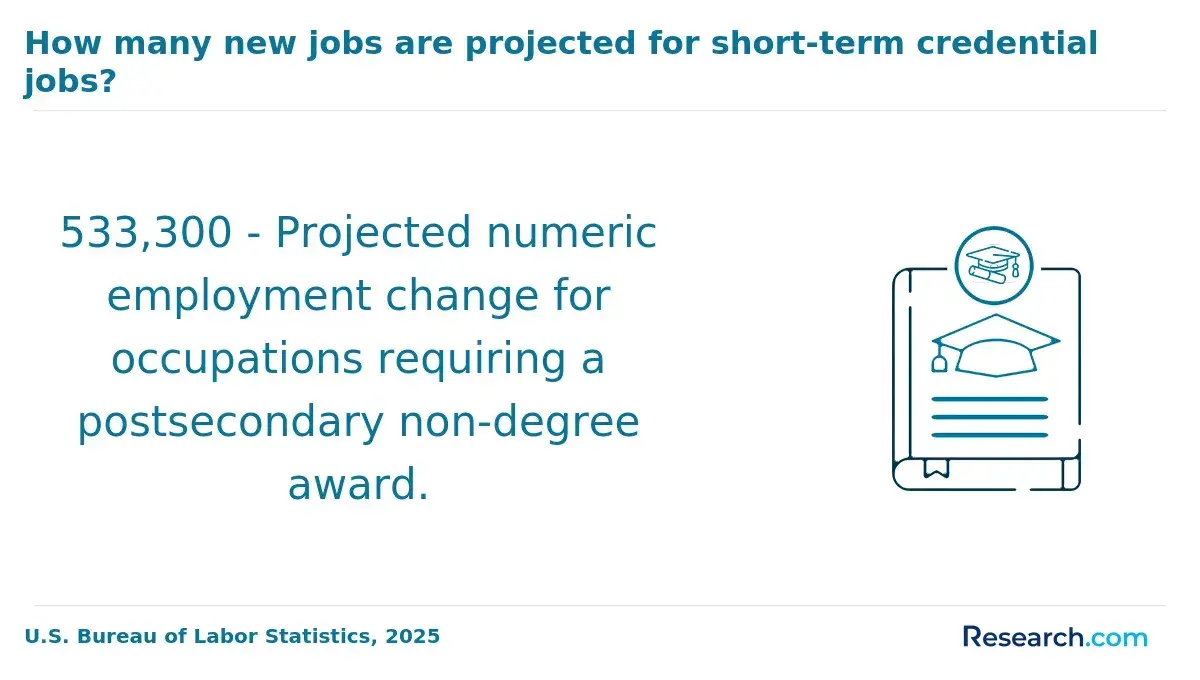
The employment context is favorable but competitive. The U.S. Bureau of Labor Statistics projects 29% growth for information security analysts from 2024 to 2034, much faster than the average for all occupations. For doctorate students, the takeaway is not that the degree guarantees advancement; it is that employers continue to need leaders who can interpret risk, manage complex programs, and communicate cyber priorities to executives and boards.
Mentorship can also help students position themselves in adjacent fields. For example, a cybersecurity leader studying automated threat detection or model governance may want to understand how an artificial intelligence major connects to AI risk, machine learning systems, and emerging security responsibilities.
The career value of mentorship is strongest when faculty do more than approve coursework. Useful professional mentoring may include the following forms of support.
- Helping students choose research topics that align with senior security, risk, compliance, or academic goals
- Encouraging conference presentations, practitioner publications, or internal executive briefings based on doctoral research
- Connecting students with professional associations, research groups, or alumni working in cyber leadership
- Advising on how to translate a dissertation or applied project into a portfolio of expertise
- Providing realistic feedback on academic, consulting, government, and private-sector career paths
Do not assume mentorship includes job placement. Ask whether faculty participate in career networking, whether alumni are accessible, and whether the program has examples of doctoral research influencing promotions, consulting work, teaching opportunities, or leadership roles.
A strong online cybersecurity management doctorate mentor should bring both doctoral-level research competence and field-relevant cybersecurity expertise. The ideal mentor does not need to be an expert in every technical tool, but should understand the management context surrounding cyber risk, organizational decision-making, security governance, and evidence-based research.
Students planning research at the intersection of cybersecurity and AI should examine whether faculty have relevant expertise in machine learning risk, adversarial AI, model governance, or automation strategy; comparing that depth with an online PhD in artificial intelligence USA can help clarify whether a cybersecurity doctorate or AI-focused doctorate is the better academic fit.
The table below outlines mentor qualifications to review before enrolling. These indicators are more useful than job titles alone because a professor may be highly credentialed but still not aligned with your intended research topic.
| Qualification area | What strong evidence looks like | Why it matters |
| Academic preparation | Earned doctorate in cybersecurity, information systems, computer science, business, public policy, or a related field | Shows ability to supervise doctoral research and scholarly writing |
| Cybersecurity management expertise | Research, teaching, or professional work in governance, risk, compliance, incident response, security leadership, or information assurance | Improves the relevance of feedback for management-focused topics |
| Research methods competence | Experience with qualitative, quantitative, mixed-methods, design science, or applied research methods | Helps students choose a feasible methodology |
| Publication or practice record | Peer-reviewed publications, books, grants, industry leadership, standards work, or high-level practitioner experience | Signals current engagement with the field |
| Mentoring capacity | Reasonable advising load, clear response expectations, and evidence of completed student projects | Reduces the risk of delays caused by unavailable faculty |
Common mistakes include choosing a program without reading faculty profiles, assuming every faculty member can supervise every cyber topic, and overlooking faculty turnover. If a specific mentor is central to your decision, ask admissions or the program director whether that person is currently accepting new doctoral advisees.
One-on-one faculty mentorship can increase the value of an online cybersecurity management doctorate, but it may also be built into programs with higher tuition, longer enrollment, or additional doctoral fees. The financial question is not simply "Which program is cheapest?" It is "Which program gives me enough expert guidance to complete a credible doctoral project without unnecessary delay?"
Current federal graduate loan costs also matter because doctoral students often borrow beyond tuition. For graduate and professional borrowers in the 2025-26 award year, federal rates published by the U.S. Department of Education include the following:
- Direct Unsubsidized Loans for graduate and professional students: 7.94% fixed interest
- Direct PLUS Loans for graduate and professional students: 8.94% fixed interest
- Direct PLUS Loan origination fee for loans first disbursed during the current fee period: 4.228%
These rates mean that a more expensive doctorate can cost substantially more than the advertised tuition once interest and fees are considered. A strong mentorship model may still be worth paying for if it reduces avoidable extra terms, improves dissertation feasibility, or supports a career goal that requires doctoral-level credibility.
The table below summarizes cost-value factors that matter specifically for mentored online doctoral programs. Use it to compare programs that differ in tuition, flexibility, and faculty access.
| Cost-value factor | Why it affects value | What to verify |
| Tuition structure | Per-credit, per-term, and dissertation-continuation pricing can produce very different total costs | Estimated total program cost under a realistic completion timeline |
| Mentor availability | Delayed feedback can extend enrollment and increase cost | Expected response times and average advising loads |
| Transfer credits | Accepted doctoral or graduate credits may reduce coursework cost | Maximum transfer allowance and whether credits affect residency or research requirements |
| Residency or symposium requirements | Travel and time away from work can add indirect cost | Whether attendance is online, hybrid, optional, or mandatory |
| Employer tuition assistance | Cybersecurity employers may support education tied to leadership development | Annual reimbursement caps, grade requirements, and service commitments |
If you cannot maximize mentorship, flexibility, and low cost at the same time, prioritize based on your risk. Students with a well-developed topic and strong research experience may reasonably choose a lower-cost, more structured program. Students with a specialized or evolving research agenda may benefit more from paying for stronger faculty access.
Students who benefit most from one-on-one mentorship usually need individualized research guidance, strategic career positioning, or help translating complex professional experience into doctoral scholarship. This includes many working professionals in cybersecurity leadership roles, but not everyone needs the same level of faculty interaction.
The following student profiles are most likely to gain value from individualized doctoral mentoring. Use them to assess whether mentorship should be a top selection factor or a secondary benefit.
- Mid-career cybersecurity managers who want to move into CISO, director, risk executive, consulting, or policy leadership roles
- Professionals with a specific research problem involving governance, incident response leadership, compliance, cyber insurance, workforce behavior, or security culture
- Students who have strong field experience but limited background in doctoral research methods or scholarly writing
- Working adults with unpredictable schedules who need flexible, individualized feedback rather than only cohort meetings
- Prospective faculty, researchers, or consultants who need a dissertation topic that supports a long-term professional niche
Students may benefit less from a program built primarily around one-on-one mentorship if they already have a mature research proposal, prefer fixed group deadlines, or want the lowest possible tuition above all else. A highly structured cohort program can also be a better fit for students who need peer accountability more than customized research coaching.
Avoid choosing mentorship as a prestige feature. It is valuable only when you will use it consistently and when the faculty expertise matches your goals. If you are not prepared to meet regularly, revise drafts, and act on feedback, a high-touch model may not produce enough added value to justify a higher cost.
How Should Students Evaluate Faculty Mentorship Before Choosing an Online Cybersecurity Management Doctorate?
Evaluating mentorship before enrolling requires more than reading the program homepage. You need to verify the mentor assignment process, faculty expertise, communication expectations, dissertation structure, accreditation, and total cost. The goal is to confirm that the program's support model is operational, not just promotional.
If you are still strengthening your technical foundation before doctoral study, a targeted cyber security course can help you test interest in a specialization such as cloud security, governance, incident response, or risk management before committing to a doctorate.
Use the following steps before applying or accepting admission. They are designed to help you compare mentorship quality with tuition, flexibility, and career outcomes.
- Identify three to five faculty members whose research or professional background overlaps with your intended topic.
- Ask when students are assigned a primary mentor, dissertation chair, or committee chair.
- Request the expected frequency and format of meetings, including video calls, email feedback, document comments, and group seminars.
- Ask how many doctoral students each faculty member typically advises and whether advising loads are capped.
- Confirm whether students can change mentors if research interests, availability, or communication fit become a problem.
- Review accreditation carefully, including institutional accreditation and any program-level recognition relevant to computing, business, or cybersecurity.
- Ask for a realistic total cost estimate that includes dissertation continuation terms, fees, residencies, books, software, and travel.
- Speak with current students or alumni about response times, dissertation feedback quality, and whether mentorship matched what admissions promised.
The table below gives you a practical comparison checklist for final program review. It focuses on evidence you can request before making a financial commitment.
| Evaluation area | Strong evidence | Red flag |
| Faculty transparency | Detailed faculty profiles, research areas, and current availability | No clear way to identify potential mentors before enrollment |
| Mentor matching | Documented process for matching students by topic and method | Students are assigned randomly or only after major delays |
| Communication expectations | Published response timelines and meeting norms | Vague claims such as "faculty are always available" |
| Dissertation support | Clear milestones, rubrics, proposal process, and committee structure | Students cannot explain how dissertation approval works |
| Admissions fit | Requirements align with doctoral rigor, including graduate degree expectations, professional background, writing samples, or research goals | Admissions standards are unclear or disconnected from research readiness |
| Student verification | Access to alumni, current students, webinars, or dissertation examples | School discourages detailed questions about mentoring experiences |
The best final decision balances three factors: mentor fit, program structure, and financial risk. If a program is expensive but offers unmatched faculty expertise in your exact research area, it may be a strong investment. If the mentorship claim is vague, the lower-cost program with clearer structure may be the safer choice.
Other Things You Should Know About Cybersecurity Management
No. A cybersecurity management doctorate usually emphasizes leadership, governance, risk, compliance, policy, and organizational decision-making. A technical cybersecurity PhD may focus more heavily on cryptography, systems security, networks, algorithms, or cyber defense research.
Not always. Many programs expect cybersecurity, IT, risk, or leadership experience rather than advanced programming ability. However, students should understand core security concepts and be comfortable analyzing technical issues from a management perspective.
Some are fully online, while others require residencies, doctoral symposia, research weekends, or live virtual sessions. Always confirm whether any campus visits, synchronous meetings, or travel-related requirements apply before enrolling.
Usually, certifications do not replace doctoral research requirements. They may strengthen an application or demonstrate professional expertise, but transfer credit and course waivers depend on institutional policy.
- Top 25 Cybersecurity PhD Programs In 2026 - Programs.com https://programs.com/programs/cybersecurity-phd-programs/
- Exploring Current Cybersecurity PhD Options: A Comprehensive Guide https://www.cm-alliance.com/cybersecurity-blog/exploring-current-cybersecurity-phd-options-a-comprehensive-guide
- Accredited Online Doctorate in Cybersecurity Programs https://zoclearnings.com/blogs/accredited-online-doctorate-in-cybersecurity-programs/
- Doctoral Degrees in Cybersecurity | CyberDegrees.org https://www.cyberdegrees.org/listings/doctoral-degrees/
- Online Doctorate in Cybersecurity | IMET worldwide https://imetworldwide.com/online-doctorate-cybersecurity-certificate-program-usa/
- Doctoral Degrees in Cybersecurity | ComputerScience.org https://www.computerscience.org/degrees/doctorate/cybersecurity/
- Mentoring Cybersecurity Students in Online Degree Programs https://journal.cisse.info/jcisse/article/download/205/205/402
- The Hidden ROI of Faculty Mentorship https://www.scholaro.com/db/News/how-faculty-mentor-students-308


