2027 Online Curriculum & Instruction Degree Programs With University Scholarships: Awards, Eligibility, and Net Cost

Co-Founder and Chief Data Scientist
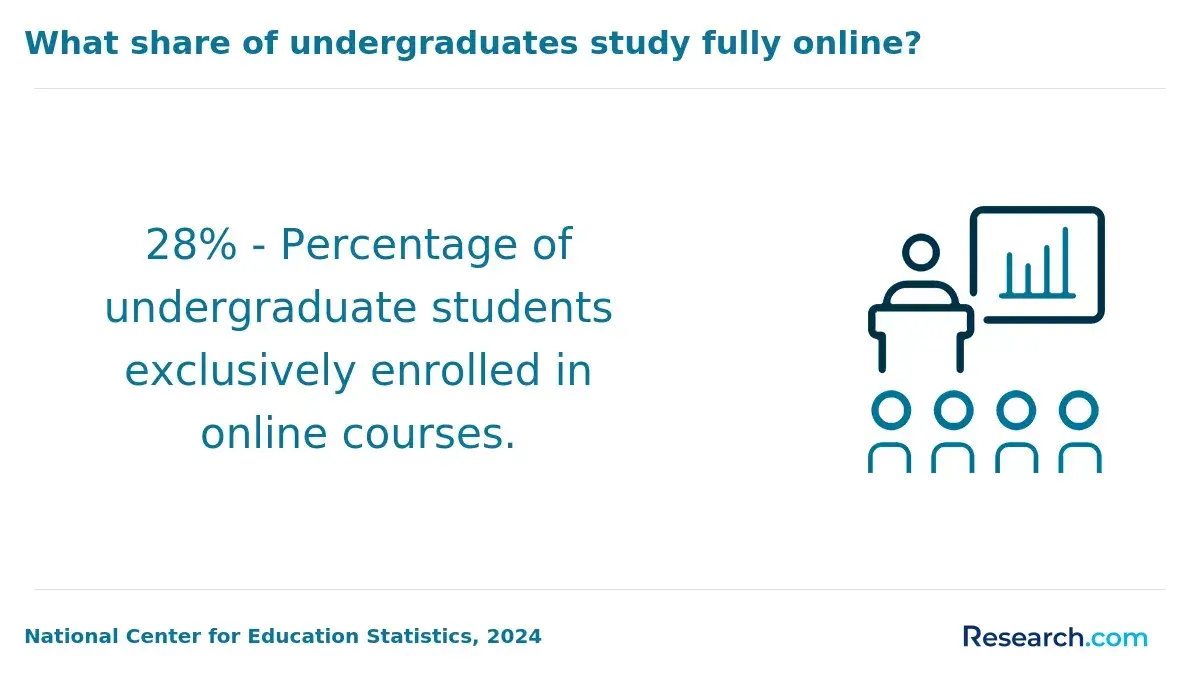
An online Curriculum & Instruction degree can prepare educators for curriculum design, instructional coaching, educational technology, and leadership roles, but tuition alone does not show what you will pay. National Center for Education Statistics data published in 2024 show that 53.5% of postbaccalaureate students enrolled exclusively in distance education in fall 2022. This guide helps teachers, transfer students, and working adults compare university scholarships, eligibility, renewal terms, and net cost so they can judge an offer by its actual out-of-pocket impact - not its advertised award.
Key Things You Should Know
- Online Curriculum & Instruction scholarships are not universal: many graduate programs limit institutional awards to specific enrollment levels, campuses, teacher-licensure pathways, or new students, so obtain written confirmation that online students qualify.
- A scholarship's value depends on the whole offer. A $3,000 award may cost more overall than a smaller award at a lower-tuition school once mandatory fees, credits required, employer aid, and federal loans are included.
- For eligible undergraduate students, the maximum Federal Pell Grant for the 2024-25 award year was $7,395; most Curriculum & Instruction master's students are not Pell-eligible, making institutional aid, employer support, and tuition reimbursement especially important.
Which Online Curriculum & Instruction Degree Programs Offer University Scholarships?
University-funded aid is most commonly available through an institution's central scholarship office, college of education, graduate school, alumni foundation, or partner-district initiative. An institutional scholarship is money awarded by the university rather than a government agency or private donor; it usually does not require repayment if the student follows its terms.
Online availability is the detail that matters. Some universities allow online education students to compete for general graduate scholarships, while others reserve awards for campus-based students, full-time students, or programs with a particular residency classification. Programs labeled Curriculum & Instruction may also appear as M. Ed. in Curriculum and Instruction, M.S. in Instructional Design, Learning Design, Educational Leadership, or Teacher Leadership.
The comparison below identifies the types of universities and award channels worth investigating. It is not a promise that every school in a category offers aid to every online student.
| Program or university channel | Where institutional aid may appear | What to verify before applying |
| Online M. Ed. in Curriculum & Instruction | College of education scholarships, alumni-funded education awards, graduate scholarships | Whether fully online and part-time students are eligible |
| Online instructional design or learning design program | Technology, innovation, adult-learning, or graduate-school awards | Whether the award covers the named online concentration |
| Public university online program | In-state educator scholarships, university foundation awards, district partnerships | Residency rules, state-teacher status, and tuition classification |
| Private nonprofit university online program | Merit awards, mission-based grants, employer-affiliation discounts | Whether institutional grants are renewable and whether they reduce other aid |
| Accelerated graduate pathway | Limited-time enrollment grants or completion scholarships | Total credits, course load, and whether a faster format reduces eligibility |
Start with schools that publish a scholarship directory and an online-program eligibility statement, then ask financial aid to identify awards attached specifically to the college of education. If speed is important, compare the academic pace and aid rules alongside options for a 1 year masters degree; an accelerated schedule can reduce living-cost exposure but may also require an enrollment intensity that affects scholarship eligibility.
A practical red flag is a school that advertises scholarships broadly but will not state whether distance learners in your exact degree qualify. Do not assume that admission to an online program automatically creates scholarship eligibility.
How Much Scholarship Money Can Online Curriculum & Instruction Degree Students Receive?
There is no standard university scholarship amount for online Curriculum & Instruction students. Awards can be a one-time amount, a per-term grant, a tuition discount, a percentage reduction, or a renewable award spread across the degree. A school should provide the award amount, applicable terms, and maximum value in writing before you use it in a budget.
Published tuition provides useful context, even though graduate online education programs set their own rates. For 2024-25, College Board reported average published tuition and fees of $11,610 at public four-year institutions for in-state students and $43,350 at private nonprofit four-year institutions. Those undergraduate averages are not a quote for a Curriculum & Instruction master's program, but they illustrate why the percentage of tuition covered can matter more than a headline award.
Use the following award structures to translate an offer into a comparable value.
| Award structure | How to calculate its value | Important limitation |
| One-time scholarship | Subtract it once from the first term or first year billed cost | It may not reduce the cost of later terms |
| Per-term scholarship | Multiply the stated amount by the number of eligible terms | Enrollment or GPA rules can limit later payments |
| Percentage tuition grant | Apply the percentage only to charges named in the award letter | Fees, books, and technology charges may be excluded |
| Employer or district partnership discount | Apply the discount to eligible tuition after confirming stackability | It may require current employment throughout enrollment |
| Full-tuition award | Confirm which tuition rate and how many credits are covered | "Full tuition" often excludes fees, supplies, and living expenses |
Ask for the scholarship's maximum cumulative value rather than relying on its annual label. A reader comparing education with another graduate route, such as a fastest psychology degree, should also compare total credits and required fees because a lower per-credit price does not automatically mean a lower total program cost.
What Are the Eligibility Requirements for Online Curriculum & Instruction Degree Scholarships?
Eligibility requirements determine whether an advertised award is realistic for you. Merit-based scholarships usually consider academic record, professional accomplishments, leadership, teaching experience, or a statement of purpose. Need-based awards generally require financial information through the Free Application for Federal Student Aid (FAFSA) or an institutional aid form.
Requirements vary by university, but these are the terms to read closely because they can change the amount you actually receive.
- Admission status: some awards require full admission rather than conditional admission or nondegree enrollment.
- Program format: confirm that fully online, hybrid, and out-of-state students are explicitly included.
- Enrollment intensity: a scholarship may require full-time enrollment, a minimum number of credits, or continuous registration.
- Academic record: minimum undergraduate GPA, graduate GPA, or satisfactory academic progress rules may apply.
- Professional affiliation: educator, school-district employee, military-connected learner, alumni relative, or partner-organization status can be required.
- Financial need: need-based awards may require FAFSA completion and verification of financial information.
- Citizenship or residency: some institutional funds have federal aid eligibility, state residency, or donor restrictions.
- Deadline: scholarship deadlines can occur before the program admission deadline or before a term begins.
Also distinguish admission requirements from scholarship requirements. A program may admit a teacher with a qualifying bachelor's degree and professional experience while a scholarship imposes a higher GPA, earlier deadline, or full-time enrollment condition. For licensure-oriented tracks, verify state requirements separately; completing an online curriculum program does not by itself establish eligibility for every state credential.
How Do You Apply for University Scholarships for an Online Curriculum & Instruction Degree?
Apply early enough to meet both admissions and scholarship deadlines. Automatic consideration is convenient, but it is not the same as a guaranteed award; schools may still use a competitive review, funding limits, or separate eligibility criteria.
These steps create a reliable application record and make it easier to compare offers later.
- Identify your exact degree, concentration, start term, online format, and anticipated enrollment level.
- Search the university's graduate school, college of education, foundation, and online-program scholarship pages.
- Ask financial aid in writing whether distance learners in your exact program can receive each named institutional award.
- Complete the FAFSA if you are eligible and submit any institutional financial-aid application by the earliest deadline.
- Prepare requested materials, which may include transcripts, résumé, teaching license, recommendation, essay, employment verification, or district affiliation proof.
- Save copies of every submission and request a written award notice showing the amount, terms covered, renewal conditions, and restrictions.
- Recalculate your budget after receiving the award letter, including tuition, fees, books, required technology, and any travel for residencies.
Adult learners often have strong professional evidence for scholarship essays. Explain your instructional impact, curriculum-development goals, leadership experience, and how the degree supports a defined role rather than repeating your résumé. Applicants exploring adjacent management training can similarly compare application friction among top MBA programs that don't require GMAT or GRE, but admissions-test policies do not determine scholarship eligibility.
A common mistake is waiting for admission before looking for awards. Some university scholarship pools close months before classes start, and a late applicant may be eligible in theory but miss the available funding cycle.
Are Scholarships for Online Curriculum & Instruction Degree Programs Renewable Every Year?
Some scholarships are renewable, meaning the university may continue the award for additional terms if you meet stated conditions. Others are one-time awards, so treat renewal as unavailable unless the award letter explicitly says otherwise. "Renewable" also does not necessarily mean the same amount will be paid each year.
Before accepting an offer, review these renewal elements because they determine the award's real multi-term value.
- Minimum cumulative GPA or satisfactory academic progress standard.
- Required enrollment level, such as full-time status or a minimum number of credits each term.
- Continuous enrollment requirement and rules for a leave of absence.
- Maximum number of terms, credits, or award years covered.
- Whether the scholarship is contingent on available funds or annual reapplication.
- Whether changing concentration, dropping a course, or moving from online to another format affects eligibility.
- Whether the award can be reduced if you receive outside scholarships, employer aid, or other institutional grants.
Get a renewal answer from the financial-aid office in writing and retain the original award notice. If your degree is designed for part-time working teachers, ask specifically whether taking fewer courses during a busy school term affects the award; this is one of the most frequent sources of unexpected net-cost changes.
Can You Combine an Online Curriculum & Instruction Scholarship With FAFSA and Other Financial Aid?
Often, yes. Students may be able to combine institutional scholarships with federal aid, outside scholarships, employer tuition assistance, veterans' education benefits, and payment plans. The final package is constrained by federal financial-aid rules, institutional packaging practices, the program's cost of attendance, and the specific scholarship's terms.
FAFSA is especially useful because it can establish eligibility for federal Direct Unsubsidized Loans, Direct Graduate PLUS Loans, and, for eligible undergraduate students, Pell Grants. Graduate and professional students generally are not eligible for Pell Grants, so a Curriculum & Instruction master's student should not build a budget around Pell funding unless the school confirms an eligible undergraduate classification.
Ask the school how each resource is treated before accepting it. The following interactions are the ones most likely to affect your net bill.
| Funding source | Potential interaction with university scholarship | Question to ask |
| Federal loans | Usually can fill remaining eligible educational costs | How much borrowing remains after grants and scholarships? |
| Employer tuition assistance | May stack, or may reduce need-based institutional aid | Does employer funding change my university award? |
| Outside scholarship | Must usually be reported and may alter the aid package | Will outside funds replace loans, work-study, or institutional grant aid? |
| Veterans' benefits | Can affect billing and institutional aid coordination | Which charges are covered, and what remains eligible for scholarship support? |
| State or district assistance | May have service or employment obligations | Can this be used with online enrollment and university-funded aid? |
Do not decline a scholarship because you expect it to eliminate federal borrowing automatically. Instead, request a revised aid worksheet showing what changes first when outside or employer funding is added.
How Much Does an Online Curriculum & Instruction Degree Cost After Scholarships and Financial Aid?
Net cost is the amount left after gift aid - scholarships and grants - is applied to eligible education charges. It is different from the amount financed with loans: loans can lower the bill due now, but they do not lower the underlying cost because they must generally be repaid with interest.
Calculate a term-by-term estimate rather than subtracting a scholarship from a tuition headline. This approach captures fees and timing differences that frequently make online programs cost more than students expect.
| Net-cost component | Include it? | Why it matters |
| Tuition for required credits | Yes | This is the base charge and may differ by residency or course load |
| Mandatory university and online-learning fees | Yes | Scholarships may not cover these charges |
| Books, software, assessments, and classroom materials | Yes | Instructional programs can require specialized digital tools or field-related materials |
| Required residency, practicum, or travel costs | Yes, when applicable | An online label does not always eliminate in-person requirements |
| University scholarships and grants | Subtract | These reduce cost without repayment when conditions are met |
| Employer tuition assistance and outside scholarships | Subtract if confirmed | Payment timing and stacking rules can affect the bill |
| Federal and private loans | Show separately | They finance remaining cost rather than reduce it |
For example, a meaningful scholarship can still leave a high net cost when a program has more required credits, noncovered fees, or a longer completion timeline. Compare the full program estimate, not merely the first term. Students also considering lower-cost management credentials can use a cheapest online business management degree comparison as a reminder that affordability depends on total required credits and charges, not tuition per credit alone.
Request a personalized cost-of-attendance estimate from each university. Ask it to separate grants and scholarships from loans, identify charges the award does not cover, and show the expected cost for your planned pace of enrollment.
Are There Scholarships for Transfer, Adult, Military, and Other Online Curriculum & Instruction Students?
These student groups often need additional verification, so identify the relevant office before applying.
- Transfer students should ask how accepted credits affect enrollment status, degree length, and eligibility for awards that require a minimum number of institutional credits.
- Adult and returning students should look for scholarships based on professional experience, service, leadership, or time away from school.
- Military service members, veterans, and dependents should consult the school's military or veterans office about institutional discounts, benefit certification, and scholarship stacking.
- Current teachers should ask whether district partnerships, educator associations, or shortage-area initiatives provide university-funded awards.
- International, undocumented, and non-U.S.-citizen applicants should ask the institution directly about donor-funded awards and FAFSA-related restrictions.
- Part-time students should confirm eligibility separately because many graduate scholarships require full-time enrollment even when the degree is designed for working professionals.
The strongest approach is to disclose your status early and request a list of awards that explicitly includes your program format. A scholarship page aimed at "graduate students" may still exclude online, nondegree, certificate, or less-than-half-time enrollment.
What Is the Difference Between Merit-Based and Need-Based Scholarships for Online Curriculum & Instruction Degrees?
Merit-based scholarships are awarded primarily for qualifications such as GPA, academic achievement, teaching excellence, leadership, professional experience, or a strong application essay. Need-based scholarships use financial circumstances as a central factor and often require FAFSA information or an institutional financial-aid application.
Neither type is automatically better. Merit aid can be particularly valuable for working educators whose household income may limit need-based eligibility, while need-based aid can provide stronger support when documented financial need is substantial. Some university awards blend both approaches.
This comparison shows how each type affects a scholarship strategy.
| Factor | Merit-based scholarship | Need-based scholarship |
| Main basis for selection | Achievement, potential, academic or professional record | Demonstrated financial need, sometimes with academic criteria |
| Common documentation | Transcript, résumé, essay, references, educator credentials | FAFSA, institutional forms, and sometimes verification documents |
| Effect of income changes | Often limited unless terms say otherwise | Eligibility or amount may change with financial circumstances |
| Typical renewal focus | GPA, enrollment, and satisfactory progress | Continued need, FAFSA filing, and satisfactory progress |
| Best comparison measure | Total renewable value after all conditions | Expected annual grant after required forms and verification |
Apply for both whenever permitted. The mistake to avoid is self-selecting out of need-based aid because you assume you will not qualify; the university, not the applicant, determines eligibility under its rules.
How Should You Compare Scholarship Offers From Online Curriculum & Instruction Degree Programs?
Compare offers using a common time frame, preferably the full expected degree length. The largest scholarship is not necessarily the best offer when another university has lower tuition, fewer required credits, more predictable renewal rules, or a stronger employer partnership.
Build one comparison sheet for every admitted program. The information below is what should appear before you make an enrollment deposit.
| Comparison item | Why it changes value | Best evidence |
| Total required credits and estimated completion terms | Determines the tuition base and how long funding must last | Official degree plan |
| Tuition and mandatory fees by term | Shows charges beyond the advertised tuition rate | University billing estimate |
| Scholarship amount and payment schedule | Distinguishes one-time aid from recurring support | Written award letter |
| Renewal criteria and maximum terms | Determines whether later costs rise | Scholarship terms and conditions |
| Online, part-time, and residency eligibility | Confirms that your actual attendance plan remains covered | Written financial-aid confirmation |
| Employer, military, and outside-aid stacking | Can increase or reduce the final institutional package | Financial-aid packaging policy |
| Licensure, practicum, or residency expenses | Captures costs that tuition scholarships may not cover | Program handbook and cost estimate |
Use the following decision sequence after all offers arrive.
- Confirm that every scholarship applies to your exact online Curriculum & Instruction degree and anticipated enrollment level.
- Calculate total program charges, including required fees and non-tuition expenses.
- Subtract only scholarships, grants, employer payments, and benefits that are documented and reasonably expected.
- Separate loans from gift aid so the remaining cost is not mistaken for a discount.
- Stress-test the budget by assuming a reduced course load, one nonrenewal scenario, or a term with extra professional obligations.
- Compare academic fit as well as price, including curriculum focus, faculty support, accreditation, practicum requirements, and whether the degree aligns with your state or employer goal.
- Ask the financial-aid office to correct any inconsistency between the scholarship page, award letter, and student account estimate before committing.
For educators aiming beyond a master's degree, compare the cost and admission expectations of later study separately; an online PhD organizational leadership may serve a different career objective and should not be treated as a direct substitute for a curriculum-focused degree. The best scholarship value is the offer that leaves the lowest sustainable net cost while still supporting your intended professional path.
Other Things You Should Know About Curriculum & Instruction
Not necessarily. Many programs are designed for licensed teachers seeking advanced curriculum, instructional-coaching, assessment, or leadership knowledge. If you need initial licensure, an endorsement, or administrative certification, verify the program's state-specific approval, clinical requirements, and eligibility with the university and relevant state agency.
Completion time varies by required credits, transfer credit, course availability, and whether you study full time or part time. Working educators often choose part-time pacing, which can make renewal terms and per-term scholarship limits especially important.
The degree can support roles such as curriculum specialist, instructional coach, learning designer, teacher leader, professional-development coordinator, education consultant, or instructional technology specialist. Actual job titles, employer requirements, and licensure expectations vary by school district, state, and organization.
Possibly. Compare total program cost after confirmed grants and scholarships, required fees, completion timeline, and non-tuition expenses. A lower-priced program with a smaller award can produce a lower net cost than a higher-priced program with a larger advertised scholarship.
References
- Scholarships for Online Students | ScholarshipOwl https://scholarshipowl.com/blog/find-scholarships/scholarships-online-students/
- What Financial Aid Offers Don't Tell You About the Cost of College | U.S. GAO https://www.gao.gov/blog/what-financial-aid-offers-dont-tell-you-about-cost-college
- Explore Scholarships for Online Education https://www.oedb.org/online-scholarship/
- Top 20 Education Scholarships to Apply for in December 2025 https://bold.org/scholarships/by-major/education-scholarships/
- Scholarships for Working Adults | Top Eleven Online Colleges https://www.college-scholarships.com/11-scholarships-for-working-adults-top-eleven-online-colleges/
- 30 Great Education Degree Scholarships https://www.topeducationdegrees.org/education-degree-scholarships/
- 2026 Guide to Scholarships For College Students https://www.onlineu.com/resources/financial-planning/scholarships
- 20 Teaching Scholarships for Students | All Education Schools https://www.alleducationschools.com/financial-aid/teaching-scholarships/
- 7 Helpful Scholarships and Grants for Online Schools https://www.studentloanplanner.com/grants-for-online-schools/
- Major Differences https://www.educationnext.org/major-differencecs-why-some-degrees-cost-colleges-more-than-others/