2027 Online BS in Business Administration Admissions with A Degree from an International Technical College: What to Check
Audited and Verified:
Our Editorial and Data Verification Process
Research.com uses government datasets, official education statistics and primary institutional information to support its career and degree guides. Our review process checks factual accuracy, occupational definitions, source dates and the requirements associated with the credentials discussed.
How This Article Was Fact-Checked
Our editorial team verifies salary estimates, employment projections, education requirements and program information against original data providers and official organizations. Salary figures are checked against the relevant occupational definitions and reporting periods. Information about licensure, accreditation and required in-person training is reviewed separately.
Fact-checked and verified on:

Co-Founder and Chief Data Scientist
A degree from an international technical college may open a path to a U.S. online BS in Business Administration, but admission and transfer credit are separate decisions. A school might recognize your credential yet apply only some of its courses toward the bachelor's degree. If you plan to study from outside the United States, enrollment rules and live-class schedules matter too. This guide shows you what to document, which offices make the decisions, and how to compare offers before paying a deposit or enrolling.
Key Things You Should Know
- An international technical college degree can qualify you to apply, but the U.S. institution decides whether it recognizes the credential and admits you to its business program.
- Accepted credits may count only as electives. Request a written degree audit showing how they apply to general education, the business core, and any concentration before estimating completion time.
- A U.S. bachelor's degree commonly requires around 120 semester credits; the credits you still need depend on course equivalencies, transfer limits, and the school's residency rules.
What Is an Online BS in Business Administration?
An online Bachelor of Science in Business Administration is an undergraduate degree covering business functions such as accounting, finance, marketing, management, and operations. "Online" describes delivery, not a different academic level. Programs may have scheduled live meetings, group assignments, proctored exams, or a capstone, so the format is not necessarily self-paced.
The exact degree title matters. A BS in Business Administration, a BBA, and a specialized business bachelor's may overlap, but their quantitative requirements, concentrations, and transfer policies can differ. An accelerated format may shorten the calendar, not the work required; accelerated business education for working adults is worth comparing only after you know which prior courses satisfy degree requirements.
Can an International Technical College Degree Qualify for U.S. Admission?
Yes, potentially. The decisive question is whether the receiving university accepts your institution and qualification as appropriate prior college study. A technical college may award a credential comparable to an associate degree, a different postsecondary award, or a qualification the university will not treat as transferable degree-level work. The credential's name alone does not settle that question.
Ask admissions whether your award meets its entry requirements and whether the business school has separate admission criteria. If your technical study was in engineering, computing, or another non-business field, ask which mathematics, communication, or introductory business courses you must complete and whether they are required before admission or later in the degree. The distinction between eligibility and preparation is also useful when reviewing academic eligibility for business administration degree study.
Confirm that the university can enroll students residing in your country. Admission to an online U.S. program does not, by itself, provide a U.S. visa, permission to enter the country, or employment authorization.
What Accreditation Should an Online Business Administration Program Have?
First, verify that the U.S. institution holds institutional accreditation recognized by the U.S. Department of Education. This is distinct from recognition of your former technical college: the university's admissions and transfer offices decide how they assess your previous education. Check the institution's current accreditation status directly with the accreditor and ask whether the online degree is awarded by that institution.
A business school may also hold AACSB, ACBSP, or IACBE accreditation. These are business-focused credentials, not substitutes for institutional accreditation. Their scope can differ, so confirm whether the particular school or program is covered rather than assuming every business offering is accredited. If application fees affect which institutions you can approach, applying to accredited online colleges for free can be a useful starting point, but verify each school's status and fee policy before applying.
Evaluation usually has two stages. Admissions determines whether your institution, credential, and academic record meet entry rules. The registrar or transfer-credit office then determines which individual courses earn credit; the business department or academic adviser decides how applicable credits fit the degree. Some schools evaluate records themselves, while others require a course-by-course report from an approved credential-evaluation service.
The outcomes below explain why a favorable credential evaluation is not yet a completion plan.
| Finding | What it establishes | What remains uncertain |
| Credential recognized | Prior study can be considered under the university's admissions policy. | Admission and course credit are not guaranteed. |
| Course credit accepted | A course earns a stated number and level of transfer credits. | It may count as an elective rather than meet a required course. |
| Requirement satisfied in a degree audit | Credit is applied to a specified general education, business, or elective requirement. | Other requirements, including courses taken at the university, may remain. |
Request the university's document instructions before ordering an evaluation. Gather official transcripts, proof of the award, course descriptions or syllabi, grading-scale information, and certified translations if required. Ask how it converts your credits to semester credits, treats practical or pass/fail courses, and assesses quantitative or accounting equivalencies. A prior technical course may be excellent preparation without matching a required business course. Applicants considering another specialized route can use colleges accepting coursework toward project management bachelor's study to frame the same credit-applicability questions - not as evidence that a business program will award identical credit.
Requirements vary by institution and by whether you apply as a transfer student, a first-year student, or a second-degree student. A completed international technical credential may support an application without satisfying every condition for admission to the business major.
Before submitting documents or paying for evaluations, ask admissions to confirm the requirements that apply to your record:
- Confirm your applicant category, minimum academic standing, deadlines, and whether the business major has separate entry requirements.
- Ask which official records, translations, credential evaluations, and proof of English proficiency are required - and whether any English-language waiver applies.
- Identify required mathematics, statistics, accounting, economics, or communication courses; ask whether missing courses can be completed after admission.
- Confirm whether testing, an essay, references, or proof of secondary-school completion is required in your applicant category.
Policies may differ even among closely related degrees. If your technical background points toward people operations, compare the entry rules of business administration with transfer pathways into online human resources programs; a specialized program may evaluate the same courses differently. Get program-specific answers in writing rather than relying on a general transfer estimate.
For this applicant, the most important difference may be access rather than academic subject. An online program can allow study from abroad if the university permits enrollment from your location. A campus program requires attention to travel and immigration rules, while an online program still may require live attendance at inconvenient local hours. Neither format changes the university's authority over transfer credit or graduation requirements.
Compare actual course schedules, exam arrangements, software access, group-project meeting times, and any campus visits or internships. Ask whether required business courses run every term and whether technical support is available in your time zone. If speed is your priority, accelerated bachelor's program comparisons are most useful when checked against your written transfer audit: a short advertised timeline may not apply if prerequisites must be taken in sequence.
A BS in Business Administration generally combines general education with a business core that may include financial and managerial accounting, economics, business law, finance, marketing, management, operations, and statistics or business analytics. Many programs add electives, a formal concentration, or a capstone. Exact courses and prerequisites come from the university's catalog for your enrollment term.
Your technical background may be especially useful in operations, information systems, or analytics coursework, but it does not automatically replace introductory accounting or other business requirements. Review the degree audit for prerequisite chains: a transferred mathematics course might fulfill general education yet not satisfy the specific prerequisite for business statistics. If human resources interests you, understanding human resources degree levels can help you distinguish an undergraduate elective or concentration from a separately awarded HR degree or later credential.
A U.S. bachelor's degree commonly totals around 120 semester credits, but an international technical college award does not translate into a fixed number of remaining credits. Completion time depends on credits applied to the degree, prerequisite sequences, course availability, enrollment pace, and any minimum credits that must be earned at the university. Ask for a term-by-term plan based on a completed evaluation, not an advertised transfer maximum.
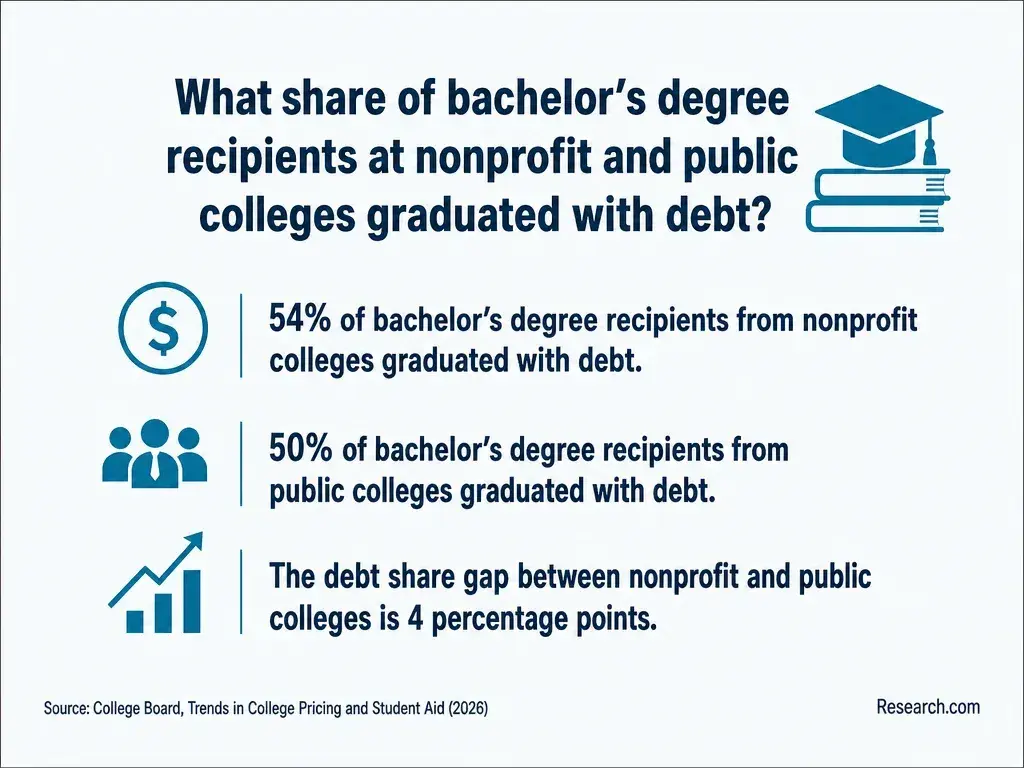
For cost, compare tuition and mandatory fees against the courses in that plan. Include credential evaluation and translation charges, books, software, proctoring, possible travel, and payment-conversion costs. Ask how the university bills students living abroad and whether its tuition rate or payment options differ by residency. Comparing business administration tuition and FAFSA eligibility can inform a cost comparison, but do not assume that studying at a participating U.S. institution makes an international applicant eligible for U.S. federal student aid; eligibility depends on individual status and applicable rules.
Business administration can support applications for roles in operations coordination, sales support, procurement, marketing, and human resources. Your technical training may provide an advantage for roles combining business processes with technology, but employers will also look for relevant experience, communication skills, and evidence that you can use business tools. A bachelor's degree does not automatically qualify a new graduate to manage staff.
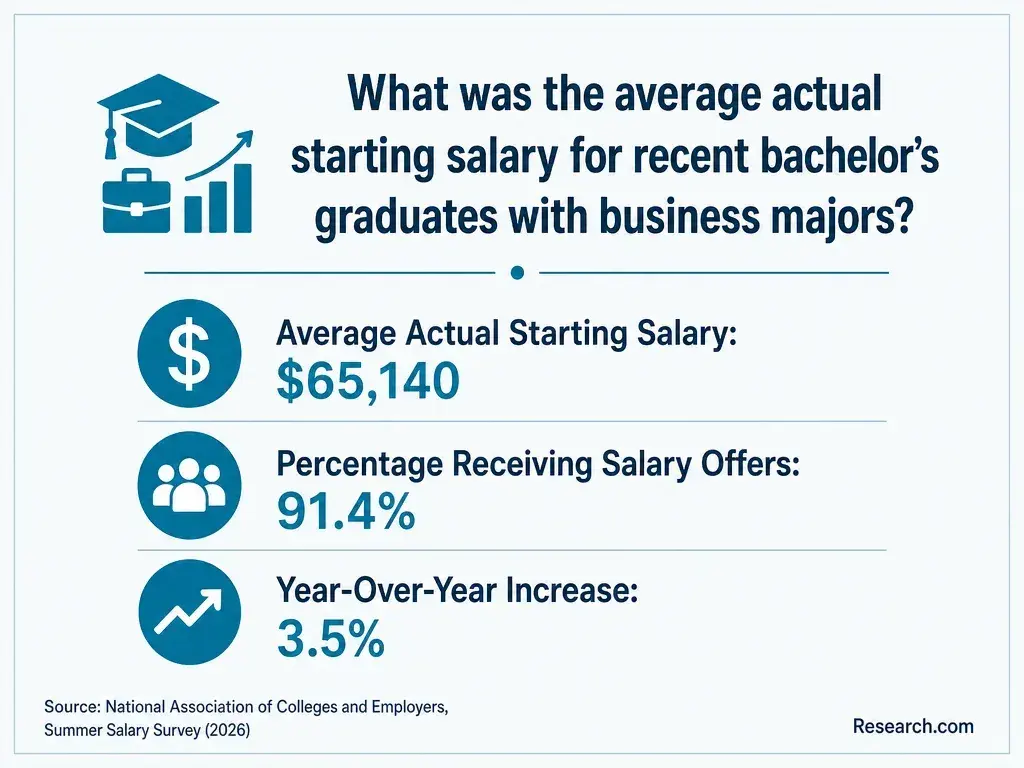
For context, the U.S. Bureau of Labor Statistics reports a May 2025 median annual wage of $75,940 for human resources specialists. That is an occupation-wide U.S. median, not an entry-level offer or a predicted salary for business administration graduates; the role, location, experience, and your authorization to work in the United States all matter. If your goal is specifically to lead teams, comparing three-year-or-less leadership degree pathways may clarify whether a leadership-focused curriculum fits better than a broad business degree. Check both programs against the jobs you intend to pursue.
Do Business Administration Graduates Need Licenses or Certifications?
There is no general U.S. license required simply to hold a business administration degree or work in many business support roles. Specific activities are different: regulated accounting, securities work, and some other occupations have separate rules. Voluntary credentials in fields such as project management or human resources may require their own education or experience. A business course or concentration does not award those credentials automatically.
If you have a particular role in mind, check its regulator or certifying organization before choosing electives. Compare its requirements with the degree plan and the cost of any additional study. For example, estimating the cost of accredited project management study may help if your goal is project-focused work, but a project management degree and a professional certification are separate qualifications. If you intend to work outside the United States, also check how employers and relevant authorities there recognize the U.S. degree and any proposed credential.
Other Things You Should Know About Business Administration
Some universities review applications using an interim transcript, but may require the final official record and proof of award before enrollment or final credit evaluation. Ask for the deadline and whether an offer would be conditional.
Not necessarily. The university must permit enrollment from your location, and its identity-verification, payment, and examination procedures must work there. Confirm those rules before applying.
No. A U.S. degree does not itself grant a visa or employment authorization. Any plan to work in the United States requires a separate review of the applicable immigration and employment rules.
Possibly as supporting information, but the second university makes its own admission and transfer-credit decisions. Ask whether it accepts the same credential-evaluation report before paying for another one.
- Accreditation in the U.S. | ed.gov http://www.ed.gov/laws-and-policy/higher-education-laws-and-policy/college-accreditation/accreditation-in-the-us
- 9 FAM 402.5 (U) STUDENTS AND EXCHANGE VISITORS | state.gov https://fam.state.gov/fam/09FAM/09FAM040205.html
- Transfer Credit | University of Alabama - UA Academic Catalog https://catalog.ua.edu/undergraduate/about/academic-regulations/policies/transfer-credit/
- English Language Proficiency | University of Arkansas https://international-students.uark.edu/admissions/english-language-proficiency.php
- General Education and Common Curriculum Requirements | UConn School of Business https://undergrad.business.uconn.edu/academics/cc-gen-ed/
- College of Business Administration - Academic Catalog https://catalog.uic.edu/ucat/colleges-depts/business-administration/
- U.S. Bachelor Equivalency - NYU Tisch School of the Arts https://tisch.nyu.edu/admissions/graduate-admissions/USbaequivalency
- Business Administration Major, B.S.B.A. - UNC Catalog https://catalog.unc.edu/undergraduate/programs-study/business-administration-major-bsba/
- International Credential Evaluation Requirements | Information Technology Services https://graduate.louisville.edu/admission/international/evaluation/requirements
- International Degree Equivalencies - Graduate School https://gradschool.cornell.edu/admissions/application-steps/transcripts/international-degree-equivalencies/