2027 Online BS in Business Administration Admissions with A Conditional Admission Offer: What to Check
Audited and Verified:
Our Editorial and Data Verification Process
Research.com uses government datasets, official education statistics and primary institutional information to support its career and degree guides. Our review process checks factual accuracy, occupational definitions, source dates and the requirements associated with the credentials discussed.
How This Article Was Fact-Checked
Our editorial team verifies salary estimates, employment projections, education requirements and program information against original data providers and official organizations. Salary figures are checked against the relevant occupational definitions and reporting periods. Information about licensure, accreditation and required in-person training is reviewed separately.
Fact-checked and verified on:

Co-Founder and Chief Data Scientist
A conditional admission offer is an opportunity to start an online BS in Business Administration, but it may not yet be permission to continue through graduation. The condition could involve a missing transcript, a prerequisite, or an academic performance requirement - and missing a deadline could disrupt your plans. If you are deciding whether to accept an offer, this guide explains what to confirm in writing, how to assess the degree and its cost, and when another program may be the safer choice.
Key Things You Should Know
- Identify every condition, its deadline, the required evidence, and who decides whether you have satisfied it before you accept.
- Confirm whether you can enroll in the business major now and whether courses taken while conditional will count toward graduation and financial-aid eligibility.
- Compare the written degree audit and total remaining cost - not just the admission offer - especially if prerequisites or limited course availability could delay completion.
What Is an Online BS in Business Administration with Conditional Admission?
Conditional admission is an offer subject to stated requirements. A school might allow you to begin classes while it awaits an official transcript, requires a prerequisite, or monitors your grades during an initial term. Another school might require the condition to be cleared before enrollment. The offer letter and applicable catalog policy - not the phrase "conditional admission" alone - determine what you may do.
Check whether the offer admits you to the university, the BS in Business Administration major, or both. Being allowed to take courses is not the same as having all prior credits evaluated or being eligible to graduate. If the condition concerns previous study, the school's credit and eligibility rules for business administration admission provide useful comparison questions, but the admitting institution must decide your case.
How Does Conditional Admission Differ from Regular Admission?
Regular admission means the school has accepted the applicant under its stated entry requirements. Conditional admission leaves a specified requirement unresolved; it does not necessarily mean the applicant is academically weaker or that the degree itself is different. These distinctions matter when planning enrollment and payment.
| Admission status | What it generally indicates | What remains uncertain |
| Regular admission | Entry requirements have been met under the institution's policy. | Transfer-credit applicability, course access, and graduation requirements may still need confirmation. |
| Conditional admission | Entry depends on meeting one or more stated conditions. | Whether and when the student may enroll, continue, or enter the major depends on the offer's terms. |
| Application pending | No final admission decision has been issued. | Eligibility to enroll and any eventual conditions remain undecided. |
If the conditions are too restrictive, you can compare other applications before committing. Fee-free applications for online college may reduce the cost of keeping another option open; verify each school's current application and business-program policies.
What Should You Check Before Accepting a Conditional Admission Offer?
Ask admissions to identify the policy that governs your offer and put any clarification in writing. Work through these checks before paying a deposit or registering, because an unresolved condition can affect both your first term and your completion plan.
- Define the condition: What document, grade, course, or other result is required, and what counts as acceptable proof?
- Confirm timing and authority: What is the deadline, who reviews the evidence, and when will you receive a final decision?
- Clarify enrollment: Can you take business-major courses now, and what happens to your registration if the condition is not met?
- Request a degree audit: Which previous credits are accepted, which satisfy specific requirements, and which prerequisite, residency, or concentration credits remain?
- Check financial exposure: Ask financial aid about your eligibility during conditional status, and obtain the deposit, withdrawal, and refund deadlines for the relevant term.
A conditional offer is most attractive when the remaining requirement is achievable by its deadline and the school confirms a workable course sequence. If resolving it postpones required business courses, compare the resulting graduation date with ranked programs for finishing a business bachelor's sooner; a faster advertised format is useful only if your credits and schedule fit it.
Verify the institution's accreditation with the accreditor and the U.S. Department of Education's recognized-accreditor information. Then check whether any claimed AACSB, ACBSP, or IACBE business accreditation actually covers the school or program offering your online BS. These are different checks: institutional accreditation does not establish business-specific accreditation, and business accreditation does not settle your individual transfer evaluation.
Confirm the exact degree name, online delivery arrangement, and institution that will award it. A listing of nationally ranked online business programs can help you identify comparison candidates, but a ranking is not a substitute for checking accreditation scope and the catalog that applies to your enrollment term.
Requirements vary by school and applicant type. An institution may request a secondary-school credential, previous college transcripts, a minimum academic record, or specified preparation in mathematics or business. A transfer applicant might meet university entry requirements but still need accounting, economics, statistics, or another course before progressing in the major.
Submit the documents the institution requests, then ask which requirements are mandatory, which can be completed after admission, and whether an approved equivalent satisfies them. If you previously studied another subject, do not assume those credits are lost - or that accepted credits fulfill the business core. For a student considering an HR-focused alternative, human resources bachelor's residency and transfer rules illustrate why the same prior coursework can have different value in different degree plans.
A BS in Business Administration commonly combines general education with business coursework in accounting, economics, finance, marketing, management, operations, and quantitative analysis. Requirements and sequencing vary: an introductory course may be needed before an upper-level course, while a capstone may be available only near graduation.
Read the degree map for the term you would enter. Identify any courses you are barred from taking until your admission condition is cleared, then check when those courses are offered online. If your goal is primarily supervising teams rather than broad business study, compare the actual curriculum - not just the title - with organizational leadership degrees with faster completion options. A leadership-focused degree may be a better fit for some goals, but it is not interchangeable with a business administration BS.
Your completion time depends on credits that apply to the degree, remaining prerequisites, course sequencing, enrollment pace, and any delay caused by the admission condition. An estimate based only on credits a school accepts can be misleading if those credits count as electives rather than business requirements.
To compare offers, request an itemized estimate using the same assumptions for each school: remaining required credits or courses, tuition charging method, mandatory fees, books and software, and expected terms of enrollment. Ask whether a prerequisite taken to clear conditional admission counts toward the degree and whether aid can cover it. Compare business administration tuition and completion time as separate measures: the shortest calendar path is not necessarily the lowest-cost one.
Online study removes routine travel to class, but it may still require scheduled meetings, timed or proctored exams, group presentations, internships, or campus visits. Campus study may offer easier in-person access to peers and services, but fixed meeting times and commuting can constrain a working student. Neither format automatically resolves a conditional admission requirement.
Ask for a sample course schedule and assessment policies before accepting. If you need to finish quickly, a guide to accelerated bachelor's study can help frame the pace comparison; confirm that the actual business courses you need are offered when your condition permits you to take them.
Business administration coursework can support applications for roles such as operations coordinator, marketing coordinator, HR assistant or specialist, and project coordinator. The suitable entry point depends on your work history and evidence of relevant skills, including spreadsheets, communication, process documentation, and analysis. A degree alone does not make a new graduate a manager or qualify someone for a regulated occupation.
If you already know the function you want, compare the BS curriculum with a more focused path. For example, transfer-friendly project management bachelor's degrees may warrant consideration for project-focused work, although employers can still expect practical project experience. Before accepting a conditional offer, check whether its required courses leave room for the electives, internship, or work samples relevant to your goal.
What Salaries and Job Outlook Can Business Administration Graduates Expect?
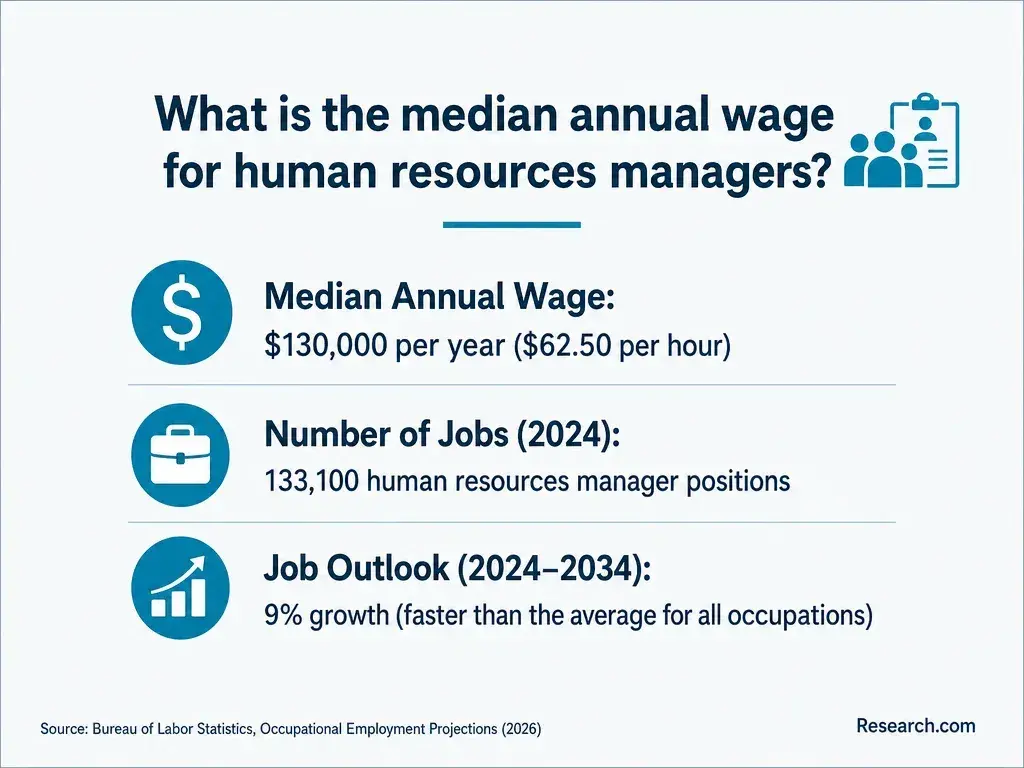
There is no single salary or growth rate for BS in Business Administration graduates. U.S. Bureau of Labor Statistics occupation-wide figures can provide context, but they include workers with different degrees and experience levels. For example, the May 2025 median annual wage for human resources specialists was $75,940, and BLS projects 6% employment growth for that occupation from 2025 to 2035. Neither figure predicts a new graduate's starting salary or the outcome of a conditional admission offer.
Evaluate the offer against the jobs you could realistically pursue, the experience those employers request, and your net education cost. If borrowing or an extra term would strain your budget, compare affordable business administration programs with federal aid access. Confirm your own aid eligibility and remaining degree requirements before treating a lower advertised tuition rate as a better financial outcome.
Other Things You Should Know About Business Administration
Possibly. Ask admissions whether deferral is permitted, whether your condition and scholarship terms carry over, and whether you would need to apply again.
Ask the registrar how admission status is recorded. The diploma generally identifies the awarded degree, but only the institution can confirm its diploma and transcript practices.
Usually, an admission offer does not prevent you from applying elsewhere. Check any deposit terms and enrollment commitments before making a second decision.
Only if the institution has an applicable prior-learning or experiential-credit policy and approves your evidence. Employment alone does not award credit or replace an admission condition.
- Student Information | HESC - NY. Gov https://hesc.ny.gov/programs-policies-and-procedures/student-information
- Rule 3357:15-18-01 | Admission policy. https://codes.ohio.gov/ohio-administrative-code/rule-3357:15-18-01
- Program Integrity Questions and Answers - Satisfactory Academic Progress | U.S. Department of Education http://www.ed.gov/laws-and-policy/higher-education-laws-and-policy/program-integrity-information-questions-and-8
- Eligibility Requirements | Federal Student Aid https://studentaid.gov/understand-aid/eligibility/requirements
- State Authority of Distance Education | pa.gov https://www.pa.gov/agencies/education/programs-and-services/instruction/postsecondary-and-adult-education/state-authority-of-distance-education
- School-Determined Requirements - FSA Partner Connect https://fsapartners.ed.gov/knowledge-center/fsa-handbook/2026-2027/vol1/ch1-school-determined-requirements
- Out-of-State Distance Education Information | Civil Service Commission https://www.nj.gov/highereducation/licensure/outofstatelicensure.shtml
- FAQs - Transfer Students | University of Cincinnati Admissions https://www.admissions.uc.edu/information/transfer/ts-faq.html