2027 Online Aviation Management Degree Programs With No Letters of Recommendation Required

Co-Founder and Chief Data Scientist
Applicants who do not have recent professors or supervisors to ask for references can still find online aviation management degrees with streamlined admissions. "No letters required" usually means references are not part of the standard application; transcripts, identity documents, and other evidence may still be required. This matters as online learning remains a major access route for working adults. The National Center for Education Statistics reported that 54% of U.S. postsecondary students took at least one distance education course in fall 2022.
This guide helps you identify real no-reference options, verify quality, compare costs, and choose a program that fits aviation career goals.
Key Things You Should Know
- Some online bachelor's aviation management and aviation administration programs list no recommendation letters in their standard undergraduate application, but applicants should confirm the requirement for their exact degree, start term, and transfer status before applying.
- No-reference admissions do not mean open admission or guaranteed acceptance: schools commonly review official transcripts, prior-college standing, a high school credential or equivalent, and sometimes a résumé, essay, placement information, or aviation experience.
- Compare institutional accreditation, total tuition and fees, transfer policy, aviation-focused coursework, and career support - not admissions simplicity alone; College Board reported average published 2024-25 tuition and fees of $11,610 at public four-year in-state institutions and $43,350 at private nonprofit four-year institutions, although online program pricing can differ substantially.
Which Online Aviation Management Degree Programs Require No Letters of Recommendation?
An online aviation management degree typically combines business coursework with aviation operations, safety, airport administration, airline management, logistics, and regulatory topics. Degree titles vary, including aviation management, aviation administration, aviation business administration, and aviation operations. A program qualifies as "no letters of recommendation required" only when its published application instructions do not ask standard applicants to submit references. This is different from a school that accepts letters voluntarily or waives them only for applicants meeting a GPA threshold.
The following institutions are examples worth checking because their standard undergraduate online admissions materials have generally emphasized applications and transcripts rather than recommendation letters. Requirements can change by catalog year, degree level, residency category, and applicant type, so treat this as a short list for verification rather than a promise of admission.
| Institution and online program area | Degree level | What to confirm directly | Likely fit |
| Embry-Riddle Aeronautical University Worldwide aviation business programs | Bachelor's | Whether the selected concentration and applicant pathway require references, prior credits, or placement documentation | Students seeking an aviation-specialized institution and flexible terms |
| Liberty University online aviation management programs | Bachelor's | Current transcript, high school credential, and any aviation concentration requirements | Students who want an aviation and business curriculum in a large online format |
| Purdue Global aviation management programs | Bachelor's | Transfer evaluation, prior-learning options, and whether any supplemental materials apply | Working adults seeking career-oriented online study |
| Other regionally accredited universities offering aviation administration or aviation business online | Bachelor's or master's | Whether "no references" applies to the degree itself rather than general university admission | Applicants comparing public-university tuition and aviation specialization |
Do not assume that an institution's general undergraduate application rules apply to a graduate aviation management program. Master's programs are more likely than bachelor's programs to request professional references, particularly when they assess leadership readiness. Students weighing aviation management against broader management training can also compare an online business degree to see whether a general business curriculum better matches their target role.
Before paying an application fee, use the degree page and current catalog rather than a third-party listing. Ask admissions in writing: "For the online [exact degree name] beginning [term], are recommendation letters required, optional, or waived for my applicant category?" Save the response with the application materials.
What Are the Admission Requirements for Online Aviation Management Degree Programs With No Recommendation Letters?
Streamlined admissions remove one document, not the school's responsibility to determine whether you can succeed in college-level work. Most online bachelor's programs require an application, official transcripts from previously attended schools, and evidence of high school completion or an equivalent credential. Transfer applicants usually must submit transcripts from every college attended, even if they do not want credit from each one.
This table separates common requirements from items that depend on the school and applicant profile. It can help you prepare before an application portal opens.
| Application item | How commonly it appears | What the school uses it to assess |
| Online application and identity information | Nearly universal | Eligibility, residency, program selection, and contact details |
| Official high school and/or college transcripts | Nearly universal | Prior coursework, GPA, transferable credit, and academic standing |
| High school diploma, GED, or equivalent evidence | Common for first-time undergraduates | Basic undergraduate entry eligibility |
| Personal statement or short-response question | Varies | Goals, motivation, communication, and fit with the program |
| Résumé or work-history form | More common for adult-focused or graduate programs | Relevant airport, airline, military, logistics, customer-service, or leadership experience |
| Standardized test scores | Often not required, but varies | Placement or additional evidence when transcripts are limited |
| FAA certificates or aviation prerequisites | Program-specific | Eligibility for technical concentrations; management degrees often do not require pilot training |
Aviation management generally does not require a private pilot certificate because it prepares students for business and operational roles rather than pilot licensure. However, a curriculum may include aviation law, airport systems, safety management systems, accounting, economics, data analysis, and supply chain concepts. Applicants whose academic record is older or uneven should explain relevant employment accomplishments when the application provides a place to do so.
One common mistake is reading "recommendations not required" as "no documents required." Another is sending unofficial screenshots when the institution requires an official transcript. Make a document checklist from the program's current application page, then submit only what the school requests; unsolicited recommendation letters may not be added to the admissions file.
Are Online Aviation Management Programs With No Letters of Recommendation Easier to Get Into?
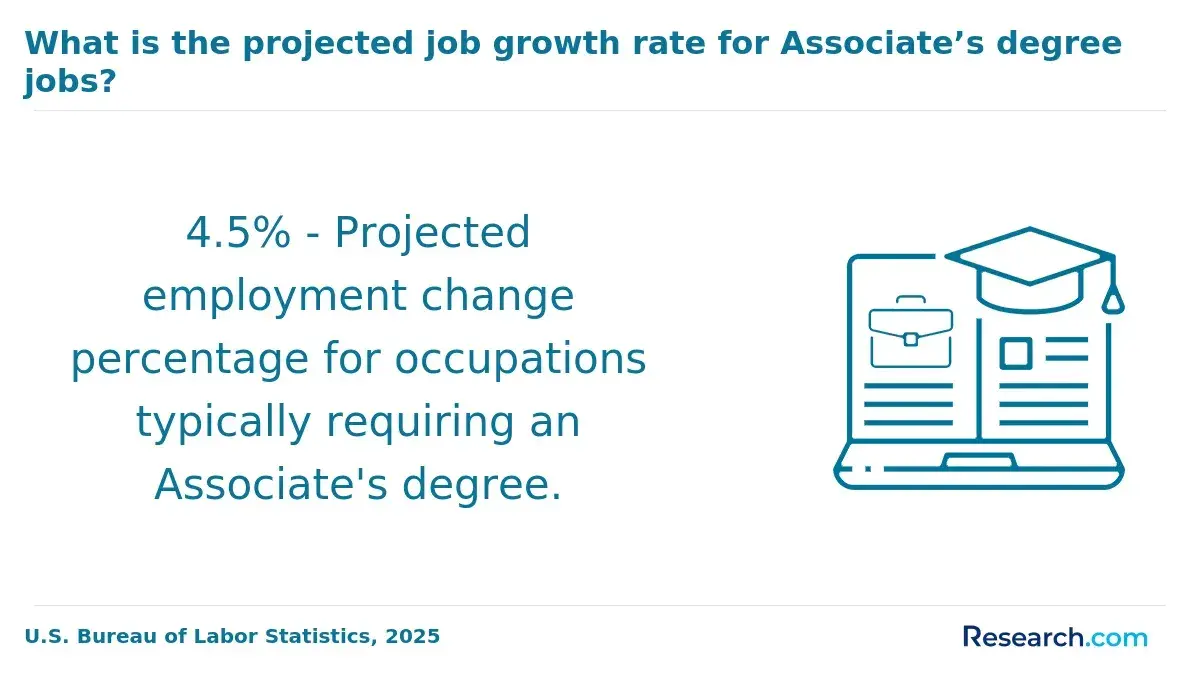
They may be easier to apply to, but they are not necessarily easier to enter or complete. Removing letters can reduce delays for applicants who have been out of school, are changing careers, work nontraditional schedules, or do not have current academic contacts. It does not eliminate academic review, financial obligations, course expectations, or institutional policies on prior academic performance.
Admissions selectivity depends on the whole process. A school may rely more heavily on transcripts and a stated minimum GPA, while another may use holistic review without publishing a fixed cutoff. For graduate study, schools may still expect a completed bachelor's degree, relevant professional experience, a résumé, and an essay even when references are not required.
Use this distinction when interpreting simplified admissions:
- Simpler application: Fewer documents, such as no letters or test scores, but normal review of transcripts and eligibility.
- Conditional admission: Entry may be available with requirements to meet a specified GPA or complete early courses successfully.
- Open admission: Broad access policies, which still may include placement, prerequisite, or progression rules.
- Selective admission: A limited-seat or competitive review process that may or may not request recommendations.
A no-reference route is most useful for prepared applicants whose strengths are visible in transcripts, work history, or a well-supported statement. It may be a poor choice for someone selecting a school solely because it seems less demanding. A program's accreditation, curriculum, cost, course availability, and support for career goals are more meaningful indicators than the number of application documents.
If your long-term goal is executive aviation leadership, compare whether an undergraduate degree now and an MBA later make more sense than a narrowly specialized graduate path. Affordable top MBA online options can be relevant after you have developed aviation or management experience.
Recommendation letters are traditionally used to obtain outside evidence of reliability, communication, leadership, and readiness. When a program does not require them, it typically evaluates evidence that is easier to verify directly. The strongest application shows a consistent connection between your prior education, professional record, and intended aviation role.
Admissions teams commonly use the following materials to build a fuller picture of applicants without references:
- Official transcripts to review completed courses, cumulative performance, academic trends, and eligibility for transfer credit.
- A personal statement to assess whether the applicant understands the degree, communicates clearly, and has realistic goals in airline, airport, cargo, safety, or aviation-service management.
- A résumé to identify supervisory duties, scheduling, dispatch support, customer operations, military logistics, maintenance coordination, or other relevant experience.
- Prerequisite completion or placement results to determine readiness for writing, mathematics, business, or statistics coursework.
- Professional licenses or training records, when relevant, to document aviation exposure without treating a certificate as a substitute for academic preparation.
A concise statement can be particularly helpful when it is requested. Instead of repeating a résumé, explain the operational problem you want to understand better - such as airport customer flow, airline scheduling, safety reporting, or cargo coordination - and connect it to specific coursework. Do not exaggerate aviation responsibilities; admissions offices can ask for documentation or clarify employment history.
Programs may also value transferable business skills. Budgeting, team supervision, compliance, analytics, procurement, customer service, and project coordination are relevant to aviation management. Students still exploring academic direction can review different majors in college before committing to a specialized aviation curriculum.
Accreditation and transparent institutional practices are the most important safeguards when evaluating a streamlined-admissions program. In the United States, institutional accreditation is generally the baseline check because it affects federal aid eligibility, transferability, and employer confidence. Aviation management is a business and operations degree, so it usually does not require the same programmatic accreditation as pilot training or aircraft maintenance education.
Use the school's accreditation statement, its accreditor's public directory, and the U.S. Department of Education database to verify status. A legitimate institution should clearly identify its accreditor, physical address, tuition policy, refund policy, faculty information, academic calendar, and complaint process. Do not rely on a seal alone; verify the accreditor and institution names independently.
These checks can help distinguish a sound online degree from a risky enrollment decision:
- Confirm that the institution holds recognized institutional accreditation and that the status covers the degree-granting campus or online division.
- Read the current catalog for the exact aviation management degree, including required credits, learning outcomes, graduation rules, and transfer policies.
- Check whether the curriculum covers management, aviation operations, safety, finance, law, and analytical skills rather than relying on vague course descriptions.
- Review faculty credentials and determine whether aviation practitioners, business faculty, or both teach core courses.
- Request the complete cost of attendance, including technology, course-material, graduation, and any aviation-related fees.
- Ask whether online students receive advising, library access, career services, disability accommodations, and technical support.
Red flags include pressure to enroll immediately, unclear accreditation language, promises of guaranteed employment, unexplained fees, and credits that appear unlikely to transfer. Also be cautious when a school advertises "no requirements" but cannot provide a current catalog. A legitimate no-recommendation policy simplifies evidence collection; it should not obscure academic standards or consumer information.
Employers generally focus on whether the degree is from a recognized institution, what you learned, and your relevant experience. For roles involving federal regulations, airport operations, or safety, practical knowledge and employer-specific training can matter as much as the degree title. Aviation management does not itself confer FAA pilot, mechanic, dispatcher, or air traffic controller credentials.
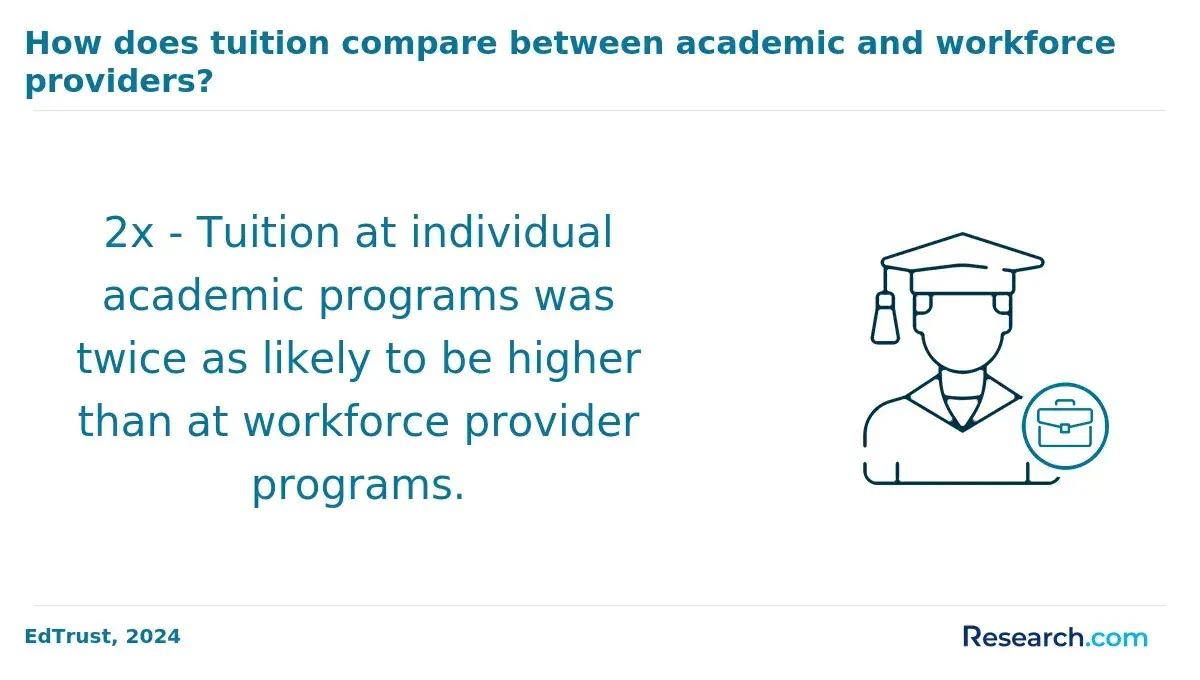
Recommendation-letter policies do not determine tuition. Online aviation management costs depend mainly on the institution, residency rules, total credits required, transfer credits accepted, course fees, and whether the school charges a flat online rate. Published tuition is only one part of the decision: a lower per-credit price can cost more overall if few prior credits transfer.
For context, College Board's 2024-25 published averages were $11,610 for tuition and fees at public four-year institutions for in-state students and $43,350 at private nonprofit four-year institutions. These are broad undergraduate benchmarks, not online aviation management price quotes. They exclude many living, technology, and personal costs and should not be used as a program total.
Ask each school for a written estimate based on your transfer evaluation and intended pace. The cost categories below reveal why two programs with similar advertised tuition can have very different totals.
| Cost factor | Why it changes the total | Question to ask |
| Tuition rate | May be charged per credit, per term, or at a flat online rate | Is the quoted rate guaranteed for my enrollment period? |
| Transfer credit | Accepted credits can reduce the number of courses needed | How many credits are likely to apply to the major and general education requirements? |
| Mandatory fees | Technology, student services, course materials, and graduation fees may be separate | What fees are charged each term and at graduation? |
| Books and software | Digital platforms, simulations, and access codes can add costs | Are materials included in tuition or billed separately? |
| Travel or residency requirements | Some programs include optional or required experiences | Is any campus visit, proctoring, or travel required? |
Aviation management students should also calculate value, not simply price. Compare whether the degree includes operations, analytics, leadership, safety, and internship opportunities that align with your intended role. For students considering a visually oriented aviation communications or branding role instead, an online graphic design degree may be a more direct academic route.
Yes. A streamlined admissions process does not normally prevent a student from seeking financial aid. Eligibility for federal student aid depends on factors such as enrollment in an eligible program at an eligible institution, citizenship or eligible noncitizen status, satisfactory academic progress, and FAFSA information - not on whether recommendation letters were submitted.
Complete the FAFSA as early as practical for the relevant award year, then review each school's financial-aid offer carefully. Aid may include federal grants for eligible undergraduates, Direct Loans, work-study where available, institutional scholarships, employer tuition assistance, veterans' education benefits, and private scholarships. Amounts and eligibility vary by student and can change from year to year.
Before accepting funding, make these comparisons:
- Separate grants and scholarships, which generally do not require repayment under their terms, from loans that must be repaid with interest.
- Compare the net price after gift aid, not the school's advertised tuition alone.
- Ask whether aid applies equally to part-time enrollment, accelerated terms, and repeated courses.
- Confirm the school's satisfactory academic progress policy, including minimum completion pace and GPA requirements.
- Check whether employer reimbursement requires you to remain employed or earn a specified grade.
Students using veterans' benefits should contact the school's certifying official before registering because online enrollment, course load, and program approval can affect benefits. Borrow only after reviewing expected total borrowing, likely completion time, and the career value of the curriculum. Admissions convenience should not lead to a rushed financial commitment.
Doctoral study is a different financial and admissions decision, often involving more extensive documentation and research expectations. Students who ultimately need an education-leadership credential can separately examine online Ed.D programs rather than assuming an aviation management degree serves that purpose.
Time to completion is determined by degree level, required credits, transfer credit, course sequence, and enrollment intensity - not by the absence of recommendation letters. A bachelor's degree commonly requires about 120 semester credits. Students who begin with no transferable credit and attend full time often plan around four academic years, while transfer students or those with approved prior learning may finish sooner. Part-time students often need longer.
Online formats can offer multiple starts, asynchronous coursework, or accelerated terms, but flexibility is not the same as a lighter workload. Aviation management courses may require group projects, case analysis, presentations, and time-sensitive assignments. If a program uses eight-week terms, taking two classes at once can create a workload similar to a larger traditional course load.
Use the program map to estimate your own timeline. Confirm how often required classes run, whether a capstone must be taken last, and whether transfer credits satisfy only electives or also major requirements. A school should be able to explain a realistic sequence after reviewing your transcripts.
Working adults may benefit from starting with one course to test the online platform and weekly workload. Students seeking rapid completion should avoid choosing a program solely because it advertises frequent starts; a degree that does not offer needed core courses regularly can delay graduation.
Often, yes. Transfer review is usually separate from the recommendation-letter policy. Schools commonly evaluate official transcripts course by course to determine whether prior work meets general education, business core, aviation core, or elective requirements. Acceptance of a credit does not always mean it applies to the aviation management major.
Transfer rules differ widely. Institutions may set limits on the number of credits accepted, require a minimum grade, impose time limits on certain courses, or require that a specified number of credits be completed through the degree-granting school. Military training, industry certifications, examinations, and professional learning may also be reviewed under prior-learning policies, but approval is never automatic.
To protect both time and money, follow this transfer process before enrolling:
- Send official transcripts from every prior institution early enough for a written evaluation.
- Request a degree audit showing which credits meet general education, business, aviation, and elective requirements.
- Compare the remaining required credits with the program's course sequence and expected graduation date.
- Ask whether the evaluation is preliminary or final and whether it changes after enrollment.
- Keep course descriptions and syllabi available if the school requests them for an older or specialized aviation course.
A frequent mistake is comparing schools by the number of credits accepted without asking where those credits apply. A program that accepts more electives may still require nearly all aviation and business core courses. Choose the option with the best combination of applicable credit, transparent pricing, and curriculum alignment.
How Should You Compare Online Aviation Management Degree Programs That Do Not Require Letters of Recommendation?
Start by treating no-reference admissions as one screening criterion, not the final decision. The right program should support the job you want, whether that is airport operations, airline customer experience, aviation safety, cargo and logistics, fleet support, or a broader transportation-management role. The U.S. Bureau of Labor Statistics reported a 2023 median annual wage of $102,010 for transportation, storage, and distribution managers, while also projecting 9% employment growth from 2023 to 2033. This occupation is broader than aviation management, but it illustrates why management, logistics, and analytical skills can be valuable across transportation employers.
Compare finalists using the same questions so marketing language does not obscure practical differences.
| Comparison area | What a strong answer looks like | Potential concern |
| Recommendation policy | The program confirms in writing that letters are not required for your applicant type and start term | The answer refers only to general university admission or says requirements may be added later |
| Accreditation | Recognized institutional accreditation is clearly identified and verifiable | Unclear accreditor name, vague claims, or no current catalog |
| Curriculum | Coursework addresses aviation operations, business, safety, law, data, and leadership | Few aviation-specific courses or no visible learning outcomes |
| Cost and transfer credit | Written tuition estimate and degree audit explain total remaining credits | Only a per-credit promotional price is provided |
| Online delivery | Clear information on live sessions, group work, proctoring, pacing, and support | Format is described only as "flexible" without details |
| Career relevance | Internships, employer connections, faculty expertise, and career services align with your goals | Guaranteed-job claims or no discussion of career preparation |
Shortlist two or three accredited programs, request their catalogs and degree audits, and compare net cost rather than application convenience. Ask admissions whether the degree is fully online, whether students can complete an internship near home, and whether any aviation experience is required. Ask career services which employers recruit online students and what support is available for résumé review, networking, and internships.
A no-recommendation program is a strong option for applicants who can document readiness through coursework, work history, or a focused statement. It may not be ideal for students who need extensive academic remediation, want a pilot or maintenance credential rather than management training, or cannot verify the school's accreditation and costs. The best choice is the program that makes its standards, outcomes, and financial expectations clear before you enroll.
Other Things You Should Know About Aviation Management
Only submit them if the application explicitly allows optional materials. Some admissions offices will not add unsolicited documents to an application file. If letters are optional, use them only when they add specific evidence of leadership, aviation knowledge, or academic readiness.
No. Many airport, airline, cargo, customer operations, safety support, and administrative roles do not require pilot certification. A pilot certificate may be helpful for certain career paths, but aviation management degrees generally focus on operational and business knowledge rather than flight training.
It should hold regional accreditation from the school’s institutional accreditor, and the aviation management program should follow university degree standards. Some programs also align coursework with FAA-related aviation operations, airport management, safety, and logistics requirements, which employers often recognize when reviewing graduates for management roles.
Employers may consider the institution's recognition, the curriculum, your experience, and your demonstrated skills more than the delivery format alone. Choose an accredited program that clearly identifies itself as a degree-granting institution and pursue practical experience, internships, or relevant workplace projects when possible.
- Aviation Management Degree - MSU Denver https://www.msudenver.edu/online/aviation-aerospace-management-bs/
- Aviation in universities? https://community.infiniteflight.com/t/aviation-in-universities/760486
- Internships | Federal Aviation Administration https://www.faa.gov/jobs/students/internships
- Internships: The Talent Magnet https://nbaa.org/flight-department-administration/internships/internships-the-talent-magnet/
- The Best Online Aviation Management Degree Program https://www.indwes.edu/articles/2024/06/the-best-online-aviation-management-degree-program
- Students HM | United Airlines https://careers.united.com/us/en/students