
2027 Most Affordable Associate Degrees for Technology Careers

Co-Founder and Chief Data Scientist
Which associate degree offers a practical route into technology without leaving you with an unaffordable bill? The answer depends on more than the major: local tuition, required fees, equipment, and whether the credits advance your career goal all matter. The College Board reported average published in-district tuition and fees of $4,050 at public two-year colleges for 2024-25, making them a useful starting point - not a price guarantee. This guide compares technology-related degree paths, explains their career and transfer trade-offs, and shows you how to calculate the cost of finishing.
Key Things You Should Know
- Start with an in-district public community college, but compare its full degree cost against other offers; the 2024-25 national average of $4,050 covers one year of published tuition and fees, not every expense.
- Choose by career goal: an applied technology degree may support workforce entry, while a transfer-focused science degree may save money only if its credits count toward your intended bachelor's program.
- Expect many associate programs to require about 60 credits; prerequisites, course schedules, part-time study, and accepted transfer credit can change both completion time and total cost.
Top 10 Most Affordable Associate Degrees for Technology Careers
Business Programs
An associate degree in business information systems or business administration with analytics coursework can suit someone interested in technology-enabled operations rather than hardware or software development. Compare required spreadsheet, database, and accounting courses with the jobs you want. A transfer-oriented AA or AS may be economical if its courses satisfy a bachelor's degree plan; an AAS may provide more applied training but transfer less cleanly. Avoid paying for a broad business degree if your target job specifically requires networking, programming, or another technical skill the curriculum does not teach.
Healthcare Programs
Health information technology or health information management associate programs combine records systems, coding, privacy, and healthcare workflows. They can be a better technology fit than a general healthcare degree for students who prefer data and systems to direct patient care. Compare specialized software, practicum, and certification-related costs alongside tuition. Check whether the program's accreditation or curriculum meets the eligibility rules for any credential you intend to pursue; earning the degree and qualifying for a certification are separate questions.
Information Technology Programs
Computer information systems, networking, cybersecurity, and software development associate degrees offer the most direct technical coursework. A local AAS with hands-on labs may be cost-effective for help desk or junior technical roles; an AS with an articulation agreement may offer better value for a future bachelor's degree. Compare lab and equipment fees, access to current tools, internships, and the credits your next school will accept. Cybersecurity classes alone should not be mistaken for a direct route into an experienced security analyst job.
Nursing / Pre-Nursing Programs
An associate degree in nursing is a clinical pathway, not a general technology degree, although nurses use electronic health records and other digital systems. Pre-nursing coursework may lead to a separate, selective nursing application. Clinical placement, transportation, supplies, and possible waiting periods can materially increase costs. Anyone aiming for nursing informatics should first examine the nursing licensure pathway and later experience requirements. Choose this route for patient-care work - not as a cheaper substitute for an IT degree.
Criminal Justice Programs
A criminal justice associate degree with digital evidence coursework can introduce technology used in investigations, but it is not equivalent to training in computer forensics or cybersecurity. For technical evidence roles, compare its computing requirements with those of an IT program and review actual job postings. Agencies may impose background, experience, or additional education requirements. The less expensive degree is poor value if it omits the skills required by your intended occupation.
Psychology / Counseling Programs
Psychology coursework can complement technology interests such as user research, accessibility, or digital mental health, but a psychology associate degree is usually a transfer pathway rather than direct preparation for a technical job. Licensed counseling requires additional education and state-specific requirements. If your goal is technology employment soon after graduation, compare a computing major with psychology electives. If your goal is a bachelor's degree, verify that the lower-cost associate courses satisfy the receiving institution's major requirements.
What Are the Most Affordable Associate Degrees for Technology Careers?
The most affordable technology associate degree is the accredited program with the lowest realistic cost to complete and coursework that fits your next step. For many students, that means an in-district public community college. No major is automatically cheapest: specialized labs, equipment, commuting, and credits that do not transfer can outweigh a low tuition rate. Likewise, a program listed among easy degrees to get is not necessarily the least expensive or most useful choice.
This comparison identifies degree fields worth pricing first. The cost column describes expenses to check, not verified prices or a ranking of individual colleges.
| Associate degree field | Best fit | Cost and value question |
| IT support or computer information systems | Entry-level technical support and systems fundamentals | Are certification exams, software, and lab access included? |
| Networking or cybersecurity | Network support skills and a foundation for later security work | Do equipment and lab fees change the total price? |
| Software development or web development | Programming projects and a portfolio | Will the curriculum build demonstrable skills without costly extra tools? |
| Health information technology | Healthcare records and data workflows | Are practicum and intended certification costs accounted for? |
| Transfer-focused computer science AS | A planned bachelor's degree in computing | Will each course apply to the destination major? |
For direct employment, compare applied coursework and local employer expectations. For transfer, a low-priced AS can become expensive if the destination school accepts credits only as electives. Request a program-specific transfer evaluation before deciding.
How Much Do Technology Associate Degrees Cost and How Long Do They Take?
Many technology associate degrees require about 60 credits. Two academic years may be feasible with a full-time schedule, but part-time enrollment, math prerequisites, limited course offerings, and internships can extend the timeline. Ask for a term-by-term plan based on your starting credits rather than relying on a standard completion claim.
The College Board's 2024-25 figure of $4,050 represents average annual published tuition and fees for in-district students at public two-year colleges. It is a benchmark, not the total price of a degree: residency rules, program fees, books, equipment, transportation, and living expenses vary. Your net price also depends on grants and scholarships.
To compare offers fairly, request each school's estimate for all remaining credits and mandatory fees, then ask which additional expenses are required for your major. Complete the financial aid application and check eligibility for federal aid, state grants, employer assistance, and institutional scholarships. A cheaper per-credit rate is not a bargain if you must take more credits to finish.
Are Online Technology Associate Degrees as Valuable as Campus Programs?
Online and campus technology degrees can both be valuable when the institution is accredited and the program develops skills employers can assess. Format alone does not establish quality or lower cost. Online study may reduce commuting, but remote lab access, scheduled meetings, proctored assessments, and technology fees can affect its value.
Choose online study if its schedule and hands-on tools fit your needs; consider campus or hybrid study if in-person labs and immediate instructor support would help you finish. Ask whether every required course is offered online, whether attendance is scheduled, and whether an internship or other activity requires travel. Some technology-related roles can be performed remotely, but a degree is not a promise of one of the degrees for work from home jobs leading to a remote position.
What Do You Learn in an Associate Technology Degree Program?
Most programs combine general education with technical coursework. Depending on the major, you might study programming, databases, operating systems, networking, security principles, web development, or technical communication. Applied programs may include labs, projects, or internships; transfer-focused programs may require more mathematics and science.
Look beyond course titles. A networking student should check access to equipment or simulations, while a prospective developer should look for substantial coding projects. Also verify that required classes run often enough to keep your graduation plan on track. Industry certifications can complement coursework, but an associate degree does not automatically award a certification or pay its exam fee.
What Are the Admission Requirements for Technology Associate Degrees?
Community colleges commonly require a high school diploma or equivalent for associate-degree admission, then use transcripts or placement measures to determine a student's starting courses. A particular major may also require math prerequisites, a minimum course grade, or a separate application. Health-related technology programs with placements may have additional conditions.
Before applying, ask an advisor to review prior college coursework and any relevant credentials. Accepted credit can reduce cost and time, but schools decide how it applies to degree requirements. Do not confuse admission to the college with admission to a selective program or assume previous courses replace required major classes.
Which Technology Careers Can You Enter With an Associate Degree?
An associate degree can help prepare you to apply for technical support, junior web development, and some network support positions, depending on your skills and the employer. A portfolio, internship, relevant certification, or work experience may strengthen an application. Security analyst and many advanced software roles commonly call for qualifications beyond an associate degree.
Use the job you want to test the degree's value: compare local postings with required courses and ask the program what projects students complete. A bachelor's degree may be the more suitable next step for roles requiring deeper specialization. Graduate study is a later decision; guidance on what masters degrees are worth it should not be treated as evidence that a master's is necessary for entry-level IT work.
What Salaries Can Technology Associate Degree Graduates Expect?
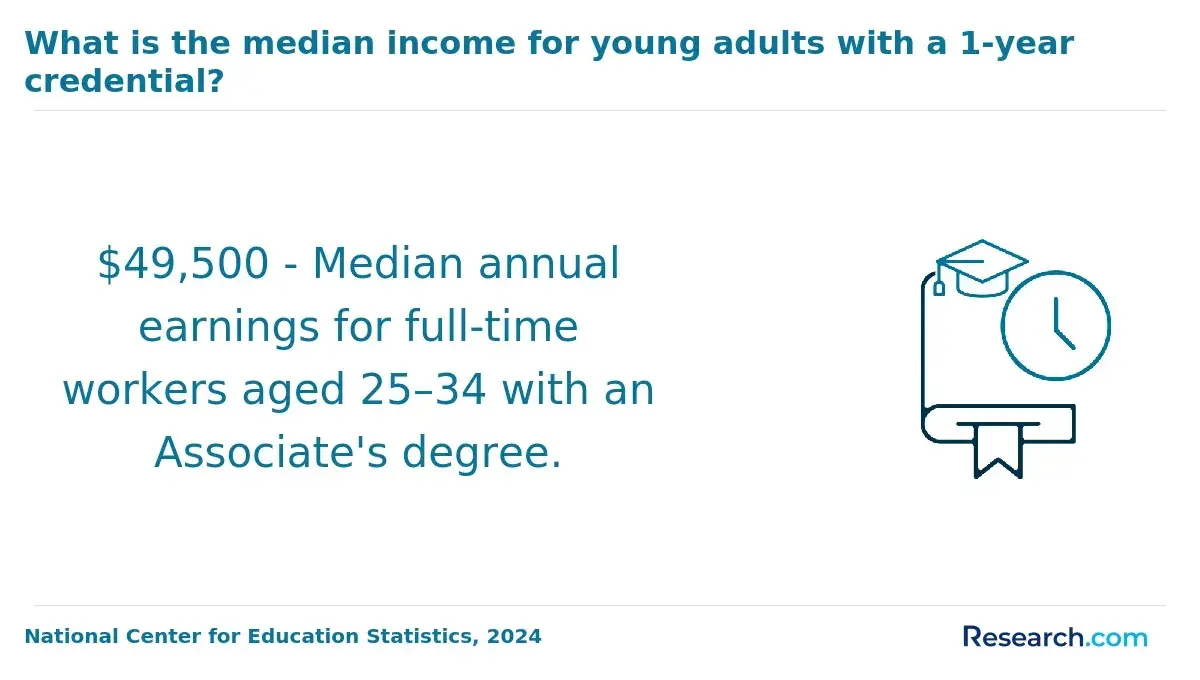
Pay varies by occupation, location, experience, and employer - not simply by degree held. The U.S. Bureau of Labor Statistics reported a May 2024 median annual wage of $61,550 for computer support specialists. That is the midpoint for people employed in the occupation, not a typical starting salary or a prediction for associate degree graduates.
When weighing tuition against potential earnings, compare realistic entry-level openings in your area rather than using the median for an advanced occupation. Include the cost of any additional certification or education you expect to need, and avoid programs that imply a particular wage is guaranteed.
What Is the Job Outlook for Associate-Level Technology Careers?
Technology hiring is not uniform across occupations. The Bureau of Labor Statistics projects 29% employment growth for information security analysts from 2024 to 2034. That indicates demand for the occupation, but it does not mean new associate degree holders will readily qualify: these roles typically require a bachelor's degree and related experience.
AI and automation may change routine technical tasks, making troubleshooting, communication, security awareness, and the ability to learn new tools especially useful. Treat broad growth forecasts as context, then inspect local entry-level postings for the qualifications employers currently request.
How Can You Choose an Accredited Technology Associate Degree Program?
Accreditation, career fit, and the total cost to finish should drive your choice - not a low advertised tuition rate alone. Confirm the college's institutional accreditation through the accreditor or the U.S. Department of Education, and check whether a specialized credential requires particular program recognition.
Use these checks when you contact admissions and program advisors; written answers make competing offers easier to compare.
- Request a degree audit showing remaining credits, required courses, and the likely schedule for completing them.
- Get an itemized estimate of tuition, mandatory fees, equipment, exams, and any required travel.
- Ask a prospective transfer school which courses satisfy your intended major, not merely which credits it accepts.
- Confirm delivery requirements, financial aid eligibility, and the technical projects or work experience the program offers.
A red flag is a school that cannot explain fees, course availability, or how credits apply to your goal. If you eventually consider online master's programs, remember that graduate study first requires an appropriate bachelor's pathway; plan your associate transfer credits accordingly rather than paying for courses twice.
Other Things You Should Know About
Not necessarily. At the same college, tuition may be similar, while lab fees, required materials, and transfer plans differ. Compare the cost of finishing your intended pathway.
Yes, some entry-level support and technical roles may be accessible, but employers also assess skills and experience. Advanced roles can require additional education or work history.
Choose an AAS when its applied courses meet your near-term career goal. Choose an AS when its credits are confirmed to satisfy a planned bachelor's degree. Paying to repeat credits later can erase early savings.
It may reduce commuting costs, but tuition, online fees, equipment, and any in-person requirements still matter. Request a complete cost estimate for both formats.
References
- Transfer pathways | Minnesota MyHigherEd https://myhighered.mn.gov/transfer-students/transfer-pathways
- Employment Projections Home Page | bls.gov https://www.bls.gov/emp/
- An Overview of Accreditation of Higher Education in the United States | Congress.gov | Library of Congress https://www.congress.gov/crs-product/R43826
- IPEDS - National Center for Education Statistics (NCES) https://nces.ed.gov/ipeds/Search
- How Long Are Community College Programs? | Edison State Community College https://www.edisonohio.edu/blog/how-long-are-community-college-programs
- Transfer Pathways - Middle Tennessee State University https://www.mtsu.edu/how-to-apply/transfer-pathways/
- TN Transfer Pathway and University Parallel Paths | columbiastate.edu https://www.columbiastate.edu/academics/ttp-and-university-parallel-paths.html
- Online - VCCS https://www.vccs.edu/online/
- University Transfer Degrees & Partnerships | Elgin Community College https://elgin.edu/student-services/transfer-services/university-transfer-degrees/
- Online | Coastline College https://www.coastline.edu/locations/online.php


