
2027 Most Affordable Associate Degrees for First-Generation Students

Co-Founder and Chief Data Scientist
Choosing an associate degree is harder when you are the first in your family to navigate tuition, financial aid, and transfer rules. The College Board reports that average published tuition and fees at public two-year colleges were $4,050 for in-district students in 2024-25.
That figure is a starting point, not the cost of finishing a degree. This guide compares six fields by likely expenses and educational goals, then shows you how to check the price, credentials, and support that matter before you enroll.
Key Things You Should Know
- Start with a local public community college, but compare the cost of all remaining courses and required fees, not just its advertised tuition. The 2024-25 national in-district tuition-and-fees average was $4,050 per year.
- Complete the FAFSA and review your actual aid offer. The maximum federal Pell Grant for 2024-25 was $7,395, but eligibility and award amounts vary; grants may substantially change which option costs least.
- Choose the degree that fits your goal: a transfer-oriented AA or AS may be less costly than taking credits that will not apply to a bachelor's degree, while a career-oriented AAS may be better for direct workforce preparation.
Top 10 Most Affordable Associate Degrees for First-Generation Students
Business Programs
Business administration, accounting, and office-management associate degrees can be relatively inexpensive when they require standard classroom courses rather than specialized equipment or placements. An AA or AS may suit students planning to transfer; an AAS may emphasize bookkeeping, payroll, or administrative work. Compare required software fees and confirm whether accounting courses will count toward a future bachelor's degree. An associate degree can support entry-level applications, but management roles generally require experience and may require further education.
Healthcare Programs
Healthcare administration, medical billing, and health information programs may offer lower total costs than clinical programs because they often have fewer laboratory and placement expenses. That does not make every program cheap: coding software, certification exams, and employer expectations can add costs. Check whether the curriculum prepares you for the specific role you want. Clinical occupations follow different requirements; a general healthcare associate degree does not substitute for occupation-specific training or a license.
Information Technology Programs
Information technology and computer support programs can be cost-conscious choices when the college includes software and remote-lab access in its fees. Compare device requirements, certification-exam costs, and whether courses build a portfolio of practical work. An AS may be designed for transfer, while an AAS may concentrate on technical skills for entry-level roles. Neither a degree nor a certification guarantees a job; employers also assess troubleshooting ability and experience.
Nursing / Pre-Nursing Programs
Pre-nursing is usually preparation for applying to a nursing program, not a nursing qualification. An associate degree in nursing can lead toward registered-nurse licensure, but admission may be selective, and students must meet clinical requirements and pass the NCLEX-RN before seeking a state license. Budget for prerequisites, uniforms, screenings, transportation, and exam-related costs. Ask whether clinical placements are available on a schedule you can attend; a low tuition quote is little help if required shifts prevent completion.
Criminal Justice Programs
Criminal justice programs commonly cover law, courts, and public safety. They may have few specialized course expenses, making local tuition and fees especially important to the comparison. An AA may suit a student planning to transfer; an AAS may focus more on immediate workforce preparation. Check hiring rules for your intended agency before enrolling: an associate degree alone does not waive academy training, background checks, physical standards, or other job requirements.
Psychology / Counseling Programs
A psychology or counseling-focused AA or AS is typically an affordable transfer starting point, not a direct route to practicing as a licensed counselor or psychologist. Those professions require substantially more education and state-specific credentials. Before choosing the least expensive program, confirm that its psychology and general education courses apply to your intended bachelor's degree. Students seeking quicker entry into helping work should also compare the requirements for local support roles or relevant certificates.
What Are the Most Affordable Associate Degrees for First-Generation Students?
The most affordable choice is usually the eligible, appropriately accredited program with the lowest cost to completion for your goal, not a particular major at every college. Business, nonclinical healthcare, IT, criminal justice, and transfer-oriented psychology may avoid the clinical expenses common in nursing, but local pricing and financial aid can reverse that comparison.
This table compares the six fields by the expenses and educational purpose most likely to affect your decision. It is a screening tool, not a price ranking: request a program-specific estimate before committing.
| Field | Common cost consideration | Best fit to check |
| Business | Software or course-material fees | Transfer or entry-level business work |
| Healthcare | Coding tools or certification expenses | Specific nonclinical occupation |
| Information technology | Computer, lab, and exam costs | Hands-on skills and entry-level technical work |
| Nursing / pre-nursing | Prerequisites, clinical travel, and screenings | Nursing admission and licensure pathway |
| Criminal justice | Local tuition and transfer fit | Agency requirements or bachelor's transfer |
| Psychology / counseling | Credits that may not apply after transfer | Planned bachelor's and later education |
If your priority is long-term career fit rather than immediate workforce entry, compare best majors for the future with the bachelor's pathways available from your community college. The least expensive associate degree may cost more overall if it adds courses to that path.
How Much Do Affordable Associate Degree Programs Cost?
Start with published tuition and mandatory fees, then subtract grants and scholarships for which you actually qualify. Add books, supplies, transportation, technology, and any major-specific costs. Net price reflects costs after grant aid; total program cost depends on how many terms and credits you need to finish.
These figures establish a national benchmark, not a quote for a particular program or a promise of aid:
- $4,050: Average published annual tuition and fees for in-district students at U.S. public two-year colleges in 2024-25, according to the College Board.
- $7,395: Maximum federal Pell Grant for 2024-25; an individual student's award could be smaller or unavailable.
Ask each college for an estimate covering every required term, including summer courses or prerequisites. Verify your residency rate and whether scholarships apply to part-time enrollment. If comparing cheapest online colleges, include online fees and any in-person requirements; a lower advertised rate may not mean a lower finishing cost.
Which Affordable Associate Degrees Offer the Best Career Opportunities?
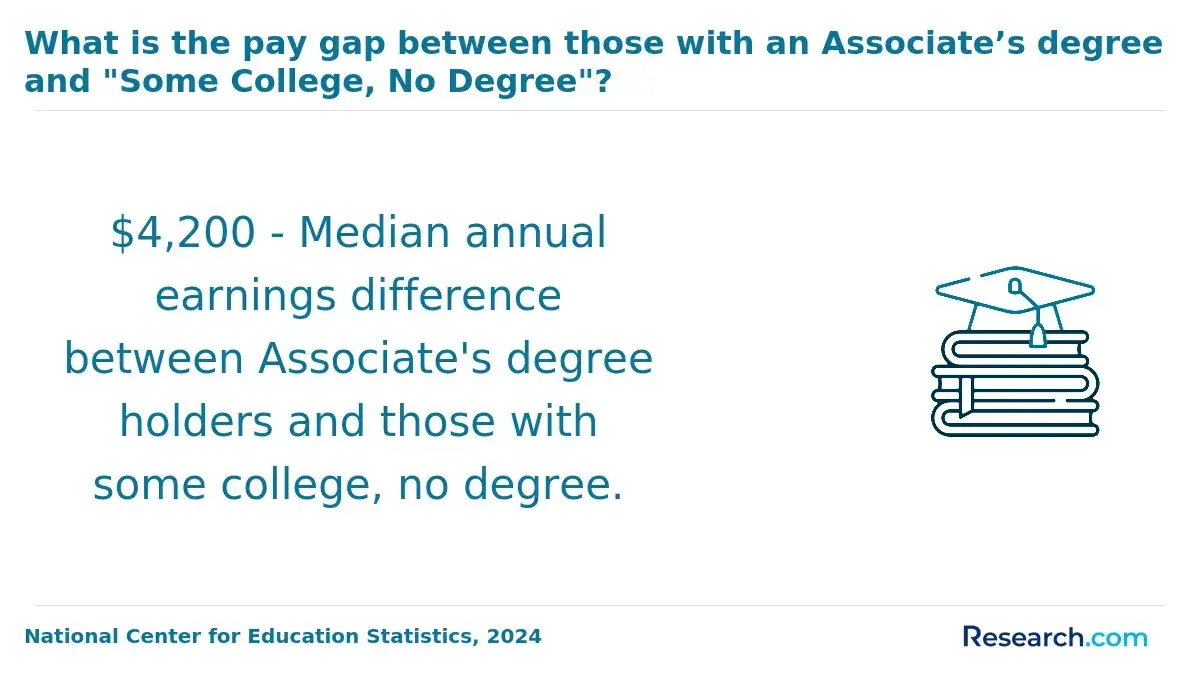
The strongest career opportunity depends on whether you want to work soon or transfer. A career-focused IT or nonclinical healthcare program may prepare you to apply for specific entry-level roles, a business AAS may do the same across a wider range of workplaces. Psychology is generally a stronger choice for a planned bachelor's pathway than for immediate counseling practice. Nursing offers a defined licensed occupation but brings selective admission and clinical costs.
For context, the U.S. Bureau of Labor Statistics projects employment of registered nurses to grow 5% from 2024 to 2034. That forecast concerns the occupation, not job placement for associate degree students. Check local openings and employer requirements before treating any field's national outlook as your personal outcome.
Are Online Associate Degrees as Affordable and Reputable as Campus Programs?
Online associate degrees can be reputable and affordable when the institution has recognized accreditation and the delivery format lets you complete every requirement at a manageable cost. They are not automatically cheaper: online course fees, equipment, proctoring, and travel for required activities can offset savings on commuting.
Review associates degrees online as a starting point, then confirm the full degree timeline with the college. Short courses are not the same as a short degree. Ask whether classes are asynchronous, whether exams require scheduled attendance, and whether labs, clinicals, or practicums must be completed in person. For hands-on nursing and allied-health paths, local placements may make a hybrid or campus program more workable.
What Accreditation Should First-Generation Students Look for in Associate Programs?
Look first for institutional accreditation recognized by the U.S. Department of Education or the Council for Higher Education Accreditation. Then check any program-specific approval or accreditation relevant to your intended occupation. These are separate checks: institutional accreditation alone does not establish that a nursing program meets a state board's requirements.
Before paying a deposit, use this sequence to test whether an apparently affordable program will meet your goal:
- Confirm the institution's current accreditation status with the accreditor and the college.
- For regulated work, ask the appropriate state board whether the specific program meets its education requirements.
- If you plan to transfer, ask the destination university which courses satisfy your intended bachelor's degree requirements, not merely which credits it will accept.
A red flag is a promise that all credits will transfer or that graduation alone confers a professional license. Get the applicable policy in writing.
What Are the Admission Requirements for Affordable Associate Degrees?
Many community colleges offer broad access to general admission, commonly asking for an application and proof of prior education. Placement procedures and financial aid documentation vary. Admission to the college does not necessarily mean admission to a nursing or other selective program; those may require prerequisites, grades, testing, screenings, or a separate application.
Ask an advisor to map your remaining requirements before registering. If you have previous college credit, request an evaluation showing which credits apply to this degree and whether you must complete a minimum number of credits at the new college. That protects you from paying again for courses you do not need.
What Coursework Do Affordable Associate Degree Programs Include?
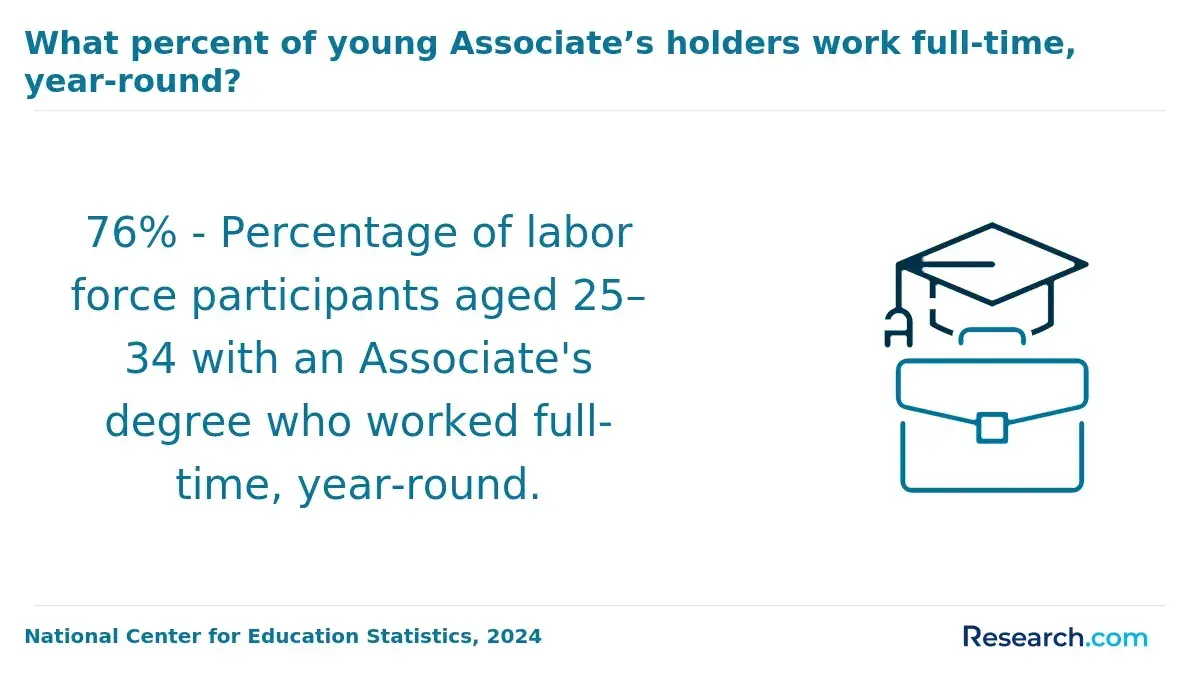
Associate programs commonly combine general education, such as writing and math - with courses in the major. Many are designed around roughly 60 credits, but prerequisites, clinicals, course availability, and college rules can change both the required credits and completion time. An AA or AS often emphasizes transfer preparation; an AAS often emphasizes workforce skills. Check the actual curriculum rather than relying on the abbreviation.
Business students may study accounting and management; IT students may complete networking labs; nursing students face sequenced science courses and clinical work. If you need a flexible schedule, compare course calendars rather than assuming every online class is self-paced. A guide to the cheapest self-paced online college options can help frame that comparison, but verify that required courses are offered in the format you need.
What Salaries and Job Outlook Can Graduates Expect?
Occupational wages are useful for comparing possible paths, but they are not salaries promised to graduates of a particular associate program. The U.S. Bureau of Labor Statistics reports a May 2024 median annual wage of $93,600 for registered nurses. Reaching that occupation requires nursing education, passing the licensing exam, and meeting state requirements; wages vary by location, employer, and experience.
For other fields, compare the occupation you could realistically enter first - not a senior job title associated with the subject. Ask the college for documented outcomes for your exact program, and distinguish the share of graduates who responded to a survey from the share who found relevant work.
Which Certifications or Licenses Do Associate Degree Graduates Need?
Requirements depend on the job, not simply the degree title. Registered nurses must meet state board rules and pass the NCLEX-RN. IT employers may value an industry certification alongside practical skills, while medical coding employers may seek a particular coding credential. Criminal justice employers can require academy training or other agency-specific qualifications. Practicing as a licensed counselor or psychologist requires further education and state licensure.
Before enrolling, identify the role you want, check its state or employer requirements, and ask whether the program prepares students for any required exam. Include exam, application, and renewal expenses in your cost comparison; a degree priced below its competitors may still be the more expensive route to your intended job.
Other Things You Should Know About
Yes. Ask prospective colleges about financial aid advising, academic advising, tutoring, and first-generation student support. Request a degree plan that shows the courses required for your specific goal.
Not necessarily. Eligibility and award amounts vary, and tuition is only one expense. Compare each school's aid offer against its estimated total cost, including living and program-specific expenses.
None is cheapest everywhere. An AA or AS may reduce later bachelor's costs when courses apply to that degree; an AAS may be a better-value direct career route. Compare the complete pathway, not just the first term.
It depends on required credits, enrollment pace, prerequisites, course scheduling, and accepted prior credit. Ask the college for a term-by-term plan based on your circumstances rather than assuming every program takes exactly two years.
References
- Federal Pell Grant Program of the Higher Education Act | congress.gov https://www.congress.gov/crs-product/R45418
- What Financial Aid Offers Don't Tell You About the Cost of College | U.S. GAO https://www.gao.gov/blog/what-financial-aid-offers-dont-tell-you-about-cost-college
- Fast Facts: Tuition costs of colleges and universities (76) | ed.gov https://nces.ed.gov/fastfacts/display.asp
- Associate's degree: Career Outlook | bls.gov https://www.bls.gov/careeroutlook/subject/associates_degree.htm
- Office of Postsecondary Education - Program Guide http://www.ed.gov/about/ed-offices/ope/office-of-postsecondary-education--program-guide
- Special Transfer Benefits for TCC Students | Tarrant County College District https://www.tccd.edu/services/transfer-center/transfer-agreements/special-transfer-benefits-tcc-students/
- Support Services - Areas of Study - Catalog Search https://catalog.skagit.edu/content.php
- Support Services - Bunker Hill Community College https://www.bhcc.edu/handbook/supportservices/
- Jenzabar University | qcc.edu https://theq.qcc.edu/ICS/Student_Services/Transfer_Services_Sub_Pages/Step_5_Transferring_Options.jnz
- College Affordability Still Out of Reach for Students with Lowest Incomes, Students of Color | IHEP https://www.ihep.org/college-affordability-still-out-of-reach-for-students-with-lowest-incomes-students-of-color


