
2027 Master's in Data Science vs. Master's in Quantitative Psychology: Choosing Your Graduate Path

Co-Founder and Chief Data Scientist
A master's in data science and a master's in quantitative psychology both develop advanced analytical skills, but they prepare students to answer different kinds of questions. Data science generally emphasizes building models and working with data across industries; quantitative psychology emphasizes measuring behavior and designing credible research. If you are choosing between them, the deciding factors are the work you want to do, the methods you want to master, and the evidence each program offers that it can get you there.
Key Things You Should Know
- Choose data science if you want broader preparation for computing-intensive analytics roles; choose quantitative psychology if you want to specialize in behavioral measurement and research methods.
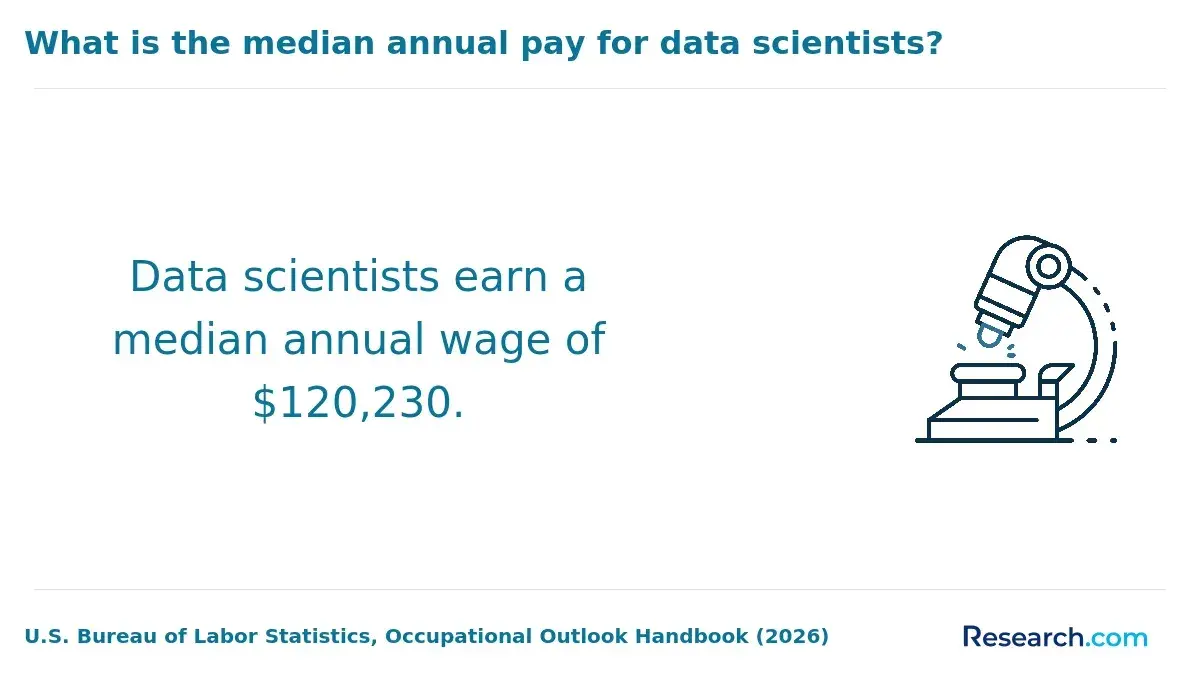
- The U.S. Bureau of Labor Statistics reports a $120,230 median annual wage for data scientists in May 2025, but that is an occupational figure - not a salary prediction for graduates of either degree.
- Compare actual courses, projects, total costs, and graduate destinations: a degree title alone cannot establish technical depth or career fit.
What is the difference between a master's in data science and quantitative psychology?
Data science focuses on extracting useful information from data, often through programming, statistical modeling, machine learning, and data systems. Quantitative psychology focuses on developing and applying methods to study psychological traits, behavior, and change. Both can be mathematically demanding; their distinctive strengths lie in the problems they prioritize.
This comparison shows which questions and work products each degree is more likely to emphasize. Individual programs can cross these boundaries, so use it as a starting point for reading course catalogs.
| Decision criterion | Data science master's | Quantitative psychology master's |
| Typical central question | How can data support a prediction, product, or operational decision? | How can we measure a psychological construct or draw sound conclusions about behavior? |
| Likely emphasis | Programming, machine learning, data management, and model evaluation | Psychometrics, research design, statistical inference, and behavioral data |
| Common project output | A reproducible analytical workflow, model, or application | A measurement study, methodological analysis, or research report |
| Best initial fit | Students seeking flexibility across data-driven industries | Students committed to behavioral research or measurement-intensive work |
The choice is not "technical versus nontechnical." A quantitative psychology program may teach sophisticated statistics, while a data science program may offer limited training in research design. Inspect required courses rather than judging by the degree name.
Which degree offers better career opportunities and earning potential?
For a student who wants access to a wider range of industry analytics roles, data science is usually the more direct credential. For someone targeting psychometrics, behavioral research, or methods-focused work, quantitative psychology may provide more relevant evidence of expertise. Neither credential guarantees entry to a particular occupation; employers also evaluate experience, projects, programming ability, and subject knowledge.
Data science has a clearly identifiable federal labor-market category: BLS projects 35% employment growth for data scientists from 2025 to 2035. That supports the case for broad demand, but it does not measure openings reserved for master's graduates or establish that data science offers better prospects than every quantitative psychology career.
Earning potential is similarly role-dependent. A graduate who joins a commercial analytics team and one who takes a research position should not expect the same pay simply because both use statistics. When comparing offers, look at the role, employer, location, and your experience before graduate school. For AI-oriented roles, alumni network considerations for AI master's applicants can inform questions about connections and career support, but a network is not an employment outcome.
What do you study in data science and quantitative psychology master's programs?
Data science curricula commonly combine statistics with coding, machine learning, and practical work with datasets. Quantitative psychology curricula center on statistical methods for psychological research, potentially including test development, longitudinal analysis, and experimental or survey methods. The distinction matters when two programs advertise the same term - such as "modeling" - but teach it for different purposes.
Compare the assignments behind course titles. If you want to build predictive systems, look for substantial programming, model evaluation, and reproducible projects. If you want to validate assessments or study behavioral change, look for measurement theory, research design, and applied work with human-subject data. Students interested specifically in health-related AI can also examine AI master's program selection for healthcare careers as an adjacent route; it should not be mistaken for training in psychological measurement.
What are the admission requirements for each master's degree?
Requirements vary by institution. Data science applicants may need to demonstrate programming, calculus, linear algebra, and statistics preparation; quantitative psychology applicants may need statistics and research-methods preparation alongside the mathematical background required by their chosen program. Neither a psychology degree nor a computing degree automatically qualifies - or disqualifies - an applicant.
Separate formal prerequisites from skills recommended for success. Before applying, match your transcript to each program's published requirements, then ask whether work experience, nondegree coursework, or another form of preparation can address a gap. Self-study may make you more capable without satisfying a required for-credit course. Also check whether faculty research alignment matters for programs built around a thesis or research mentorship.
How long do these master's programs take and how much do they cost?
There is no reliable single price or completion time for either degree: credit requirements, tuition rates, enrollment pace, and thesis or project requirements differ by program. Compare published program requirements and current tuition schedules rather than assuming that one discipline is inherently cheaper or faster.
Build a like-for-like estimate using required credits × applicable tuition rate + mandatory fees, then account separately for books, software, travel, and any income you would give up to study. Ask whether tuition can change before you finish and whether assistantships or employer benefits apply to your enrollment format. For students prioritizing elapsed time, faster paths to a data science master's degree offer another comparison point; verify whether an accelerated pace leaves room for the methods and projects your target job requires.
A common mistake is comparing one school's tuition-only quote with another school's full cost estimate. Request the same cost components and a realistic schedule from both programs before weighing the price difference against likely career value.
Are online or campus-based programs better for these degrees?
Neither format is automatically stronger. Online study may suit a working professional who can complete programming projects or statistical coursework remotely. Campus study may be more useful when a quantitative psychology student needs close research mentorship, access to a lab, or frequent collaboration on a thesis. The relevant question is whether the specific program provides the experiences your target work requires.
Check whether classes meet live, how group projects operate, whether research supervision is available remotely, and whether any visits are required. Online price comparisons also need the full fee schedule: online machine learning master's cost limits illustrate why tuition and required fees should be considered together. If you will study from another state, confirm that the institution can enroll students where you reside.
How do accreditation and professional standards differ between the programs?
Start by verifying the institution's recognized accreditation and the standing of the specific graduate program. Do not assume that a specialized accreditation applies merely because a university offers a psychology or data science degree; ask the school what, if any, program-level recognition it holds and whether that recognition matters for your goal.
Professional standards also differ by intended occupation. A quantitative psychology master's focused on research methods is not automatically a path to psychologist licensure, which is governed by state requirements and depends on the intended practice area and qualifying training. Data science roles generally have no analogous psychologist-licensing requirement. If licensure is your aim, obtain written confirmation from the relevant state board and program before enrolling rather than relying on the word "psychology" in the degree title.
What jobs can you get with a master's in data science or quantitative psychology?
A data science master's can support applications for data scientist, machine learning, analytics, or related technical roles when the graduate has the skills each employer requests. Quantitative psychology can be especially relevant to psychometrician, measurement specialist, research analyst, and behavioral-research roles. Some roles - particularly research-intensive or senior methods positions - may require experience or doctoral training beyond a master's.
There is overlap: a quantitative psychology graduate with strong coding and data-system skills may pursue industry analytics, while a data science graduate with research-design expertise may work with behavioral data. To evaluate that overlap, inspect job postings you would actually apply to. If they repeatedly request software development and production models, favor programs with substantial computing projects; if they request instrument validation or complex study design, favor programs with demonstrated measurement depth.
What are the salary and job outlook differences between the two fields?
BLS reports a $120,230 median annual wage for data scientists in May 2025. This describes employed people in that occupation across education and experience levels; it is not a starting salary or the measured return on a data science master's.
There is no equally precise, single BLS occupation that captures every quantitative psychology graduate. They may work under different research, statistical, assessment, or analytics job titles. As a result, comparing the data scientist median with a generic "psychologist" salary would misrepresent the decision. For a useful comparison, identify the job titles you want, examine pay information for those roles in your intended location, and ask programs for documented graduate outcomes - including how many graduates responded and whether they already had relevant experience.
How do you choose a reputable program for your career goals?
Choose a program by testing its claims against the work you want to do, not by ranking or degree title alone. Use the same questions for every school so that appealing electives or a low advertised price do not obscure missing essentials.
Before enrolling, work through this short comparison:
- Name a target role: Collect representative postings and identify the methods, software, and research experience they require.
- Verify required training: Read course descriptions and project requirements; an elective you may not be able to take is not equivalent to a required course.
- Check support and outcomes: Ask about research supervision, project feedback, career services, and the definitions and response rates behind any placement figures.
- Compare complete costs: Obtain current tuition and required-fee estimates for your enrollment plan, then assess funding and time away from work.
If your goal turns out to be applied AI rather than general data science or psychological measurement, compare affordable online AI programs as a separate option. Choose data science when its computing and analytics training matches your target roles; choose quantitative psychology when rigorous behavioral measurement and research are central to them.
Other Things You Should Know About Data Science
A thesis can provide evidence of independent research ability and help you assess whether you enjoy sustained methods work. Doctoral admissions expectations vary, so check prospective PhD programs before treating a thesis as a universal requirement.
Possibly. Cross-department electives depend on registration rules, prerequisites, scheduling, and whether the credits count toward your degree. Confirm all four with the program before relying on an elective to fill a major skills gap.
Research involving human participants may require review under your institution's policies and applicable rules. Ask your supervisor about approval, consent, and data access before collecting or analyzing sensitive information.
If you are uncertain about the daily work, a relevant course or substantial project can help you test your interest. Check whether any credits would transfer before assuming a smaller credential will shorten a later master's.
References
- Annual Earnings by Educational Attainment - COE https://nces.ed.gov/programs/coe/indicator/cba/annual-earnings
- Frequently Asked Questions - California Board of Psychology https://www.psychology.ca.gov/licensees/faq.shtml
- How Much Do Data Scientists Need to Know About Statistics? | virginia.edu https://datascience.virginia.edu/news/how-much-do-data-scientists-need-know-about-statistics
- Psychology: Data Science in Human Behavior MS | Professional Degrees & Certificates https://pdc.wisc.edu/degrees/psychology-data-science-in-human-behavior-ms/
- Program: Data Analysis and Research Psychology, MS (Online) | northwestu.edu http://catalog.northwestu.edu/preview_program.php
- APA Health Service Psychology Workforce Optimization https://www.apa.org/education-career/grad/national-standards-masters
- Why Choose a Master's in Applied Data Science? | Bay Path University https://www.baypath.edu/news/bay-path-university-blogs/post/why-choose-a-master-s-in-applied-data-science/
- Quantitative Methods & Data Analytics for Human Behavior (M.S.) | Peabody College of Education and Human Development https://peabody.vanderbilt.edu/academics/masters-programs/quantitative-methods-and-data-analytics/
- Quantitative/Psychometric Methods (QPM) | Psychology https://cla.umn.edu/psychology/graduate/areas-specialization/quantitativepsychometric-methods-qpm


