2027 Master's in Data Science vs. Master's in Financial Engineering: Choosing Your Graduate Path

Co-Founder and Chief Data Scientist
A master's in data science can prepare you to analyze data across industries; a master's in financial engineering concentrates quantitative methods on financial markets and risk. If you are choosing between them, the deciding factor is not which degree sounds more technical. It is whether you want broad flexibility or specialized preparation for finance - and whether a program's coursework, recruiting access, and total cost support that goal. This comparison will help you identify the better fit and evaluate actual programs before applying.
Key Things You Should Know
- Choose data science for broader industry options; choose financial engineering when you want to apply advanced quantitative methods specifically to finance.
- The U.S. Bureau of Labor Statistics projects 35% growth in data scientist employment from 2025 to 2035, but that occupation-level forecast does not predict outcomes for either degree.
- Compare required courses, access to target employers, and total cost - not degree titles or advertised salaries alone. Finance-specific roles may demand preparation that a general data science curriculum does not provide.
What Is the Difference Between Data Science and Financial Engineering?
Data science focuses on extracting useful information from data through statistics, computing, and modeling. Financial engineering applies mathematics, statistics, and computation to financial problems such as pricing, portfolio construction, and risk. The disciplines overlap, but the domain in which you learn to use those tools differs.
The table compares the degrees by the criteria most likely to affect your choice. Individual programs can depart from these patterns, so use their required courses - not their names - to confirm the distinction.
| Criterion | Master's in data science | Master's in financial engineering |
| Primary focus | Modeling and using data across potential industries | Modeling financial instruments, markets, and risk |
| Typical emphasis | Statistical learning, data pipelines, machine learning, and communicating results | Probability, stochastic modeling, numerical methods, and financial applications |
| Domain preparation | Varies by elective and project | Finance is usually built into required coursework |
| Best fit | Students who want to keep industry options open | Students committed to quantitative finance roles |
If your interests lie more in reporting, business decisions, and applied analysis than in either path's mathematical depth, a guide to data analytics master's programs can help you examine a third option.
Which Degree Has Better Career Opportunities: Data Science or Financial Engineering?
Neither degree has universally better opportunities. Data science can support applications across sectors, while financial engineering provides more targeted preparation for roles in banks, investment firms, trading organizations, and financial-risk teams. That specialization is valuable if those are your intended employers; it is less useful if you are uncertain about working in finance.
The Bureau of Labor Statistics projects data scientist employment to grow 35% from 2025 to 2035. This indicates substantial demand for the occupation, not that every graduate will qualify for those jobs or that data science offers better prospects than financial engineering. Financial engineering graduates may pursue several job titles rather than one directly comparable occupation.
Work backward from actual roles. For data science positions, look for programs whose projects demonstrate data preparation, model evaluation, and communication. For quantitative finance positions, check whether required courses and projects cover the financial methods named in job postings. In either case, examine employer recruiting access and internship support rather than treating a career-services page as evidence of placement.
How Do Data Science and Financial Engineering Salaries Compare?
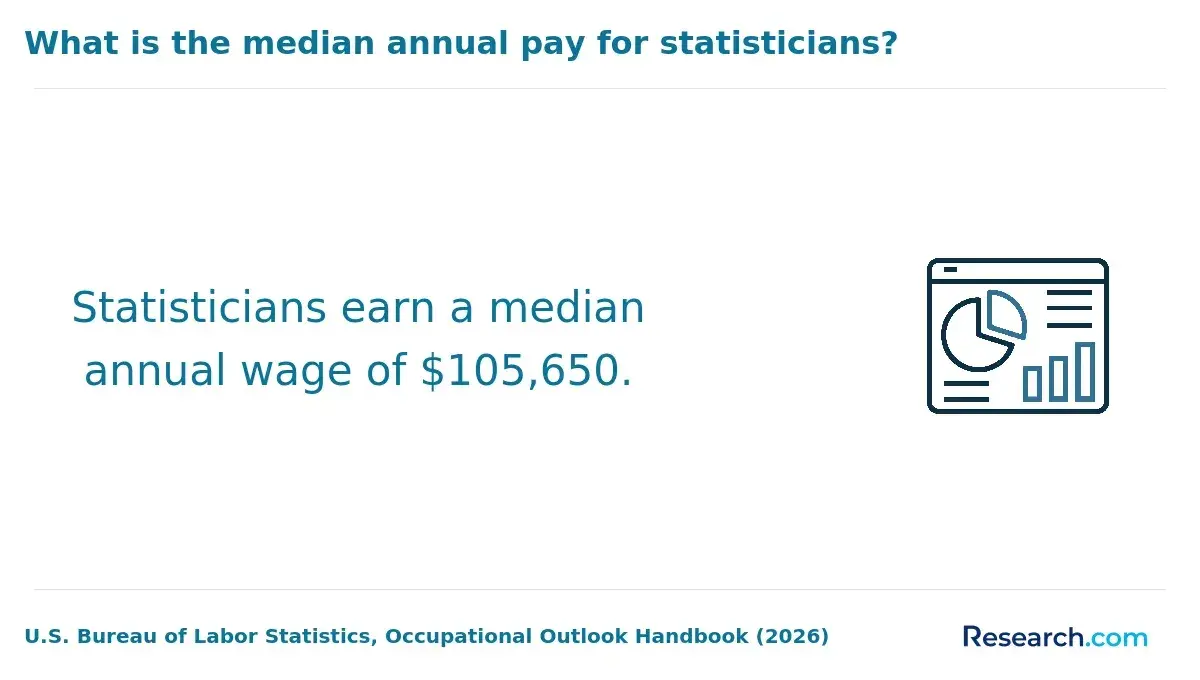
The Bureau of Labor Statistics reports a May 2025 median annual wage of $120,230 for data scientists. That is a national occupation-level figure for workers with varied education and experience - not a starting salary or a return attributable to a master's degree.
There is no single, equivalently defined "financial engineer" salary figure in the information available here. A comparison between the data scientist median and a salary advertised for one finance job would mix different occupations, experience levels, employers, and potentially bonus structures. It would not establish which degree pays more.
For a useful comparison, ask each program for recent outcomes by job title, location, and prior experience, along with the number of graduates represented and the response rate. Separate base salary from bonuses. If a program does not publish those details, treat its salary claims as incomplete rather than filling the gap with an estimate.
What Do You Learn in Data Science and Financial Engineering Programs?
Both paths may require substantial programming, probability, and statistics. Data science programs commonly emphasize working with messy data, statistical or machine-learning models, and communicating or deploying results. Financial engineering programs typically put greater weight on mathematical finance, numerical techniques, and testing models against financial problems. These are broad patterns, not promises about any particular curriculum.
Look beyond course titles. An "AI" elective, for example, may offer less relevant depth than a substantial project in the methods your target role uses. If responsible deployment of AI is important to your intended work, compare actual course requirements with graduate AI degrees with governance coursework rather than assuming either degree covers governance in depth.
Request recent syllabi and sample capstones. A strong comparison asks what students must build, how their work is evaluated, and whether relevant advanced courses are guaranteed to run during their enrollment.
What Are the Admission Requirements for Each Master's Degree?
Requirements vary by institution. Applicants to either degree should expect programs to assess quantitative and programming readiness. Financial engineering may place particular weight on advanced mathematics; data science programs may weigh statistical, computing, and applied experience differently. Do not assume that a finance background substitutes for mathematics or that a computing background substitutes for probability.
Check each program's stated prerequisites against your transcript, then ask whether a missing course must be completed for admission or is merely recommended for success. Professional projects can show readiness, but they do not automatically fulfill a formal course requirement. Application essays also vary by program and degree: application essay policies for online machine learning master's degrees illustrate why you should verify the policy for the specific program you choose rather than assume a field-wide rule.
How Long Do These Master's Programs Take, and What Do They Cost?
Neither degree has a standard duration or price. Credit requirements, full-time or part-time enrollment, tuition rules, and the availability of required courses determine how long a particular program takes and what you pay. Without comparable, current program figures, a claim that one degree is generally cheaper or faster would be misleading.
For each school, build the same cost estimate before comparing offers. The following items matter because tuition alone can conceal a meaningful difference in total expense:
- Published tuition for the full required credit load and mandatory fees.
- Additional expenses for materials, software, travel, or required in-person activities.
- Living costs and foregone earnings if the schedule limits paid work.
- Scholarships, employer assistance, and financing costs that apply to your circumstances.
Then compare that estimate with a realistic career plan, not an advertised salary. A specialized financial engineering program may be worth a higher personal cost if it provides access to your target roles; a less expensive data science program may be preferable if you value flexibility or intend to remain employed. Neither outcome is guaranteed.
Are Online or On-Campus Programs Better for These Degrees?
For an employed applicant, compare live-session times, group-work expectations, course rotation, and career support before enrolling. Program selection for employed data science master's applicants is especially relevant if keeping your job is a firm constraint. If your goal is quantitative finance, also ask whether remote students can participate in the same finance recruiting and projects as campus students.
How Can You Evaluate Accreditation and Program Quality?
Verify the institution's accreditation through the accreditor or an official government-recognized directory; do not assume that a program's marketing language establishes its standing. Then assess the degree itself. Institutional accreditation does not tell you whether the curriculum is sufficiently rigorous for a data science or quantitative finance role.
Program quality is best judged against your intended work: required mathematical and computing depth, faculty expertise, recent student projects, access to appropriate employers, and transparent graduate outcomes. Be cautious of a program that highlights rankings or exceptional alumni salaries but will not explain which graduates its outcomes represent. If you will study online from another state, confirm that the institution can enroll students where you live.
What Certifications or Licenses Do Graduates Need?
Neither master's degree, by itself, creates a universal certification or license requirement. A data science role may require demonstrated skills rather than a professional license. A finance role's requirements depend on its duties, employer, and applicable rules; some regulated activities may require registration or examinations, while other quantitative roles may not.
Do not buy a certification solely because a program advertises it. First identify the roles you plan to seek, check current job requirements, and ask employers or the relevant regulator which credentials apply to those duties. A degree does not replace any registration a particular role requires.
How Do You Choose Between Data Science and Financial Engineering?
Choose data science if you want to apply statistical and computational methods across industries and would prefer to develop finance expertise through electives or projects if needed. Choose financial engineering if quantitative finance is already your target and you want finance-specific methods, projects, and recruiting access built into the degree. If your target is primarily an AI-focused role, selecting an AI program based on target roles may help you assess whether either degree is the right match.
Before submitting applications, make a short, evidence-based comparison. These steps help prevent the common mistake of choosing a title - or a reported salary - without checking what the program can actually offer:
- Collect several current job postings for your target role and note recurring technical and domain requirements.
- Match those requirements to each program's mandatory courses, available electives, and completed student projects.
- Ask for comparable outcome details, including job titles, graduate experience, response rates, and access to recruiting.
- Calculate your full personal cost and confirm the schedule is workable before deciding.
If one program cannot provide a credible route from your present skills to your target work, remove it from the shortlist even if its degree title is appealing.
Other Things You Should Know About Data Science
The names are often used for closely related degrees, but naming does not establish equivalent coursework. Compare required courses and projects before treating two programs as interchangeable.
Yes. A carefully documented project using financial data can demonstrate relevant analytical skills. It does not, by itself, establish mastery of the finance-specific methods an employer may require.
Not as a general condition of studying the subject. Check a specific program's project requirements rather than assuming personal trading is expected.
Check the languages named in your prospective programs' prerequisite and course descriptions. Demonstrable programming ability matters more than assuming one language is required everywhere.
References
- Career Impact | UCLA Anderson School of Management https://www.anderson.ucla.edu/degrees/master-of-financial-engineering/career-impact
- Masters in Financial Engineering Programs | MSCF | Carnegie Mellon University https://www.cmu.edu/mscf/news/evaluating-masters-in-financial-engineering-programs
- Master of Science - Stanford ICME https://icme.stanford.edu/academics-admission/icme-master-science
- Alumni Perspective: Do I Need a Master's Degree for Data Science? - School of Data Science https://datascience.virginia.edu/news/alumni-perspective-do-i-need-masters-degree-data-science
- What Can I Do With a Degree in Data Science? Career Paths & Skills | Harvard SEAS https://seas.harvard.edu/news/what-can-i-do-degree-data-science-career-paths-skills
- What Is A Master Of Science In Financial Engineering? | Noodle.com https://resources.noodle.com/articles/what-is-msfe-degree-master-of-financial-engineering/
- Statistics MS Prerequisites for Business Grads | GradPilot https://gradpilot.com/news/statistics-masters-prerequisites-business-degree